Harsh Sonawala is the co founder of India Someday and since his childhood, he has travelled to different parts of India and the world. The thrill of travelling and sharing his experiences with others was the reason behind starting India Someday. Other than the office where he is conjuring up marketing ideas, he can be found scuba diving in the Andamans or relaxing in a chalet in the Himalayas.
Travelling as a couple to India? You’re bound to have questions and concerns. From urban to rural, India’s attitude toward romance differs wildly. Unmarried couples may be forced into separate rooms or given tips on where to catch a quick moment together. Be aware you may be vulnerable to stigma. Whereas the country, which ties love up into a neat little box, will heartily embrace married couples. But there are also many beautiful sights for you to plan a romantic getaway to India.
It’s very complex and the general rule, especially when it comes to PDA, is to be sensitive to the atmosphere around you. It’s a country with endless opportunities to showcase your love and discover each other, as long as you do your research right. When you’re out, watch how other people, and other couples in particular, are behaving and simply follow suit. You may even learn a thing or two on clandestine loving from our attention-weary youth!
The ultimate romantic getaway to India includes a trip to the Taj Mahal
Booking your rooms
While some of the smaller hotels may refuse to admit unmarried couples of Indian origin, they usually make an exception for foreigners. The days of being questioned about differing last names are in the past, particularly in the metropolises, but there’s a stigma attached to booking a room for a couple of hours in the afternoon. If you’re travelling as a couple to India you might want to play it safe by slipping on a ring. Explain the unshared last name on your passports as a cultural difference or bureaucratic delay; you might feel a little more comfortable. Married couples, feel free to flaunt your wedding rings.
The attitude of homestays is usually far more accepting. They are used to a certain kind of traveller that breaks the rules and travels young, or ones who may or may not believe in the institution of marriage at all. Rest assured that if you’re doing your bookings through us, you won’t have to lie or worry.
Hampi: another destination for your romantic getaway to India (Photo Credit – Jimmy Conover)
Being yourselves
When travelling as a couple to India, please accept that there are different customs to abide by. There’s no shame in holding hands or taking a brief nap on your partner’s shoulder. Anything beyond that may make those around you uncomfortable. Please try not to think of it as people judging you and forcing their rules down your throat. Yes, it would be lovely to have the freedom to express your love openly. But the current cultural reality is that it’s considered as discomforting as flashing. So hold the passion in check until you’re behind closed doors or learn from the couples canoodling on street corners and grab a little peck when no one’s watching.
A romantic getaway to India in Mumbai (Photo Credit – Joanna Nix-Walkup)
Using public transport
Be more careful about your intimacy, especially on overnight journeys. While it may cause a little heartache to skip the goodnight kiss, remember that as a space without any police patrols or specific rules, you’re more likely to attract unwanted attention. Stick to your berths and follow the age old Indian tradition of ‘behavingdecently‘. You don’t have to completely ignore one another, hugs and hand-holding will turn no heads. Mostly, foreigners travelling as a couple to India are given the benefit of the doubt in these circumstances.
Be modest and respectful on public transport
Safety
Because you are travelling as a couple to India you have each other for safety. But we recommend that you cover your basics. Be aware of your surroundings and carry pepper spray, have your embassy on speeddial and do your research. With all your homework in place, you can push all the nagging worries to the back of your head and throw yourself headfirst into this splendid country you take your romantic getaway to India with the one you love.
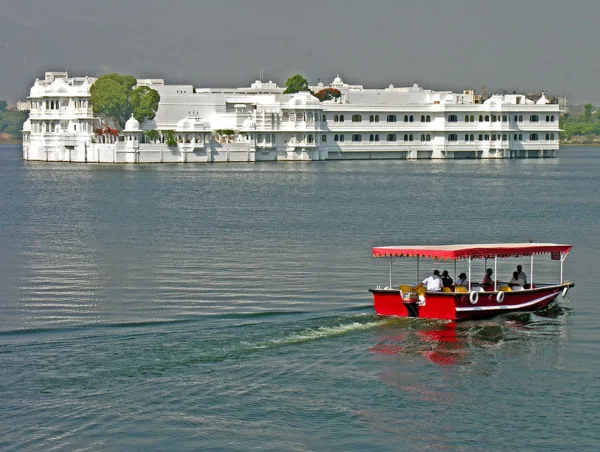
A trip to Lake Pichola is incomplete without a boat ride in the serene lake (Photo Credit – Dennis Jarvis)
If you’d like to travel in any other way, our blogs on solo travelling and solo travelling as a woman can be helpful to you too! India Someday can help you plan your perfect trip without being invasive and giving you your space. Just hit Plan Your Trip to know more.
If you are travelling in India, Delhi will likely be a part of your trip (unless you are exploring only South India). Delhi is central to any place you are travelling in North India and is the capital of the country for good reasons. Different worlds co-exist in Delhi at the same time. A dichotomy exists: the wide roads and modern infrastructure of New Delhi and the unchanging capital of the Mughal Era, now branded Old Delhi. One thing that definitely hasn’t changed about Old Delhi is the abundance and variety of excellent food.
Here is a list of a few of our favourite places to eat in Old Delhi
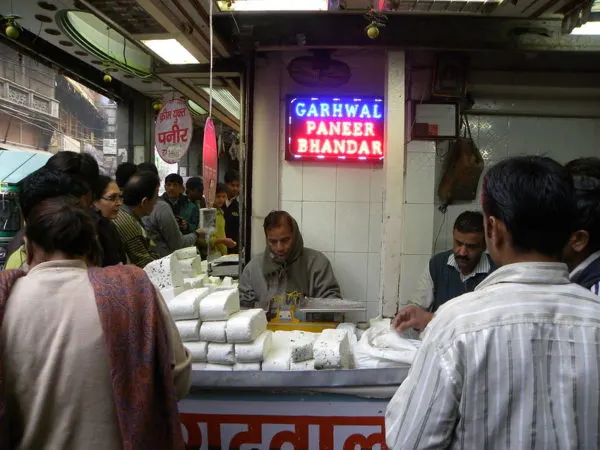
Garhwal Paneer Bhandar (Photo Credit – Bomb Man)
Karims (Jama Masjid)
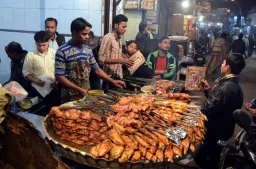
Self-proclaimed descendants of the royal cooks from the Mughal Dynasty, Karims is popular for its Mughlai and North Indian Cuisine. A non-vegetarian paradise, everything at Karim’s is deliciously juicy and tender. The Mutton Seekh and the Mutton Barra are our favourites. If you are a vegetarian, there aren’t too many options, but the Shahi Paneer is really good and you should give it a try!
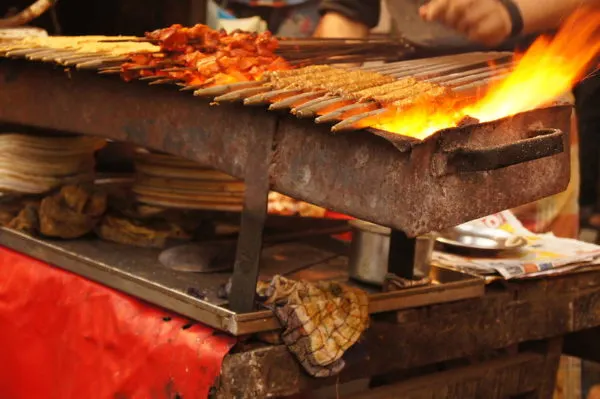
Seekh Kebab at Old Delhi outside Jama Masjid (Photo Credit – Abhishek Srivastava)
Paranthewali Galli (Chandni Chowk)
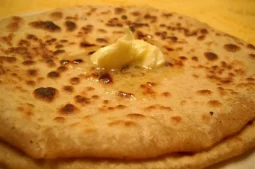
Parathewali Galli is a vegetarian food street located in the hustling market of Chandni Chowk near the Red Fort. Popular for its Parathas (bread stuffed with a spiced vegetable filling), the sheer variety of Parathas is jaw-dropping. Visit for the crowd-watching as much as the food.
Paratha (Photo Credit – www.burrp.com)
Jain Coffee House (Chawri Bazaar)
In the crowded streets of Chawri Bazaar, Jain Coffee House is a pocket-sized café, hidden away in the twisted alleyways, and is not the easiest to find. Once found, you’ll notice that it’s quite unusual, a place that’s been in operation for the better part of the last 50 years. The coffee and the milkshakes are really tasty, but Jain Coffee House is on our list for its mouth-watering fruit sandwiches. This is one place that merits a visit, purely for its delicious sandwiches.
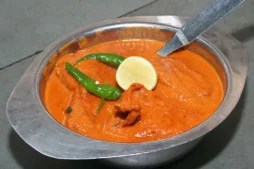
“I can’t please everybody, I am not butter chicken”. There’s one of the most commonly uttered phrase in North India. Everybody loves butter chicken – soft tender chicken chunks cooked in a thick gravy of tomatoes, cashews and butter. In the kitchen of Moti Mahal, a legendary restaurant also located in Old Delhi (more on Moti Mahal later), Butter Chicken was invented.
However, if you visit Aslam Chicken Corner expecting a traditional version, you’re in for a surprise. Aslam Chicken Corner serves Butter Chicken in the most literal fashion. Roast some chicken, put it in a bowl, and pour dollops of butter over it, season it with some salt and Voilà! That’s Butter Chicken for you!
Delicious BBQ (Photo Credit – www.thehindu.com)
Moti Mahal (Dariyaganj)
You will find many Moti Mahals across the country, but they are all merely replicas of this one. The real Moti Mahal has stood the test of time. Like we said before, Butter Chicken was invented here. World-famous chefs like Gordon Ramsey and Heston Blumenthal have paid a visit to this restaurant to have their world-class food too!
(Photo Credit – www.indianexpress.com)
Kuremal Mohanlal Kulfiwale (Sitaram Bazaar)
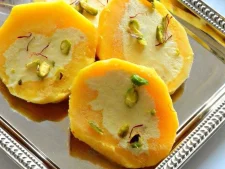
As the name suggests, Kuremal Mohanlal is famous for its Kulfis (an Indian ice-cream). This place is popular for its variety of Kulfis, especially the Mango and the Apple Kulfi, which is stuffed inside the fruit. Don’t miss this delightful and sweet ending, after your hearty meal in Old Delhi!
Five months into my amazing India travel experience as a solo female, made possible by India Someday’s absolutely brilliant You Wander We Pay contest, I bear good news. I’m alive and well, perhaps even glowing, as I dream about where to venture next in this country of chaos and charm.
Probably not what you would expect to read if you, like many others I know, have been too daunted to make your way to India. Deterred by the countless blogs which warn women endlessly about the dirt, disorder and demeaning behaviour of the ‘terrible male species.’
Well, here are six thoughts I think you should keep in mind if heading this way. And fear not, they are not designed to scare the chapatti out of you!
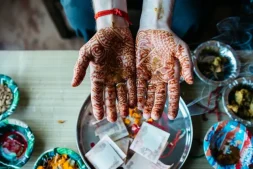
Mehendi on hands (Photo Credit – Pablo Heimplatz)
It’s pretty damn amazing here! Mind the media!
All too often, it’s the gloom and doom of life that’s presented to us in our media, instilling fear and emphasizing negativity. Keep that in mind! I’m not suggesting bad things don’t happen – they surely do, all over the world.
And huge kudos to those who share their experiences and raise critical awareness of gender-based violence of any sort. So I say yes, read it all! Hear the important voices of survivors and fellow travellers, increasing awareness and sharing safety tips. There is lots of good advice out there.
Just beware! It’s not the full story! There are thousands of us women who are having stellar, incident-free expeditions through India. Immersing in the culture and commotion, day and night, in cities and villages, with women and men. We’re more than safe, we’re having the time of our lives!
They each have a different success story to tell (Photo Credit – Find Your Feet, Flickr)
You will be stared at – You are fascinating!
Whether you’re on the Metro platform in Delhi or walking through a small village in Uttarakhand, you WILL be stared at. You can count on it. All the more so if you have very fair skin or blonde curly hair! I’ve had people literally come stand a foot away from me, looking me up and down, or even sneaking selfie shots with me, as if I wouldn’t notice.
Many women travellers are horrified by this and have told me they feel like sexual objects. While I can empathize, knowing we carry with us our personal and shared histories as women, I personally feel more like an object of cultural curiosity and am not at all offended. Isn’t that a big part of why we’re here too?! One of my favourite parts of travelling in India is the amazing parade of people. I could watch and stare all day!
So yes, I do feel eyes on me, but I feel more like a walking museum of western life than a sexual object. I can feel their fascination with my white skin, my freckles, my smile, my jewellery, my clothes, my bag, my shoes. I feel them wondering about who I am, what I do, how I think, not just what I look like naked. And trust me, I do know that feeling of being objectified – I just happen to feel it much more on the streets of New York City than here in India.
Of course, as with anywhere, there will be some obnoxious souls you might encounter. Indian men will often be the first to warn you about them. But, after 5 months of some pretty intense travel through cities and villages, using public transportation, and following my gut, I’m happy to say that I don’t think that’s the norm. Some men, in fact, might not even look at you at all, declining eye contact even while you’re in a conversation.
Let your guard down and be as open as possible to other walks of life
Positive Energy is Palpable! Being present. Being open.
I’ve been blown away by the positive energy here in India. Perhaps it’s one of my favourite parts of this country. I’ve travelled to many places around the world and never have I felt so much positivity. From the breathtaking natural environments of wide-open deserts (Jaisalmer, Rann of Kutch), to the stunning mountains of Uttarakhand and Himachal Pradesh.
The powerful rivers, the glorious beaches, the endless farmland, and even the chaotic streets are filled with people and cows. The beauty of the land coupled by the brilliant colours of clothing and other textiles can almost even be over-stimulating and nourishing for the eyes and soul! And then there are the people – for whom the answer to any question is “yes, possible!”
Take it in! Breathe it! Be present and live in the moment! Savour it! Feel its healing power! Let your guard down!
Put those fear-mongering blogs in the back of your mind – and get to know the locals, even the men! Many travellers come to India and spend their time only seeing sites and enjoying the comforts of their accommodations.
But being open to the people and culture will truly enrich your experience. It will also get you the directions and guidance you need, sometimes without even asking (the majority of people simply want to connect with you and help – not get in your pants!)
The eye contact to be made, with women and men alike, especially while circling the white marble floors of the Golden Temple grounds, is unlike anything I’ve ever experienced. Even while on buses or walking the streets, connecting eyes and exchanging genuine smiles (and perhaps ahead bobble too) is powerfully beautiful – and harmless!
The majority of people, women and men, are sincerely interested in you culturally. Hence, offering you chai because of their Indian hospitality and to interact with you, as a human.
Let your guard down (to whatever extent feels comfy and safe) and be as open as you can to the stellar people here. I for one have found myself eating the most delicious meals, experiencing the incredible wildlife and even dressing in full traditional Kutch exquisite handmade clothing – all because of my openness.
Embracing the positivity, and moving the fear factor to the backseat (still need the info to inform your gut) will surely offer you a truly memorable India experience.
Here is your chance to meet a mixture of interesting friends to make your trip more memorable
Strength in Numbers!
No, I don’t mean its better to travel with a crowd, though at times, it sure is fun! I mean there are TONS of us out here. Every week, I’m newly inspired and empowered by the calibre of solo women travellers I meet.
And not just westerners. To many Indians’ surprise, I regularly meet awesome Indian women. Women who have quit their conventional jobs, donned their backpacks and are out exploring their incredible country. Many of them blogging about it too. Many others are venturing out for long weekends and shorter trips, plotting their grand plans for longer-term adventures.
We draw strength and passion from each other. We, women, are oozing with cultural curiosity, passion for nature and desire for healing, self-growth and connection, both for ourselves and others.
Despite our masses, many will still be uber impressed by how brave you are (little do they know how much easier it often is to travel solo). You will still frequently be asked if you are single if you have kids and why not! Roll with the questions, as you like, having fun and embracing the opportunity for dialogue, even if it feels better to white-lie your answers.
All the more interesting if you connect with local women and women’s organizations, bearing witness to their experiences too. One of my favourite moments was chitchatting about periods with the 14 and 19-year-old sisters from Dharamkot whose home I stay in. They loved my diva cup (definitely something I recommend for all menstruating travellers!)
Such an amazing collection of women I feel honoured to now know and learn from (and with). From a 19-year-old German navigating her way through Rajasthan to the Indian woman who left her marriage and is seeking my travel suggestions. Also, to the Brit in her 70s covering more of the unbeaten path than any other woman I’ve met.
An incredible sisterhood – inspiring, empowering, and making a change!
On the go, travel buddies
Being your true self
The more you travel and the more you live, the more you know what makes you tick. What inspires you, challenges you, nourishes you, strengthens you, brings you the most fun and the list could go on. Go after those things and go at the pace that feels right for you.
Even if it means straying from the path that you’ve read about, things you’re ‘supposed to do’ or see others doing. This has landed me in the most amazing local and nature scenes, leading me from one great opportunity to the next.
Remember that there are no wrong turns. If you miss seeing a palace, it’s probably because you had an eye-opening conversation or were in a beautiful park. India is a thoroughly overstimulating place!
Staying in one area and unfolding the many layers; moving on to experience another terrain, language, style and cuisine; or venturing to a meditation or yoga retreat – all will offer endless anthropological phenomenon.
In India, when asked “why,” the answer is often “why not?” If you keep this philosophy in mind, following your instincts and true-self will be all the more fun.
Travel to find yourself
Good decisions and following your gut (a few little tips)
5 incident-free months of amazing travel through India (not even Delhi Belly!) I realize I might indeed be blessed with some good fortune. I’ve also followed some decent advice for making wise decisions. Even though it sometimes means sacrificing something my ‘true self’ (see above) would want to wear or do! Here are some of the tips I find most helpful.
Dive Into India’s Textiles
Have I mentioned the vibrant colours and amazing patterns of all the textiles and clothing? Well, dive in! Leave your spaghetti-strap tanks at home (in fact, leave everything at home and carry the lightest bag possible!) Hit the markets and shop for some colourful scarves and cotton kurtas (loose, long tunics worn by Indian women).
The hardest part will be choosing! Or wear other clothing that keeps you covered. India is a pretty conservative country. Covering your shoulders and legs might make you a little hotter temperature-wise. But you’re bound to feel much comfier in other ways. It will certainly help make the inevitable staring feel benign and a colourful kurta will earn you an extra smile or two.
Enjoy the conversation
You’ll be asked over and over again about what country you’re from. And often the convo can become much more substantive and interesting. Get into it, enjoy it – and as you should anywhere, have your clear set of boundaries. Be ready to ease yourself out of the conversation as soon as you get any sort of “icky” feeling.
Indulge in stargazing
The stars can be incredible here. Nothing like stargazing in the countryside, where the dearth of electricity means little light pollution. It’s not easy to hold me back from a good night walk, especially when my strong instincts don’t smell any danger. But I make that sacrifice, both in cities and in villages. I don’t do a lot of walking alone outside at night.
Thankfully, there’s almost always something fun going on to watch, talk about, cook, eat or play inside!
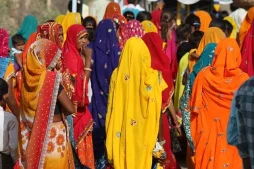
Colourfully dressed Rajasthan women (Photo credit – Suffix)
Take the local transport
Local is often better. In big cities, I love taking public transportation and to get between cities and states, the trains and buses are stellar. Look out for “all-women” cars on local trains, usually all the way at the front or back.
Amazing to ride with so much fun colour and energy. A packed car full of traditional women carrying things on their heads and contemporary women heading to a whole array of jobs. There are even special lines for women to purchase tickets and some cities now have a fleet of all-women rickshaws.
Train Travel
For long train travel, I recommend either 2nd class AC or Sleeper Car. In Sleeper, the top bunk is best. There are lots of stories out there of women who have been groped on trains. However, I have yet to meet someone this has happened to. I love Sleeper Class because it’s always easy to connect with trusted Indian women, many travelling with their families.
They will happily keep an eye on your bag when you go to the bathroom. And they will also offer you some of the home-cooked food they brought on their journey. Lots of peddlers and other people will keep coming in and out of the train car. Hence, being on the top bunk gives you a safe place for your bags and lets you take it all in from a distance. I LOVE these train rides.
Sleeper Buses
Overnight sleeper buses are pretty great too; though beware of the double sleeper. As the name suggests, it is meant for two. And unless you know who you’re sharing it with, it’s probably not a good idea! Again, the upper level is more private but the bottom level is definitely less bumpy!
Bottom line ladies, as you would/should anywhere in the world, my best advice while travelling India is to be aware, use common sense and follow your gut. Make sure to enjoy the fabulous people and positive energy of this blessed country!
Namaste!
Thank you to India Someday, You Wander We Pay, and Incredible India.
We’re not gonna lie, Bollywood is pretty amazing. But, if you take all your cues on Indian culture from a Yash Chopra movie, you’re setting yourself up for some major disappointment. You probably saw that one coming though. Maybe you turned to the more gritty movies by acclaimed directors and producers in recent years. Maybe Slumdog Millionaire? Please don’t.
Between the big money Bollywood blockbusters and the well-intended but out-of-touch foreign entries, there are a handful of moving and eloquent homegrown pieces that tell the stories of people you are most likely to encounter on your trip – the middle-class pencil pusher, the confusedly passionate student, the curious village boy, and dysfunctional families that brush dirty secrets under the rug.
While the locations may be neither quaint backward villages nor mansions big enough to house a city. But if you focus on the people and their relationships you’ll come to the country more prepared to understand it, both in its multi-faceted history and its convoluted present. I regret that this list has no regional options, as those are not always as easy to find with subtitles.
Film City in Mumbai
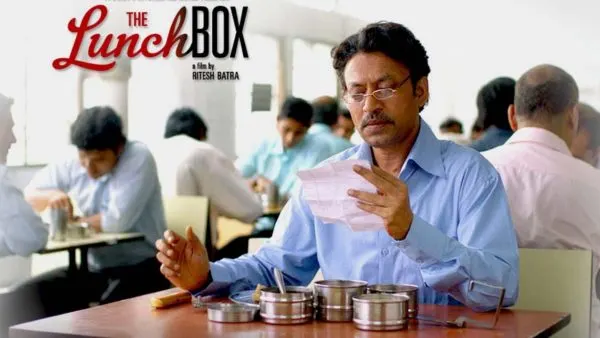
Lunchbox
This Bollywood movie was released in 2013, it gently essays the complacency and complexity of the urban Indian middle class. An ageing accountant and a young housewife craving her husband’s wandering attention are accidentally linked through an error in Bombay’s otherwise infallible Dabba system.
Their relationship grows in the backdrop of sharing a radio and recipes with the upstairs neighbour, the comforting monotony of a daily commute and fantasies of potential love lost. The story is lovely in itself, but this movie’s particular beauty lies in its details – the unthreaded eyebrows of a woman whose husband does not love her, the creaky ceiling fans of an ancient South Bombay office. Watch it for the subtleties.
IMDB rating: 7.8/10
This movie’s particular beauty lies in its details
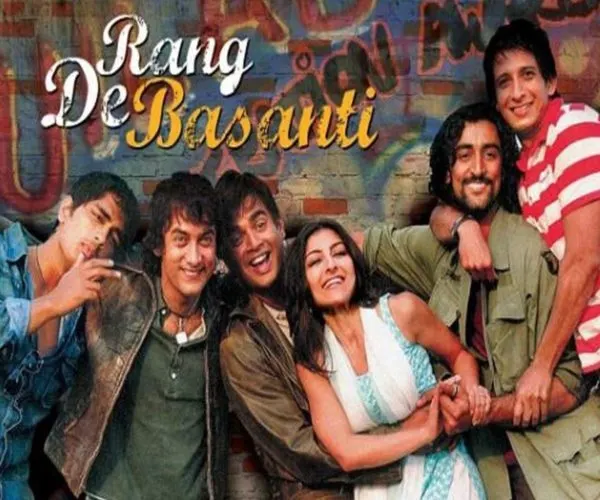
Rang De Basanti
Passion, history, pride. A gripping and heart-wrenching film about the journey of a group of college kids making a movie about the Freedom Movement over half a century after its dreams supposedly came to fruition. Tackling the seedy underbelly of political corruption and tracing its tangible and achingly physical casualties on the ground.
This Bollywood movie takes you across North India, infusing you with the history of a proud race, delving into the horrors of partition and religious conflict and will finally ask, if after all that sacrifice and bloodshed, are we finally a free country? And if not, how many more lives must we give? Watch it for the power-packed emotion.
IMDB rating: 8.2/10
Rang De Basanti
Pather Panchali
Famously the one to kick off the trend of ‘authenticity’ in Indian film, Satyajit Ray’s masterpiece lays out the rural life in a simple and straightforward story.
A tale of siblings hungry for entertainment in a sleepy village, the politics of cramped living quarters, the social unbalance that results from income hierarchies and the parental burden of providing and caring respectively.
Nearly half a decade has passed since its release, and a lot has changed, but is, as always, the same. Watch it before you decide to trek out into the rural countryside and ‘get to know the real India’. Watch it to know who you’re dealing with and not confuse interest with pity.
IMDB rating: 8.5/10
Watch before you decide to trek out into the rural countryside and ‘get to know the real India’ (Photo Credit – IMDB)
Queen
Granted, a major part of this movie was shot in Paris and Amsterdam but it’s not just Europe. It’s Europe through Rani, the mould that all urban Indian girls are cast from. Left at her own wedding when her boyfriend suddenly decides she isn’t ‘modern enough’.
Rani, her name meaning Queen, decides to go off on her honeymoon anyway and meets all sorts while there. To understand her grapple with the woman she thought she would be, and the woman she discovers herself to be capable of being is to understand the expectations and limits set to so many like her.
Watch as a woman travelling to India for the context it can provide
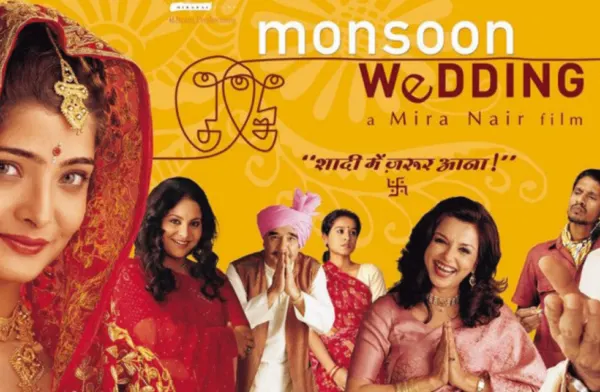
Monsoon Wedding
If you’re going to be spending a lot of time in the big cities, this is a great way to dive into what you might consider the dichotomy of the upper-middle classes. Rich, educated, urbane, but still outrageously sexist and oppressive towards their own.
This movie is simultaneously hilarious, colourful and shocking. As one man’s attempts to throw his daughter a big Punjabi wedding he cannot afford churns up memories of sexual abuse, a budding romance and a young boy’s punishment for leaning too far into the demarcated realm of women.
As a traveller you might meet young people at bars and cafes of this category. This Bollywood movie will help you understand the grey shades of their backgrounds. Also, it maybe keep you from passing judgement too soon. Watch it for the honesty.
IMDB Rating: 7.4/10
This is a movie that dives into the dichotomy of the upper-middle class
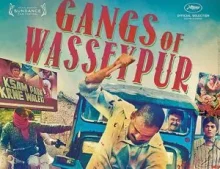
Gangs of Wasseypur
Action-packed and haunting, this makes an appearance on any list with the word authentic in it. Set in the mafia-ruled Badlands of Jharkhand it watches three families battle it out for control over the local coal supply through gun warfare, seduction and dirty, dirty politics.
After being screened as a whole 5-hour long movie at numerous film festivals. Anurag Kashyap’s multi-starrer had to be chopped into two halves for the general public. The brilliant cinematography and chase scenes mean that it’s easy on the eyes.
And, the cuss-laden dialogues and sure to keep your adrenaline pumping. Watch it if you’re looking out for some of that classic third-world grit.
IMDB Rating: 8.2/10
Packed with action, three families battle it out for control over the local coal supply through gun warfare, seduction, and dirty politics (Photo Credit – IMDB)
Craving that soft light dough, those warm strings of cheese, that delicious tomato tang, but only see vada pav stalls everywhere you look? Look no further! Mumbai is a cosmopolitan city, and as such, there is a variety of food to eat that isn’t just curry or street food. You can buy Mexican, American, Continental, Thai, Chinese, and of course, Italian! So if you’re craving some food comforts from home, then we can help!
We have created a list of the best pizza restaurants for you to visit during your stay in Mumbai.
The best pizza joints in all of Mumbai (Photo Credit: Flicker.com)
Pizza by the Bay
The current avatar of a Marine Drive stalwart that once celebrated the smoky richness of Jazz and R&B. Bang opposite the seaface with big, white-framed windows thrown open, you can take in the warm afternoon breeze with a jug of mojitos by your side, sampling simple and delicious Italian fare with the who’s who of SoBo.
India Someday recommends: Literally anything they’re willing to put on their famous thin crust
Pizza with a sea view! (Picture Credit: On the grid: city guides)
Pizza Express
This chain seems to always have an outlet somewhere near you and is quick to flood your inbox with discounts and offers. But don’t let that take away from its posh gourmet charm. Classy to a fault, it gives you the full force of the authentic Italian industry, tasteful interior decorating et al, but at believable prices.
India Someday recommends: The red hot calabrese pizza.
(Credit: Wesual Unsplash)
Francesco’s Pizzeria
A cosy glass-fronted outlet in Lower Parel is more famous for its lasagne than its pizzas, but that doesn’t make their pizzas any less spectacular! This little joint loves to play around with funky new themes and ideas, and even had an Italian chef over recently to mull over a new menu. The massive menu covers everything from desi twists to authentic hits.
India Someday recommends: The Notorious Nachos Pollo pizza. Nachos on a pizza. Yes!
Try The Notorious Nachos Pollo pizza, if you can handle it (Photo Credit – kshitij_shah_89)
Playlist Pizzeria
Great people make great pizza. Lovely staff and catchy music are the heart and soul of this no-frills outlet in the corner of nowhere that is constantly packed with diehard customers that love the place for its dedication to amazing pizza and nothing else. That said, our recommendation may catch you a little off guard!
India Someday recommends: Garlic bread. It’s almost a pizza in itself with a thin slice topped off with mounds of delicious gooey garlicky cheese.
Cheesy thin crust pizza (Photo Credit – Thomas Tucker)
Quattro Ristorante
A worthy offering for the vegetarians tired of putting up with sub-par Italian just to avoid meat, this quirky little corridor of a restaurant takes their mission very seriously. Beautifully starters and mocktails set the bar high for the veritable event that is the main course. A lovely spot to cuddle up in the booths with your favourite cuddle-buddy.
India is home to over a billion people, and the country covers more than three million square kilometers. Now that you’ve booked your plane ticket to India, you’re raring to see everything that you possibly can. With so much area to cover and so little time, not to mention your limited traveling funds, seeing India from a train window is an excellent way to soak in as much of this beautiful and diverse country as you can. Here we’ll look at the step-by-step process of seeing India by rail.
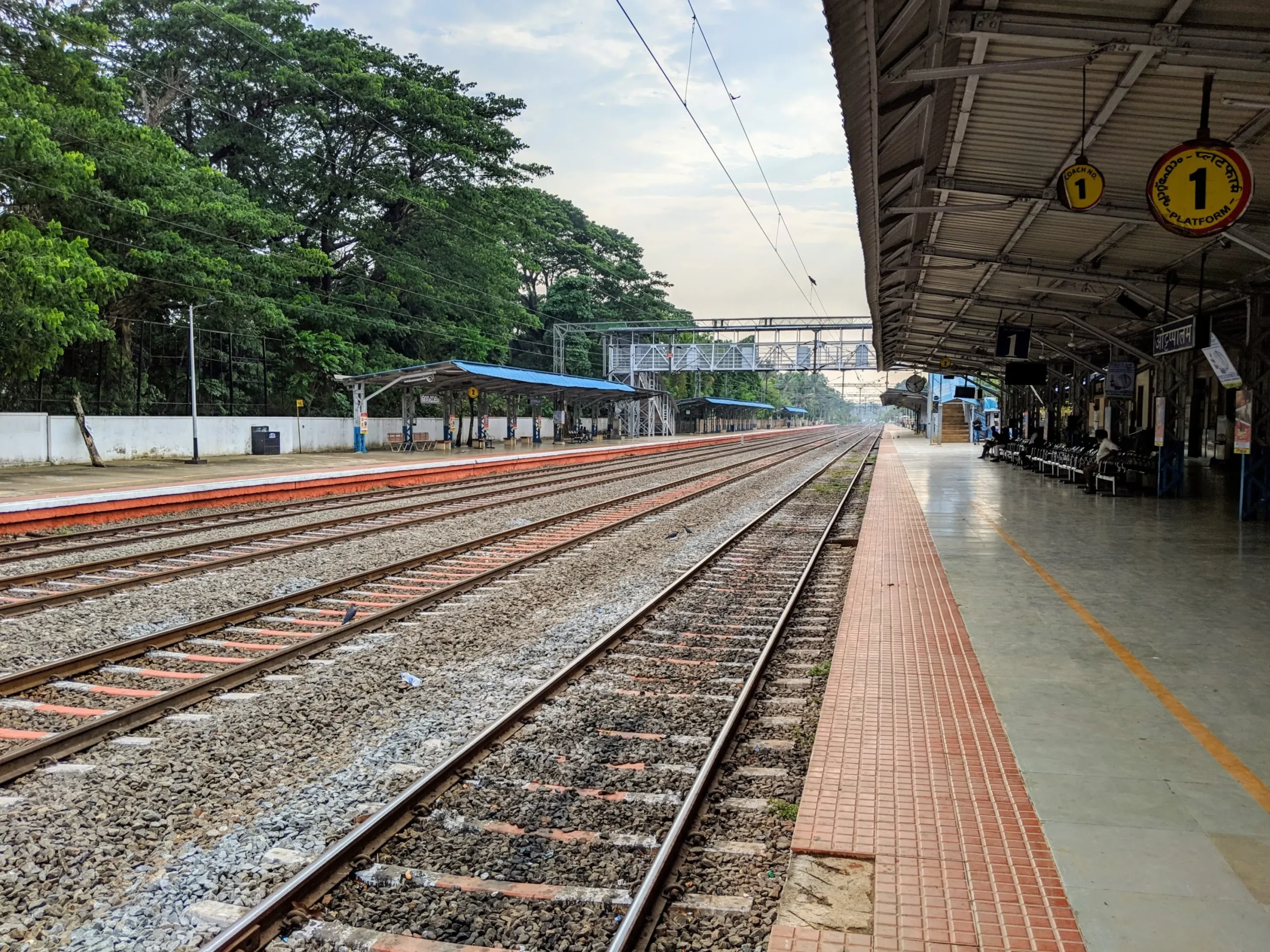
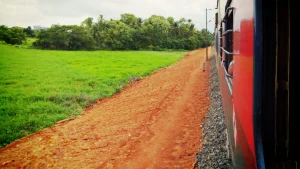
Train arrives well before time
JessSignet is a travel writer and regular backpacker. She loves exploring the globe and enjoys sharing her travel insights and tips.
Step One: Choosing your Route
If you are backpacking in India then the first step is to decide where you want to go. Most trains run from one city center to another, so you can reasonably expect the train to stop in the very heart of that city. Then take a look at the times and fares. Be careful when checking fares: for longer journeys, there are sleeper cars which may or may not offer air conditioning and which may or may not include all of the meals on the journey. Be sure to take these factors into account, especially if you plan to cover a long stretch.
Once you’ve chosen your route, you can easily book the ticket online or go to any train station to purchase the ticket. If it sounds a bit daunting but seeing India by rail is an exploration like no other. Also don’t hesitate to call India Someday and have them handle it for you!
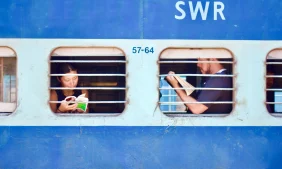
Engrossed readers on the go: (Credit- Rathish Gandhi)
Step Two: Packing What You Need
Seeing India by rail is a very special experience, but as any experienced train traveller can tell you, it does require some special preparation. The key to travelling by train and saving money is to bring everything that you need with you. Prices on the train tend to be a bit steep, so bring enough water and snacks to last you for the duration of your trip. Even if meals are provided with your ticket, be wary. The new food might not sit well with you as you’re traveling fast down the tracks. If you’re prone to motion sickness, it’s a good idea to take some medicine before you set out.
Remember when backpacking in India to always bring your travel documents wherever you travel, such as your passport and your visa. There are often pickpockets prowling the trains, so be sure to stash all of your valuables on your body, or keep them in a very safe place at all times. In recent years, there have also been many issues with violence toward women on the trains. While this trend has subsided a bit, many lines have created “women only” carriages to prevent gender-based violence.
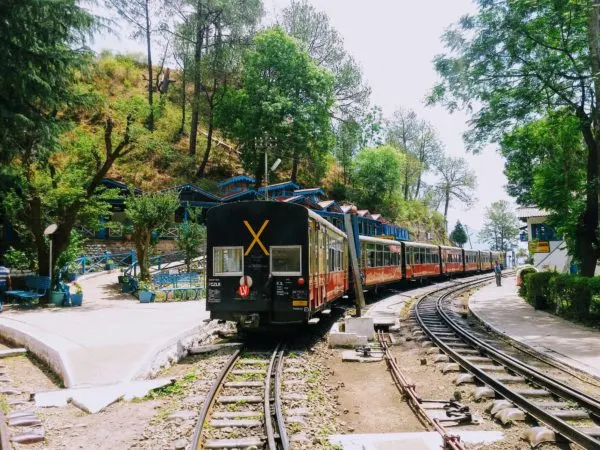
Witness beautiful views on the train journey
Step Three: Getting Onto the Train
Now that you’ve packed and prepared for your train trip, you’ve got to make it to the train station. Most of the larger cities in India have a central train station in the city center. Locating the station can be done by asking directions from a local. Also, don’t hesitate to ask India Someday to book you a taxi.
Make sure to arrive at the station early so that you can ensure a seat and get settled before the train leaves for your destination. If you are backpacking in India then it’s likely you may choose a less expensive and less fancy train line. Be prepared that things will not always run exactly on time. However, it is always better to be a bit early, even if the train may be a few minutes late. Many lines do not offer refunds if you miss the train, so to protect your train ticket investment and arrive early to the station!
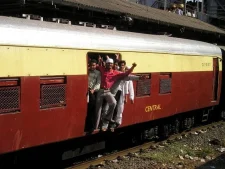
Mumbai local (intercity) trains are packed with daily travellers
Step Four: Sharing Your Experience
Finally, you’ve made it to your destination, and half of the fun was getting there! Some of the best ideas and breakthroughs were made on train journeys. Take advantage of this time to reflect on your experiences in India – from the seemingly inconsequential to the unforgettable. Use your hours to capture the scenery passing you and share it with your friends. Even though wifi is often accessible in India, it’s always a good idea to have a VPN or similar service on your device. This allows you to connect to all of your favourite websites and social media platforms while you’re abroad. It’s also a good idea to check in with friends and/or family at each leg of your train journey so that someone knows where you are at all times.
Overall, seeing India by rail is a great way to see more of the country as you travel between destinations. Plus it’s a great way to save money as you travel around one of the largest and most crowded countries in the world. So grab your backpack and your passport, and get ready to plan, pack, travel and share your experience all over the Asian subcontinent!
There’s a sort of liminal charm to music festivals in India. Most require you to pack up your fringed vests and vinyls and head across the country into the mountains or the desert sands for a mini-holiday of punk-ass beats and electric crowds. Or smooth riffs and night skies. Or the thadaak-thadak of the dholak and the warm glow of a bonfire. Whichever festival you choose, you know you’re in it for the atmosphere. You can meet your friends in the bar behind your house, explore new music as you chug along to your day job. But the spirit of a music festival, be it blues, folk, rock and roll or multi-stage, starry-billed, commercially-endorsed madness, is a release. So fill up the wheelie-case, put on your earphones and catch a cab, February’s got plans for you.
Sula Fest
Wine-tasting, grape-stomping, crowd-surfing. Goes well together don’t you think. Set in the country’s largest vineyard with varied artists producing myriad sounds, it’s a great way to celebrate the harvest of our most beloved wine-ingredient.
On-site camping in swanky Swiss tents, paintballing, zorbing, hot-air ballooning, larger than life interactive art installations are just the bonuses. Come and stay for the spine-tingling folk music and the bass-thumping techno. Artists, filmmakers and musicians come together for a weekend of self, proclaimed craziness, a little Indian Burning Man, if you will. Don’t miss it.
Folk Rajasthan music player tuning his instrument (Photo Credits – Jean-Etienne Minh-Duy Poirrier)
Kala Ghoda Arts Festival
While the shopping section pulls in the crowds, it’s the cultural shows you really take home with you. Moreover, the Classic Dance on makeshift stages under the heavy boughs of Horniman Circle Gardens, power-packed rock gigs on the steps of the imposing Asiatic Library, book-readings in the tome-lined Kitab Khana, street plays in the well, street. Scour the schedule and don’t feel afraid to try something you’ve never heard of before. Entry is free to all.
Siva Mani, acclaimed percussionist plays the Kala Ghoda Festival (Photo Credits – Elroy Serrao)
Hill Top Music Festival
The ultimate party for those that can’t wait until December’s Sunburn. Lounge on the warm Goan beaches all morning before descending into psy-trance madness post three, to be continued until your back dozing on the beach, trapped in the most cathartic party cycle of your life.
Let your soul drift back to the era of whiskey crooners and pomaded coiffs with Bandra’s Mahindra Blues Festival. Big names from the global scene top the bill but supported by a host of brilliant local bands. Set in the arms of the gentle sea breeze, join the crowd and become part of the communal way.
We’ll help you plan the ideal holiday while catering to all your needs and interests. Whether its time constraints or budget restrictions, leave it to us and just hit that Plan Your Trip button.
Apart from the historic sights and delicious food, there are some must-see museums in Delhi that you should explore if you are a history buff. From modern art to ancient sculptures, regional handicrafts to the history of toilets – here is our list of the 15 must-see museums in Delhi. Are you already planning a trip? Our guide ongetting around in Delhi is sure to help as well!
India National Museum Center
National Museum
One of the largest and most popular museums in India, the National Museum is a must-visit for anyone interested in Indian history and culture. The museum houses over 200,000 artifacts, tracing India’s history over the past 5000 years.
The museum has different exhibits divided according to themes. From artifacts from the prehistoric era to modern works of art, the diverse departments include archaeology, paintings, arms and armour, and manuscripts. You can even find relics from 4th and 5th century BC, from antiques of the Indus Valley Civilization, the Harappan Civilization, to the artwork from the Mughal era and Buddhist artwork and Buddha relics.
Also known as the National Museum of India, it was proposed by Sir Maurice Gwyer and established in 1949. It is also home to the National Museum Institute of the History of Arts, Conservation, and Museology, added in 1983. Currently, it is maintained by the Ministry of Culture, Government of India.
The museum is disability-friendly. There is a special gallery for disabled people with tactile replicas of some objects, along with Braille labeling, audio guides, and ramps.
Location: Janpath Road, Rajpath Area, Central Secretariat, New Delhi Timing: 10:00 a.m. to 6:00 p.m. from Tuesday to Friday, 10:00 a.m. to 8:00 p.m. on Saturday and Sunday. (Closed on Mondays and public holidays) Entry fee: INR 650 for foreign tourists (this includes an audio guide, available in English, German and French, that covers over an hour of information on the collections)
National Museum
National Gallery of Modern Art (NGMA)
The brainchild of Jawaharlal Nehru, the National Gallery of Modern Art (NGMA) is a haven for art lovers and history enthusiasts. Established in 1954, the museum is located in Jaipur House, the mansion of the former Maharaja of Jaipur. If you want to understand Indian art, this is the place to be. The museum houses one of the largest collections of modern artwork with over 14,000 works on display, dating back to the 1850s. The works include those of Rabindranath Tagore, Amrita Sher-Gil, Raja Ravi Verma, and other renowned artists.
Location: Jaipur House, Shershah Road, India Gate, New Delhi Timing: 11:00 a.m. to 6:30 p.m. (closed on Mondays and national holidays) Entry fee: INR 500 for foreign tourists
National Gallery of Modern Art
National Crafts Museum
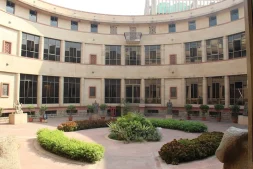
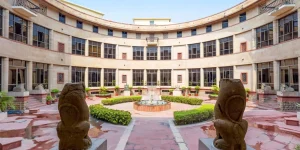
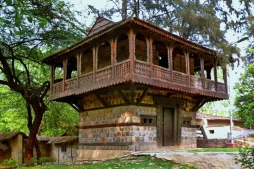
If you want to explore the indigenous arts and crafts of India, you should visit this museum in New Delhi. The National Crafts Museum was renamed The National Handicrafts and Handloom Museum in 1986, and National Crafts Museum and Hastkala Academy in 2019. The museum is designed as a traditional Indian village, with life-size village homes, havelis, and Ayyanar shrines of rural South India. The museum is known for keeping alive the old Indian crafts and weaves, like mithila wall painting, khadi textile looms, ornate temple carvings, and even an intricately decorated Gujarati haveli. It holds the promise of hands-on learning, dozens of photo opportunities, and heavy shopping bags from the artisan courtyard in the back.
Location: Bhairon Marg, Pragati Maidan, New Delhi Timing: 10:00 a.m. to 5:00 p.m. (closed on Mondays and national holidays) Entry fee: INR 500 for foreign tourists
If craft and architecture interest you, get ready to be blown away by some of the most spectacular temples in India. Here are a few must-visit temples when in India.
National Crafts Museum
Shankar’s International Dolls Museum
One of the most unique museums in India, Shankar’s International Dolls Museum is the conceptualization of famous cartoonist K. Shankar Pillai.The museum has more than 160 shelves of dolls from across the world! When the museum was established in 1965, it housed just 500 dolls. Today, there are more than 6500 dolls from over 85 countries, with some dolls over 400 years old!
Sprawled across 5000 square feet, the museum is divided in two sections. The first section has dolls from countries like the USA, Europe, Australia, and New Zealand, while the other section has dolls from Asian countries. There is also a section where visitors can learn the art of doll making, while one section is a “clinic” to restore dolls from the museum.
Location: Nehru House, Bahadurshah Zafar Marg, New Delhi Timing: 10:00 a.m. to 5:30 p.m. (closed on Mondays and public holidays) Entry fee: INR 200 for adults (foreigners) and INR 100 for children (foreigners)
Indian Air Force Museum
The Air Force Museum showcases the history of the Indian Air Force through a collection of artifacts and other memorabilia. Situated in the Delhi Cantonment area, the museum has different viewing galleries.
The indoor gallery features uniforms, vintage personal weapons, photographs, and other items of the Indian Air Force. There is also a hangar which displays wall aircraft and other inventory.
The outdoor gallery has large planes, radar equipment, and captured enemy vehicles. The museum also has large transport aircraft which are displayed on the annual Air Force Day. This museum is a place of pride for Indian citizens.
Location: Air Force Museum, Palam, New Delhi Timings: 10:00 a.m. to 5:00 p.m. (Closed on Mondays, Tuesdays, and public holidays) Entry fee: Free entry
Indian Air Force Museum
Sulabh International Museum of Toilets
If you prefer the bizarre over the ordinary, head to the Sulabh International Museum of Toilets in Delhi, a museum dedicated to toilets. Built in 1992 by social activist and founder of the Sulabh NGO, Dr. Bindeshwar Pathak, the museum has been titled as one of the weirdest museums in the world by Time magazine.
True to its name, the museum showcases the global history of toilets and sanitation. The history of toilets in the museum is divided into three sections – Ancient, Medieval, and Modern. From 2500 BC to the 20th century, the museum has artifacts and exhibits from over 50 countries. It showcases the historical origins of the water closet and toilets used during the Lothal and Mohenjo-Daro civilizations. The museum even displays a fantastic collection of poetry on toilets!
The objective behind this unusual museum is to raise awareness about the sanitation issues faced by the country.
Location: Sulabh Bhavan, Mahavir Enclave, Palam-Dabri Marg, New Delhi Timing: 8:00 a.m. to 8:00 p.m. (10:00 a.m. to 5:00 p.m. on Sundays) Entry fee: Free entry
Sulabh International Museum of Toilets
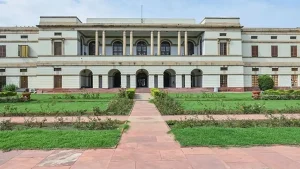
Nehru Memorial Museum and Library
If you want to visit political history museums, the Nehru Memorial Museum and Library is one of the best of Delhi’s museums. The museum was established in memory of Pandit Jawaharlal Nehru, a freedom fighter and the first Prime Minister of India.
Built over 30 acres of land, the complex has a museum in the eastern wing and a library in the western wing, which houses an extensive collection of rare books. A centre for contemporary studies was added in 1990. The complex also has a planetarium.
You can explore his personal rooms, preserved for decades by the museum. The museum showcases his personal life, education, and the journey to becoming the first Prime Minister in his erstwhile residence at Teen Murti Bhavan. You will also find excerpts from his greatest speeches carved into stone in the front of the museum. The museum also has archives of the writings and private documents of Mahatma Gandhi, Sarojini Naidu, Jayaprakash Narayan, Charan Singh, and more.
Location: Teen Murti Bhavan, Teen Murti Marg, New Delhi Timing: 9:00 a.m. to 5:30 p.m. Entry fee: Free entry
Nehru Memorial Museum and Library (Credit: The Financial Express)
National Rail Museum
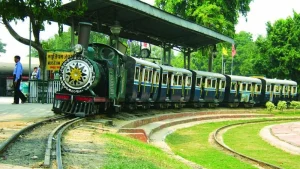
If you love trains, the National Rail Museum in Delhi showcases the rich history and rail heritage of India. Railways in India are the most convenient, complex, common, yet grand mode of transport. With more than 100 real exhibits of Indian Railways, the museum pays homage to this mode of transport. You can find static and working models, antique train furniture, railway equipment, and historical photographs and memorabilia in the museum. The main attractions here are the Fairy Queen, the oldest operating steam engine in the world, and a toy train that provides rides around the museum grounds. You can also find a skull of an elephant that charged the UP mail train in 1894!
Location: Chanakyapuri, New Delhi Timing: 10:00 a.m. to 5:30 p.m. (closed on Mondays) Entry fee: INR 100 for foreign tourists. Audio guide rental INR 150 (available in English and Hindi)
National Rail Museum (Picture Credit: The Asian Age)
The Tibet House Museum offers an insight into Tibetan and Buddhist culture and heritage. The five-storey museum was founded by His Holiness Dalai Lama in 1965, and displays Tibetan art and historical artifacts in the art museum. There are Tibetan paintings decorating the galleries of the museum.
There is an in-house library with over 5000 books and manuscripts preserved carefully. Many of these artifacts on display were brought to India by Tibetans fleeing from their homeland.
Tibet House also has a conference hall, research center, gallery, and a bookshop.
Location: 1 Institutional Area, Lodhi Road, New Delhi Timing: 9:30 a.m. to 5:30 p.m. (closed on Saturdays, Sundays, and public holidays) Entry fee: INR 10
National Science Centre
Established in 1992, the National Science Centre in Delhi will have you hooked with its displays. The museum provides an insight into the history, present, and future of various technologies and developments in India.
Spread over eight levels, the science centre has many interactive activities and games, lectures, exhibitions, and competitions. The Human Biology gallery, Earth Science gallery, and Prehistoric Life gallery showcase various installations and exhibits to teach you science and history in a fun way. The Fun Science gallery has mazes, illusions, and interactive experiments that explain scientific principles.
Location: Bhairon Marg, Pragati Maidan, New Delhi Timing: 10:00 a.m. to 5:30 p.m. (Closed on Holi and Diwali) Entry fee: INR 150 for foreign tourists (rides priced separately)
National Science Centre (Picture Credit: India Map)
Kiran Nadar Museum of Art
The first private museum in India dedicated to contemporary and modern arts, Kiran Nadar Museum of Art was established in 2010 in New Delhi, with another center in Noida. Helmed by Mrs Kiran Nadar, the museum is inspired by the Guggenheim, MoMA, and the Whitney in the USA.
Spread over 18000 square feet, the museum has an elaborate art collection with more than 4500 pieces of art from painters from the 19th century to the present contemporary artists. The most renowned works here are from artists like M.F. Hussain, Raja Ravi Verma, and Anish Kapoor. The museum also has workshops, seminars, exhibitions, and public programs regularly.
Location: Saket, New Delhi Timing: 10:30 a.m. to 6:30 p.m. (closed on Mondays and national holidays) Entry fee: Free
Kiran Nadar Museum of Art (Credit: thedilli)
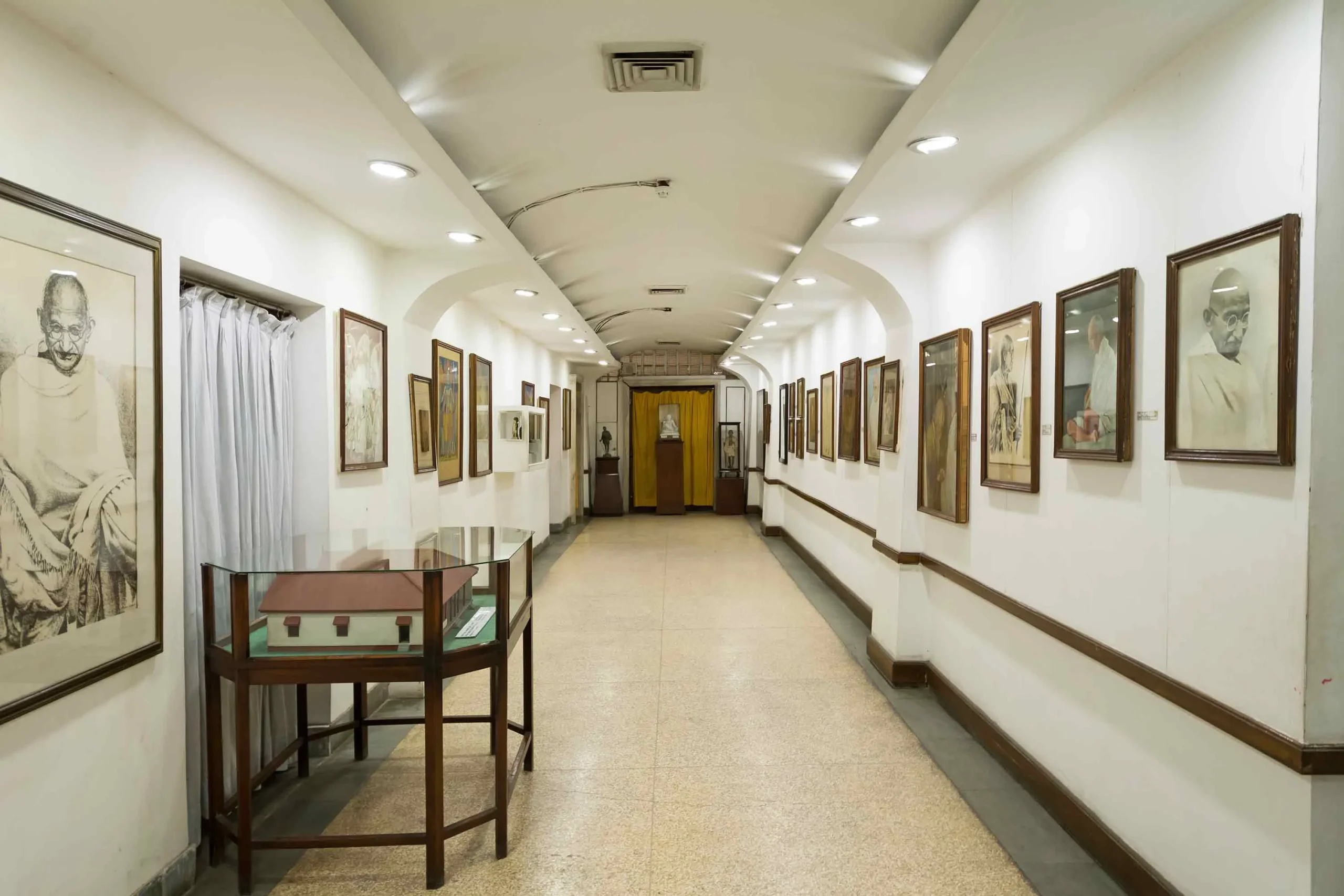
National Gandhi Museum
The National Gandhi Museum is a tribute to the Father of the Nation, Mahatma Gandhi. It displays many of Mahatma Gandhi’s personal memorabilia, such as clothes, letters, manuscripts, and journals. The museum also has one of Gandhi’s walking sticks, the dhoti worn by him when he was assassinated, and one of the bullets used to kill him. The museum showcases the history of the Satyagraha movement, the philosophy of ahimsa (non-violence), and the Indian independence movement through sculptures, paintings, and original photographs of Gandhi. Gandhi’s life is shown through a film in English and Hindi in the museum.
Location: Opposite Raj Ghat, New Delhi Timing: 10:00 a.m. to 5:30 p.m. (closed on Sundays and public holidays) Entry fee: Free entry
National Gandhi Museum
Gandhi Smriti Museum
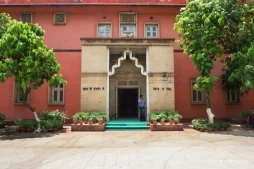
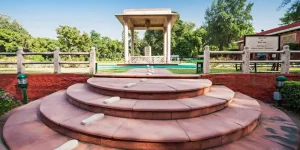
A tribute to Mahatma Gandhi, the Gandhi Smriti Museum is is housed in Birla Bhavan in central Delhi. Birla House, the former residence of industrialist BD Birla, was lent to Gandhi to use. This is where Gandhi spent the last few months of his life, before he was assassinated here in 1948.
In 1973, the Government of India took over the building and turned it into a museum. Gandhi’s room is maintained exactly how he left it, complete with his belongings. The rest of the museum has many artifacts such as terracotta dolls, photographs, sculptures, paintings, and information that are a window to Gandhi’s life.
There is a multimedia show held every day at 1 p.m. at the museum. There is also a khadi store on the museum premises, where one can support this indigenous industry of India.
Location: Birla House, Tees January Marg, New Delhi Timing: 10:00 a.m. to 5:30 p.m. (Closed on Mondays) Entry fee: Free
Gandhi Smriti Museum
Ghalib Museum and Library
The Ghalib Museum and Library is dedicated to the Urdu and Persian poet, Mirza Ghalib. If you love reading and writing, this is one of the best museums for you.
Established in 1969, the museum is a treasure trove for writers and poets. Ghalib’s residences, favorite food, and attire are on display in the museum. There are also photographs, books, sculptures, and important documents from his time. Ghalib Academy, where the museum is situated, also has a calligraphy training center, an art gallery, and a library with a vast collection of books.
Location: Basti Hazrat Nizamuddin, New Delhi Timings: 10:00 a.m. to 6:00 p.m. (closed on Sundays) Entry fee: Free entry
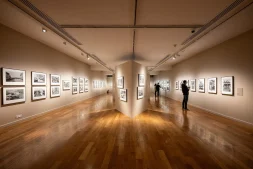
Museo Camera
If you love photography, Museo Camera in Gurugram is the perfect place for you! Museo Camera in Gurugram is the brainchild of Indian photographer, historian, and archivist Aditya Arya. Established in 2009, the museum, dedicated to cameras, showcases unique vintage cameras and photography equipment from more than a century ago! A large part of the artifacts comes from the photographer’s personal collection.
The museum displays historical and contemporary photographs, cameras, and rare photography equipment from around the world. There are many temporary exhibits taking place here, along with film screenings and performances.
The restaurant Fig can be found on the museum complex, if you want to grab a bite!
The museums in Delhi are just one of the many reasons to visit the capital of India. If you want to know more about Delhi,here is our list of things to do in Delhi.
Fromamazing food to rich history, Delhi has loads to see and do. It can also be combined with other destinations likeDharamshala andRajasthan! Curious? Hit thatPlan Your Trip button and let’s get started!
“Your hand opens and closes and opens and closes. If it were always a fist or always stretched open, you would be paralyzed. Your deepest presence is in every small contracting and expanding, the two as beautifully balanced and coordinated as bird wings.”
~ Rumi
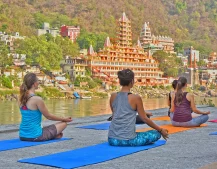
An immersive environment where you can forget your worldly troubles (Photo Credit – Steven Zwerink)
Yoga festival
Every coin has two sides, so does yoga. Yoga has a personal side and a social side. Like your own breath surging into your lungs or the gentle brushing away of thought from a restless mind. Also, a social side would be of learning, helping, allowing the principles of yoga to seep into your relationships.
Reach out a little further into that society of fellow practitioners by setting out for the International Yoga Festival. And give yourself the opportunity of slipping into the melting pot of its people.
Those who practice it abroad dream of coming to India and meeting renowned yoga acharyas. They want to explore the country that birthed and nurtured them. So they make this trip to be among others who share similar beliefs and practice the chosen lifestyle.
While this doesn’t apply to Indians in general. It definitely does to the several hundreds that gather in the sacred city of Rishikesh each year. People from over 30 countries across the globe for this festival.
Organised by the Parmarth Niketan Ashram, the festival packs over 60 hours of yoga into the first week of February. Alongside internationally developed strains, traditional styles like Kundalini Yoga, Power Vinyasa Yoga, Iyengar Yoga and Kriya Yoga are practiced. Accordingly, dozens of yoga acharyas lead classes through the day.
a day at the festival
It is hemmed in by a 4 am rising call and an Aarti and cultural programs in the evening. Basic boarding facilities are complemented by simple vegetarian food. This creates an immersive environment. An environment where you can forget your worldly troubles and commit to the exploration of body and soul.
What began as a handful of people in a small hotel has now grown into a community. A community that always has room for one more!
A couple of months ago the Indian Government updated its rules and regulations for obtaining an e-visa. And it wouldn’t do for you to be left in the dark, would it? So here’s a quick briefing on the changes, make a note in your travel diaries.
Indian Visa application form
Eligibility
PURPOSE: Only four possible intentions are considered innocent by the Indian Government for obtaining a visa. Firstly, recreation and sightseeing, likewise, casual visits with friends and family. Secondly, a short duration for medical treatment, and lastly, a casual business visit. Our apologies on not making a category for Self-Discovery.
PASSPORT: The original document should be valid for another six months from arrival. Also, It should have at least two blank pages to fill up with Indian stamps. Unfortunately, those holding Pakistani Passports or are of Pakistani origin, are not allowed this convenience.
Hence, they must apply directly at the India Mission for regular passports. Diplomatic/Official Passport holders, and those endorsed on Parent’s/Spouse’s Passport and International Travel Document Holders, will all have to also make do with the regular method of obtaining visas.
Always ensure validity (Photo Credit – Jacqueline Marcou from Pixabay)
Application requirements
PASSPORT: For an e-visa, you will need to submit a scanned copy of your passport’s information page online here. So before your stay in India, do make sure that it’s signed and valid for 6 months. Also, it needs to be full of blank visa pages for all your fun travel plans. Don’t forget to carry it with you on your trip!
PHOTO: You will have to upload a digital copy of a passport-sized photo to the website. You can also use a scanned photo of a regular passport photo instead.
PROOF OF DEPARTURE: You will need to show a confirmed round trip ticket. So they know you’re not trying to sneak in and start a new life.
PLEASE NOTE
For applications to be eligible for an e-visa they must be submitted no later than 4 days prior to departure, and no earlier than 34 days before the date of arrival so if you’re not the kind that likes their itinerary done and dusted well in advance, you might want to consider a traditional visa.
You can get a maximum of 2 Electronic Travel Authorisations (ETA) in a year with one of them providing a maximum stay of 30 days.
You can pick up a visa on arrival at Bangalore, Chennai, Cochin, Delhi, Goa, Hyderabad, Kolkata, Mumbai, and Trivandrum ONLY.
Carry a copy of ETA at the time of your travel (obviously).
Your visa will usually be processed and issued within 3 business days if approved.
Have a safe flight to India!
Happy bureaucratising to you!
Let India Someday handle it and plan your best trip.