Harsh Sonawala is the co founder of India Someday and since his childhood, he has travelled to different parts of India and the world. The thrill of travelling and sharing his experiences with others was the reason behind starting India Someday. Other than the office where he is conjuring up marketing ideas, he can be found scuba diving in the Andamans or relaxing in a chalet in the Himalayas.
Two months in India with three little children! Wow!
Sarah and her husband from Canada are travelling with their children aged 12, 10, and 5 for a year across Europe and Asia. They used our help to plan parts of their India trip and are guest authors for a series of blogs on travelling in India with children.
When we tell people that we spent two months in India with our children, they generally have two responses. The first is “and how was THAT?” And then there is a barrage of questions about sickness, filth, food contamination, drinkable water, diarrhoea, bugs, etc. And it turns out that we weren’t sick, not even once. Actually, much to my dismay, I put on a bit of weight!!!
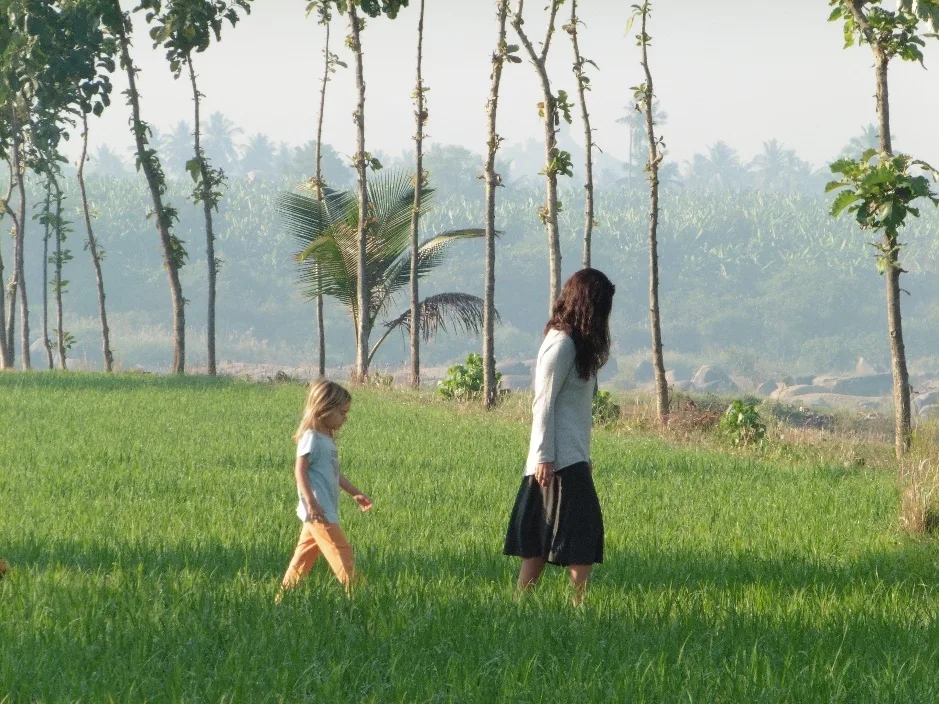
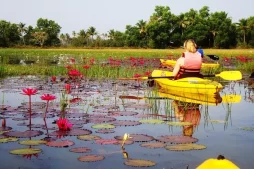
Enjoying the countryside in Kerala
The second thing people say is, “wow, two months! You must have seen the WHOLE country!” Again, totally wrong. In two months of travelling around, spending no more than a week in most places and sometimes just a few days, we saw a fraction of what India has to offer.
India is so large and so diverse, is a world in and of itself. There are a huge variety of climates and ecosystems all within one country. As you travel from one location to another, the scenery and temperature will change drastically. The language also changes.
Being unable to understand Hindi, I could no better understand Punjabi, Tamil or any of the hundreds of other languages spoken in India and felt grateful for the English that people would communicate to me in. The food was different depending on what part of India you were in – and although you could find dosas, for example, in both the South and North of India, the food and its flavour were directly related to the part of the country it came from.
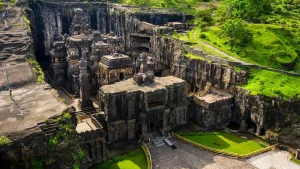
We arrived in Mumbai in early January of 2015 and travelled over to Aurangabad to see the amazing caves of Ellora and Ajanta. We then travelled South to the sanctuary of Hampi. From there we crossed over to the beaches of Goa and made our way South to Kochi and the backwaters and beaches of Kerala. We then escaped the heat and flew North to Delhi and headed to the spiritual city of Rishikesh.
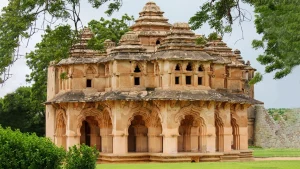
Stunning Ellora Caves in AurangabadWe visited Hampi
After taking in what we could of the International Yoga Festival, we headed up to a hilltown on the edge of the Himalayas called Mussorie and enjoyed amazing views and cold weather. We made our way back to Delhi by train and did a quick one day trip to Taj Mahal and then flew out. Two months on the move and that was what we saw! Yes, it was a lot and it was also nothing, all at once.
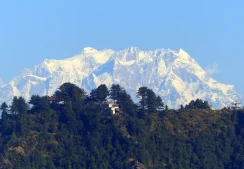
View of the Chaukhamba Looms from Mussoorie (Photo Credit – Paul Hamilton)
We loved the country and plan to come back. You would be hard-pressed to find nicer and more friendly people anywhere. Next on our list is the south-east, French-influenced side of the country to enjoy Pondicherry and all around. We would also love to head up to Rajasthan and see the magical North that we have heard so much about. I would like to hit the lesser-populated, but hippy vibe beaches of Karnataka too. And of course, I would head back to Hampi – just because this little piece of heaven exists on Earth!
Sarah and her husband from Canada are travelling with their children aged 12, 10 and 5 for a year across Europe and Asia. They used our help to plan parts of their India trip and are guest authors for a series of blogs on travelling in India with children.
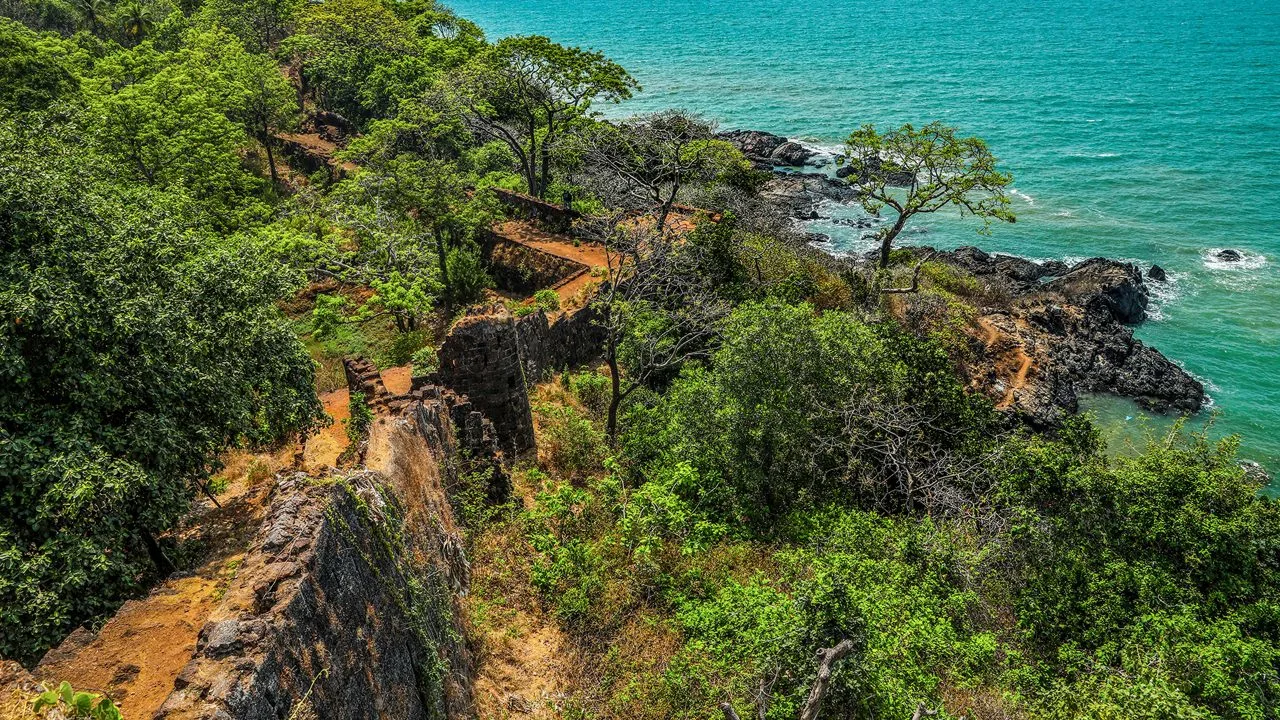
In our two month trip around India, we spent about two weeks in Goa. It is definitely a place that you could lose yourself in and end up staying much longer than expected. It is a very gentle entry into India and a bit of a respite from some of the tougher elements about travelling in India.
There is much less poverty in Goa, there is certainly an abundance of western food and, of course, you can always get a drink of something alcoholic. These things are not the case in many parts of the rest of the country. Of course, the beaches make Goa a perfect place for a holiday or a place to chill out and relax or even recharge before you carry on with your India travels.
Goa is a perfect place for a holiday and a place to chill out
Kayaking in the backwaters
Goa is actually much more than beaches. If you were to go to Goa and spend all your time on the beach you would no doubt have a wonderful time, but you would miss out on so much more that Goa has to offer. Just like Kerala, Goa has a network of backwaters where you can paddle for ages and see a variety of birdlife and animals. The sounds of nature are magical and there is a lot of the traditional life of the people happening on the river banks. It is peaceful, serene and inspirational.
Sal Backwaters, South Goa (Picture Credit: Tripadvisor)
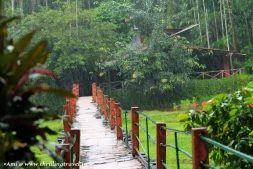
Spice Farms
The spice farms are also a must-see in my mind. You will see how many things grow that you use in your daily life, and certainly some things will baffle you. You might find yourself saying, “Funny, I never thought about that before!” And becoming more curious about life is a bonus. Learning about how things are made not only makes you more interested and ask more questions, but you will suddenly find that you start asking a lot more questions and learning a lot more about other things too.
Spice Garden (Photo Credit: Thrilling Travel)
Markets and colonial villages
Goa has several large markets. Whether you are looking for a hippy scene, cheap clothes, traditional handicrafts or even fruit or vegetables, you will find it here. Different markets happen on different days so if there is something that you are interested in seeing, be sure to check into which day it is on and the location.
As well as lots of charming little villages, Goa’s cities offer beautiful architecture from its Portuguese colonial history. In Panjim, Old Goa or Margao, there are churches and buildings to admire throughout the province. The old houses are also absolutely beautiful. Getting off the beach and into the town will definitely give you a feeling of the bigger picture of this little province and you see the influence of its colonial past all around you.
Travelling around India with children and using different modes of transport! – Another great and super useful blog by Sarah and Gregor.
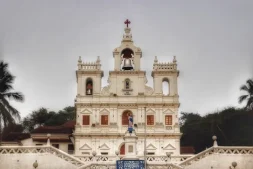
Immaculate Conception Church in Panjim
Embracing all parts
And a blog post on Goa would not be complete without some mention of the dogs. Before we arrived, we read lots of TripAdvisor posts complaining about all the barking dogs on the Goan beaches. It is true – Goa has loads of stray dogs and it seems like the night time is party time for them. The thing is though that you can’t avoid it, so the best thing is to embrace it.
We decided to view these lovely creatures like a bunch of teenage boys; sweet on the inside but all trying to assert their position. They were friendly as could be and hovered a bit at dinner time as they were always keen to get a bit of food, but they could easily be shooed away as well. At night, they howled and barked at one another – but it made us laugh. The partying dogs of Goa added to the charm and we made sure that our earplugs were handy!
We hope you enjoyed this blog! If you have a trip planned to Goa, we also suggest you read our more detailed blog on things to do in Goa. If you need our assistance in planning your trip to this beautiful region, do get in touch with us. We would be happy to help you plan a customized trip according to your travel needs!
Magdalen and Brian, our American guests, did a three week tour across North India. They were most excited about travelling by trains in India and wanted to use them extensively. While many of our guests prefer only travelling by the top-tier AC classes, they wanted to try a mix of all. (AC Seater Class CC, non AC Seater Class SS, Sleeper AC Class, 3 AC and creme de la creme AC FIRST CLASS, 1 AC).
They share their experiences and advice in this blog post. Their original post and many of their adventures can be read on their blog.
Maharaja Express for luxury travel (Photo Credit – Shekhar Virdi)
Trains in india: An Indian adventure!
During our 3-week India trip, we took trains for much of the travel we did. While we were at it, we learned a lot about trains in India. The short story: Trains in India are fantastic.
A quick note about prices of train classes in India – most of the prices listed here were specific to our experience (or estimates of our experience). We last travelled in the summer of 2015. Prices may have changed since then – when you are reading this. But just keep in mind, this was our experience.
In planning our trip, we made sure to book trains of a variety of different classes. We did everything from a fancy first class AC overnight car to the reserved seat non-AC car. We did not do the lowest class, the ‘general population’ sleeper car. All in all, we found trains to be a safe, affordable, and an easy way to travel.
There are some great resources out there for much more detailed accounts of the various train classes in India, or tips on how to book trains – for this blog, we just wanted to describe some of our general experiences.
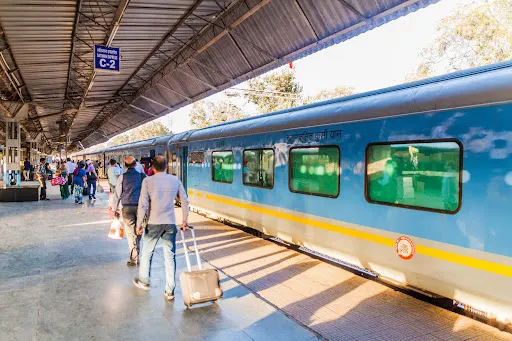
Train travel in India – Old coaches, but a lot of fun!
Reserved non-A/C Seater (aka SS – second seating class)
We wanted to try the different train classes in India. First, the reserved seat non-AC car. We took this class from Agra to Delhi in the early evening. The ride was about 4.5 hours long. The train arrived in Agra on time and got to Delhi pretty much on time. The car holds perhaps 90 people or so. All of the seats are labeled, so you just check your ticket for your assigned seat. When we arrived, someone was in our seat, and they moved after we politely asked.
Throughout the journey countless food vendors walked up and down the car selling food. More on food in Indian trains later. This ride cost us INR 223 total for two people. It was quite economical. There were people standing up in the aisle but there was space for our bags in the overhead rack. Since there is no AC, all of the windows were open, which made the trip quite loud. If you bring a pair of earplugs you will probably use them. There were plenty of fans on the ceiling.
On one of our trips during the day we rode in a ‘Chair Car’. We were both a bit worried this wouldn’t be an AC car as it doesn’t explicitly say ‘AC’ in the title (whereas other classes are specific). Turns out this car looked and felt like a train car in Europe or the US might look and feel. There were 6 seats across with an aisle down the middle. The chairs reclined some and yes, there was AC.
Sleeper Overnight Trains (3 Tier, 3 AC class and 2 Tier, 2 AC class)
Next, we took the 3-tier and 2-tier AC cars, both different train classes in India. Both of these are sleeper cars. The main difference is the number of people in the car. The 3-tier has more people & fewer privacy features. Essentially the car is divided up into rooms (minus walls) where there are berths of beds. The beds can be changed into seats as needed.
The 2-tier AC means that if it’s daytime there are two people who might sit on the bench, and none of the beds are folded up. In the 3-tier AC the middle bed is folded up during the day so that people can sit upright on the bottom bunk. In the 2-tier the top bunk does not fold up.
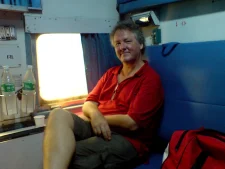
Typical 2 Tier A/C (2 AC) – The backrest folds up into the middle berth! (Photo Credit – Peter Fristedt)
Live Life Kingsize! (1st class AC, FIRST AC)
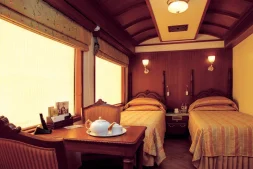
Finally, we took the 1st class AC car for a ride from Udaipur to Delhi. For just under INR 6,000 (for two) it was the most expensive journey we took. We were happily surprised to find we got a private room assigned to us. Two beds behind one door. It was a cute little ‘home’ for the 12.5 hour journey. There was a bell to ring for the attendant to come down and make the bed or help with whatever task. Upon arrival in Delhi, bag porters were knocking on our door to help with our bags. This is definitely the most luxurious of all the train classes in India.
You will get an experience like home in luxury train (Photo Credit – Luxury Train Club)
All you need to know about food on Indian trains
We found this to really vary from train to train and station to station. Sometimes, we were bombarded by tons of food sellers.
On the drinks side, they sell everything from cold bottled water (INR 20) and other cold drinks to milk masala Chai (INR 10) and coffee (not sure what this really was). We found the guy saying ‘Chai Chai’ had better chai than the guy saying ‘Chai Coffee’. We think the Chai Chai vendor has pre-brewed & sweetened masala chai, whereas the chai coffee vendor has boiling hot milk, tea bags, and instant coffee mix. Obviously the pre-brewed & sweetened masala chai is better unless you want coffee.
On the food end of things there also was quite a range. There were the guys selling chips, biscuits/cookies/crackers, and other small snack items. Then there was the guy selling two types of patties – we think one was made out of dal – the other could have been potato or chick pea. Either which way, the patties were INR 10 or so.
Our Train Favorite – Tomato Soup!
Next up, the Tomato Soup guy. In our opinion, this was the best.
First off-the way they said ‘Tomato Soup!’ just made us grin ear-to-ear each time we heard it. Then for INR 20 to get a small cup of super tasty Tomato Soup (with really yummy croutons in it), it was just amazing.
Next up were the guys selling vegetable cutlets and other types of cutlets. We tried a veg cutlet once. It was two pieces of some sort of breaded spiced potato ‘cutlet’ and two pieces of buttered bread. If you were starving (which we were) this is good enough. Otherwise, we would skip it next time. We seem to remember the price was INR 20. There was a guy selling omelets, but we did not try it.
Full meals and Indian Trains
Finally were the guys selling full meals on our overnight trains. I think this might have just been for the upper classes (we only saw it in First & 2 Tier AC classes). For INR 150 you get a full thali plate. There was a dal, a potato dish, and a paneer dish. This was served with chapatti (which we found to be too thick, cold, hard and not appetizing), rice, a gulab jamun and a plastic spoon. All in all, the meal was good enough with plenty of spice and it felt fresh and hygienic enough (it was a tray sealed with plastic).
Dining on the train (Photo Credit – Steve Hicks)
Meanwhile, at the various stations, you’ll find a variety of food. Some stations will have nothing, but many will have at least a drink person with chips and other pre-packaged food. Still larger stations will have fruit sellers and a variety of places to get items like samosas or pre-made sandwiches. Finally, the largest stations will have restaurants just outside (such as Comesum).
Read more about train and bus travel in India – North India by bus and train, the experience of three young backpackers. We hope reading this article on the different train classes in India has inspired you to take a journey. Just click on Plan Your Trip for any assistance.
While travelling to India, most people have an idea of the places they must see, like Agra, Delhi, and Jaipur (The Golden Triangle), the beaches of Goa, the backwaters of Kerala, or even the romantic Udaipur and the bustle of Mumbai.
But India is so vast that you can actually find places that aren’t a part of the tourist trail. We secretly always hope these places remain hidden so that they don’t lose their charm. So, here’s a list of our favourite offbeat destinations in India. We’re trusting you with our secret!
If you’ve already decided that you’re coming to India, or are on the fence, contact us and we’ll help you decide or choose a route that fits you.
You’ll witness beautiful mountains views in both of these routes
Lahaul Spiti – the lesser-known Himalayas
When you think of the Himalayas, the first place that comes to mind is Leh and Ladakh or perhaps Shimla, the British Summer Capital. But the Himalayas are also home to a bunch of wonderful lesser-known regions.
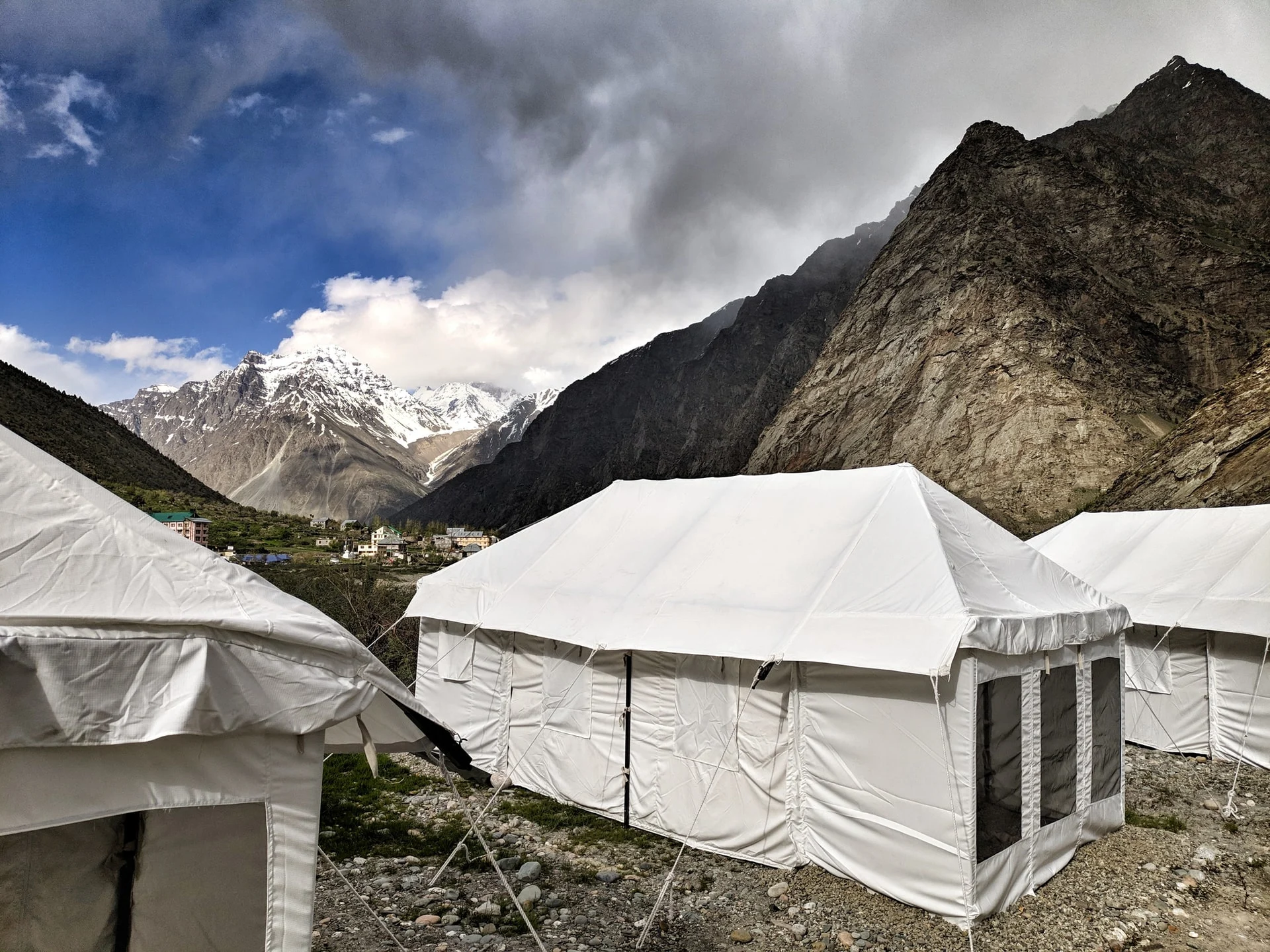
One such region is Lahaul – Spiti. It’s a part of northeast Himachal, and though travelling here can be difficult, the view surely makes up for the extra efforts.
You don’t find the best roads here, but you will find grass trails, mud paths, and friendly locals who work as a team to make even an 8-hour drive seem surprisingly pleasant.
The route that explores the unknown mountains of the North
Here, you must start your trip in Delhi or Chandigarh and then head to Shimla. Shimla isn’t the prettiest hill station because of extreme commercialization, but it still has an old-world charm to it. You could experience hospitality like never before by staying at Sunnymead in Shimla.
The next stop would be Thanedar Kotgarh, a small, quaint village where you get to see ranges of mountains. Walking through the apple orchards is a must here.
The next stop is Sangla, a heavenly getaway. The Himalayan mountains surround you, and you can hear a gushing river as you watch the world go by. For your time in Kaza and Tabo, we would highly recommend trying Ecosphere, as they work for the well-being of the community.
We also suggest checking out the Tosh/Parvati Valley if you’re looking for a laid-back experience post long car journeys. Both these places have a decent nightlife, and you might just be able to catch a party and perhaps have company for the route ahead.
The road journeys for this particular route are open from July to September. The journey is absolutely worth it as your vision will always be occupied by the striking monasteries and perfect blue skies.
In terms of travel, it would be best to hire a chauffeur-driven car for the entire trip. However, you could also take local buses if you are on a tight budget.
Best time to travel: July to September
Number of days needed: 15-18
Ideal for: Couples | Families | Friends
Lahaul and Spiti (Photo Credit: TourMyIndia)
Uttarakhand – more than just Rishikesh
Uttarakhand is known for the snowy winter, larger-than-life mountains, small villages, and simple people. This region is famous for adventure sports such as river rafting, trekking, skiing, camping, rock climbing, and rappelling. We’d advise you to combine a trip to Jim Corbett National Park with the Kumaon hills and the touristy Rishikesh for an overall experience.
Consider this route and get a massive adrenaline rush
You could either start your trip in Delhi or directly take a flight to Dehradun and then head to Rishikesh. Rishikesh hit stardom when the Beatles spent a few months there with their spiritual guru. And ever since, Rishikesh has had lots of yoga shalas and courses for tourists wishing for a calming and spiritual experience. That aside, it’s a nice small town on the banks of the mighty Ganges River (where you can river raft). It also offers great places to eat.
The next stop would be Jim Corbett National Park. A dense forest with the chance to spot a tiger in the wild, it’s exactly like how Ruskin Bond describes it in his books. You may spot the elusive tiger if you are lucky enough and will definitely see a host of other wildlife. From here you could make your way into the Kumaon Hills and the beautiful hill station of Nainital. Thereafter, making your way to a lovely property called Itmenaan tucked away in the mountains.
As you make your way back down to Delhi via Kathgodam, you can add a few more places to your itinerary. If you have the time you could include places like Munsiyari, or Ramgarh. One thing we can promise is that not too many people would have travelled this route.
In terms of travel, it would be best to hire a chauffeur-driven car for the entire trip.
We can come up with a variety of combinations if you are specifically looking for offbeat tours in India. This post just explores two of them. Do get in touch with us and let us know the number of days you have, and we can then plan the trip for you.
Magdalen and Brian were our first guests from Pakistan (albeit, Americans living in Pakistan). They’ve shared some very useful tips on negotiating auto rickshaw prices in India, and allowed us to pass along the wisdom. Their original post and many of their adventures can be read on their blog.
While we are by no means experts in this topic, it is a piece of wisdom we want to pass along to other travellers for their adventures in India. While every city is different, many of them offer a variety of different transportation options, and it is quite easy to end up overpaying for such services.
This post is about the auto, tuk-tuk, auto rickshaw… whatever it may be called, where you currently are. We will use ‘auto rickshaw’ or ‘rickshaw’ for this blog post. Under this same topic, but slightly different, we will also include the bike rickshaw. What we’re covering: Negotiating auto rickshaw prices in India, or simply put, how to figure out what to pay!
No doubt, you must have read in all of the travel blogs or guidebooks to agree on the price of the rickshaw before you get inside. In some cities, they even talk about metered rickshaws. Regardless of what you find when you arrive, here are some tips to help you understand auto rickshaws in India better.
From India Someday, here is a quick look at some travel routes for North India and for South India. Get in touch, and we would love to discuss your trip to India.
Yes, it can feel strange at first, but do it! You will walk up to the driver & say “how much to go to X location”. They will tell you to get in without giving you a rate. Ask again, and they will respond with a number that they are very confident in. Be warned, this is usually higher than any local would think of paying. Negotiate your way lower. Sometimes we started with a quote of INR 250 and were able to talk them down to INR 20-40. Just be firm and polite. It’s also okay to walk away after you start negotiating auto rickshaw prices in India; you are not bound to the ride.
Negotiate with the driver
2) Ask a Local
Before we’d leave the train car, we’d turn to the person next to us and ask, “What is the local rate for rickshaws in this city?” Usually, we were able to find out an appropriate price quite easily (though of course sometimes they would tell us numbers above what we knew to be true). We also asked police officers and folks at the front desk of the hotels/hostels we were staying at. Sometimes they wanted to ask us where we were going and tried to help coach us – but usually we were able to find a good price point to be aware of. At times, we would ask two people and get very different numbers, like INR 40 and INR 200, for example. Go with the smaller number in mind when you negotiate.
This is true for so many things in life! When you’re staying at a fancy hotel (or standing in front of one), and you ask the nearest rickshaw for a ride, the price will be higher! If, however, you walk away from that fancy hotel, onto the main road (maybe you’d have to walk 200-300 meters) often you will be able to strike a better bargain (the difference between INR 250 and INR 40, for example). This also applies for right in front of the train station & tourist attractions. Know the nearest intersection to your hotel and give that instead of the hotel name for the rickshaw ride back. This is an easy way to get the upper hand in negotiating auto rickshaw prices in India.
(Photo Credit – Fabrice Florin)
4) Don’t be afraid to walk away
It is not uncommon for you to approach one driver, and instantly be mobbed by 2 to 10 other drivers, all trying to understand you mispronounce the name of a tomb, hotel or monument. Know that you are, in that moment, negotiating with all of them – but, it is also okay to walk away. Time and time again we would ask how much to go to a certain location, get an outrageous price, then we’d quote something much less. The drivers would come down some bit, but we were still not happy, so we’d walk away. Right at that moment, they would offer a somewhat reasonable rate. Or they don’t & you just walk away to find the next rickshaw.
You can take any rickshaw from Rickshaw stand (Photo Credit – Joegoauk Goa)
5) Be confident, just sit in a Tuk Tuk and ride!
Sometimes, we just hopped on the rickshaw, told them where we wanted to go and gave them the local fare without a problem when we hopped off. However, we did this when we were quite confident of the local rate and we were not standing in front of a fancy hotel. No promises that this works all the time – but it did work for us a couple of times. We also didn’t really stick around to discuss things with the driver- we just paid and walked away.
Tipping a rickshaw driver: There is no need to tip on a single ride. If you hire a rickshaw for the day we suggest tipping a small amount, as long as you don’t buy anything at any of the shops the rickshaw driver took you to. Do not buy anything at any shop your driver takes you to, he is most likely getting a commission and the prices will be inflated to cover his cut (plus some).
A quick note on the bike-rickshaw – We rode them a few times. They’re bumpy, slower than the autos, and difficult for tall people to sit in, but great for the environment. That said, they are totally safe & somewhat fun. They are supposed to be fix-priced: when we talked with other tourists we found they usually paid INR 10 per person (sometimes INR 20 if you’re traveling alone). We never got the prices down that far, but we preferred the smoother ride of the auto rickshaws so we usually steered clear of them.
A quick note on safety – While I’m sure there are horror stories out there about using rickshaws, we have ridden rickshaws in several countries and had no problems at all. We’ve ridden them early in the morning (before sunrise), throughout the day, and late into the evening. We’ve ‘rented’ a rickshaw for the day & hired them for partial days too. All with no major problems. But, as with anything, you should be careful and mindful of yourself, your surroundings, and your belongings.
Bottom-line, remember that the rickshaw drivers are just trying to make a living in order to feed their families. You, however, are trying to save money to travel more. Sometimes we would negotiate to INR 80 (from INR 250) and would give the driver INR 100 anyway. We hope these tips on negotiating auto rickshaw prices in India have made you confident for your Indian adventure! Click on Plan Your Trip for your ideal itinerary.
Be confident, while riding a rickshaw too (Photo Credit – Curtis Palmer)
For the last few months you have worked hard, you have been sweating it out at the gym. The realisation that you need to get fit could have come from anything – a pair of jeans that just won’t fit, or somebody reminding you how much you have put on, or the fact that even a 500 meter run knocks the daylights out of you. That is all changing. You have made it a point to work out and get fitter day the day. Then you come on vacation to India where the gyms are unfamiliar and the food is irresistible. But you want to stay fit, months probably years of following a fitness regime just aren’t worth throwing away over a couple of weeks’ fun. Desperate for ideas on places to go jogging in Mumbai?
We have some good news for you! As we believe and keep saying, India is a country with something for everybody and it’s got something for our fitness freaks too. There are various places across the country you could go for a jog, a refreshing run next to the thunderous sea or on a track surrounded by hills, you would be truly amazed at how varied your jogging options are.
India has something for everybody and it’s got something for our fitness freaks too (Photo Credit – Dylan Walters)
Where to jog in Mumbai
In our first part of ‘Where to jog when in India?’ we focus on the maximum city of Mumbai.
As a tourist, it is likely for you to be amazed at the chaos that the city puts up with every day. Mumbai, with a staggering 12,655,220 people, is the 09th most populated city in the world.
Made up of just seven small islands, it doesn’t take a rocket scientist to know that one of the biggest problems is the space crunch. With a growing population of 10 million+ people and land not equipped to house so many, living in Mumbai isn’t for everybody (especially not for people who like their own space.)
But perhaps Mumbai has always been on your list. You have probably watched a few Bollywood movies and want to check the city out for yourself. At the same time, you hope that the fitness routine you have been religiously practising does not go to waste. You cannot miss the jogs you so depend on for your daily routine.
We decided to jot down a list of our favourite places to go for a run/jog in Mumbai to help you keep fit on your vacation.
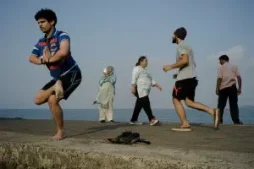
There are still options to stay fit during your holiday (Photo Credit: Nilesh Mazumdar)
1) Marine Drive
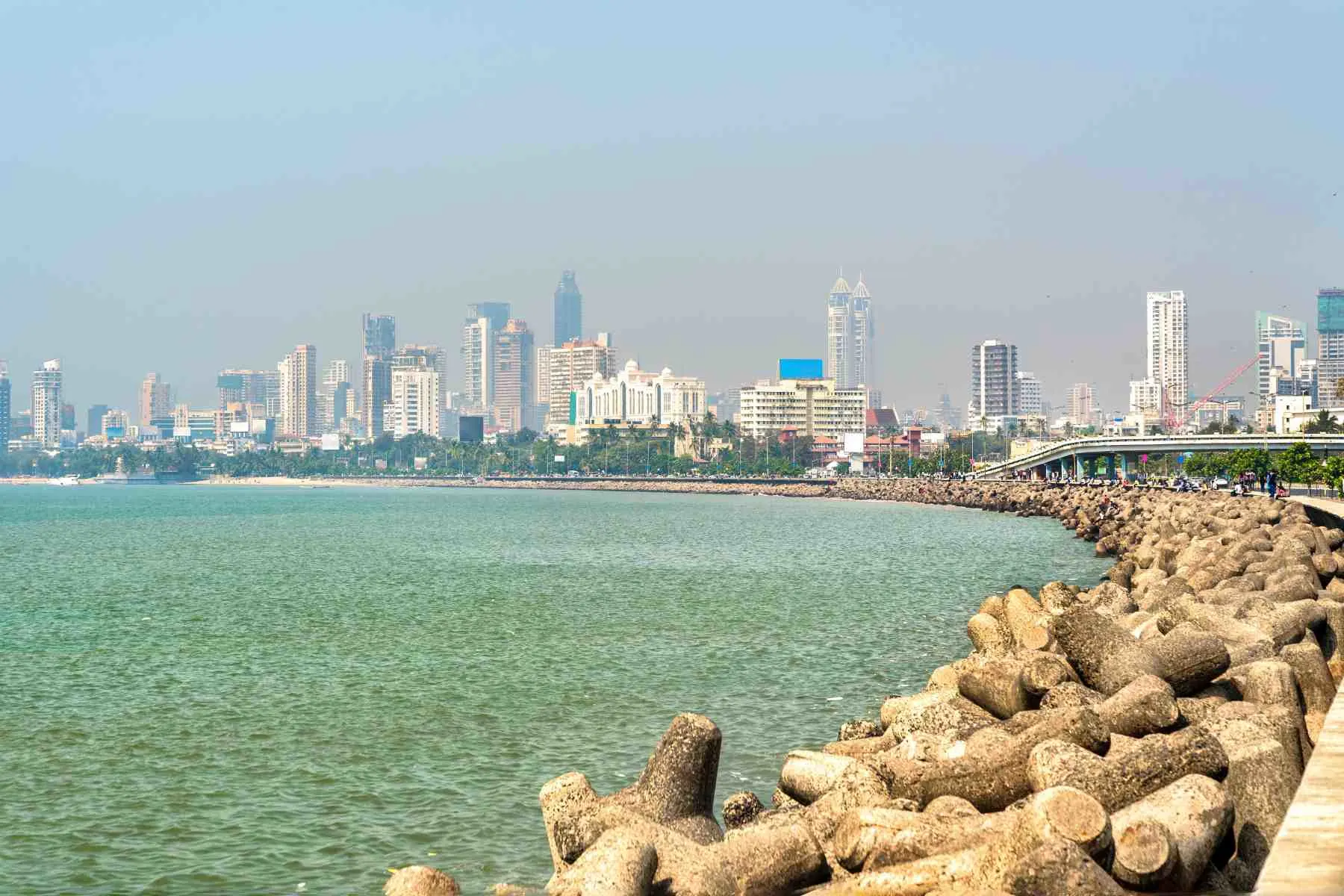
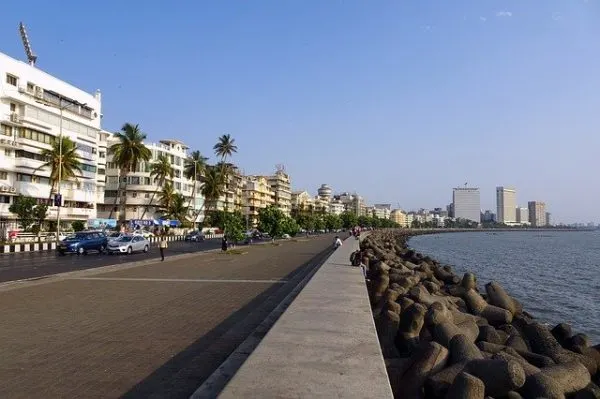
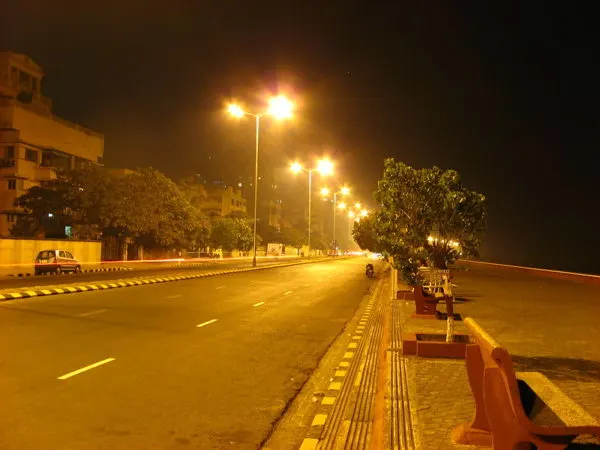
Our favourite place to go on a jog, a place where you could jog at any time of the day (though not during the cruciferous afternoons obviously.) It is a long stretch next to the sea. This place is ideal for an early morning or evening jog.
Go for a morning run if you need exercise to start your day. You’ll be surprised to see just how many people in this mad-paced city make time to stay fit. Beware though, the sea isn’t always the most pleasant of smells and when you’re breathing hard you’re going to be inhaling lungfuls of less than savoury scent.
With the sea at your side and the sound of the waves, you can understand why Marine Drive is one of our favourite jogging destinations in the city (Photo Credit – Bishnu Sarangi)
2) Priyadarshini Park
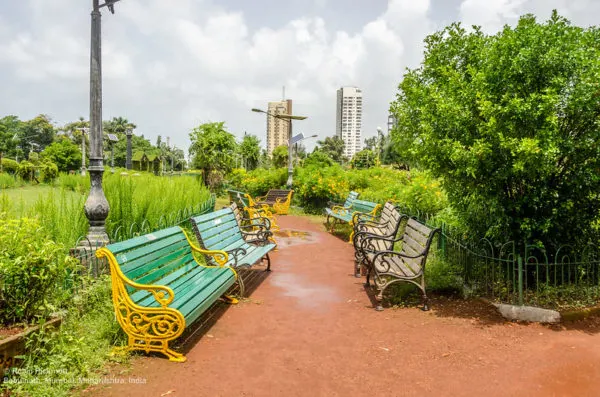
Priyadarshini Park in Malabar Hill is another place well equipped to deal with requirements of various levels of athletes. Built on reclaimed land, a jog on the PDP track is as smooth as it gets.
A beautiful green place tailored to suit everybody, from beginners forcing themselves out of bed to dedicated joggers who like to run every morning before work.
Well equipped to deal with the requirements of various levels of athletes (Photo Credit – Robin Hickmott)
3.) Joggers Park Juhu/Bandra
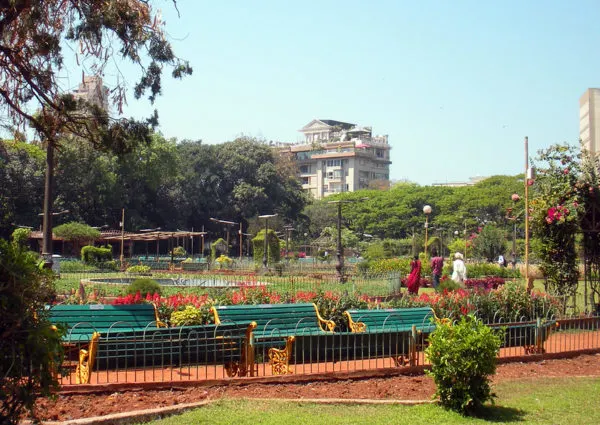
For the people living in or visiting suburban Mumbai, Joggers Park in Juhu is a very popular spot amongst runners. It’s created specifically so people in the suburbs would have a place to go for their morning or evening runs.
Joggers Park is definitely a sweet place for serious runners. At the same time, it makes room for senior citizens taking their evening constitutional. There is another Joggers Park in Bandra which is also beautifully maintained and you can find a lot of people exercising there too.
Beautifully maintained and ideal for joggers (Photo Credit – JWoodsSRI)
4) Hiranandani, Powai
Want to jog away from the hustle and bustle of the city? If you’re searching for somewhere more rural then head to Hiranandani.
Powai is surrounded by hills and in the centre is a beautiful still lake, a very peaceful location and not as chaotic as the rest of Mumbai. If you don’t want to go running on the streets or prefer quick jogs, it’ll work well for you.
A peaceful location and not as chaotic as the rest of Mumbai (Photo Credit – Waterloo Hildreds)
5) Worli Seaface
One for the early birds! Plus, another place in Mumbai if you like running by the sea, though not as lavish as the Marine drive. There’s a reason why this place is not as high on our list as it could be and that is because it’s only any good if you are a morning person.
However, it is not the best location if you like to go for a run after work because the traffic can be disruptive and the hawkers a pain. We would suggest starting your run at least at 0600 hrs the latest if you are coming to Worli Seaface.
A location for those early risers who like a run before the day starts (Photo Credit – Simon Alexander Jacob)
6) Mahalaxmi Race Course
Open to the public from 16:00-20:00 hrs, the 2km stretch is covered in mud and is a better surface to run on than any other place on this list (everything else is either concrete, asphalt or granite). So it is considered a much better surface for your legs.
If you are travelling to India and want advice on what to do in each city, as well as some insider tips on how to enjoy cities such as Mumbai like a local, then get in touch with us at India Someday and we will help plan your trip.
Not just a place for horse racing but also a great ground for jogging (Photo Credit: The Indian Express)
We promise you a tour that is the right mix of ‘Understanding India, Experiencing India and Exploring India’.
Understanding India – India evokes a million questions! Religion, the cows, arranged marriages, the food, the culture, the famed Indian weddings and more. It usually takes a life-time of understanding it all, but we will try our best to explain in fourteen days.
Experiencing India – We’ve included activities ranging from slum tours to cooking classes, Bollywood dancing to a rural visit, we’re sure this will help you experience India through active participation, rather than just looking at monuments and sights
Exploring India – You will see a lot and do a lot and we will be around, but we DO NOT plan on holding your hand all the way or keeping you under strict schedules. Expect time in each city to explore/do things on your own too.
An overview – Day-to-day plan for India Someday Group Tour
Do not worry! We do not have a daily 9 am to 9 pm agenda on our trip. But, we do want to give you an overview of your time in India in terms of
Things to see and do in each city
Which activity will be in which city
Amazing spots/monuments that we will stop at while driving in-between cities
Optional activities that are worth knowing about (you can sign up for them in India)
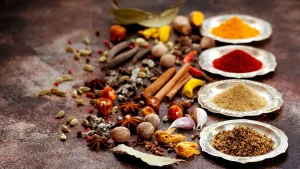
Welcome to India, a land of colours and spices (Photo Credit – Shri and Sam)
Day 1 – Mumbai: Introductions, Easy Sightseeing and Nightlife
What Mumbai (or Bombay as we locals still like to call it) lacks in monuments it makes up for in energy and a distinct city vibe. Bombay usually strikes most travellers as both a crazy and yet a very likeable city.
We will start your morning a little slow with introductions (as some of you may be jet-lagged) and then venture out to explore the city. We will use a mix of public transport (trains, buses and taxis) to explore a bunch of touristy and non-touristy sights. We will be with you throughout this day.
Some of the possible highlights would be the Jain Temple, with lovely sea views, a very cute (free entry) Gandhi museum, a very interesting open-air laundry (Dhobi Ghat) and just in general being plugged into the city riding buses with locals and seeing the craziness on the streets of Mumbai first-hand.
Lest we forget, an introduction to some local Indian food.
While some of you might be tired since it is Saturday night we would love to show some of the city’s nightlife! It makes for a very different experience, seeing the affluent and young party side of Mumbai.
Mumbai Stay – Mumbai is an expensive city, Travelers Inn (Reviews), is very centrally located and clean, but a basic hotel. Stay would be in rooms.
You cannot visit Mumbai without tasting the delicious street food (Photo Credit – Bharat Mirchandani)
Day 2 – Mumbai: Slum Tour, Bollywood Dance
A slum tour in Mumbai is an eye-opening experience. You will see a very densely populated part of Mumbai, but the way they live and how industrious they are would amaze you. Including travel, the slum tour can take anywhere between 4-5 hours. We’d spend the evening trying some Bollywood Dance moves.
You’d still have pockets of time should you wish to shop or explore a little of the city on your own. We are always happy to guide you or come along.
Slum Tour and Bollywood Dance class costs are included in tour costs.
Mumbai is the home to Bollywood, make sure you watch one Bollywood movie during your visit (Photo Credit – Tumisu)
Day 3 – Mumbai: Free exploration time
While we hope to have given you enough of a glimpse into the flavours of Mumbai, there is still a lot to see in the city. There are lovely museums and art galleries to explore which are walking distance from your hotel. You can take an early morning cycling tour, or hop onto a ferry to see the caves of Elephanta.
There are a couple of lovely audio walking tours too. Or just shop/relax and you might find something cool in the city on your own!
Travel to Udaipur – We would be taking an overnight sleeper bus to Udaipur, this is the longest commute between any two cities on our trip. The bus would depart at 06:00 pm in the evening and reach Udaipur at 09:30 am the following morning.
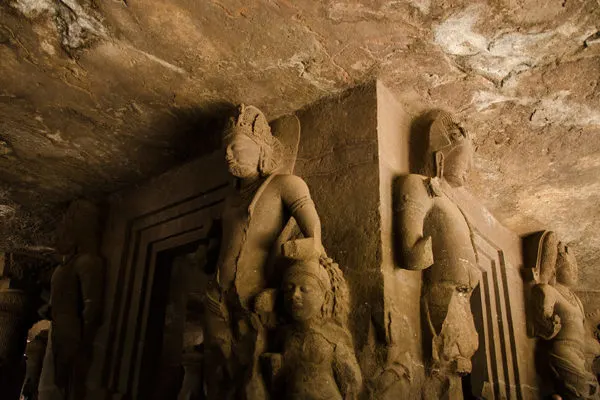
Visit Elephanta Island, just off the coast of Mumbai, to explore some Hindu caves (Photo Credit – Keya Arati)
Day 4 – Udaipur: Exploring the old city and dinner by the lake
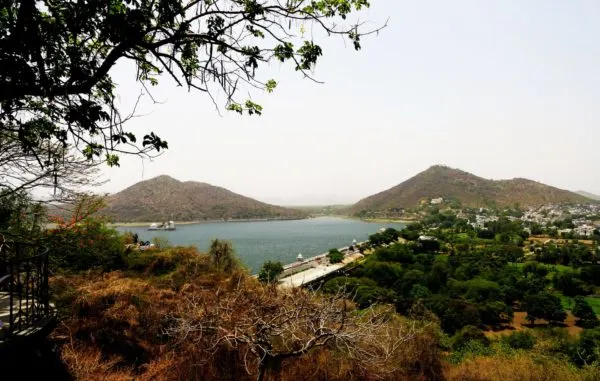
Udaipur is a charming medieval city on the banks of Lake Pichola, a beautiful mix of lakes, rolling hills, lovely palaces, and endearing locals. Our overnight bus journey would effectively take us back in time as we explore the old parts of Udaipur the next morning.
A lovely palace by the lake, a touristy (but very pretty) boat ride that gives you views of the city.
We will spend most of the first day exploring the popular sites in Udaipur. A bunch of them are clustered together within walking distance, and for others we’d use a tuk-tuk. We will end the day with dinner with a beautiful view of the lake.
City Palace Udaipur, the largest palace complex of Rajasthan located on the banks of Lake Pichola (Photo Credit – Volker Glätsch)
Day 5 – Udaipur: Rural Visit/Trek
Udaipur is a small town, a short drive in almost any direction and one would be in the midst of the countryside, small villages and rolling hills. We will spend the first half of the day in these villages, either cycling or on a light trek and you’d get glimpses of rural India.
You would have the evening to yourself.
Trek up the Aravalli Mountains just around Udaipur (Photo Credit – Narinder Pal)
Day 6 – Udaipur: Free exploration time and cooking class
You will be cooking Indian lunch today and then we will eat what we have cooked. Apart from that it would be an easy day for some more exploring/relaxing or shopping. If everyone is up for it we know some beautiful heritage hotels that offer some fantastic views in Udaipur, and we could go there for a drink.
Cooking class is included in the India Someday Tour.
Take a cooking class and learn all about what spices to use in Indian dishes (Photo Credit – Kristina Tripkovic)
Day 7 – Drive from Udaipur to Jodhpur
(with a stopover to visit Ranakpur temples and Kumbhalgarh Fort)
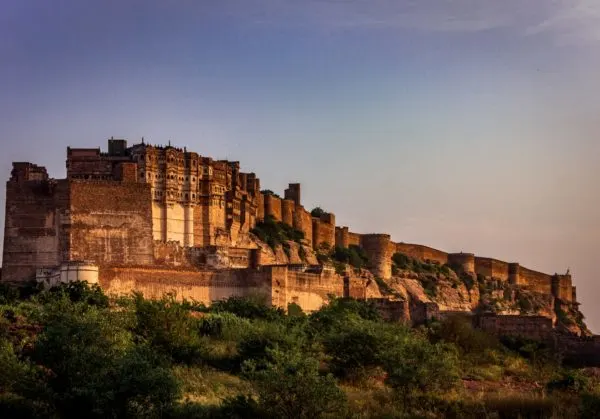
If any Indian monument will come close to (or perhaps exceed) the Taj Mahal in mesmerising a traveller it would be the stunning Mehrangarh Fort in Jodhpur. The crowning citadel of another lovely medieval town with endless narrow alleys and blue houses, where one would love to get lost! But, it would have to wait until we drive there.
Udaipur to Jodhpur is a very pretty drive. Beautiful Indian countryside and a stop to visit the stunning marble temples of Ranakpur. Kumbhalgarh Fort is another optional stop en route to Jodhpur. One has to climb a steep flight of stairs but is rewarded with a beautiful view.
We’d reach Jodhpur towards the evening. Our guest house rooftop offers a magnificent view of the lit-up Mehrangarh Fort. You’d have the evening to still walk around the old town, aimlessly walking in these old towns in itself is so much fun.
On the way to Jodhpur, you must visit the Ranakpur temples (Photo Credit – Volker Glätsch)
Day 8 – Sightseeing and Ziplining from the fort (optional)
A stunning fort, yet another temple, a lavish palace (converted into a luxury hotel) and a desert rock park are few of the sites we would explore today. Unless you have a phobia of heights, the ziplining experience at the Mehrangarh Fort is an amazing experience. It is optional for those that wish to do it!
Mehrangarh Fort during the golden hour (Photo Credit – Yash Raut)
Day 9 – Drive to Pushkar
A sacred lake, innumerable temples, a confused religious and yet hippie vibe! Pushkar again is not a town with any stunning monuments, but just a great small town to aimlessly walk around and soak in the atmosphere.
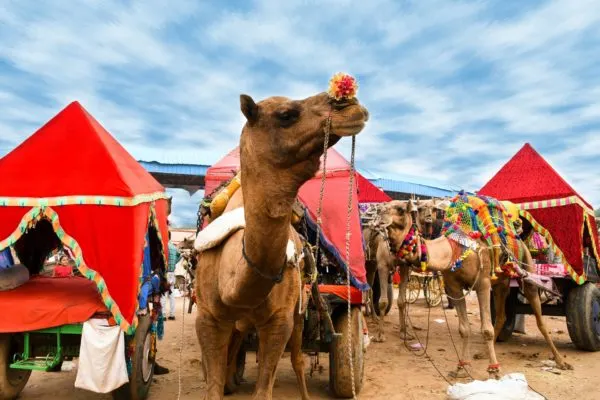
Pushkar Camel Fair, popular opportunity to witness an old traditional style Indian festival (Photo Credit – Ashish Sangai)
Day 10 – Drive to Jaipur, Sightseeing
We would explore the Ajmer Dargah on the way to the railway station to take our train from Ajmer to Jaipur.
Jaipur is a lot bigger than the other towns we would be visiting in Rajasthan. We will try to explore Amer fort on our first evening as the views around sunset are splendid and end our day with a Bollywood film.
Jaipur Stay – We’ll be staying at very cool Moustache Hostel (Reviews). We’ll stay in dorms, unless you have requested for a room.
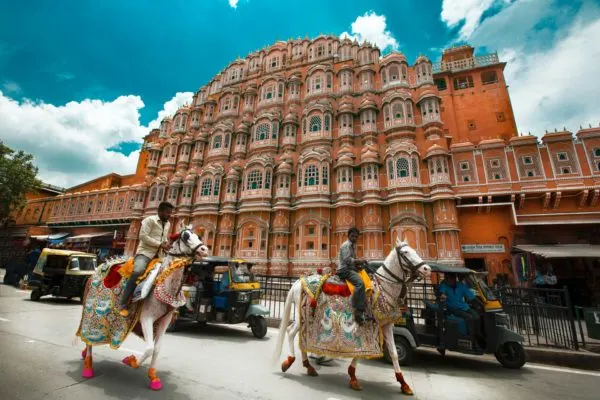
Hawa Mahal the most iconic monument in Jaipur (Photo Credit – Aditya Siva)
Day 11 – Sightseeing, optional shopping or Elefantastic
We’d spend the first half of the day exploring a bunch of monuments within Jaipur city. For those interested, Jaipur has a fantastic elephant farm and experience at Elefantastic.
While the activity is not included in the cost of the tour, for anyone that loves animals and is amazed by elephants this is a great experience. You can spend the second half with elephants or shopping/more exploring.
Elephant Farm Experience (Photo Credit – Kevin Jones)
Day 12 – Drive to Agra
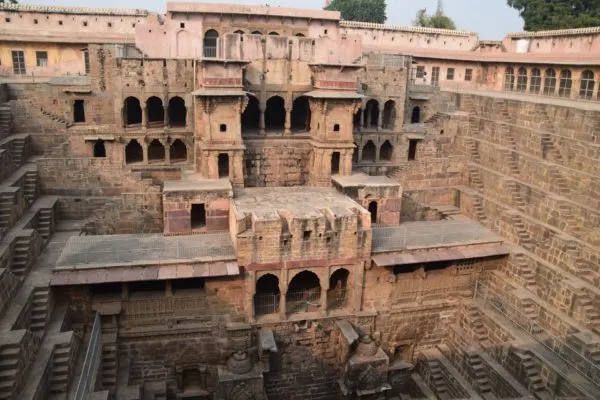
Our drive to Agra will have a couple of stops, first to visit the step-wells of Abhaneri and then to visit the fortress city of Fatehpur Sikri. We will see Taj Mahal twice on your trip, the first time from across the river around sunset.
The stepwells of Abhaneri make beautiful holiday photos (Photo Credit – Susan Fleming)
Day 13 – Taj Mahal and drive/train to Delhi
Wake up early in the morning to visit the Taj Mahal at the break of dawn, it is absolutely gorgeous under the soft rays of the morning sun. We’d then look at the Agra Fort, Baby Taj (an equally impressive monument), and if time permits, Akbar’s Tomb. We would then either take a train/bus or car to Delhi.
Delhi Stay – Our stay in Delhi would be in a hostel too, a very calm and yet central location. Moustache Hostel (Reviews).
Sunrise at Taj Mahal (Photo Credit – Shan Elahi)
Day 14 – Delhi sightseeing
Delhi or Bombay which is a better city? We already know the answer, but we will let you decide. Unlike Bombay, Delhi has some fantastic monuments! There’s an excellent metro to get to all places. Great food, both restaurants and street food. A lot of history and nightlife too!
Here is an insider guide to what monuments you cannot miss on your trip to Delhi.
The Baha’i Lotus Temple in New Delhi should not be missed (Photo Credit – harmeet9000)
Day 15 – Little more sightseeing and departures
We will have a few hours on the last day for some final sightseeing followed by arranging transfers to the airport/railway station!
If you would like to take this trip or a similar one with any extra stops, then get in touch with us now. We at India Someday will be there for you while booking and during your trip to make sure you have the best holiday possible.
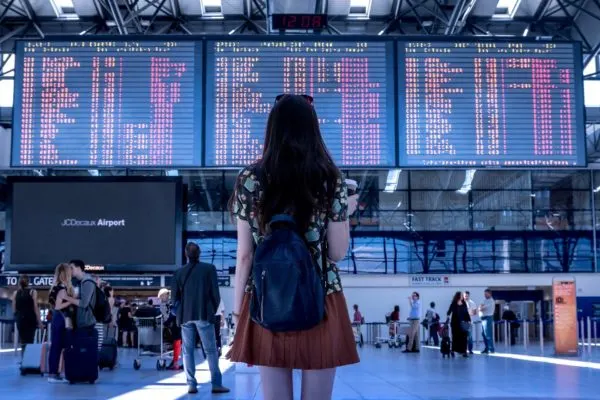
Looking at travelling to India but not sure about the flights to India? which is the best city to fly into India? Our blog should give you an overview of the best cities to fly into India depending on which region you’d like to explore.
Time to book your flights to India (Photo Credit – Jan Vašek)
Touring North India? Fly into Delhi, but explore flights into Bombay
When planning a trip to a country as huge as India, the most frequent question that we get is which is the best city to fly into India?
If you plan to visit Rajasthan, Varanasi, or travel to the Himalayas (Kashmir, Leh and Ladakh or Himachal Pradesh) then the best city to fly in to is Delhi. Most international flights to India fly into Delhi.
On the other hand, if you’re thinking of touring around Rajasthan, do explore open-jaw flights to India. For example, fly into Delhi and fly out of Mumbai (or the other way around).
Delhi and Mumbai are very contrasting experiences, definitely worth including both in your list of places to visit in India. Delhi has some splendid monuments and great history. Mumbai (especially the southern end) is very easy to walk around, and has a spirit which will simply engulf you.
Udaipur (Southern Rajasthan) is equidistant from Delhi and Mumbai. Hence, if you are looking at touring across Rajasthan you can fly into Mumbai and then travel to Udaipur and travel across Rajasthan. It can also be done the other way around; visit Rajasthan and end your trip in Mumbai after Udaipur.
Gujarat is another interesting and not a very touristy state. It is convenient to reach both on the way from Rajasthan to Mumbai or a stop on the way from Mumbai to Rajasthan.
A number of our guests from USA choose to fly on Air India (AI 102), as they operate a direct flight from New York (JFK) to Delhi, and Delhi to New York (JFK). Air India has a very good network of domestic flights in India too, so irrespective of where your trip ends in India, it connects you back to your Delhi-JFK return flight via an internal Air India flight.
Touring Northeast India? Fly into Kolkata, Explore flights to Delhi
Visiting the Northeast, you have to ask yourself, are you planning to visit only the Northeast (cities like Kolkata, Varanasi, Darjeeling, Assam, Sikkim, etc.) or do you plan to spend some time there and then make your way westwards?
An interesting tour plan would be working your way from Delhi along places on the river Ganges i.e. Gwalior, Orchha, Khajuraho, Varanasi and then ending your trip with time in Darjeeling or Sikkim. Flying into Delhi and out of Kolkata would be a great option for such a tour.
You could also do this tour the other way around by flying into Kolkata and end in Delhi.
If you plan to explore the more remote Indian states of Assam, Arunachal Pradesh, Mizoram, Meghalaya, Tripura, Nagaland and Sikkim then the best city to fly into India would be Kolkata. However, if international flights into Kolkata are very expensive you can also look at flying into Delhi and then taking an internal flight.
The Northeast is a unique and beautiful place to visit, so check these reasons why it would be a memorable trip!
Visit the tea Gardens in the beautiful Darjeeling, you won’t regret the peaceful nature here (Photo Credit -Boudhayan Bardhan)
Holidaying in Goa, and South India?
If you are looking primarily at a beach holiday and spending most of your time in Goa then the best city to fly into India would be Mumbai or Goa and explore Bengaluru.
There are over ten daily and inexpensive flights from Mumbai to Goa. Daily trains and buses too (for more information read getting from Mumbai to Goa).
If you are lucky you will find direct flights to Goa too! These are usually operational only during the winter months and common from Europe/Russia. Just explore and research in terms of flight connections.
Bengaluru may seem far from Goa, but it’s well connected by daily and inexpensive flights. You can also look at flying out of Bengaluru and touring across the state of Karnataka by road as you make your way from Goa (Goa-Hampi-Mysore-Bengaluru).
Avoid looking at flights into Delhi, unless you also plan to visit the Taj Mahal or a little of Rajasthan. There are only a couple of daily flights from Delhi to Goa and they can get quite expensive.
Looking at a South India Tour? Fly into Bengaluru, Chennai, or Kochi (if only visiting Kerala)
Looking at spending time across Tamil Nadu, Karnataka and Kerala?
For the South Indian tour the best city to fly into India is Chennai or Bengaluru. When planning a South India tour we usually recommend starting with Karnataka or Tamil Nadu and ending your holiday in Kerala. Kerala is beautiful, relaxing, and provides great massages so all in all, an ideal way to end your journey through India.
You may want to explore looking at flights to Bengaluru/Chennai and out of Kochi or Trivandrum. However, if expensive, remember Kochi to Bengaluru/Chennai flights are frequent and inexpensive.
While Kochi and Trivandrum (cities in Kerala) seem close to each other on a map they are a four drive from each other. So if you plan to end your holiday on a beach in Kovalam/Varkala then Trivandrum would be a perfect choice. However, if you are keen on Mararikulam then Kochi would be the right choice. Moreover, a lot of other places of interest in Kerala are close to Kochi as well. You may wish to bear that in mind when booking flights.
Useful tip: Most middle east airlines i.e. Emirates, Etihad, and Qatar Airways have good connections in and out of airports in Kerala.
At India Someday, we are avid travellers that specialize in assisting travellers plan their holiday to India. Whether it’s flights to India, getting around or accommodation, feel free to get in touch if you have more questions, or fill out our questionnaire to plan your trip accordingly.
Apart from the wonderful beaches, Kerala has so much to offer (Photo Credit – Elroy Serrao)
Being the mad foodies that we are, we believe nothing defines a city like the street food it offers to its citizens. The regular and enthusiastic consumption of street food in the city is the major difference between a local and a tourist. A local knows his street food, a traveller wants to. The street food in Mumbai is there when you are tired of the ‘ghar ka khana’ (home-cooked meal) or stuck somewhere and struck by hunger pangs, or it’s that time of the month when your wallet’s light and you can’t afford a restaurant meal, and McDonald’s is just blah!
Street food is the signature of a city, something that you can only find in a particular place. You can’t separate the food from the city and the city from the food; this is what the locals eat and swear by. If you want to see what the people of a certain place are like, try their street food.
Experience the mouth-watering street food in Mumbai during your trip and live like a local would! (Photo Credit – Anisht Dev)
Top five street food and local delicacies you must NOT miss when in Mumbai
In our first part of the ‘Street Food in India’ series, we begin with the maximum city of Mumbai. Why Mumbai? Because India Someday is based in Mumbai and it is probably the most versatile when it comes to street food. Reflective of its cosmopolitan ethos, the city draws in cuisines from across the country and makes them its own.
Mumbai has enough delicacies to satisfy the most discerning eater, whether you are vegetarian or non-vegetarian, or even vegan! You can try to best veg street food in Mumbai as long as you know what’s what.
Here is some further advice on street food in Jaipur and Calcutta.
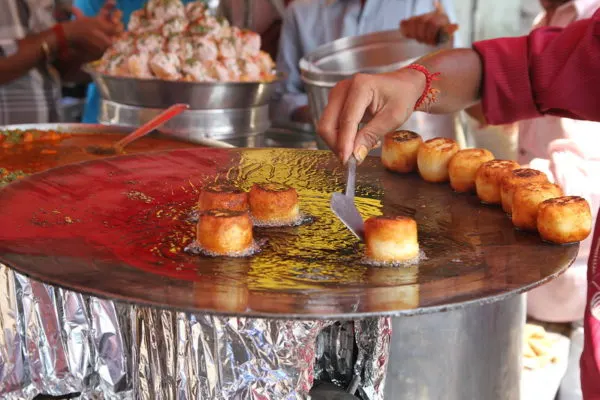
Street food vendors in Mumbai (Photo Credit – Marco Zanferrari)
Vada Pav
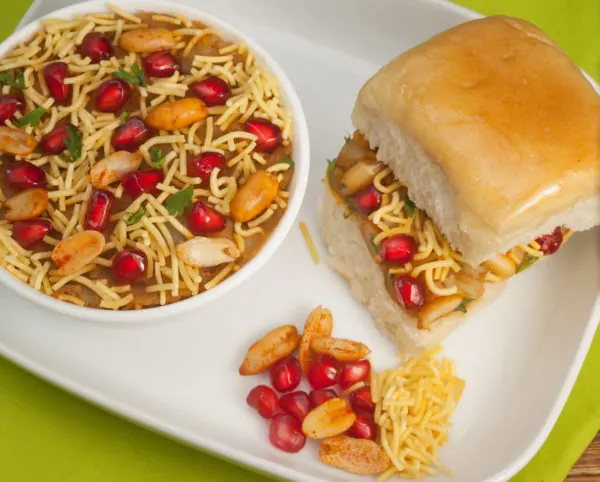
You definitely have to begin your street food adventure with this one! India’s take on the burger! The king when it comes to street food in Mumbai. Easy on the wallet and the food you can relate to most with Mumbaikars (citizens of Mumbai). It’s hot and it’s spicy; you can have it with the sweet tamarind & date chutney if a little too spicy for your palate.
A favourite lunch snack for Mumbaikars, especially the ones who are in a rush or don’t have the money to have a proper meal. The Vada Pav is one of the few truly indigenous street foods of the city that developed directly from Maharashtrian and Portuguese cuisine.
Vada Pav is among the best street food in Mumbai and one to try by the non-meat lovers.
Where can I have this?
Getting a Vada Pav in Mumbai isn’t tough; you will find it almost everywhere.
Which one doles out the best?
Aaram Vadapav, CST(42, Mint Road, Opposite GPO, Fort, Mumbai). It is a small stall right across the famous UNESCO World Heritage Railway Station CST in South Mumbai. Dig into this with a side order of cutting chai! If you’re a fan of crunch, try out the samosa pav as well.
Hint: the stall is attached to a little restaurant and they serve up a variety of fresh and inexpensive local delicacies.
The King of Mumbai’s Street food – The Vada Pav!
Pav Bhaji
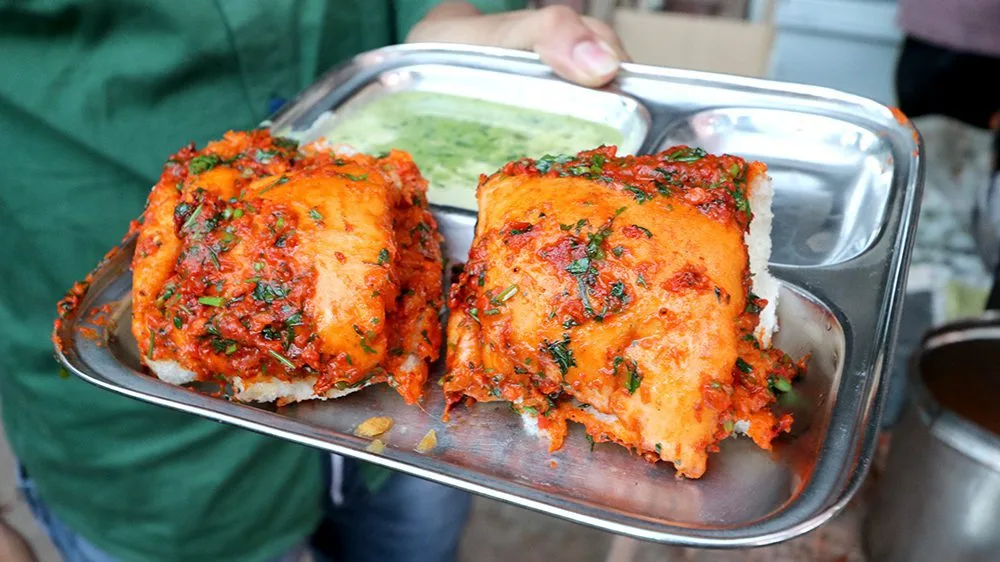
Another delicacy that tastes best in Mumbai, Pav Bhaji is a vegetable mash in thick tomato and potato curry, laden with generous amounts of butter, served with the local pav bread and garnished with onions and lemon juice. Another dish that is considered as the best veg street food in Mumbai. Even the thought of Pav Bhaji makes one salivate.
Where can I have this?
We suggest Sardar Pav Bhaji in Tardeo, near Grand Road railway station (Western Line) if you are in town.
If you are staying in the suburbs, Amar Juice Center is best known for its Pav Bhaji and the icing on the cake is that both are open well after midnight.
Mouth-watering Pav Bhaji at Sardars!
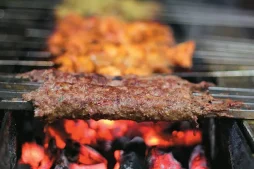
Kebabs
This one is for our non-vegetarian friends. Mumbai, just like the rest of our country has a sizable vegetarian population. However, finding non-veg street food isn’t difficult either. You can find the most delicious kebabs on the streets of Mumbai.
Where can I have this?
Sarvi we’d suggest, a 90-year-old establishment with unbeatable mutton seekh kebabs. It is in Byculla, just next to the Nagpada police station. Get down at Bombay Central railway station to get here.
Kebabs! A favourite with all meat lovers
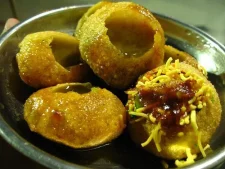
Pani Puri
Mumbaikars swear by pani-puri. Not the gol gappas, or puchkas of other cities, they are Mumbai’s own pani-puris. A small crisp hollow puri, full of spicy mint flavoured water, tamarind chutney, chickpeas, potatoes and lentils is a very refreshing dish. Please do not miss this if you are in Mumbai.
If you can’t handle spice, let it be known to the guy making you pani-puri in advance to avoid breathing fire or being reduced to tears. Though spice comes hand in hand to make the most delicious street food in Mumbai, so we recommend you add a little zing to your dishes.
Where can I have this?
We suggest Elco in Bandra or Kailash Parbat in Colaba, both these outlets use mineral water so there are no hygiene issues, also the taste is absolutely delicious. Don’t forget to ask for your sukha puri in the end!
Gol gappas in Delhi! Paani Puri in Mumbai!!
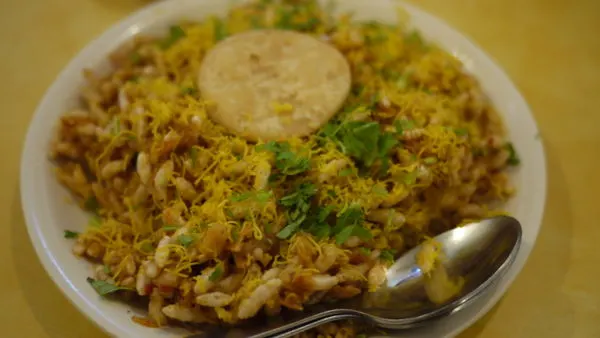
Bhel Puri
Bhel Puri is one of the most popular Mumbai dishes, a dish made of puffed rice, onions, sev, chat masala and chutneys. Cheap, light, and not as unhealthy (healthiest street food in Mumbai on this list), this is a favourite amongst Mumbaikars as a popular evening snack.
Where can I have this?
Sharmajee and Badshahs at Girgaum Chowpatty, near Charni Road railway station, are popular for their lip-smacking Bhel Puri.
Famous Bhel Puri, also known as Mumbai Chaats (Photo Credit – JK Werner)
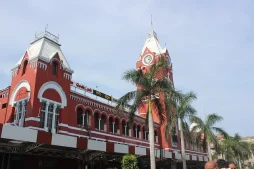
Tamil Nadu as a state has a lot to offer for a holiday, Chennai not so much. There isn’t a lot one can do in Chennai. We’re not saying that Chennai is a bad place to visit, but it’s not something you would regret missing. If you’re in the city and looking for something that packs more of a punch, this post will help you understand how to get to Chennai from Kerala.
There are multiple ways of getting to Kerala if you are in Chennai, but it depends on what your plan is. Are you in Chennai because you are planning to explore Tamil Nadu? Or are you in Chennai because you want to explore Kerala? Maybe Chennai is just a pit-stop along the way?
There are various ways of doing this trip. Tamil Nadu in itself has a lot of beautiful places to offer. It’s a state known for its temples. So if you’re a fan of architecture and history and find peace in temples, we suggest you spend some more time in Tamil Nadu before you head to Kerala.
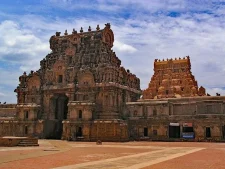
Bridheshwara Temple
By Flight
To sum it up there are two ways of going from Chennai to Kerala. One is to directly take a flight/train/bus from Chennai to Kerala with plenty of options to get there, depending on what your interests are. If temples and culture are more attractive to you than backwaters, beaches and forests you might prefer to simply stay in this state.
Almost all domestic airlines ply daily non-stop flights between Chennai and Kerala. You can fly either to Cochin, Trivandrum or Calicut in North Kerala. This is the fastest and most convenient way to get to Kerala.
By Road
You can start by driving South to Mahabalipuram (just 50 kms away). Spend a night there, explore the beautiful temples and then head to Pondicherry. It’s a lovely city built in the French style of architecture. It has some of the most amazing churches and temples and the Aurobindo Ashram. If France was a jigsaw puzzle, Pondicherry is a jigsaw piece that the French left behind!
Spend time in Pondicherry visiting the serene churches, temples and ashrams. Spend a few of your evenings watching the sun go down on the beaches of Pondi. Head next to Madurai but not before making a couple of stops on the way first.
If you still haven’t had enough of the beautiful temples and the simple yet elegant towns, check out Tiruchirappalli (Trichy) and Tanjore (Thanjavur). These towns are an hour away from each other and almost 5-6 hours away from Pondicherry. You can spend a night or two in Trichy or Tanjore before you head to Madurai. It is approximately 4 hours away and getting on a bus shouldn’t be a hassle.
Madurai is the king when it comes to protecting the old world charm. Known as the Athens of the East by some, the city that never sleeps by others. The Gandhi Memorial Museum is a place you should visit along with the Meenakshi Temple. Because of the geographical location of Madurai you are not too far (only a 4 hour drive away) from the abundantly blessed hill station of Munnar in Kerala (blessed by nature and more importantly, chocolate). What else does one want?
You can always explore Tamil Nadu first. Go to Madurai and from there go to Kerala and start your Kerala exploration.
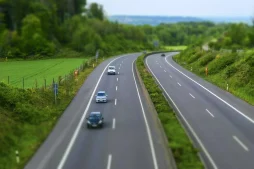
Travel though beautiful forests
By Train
Taking a train from Chennai to Trivandrum (Chennai-Trivandrum SF Express) means skipping a lot of the places in Kerala and Chennai. We suggest you take this train only if you are heading to Varkala. This train runs seven days a week.
A train from Madurai to Ernakulam is a 12-hour journey. We suggest you take the Chennai Egmore–Guruvayur Express. This train also runs 7 days a week, departing from Chennai at 07:40 hrs, stopping in Madurai at 16:40 hrs and arriving at Ernakulam at 03:25 hrs.
To summarize getting from Chennai to Kerala isn’t really difficult, there are a lot of trains, buses and flights that are available, but we suggest you explore Tamil Nadu before you visit Kerala. If you can’t wait to get to Kerala then leave now!