Harsh Sonawala is the co founder of India Someday and since his childhood, he has travelled to different parts of India and the world. The thrill of travelling and sharing his experiences with others was the reason behind starting India Someday. Other than the office where he is conjuring up marketing ideas, he can be found scuba diving in the Andamans or relaxing in a chalet in the Himalayas.
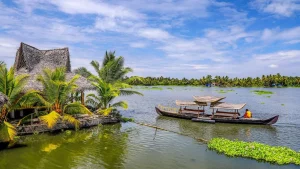
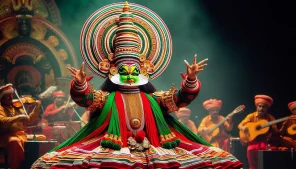
Getting from Mumbai to Kerala is fairly easy and uncomplicated. Most international travellers tend to first land in Mumbai, to then make their way to this tropical paradise. Kerala is the land of lush green valleys and lazy backwaters, brightly painted Kathakali artists and gently draped gold-and-white saris. Aptly described as ‘God’s own country’, Kerala is every traveller’s dream. This article will explore some of the different ways of getting from Mumbai to Kerala.
Blessed with endless beautiful forests and beaches and bursting at the seams with gorgeous art,delicious food and healing Ayurveda, Kerala is the place to be. For more information about Kerala, check out our blog.
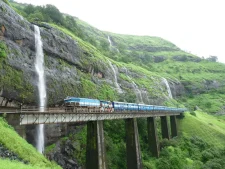
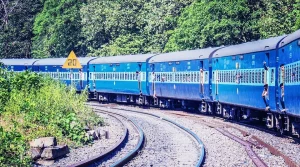
The scenic Konkan Railway route in the monsoon runs from Mumbai to Kerala (passing Goa en route) – Photo Credits
Getting from mumbai to Kerala by flight
The de-facto option to get to Kerala from Mumbai is a two-hour flight. There are frequent flights almost every hour and if booked in advance it would cost as little as 30 EUR / 35 USD per head. The adventurous should take the scenic twenty four hour train ride (more on the same later in this blog), but before that let us give you some pointers on the flights.
Kerala has three main airports, located in Kochi, Trivandrum and Calicut. All these airports are well connected with Mumbai, with many direct flights between each of them throughout the day.
Fly from Mumbai to Kochi if you are travelling to Kochi, Munnar, Thekkady, Marari, Alleppey or Kumarakom.
If you are visiting Kovalam or Varkala it is closer to fly into Trivandrum from Mumbai.
Wayanad, Kannur and Kasargod which are at the northernmost end of Kerala are closer to Calicut airport.
Kochi Airport is serviced with the most number of flights from Mumbai. It means more flexibility on flight times and at times fares that are cheaper than for flights to Calicut or Trivandrum.
Tip: If you are looking at visiting North Kerala and flights to Calicut are expensive, you can look at flights to Mangalore. Bekal and Kannur are gorgeous beaches equidistant to Calicut and Mangalore.
UPDATE:- As of 2019, there is a new airport in Kannur, making it the northernmost airport in Kerala. Flights are limited, but the best connection if you are looking at visiting beaches of North Kerala.
(Picture Credit: Pixabay)
Train from Mumbai to Kerala
If the journey is more important than the destination then do not look further for a prettier experience. It will take anywhere between 16 to 24 hours depending on which part of Kerala you visit, but taking a train along the western Indian coast will be a gorgeous and memorable experience. We share a few pointers below –
The Southern India rail network known as the Konkan Railway runs a number of trains between Mumbai and Kerala.
The major railway stations are Calicut, Ernakulam Junction (close to Kochi) and Trivandrum Central. There are a few trains that also halt at Alleppey and Varkala railway stations.
There are about 9 to 10 trains that run between Mumbai and Kerala. The average travel time is 16 to 24 hours, depending on the train and whether you plan to alight in North, Central or South Kerala.
Avoid booking tickets on a train that does not start in Mumbai. These trains are often late and dirty as people have been riding on them for a while. For more information about train travel in Mumbai, check out our blog.
The best trains to take are the ones that start from Mumbai CST, or Lokmaniya Tilak station (Mumbai CST is the easiest to reach).
Avoid the trains to Kerala that you need to board from Kalyan or Vasai Road. These stations are listed as Mumbai stations but are far from the city.
Since it is a long train journey to Kerala, it is nice to take a train to Kerala and then fly back.
The journey is extremely scenic. So if you have the luxury of time, definitely take a train journey to savour and remember the beauty of Kerala.
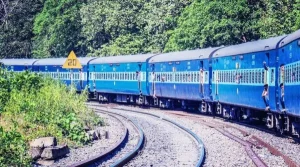
Train from Mumbai to Kerala (Photo Credit – Antriksh Kumar)
getting from Mumbai to Kerala by Road
The least recommended option is to travel from Mumbai to Kerala by road.
The distance from Mumbai to Kochi is 1377 kms.
There are no direct buses that ply between the two regions.
Driving to Kerala with a rented car would mean a journey of two days with a night halt. Moreover, a car hire would be very expensive and not all car rental agencies would be willing to send a car and driver from Mumbai to Kerala.
We recommend either taking a flight or train when travelling from Mumbai to Kerala as the drive would be tiresome and expensive.
Long Route
Stops en route
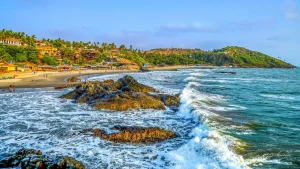
Goa, the most popular beach and party destination comes right between Mumbai and Kerala. You can either take a train or fly to Goa and then travel onwards to Kerala, or explore more travel options.
You can also make the entire way from Mumbai to Kerala your travel route. This way, you can stop at additional interesting places like the temple and ruin landscapes of Hampi, the charming palace town of Mysore or the green region of Wayanad. From there you can easily get to Calicut and head down to Kochi by train. Our guest Rachel did this on her two-week-trip across South India. Check it out!
An alternative route is to fly from Mumbai to Mysore directly. This avoids the long Goa – Hampi – Mysore train journeys to then going to Kerala. This was Daphne’s idea for her two-week-trip to Kerala in May.
Alternatively, the coasts of Maharashtra and Karnataka are dotted with idyllic small coastal towns. You can choose to stop at any one of them. Do remember that you will have very basic tourist facilities there.
For some inspiration, check out Tom and Amy’s trip to Kerala. Alternatively, for any more information or for help planning your perfect trip to India, feel free to contact us!
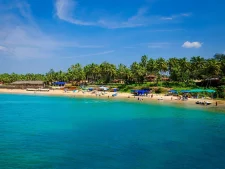
Goa
We would love to help you plan a trip to India that involves getting from Mumbai to Kerala, visiting the gorgeous places en route. Plan Your Trip with us now and we will figure out the ideal travel route together with you.
A Dosa is a delicious crepe-like pancake made from risen rice batter. Cooked with dollops of clarified butter, and served with multiple condiments like Sambar (lentils cooked with spices and assorted vegetables). And some wet chutney made either with grated coconut, lentils, green chillies, mint or onions, tomatoes and red chillies. Not to forget the deliciously fiery Gunpowder or Mulgapudi.
Although it originated in South India, it’s popularity has surged throughout the country. Each stall sells many different varieties, the most common being masala dosa, stuffed with fried potatoes. City vendors usually have plenty of cheese-based options which are to die for!
Dosa (Picture Credit: Awesome Cuisine)
Idli
Idli is a steamed savoury cake that is made from fermented rice batter and is normally served in pairs or triplets. You can serve it with the same chutneys as dosas, but usually with a little extra sambar for the idli to soak up. In some cities, they might throw some butter on top of the idli to make it tastier.
Idli (Picture Credit: Foodie Trail)
Puttu
Puttu is a breakfast dish of steamed cylinders of ground rice layered with grated coconut. It is served with side dishes of chickpea curry or banana. Also, it is usually spiced with cumin, among other spices.
It is made by slowly adding water to ground rice until the correct texture is achieved, then spiced, formed and steamed with layers of grated coconut.
Puttu (Picture Credit: Archana’s Kitchen)
Curd Rice
Moving on from breakfast, we come to this staple South Indian comfort food, ‘Curd Rice’. The word ‘curd’ as used in India usually refers to sour, unsweetened yoghurt. It is most popular in Karnataka, Kerala, Andhra Pradesh and Tamil Nadu.
In Tamil Nadu, it is called ‘dadhiannam’/ ‘dadyodanam’. Various spices can be added to the basic curd rice combination. It’s often eaten accompanied by South Indian pickles such as mango or lime.
It also aids digestion and is eaten post every meal. Some also eat it as the main course itself.
Curd Rice (Picture Credit: Sharan-India.org)
Rasam
Rasam is a South Indian soup which is prepared using tamarind juice as a base. Tomato, chilli pepper, pepper, cumin and other spices as also used as seasonings. Steamed lentils are added along with any preferred vegetables and finally chopped coriander leaves and grated coconut are used for garnishing. Rasam is different from sambar in its seasoning ingredients and is usually fluid consistency.
Rasam (Picture Credit: Untold Recipes by Nosheen)
We at India Someday are big foodies so if you’re ever visiting India and want some suggestions on where to grab good South Indian food don’t hesitate to get in touch.
Looking for a quick trip from Mumbai to Agra? You can consider either taking a train between Mumbai and Agra or a flight to Delhi and then driving down to Agra.
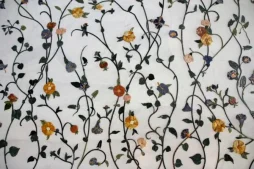
The floral design of precious stones on marble on the walls of the Taj Mahal (Photo Credit – Judson Moore)
by train
Only a few trains stop at Agra station. You will have more options if you take a train to Mathura Junction which is 40 kms from Agra
The train journey can take anywhere between 14 to 20 hours depending on which train you take
Train no. 12953 August Kranti Rajdhani Express is the fastest and most comfortable train to take between Mumbai and Mathura to reach Agra. This train also has tickets under the ‘foreign tourist quota’, so the chance of getting a last-minute ticket is higher.
For such a long journey, you should consider an overnight train for comfort and to make the time pass quickly
by air
Flight is the fastest way to reach Agra. The option that is most easily available are frequent flights from Mumbai to Delhi, followed by a 3-4 hours drive to Agra.
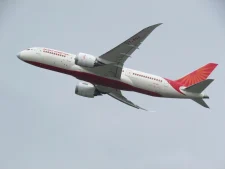
During tourist season i.e. October to March at times there are direct Air India flights from Mumbai to Agra. The flight schedule keeps changing and is not operational every day. A very convenient option when possible.
Flights are the quickest option though they are not usually the cheapest (Photo Credit – Daniel Eledut)
by bus
There is no bus service between Mumbai and Agra. A roundabout option is taking a bus to Udaipur, touring Rajasthan, and then eventually reaching Agra. Here are a few common routes across Rajasthan which include some of the most visited cities in North India.
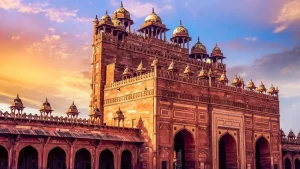
Fatehpur Sikri is another monument to visit during your stay in Agra
Do you like to travel during the leaner months when tourist crowds start thinning out? Even though India is an all year destination, you just need to decide which region to visit keeping the weather or adequate preparations in mind. Accordingly, travelling to India during off-season brings a lot of benefits from great discounts to less crowds etc. So you should plan wisely.
Over blog explains travelling to India during off-season, where to go and what to expect. Before that, to get a deeper understanding of when to visit India, read our blog.
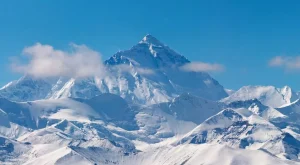
You can do trekking in mighty Himalayas (Photo Credit: TravelInvest)
Which months are off-season months in India?
The beginning of May until the end of September is considered off-season time for tourism in India. This period is divided into two seasons weather-wise i.e. May to June (summer season) and July to September (monsoon season). This means if you are travelling to India during off-season you will experience either the hot summer/wet monsoon/both.
May and June are relatively busy months for tourism in the Himalayas as schools are out for summer trips within the country and lot of families plan trips to the cool hilltops to escape the heat.
At India Someday, we strongly recommend tours to North India during the monsoons as the rains are light and the region does not receive prolonged spells of showers. You end up enjoying pleasant weather, light rains and green countryside.
As India is vast, it differs from region to region; also depending on whether you plan to visit during the summer or the monsoon.
The benefits of travelling to India during off-season, other than in the Himalayas, you can expect to see many breathtaking sights and a lot less crowd while also enjoying the great discounts on accommodation all across India.
Summer off-season months
Expect really hot weather (afternoon temperatures of 40 degree Celsius and rising). You must prepare yourself for the heat, travel slow and pick accommodation with air-conditioning.
DO NOT WORRY, during these months we plan trips with A/C rooms and A/C modes of travel. It’s preferable to start exploring the city earlier in the day, come back for an afternoon nap or R&R at the hotel and then head back out after 16:00 hrs.
Monsoon off-season months
July onwards the heat gets more bearable, late 20 and 30 degree Celsius. Depending on which region you plan to visit you will encounter different amounts of rainfall. In general, the North (Delhi, Varanasi, Agra, Rajasthan and Gujarat) receive light showers never causing hindrance to travel.
Mumbai, Goa and Kerala on the other hand receive heavy tropical rainfall. Having said that, if you embrace the warm rain, the regions are green, teeming with water, and the locals are happy! It really is a special experience, but it will rain!
May and June are the hot summer months. They’re better avoided unless you plan to spend time in the Himalayas. If your dates are not flexible and you don’t mind the heat, fear not for we will plan your trip with excellent air conditioned hotels and modes of travel. Like we said, off-season rates are great!
July to September are the monsoon months. They are still considered off-season months for travelling in India and you also enjoy fabulous discounts. Kerala (South India) receives a lot of rain during these months. However, we believe it is a great time to tour the North India.
Across India, you will enjoy fabulous hotel deals. Expect budget hotels to be 30% cheaper and upper end hotels to be up to 50% cheaper. India has an amazing collection of palace and boutique hotels, that are affordable, and less crowded.
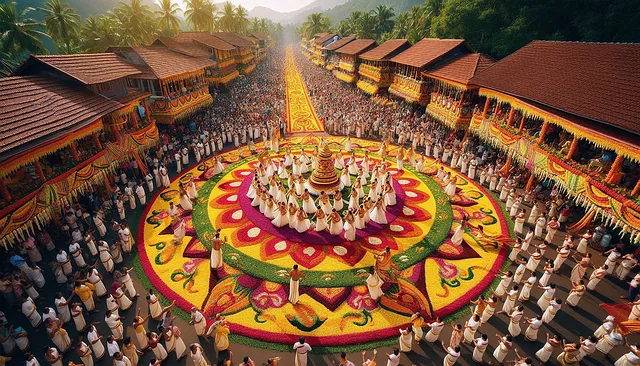
India is a land of festivals, and a lot of festivals are celebrated in August and September. These festivals offer a variety in diversity, such as harvest and religious festivals like the Ganesh Chaturthi (festival for the elephant headed God), Onam (a ten days harvest festival in Kerala), Navratri (a nine days festival to celebrate every form of the mother goddess Durga) and Dusshera (religious festival based on the Hindu mythology of The Ramayana).
You will enjoy the Onam festival in Kerala
If you are unsure about when you want to visit India or how to organise your trip during off-season time, plan your trip withus. We can help you using our travel expertise and candid advise. Traveling during the off-season may work out in more ways than one with the correct attitude and insight so just give us a shout and we’ll help you Plan Your Trip in the best trip possible way for this special time of the year. There’s always something great going on in India, and we know exactly where it all is!
Also, check out our Blog weather series for the different months in India. If you are still not sure when to visit India or where to go at the time you intend to travel, plan your trip with us and we can help you figure it out.
If you are thinking about the car rental process in India, this blog will help you! Hiring a car and driver in India is a great idea if you want to get from one location to another while avoiding the chaos and confusion of the railway stations and busy roads in the country.
There are a lot of affordable commute options in India, but hiring a car makes your travels much more comfortable. In North India, you will find a lot of options, from trains to buses. However, you may miss out on some of the most interesting sites accessible by road in public transport. With your personal car and driver, you can make a stop anywhere you like. In South India, on the other hand, hiring a car and driver is the best way to travel.
In this article, we talk about the car hiring process, the benefits of hiring a car, the cost, and the best places to consider getting a driver to show you around.
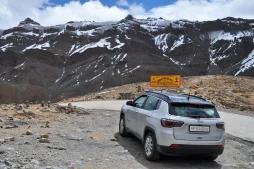
Beautiful views on the way: credit – nomad-bikers
What are the benefits of hiring a car and driver in India?
There are many ways to travel in India – you could take a train, bus, or a flight. You could also hire a car and drive yourself. Or take a tour. So why hire a car and driver in India? Well, as an independent traveler, renting a car and driver is the perfect choice for a comfortable journey.
Getting tickets and boarding crowded trains on the chaotic railway stations can get stressful. A bus or flight, as a public mode of transportation, will not cater to your individual needs. You can hire just a car and drive yourself, but we would not recommend it, since the roads in India are often not in a good condition, and road rules are not always followed. Plus, having a driver along with the car gives you more time to relax and enjoy your vacation.
Having a car and driver gives you immense flexibility. You can leave a place at any time you like and make as many unscheduled stops en-route as you want. Plus, if you have a chatty driver, it can be a great cultural experience for you. Drivers in India are usually from a lower or lower middle class background, living on the road and learning English on the job. Having conversations with them will open new doors to the country you cannot get anywhere else.
Car rental in India is very affordable. The comfort of a nice car and chauffeur, the convenience and flexibility, and the driver’s local knowledge of the region, makes touring India with a car and driver a great option. In terms of value for money, it is a good idea for a cultural Indian experience.
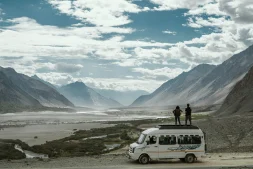
Stop to capture the scene (Photo Credit – chinh-le-duc)
What is the cost of hiring a car in India?
There is no standardized cost for hiring a car in India. The prices usually depend on the car vendors, the type of car, the region, and the quality of services. You can find your own vendor if you wish to, but at India Someday, we work with vendors who we can vouch for ourselves in terms of quality and service provided. We will only recommend experienced drivers who can speak English and know the region well.
Here is a ballpark estimate of the daily rate for common cars; however, do remember this is an estimated cost –
Approx INR 5200 per day for aSedan Car. (You can fit up to 3 adults comfortably)
Approx INR 6500 per day for an SUV segment car,Toyota Innova is the most popularly used car. About 4 adults + 1 child can fit here very comfortably.
Approx INR 10000 per day for aminivan. This can fit up to 8 adults, has variants that can fit 10/12 adults too.
The Prices Include:
A good quality air-conditioned car
Driver services throughout your trip
All road tolls or taxes
Stay and meal allowance for the driver
Additional Notes
Car rental prices inKerala are about 15% cheaper, as the driving distance between towns is shorter than most other places in India. The prices can also vary from company to company, and the prices given here are an approximation.
The rates are considering you use the car to drive you from between destinations within a region (longer driving distances). Rates for car hire for internal sightseeing within a city, day tour, or a city tour would be cheaper.
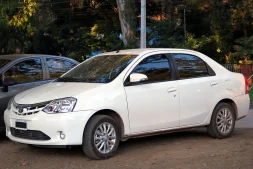
Toyota Etios : Sedan cars mostly used in India for travels
Car Rental Process: How does hiring a car and driver work in India?
We recommend booking a car and driver before you arrive in India. Unfortunately, the process of hiring a car and driver is not very organized in India. You can hire a car and driver through a reputable company or ‘transport agency’, which specializes in providing cars and drivers. Or, you can hire individual drivers that own personal vehicles.
It is preferable to hire an independent driver who drives his own car. His incentive to provide you with excellent service is higher as his business depends on recommendations from clients.
At India Someday, we can help you with all the bookings and car rental processes so that you don’t have to worry about it.
Would the driver speak English?
It really depends on the driver. In more touristy regions like Rajasthan and Kerala, it is easier to find an English-speaking driver. We always search for English-speaking drivers, so that they can tell you about their personal experiences and give you an insight into living in India. Plus it will help with any questions you might have.
Can the driver double up as a guide?
Unfortunately not. The drivers would rarely know enough about the towns from a historical perspective. Also, Indian culture and the history of most Indian towns is very deep-rooted, and it takes an expert to know all about it. However, they’ll most likely have their own tales surrounding places and monuments. If you meet a chatty driver you’re in for a treat!
Can we ask the driver to take us anywhere we want at any time?
You can inform the driver a day in advance of your plans (if you have a rough idea). However, if you have any location you want to visit in other cities, you would have to inform your agent, as there will be an additional charge for the same since you will be covering additional kilometers than the city limits.
Are the costs of the driver’s accommodation and food included?
You will have the car at your disposal throughout your trip and won’t have to pay anything extra for the driver’s food or accommodation, fuel, toll, or any taxes. All these aspects are covered in your overall cost.
How much do we tip the driver?
It is highly recommended to tip your driver at the end of the tour. However, there is no hard and fast rule on how much you have to give the driver, it is at your discretion. It usually varies from INR 100 to INR 200. But just to give you an idea, here is a link toadvice for tipping in India.
Can India Someday help us with the car rental process in India?
Yes! Depending on which regions in India you are visiting, we can always help you find a trusted, excellent driver and car hire.Contact us for more information.
Things to keep in mind
The condition of roads in a lot of cities in India is poor and vehicles can take longer to reach your destination than the estimated time. It will be helpful to take this into consideration while planning your trip.
If you want to tour in comfort, it would be better if you paid extra to get more spacious vehicles.
There is a tax that needs to be paid while crossing state borders, so check if that price is included in your total cost.
The car will need to return to its original destination at your expense, so plan accordingly.
Keep the contact details of your driver handy.
The drivers are not tour guides. They will drive you from one destination to another, and can answer general questions. However, they will not accompany you to the attractions.
Some drivers might have good recommendations for you in various cities, such as hotels for accommodation, or shops, if you want to go shopping. These could be worth checking out, although the drivers may get some commission from the owners. It is completely up to you if you want to try it out, and you can firmly decline if it doesn’t interest you.
Your driver may invite you home to have dinner with his family as a friendly, hospitable gesture. If you feel like your driver has been helpful and trustworthy, you can accept the invitation if you wish to. However, if the driver hopes that you will give him some financial assistance, you can simply ignore the hint. Many other travelers often feel compelled to contribute something, so if you are okay with it, you can go ahead.
If you are going on a tour of the Golden Triangle (New Delhi – Agra – Jaipur), keep in mind that the Taj Mahal is closed on Fridays.
You can never be sure if you are choosing an honest and safe driver. At India Someday, we only book car and driver services that we can vouch for. Contact us to plan the perfect tour for you in India, and we will take care of all your hotels and car rent needs.
If you’re planning on visiting India in December, this article is a must-read. December is when winter season arrives in India, and India in December will vary depending on the region you visit. While South India has pleasant weather with cool temperatures, the North can be extremely cold. It’s more than likely to snow in the mountains, and you can even go skiing! Plan accordingly to find the best places to visit in India in December.
The tourist season kicks off in popular regions like Rajasthan, Kerala and Goa. Christmas time is when many international and domestic travellers go on a holiday. And India, with its constant sunshine and fantastic varied climate, is too tempting to refuse. India in December experiences a huge influx of tourists. But, as long as you book in advance and have a strong travel partner like India Someday with you, you can stay within your planned budget when planning your holiday.
PLACES TO VISIT IN DECEMBER
Goa: Enjoy the nightlife and festivities of Christmas and New Year at the beach.
Rajasthan (Jaipur, Udaipur, Jodhpur): Explore colourful markets, beautiful forts in the pleasant winter weather.
Kerala (Munnar, Alleppey): Enjoy the view of lush green tea plantations and tranquil backwaters in mild temperatures.
Varanasi: Experience Varanasi’s winter festivities and witness spiritual rituals on the Ganges.
Agra: In the cool weather, visit the iconic Taj Mahal and other Mughal monuments.
Andaman & Nicobar Islands: Enjoy water sports like scuba diving and relax on pristine beaches.
Rann of Kutch, Gujarat: December is ideal for attending the Rann Utsav festival and enjoying the beauty of the white salt desert.
Himachal Pradesh (Shimla, Manali): Perfect time for doing adventure sports and experiencing snowfall among the scenic mountains.
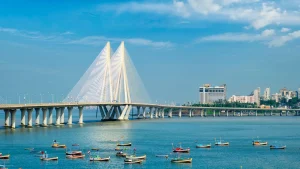
Worli Sea Link
Visiting North India in December
When it comes to visiting India in December, the North is up for grabs. December is a fantastic time to travel to Rajasthan and the neighbouring states of Gujarat, Madya Pradesh and Uttar Pradesh. North India is one of the best places to visit in India in December due to pleasant weather. You can use the full day for activities and sightseeing without it being excessively hot. These areas experience the brunt of the heat from March to June and September to November. However, it can get very cold in the morning and at night – temperatures can drop to below 10ºC (50ºF). Hotels will supply warm blankets. Pack warm clothes and scarves, maybe even a hat and gloves, especially for the desert.
The only issue you might face is the fog, common in North India in December and January, especially in Delhi and Agra. This causes flights and trains to get delayed sometimes, and a limited view of the Taj Mahal early in the morning.
For a nice route through Gujarat, check this trip one of our guests did.
Start your trip to Delhi, the capital of India! (Photo Credit – Mohan Nannapaneni)
The Desert
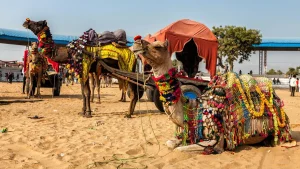
We recommend an overnight safari to the desert, possible in Jaisalmer, Bikaner and a few other destinations. The safari lets you experience the desert and a mesmerizingly full night sky. There are also two fun and interesting cultural fairs that take place in North India in December- The Kumbalgarh Festival (1st to 3rd Dec) and the Mt. Abu Winter Festival (29th to 31st Dec). For some suggestions on travel sites in Rajasthan, click here.
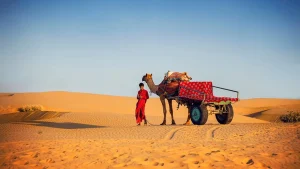
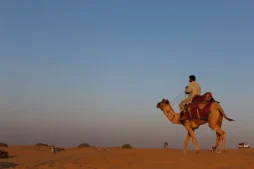
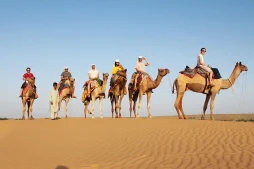
A camel in the desert sand dunes.
The Himalayas
Further North at the foothills of the Himalayas, it gets very cold in December. Often it’ll snow in places like Shimla, Sikkim, or Manali. This can be a magical experience for some but can be quite disappointing for those trying to get a tan. If you’re interested in skiing, then Gulmarg or Auli are good options. However, resorts aren’t as lavish as in the USA, Canada, and Europe. We can help you finalize your travel plans, whether it involves skiing or not. Simply click Plan Your Trip.
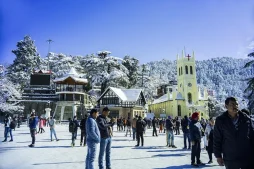
Manali town covered in snow
Visiting South India in December
The retreating monsoon along the east coast ends around mid-December. Sometimes cyclones hit from the Bay of Bengal to Tamil Nadu in places like Chennai, Pondicherry and Mahabalipuram. However, this doesn’t happen often and it would only be in the beginning of the month, if at all. Pondicherry, a former French colony with catholic influences, is a great destination if you want Christmas vibes. Must Know:Best Time of the Year to Travel to India
You can visit the stunning temples in South India
Kerala
The rainfall stops in Kerala during December. While it’s quite warm all year round, it’s pleasantly warm or quite cool in December. In the mountainous areas like Munnar, Thekaddy or Wayanad, it can be as low as 17ºC (62ºF). It is peak season on the beaches so prepare for large crowds around Varkala and Kovalam. Off the well-worn path, we’d recommend Marari Beach, just 45 minutes away from Alleppey. Kerala has also many Christian influences, especially in the backwaters and Kochi region, making it a good Christmas destination. See our route recommendations for Kerala here.
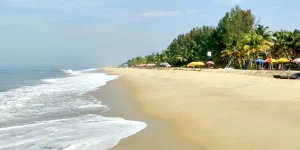
Marari is a little untouched village at the beach, the perfect beach to visit in the winter
Goa
If you want to spend the holidays in Goa, book months in advance. You must plan a multiple-day stay as hotels don’t accept short stays. Prices are the highest at this time of the year with peak season supplement booking charges from December 20th to January 10th. Prepare for very crowded beaches.
Here are some route suggestions for two weeks and four weeks in South India.
Visiting December in India is a common trend. This makes it peak tourist season for many regions. Holidays in December to Rajasthan, South India and Goa need to be booked well in advance, preferably before September. Train tickets are often booked three months beforehand and flights can get very expensive. Emergency bus tickets are available but offer less comfort. Trips to the mountains in the North and Northeast require warm clothing. Additionally, not every activity is possible, so plan your trip wisely.
If you like to escape the Christmas madness and cold in December, plan your trip with us now and we’ll help you decide the best places to visit in India in December.
The Thar Desert is a wonderful place to visit on your holiday, but prepare for the desert chill!
At India Someday, we create personalized itineraries for your trip to India. Contact us, and together we can plan the perfect trip to India for you!
The following is a guest article which talks about exchanging money in India is written by Joe, a hotelier and the director of Tripzuki, and first appeared on the Tripzuki Blog. Hailing from England and having lived in different corners of the world, he has a pretty good grip on the situation here, so we got him to write a short post on getting cash in India.
How to Exchange Money in India?
Our guests would often ask what to do about money while they’re here. Where can I get cash in India? Should I carry cash with me to India? What about travellers’ cheques? Those are probably the top 3 questions people ask.
Firstly, as somebody who travels back and forth to India regularly here’s what I do: just use an ATM and withdraw from my foreign account. However, like all the methods described here, there is no perfect way, and all methods come with some charges or complications.
About making card payments in India
Most modern hotels and restaurants in the big cities will take Visa and Mastercard debit and credit card payments, with charges likely to be between nil or 2 to 5%.
Credit cards are good because you may get some protection in case of fraud. Cards, in general, are bad because of the automated security they put in place. This means when a payment suddenly goes through in Delhi instead of your home country. The computer says ‘Woah, that’s weird! Block that card now!’. You then spend the next hour trying to call your bank, and if you’re really unlucky you’re also standing there with a waiter brandishing your unpaid bill.
In less modern establishments, markets, small family businesses, and so on, you’ll be using cash. In other words, you will need cash in India. Oh, it comes in handy for tipping as well.
‘Paisa’ in Hindi means ‘money’. It the lowest denomination of currency in India, but you won’t see them or be expected to pay them. So what’s the best way to get hold of Indian rupees (also interchangeably written as ‘INR’ and ‘Rs’)?
In most major cities and tourist destinations you will be able to find an ATM. They have spread across the country. You wouldn’t believe how many different banks there are; I counted almost 200 once!
Indian ATMs are a bit quirky in that they’re often a separate, tiny shopfront with a locked door and a half-asleep guard outside. Approach and he’ll open the door for you if it’s not already occupied.
Chances are that you’ll have to put your card in and pull it out a second later – swiping it in effect – and in some machines, you even have to leave your card in. Anyway, to a foreigner it can be a bit confusing but you’ll get the hang of it. The guard will probably help you if you get stuck (as will most Indians).
There are 2 catches to using ATMs in India. Firstly, there is often a maximum withdrawal limit of 10,000 to 15000 rupees. So if you want more than that, head down the road to another ATM and repeat the process.
The second catch is that the bank will give you a crappy exchange rate and your card-issuing bank will undoubtedly charge you a foreign withdrawal fee as well. I paid 5 UK pounds per transaction on my last trip. Banks, huh! (Few banks which you might see in all cities are HDFC Bank, ICICI Bank, State Bank of India (SBI))
You can usually get rupees at the airport but the exchange rate will be really bad. Not only can it be hard to estimate your spending in advance, but who really wants to carry around a huge wad of notes when they’re on holiday?
This can actually be a good option. You can go to an Indian bank that deals with foreign exchange (not all do), stand in line, and get not such a good rate. Alternatively, you can often exchange at your hotel or with a high-street money-changing office (or just a guy that somebody recommends).
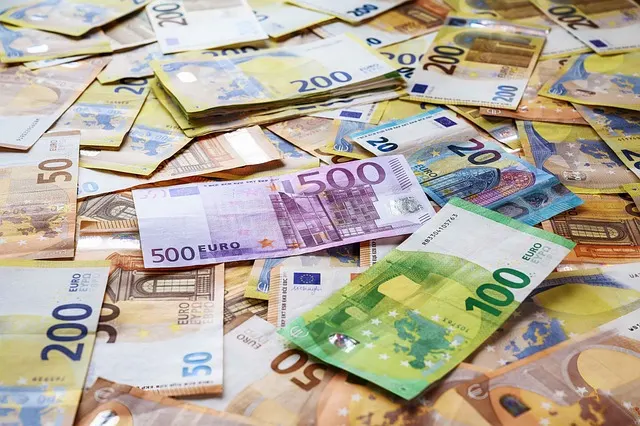
The rates in this case vary but often don’t get much worse than the banks’ rates. It’s often the case that foreigners worry about being ripped off in India but with money exchange, I wouldn’t get paranoid about it. If you go to somebody that is recommended by your hotel then chances are they will have a reputation to maintain, and ripping off tourists makes everybody lose face. The best currencies are US dollars, UK pounds, EUR and AUD.
Do people still use these? I guess they do but as mentioned above, not all Indian bank branches deal with foreign exchange. Despite being shockingly behind the times, even the ones that do might not change your cheques. My advice is not to bother with this option.
So, in conclusion, I’d say there are 2 ways to go about things: take a couple of cards and take some rupees or strong foreign currency. Personally, I’d say just with a couple of cards is the easiest way to travel. Yes, you pay ATM charges, but when you change money, you get hit on the exchange rate, which may seem less tangible but it’s still a charge.
When listing places to visit in India on your travels, the North should certainly come at the top of your list! North India covers an area of approximately 1 and a half million sq km, and is endowed with incredible nature, diverse climatic conditions, and a myriad of cultural practices. This article will explore the twenty best places to visit in North India. This article will explore the twenty best places to visit in North India and give you a glimpse of the diverse beauty the region has to offer. We will cover the prominent historic ‘Golden Triangle’ of Delhi, Agra, and Jaipur, and take you through the deserts of Rajasthan and into a beautiful Himalayan paradise. Here are the 20 best places to visit in North India!
Plan your trip with us now and we can give you all the details of any place that interests you!
In ancient northern India, Kathakas communicated stories from the great epics and ancient mythology through dance – Photo Credit Saksham Gangwar.
Delhi – A Capital with Character
Chances are New Delhi will be your primary touch point with India, especially if you’re looking to explore North India. As the capital city of the country, no visit is complete without soaking in the rich history of Indian modernity that is Delhi. This is displayed through its construction, architecture, monuments, tombs, temples, ruins and more. All areas offer a unique component to the sprawling city, with highways interconnecting with the rest of the country.
Whether you’re interested in history – visit Old Delhi, looking for some street shopping – plenty to choose from (Sarojni Nagar, Lajpat Nagar, Palika Bazaar), eager to try the delicious street food (UPSC, Nathus), or even to splash out at the designer stores (Luxurious malls are plenty), you’re sure to find what you love in the capital city.
As time passes in this buzzing city, you will find yourself discovering so much within the mesmerizing metropolis. The best time to visit has to be the spring and autumn months – specifically November to March – as the climate would make it easier to move around and explore while also avoiding the unrelenting monsoons.
Agra – More than just the Taj Mahal
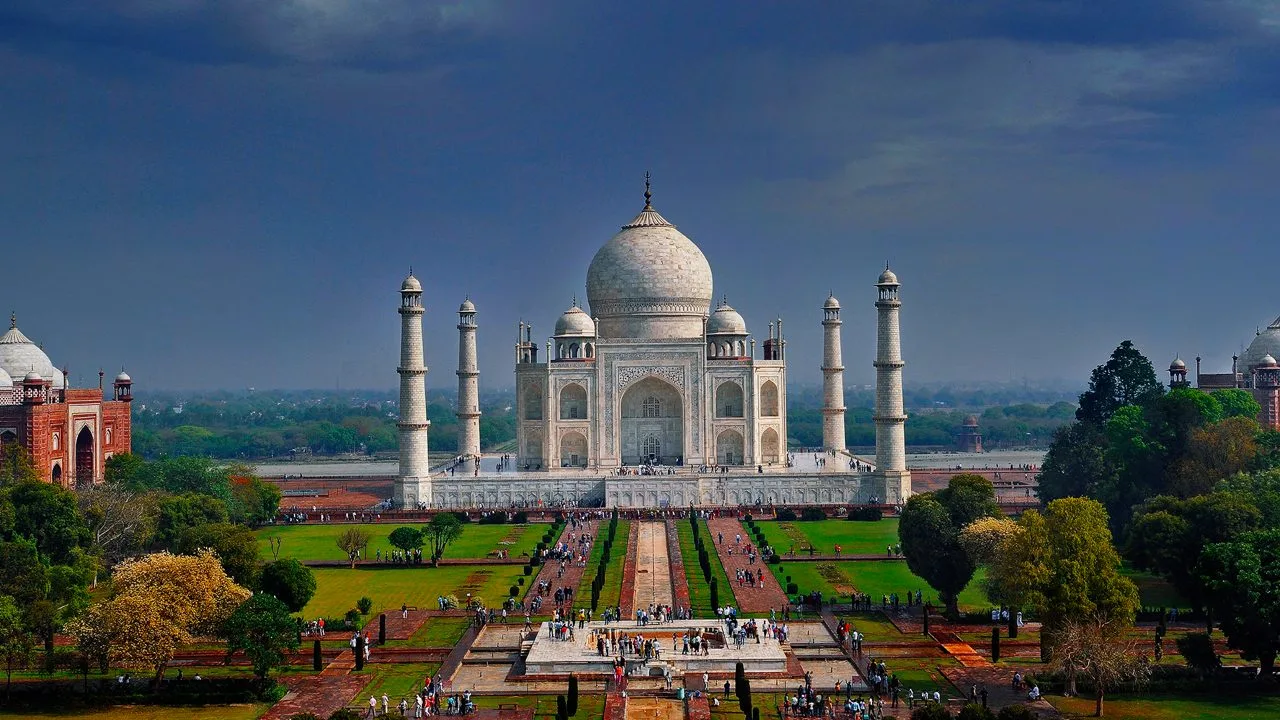
The Taj Mahal – one of the world’s new Seven Wonders of the World makes for the most obvious tourist attractions of North India. The undoubtedly magnificent monument that resides in this city is an absolute must on your trip to North India. At dawn or dusk, the Taj Mahal will leave you captivated, inspired, and enthralled. Be sure to also visit some of the other glorious sites in this riveting city.
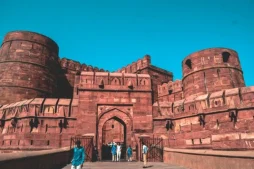
From the Agra Fort and the Baby Taj to Akbar’s tomb and the fortress city of Fatehpur Sikri. The unique historic significance is one to remember and the architectural genius is beyond comprehension. Further, experience swanky accommodations, craft emporiums, and restaurants in Sadar Bazaar. Agra is a fabulous insight into the extravagance and the artistic impulses of the Mughals and their social effects. There’s a reason the Taj is consistently of the global top places to visit.
Agra Fort! The gem of the Mughal Era – Photo Credit Arun Geetha Viswanathan.
Jaipur – Take a Piece of Culture
Jaipur, lovingly called the pink city due to the colour of the old city, is the biggest and most bustling city in Rajasthan. From old to new and everything in between – this north Indian city enjoys a bustling city life while also embracing its history. Find some beautiful handcraft and souvenirs in the old city bazaars. The courtyard-like markets will deliver top-notch textiles and accessories made into ethnic wear. Try the kachori from ‘Kanji’ or the traditional ‘dal bati’ at old Jaipuri food joints for different, interesting food.
The monuments in Jaipur are beautiful, picturesque and a marvel to explore. The Amer Fort’s lighting is exquisite, be sure to experience the light and sound night show. Further, visit the Sheesh Mahal (palace of mirrors), the Galtaji ‘Monkey’ Temple, the Nahargarh Fort and the lesser-known Royal Cenotaphs. Jaipur is a photographer’s paradise with its Rajasthani architecture. Anyone interested in history, culture and urban life will have a blast.
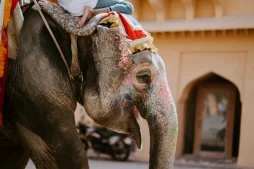
Ride an elephant up the hill to the main entrance of stunning Amber Fort (Photo Credit – Annie Spratt)
Ranthambore – To Spot a Tiger
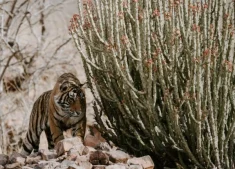
Ranthambore National Park is one of the top places to visit in North India for tiger sightseeing, your odds of an encounter are high! Tigers here assume ownership of the park, unperturbed by visitors and their cameras. As far as places in North India go – this is one as unique as it gets! The proximity of this reserve to the capital of India, Delhi, Agra and Jaipur makes this a convenient trip for travellers.
In addition to these stripy cats, there are also hyenas, leopards, crocodiles, cobras, vipers, tortoise and a plethora of birds. Experience the entire park from the top of the Ranthambore Fort. Visit their website for more details about opening times. This makes for a nice alternative to Jim Corbett National Park for a less tourist vibe.
At Ranthambhore, the Bengal Tigers greet you! (Photo Credit – Annie Spratt)
Jaisalmer – The Desert’s Golden Edge
Jaisalmer is relatively more difficult to get to (overnight train from Jaipur or drive from Jodhpur), but entirely worth it. The ‘Golden City’ is a typical Rajasthani desert town, with camel rides at sunset, and truly one of the best places to visit in the state. You can also camp in the desert amidst the arching sanddunes.
The village folk in their vibrant turbans fill the bazaars and there is no match for Jaisalmer’s sandstone structures. Walk through the meandering streets with no fear of getting lost in this medieval gem. Look for traditional dance performances and don’t forget to visit the Jaisalmer Fort and embrace the scenic beauty of Gadsisar Lake, two unforgettable experiences.
Incredible Golden city of India!
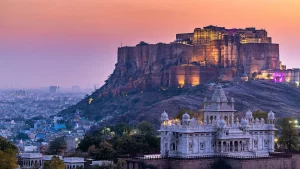
Jodhpur – home of the mighty mehrangarh fort
While we are in Rajasthan, we can’t miss out on one of the best tourist places in North. The small town of Jodhpur borders the Thar Desert to the east, getting the best of the desert while still not entirely in it. Almost all houses in the old town are painted in a beautiful baby blue, creating the ‘Blue City.’
The stunning Mehrangarh Fort (easily Rajasthan’s most beautiful) looms over the blue colours. Ziplining off the fort is a brilliant experience one shouldn’t miss. Apart from the fort, go around town if you have time; see the puppet makers, tie and dye artists, spice markets and more. Lose yourself in the bazaars that circle around the clock tower at the heart of the city. The Jalori and Sojati Gates will give you a nostalgic feeling of Jodhpur’s age and history.
Pushkar – Small, Sacred and Young
Another one of the tourist places in North- Pushkar packs a punch. Legend says that Lord Brahma, a Hindu deity, dropped a lotus flower in a place north of Ajmer, and there a lake sprung out. Pushkar and it’s sacred Pushkar Lake are an incredibly important pilgrimage site, and also attract many young backpackers. The lake is flanked by hundreds of temples and Ghats, one of them being the only Brahma Temple in India.
Further, there are rooftop cafes, bakeries and a very colourful market filled with handicrafts, hipster clothing and food. Sunset by the lake is a great experience. If you come to the Pushkar Camel Fair in November, you’ll see throngs of pilgrims, folk musicians and artists, camel traders; a charming desert vibes during the festivities. Climb to the Savitri and Gayatri Temple to get views of Pushkar from above and beautiful sunrises and sunsets. Remember to book in advance for the fair.
Popularly known as Benares and Kashi, the oldest living city lies off the famous Ganges River. The banks of the river have an array of Ghats leading to holy waters. Here you’ll witness priests, pilgrims and religious folk in colourful attire performing rituals in the river.
The Varanasi Ghats are also where Hindus religiously cremate their dead and where the Ganges aarti takes place. Watching this ceremony take place is one of the most intense and moving experiences you can have in India. Varanasi has a unique vibe as one of the major pilgrimage sites and some of the oldest, most ancient temples. ‘The city of lights’ is one of sages and priests where deities abound and is definitely a must visit spiritual destination.
Varanasi! The essence of the spiritual and ancient city of India (Photo Credit – M M
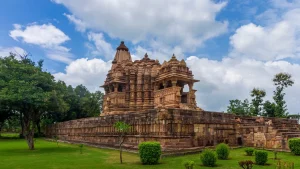
Khajuraho – The erotic temples
The sensual sculptures of the Khajuraho temples are incomparable to anything else. There are several theories as to why the Chandela Dynasty had such explicit erotic temples built in the 10th century. In 1838, the British rediscovered this forgotten architectural marvel, 400 kms Southeast of Agra and West of Varanasi.
The Western Group temples are particularly stunning with pinkish sandstone and almost 3D reliefs creating a realistic account of the practices involved. Add this to the subtle changes in hues by the changing daylight, moonlight and the night floodlights and you’ll be admiring for hours! Khajuraho village, although belittled by the grandiose temples, has its own discreet charm as a laidback spot with a nice market and pretty restaurants. The Dance festival there is a great time to visit Khajuraho.
Amazing temples of Khajuraho!
Udaipur – Charming city of Lakes
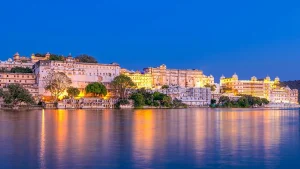
Udaipur is a famous rich and romantic setting you’ve probably seen but never known where it’s from. Lake Pichola seems painted with an array of island palaces with beautiful balconies, Havelis (royal decorated mansions), Ghats and lovely restaurants all with views of the lake and its surroundings. Some of these island palaces have been transformed to hotels, like the Lake Palace Hotel and the Jag Mandir. The City Palace east of the lake is a wondrous century-old palace built over hundreds of years. Fateh Sagar is also to the north of the lake. With such a variety of views in the ‘City of Lakes,’ it’s a must on any trip to Rajasthan.
Udaipur – The mesmerizing city of lakes
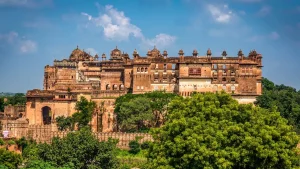
Orchha – The Hidden Gem
Chhattisgarh is a more or less undervalued gem, Orchha is a must-visit if you’re taking a trip to Khajuraho. The name itself actually translates to a ‘hidden place’, an apt meaning for this dhak-covered medieval town. Its architectural value has been recognized over the years. Its lovely shikhara, palatial remains, havelis, and sandstone cenotaphs invaded by flora have all been preserved.
The village is a great place to visit, to relax by the Betwa River on your way down to other cities. Orchha has become more popular, you’ll find many guided tours and tourists here. The best way to enjoy it is to let the bustle clear, lay back and take in the charming historical aura of this beautiful place.
Explore the architectural splendour of the monuments in Orchha
Kanha National Park – Sit in Nature’s Lap
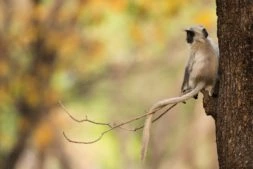
The Kanha National Park in Madhya Pradesh is easily one of the finest wildlife sanctuaries in India and might not quality as a one of the tourist places in north. While, yes, I could have easily recommended Jim Corbett National Park – Kanha is special too – It sprawls over 940 sq kms of deciduous forest cover, grasslands, hills and rivers.
You’ll spot a myriad of bird species and other fauna (tigers) and be awestruck by the early morning beauty of the park. Tiger spotting is more difficult than in other reserves. However, it’s totally worth a visit for the rest of the wildlife and the refreshing countryside views it offers.
Travel through the diverse wildlife at Kanha National Park
Bandhavgarh National Park – Bengal Tiger Territory
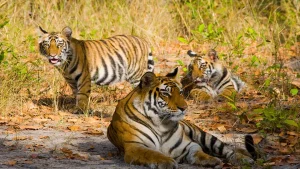
195 kms from Jabalpur and 237 kms from Khajuraho, this national park houses the most number of tigers in India. The Bandhavgarh National Park is 448 sq kms and by far the best reserve to spot tigers. During season time, you’ll have the best chances to see them and get insight to their lives and habits.
Accommodation is available near the park entry, which makes it even more convenient. Check out the different sort of birds while lounging at your lodge. If you’re more interested in architecture or history, it also contains some enthralling ruins.
Bandhavgarh National Park is one green destination where you can not only spot the elusive tiger but also leopards, elephants, and white tigers.
Rishikesh – a Charming and Spiritual Himalayan Escape
Relaxing in the foothills of the Himalayas, both Haridwar and Rishikesh hold a crazy mix of different types of people. From yogis, sanyasis, travellers, hippies, backpackers, adventure sports enthusiasts and more, they all come to enjoy the Ganges River. While Haridar has Har ki Pauri to pray to the Ganges river, the hill station of Rishikesh has a stunning backdrop with the Garhwal Mountains looming over.
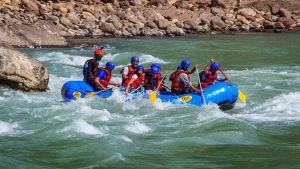
There are many ashrams and yoga centres here. Rishikesh is also a haven for adventure seekers – here, you can go white water rafting, mountaineering or on one of the easier recreational treks. The unparalleled adrenaline rush of bungee jumping and the tranquility of its original charm, make Rishikesh a spiritual and exciting place. Walk upriver, sit among the rocks and meditate.
From Haridwar – the food scene is unmatched – indulge in all sorts of street food. All in all, it’s a lovely experience to spend a good amount of time with, hence one of the best places in North India that can be visited throughout the year, thanks to them being in the lap of the Himalayas.
Breathtaking adventures in Rishikesh (Picture Credit: Live Free Hostels)
Amritsar – An Awakening of Humility
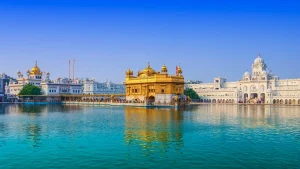
Amritsar, Punjab’s largest city and holy city for Sikhs, is famous for its Golden Temple and stately domes that command the busy old town streets’ view. Walking around the bazaars and the narrow by-lanes of the old quarter is an experience on its own.
The north indian food here is unmatched – do indulge! There is also a golf retreat at the Wagha border 29 kms west (Indo-Pak frontier) where Indian and Pakistani soldiers elaborately bring down flags every evening. Interested in history? Visit the site of Jallianwala Bagh (where silent protestors were massacred during India’s struggle for freedom and independence).
Soak in the sights of the Golden Temple and explore the beautiful Amritsar
Chandigarh – An urban design benchmark
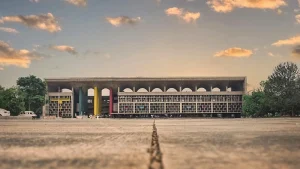
The interesting administrative bureaucratic mess surrounding Chandigarh isn’t the only worthy thing about this city. It’s modelled on Jawaharlal Nehru’s vision for a city ‘symbolic of the future of India, unfettered by the traditions of the past, [and] an expression of the nation’s faith in the future.’ Architect Le Corbusier (Charles Edouard Jeanneret) designed Chandigarh back in 1952 as the progressive town undergoing structural experimentation.
Even amid controversy, architects and designers study Chandigarh’s buildings across the world. It’s much cleaner and greener compared to other major Indian towns. The rock garden here is the most frequented tourist destination in India after the Taj Mahal. No wonder, Chandigarh is often called the “city beautiful” or the planned city of North India. Best time to visit is definitely November to February, where you can indulge in local festivals such as the rose festival held in February every year.
Chandigarh – A well organised city!
Dharamshala – Center of Buddhism in India
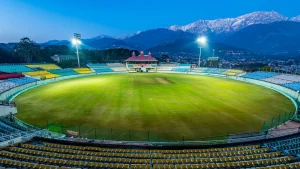
Home to the Tibetan spiritual leader Dalai Lama and the exiled Tibetan government, the hill station of Dharamshala has a unique spiritual vibe to it. The Dalai Lama stays in McLeod Ganj, slightly North in Himachal Pradesh, and there are numerous monasteries that make the valley wonderful. While you can buy Tibetan souvenirs and eat the best momos in India, Dharamshala also offers some of the most natural beauty for you to enjoy.
There’ll be heavy snowfall in the winters and heavy rains during the monsoon season, but after the monsoons, it’s perfect to visit. With picture perfect views of snow covered mountains, the best time to visit Dharamshala is definitely April to June or October to March.
You can stay at McLeod Ganj in one of the many lovely lodging options there. Visit the Dalai Lama Temple, especially during chanting and spin the prayer wheel for good fortune. Dharamshala is also the base for superb Himalayan treks. There are numerous things to do in this region, so you can spend weeks and not get tired of it all.
Dharamshala makes you leave everything aside and just get pampered by nature’s beauty
Shimla – Cool, Colonial and Charming
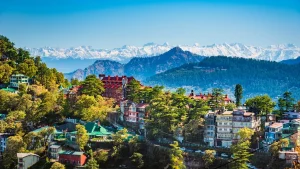
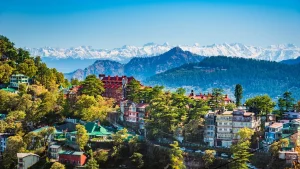
This Himalayan hill station is wonderful, houses steep valleys, apple orchards and maize terrace farming on its hills. Shimla is at 2159 meters and always has cool weather and stunning views. Unsurprisingly, the British made it their summer capital, retaining its colonial aura through churches, mansions, resorts, culture, and British-named shops and homes, and the city even flaunts an old-school mall road. Christ Church and Scandal Point are major landmarks there. The Mall Road is the main shopping area and the Gaiety Theatre hosts several shows. Indian tourists visit from May to June, so if you want to evade the crowds, come in a different season. October and November are great times to visit to soak in the natural beauty of this quaint hill station, but book in advance. Keep an eye out for brass bands, sports screenings and pony rides.
The Kashmir Valley is easily one of the best and most beautiful destinations in North India. This exquisitely cool and lush place is like heaven on earth. Entering from Jawahar Tunnel or Zoji La Pass, the views will be fantastic, verdant and perfectly mountainous. The natural beauty of the snow capped Pir Panjal Range, the bright green fields of corn, wheat, almonds,many popular hill stations sprinkled throughout etc., and some of the highest quality wood only adds to Kashmir’s beauty. Benign spices blended perfectly make the cuisine special. Not too industrialised, the renowned handicraft of Kashmir is worth checking out. Kashmir is also home to Gulmarg Ski Resort. For those looking to ski in India, check out our blog!
Fall in love with the beauty of Kashmir Valley
Leh and Ladakh – Distinctly beautiful valley
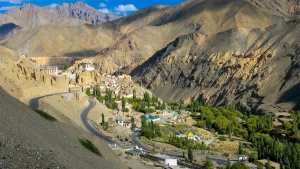
A nature lovers delight, Ladakh is an entirely separate part of the country in administration, culture and terrain. ‘The Land of High Mountain Passes’ is often called ‘Little Tibet’ for its rich Buddhist culture. There’s no lack of hill stations in Ladakh as well – whether you stay in the quaint little village of Stok and Turtuk or the bustling city of Leh – you’ll have plenty to discover. Ladakh is a Himalayan desert in North India and the ultimate experience for extreme bikers and drivers. It’s a sparse landscape, but the terrain changes are otherworldly. Leh is Ladakh’s stunning thriving capital. To its North lies KhardungLa, one of the highest drivable pass in the world that reaches the Nubra Valley’s sand dunes. Pangong Tso is an incredibly lovely picturesque lake.
You need a permit to visit, so reach Leh a day early to get them. A jeep or a bike is ideal to traverse the region. While there is very little rain and snowfall, it’s very inaccessible because of the heavy snowfall blockages to reach Ladakh. As you venture farther into the wilderness, it becomes less accessible but not impossible.
Vibrant Ladakh colours!
These are a few of our favourite places to visit in North India. We hope you now have some new destinations on your list, but feel free to contact us for any help planning your dream trip to India!
If you’re interested in visiting any of these places, contact us or directly fill our form and we’ll start planning your perfect trip.
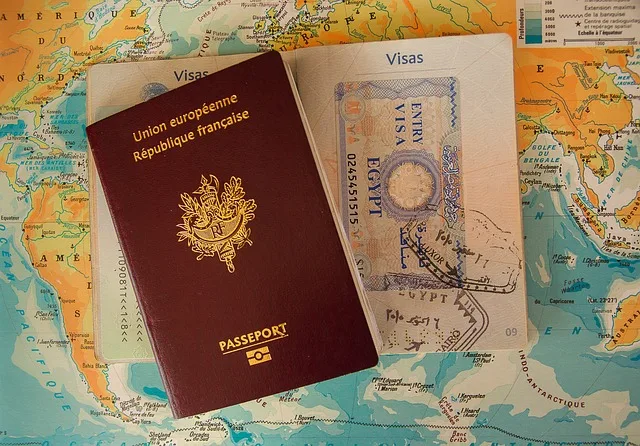
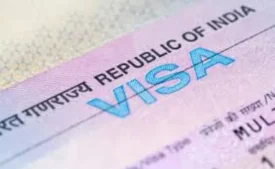
One will need to get Indian visa information and its process before applying before you plan your visit to India. For this, you’ll need to go through the Indian visa application guide. Especially if you are not an Indian citizen. Because if you are not an Indian citizen, you are not eligible to apply for the status of ‘Person of Indian Origin (PIO)’ or an ‘Overseas Citizenship of India (OCI)’. This article will provide you with an insight on how to go about applying for an Indian tourist visa. Read more about applying for a Tourist Visa to India.
Eligibility for a PIO card
a) Individuals who have had an Indian passport before at any time.
b) Individuals having at least one parent, grandparent or great grandparent born in India or is a permanent resident of India. Along with none being citizens of a foreign country.
Eligibility for OCI card
Individuals who have at least one parent, grandparent or great grandparent who
a) Were eligible to become citizens of India on 26th January, 1950.
b) Belonged to a territory that became a part of India after 15th January, 1947.
c) Were citizens of India on or after 26th January, 1950,
How to Apply for an Indian Tourist Visa?
A Tourist VISA is the type of visa that one will need to visit India for a vacation.
Check if you’re eligible for an OCI or a PIO
VISA Application Overview
a) Certainly, you can use the online VISA application system to make the applications.
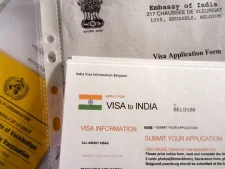
b) Indian Visa Application Form – You fill and submit the application form online. Followed by an interview that needs to be scheduled at the relevant Visa Application Centre (IVAC) or Indian Mission/Post. You will need to sign a copy of the filled-in application form. And, in addition to all required supporting documents, you will need to submit the form on the scheduled date of interview.
c) You can find the details of supporting documents needed and instructions for filling the online form, on the website above. Scheduling the appointment and the status of submitted applications can be done on the same website too. Also, you can contact the relevant Indian Mission in order to obtain the information.
d) To process applications and issue VISAs, it will take a minimum processing time of three working days. After that, Tourist VISAs are typically granted for a period of 180 days and allow multiple entries into the country. No Documents are required at the time of submitting the application. Five-year tourist visas may be granted if the applicant is connected with tourism professionally.
Indian Visa application form
Guidelines for filling out the online application form
a) The online application form is meant for individuals who are applying for a VISA from outside India.
b) A separate application has to be filled out for each individual applicant.
c) Once the online application form is submitted, further modifications are not allowed.
d) An option to save the online application form prior to submission is available, to allow verification and changes.
e) A file number will be automatically generated after form submission, and this is needed for all further communication regarding the application.
Online Application for Visa- Photo Credit Dennis Sylvester Hurd
Guidelines for uploading digital photographs
The online application process requires uploading a digital photograph of the applicant. The photograph must meet the following specifications:
a) Format: JPEG
b) File size: Minimum 10 KB, Maximum 300 KB
c) Image size: Minimum 350 pixels (width) x 350 pixels (height), Maximum 1000 pixels (width) x 1000 pixels (height).
d) The photograph must present a front view of the full face with eyes open.
e) The head must be in the centre of the frame. And the full head from the top of the hair to the bottom of the chin must be visible.
f) The head must measure 1 inch to 1-3/8 inches (25mm to 35mm). The eye height must be between 1-1/8 inches from the bottom of the photograph.
g) The background must be plain and light coloured (white or other colours allowed).
h) No shadows on the face or background, and no borders on the photograph.
Appointment Scheduling
Applicants can schedule appointments as per their suitability with the concerned Indian Mission.
Each applicant needs to schedule a separate appointment.
The online application form is meant for individuals who are applying for a VISA from outside India- Photo Credit Steve Johnson
The sequence of steps for filling out the online application form
Accessing the online Visa application system.
Filling out the application.
Verifying the details and submitting the form.
Then, recording the system-generated file number for all further communications with the relevant Indian Mission.
Following successful submission, an automatic confirmation for making an appointment will be requested by the system. Select ‘Yes’ to seek an appointment and make an online payment or ‘No’ to just print the submitted application form.
If the response is ‘No’, then the applicant is required to print the submitted online application. Once printed, visit the relevant Indian Mission along with supporting documents for further processing.
If the response is ‘Yes’, select the appointment date and time at the relevant Indian Mission online.
Next, an e-Payment’ system allows making a payment online.
If e-Payment is not available, then the payment has to be made physically on the day of the scheduled appointment.
To apply for your Indian Visa immediately and enjoy your Indian holidays!
Apply for your visa now and enjoy a wonderfully exotic holiday to India (Photo Credit – Julien Tromeur)
With a topography of mountainous terrains, gently undulating hills, deep valleys, ancient ruins, and vibrant capital cities, there are many, many offbeat travel destinations in India.
A journey in India is an extraordinary excursion through popular tourist attractions, exquisite offbeat destinations, completely isolated locations, ancient rainforests, blossoming historic sites, and architectural wonders. While some of the places are hidden gems, some others are once-forbidden regions eager to welcome visitors now. With its scenic beauty and mystical charm, India has an enigmatic yet buoyant nature.
From India’s oldest ethnic tribes in North East India to the scenic Western Ghats, from the snowy mountains in the North to the backwaters in the South, India has the most beautiful tourist destinations to provide you with the perfect fairytale vacation.
Here are 30 of the best offbeat places in India for your next trip or offbeat family vacation.
Find the best offbeat destinations to travel in India!
Nubra Valley, Ladakh
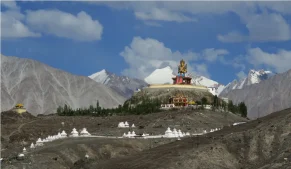
Nubra Valley in Tibetan language means the Valley of Flowers. You need to apply for a permit to visit this stunning valley, since it is home to many endangered wildlife species. You can explore ancient monasteries and villages around the valley, including the popular Diskit Village. You can try activities such as camel riding and river rafting.The best time to visit Nubra Valley is between May and September.
Nubra Valley
Hemis, Leh
Hemis, or Hamis, is a small town on the banks of the Indus River. The beautiful village located in Leh district is famous for the Hemis Monastery. Built by the king of Ladakh, it is one of the wealthiest monasteries in India. The monastery has an incredible statue of Lord Buddha made of copper, with stupas made of gold and silver, thangka paintings, and beautiful murals. The annual Hemis Festival is held here in June every year. Hemis is also known for the Hemis National Park. While the park houses a variety of wolves, langurs, marmots, deer, and red foxes, the most spectacular animal here is the rare and endangered snow leopard.
The best time to visit Hemis is from April to June.
Hemis National Park, Leh
Gurez Valley, Kashmir
Kashmir is a popular destination in India among tourists, but not many people have heard about the Gurez Valley in Kashmir. A perfect camping and trekking destination, the remote town is surrounded by snow-capped mountains and cold water streams all around.
You can witness the nomadic life of shepherds in the valley, and experience the local food and culture. Besides watching the mesmerizing views of the Himalayas, you can also explore Wular Lake, Peer Baba Shrine, and Razdan Pass.
The best time to visit Gurez Valley is between June and September.
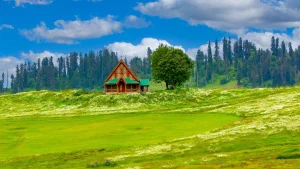
Gurez Valley (Picture Credit: Cliffhangers India)
Khajjiar, Himachal Pradesh
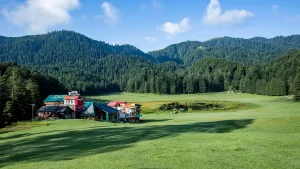
Himachal Pradesh’s Chamba Valley is a popular tourist destination, but there is another place in this gorgeous state that you must visit – Khajjiar, often called the “mini Switzerland of India”. Surrounded by lush green meadows and snow capped mountains, Khajjiar is well-known for its pristine picture-postcard environs, including a brook-fed lake and the massive Western Himalayan Alps.
Relax by taking a walk in the meadows or exploring the nearby temples. The Khajjiar Lake is a popular place for boating and horse riding. You can trek to the Kalatop Wildlife Sanctuary, or try some adventure sports like paragliding, zorbing, and more.
The best time to visit Khajjiar is during the summer months between April and June, when there are beautiful blue skies and a pleasant climate.
Khajjiar, Himachal Pradesh
Andretta, Himachal Pradesh
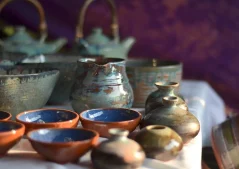
Around 13 kilometers from the massive tea gardens of Kangra Valley Palampur district in Himachal Pradesh is the small village of Andretta, an artists’ colony. An Irish theatrical artist and environmentalist, Norah Richards, moved to this peaceful village from Lahore in the 1920s. She founded the artists’ community here, which is frequented by many artists.
Many art enthusiasts from all over have admired Andretta’s pottery work and art collection. What makes this town with its artistic plethora even more picturesque is its location, surrounded by the Himalayas.
The best time to visit Andretta is from March to June and mid-September to November.
Andretta Pottery (Picture Credit: Tripadvisor)
Thanedhar, Himachal Pradesh
In the state of Himachal Pradesh, against the backdrop of the mighty Himalayas, lies the town of Thanedhar, an untouched beauty devoid of any chaos. This offbeat destination offers a stunning view of the snow-capped mountains, especially during sunrise or sunset when the sun’s fiery red hits the white snow.
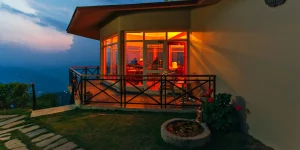
The town is renowned for its apples – you can find the entire valley filled with vividly-colored apple trees that change colors with the changing seasons. It is the ideal location to simply relax. You can stay at theBanjara Retreat and enjoy fabulous views from your room of this unexplored area in India.
Banjara Retreat (Picture Credit: Banjara Camps)
Mana, Uttarakhand
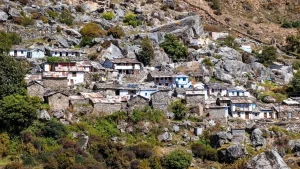
Situated on the Uttarakhand-Tibet border, Mana is the final village of India. Mana sits at an elevation of 3219 meters above sea level on the banks of the Saraswati River, home to the Bhotias, or the Mongol tribe.
Known as the ‘Tourism Village’ in Uttarakhand, Mana is considered India’s spiritual glory with some beautiful waterfalls, lakes, hiking trails, and mountain peaks in the world. On clear nights, you can see shooting stars and the Milky Way from this village. The surreal beauty of Mana makes it one of the best places to visit.
The natural beauty of Mana is best seen from May to early November.
Mana Village, Uttarakhand
Damro, Arunachal Pradesh
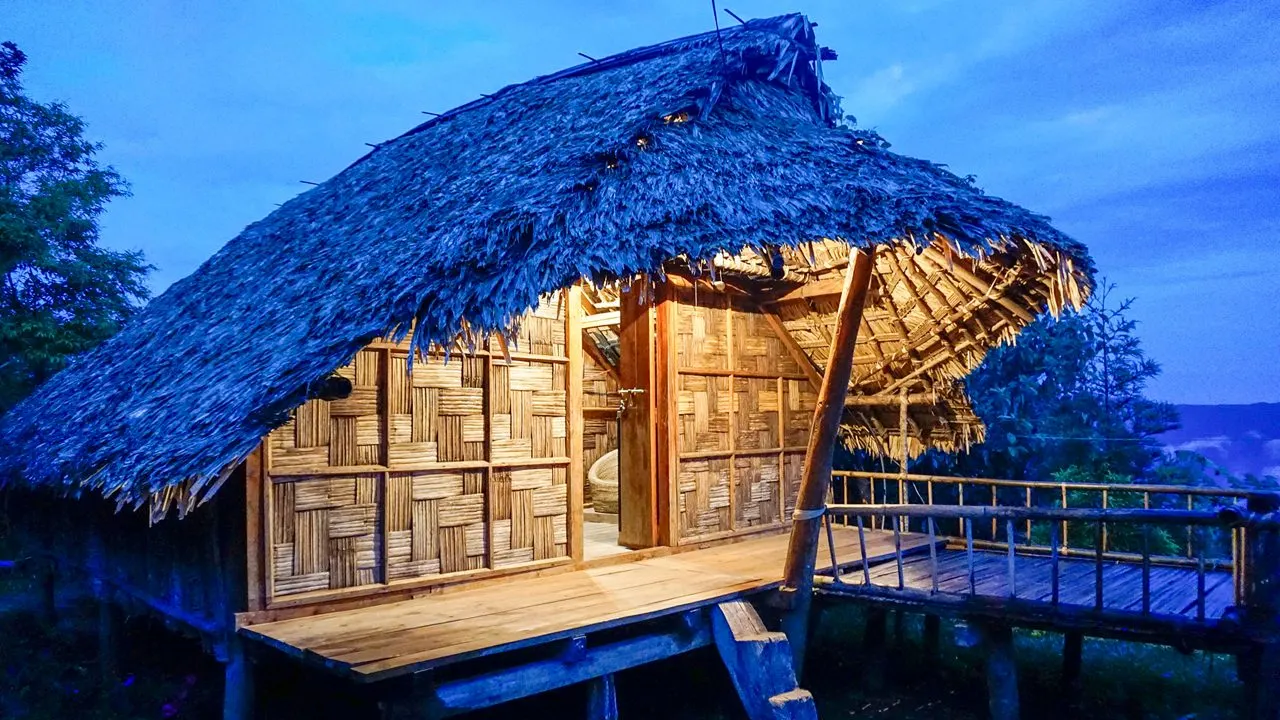
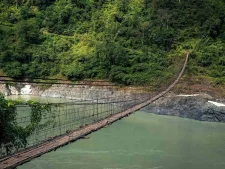
If you are looking for an authentic hidden gem in India, you should not miss Damro in Arunachal Pradesh. You will be able to get a glimpse into the tribal lifestyle here – bamboo houses with thatched roofs, or wooden bridges that sway when you walk. In fact, you can even walk over the longest hanging bridge as you cross a river below!
You can find tamed bison in this region. The Damro Labokellie Tea Garden is a beautiful place to visit here. Talk to the locals and try your hand at working in the fields alongside them!
This will be a trip unlike any other, and once you visit, you may not want to go back to your city life! The best time to visit Damro is between October and April.
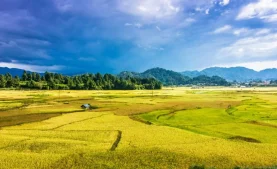
With majestic mountains, deep valleys, and lush greenery everywhere you look, Ziro Valley is a small piece of pristine natural beauty in Arunachal Pradesh. It is known for its rice fields, and bamboo and pine forests. You can explore the tranquil local villages in the region and learn more about the tribes and their culture.
Ziro Valley is also a treasure trove of culture. It is home to the Apatani tribe, known for their warm hospitality and love for music. The valley is renowned for the famous Ziro Music Festival, which usually takes place in September or October. Music lovers from all over the country gather here for this festival. The tribe’s unique culture, vibrant festivals, and daily activities show the harmony between man and nature.
The best time to visit Ziro Valley is between March and October.
Ziro Valley (Picture Credit: Travespert)
Namsai, Arunachal Pradesh
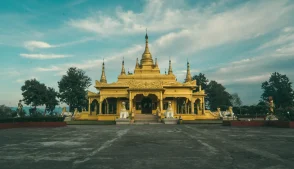
Namsai in Arunachal Pradesh is home to the Tai Khampti and Singpho tribes of Arunachal Pradesh. The breathtaking scenery of this beautiful town is characterized by lush paddy fields, rivers, grand pagodas, bamboo houses, and lush green tea plantations.
The slow and relaxed atmosphere, along with the breathtaking natural beauty of the place from almost every vantage point will leave you mesmerized. It also houses the main attraction of Arunachal Pradesh, the Golden Pagoda.
The best time to visit Namsai is from November to February.
Golden Pagoda Namsai (Picture Credit: the Golden Pagoda)
Yumthang Valley, Sikkim
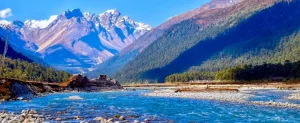
Known as the Sikkim Valley of Flowers, Yumthang Valley is located in the North Sikkim district of Sikkim. The valley looks picture-perfect, with abundant greenery, rivers, hot springs, and meadows where you can spot yaks, all surrounded by the snowy mountains.
The Shingba Rhododendron Sanctuary is located in this valley. It has more than 24 species of rhododendron, the state flower. Countless flowers bloom in vibrant colors from late February to mid-June.
The best time to visit Yumthang Valley starts from late February and continues till mid-June.
Yumthang Valley, Sikkim
Majuli, Assam
Floating on the Brahmaputra River in Assam, Majuli is one of the world’s largest river islands, and the world’s largest river island which is inhabited. You can reach the island via a ferry ride, and explore it on a rented bicycle. You can experience the lifestyle of the tribes on the island and partake in the cultural activities. You can also try Assamese cuisines and try your hand at traditional handicrafts.
The best time to visit Majuli is between October and March.
Majuli, Assam (Picture Credit: Times of India)
Mawlynnong, Meghalaya
Meghalaya is truly one of the best offbeat destinations in India, not frequented by tourists. Mawlynnong is a very small village located in Meghalaya which holds the title of the cleanest village in Asia, and rightfully so. Along with the unspoilt natural beauty of the village, there are waterfalls and beautiful flower gardens in the peaceful village, as well as a living root bridge, which will require you to climb down many steps. You can also experience the local cuisine and lifestyle of the people.
The best time to visit Mawlynnong is between September and May.
The green hills of East Khasi are home to the village of Kongthong, three hours away from Shillong. With a population of around 900 people, the town is known as the “whistling village of India”. This is because the names of the villagers are tunes!
This unique tradition draws visitors to Kongthong, apart from the untouched natural beauty of the place. When a baby is born, it is given a regular name, and a unique tune by the residents of the village, and the people call each other with their tunes!
The best time to visit Kongthong is from October to May.
Kongthong, Meghalaya
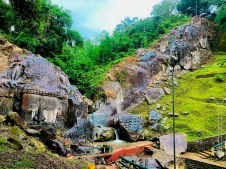
Unakoti, Tripura
Unakoti in Tripura is a gem hidden in plain sight, right out of a fantasy movie. 178 kilometers from Agartala, an ancient stone gate opens to massive stone and rock sculptures carved out of a hillside. The rock carvings depict Lord Shiva’s life and scenes from Hindu mythology. You can spot sculptures of Hindu deities such as Lord Ram, Lord Ganesha, Lord Hanuman, and Nandi Bull.
The geographical terrain of the region also makes Unakoti a great place for trekking and hiking.
Unakoti is one of the most offbeat travel destinations to visit in India, best visited from October to April.
Unakoti, Tripura
Lunglei, Mizoram
Known as the “Bridge of Rock”, Lunglei in Mizoram is a pristine paradise, away from the bustling city life. The rolling meadows surrounded by massive hills, surreal landscapes, diverse flora and fauna, peaceful ambiance, the local Mizo culture, and the untouched beauty of Lunglei will leave you wanting more.
Rich in biodiversity, Lunglei is home to the Khawnglung Wildlife Sanctuary, Thorangtlang Wildlife Sanctuary, and Saza Wildlife Sanctuary. These sanctuaries house animals like tigers, leopards, deer, monkeys, migratory birds, and more.
You can go bird watching, camping, or trekking in Lunglei amidst nature, or you can visit the Saikuti Hall to learn more about the cultural traditions of the region.
The best time to visit Lunglei is from October to June.
Lunglei, Mizoram
Shekhawati, Rajasthan
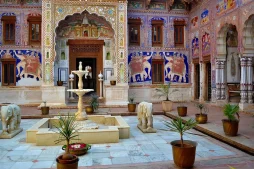
The Shekhawati region of Rajasthan has been called the “open art gallery of Rajasthan”, thanks to its beautifully painted Havelis, vibrant murals, and grand palaces, mansions, castles, and forts. Situated in the northeast corner of Rajasthan, the semi arid retreat filled with history and heritage, displays stunning frescoes, and architectural splendour.
Shekhawati is an ideal tourist attraction for a family vacation, best visited between October to May.
The desert town of Osian in Rajasthan is known for its vast sand dunes, desert plants, heavy winds, and dramatic landscapes. Located on the edge of the Thar desert, you can experience the remote desert life in this place.
Osian city is also known as the Khajuraho of Rajasthan, owing to the abundance of ancient temples with elegant architecture and design. If you do visit Osian city, do not miss out on the experience of camping under the stars in the Thar Desert. Osian is one of the best offbeat destinations in India.
The best time to visit Osian is from November to March.
Osian, Rajasthan (Picture Credit: Osian Resorts and Camps)
Mandu, Madhya Pradesh
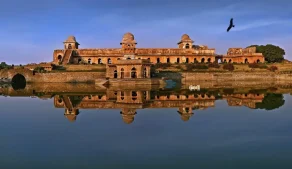
Visiting Mandu in Madhya Pradesh is like going back in time. The majestic palaces and ruins give a glimpse into the grandeur of India’s past. Also called the “City of Joy”, Mandu displays a blend of Hindu and Islamic architecture in its magnificent tombs, mosques, and palaces.
The Jahaz Mahal appears to be floating over twin lakes. Other attractions here are Rani Rupmati’s Pavilion, Champa Baoli, and Baz Bahadur’s Palace.
The best time to visit Mandu is from October to March.
Jahaz Mahal, Mandu (Picture Credit: 30 Stades)
Netarhat, Jharkhand
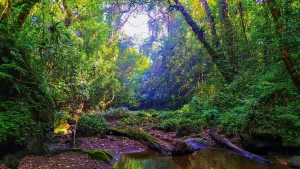
Surrounded by hills, lush forests, and natural springs, Netarhat is a tiny hill station in Jharkhand which will fascinate nature lovers. Nestled in the heart of Jharkhand, Netarhat was built by British rulers due to the serenity that this area provided. This charming hill station has some of the best sunrise and sunset views, especially in summers. It is an ideal tourist attraction if you are looking for some solace.
If you travel by road to Netarhat from Ranchi, you pass through seven hills! Netarhat is one of the most beautiful tourist destinations to visit in India from October to March.
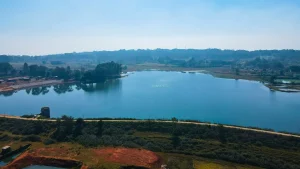
Netarhat Dam
Sandakphu, West Bengal
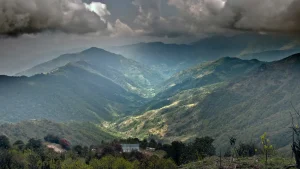
A popular trekking spot, Sandakphu is situated in SIngalila National Park in Darjeeling district in West Bengal. While the trek is long, the view from the top is worth it. The Sleeping Buddha peak offers phenomenal views of the Kanchenjunga range, and you can see four of the five highest peaks in the world – Mount Everest, Kanchenjunga, Makalu, and Lhotse, in a continuous snow clad arc. This is why Sandakhpu is called Trekkers’ paradise.
The best time to visit Sandakphu is from March to May and late September to early December.
Sandakphu
Mainpat, Chhattisgarh
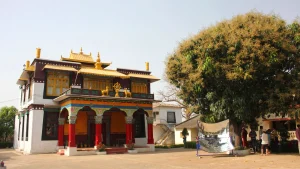
Mainpat in Chhattisgarh is an interesting offbeat destination in India. It is a temple town primarily for Tibetans. This pure destination has many temples built by the Tibetan settlers in the region. If you visit this place, you should visit the Takpo Shedupling Monastery here, along with Mercury Falls and the Parpatiya Sunset Point.
The best time to visit Mainpat is between October and March.
Mainpat
Velas, Maharashtra
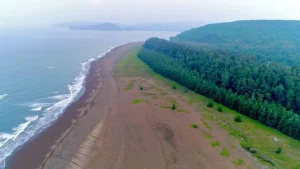
Velas in Maharashtra is well-known for its annual turtle festival. Every year between March and April, you can watch Olive Ridley turtles hatching from their eggs on the Velas beach, in their natural habitat. You can also take part in the conservation efforts along with the villagers.
Other attractions near Velas are the Bankot Fort and Harihareshwar Beach. The best time to visit Velas is between March and April.
Velas (Picture Credit: Savaari)
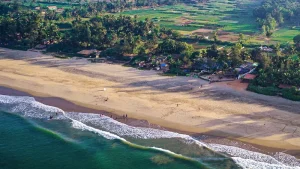
Gokarna, Karnataka
Known for its beautiful beaches and adventure activities, Gokarna in Karnataka is a great place for travelers looking for spirituality and adventure. The Mahabaleshwar Temple is a popular tourist attraction in Gokarna. The town has many pristine beaches, such as Om Beach, Half Moon Beach, and Kudle Beach.
The best time to visit Gokarna is between October and March.
Om Beach, Gokarna
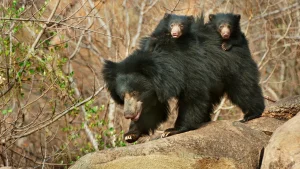
Daroji Sloth Bear Sanctuary, Karnataka
You may be familiar with the magnificent medieval metropolis Hampi, a UNESCO World Heritage Site in Karnataka, but you may not know about Daroji Sloth Bear Sanctuary, a wildlife reserve near Hampi.
Established in 1994, the reserve protects the Indian Sloth Bear and currently houses 120 sloth bears. Visitors can observe these animals in their natural habitat. Along with sloths, the sanctuary also has animals like leopards, hyenas, jackals, wild boars, and many species of birds.
The best time to visit Daroji Sloth Bear Sanctuary is between October and February, when the bears are most active.
Daroji Sloth Bear Sanctuary
St Mary’s Islands, Karnataka
St Mary’s Islands is a group of four small islands off the coast of Malpe in Karnataka. Due to the abundance of coconut trees in the area, it is also known as Karnataka’s Coconut Island. The islands are full of basalt rock formations, designated as one of the 34 National Geological Monuments in India by the Geological Survey of India. Millions of years ago, hot molten lava oozed from the Earth’s surface and was cooled by the waters of the Arabian Sea, resulting in the igneous rocks with a unique hexagonal shape.
While the islands are uninhabited, they are open for tourism. There are many security measures in place in order to preserve the natural environment and protect the visitors. The best time to visit Coconut Island is from October to January.
St Mary’s Islands (Photo Credit: Savaari)
Gandikota, Andhra Pradesh
Popularly known as the Grand Canyon of India, the Pennar river gorge is a 300-foot-deep gorge in the village of Gandikota. The village of Gandikota was technically built by Kapa Raja on the picturesque Pennar river gorge in 1123 A.D. This makes it one of the best places to visit in India.
The word Gandikota roughly translates to “gorge fort”.This stunning geological formation in India has numerous narrow valleys, streams, the ancient fort, and a rich history of a 300-year-old dynasty.
The best time to visit Gandikota is from October to March.
Gandikota Canyon (Photo Credit: Nature Walkers)
Lepakshi, Andhra Pradesh
The small town of Lepakshi is situated in Andhra Pradesh in South India. Steeped in history and rich tradition, the town houses the Veerabhadra Temple. The temple has a beautiful idol of Lord Shiva and the famous hanging pillar. It has stunning frescoes depicting scenes from Hindu epics Mahabharata and Ramayana.
Lepakshi is also home to the Jatayu Theme Park, which has a big statue of Jatayu, a vulture from Ramayana. Lepakshi has a rich historical past. According to legends, this town is where Jatayu fell when he was killed by Raavan.
The best time to visit this historical town is from November to March.
Lepakshi
Tharangambadi, Tamil Nadu
Tharangambadi is a tiny beach town in Tamil Nadu’s Nagapattinam district. Built in the 14th century, it used to be a Danish colony named Tranquebar. The town is also known as the land of the singing wave, a beautiful cultural playpen located in South India, sitting at the confluence of the Kaveri river and the Bay of Bengal.
The best time to visit Tharangambadi is between November and March.
Fort Dansborg, Tharangambadi
Ponmudi, Kerala
Nestled in the Western Ghats in Kerala, Ponmudi town is a picturesque hill station, fairly unexplored by tourists. The town has misty hills, lush green valleys, and gurgling streams, with a view of the massive tea gardens and coffee plantations.
If you want to get away from the chaos of city life, Ponmudi is a peaceful hill station perfect for nature lovers. You can explore the Golden Valley or sit near the freshwater springs or Kallari River. Take a walk through the deer park, or go trekking to the highest peak in the region, Agasthyarkoodam.
One of the most gorgeous offbeat places in India, Ponmudi is at its best from October to March. You can also visit immediately after monsoon season, when the region is abundant with verdant greenery.
Ponmudi
Usually, most tourists visit the popular tourist destinations of any region, and do not include offbeat places in their list of places to visit. However, these places are often crowded. Offbeat travel destinations, on the other hand, can balance your itinerary, and are pristine and untouched in their beauty.
While exciting, these destinations can be tricky to find and navigate. Get in touch with us and we will help you find some of the best places to visit in India. We can customize the perfect trip for you based on your preferences and budget, ensuring you go back with unforgettable memories.
Let India Someday handle it and plan your best trip.