TALK WITH US +91-9970620335
WhatsApp

8 Best Things to do in Bikaner

“Oh Bikaner, why have you been hiding all this time? Did you get overshadowed by too many famous siblings?” Sonal and Sandro 

In the city of Bikaner, you will get to experience all the classic Rajasthan must do’s but with lesser tourists. From the intriguing forts, temples, to jaw-dropping places and yummylicious North Indian Food, you will get to experience it all.

Bikaner is popularly known for the sand dunes and the famous rat temple but has much more to offer and will surprise you at every chance it gets. 

Here is a list of things to do in Bikaner to make sure you don’t miss anything in this beautiful city.

Forts to visit in Rajasthan (Bikaner)
The Mighty Junagarh Fort in Bikaner

1. Junagarh Fort

 While one may assume this is the most common site to visit and would be just like every other sibling fort in Rajasthan, you might want to change your mind. This fort was built by Raja Rai Singh in the late 15th century, however, the interesting aspect of this fort that will capture your attention is the architecture and intriguing stories of the different rooms!

One such story being the ‘Badal Mahal’ which is the blue room in the fort, built for the royal children which depicted rain, as Bikaner received very little rainfall. Aside from these interesting stories, the fresco paintings on the wall, its windows made of beautifully designed ceramic tiles from all over Europe and Asia. It goes without saying that the fort is an architectural delight and is a must-visit on your trip.

VISITING HOURS: 10:00 to 17:00 hours 

ESTIMATED TIME: 1-2 hours

COST: INR 300 per person for foreign tourists, INR 50 per person for Indian tourists

Here are a few forts across India which are not only jaw-dropping but also great to explore with kids. 

Forts to visit in India (Things to do in Bikaner)
Walls Of Junagarh Fort

2. Karni Mata Temple  

Just when you think you’ve experienced it all in India, you have the Karni Mata Rat Temple to bring your culture shock meter to soar up high. This Temple was built to commemorate the Karni Mata Goddess, who was a part of the Charin clan, it is believed that once she died she got reincarnated as a rat.

The followers of this clan believed that they too would be reincarnated as a rat. Not only do pilgrims worship the rats here but also believe that they will be cured of their ailments.

It is considered auspicious if you spot the white rat of the temple, however, there are as many as 20,000 rats here and to add on you have to enter the temple barefoot! So all we can say is ‘All The Best’.

VISITING HOURS: 24 hours

ESTIMATED TIME: 30 mins

COST: Free


Temple in Bikaner (Things to do in Bikaner)
Karni Mata Rat Temple In Bikaner (Photo Credit- Enric Bach)

3. Devi Kund

About 8 kilometers away from the main town of Bikaner is the Devi Kund Sagar which is a crematorium. Although it does not sound like the best idea, the architecture here makes it worth the visit.

There are several Chattris (cenotaphs), each dedicated to one of the important rulers of the dynasty. The cenotaph of Maharaja Suraj Sign is the most exquisite of them all. If you have time in hand making a stop here will be worth it. 

VISITING HOURS: 10:00 to 17:00 hours 

ESTIMATED TIME: 30 mins 

COST: INR 30 per person for foreign tourists, INR 30 per person for Indian tourists

4. Haveli Rampuria 

Rampuria is a cluster of Havelis (aristocratic homes), in the old town of Bikaner and this city takes pride in this gem. The minute you step on these streets, you will know why it is so talked about. Built in red sandstone, you will notice that every inch of these Havelis are adorned with skillful artistic work, from the latticed windows to the jharokhas (casements).

There is a blend of Victorian, Rajput, and Mughal style of architecture. These clusters of Havelis are unlike anything you would have seen in India. Grab your camera, wake up early, and start your day exploring these lanes.

The snapshots you will get here will make it seem like you’ve been transported back in time, into an old British town, because of its strong Victorian architectural influence. 

VISITING HOURS: 24 hours

ESTIMATED TIME: 1 hour

Cost: Free


Havelis of Bikaner
Day Time Views Of Haveli Rampuira (Photo Credit – Alessio Spinaci)

If you truly enjoy marveling at such beautiful structures, Rajasthan is filled with them. Here are a few cities across Rajasthan which will definitely perk your interest.

5. The Jain Temple Bhandasar 

This Jain marble temple is one of the oldest buildings (15th century) in Bikaner and a place where you find some peace and quiet time. The details and intricacy of the mirror work on the walls of this temple is fascinating and hypnotic. They also have fresco paintings depicting the life of the Jain Tirtaknar (teacher).

It is said the foundation of this temple is built on ghee (butter) and coconut. If you have time, make a stop here, seek blessings, and marvel at this beautiful structure, as it is said to be one of the most beautiful Hindu temples.

VISITING HOURS: 24 hours

ESTIMATED TIME: 3-4 hours

COST: Free

Discover More: Know the Cost of Traveling in India

6. The Camel Research Center

If you are fond of animals and find camels as an interesting species, make sure to stop by the Came Research Center in Bikaner, which is about 8kms away from the main city. It’s the only breeding farm in India with about 230 camels. You will not be able to resist capturing the baby camels, as it’s a sight you don’t see often. Photography/videography is allowed on the premises, you can even enjoy a camel ride.

Make sure to visit this place anytime between 15:00 to 16:00 hours, as at this time most of the camels return back to the farm. Another unique part of this experience would be visiting the camel milk parlour, where you can indulge in various camel milk products like ice-creams or any cold beverages. 

VISITING HOURS: 14:00 to 18:00 hours

ESTIMATED TIME: 1 hour

COST: INR 100 per person for foreign tourists, INR 30 per person for Indian tourists


Off beat things to do in Bikaner
Baby Camels In The Farm at Bikaner.

7. Camel Festival 

While most of us have heard of the Pushkar camel fair, Bikaner too is making sure they are not left behind in organizing this unique festival. If you are visiting Bikaner in early January, luck is on your side, although the festival dates vary every year, it usually takes place in the second week of January.

During this festival you get to see all the camels dressed up in colorful ornaments,parading alongside the backdrop of the Junagarh fort, there is also a camel pageant which is the biggest highlight of the festival. The folk dance and music, the fireworks in the evening, the camel talent show contests and the delicious Bikaneri food items sold there, makes this the most happening event of Bikaner.

VISITING MONTH: January

ESTIMATED TIME: Half A Day

COST: INR 600 per person

Festivals in Bikaner
Ornamented Camel At The Bikaner Camel Fair

Another interesting city which hosts a similar event is the city of Pushkar. This blog has all the details you need to get an insight of what goes down at this event.

8. VILLAGE SAFARI 

About an hour away from the main city of Bikaner is the Katariasar Village. You will definitely not find a lot of tourists here as it’s not so talked about. You will get a chance to interact with the locals who love to chat with you and give you an insight into their life, you get to observe their daily activity.

Herds of desert foxes, rabbits and peacocks stroll by, make sure to watch out for them. Walking along the sand dunes and enjoying the sunsets is a very relaxing experience. You can book this tour directly with your hotel/homestay.

ESTIMATED TIME: Half A Day OR Overnight Safari,

COST: INR 2,000 – INR 5,500 

See Also: Navigating the Best of North India

Activities to do in Bikaner
An Evening At The Sand Dunes In Bikaner


After visiting this offbeat destination, you will leave Bikaner wanting to explore more of India.  So make sure you get in touch with our travel experts and they will help you club this destination with the rest of your travels, along with more inside tips to ensure a smooth trip.

Learn More: Uncover India’s Must-See Attractions

Ayurveda in India – All you need to know

India is known across the world as the home to ancient forms of healing and mastering the body. Among these is the art of Ayurveda. It is the traditional Hindu system of medicine based on the idea of balance in bodily systems. It is also one of the reasons many people, tourists and Indians alike, travel across India seeking out Ayurvedic treatment. Read on to know more about Ayurveda and Ayurveda retreats in India.

Ayurveda in India
The ancient art of Ayurveda originated in India (Photo Credits – Gundula Vogel from Pixabay)

What is Ayurveda? 

Ayurveda is a 5000 year old art of healing from India. It is the oldest recorded traditional system of medicine which is still practiced and lived today. Ayurveda takes into account the physical and mental constitution of the person and how his/her social relationships influence their environment.

It teaches us how our lives can be influenced, shaped and extended, and eventually be controlled. Hence, Ayurveda requires self-responsibility regarding the quality of nutrition, your way of life and the mindfulness with yourself and others. An Ayurveda retreat can therefore help you with recreation and well-being in general.

Ayurveda is also effective to treat and sometimes cure chronic diseases. Some of these diseases include rheumatic diseases, metabolic disorders, cardiac cycle afflictions, allergies, skin diseases and gynaecological disorders. Ayurveda can also have a positive effect on patients with mental disorders like depression, anxiety, etc., because the concept of Ayurveda suggests that physical as well as mental disorders originate from disorders in the flow and balance of energy.

Of course, the usual precondition applies: Ayurveda can only unfold its full potential if practiced in daily life and not only in the Ayurveda retreat.

Ayurveda in india
Ayurveda in India makes use of certain plants and herbs

How does Ayurveda work? 

There will first be a thorough diagnostics of the eyes, pulse and tongue, and you will fill a questionnaire about your health. Post that, a licensed doctor proposes a plan for treatment. They will adjust it according to personal requests, the time you will spend at the Ayurveda retreat and the climatic conditions during the stay. Personal diagnostics and daily consultations with experts are an essential part of every high-quality Ayurveda therapy. During the treatment, you will have a daily consultation session in which you can individually adjust the treatment and its intensity according to your condition.

ayurveda retreat in india
Daily personal consultation sessions with experts make the experience highly individualized

Ayurveda harmonizes the mind and body through herb and oil applications. The essence of Ayurvedic medicine, which is the knowledge of herbs and their effects, is mostly unknown to the western world. The healing effect of Ayurveda is based on the individual composition of applications of oil and herbs.

Another essential part of Ayurveda retreats is Yoga and meditation, and both of these, along with Ayurveda, originated from the ‘vedic’ science.

Nutrition plays a crucial role in the Ayurveda retreat as well, since it is one of the cornerstones of the concept of Ayurveda. Due to the different metabolisms of every body, a nutrition consultant who offers advice according to the requirements of the individual body is part of a typical Ayurveda treatment. This consultant helps you learn what you can improve in the future when you are back home. In general, an Ayurveda retreat is fit for everyone who wants to improve one’s health and well-being. 

ayurveda retreat in india
Nutrition is one of the important components of the concept of Ayurveda

What is the best time to come to india for an ayurveda retreat?

Typically, people come to India for Ayurveda retreats during the monsoon. Kerala in South India is where you will find the most retreats. The monsoon season here starts in June and lasts until September, and returns again from October to November. This is the best time for the body to purge itself. But this also means that the climate brings a lot of rain, humidity and sometimes even flooding and landslides. If you want to avoid these climatic conditions, you’re better off choosing a time in winter, between December and March. From March until the next monsoon season in June it can be very hot and humid.

See Also: Ideal Times Visit Kerala

Read on: Investigate the Best Timing for a Journey to India

At some Ayurveda retreats, you will be greeted in the traditional Indian style of paying respects to a guest – (Photo Credits – Fabrice Florin)

HOW LONG TO SPEND IN A RETREAT FOR AYURVEDA IN INDIA?

Since Ayurveda depends so much upon the individual and your life, there is no commonly followed duration for an Ayurveda retreat in India. If you want to go to an Ayurveda retreat for recreation and wellness, 2 weeks are sufficient. However, it is not uncommon for people to seek treatments and help with more serious diseases or illnesses. If this is your intention, then we advise planning for a longer stay, from 4 to 6 weeks. Take even longer if necessary. 

Looking for Luxury Stay? Here is our Guide to Best Hotels in India

Ayurvedic treatment is unlike any other, and is a big reason tourists visit India (Photo Credits – Fabrice Florin)

why is india someday your best partner for Ayurveda retreats in India ?

We believe that Ayurveda retreats in India give you an absolutely authentic treatment and medical success. India is its country of origin and the art grew and developed here. To provide you with the best possible experience, we from India Someday work closely with local experts. Hence, we can ensure you the most competent service in planning your Ayurveda retreat in India. 

Ayurveda in India deploys various oil massages and treatments (Photo Credits – Destinos Asiaticos Viajes Frontia)

If you want to travel in India before or after your Ayurveda retreat, we would love to help plan your trip. Because the only thing better than getting to know a country and its people is ending with finding your inner balance.

Contact us now to plan your authentic Ayurveda retreat and your travel in India, customized to fit your needs. We look forward to making your trip a success, medically as well as experience-wise. Plan your trip now! .

Festivals in India You Should Plan Your Trip Around

India is known as the Country of Festivals. This in itself showcases the glory of celebrations in the country. When it comes to festivals in India, all hostility is forgotten, and the joyous occasions dawn on people. Different castes and creeds come together during this time to be a part of the cheer.

Each trip to India has an unforgettable influence on the traveller, but adding a festival to the spread would create memories that would be cherished forever. Moreover, each of the festivals in India brings along a bundle of joy with them. Celebrations of Indian festivals have their own unique extravaganzas, each with soaring levels of zeal throughout the country.

Below listed are some of the festivals that we think you shouldn’t miss when planning to visit India.

Diwali, Indian Celebrations
Diwali in India

Diwali

The festival of lights illuminates not only the streets and homes of the Indians but also the lives of all who witness it. The early winters bring Diwali, a five-day occasion that people across the country celebrate, to worship Goddess Lakshmi (the Indian deity of wealth).

The festivities include delicious preparations, crafting ‘Rangolis’, and vivid fireworks. ‘Rangolis’ are mandalas, painted on the ground. These are traditionally made using coloured salts.

Diwali signifies the return of Lord Rama to Ayodhya after he defeated the evil King Ravana. Celebrations of Diwali in India are spectacular and should not be missed! Also, because, you get a great taste of culture and religion too.

We recommend visiting the cities of Jaipur and Mumbai to experience all of what the festival has to offer, and more!

best festival tours in India, why visit india during a festival
Diya (Photo Credit – Bhupendra Singh from Pixabay)

Holi

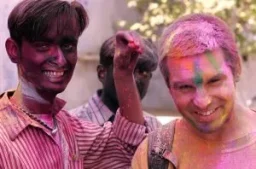
A cheerful occasion where people come together to celebrate. Holi is known for its vibrancy and cheerfulness. As with every Indian festival, Holi too has its significance. Once again, it marks the triumph of good over evil, Holi is based on the story of Prahalad.

The month of March hosts this joyous occasion. It is commenced by the burning of ‘Holika’ (a demon king’s sister), in a ceremonial fire. The next morning, however, is the day that brings friends and family together. Holi in India is celebrated by playing with colours and smearing it on dear ones.

The levels of brotherhood know no bounds when it comes to Holi in India. For the best Holi experience, we recommend visiting the urban cities. Mumbai, for a fun and quirky experience and cities in Rajasthan, like Jaipur or Udaipur, for a more cultural, traditional and royally festive experience.

For a wild, intense experience, the cities of Mathura or Pushkar can also be visited. But beware, the celebration in these towns tend to get harsh and aggressive, so it’s not an activity we recommend for women.

Explore More: Discover the Ideal Timing for a Visit to India

Festival of colours, best place to visit for Holi
Holi (Photo Credit – Murtaza Ali from Pixabay)

Dussehra

Dussehra is a festival in India that is celebrated to commemorate the victory of Lord Rama over the evil demon King Ravana. An extremely interesting event, Dussehra is celebrated by the burning of models of Ravana. These statues, around 15 meters tall, are burnt to the ground, and various plays called ‘Ram-Leela’ are performed on the streets.

These are recitals of the story of Lord Rama, and how he overcame various obstacles in his life. Many different cities host spectacular shows, but some of the most invigorating displays of Dussehra in India are in the cities of Delhi and Varanasi. Filled with tradition and excitement, and one can truly live the experience in a Dussehra celebration.

Religious festivals in India, Ram leela
Dussehra (Photo Credit – Tanuj Handa from Pixabay)

Durga Puja

Durga Puja is one of the most hypnotising religious festivals one can experience. Based majorly in West Bengal, Durga Puja is celebrated in honour of the victory of Goddess Durga over a demon called ‘Mahishasura’. Festive air circles the city as the 10 days of Durga Puja inch closer.

Preparations for the festivities are endless, as people flood malls and streets to buy new clothes and other trinkets for themselves and their families. Once the festival commences, the people move around the city to worship the different idols and revel in the unique beauty that each place has to offer.

These idols are kept in places called ‘pandals’. Each one is ornately decorated with innovative concepts put together by the hosts. A key city to visit during this festival is Kolkata. The old capital of the country has its own charm, and the buzz during the festive season is unmatched by any other in the world.

One must stay until the end, as the last day is one of the most intriguing. Consequently, people bid farewell to their dear goddess as she is immersed in the waters of the holy river Ganges. Only to return the following year and bring back the enthusiasm of the upcoming festival with her. 

Find Out More: Experience the Kaleidoscope of India’s Offerings

Dura Puja, unique festivals to experience
Durga Puja (Photo Credit – Abhishek Shirali)

Ganesh Chaturthi

Ganesh Chaturthi is the pride of the Indians. Everyone comes together to celebrate the birthday of their dear and beloved Lord Ganesha (The Elephant God). It is celebrated in the early autumn season, just as the rains come to close. To visit during the festival would be culturally enriching and is something one must not miss.

With merrymaking and laughter, dance and music at its peak, the festival is truly a time to enjoy yourself. Lasting 10 days, the celebration, along with the devotion is a sight worth witnessing. The Ganesha idols are placed in ‘Pandals’. People from all across the country travel to catch sight of the breath-taking idols.

Each one has an appealing, creative idea with abundant decoration and ranging sizes. Some of the idols are as tall as 5-storey buildings, whereas others could be merely 15 inches in height. One of the most glorious cities to visit is Mumbai, with a huge diversity of idols, whereas the tallest idol in India resides in Hyderabad.

As with the Durga Puja, the immersion of the idols in water is a sight to see! Ganesh Chaturthi in India is definitely a festival you shouldn’t miss!

Ganpati, Places to celebrate Ganesh Chaturti
Ganesh Chaturthi in Mumbai (Photo Credit – Chabilleasy Mawa Unsplash)

Pushkar Camel festival

An exciting new aspect to a centuries-old trading fair is what made the Pushkar camel festival so invigorating! Set in a small village amidst the vast state of Rajasthan, the fair takes place in November. Occurring on a special day of the full moon, the festival is crucial for traders, and entertaining for travellers.

Traditionally, this event was to invite different camel and cattle breeders to trade their flock. However, the event has now evolved to become one of the most attracting and important festivals to visit in Rajasthan. Although it is meant for merchants to participate in business trades, the festival is always full of eager tourists.

As such, there are also many different forms of entertainment for them. There are puppet shows and dance shows, musical concerts and snake charmers all present in the fair. There are also competitions for the camels, such as fancy dress and camel dance competitions. Each event has something new to offer, and you will leave with memories to be cherished forever. 

Camel Fair,
Camel race at the Pushkar Mela (Photo Credit – Jason Rufus)

Ziro Music Festival

The Ziro Music Festival is a one-of-a-kind music event for which people come together from all around the world. It is a good escape from the typical concert that is held in the city. This is held in the Ziro Valley close to Arunachal Pradesh.

Attendees stay intent is to take in the full experience; enjoying the fresh air and clear skies, while experiencing something unique and different at the concert. You can buy food and supplies from vendors at the festival. Generally held in late September, the music festival attracts large amounts of crowds and also some very talented artists.

People attending can bring their own tents or use the ones provided by the organisers. The Northeast of India has always been partial to Rock music, and as such, the Ziro Music Festival features various local bands that play rock music. For the non rock fans, don’t be disappointed as they play other genres too!

Travellers may choose to travel by road or by air, and the closest airport is Guwahati. However, it is necessary to make a small road trip to get there. Rest assured that if you choose to go, you will have a blast!

Music concerts in India,
Zero Music Festivals (Photo Credit – Arun Katiyar)

Kumbh Mela

The Kumbh Mela in India is an exotic display of the Indian culture, in its purest form. Featuring a religious procession and spiritual walks, the Kumbh Mela is an eccentric event that takes place in Ujjain, a town in Madhya Pradesh. Countless Indian ‘Sadhus’(saints) participate in the processions, as they make their way towards the river Ganges to ‘wash away their sins’.

During this time, many tourist walks organised. You will also find other chic shows such as laser light displays and beautiful light and thematic gates. Accordingly, visitors can watch as these interesting events unfold. One can travel to the event by air, or by train to Allahabad, and then make a road trip further.

The ‘Hindu’ culture is the highlight of this event. It generally takes place in the months of January to March and lasts for around 2 months. The Kumbh Mela is the largest religious gathering in the entire world. Moreover, this is a treat for photographers as they are able to capture all the picturesque sights.

Explore Further: Top 20 Places to Visit in North India

What is Kumbh Mela, Festivals one should experience in India
Kumbh Mela (Photo Credit – Ninara)

Baisakhi

Known as the harvest festival, Baisakhi in India celebrates the birthday of the Sikh leader, Guru Gobind Singh. The reason for this celebration is in respect to the good harvest of the year.

However, the most interesting part of the celebration is the lively festivities, where the citizens come together in open fields, and sing and dance the night away. The traditional outfits worn are mesmerising. There are also Baisakhi fairs and Langars organised. If you are interested in customary handicrafts then the fairs are the place to go and if you would like to taste some delicious food (which is free) then Langar it is.

Amritsar is a beautiful city where these festivities take place in the grandest of ways. One can arrive by air, rail or road to enjoy these fiestas.

Baisaki in Punjab, different festivals of India
Sikhs (Photo Credit – Marco Ghitti)

Hemis festival

A rich tour of the culture of Hemis is only one of the many things one can attain by attending this 2-day festival. It is started off with ornate decorations of the Hemis monastery. This is because the ceremony takes place here.

It is time to celebrate and you will find all the locals gathering around in the courtyard, dressed in their best. You will also find beautiful handicrafts and traditional tunes played all around you. The masked dances and vibrant costumes are a must-see, and the rituals of the festival are really magnificent and packed with traditions.

The Hemis festival reveals the true heritage of the locality, and one can get there via air or road. The nearest airport is the Leh Airport, and one can make a short road trip from there.

We strongly recommend that you should travel during these festivals. Because each festival offers a unique experience of its own. The celebrations are sights to see and cultural integrity is absolutely extraordinary!

If you need help to Plan Your Trip around any of these festivals in India, you can always reach out to us. And we’ll help you customise your vacation!

Hemis Festivals, Unique festivals in North India
Hemis Festival (Photo Credit – Artem Beliaikin Unsplash)

The Most Amazing Temples in India

Famous, ancient, mysterious! There is no dearth of famous temples in India. Largely because of the sheer number of gods in the Hindu religion.

There are 33 known gods and goddesses even though the number is pegged at 330 million. Each has innumerable avatars. Even so, the total number can indeed be mind-boggling. Thus, ancient rulers spared no effort in constructing the most intricate and beautiful structures to honor the ones they worshipped.

This practice continued through the ages and persists to date. As a result, you will find some of the most amazing temples in India. All in different styles and with pretty cool stories to them, too! Here’s our pick of some of the most interesting temples in India.

Ancient mesmerising carvings
Tourists admiring the artwork on the temples (Photo Credit – Aleksandr Zykov)

1. Sun Temple, Konark

Built-in the 13th century CE, for the sun god, Surya. In 1984, it became a UNESCO World Heritage Site. It’s in the form of a chariot with 24 carved wheels.

Each of which is nearly a whopping 12 feet in diameter. It is also one of the most famous temples in India and a major pilgrimage site for Hindus. The Chandrabhaga Mela around the month of February is when devotees arrive here by the thousands. This makes it one of the most interesting times of the year to visit.

Club this with: You can visit the Sun Temple as part of a trip to the east of the country, and see Puri and Bhubaneswar as well.
Konarak Sun Temple, Ancient carved Sundails
Beautifully carved wheel with sundials from stone

2. Kanchi Kailasanathar Temple, Kanchipuram

Built during 685-705 CE, it is one of the ancient temples in India. The first built for Smartha worship, inclusive of the shrines of the 5 deities. They are Vishnu, Shiva, Ganesha, Surya, and Parvati; as equals.

It is undoubtedly one of the most amazing temples in India. The architecture is an inspiration for some of the famous temples in India. Mahashivratri, in the month of February/March, is the best time to visit this temple. During which, devotees throng here in large numbers to carry out their rituals and gain blessings.

Club this with: Kanchipuram is a few hours’ drives from Chennai and is also well-known for its handloom industry. It produces high-quality silk sarees renowned for their traditional designs and intricate gold embroidery.
Strong language carvings
Borers walls carved (Photo Credit – Shrini)

3. Kailasa Temple, Ellora

A marvel of architecture, the Kailasa Temple easily qualifies as one of the most amazing temples in India. The vertical excavation method was used to carve it from a single rock with around 200,000 tons of rocks removed. Can you even imagine that!

Built-in the mid-8th century CE, it also makes it to the list of ancient temples in India. One can visit anytime. Though the weather’s probably the most conducive in the winter months, between December and March.

Club this with : Ellora and Ajanta are about 100 kms apart and are commonly visited together. They’ve both got a whole lot of ancient cave temples that are worth seeing. This can be combined with a visit to Aurangabad and Mumbai. The Deccan Odyssey, a luxury train, also makes a stop here! Find out more about that route here.
Delicate carvings
Carvings depicting the history and mythical stories

4. Lotus Temple, Delhi

A Baháí House of Worship, the Lotus Temple is widely acclaimed for its sheer beauty. It has 27 free-standing marble-clad ‘petals’ designed to resemble a lotus flower that is partially bloomed.

Thus, it is surely one of the must-visit temples in India. Open to all, regardless of faith, it also can be visited throughout the year.

Club This With: The temple is worth adding into your Delhi or larger North India itinerary. If only for an insight into a different, newer religion.
Lotus Temple, Temples in India, Delhi
Night views of the Lotus Temple (Photo Credits – Lo van den Berg)

5. Golden Temple, Amritsar

Also known as Sri Harmandir Sahib. This is the most important pilgrimage site for members of the Sikh religion. This is one of the most famous temples in India and is most visited.

Originally constructed in 1577, it was repeatedly rebuilt after being destroyed by invading armies. The reconstruction done in 1830 saw the entire sanctum coated with gold foil. Baisakhi, celebrated in the 2nd week of April. This is the best time to visit this temple to experience it in all its glory.

When you’re here, don’t forget to stop by for the langar – the free meal that volunteers prepare for anyone who wishes for a hot meal! Sign up to volunteer to help out with the food preparation. It’s a good way to get a better understanding of the tenets of the religion!

Club this with: The Golden Temple and Amritsar can easily be visited on a route across North India, especially if you also want to see Shimla and the rest of Himachal Pradesh.
Best places to visit in North India - Golden Temple
A sheer gem in the city of Amritsar that draws travellers from across the globe to marvel at this beauty

6. Padmanabhaswamy Temple, Kerala

This temple dedicated to Lord Vishnu, is considered one of the most mysterious temples in India. Not known when it was constructed, although said to be mentioned in the Sangam period of literature, dated between 500 BCE and 300 CE.

The temple is considered the wealthiest place of worship in the world. With 8 known subterranean vaults containing immense treasures! The value of gold, diamonds, rubies, and other precious stones found in 5 vaults is conservatively estimated at US$ 17 billion.

Vault B still lies unopened, and is said to contain more treasure than all the other vaults combined. Adding to the claim of it being one of the most mysterious temples in India is the belief that this vault can only be opened by chanting an unknown incantation.

Club this with: The Padmanabhaswamy Temple is in Thiruvananthapuram, the capital of Kerala, and makes a great stop on any trip in the southern parts of the state.
Padmanabhaswamy Temple, Temples to visit in Kerala, India
The Padmanabhaswamy Temple (Photo Credit – Reji)

7. Mundeshwari Devi Temple, Bihar

A small, un-ostentatious temple, Mundeshwari Devi Temple would not make it to the list of most amazing temples in India. However, it is believed to be the oldest temple in India, dating back to 233 BCE.

According to the Archaeological Survey of India. For that alone, this temple dedicated to Shiva and Shakti warrants a visit.

Club this with: This temple doesn’t really fall on any traditional travel routes, but is under hundred kilometers outside the holy city of Varanasi, and can be visited from there.
Varanasi
Spirituality (Photo Credit – ç™œćŁ« 李)
Want to plan a temple trail across India? We’ve got some great suggestions – get in touch and we’ll find the right options for you!

Indian forts that are great to explore with children

It’s hard to go wrong with the forts in India. All that history and battle-ready architecture is a sure-fire hit, especially with kids! These forts also tend to have grounds that are great to let your child role-play in!

Gwalior Fort

Across the country’s vast expanse, there are so many of them that it’s actually difficult to tell exactly how many forts are in India. Exploring the beautiful forts of India is one of the best family vacation ideas, with each one telling a more interesting story than the last.

1. The Red Fort, Delhi

At the top of the list is one of the best-preserved forts in India. A UNESCO World Heritage site, the Red Fort is also one of the most beautiful forts of India. And also a great answer to the question: ‘what can kids see in Delhi?’. Built-in 1639, it served as the seat of the Mughal empire for over 200 years. It’s majestic red sandstone walls and ornate ramparts, make it the perfect location for the Prime Minister of India to address the nation every Independence Day.

Indian history
Red Fort, Delhi

2. Mehrangarh, Jodhpur

Rajasthan has some of the most opulent palaces and forts in India, and Mehrangarh is a prime example. Towering 400 feet above the Jodhpur skyline, it is also a popular ziplining destination, ticking another box for great family vacation ideas. Showcasing varied forms of architecture, the fort and its palaces were built and renovated over 500 years. There are many galleries exhibiting valuable artefacts.

Mehrangarh is a treasure trove of information and a great learning experience for children if they’re so inclined. And if they aren’t, you can tell them that scenes from The Dark Knight Rises were filmed here!

jodhpur fort
Mehrangarh Fort

3. Golconda, Hyderabad

Golconda Fort asks for a good deal of your time with a boundary wall about 10kms long. The region is famed for having produced some of the world’s most famous diamonds, including the Koh-I-Noor and the Hope diamond. The fort itself is an absolute marvel of architecture, with astounding acoustics. A clap at the entrance of the Fateh Darwaza can be clearly heard a kilometre away at the Bala Hisar pavilion. It’s a trick that never fails to awe children! It also happens to be one of the most beautiful forts of India, so you’ll have a good time exploring it as well.

Boulders Fort
Golconda Fort

4. Chittorgarh, Rajasthan

Another UNESCO World Heritage site, Chittorgarh is said to be the largest fort in India, spread over a mind-boggling 691 acres. Although it has a rather gruesome claim to fame – that of women committing mass immolation following the defeat of the fort’s rulers – there’s a lot more to Chittorgarh than just that. Palace complexes, temples, memorials and water bodies dot the vast expanse, and exploring them can be quite fruitful. Of particular note are the two intricately carved towers, the tower of victory (Vijaya Stambh) and the tower of fame (Kirti Stambh).

Discover: Find Rajasthan’s Elite Destinations

fort
Chittorgarh Fort

5. Amer Fort, Jaipur

Imagine arriving at a fort astride an elephant. Well, that is exactly what you can do at the Amer Fort. That it is situated in Jaipur, which already boasts of marvels like the Hawa Mahal and the City Palace, takes nothing away from the grandeur of the Amer Fort (though admittedly, your kids might enjoy the elephant ride the most!). Of particular significance is the Sheesh Mahal, or Palace of Mirrors, which as the name suggests, has walls and ceilings adorned with countless pieces of silvered glass. With a number of other sights to see, including the Ganesh Pol, the Diwan-i-Aam, and the Sila Devi temple among others, the Amer Fort is also one of the most beautiful forts of India.

National hidden royalty
Amer Fort aka Amber Fort

6. Sindhudurg, Maharashtra

Now, most forts are built on land to guard against marauding armies. But Sindhudurg was built to protect the coastline from naval attacks. Constructed between 1664 and 1667, it is a testament to the foresight of Shivaji Maharaj, who commissioned its construction. A walk
along the ramparts is a delightful experience, with the expanse of the Arabian sea stretching before your eyes. This is also a nice scuba diving site, making a visit to Sindhudurg is one of the preferred family vacation ideas.

coastal forts
Sindhudurg Fort

Bonus:

With sparse historical records available, it is difficult to prove beyond doubt which the oldest fort in India is. Qila Mubarak in Punjab, said to date back to a period between 90 – 110 AD, and the Kangra Fort in Himachal Pradesh, even further back to 3,500 years ago. Either way, a visit to both would be well worth your time if you and your family love history!

Having trouble putting together a family vacation to India? We’re here to help! Get in touch with us and we’ll sort things out for you.

Spiritual Places in North India that you must visit

India is popular for its wide range of religious and spiritual beliefs. Owing to that, the country is home to a diversity of spiritual spots. Far up in the valleys of the North, you will find many places to embrace the calm and imbibe some of the essences of this life.

Here are a few places that should definitely feature on your spiritual journey in India!

The magnificent Lord Shiva Statue, Religious places in India
Lord Shiva and his Trishul

Varanasi, Uttar Pradesh

Located on the banks of the holy River Ganges, Varanasi is a centre of religious energy. This ancient city in Uttar Pradesh also goes by names Banaras or Kashi. It is one of the most visited spiritual places in India. Here, the rituals happen at its ghats, the steps leading down to the banks of the holy river. You will also experience culture in the tight, winding bylanes that lead to them.

Don’t miss the spectacle of the grand aarti (pooja) of the River Ganges, held every evening at Dashashwamedh Ghat. The Diwali celebrations in Varanasi are also a sight to behold!

Varanasi, Temples in North India
Sadhu offering prayers on the banks of Holy Ganges

Golden Temple, Amritsar, Punjab

If you are in the region, Amritsar’s Golden Temple is an absolute must-visit. This, the most famous Sikh Gurudwara, is a whole universe in itself. It is also known as Harmandir Sahib or Darbar Sahib, and was founded by the 5th Guru, and completed in 1604. The temple is popular for its peaceful and calm ambience, owing in part to the beautiful holy tank Amrit Sarovar. Many believe that Amrit Sarovar’se waters have healing powers. The reflection of the gold and marble architecture of the temple in these waters, too, is a sight for sore eyes. While you are here at this spiritual retreat, don’t forget to enjoy the very famous langar, or a free meal, served here – you can also volunteer to help prepare this meal, which feeds lakhs of people every day.

Divine and pure gold, Golden temple, Spiritua;l places in North India
Khalsa are also known as guardians and the disciples of Guru Gobind Singh

Bodh Gaya, Bihar

Bodh Gaya is where Prince Siddhartha Gautama attained enlightenment and became a Buddha. The Mahabodhi Temple here in Gaya is a UNESCO World Heritage site. People and many tourists visit this place to meditate, study and to learn the teachings of Buddha. It is one of the most peaceful, spiritual places in North India. While there isn’t much else to see and do in the area, if you’re a student of Buddhism, Bodh Gaya is definitely worth a visit.

Discover the Best: Top 20 Spots to Visit in North India

Remarkable monuments, Giant Buddha statue
Giant Buddha statue – seated in a meditation pose, or dhyana mudra

Haridwar and Rishikesh, Uttarakhand

Haridwar is one of the most sacred spiritual places in India. It is settled along the banks of the River Ganges at the point where it first flows onto the plains, and, like Varanasi, is one of the Sapta Puris (seven holy places) of Hinduism. It’s also one of the four locations at which the Kumbh Mela is held, and if you can handle crowds, that’s definitely an event that you should mark on your calendar!

The nearby city of Rishikesh is also a very famous spiritual and holy place in India. Located at the foothills of the Himalayas, it is just the right place to visit for some meditation and yoga. In fact, it is arguably the yoga capital of the world. The name, as inspired by Lord Vishnu is home to thousands of sages and pilgrims seeking peace and blessings. Along with its spiritual side, Rishikesh is also famous for adventure sports. You can enjoy river rafting, treks and also bungee jumping here.

In both of these cities, while you enjoy the sights and sounds, you will sadly need to be aware of the fact that you might encounter touts trying to take advantage of you. Don’t let them ruin your experience though – just be firm and don’t give in to their demands!

Dive Into: Rajasthan’s Forefront Travel Locations

the Tilak on forehead, best spiritual places in North India
Tilak applied on the forehead, a spiritual custom

Kedarnath Temple, Uttarakhand

Located near the Mandakini River in Kedarnath, the Kedarnath temple is one of the four ‘Chota Char Dham’, or small four abodes – holy sites – a pilgrimage circuit in Uttarakhand that also comprises Badrinath, Gangotri and Yamunotri. This temple, one of the 12 Jyotirlingas dedicated to Lord Shiva, can only be reached by foot after an adventurous trek (though there are also ponies that you can hire) from Gaurikund. The trek in itself makes the journey worth experiencing, and being a part of the throng of pilgrims at the temple is also special. The glaciers and snowy mountains around the temple add to its beauty. The temple is open from April to November, though, as the weather makes visiting through the rest of the year untenable.

Need help planning your next spiritual journey to India? Get in touch, and we will help you!

Himalayas in India
Snow clad mountains of Kedarnath

Popular Places of Worship in Rajasthan

The first thing that comes to mind when you mention Rajasthan is its opulent palaces. The Udaipur Lake Palace, Umaid Bhavan, and Amer Fort, among others, have put Rajasthan firmly on the tourist map. But Rajasthan is also an extremely important religious destination, with many significant places of worship. In India, as also in Rajasthan, religious places take pride of place, often over any other destination. And there are quite a few of them here.

Here are some places of worship in Rajasthan which you can visit to help you experience the spiritual side of the country.

Ranakpur Temples, Offbest places in Rajasthan
On the way to Jodhpur, you must visit the Ranakpur Temples (Photo Credit – Volker GlĂ€tsch)

Brahmaji Temple, Pushkar

The Mughals – Emperor Aurangzeb in particular, wasn’t kind to the temples in Pushkar, destroying them in the late 17th century. Hence, the temples here are relatively recent, including the most famous of them all, the Brahma Temple.

Originally dating back to the 14th century, it is one of the few Brahma temples anywhere in the world. Even so, with an estimated 500 temples, Pushkar remains one of the most important Hindu places of worship in Rajasthan.

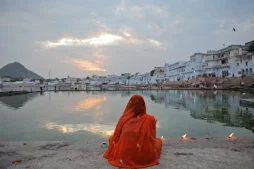
Pushkar lake, Spritual places in Rajasthan
Everyone’s welcomed at the Pushkar Lake (Photo Credit – Max Art)

Ajmer Sharif Dargah, Ajmer

The shrine of revered Sufi saint Moinuddin Chishti is perhaps the most important religious place for Sunni Muslims in India. History tells us that Emperor Akbar visited the shrine 14 times. The daily footfall here is around 150,000 people. This makes it one of the most popular places of worship in Rajasthan.

Ajmer, Popular places of worship in India
The Sufi shrine that attracts crowds in millions (Photo Credit – Zakir Naqvi)

Dilwara Temples, Mount Abu

Located near Mount Abu, the only hill station in the state of Rajasthan. Many find the Dilwara temples as one of the most beautiful Jain temples in the world. No Jain pilgrimage in Rajasthan is complete without a visit here. Built between the 11th and 15th century, they are popular for the extensive use of marble. Each one is dedicated to a Tirthankara or spiritual leader of the Jain community.

Temples of Rajasthan
Dilwara Temple, Mount Abu (Photo Credit – Rakhee @Flickr)

Karni Mata Temple, Bikaner

The Karni Mata Temple, near Bikaner, is popular among Hindu pilgrimage places in Rajasthan for quite a peculiar reason. There are an estimated 25,000 rats here. Revered by the devout, they are reincarnations of the male children or Karni Mata, a Hindu warrior sage. Karni Mata herself appears to be a reincarnation of the warrior Goddess Durga. If by chance, someone inflicts harm on the rats, they will have to replace the loss with one made entirely out of silver.

bizarre temples of the world, Temples in India
Rats being offered milk (Photo Credit – Fulvio Spada)

Shrinathji Temple, Nathdwara

The principal shrine of Shrinathji, a form of the Hindu God Krishna, this temple in Nathdwara is among the important Hindu pilgrimage places in Rajasthan, especially the Vaishnavs. Nathdwara is also popular for its distinctive style of painting, and acquiring paintings of Shrinathji created by local artists is an important part of the devotees’ pilgrimage here.

See Also: Rajasthan’s Must-See Places

Gangaur festival in Rajasthan, religious places in India
Gangaur Festival in Rajasthan

Would you like to travel through India and need help planning? Contact us and we will help you further!

8 Reasons Why You Should Travel to Orissa

We recently traveled to the East-Indian state of Orissa and want to let you know why we think you must also travel to Orissa. Here we experienced that its a delightful mix of culture, architecture, handicrafts, food and the coast.

Our 8-day trip left us astounded, mesmerized, and inspired to share our experiences with you. Here are our 8 reasons why you should travel to Orissa on your next trip to India:

Beautiful beaches of Orissa
Chandrabhaga Beach (Photo Credit – Mike Prince)

1. Off the beaten path

Despite having so much to offer Orissa is still not on many travel bucket lists. But that doesn’t have to be a bad thing! Here you can roam around recently excavated ancient ruins without seeing any other tourists at all. Or go on a boat ride through a wildlife sanctuary without sharing the experience with a big crowd of loud travellers.

The Orissa Tourism board is currently putting a lot of effort not just in promoting the state but also in making it more attractive to anyone who wants to travel to Orissa.

Museums, free heritage walks, beaches and parks as well as well-organized festivals and events that run throughout the year. From such an off-the-beaten-track destination, these will all leave you starstruck.

Ancient temples in Orissa Mukteshwar temple
Mukteshwar Temple (Photo Credit – Achilli Family Journeys)

2. Richness in culture and crafts

Orissa’s biggest selling point is definitely the versatile culture and abundance of handicrafts and handlooms. Every region, almost every town and village has its own identity and focuses on a different kind of craft and skill.

Terracotta, silver filigree, stone and wood carving, fine painting, palm leaf etching, applique, metalwork, hand dying, weaving, and much more.

Many of the products represent their beliefs, traditions, nature, and everyday lifestyle. For example, palm leaf etchings can be preserved for hundreds of years. That way historians found out who and why certain monuments were built more than a millennium ago. The image of the main deity of Orissa, the great Jagannath is still carved out of wood.

Unfortunately, many craftsmen and women are struggling to keep the century-old traditions alive. The young generation is less interested and sales are going down.

Tourism can be a great tool to save the cultures and rural lifestyles by helping these talented craftsmen finding new customers. Shopping here will not just leave you with amazing souvenirs. It would also be a fabulous way to support the local communities while you travel to Orissa.

If you’re interested to learn more about craftsmanship, visit the newly opened Kala Bhoomi Museum in Bhubaneswar. It’s a great exhibition to get to know the artistry and skills you would find all over the state.

Here is a list of things to do in Bhubaneshwar.

Orissa handicraft
Handicraft (Photo Credit – Rkrandhir)

3. Tribes IN ORISSA

Of all the states of India, Orissa has the largest number of tribes. As many as 62 tribes which make up 24% of the total population of the state. Many of them have their own languages as they live completely isolated from the society.

Others are more open and don’t mind receiving visitors to show their traditions and sell their local products. Especially their housing, clothing as well and local craftsmanship are so unique and need to be preserved. Tourism can play an important role in that effort!

Many local vendors offer tribal tours going deep into the state lasting 10 days and longer. Of course, one has to be careful. Permissions have to be obtained and visits should happen in a responsible way.

A certain level of fitness is required as visitors have to hike through the mountains and jungle to these villages. But it would be all worth it to explore this very different side of India that so far has been mainly overlooked.

However, if you don’t have the time to travel to Orissa so extensively, visit the Museum of Tribal Arts and Artifacts in Bhubaneswar – a great way to learn more about the cultures of the different tribes in Orissa.

Tribal woman (Photo Credit – JudaM)

4. Heritage Properties OF ORISSA

Before the independence of India in 1947 Orissa was still ruled by many royal families who owned plenty of land and large pompous palaces. Many of these properties have since collapsed or were entirely neglected as these noble families lost their power.

However, a new generation of royals has realized the potential of their heritage and opened up their homes to guests who like to travel to Orissa. The aim is to be able to maintain and renovate the old buildings. But also to preserve their traditions, tell their stories and support local communities who once worked on their lands.

We visited the three palace homestays, Killa Aul, Gajlaxmi Palace and Dhenkanal Palace. We were impressed by their sheer hospitality and beauty of architecture and surroundings. Altogether, there are eight heritage properties with homestay character in Orissa that started hosting domestic and international guests who are seeking royal hospitality and unique accommodations.

Odisha art culture
Patrachitra art in Orissa

5. Temple and other monuments

Orissa has many great sights and monuments worth exploring. The capital Bhubaneswar is called the city of temples and has up to 800 spiritual buildings. The temple architecture style called Kalinga is unique to the region and impresses with distinctive curvilinear shapes and decorative delicate stone carvings.

India has tons of splendid Hindu temples, however the Jagannath Temple in Puri, Orissa’s most sacred place, is one of the most imposing examples of this architecture. But definitely the jewel of Orissa is the Sun Temple of Konark which not just impresses in size but with its amazing stonemason’s work.

Here we have an interesting list of things to do in Puri during your trip.

Orissa has far more to offer than only Hindu temples. Buddhism was once considered the state religion and its influence and impact has continued until the 15th century.

At the recently excavated sites of Ratnagiri, Udayagiri, and Lalitgiri. All located around 2 hours outside of Bhubaneswar, one can find ruins and intact structures of monasteries, stupas, and statues of Buddha, dating back to the 1st until 9th century. These monuments are called the Diamond Triangle of Orissa.

At least in Bhubaneswar and Konark, the monuments are well-maintained. Guide services and information displays are provided. In other words, Orissa surely won’t disappoint the history buffs and spirituality seeking minds amongst you who consider travelling to Orissa.

Read Further: Uncover Things to do in India

Sun temple in Konark India
Konark Temple (Photo Credit – Dinudey Baidya)

6. Wildlife

Orissa is famous for its relatively large population of elephants. There are three elephant sanctuaries in the region: Mayurbhanj, Mahanadi, and Sambalpur.

But it’s also not rare to see elephants simply by driving through the forest areas of the Eastern Ghats or by visiting the tribal villages in the jungles. It is assumed that around 1800 elephants live in Orissa so it’d be the perfect place to experience the wild jumbos.

Ornithologists will enjoy the sanctuaries of Bhitarkanika (8 different species of Kingfisher) and the Chilika lake which is the largest wintering ground for migratory birds in India. Up to 160 species of birds migrate here during winters!

The giant saltwater crocodiles of Bhitarkanika also offer an impressive sight – of course from a boat at a safe distance. Some of the almost 1700 crocodiles in the sanctuary are more than 20 ft./6m long! They enjoy basking alone the creeks so catching sight of them is not a big task!

Even though it is assumed that 60 tigers roam around Orissa’s forests, sightings are rare. Unfortunately, there are no good safaris on offer anywhere. However, the Satkosia Tiger Reserve is still a great place to enjoy the flora and fauna of a deep rainforest. Here is a list of  India’s top 8 wildlife sanctuaries that you cannot miss.

One can camp along the river in set tent villages and enjoy the quietness of nature or head for a day trip from Dhenkanal to the park.

Orissa Elephants (Photo Credit – Mike Prince)

7. Short travel distances

One of the main benefits of Orissa is that the travel distances between worthwhile destinations aren’t very long. Within the Golden Triangle of Bhubaneswar, Puri and Konark you would travel a maximum of 1.5 hours. Dhenkanal is also just 1.5 hours west of Bhubaneshwar, Ratnagiri just 2 hours to the northeast.

Along the lines ‘the journey is its own reward’ you can experience rural life in the countryside from the comforts of your car. You’ll see traditional mud houses, forever green rice paddies, large buffalo or cowherds, and with a little bit of luck maybe even an elephant in distance.

Furthermore, on every transfer, you can visit other sights or places of interest on the way when you travel to Orissa. Between Bhubaneswar and Puri for example you can experience the impressive Dhauli Stupa, the craft villages Pipili and Raghurajpur, and the ancient Yogini Temple.

On the way back, you could make a stop at the Chilika lake and cruise through the brackish lagoon to experience numerous species of migratory birds. Wherever you head next, our suggestion is to use the smaller countryside roads instead of the highways and plan enough time to also stop along the way. It’s totally worth it!

Migratory birds at chilka lake orissa
Black-naped Tern (Photo Credit – Aditya Bhattacharjee)

8. Food

The food in Orissa is absolutely unmatchable! Especially for foreign tongues as it is known to be less spicy. It is also particularly healthy as less oil is used. Non-vegetarians and pescatarians will enjoy this region due to its rich offer of meat, seafood, and fish dishes.

But even vegetarians will find a great choice of food. Dishes you must try when you travel to Orissa are the mouthwatering prawn curries, Dahi Baingano (fried eggplant in yogurt), Khajuri Khata (a sweet and sour dish made from ripe tomatoes and dates) or Chhena Poda (Orissa’s very own cheesecake dessert).

Local odia cuisine - Food in Orissa

Did this article convince you to add the less travelled route to Orissa to your travel bucket list? Then get in touch with us and we will make sure you will have a fantastic time in this beautiful state in Eastern India.

The Best Budget Travel Routes in India

Here is how you can maximize your experience in India

If you’re looking for budget travel routes in India, look no further! While travelling on a budget in India can be easy, it’s just so vast that it can be difficult to plan what exactly to see and do. We’ve travelled extensively in our country, and if making the most of India on a budget is what you want, pick from these routes and you’ll be set!

Here’s our pick of budget travel routes in India. They’re ideal for two weeks, but, of course, can be stretched out longer if you would like!

Unique experiences in India
Admire the charisma of vibrant Rajasthan (Photo Credit – Evan Clark)

Get Historical in the North

Delhi – Varanasi – Agra – Jaipur – Jaisalmer – Jodhpur – Udaipur (route on GoogleMaps)

This route takes in some of India’s classic sights. You’ll get to see the iconic Taj Mahal, after all, as well as Fatehpur Sikri, Akbar’s stunning citadel outside Agra. You can be a part of the clamour and absolute madness of Varanasi’s Ghats, and delight in Jaipur’s architectural wonders. Then there’s the mighty Thar Desert and Jaisalmer, with its gorgeous fort and the blue city of Jodhpur and the towering Mehrangarh Fort. Udaipur forms a complete contrast to these cities, with its lakes and gardens.

Where to stay: All of these cities have a range of great boutique hotels, guesthouses and homestays to choose from. Check out our article on the top homestays in North India for a starting point!

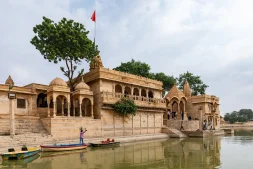
Gadi Sagar Lake in Jaisalmer, Unique experiences in India
Gadi Sagar Lake in Jaisalmer

Beaches, Backwaters and Culture

Mumbai – Goa – Hampi – Mysore – Kerala (route on GoogleMaps)

If you’re looking for a laid-back easy-going experience, this one’s for you! Mumbai is an intense starting point, but worth exploring for a few days. Drop by our office and say hi when you’re here! Then, you can head down the coast towards India’s very own sunshine state, Goa. There’s plenty of lazing about on the beach and embracing village life to be had here. Once you’ve had your fill of that, head inland towards Hampi and its unreal stone-cut temples. If you’re into rock-climbing, there’s some great bouldering to be had, too! Mysore offers yet more insight into ancient South Indian kingdoms and is worth spending a day or two exploring. And then, head down towards the backwaters of Kerala. It’s the perfect way to end your trip, with yoga, an ayurvedic massage or two, walk through spice farms, and, of course, plenty of watching the world go by as you float along the backwaters!

Where to stay: You’ll find lovely little homestays and boutique hotels all along this route. Check out our article on the top homestays in South India!

If you are looking for something more Extravagant, then checkout our article on India’s Top Hotels

Budget Travel Routes India, Backwaters of Kerala
Canoe in the backwater of Kerala

Getting around

A big expense when travelling on a budget in India can be the cost of getting from one place to the other – the country is huge! You can minimise costs by making use of the trains and buses that run across the country. All stops listed have plenty of options for both, but remember to make your bookings in advance.

Within each stop, use local transport options wherever possible. Remember that you are expected to bargain down the price, though!

We’ve got plenty more resources on travelling on a budget in India: read this piece on how much to budget for a day in India and this one on budget travel in India for more info. And, of course, you can get in touch with any questions, or if you would like some help planning your next trip to India!

Discover More: Analyzing the Expenditure of Traveling in India

Indien Rundreise Zug, Budget Travel Routes India
Trains in India

Different travel routes for Rajasthan – Delhi – Agra

Delhi, Agra and Rajasthan are probably the most visited places in India by foreign tourists. The Golden Triangle of Delhi, Agra and Jaipur being the most popular of those. But Rajasthan as a state is quite varied and diverse, it is not all about Forts and Palaces. You have a tiger safari in Ranthambore, the desert in Jaisalmer and Bikaner, small rural villages, and the spiritual town of Pushkar. Combine this with great food and some lovely charming boutique hotels and homestays and you can easily spend 2 weeks in this region.

With this blog we have given a few options of different travel routes to Rajasthan you may take depending on your interests and number of days you have to travel. If you do need help in planning your time through Rajasthan and other regions, we can help you customize your trip to India.


Route 1 – Golden Triangle plus one more city (7-8 days)

We believe the Golden Triangle i.e. Delhi – Agra – Jaipur, by itself is slightly overrated and touristy as a travel route. Delhi and Jaipur are bustling cities that offer a combination of monuments, markets and diverse places to eat. However, they do not offer much time for relaxation. Agra, solely in terms of a city, is fairly disappointing. However, the Taj Mahal, the Agra Fort and other monuments are breathtaking and make a trip to Agra worthwhile. But whilst saying this, combine these cities with offbeat homestays, interesting activities and you can have a completely different experience. So if you do only have 5-6 days in India, we could still help you plan it differently.

If you have a little more than a week to spare for your holiday, you can easily add one more city apart from Delhi, Agra and Jaipur.

One of the following options is possible to include in a weeklong Golden Triangle trip to India.

Delhi – Agra – Ranthambore – Jaipur – Delhi

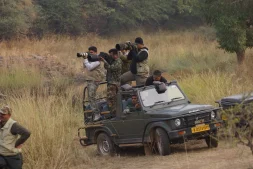
If you love the forests, you can include a stop at Ranthambore National Park. Using a detour, it can be placed between Jaipur and Agra. Ideally, spend two nights here, go for the morning and evening Tiger Safaris, and relax at your hotel/resort during the time in between. Another offbeat destination (especially for bird enthusiasts) could be the Bharatpur bird sanctuary.

Recommended mode of travel: Private car with driver. It can also be done using a combination of train rides and a car.

Delhi – Agra – Jaipur – Mandawa – Delhi

Looking for something rural and less touristy with interesting architecture and fresco paintings, include a stop at Mandawa in the Shekhawati Region.

Recommended mode of travel: Private car with driver.

Delhi – Agra – Jaipur – Udaipur – Delhi

Include Udaipur for a romantic end to your trip. Although Udaipur is a little touristy, it is an absolutely charming city. Stay in a haveli hotel in a room with a view of the lake or in one of the luxurious resorts on the outskirts of the city.

Recommended mode of travel: Private car with driver + train ride + flight.

Route 2 – Classical Rajasthan Tour(12-14 nights)

Delhi – Agra – Jaipur – Jodhpur and Udaipur, plus one more city

A more complete Rajasthan experience should include a couple of stops in Southern Rajasthan. The towns in Southern Rajasthan are more relaxed, offer a combination of stunning architecture and landscape. Start with the hustle and bustle of Delhi – Agra – Jaipur and end your trip with stops in Jodhpur and Udaipur.

Recommended mode of transport: Private car with driver between Delhi, Agra and Jaipur, a train from Jaipur to Jodhpur, then another car from Jodhpur to Udaipur and a flight back to Delhi. En route to Udaipur from Jodhpur, you can also visit the splendid Jain temples of Ranakpur. This trip can be done the other way round too i.e. fly Delhi to Udaipur and then trace your way back to Delhi.

If you do not like to compromise on your comfort you can exclude the train journey and look at a rented car all through.

If you have a little more time you can also include a rural stop at either Rawla Narlai or Deo Garh Mahal between Jodhpur and Udaipur. Or you could also add a tiger safari in Ranthambore, stay in Pushkar the hippie and spiritual city, or even visit Jawai and catch some leopards in action.

Unveil Luxury: India’s Premium Hotel Selection

One of our German clients Henning did a similar trip staying at interesting homestays. You can see the details of his trip for further details.

Route 3 – Rajasthan, all the way around (14 nights)

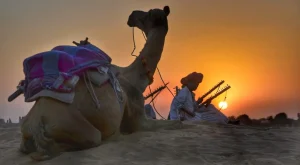
Jaisalmer is a magical desert city by the edge of the Thar Desert. Getting to Jaisalmer takes a little effort, but it is worth the travel. Try and stay within the fort walls that offer gorgeous views of the city. Take a camel ride in the dunes around sunset or even better spend a night in the desert. It is a magical experience to be surrounded by sand dunes under the starry night sky.

There are a few points one should bear in mind when including Jaisalmer; It can get notoriously hot and should be avoided April onwards. Jaisalmer is best accessible from Delhi, Jaipur and Jodhpur by overnight trains. These trains need to be booked well in advance, ideally two months in advance.

Recommended mode of travel: Private car with a driver between Delhi, Agra and Jaipur, followed by an overnight train and then another car from Jaisalmer to Jodhpur to Udaipur. Train options are possible between Jaisalmer and Jodhpur too.

This trip can be done the other way around i.e. starting with Udaipur.

If you have more time you can include a stop at Ranthambore National Park or the hippie-spiritual town of Pushkar.

Also Read: Top Rajasthan Destinations

Route 4 – All across Rajasthan with A trustworthy car and driver (14-18 nights)

If you have the luxury of time you can do a long loop across Rajasthan covering Delhi – Agra – Ranthambore – Jaipur – Bikaner – Jaisalmer – Jodhpur – Udaipur.

This trip is best enjoyed in a comfortable car with a driver that is with you all through your trip.

Try spending more time in Jaisalmer as it is usually the halfway point of your trip and you would be driving a lot. Remember Rajasthan is dotted with wonderful heritage hotels; old Havelis (Villas) and Palaces and many of them are very affordable. Ensure you pick your accommodation wisely. Stay in a healthy mix of hotels, some in the heart of the old city and then at times perched by the edge of the city.

Route 5 – Rajasthan during Festivals

You can time your Rajasthan trip to coincide with one of the many festivals that are celebrated in Rajasthan and India. Here is a list of a few festivals:

Diwali

Sometime between the end of October and early to mid-November, Diwali is celebrated. The exact dates change from year to year. Diwali is celebrated across most of India, especially with much more gusto in North India and Rajasthan. No matter where you are in Rajasthan during Diwali you will see the festivities all around. The general mood is festive.

Note – Noise and air pollution are elated during Diwali and it is a busy time for Indians to travel, so book in advance.

Holi

Holi (the festival of colours) – If you are willing to brave the onslaught of colours and a street party, plan a trip in March to coincide with the festival of Holi. Pushkar is the best town to celebrate Holi.

Note – the colours can be toxic and people are inebriated on the streets so one should be careful while travelling. However, if you are at a hotel with many tourists that organize a holi party you would get to participate in the festivities and still be safe.

Pushkar camel camp fair

The camel and cattle fair of Pushkar is another interesting festival one can include during their trip to Rajasthan. The celebrations are spread across a week. The first 5 days are the most active and interesting. The celebrations are restricted to only Pushkar and it is advisable to book well in advance.

Music Festivals

Jodhpur and Jaisalmer have music festivals each year. The exact dates change each year. The Rajasthan International Folk Festival in Jodhpur takes place in the month of October. And, in Jaisalmer in the month of February each year. If you can plan in advance as there’s nothing like planning your Rajasthan trip around a festival.

In conclusion, Rajasthan is a great state to visit for the first trip to India. If you are looking at other options to travel to India you can also see two-week travel routes for North India. And, if you would like to personalise your trip to India, do just fill out this short form and we will get back to you with an indicative travel plan.

Learn More: Twenty Must-Visit Places in North India

Let India Someday handle it and plan your best trip.

PLAN MY TRIP subtext