“Your hand opens and closes and opens and closes. If it were always a fist or always stretched open, you would be paralyzed. Your deepest presence is in every small contracting and expanding, the two as beautifully balanced and coordinated as bird wings.”
~ Rumi
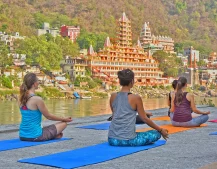
An immersive environment where you can forget your worldly troubles (Photo Credit – Steven Zwerink)
Yoga festival
Every coin has two sides, so does yoga. Yoga has a personal side and a social side. Like your own breath surging into your lungs or the gentle brushing away of thought from a restless mind. Also, a social side would be of learning, helping, allowing the principles of yoga to seep into your relationships.
Reach out a little further into that society of fellow practitioners by setting out for the International Yoga Festival. And give yourself the opportunity of slipping into the melting pot of its people.
Those who practice it abroad dream of coming to India and meeting renowned yoga acharyas. They want to explore the country that birthed and nurtured them. So they make this trip to be among others who share similar beliefs and practice the chosen lifestyle.
While this doesn’t apply to Indians in general. It definitely does to the several hundreds that gather in the sacred city of Rishikesh each year. People from over 30 countries across the globe for this festival.
Organised by the Parmarth Niketan Ashram, the festival packs over 60 hours of yoga into the first week of February. Alongside internationally developed strains, traditional styles like Kundalini Yoga, Power Vinyasa Yoga, Iyengar Yoga and Kriya Yoga are practiced. Accordingly, dozens of yoga acharyas lead classes through the day.
a day at the festival
It is hemmed in by a 4 am rising call and an Aarti and cultural programs in the evening. Basic boarding facilities are complemented by simple vegetarian food. This creates an immersive environment. An environment where you can forget your worldly troubles and commit to the exploration of body and soul.
What began as a handful of people in a small hotel has now grown into a community. A community that always has room for one more!
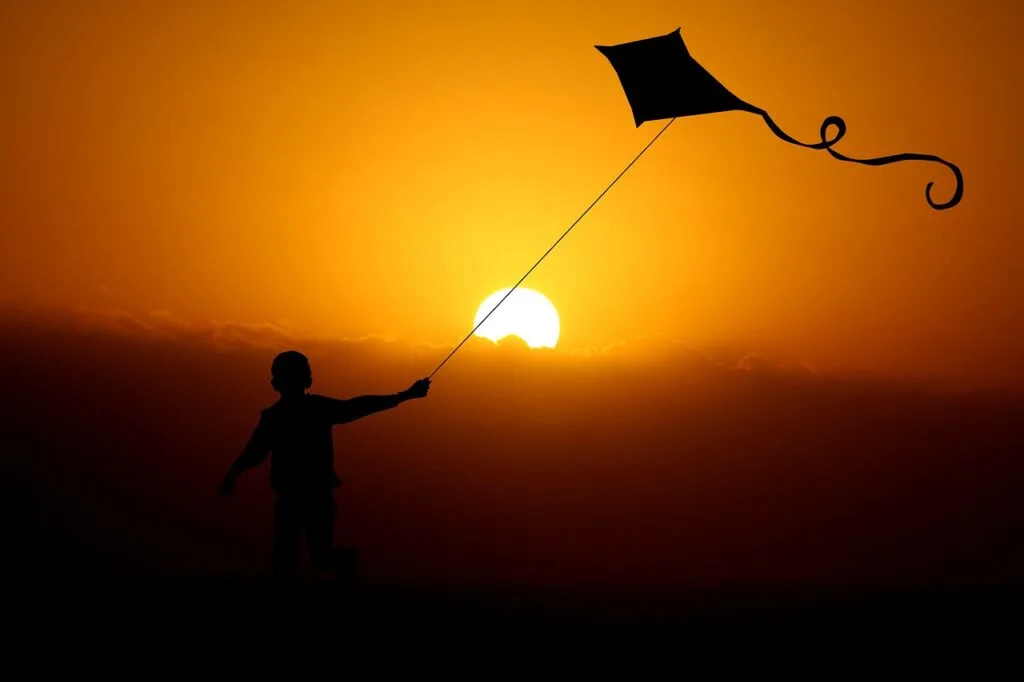
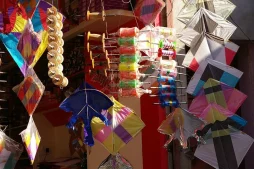
The kite festival in India falls on 14th or 15th January every year. It marks the arrival of spring and the transition of the sun into the Makara Rashi (the Capricorn zodiac sign), which is why the kite festival is called Makar Sankranti in some parts of India. In other parts, it is called Uttarayan festival, meaning “the northward journey of the sun”, which begins from this day.
It is also a festival where people come together in celebration and bury their hatchets, offering each other sweets in a joyous atmosphere. In this article, we tell you more about the significance of the kite flying festival in India, how and where it is celebrated, the international kite festival, and the precautions you need to take. Hit us up at India Someday to witness this spectacle in person.
Click here to understand what the weather is like in India in January.
Makar Sankranti is a festival that promotes friendship, family, and togetherness (Photo Credit – Andrea Kirkby)
Significance of the festival:
The significance of Makar Sankranti differs according to the region. Uttarayan festival is celebrated one day after Lohri, on the same day as Makar Sankranti. This harvest festival is dedicated to the worship of the Sun God Surya, who is said to be the source of life and energy. It also symbolizes the end of winter solstice, or Uttarayan, and the ascent of the sun. Makar Sankranti symbolizes the triumph of light over darkness.
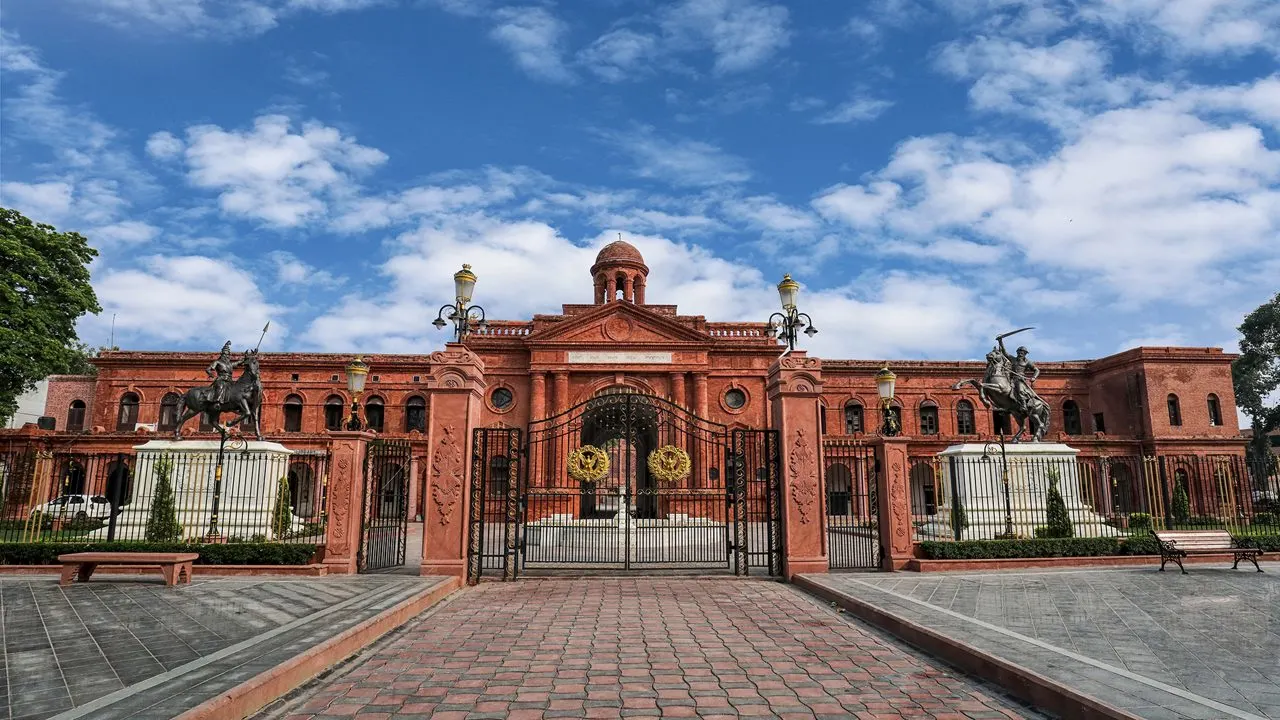
One of the other kite festivals is Basant Panchami, which marks the beginning of spring before the harvest season. Basant Panchami is popular in the northern part of India, especially Punjab. It is celebrated for a week with colors and kite flying.
Why do we fly kites on this day?
There are different records about the origin of kite flying in India.
According to Hindu religious beliefs, kites are flown into the skies as an alarm for the gods to awaken them from their deep slumber throughout winter. Kites are also said to serve as a Thanksgiving symbol to the gods in the skies above.
Some historical records suggest that kite flying was a popular activity among Mughal emperors and Muslim traders. Some say it was brought to Gujarat by Buddhist pilgrims from Tibet.
The kite flying tradition on Makar Sankranti also has scientific reasons behind it. Winters are cold and dry, and people are most prone to infections and illnesses during this time. Flying kites during the day exposes the body to the much-needed sun’s rays, which provide vitamin D to the body, boost the immune system, and prevent diseases. They are also believed to have healing and cleansing properties.
Additionally, flying kites involves physical activity, which keeps the body warm and improves blood circulation. It develops a sense of community, as everyone gathers together and shares tricks and stories while learning the sport of flying kites.
How is the kite festival celebrated in India?
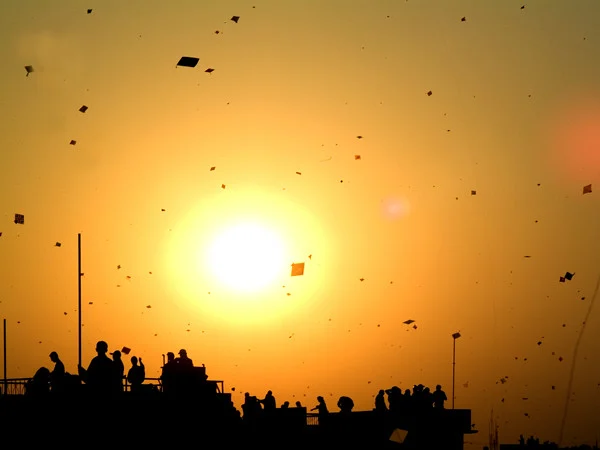
Imagine flying colourful kites with your friends and family from a rooftop under the morning sun during cold winters. This sport is an unbeatable experience, especially on this day.
This friendly kite-flying tradition soon turned into spirited kite-fighting competitions among friends and families, where kite flyers tried to cut their opponents’ kite strings so that their kite would be the only one in the sky, the undefeated winner. In Punjab, people engage in friendly kite-flying battles with each other. In Gujarat, there is an international kite flying competition every year, where people of all age groups from all over the world come and participate in this fun activity.
It is a tradition to offer tilgul laddoos to each other on this day. ‘Til’ means sesame and ‘gul’ means jaggery. Tilgul laddoos are round sweets made from sesame seeds and jaggery, two food items that are good for your body during winters. In Maharashtra, while offering these laddoos, Maharashtrian people say, “Til-gul ghya aani goad goad bola”, which means, “Have tilgul laddoos and speak sweet words”.
Some other winter specialties are undhiyu (one-pot vegetable casserole made with seasonal vegetables), chikkis, and til papdi (sesame seed brittle made with sesame seeds and sugar syrup).
There’s nothing like flying a kite from terraces and rooftops (Photo Credit – Penn-State)
Where and when is the kite festival celebrated in India?
Kite festivals are prominently celebrated in some parts of North India, Gujarat, Rajasthan, and some major cities of Maharashtra. Festivities take place on 14th or 15th January, but in a lot of places, celebrations start a week prior.
Jodhpur in Rajasthan is beautiful on its own, but it comes alive on Makar Sankranti. Witness a thousand colourful kites take over the morning skies as every rooftop is raided by enthusiastic kids and adults alike. Similarly, in Jaipur, Udaipur, and Jaisalmer, you will see beautiful kites flown in the air from rooftops.
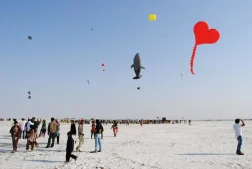
In Ahmedabad, Gujarat’s largest city, the 7th to 15th January is the International Kite Festival week. This is the most famous kite festival in India. People from all over the world come to Ahmedabad to compete in kite fighting. You can see the most unique kites soaring in the blue skies – giant banner kites, flying dragon kites, rokkaku fighter kites, wau balang kites, and more such innovative kites.
The Patang Bazaar (kite market) is open 24 hours a day during this week. Streets are filled with rows of stalls selling kites in this kite capital.
Kite flying starts at 5 am in the morning and goes on until midnight. You will see the sky filled with these beautiful kites in one of Gujarat’s biggest kite festivals.
We definitely recommend being in North India for the Kite Flying Festival, you can browse through our two-week travel routes here.
The colourful kite utsav in Gujarat (Photo Credit – Kaushik Patel)
Precautions to take
The kite flying festival is also responsible for a lot of mishaps and accidents. Why? The strings (manja) used to fly the kites are often coated with ground glass or other abrasive substances in order to cut off other kites. These strings can cause serious cuts if you run through it quickly. So be very careful while handling kites or even just being around kites.
There are also people flying kites on the streets, and often, kites can plummet downwards. Always be aware of your surroundings.
Also, ensure that you don’t trip over or run through any strings that might come in your way.
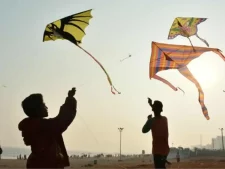
The Kite Flying Festival has religious and cultural significance attached to it (Photo Credit – Siasat.com)
All in all, the celebration of Makar Sankranti in India is very prominent. It creates an environment across the country that brings out the child in everyone. If you intend to experience the kite festival in India, let us know. We will accommodate you in North India, preferably in a homestay. This way, you can feel like you belong as you partake in the festivities with an Indian family. Click onPlan Your Trip for your ideal itinerary.
”We will be visiting the Bike Temple on the way” said our driver.
“What temple?” I responded, shocked. I thought I had heard the temple. My faith in my ability to pay attention, even when I was sleepy was restored. It had been a long and comfortable drive since our last halt at the temple in Ranakpur, I could be forgiven for falling asleep. However, since the minute I’d heard of the ‘Bike Temple’ I wanted to know more.
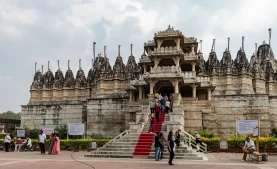
Ranakpur Jain Temple (Photo Credit – Ninara)
Religious Temples
India in general is a very religious country; you will find a lot of pretty temples, mosques and churches. Some of the most beautiful sites in the country are somehow connected to religion. Majority of India’s population is Hindu, and Hindus believe in a lot of Gods (every deity being a form of the original holy triumvirate that Hinduism is based upon).
I knew of the Tirupathi Temple in Andhra Pradesh, where people (men) shave their heads (hair is considered as a sign of pride, shaving your head would mean giving up on pride for God). I’ve also heard of the rat temple (Jaipur and Bikaner), the monkey temple (Jaipur and Hampi). But, I would never have imagined that I’d be visiting a temple devoted to a bike; a Royal Enfield to be precise.
Monkey Temple (Photo Credit – Koen)
Highway Tales
I have always been intrigued by highways; the bike temple had promised to be what I had hoped for at the start of the journey but forgotten about in the process of travelling. I was going to visit a temple, which was in its own way a highway legend; a story that I would go back and share with my friends. The mention of the bike temple had done just that.
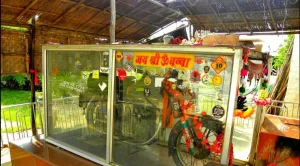
I learnt that the official name of the bike temple was Om Banna (the name of the bike’s owner). It is also known as Bullet Banna or Bike Banna (Banna is generally a term used to address a person of the male gender in Rajasthan). Our driver confirmed the story that the bike was owned by an Om Singh Rathore.
A bullet enthusiast, he was travelling from Bangdi; a small town near Sanderao in the Pali district to Chotil, when he met with an accident and rammed his bike into a tree. The impact killed him instantly and the bike fell into a ditch closeby.
The police took the motorbike to the police station the next day only to find out a few hours later that the bike had disappeared and somehow magically appeared at the spot of the accident. The police are reported to have tried various things to keep the bike from disappearing; like emptying the fuel from the petrol tank, locking the bike in chains, but only to find the bike again magically reappear at the accident spot.
Temple Om Banna Inde (Photo Credit – Jonathan Laroche)
The Bike Temple
The locals started to consider this a miracle and advised the police to leave the bike at the accident spot. They built a temple around the bike which is now popularly known as the “Bullet Baba’s temple”.
Almost all drivers who know of this story, make a stop at the shrine to pay their respect to the helpful spirit, it is believed that a driver who does not visit the temple is in for a dangerous journey.
Like all other temples in the country, a lot of people offer incense sticks, flowers, coconut and a red thread when they visit. There is one more thing I noticed the people offer here. Alcohol! Alcohol is considered a taboo in Hinduism, and India, in general, does not have a drinking culture. Even though there is no restriction on drinking, Alcohol and Religion don’t go hand in hand. It was odd to see people offer alcohol at the shrine.
This was one place I had not seen coming, I wasn’t even sure a place like this would even exist. But what an experience it was! For the rest of my journey to Jodhpur, I couldn’t stop thinking about the bike temple, and the Bike God that had watched over me the time I was on the highway.
Bullet Baba temple aka the famous Bike temple (Photo Credits – TripAdvisor)
It seems like every day is some type of holiday or festival here in India. From Jain holidays to Krishna celebrations, festivities abound. Many Jain folks fast for 8 days before this.
Jagdish Temple, Janmashtami
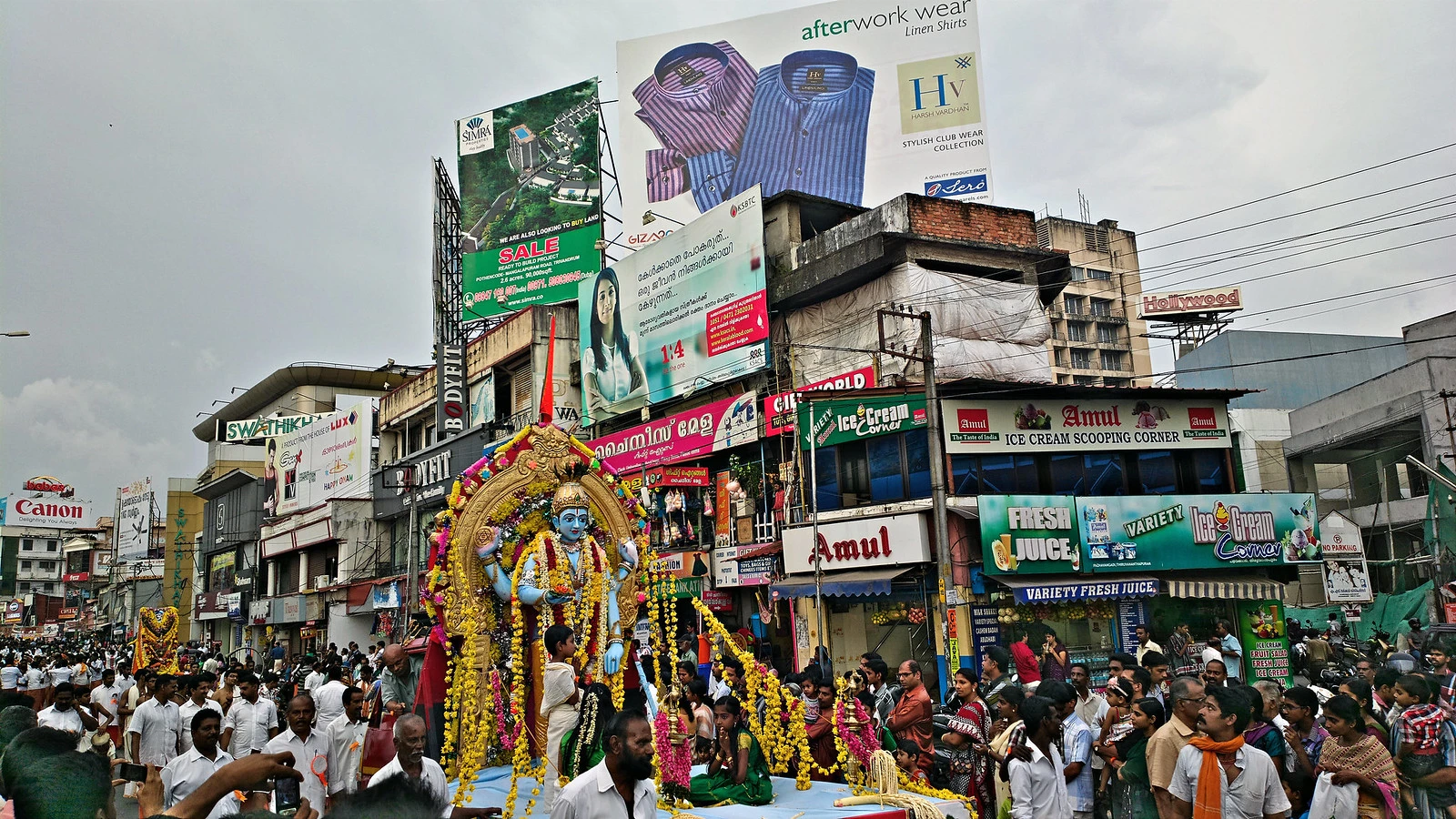
Just when I thought I had a full Janmashtami experience at the community celebration in Ahmedabad, I immediately got a sense that the Jagdish Temple festivities in Udaipur would be quite a wonder. And I sure was right. There were colourfully dressed men, women, and children. With amplified music, the clay pot dangling up above the public square, shiny streamers, and lights. It was a buzz of festival-like energy that was constant.
I was told that after 06:00 PM, the festivities would really get started. They would end by around 08:15 PM or whenever the pyramid of boys grew tall enough to knock the clay pot of yoghurt down.
Jagdish Temple, Janmashtami
I made my way over at around 7:00/7:30 and joined the dense crowd of spectators. I wish I could have somehow made it to one of the many balconies overflowing with onlookers. Instead, I found myself a spot where the visibility wasn’t bad and there was some room for breathing. That changed pretty quickly! I rarely go deep into tightly crowded spaces unless I feel I have a very clear path to exit. But this seemed like a pretty special opportunity, and I decided to stick it out.
I was able to hold my camera up high and snap some good shots. I’d been warned about unwanted gropes. Accordingly, I had purposely placed myself near women to avoid any unwanted situation.
The crowds roared with enthusiasm! The catchy music played loudly, and there was lots of call and response. It was similar to the community celebration in the Ahmedabad slum.
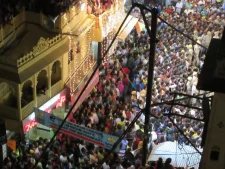
The crowd in the lanes of Udaipur leading up to Jagdish Temple during Janmashtami
The Finale!
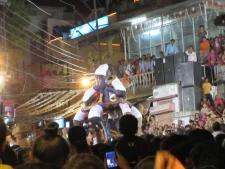
The boys made pyramids that grew taller and taller and the crowd got tighter and tighter. It was still nowhere near the clay pot. It was exhilarating to join in the excitement. Yet still, anxiety-provoking to be in the increasingly crowded audience. Not to mention the sweat literally dripping from my body.
I would think it was as cramped as humanly possible. And then dozens of more people would push their way towards me from both sides. I loved the experience though was horrified at the same time. I finally retreated, recognizing how much longer it would take. Plus, I had exciting dinner plans with a friend, of my New York friend, Aditi. I was so grateful to her for the connections she made for me.
I finally pushed and squeezed my way out of the crowds (not an easy feat), and enjoyed another vantage point from the distance.
A human pyramid being made to break the pot of yoghurt that is at the top
I worked my way through the maze of crooked streets and headed to Jaiwana Haveli to meet Aditi’s friend Yash. His family has been living there for generations. His family also runs a beautiful hotel with stunning views overlooking the lake and the palace. We met up on the roof and enjoyed a refreshing Kingfisher, some decent conversation and yet another scrumptious meal, the highlight of which was the Chilli Paneer.
Ramblinarium – Jaiwana Haveli, Udaipur
I walked myself back to Madri Haveli through the windy maze. Along the way, I was excited for a much-needed shower and rinsing of my sweat-filled clothes. I learned later that it took the boys 40 tries to make a pyramid tall enough to reach the clay pot. So glad I left when I did!
Super thankful for the A/C in my room, I slumbered well and woke to yet another delicious breakfast! This time enjoyed it with Rajesh and Shankar Singh Charan, manager of the Madri Haveli. I went to check out Rajesh’s impressive gallery and was picked up there for my next adventure – the Krishna Ranch.
Thank you, India Someday, for putting me up like royalty in Udaipur and for these first couple of cities. The air-conditioned bus (with plush reclining chairs) from Ahmedabad to Udaipur dropped me on the outskirts of town. Post this, I proudly negotiated an INR 50 rickshaw ride to the Old City.
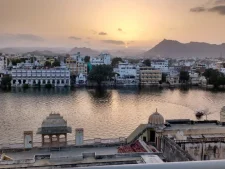
Beautiful sunset in Udaipur (Royalty in Udaipur!)
The Madri Haveli
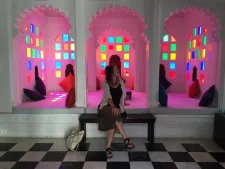
My room (or shall I say rooms) at the Madri Haveli, in the master suite, made me feel like a queen. With multiple seating areas to choose from, nooks and crannies with beautifully shaped windows looking out onto the charming old city. Also, a separate regal bedroom, and an eye-catching stone bathroom (larger than my NYC bedroom), replete with a giant tub, two sinks and a great supply of adorable Colgate toothpaste and other toiletries.
I made my way to the rooftop and was awe-struck by the stunning views of the lush mountains, beautiful lakes and the enchanting city. I knew I’d be more than content if I never left the grounds and treated myself to some laptop time in what became one of the world’s prettiest offices.
Madri Haveli Udaipur
Boat ride around Pichola Lake
I meandered the busy colourful crooked streets and worked my way towards the quintessential boat ride around Pichola Lake. I entered at Lal Ghat (where all tourists were Indian) and took the INR 250 ride around the beautiful waters, staring out onto City Palace and Jagmandir and Jagniwas Islands, quickly gaining a sense of the regal life of India.
Drawn to the green park space nearby, I wandered the windy paths, checked out some sculptures and spotted my first monkey hanging out.
Breakfast on the rooftop – Madri Haveli (one of the many royalty in Udaipur)
Jagdish Temple
Working my way back to the haveli, I stopped to visit the Jagdish Temple. All dressed up with lights, streamers and statues, and packed with folks celebrating Janmashtami; Lord Krishna’s birthday.
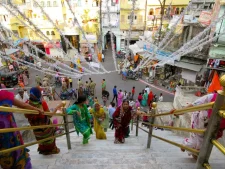
I slipped off my shoes and joined the packed line of exquisitely dressed women in colourful saris to enter the temple, built in 1651. A clay pot dangling high above the open public square, I grew excited for the community celebration that would happen the following eve.
For now, it was teeming of people, lots of music, and in the evening, a midnight procession marking the birth of Krishna.
Pilgrims walking up to the temple in Udaipur
The food
I was thrilled to meet the Udaipur artist, Rajesh Soni. In addition to photography, he does beautiful work hand-colouring, in fine detail. Also, he does others’ digital pictures, many of which were on display in the Madri Haveli Gallery.
We drove to the new part of Udaipur, passing the famous Fateh Sagar Lake (or FS as they call it here). This is where droves of locals go to hang out in the evening. You would find them sitting on the water’s edge and eating at the plentiful food stands across the road.
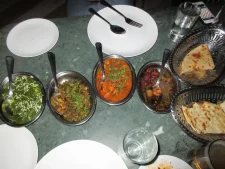
He brought me to a typical Indian thali place where unlimited vegetarian dishes are served by eager waiters. I’m so loving the yoghurts and delicious aromatic flavours of each meal more than the next in this country!
Our drive back was insane. His small car is in competition with the motorbikes, bicycles, rickshaws, people, cows, goats, and who knows what else. The streets are windy, super narrow, and barely have room for one car to go by.
He had an impeccable sense of the car size. And he magically finessed his way through the tightest of squeezes, at impressively high speeds.
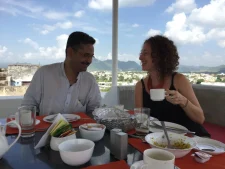
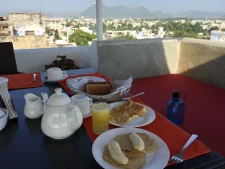
I retreated to my royal room and woke to a rooftop breakfast fit for a king. Fresh fruit, black tea, cheese omelette, banana crepes, and four pieces of toast with an assortment of jams and that delicious Indian butter.
I enjoyed learning that the Amul brand of butter I’ve been loving started out as a women’s cooperative. As it goes, some women started a milk society collecting milk from everyone’s house. This eventually got developed into a large, established company.
Breakfast with a view at Madri Haveli
Ayurvedic Massage
I spent the day having my first Ayurvedic massage, meandering the Udaipur streets, and lap-topping atop my glorious shaded rooftop. Struggling to find the place listed in Lonely Planet and overwhelmed by the plethora of choices, I decided to go with a place in the Lal Ghat area. This is where I was sold on having a massage provided by a woman.
Loving a good massage and having experienced some of the best throughout my travels, but never an Indian Ayurvedic treatment, I was curious. Throughout my hour of being gently massaged, I was curious if this woman’s work was indeed a good sampling of Ayurvedic massage. Because if so, I was going to exchange my rupees for bahts and head to Thailand!
Thankfully, the guy who ran this questionable operation wanted a genuine debrief. He has also offered earlier to return my money if I wasn’t satisfied. Dissatisfied though I was, I didn’t intend to ask for a refund. We spoke at length about Ayurvedic massage, and I much more enjoyed the next half hour of treatment he gave me.
The moral of the story is to make sure you go to a reputable place. Especially if having a woman is important for you. It became clear to me that this woman had no idea what she was doing.
Overall, it was a restful day in charming, well-touristed Udaipur, the City of Lakes. I loved hearing the sounds of the Krishna celebrations and staring out at those beautiful hills.
This weekend I went to Amritsar to do some research for our India Someday clients. The religious city in Punjab is famous for three things – The Golden Temple, delicious Amritsar food, and the Wagah Border. After a lot of exploring (and a lot of eating!), we’ve concluded that this is definitely one city you do not want to miss!
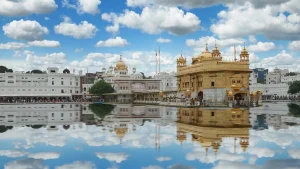
Golden Temple lit up in the evening
Amritsar Food
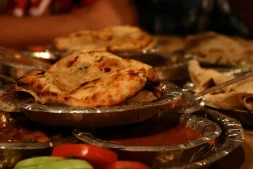
Amritsar is a food lover’s paradise. From the moment you wake up, the amount of Amritsar food you will manage to eat is a revelation. Choose between aloo puris (potato curry served with deep fried Indian bread stuffed with cottage cheese), or chole puri (the same bread served with spicy lentils) for breakfast. Kanha Sweets or Munim di Hatti at Lawrence Road are the best places to try these.
For lunch I suggest you pay a visit to the Golden Temple Langar. Or try visiting Kulcha Land where for just INR 50 -100 they serve great stuffed kulchas and lassi. If you have room left for dinner head to Bharwan ka Dhaba or Kesar ka Dhaba, for some rajma (red beans) and rice, or tandoori roti and veggies. If you have not noticed yes there is a slight bias, I am vegetarian.
North Indian food in general is a little heavy on the stomach, but eating Amritsar food is so much fun you cannot stop. Every corner you go to or every street you visit you will always find something being cooked. From aloo tikkis to fresh fruit juice, it’s all so tasty and delicious that I cannot stop raving about it.
There is lots of butter, lots of fatty foods and loads of proteins and lentils. The few days you’re there, I would suggest throwing any diet out of the window.
Excluding the taste, the best part of eating in Punjab is the people. Punjabis are a jolly bunch of people who love only one other thing more than eating – feeding someone else. So enjoy your meals hot and served with lots of love and smiles.
Amritsar food will always leave you craving for more
The Golden Temple
The serenity and the beauty of the Golden Temple is mesmerising. People often compare visiting this temple to visiting the Taj Mahal. I can guarantee that it is equally as spectacular, probably even more so. Experience continuous spiritual chanting, the stillness of the water, and the thousands of people providing service for nothing in return.
The ornate beauty of the Golden Temple itself makes your visit here truly special. I would recommend also signing up and helping to cook in the Langar. The temple itself has a long line upon entry no matter what time of the day you visit.
A Langar is found in every single Gurudwara or Sikh Temple and has an element of religious belief. It is a 24 hour open kitchen. The food is free to all guests without any discrimination. You can donate a small sum of course and you should!
The entire kitchen is run by volunteers who work in shifts. Anyone can volunteer and be a part of this team. The food is healthy and nutritious and filled with love.
You should visit the Golden Temple in the morning or at night when the religious book is taken back into safe keeping. It happens around 2200 hrs.
The beautiful Golden Temple at a distance
Wagah Border: India’s patriotic pilgrimage
Palpable in the air of Amritsar is the feeling of patriotism invoked when you visit Jallianwala Bagh or the Wagah Border.
As sad and haunting as the tragedy of the Jallianwala Bagh Massacre is, the Wagah Border is on the other end of the spectrum. Yet both are connected by a heavy sense of history and Indian strength. The border is the only entry point between India and Pakistan.
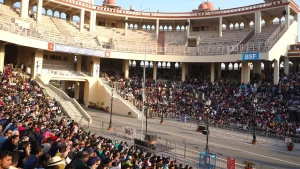
Every evening you can witness a fun and competitive beating retreat, or the ‘raising/ lowering of flags’, ceremony. The passion with which the soldiers fulfil this duty is incredible. Shouting, singing, the thumping of the feet, drums, dancing and trying to outshine the other side makes for a surreal experience.
Displays of patriotism at the Wagah Border
Accommodation
The stay in this city is not very expensive. Lower range budget hotels like Akaal Residency are clean and good value for money. And you even have a few unique options like Virasat Haveli.
But here we would recommend staying at a higher end property. Reason being, as you do want to go back to an empty shell after the hustle and bustle of the narrow streets. My pick would be a stay at the Hyatt in Amritsar – they have nice cosy rooms and the service is impeccable.
Overall, Amritsar is a destination you should visit if travelling to India. The Golden Temple, Amritsar food, and the patriotism and general spirituality of the area make for a warm and welcome stay. If you need help in seeing how you can fit Amritsar into your itinerary, let us know and we at India Someday can help you plan your trip.
Experiencing Diwali in India is an experience like no other! If we had to pick two festivals that you must definitely experience in India, it would have to be either the festival of colors Holi (March), or Diwali (October or November), known as the festival of lights. Both these festivals are a sight to behold.
Diwali takes place on different dates every year. It occurs in October or November. The Diwali dates in 2024 are from 28 October to 3 November.
So if you are travelling in India during Diwali, you have to experience the festival in the authentic way. In this blog, we will talk about experiencing Diwali in India and celebrating the festival of lights!
You can read these blogs to get an idea of what the weather in India is like in October and November.
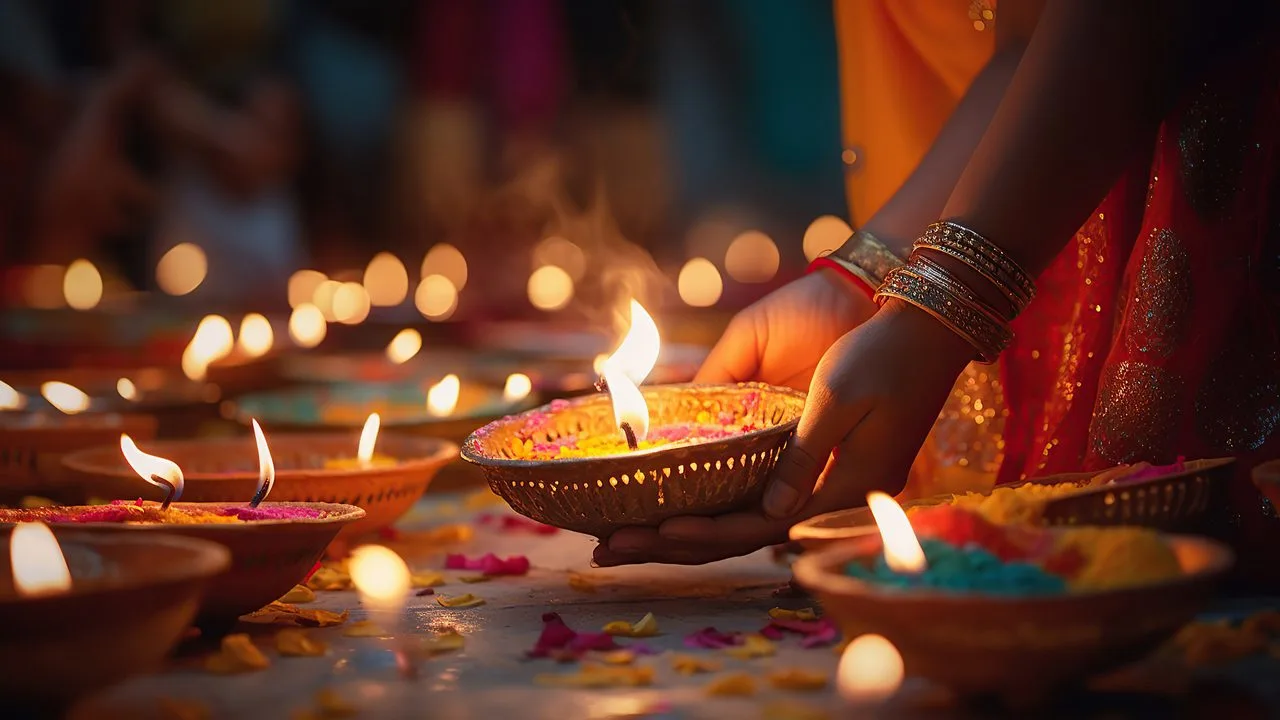
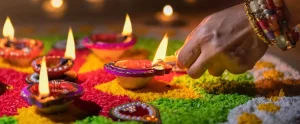
Diyas in Diwali (Photo Credit – Magik India)
Diwali in India- An Overview
The name Diwali comes from the Sanskrit word “deepawali”, which means “rows of lights”.
Diwali in India is as important to Indians as Christmas is in the West. It is a five day festival, and India’s biggest holiday. Most Hindus observe Diwali, which occurs in October or November every year.
Common traditions during Diwali include cleaning and redecorating the house, buying new clothes, lighting diyas (lamps), exchanging gifts, making and eating sweets together as a family, and bursting firecrackers at night. Friends and families gather together for this festival. Diwali is celebrated as a fresh start with the belief that good triumphs all evil.
As a traveller in India, if you are anywhere in North, Central, or Western India, you will feel the festive vibe in the air. This is a festival that brings all of India together, regardless of caste and religion. Indians are friendly, curious people, so don’t be surprised if you get invited to someone’s house to join in the celebrations.
If experiencing Diwali in India is on your wishlist (something we highly recommend),plan your trip with us now, so you can properly experience the grandeur of the festival of lights.
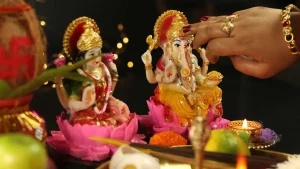
Partake in the Diwali Puja, and see if you can spot the Elephant God Ganpati (Photo Credit – HerZindagi)
Why is Diwali celebrated?
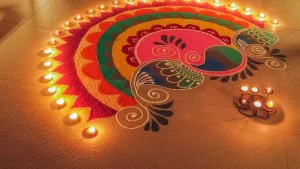
Diwali marks the beginning of a new year in the Hindu calendar in India. It symbolises the victory of light over darkness, good over evil, and hope over despair. Hindus light up their homes with lanterns and oil lamps, and make colorful rangolis (mandalas made using colored powder). This is why, Diwali is known as the festival of lights. To show gratitude to God, all material assets, such as cars, offices, jewellery are worshipped in Diwali.
Diwali is predominantly a Hindu festival, but non-Hindu communities celebrate Diwali with equal gusto. It has an important place in Sikhism and Jainism as well. Even some Buddhists observe Diwali.
There are many legends about the origin of Diwali. The stories vary depending on the region, but the underlying theme is the same – the victory of light over darkness, and good over evil.
Diwali celebrates King Rama’s return to Ayodhya. According to the Hindu epic Ramayana, Lord Rama, his wife Sita, and his brother Lakshman defeated the evil king Ravana and returned to Ayodhya after 14 years of exile.
In another legend, the festival marks the time when Lord Vishnu rescued Goddess Lakshmi, the goddess of wealth and good fortune, from the demon King Bali who had imprisoned her. On this day, Lord Vishnu ordered King Bali to be banished to rule the netherworld.
In Sikhism, Diwali has historical significance. On this day, the sixth Sikh Guru, Guru Hargobind ji, along with 52 other Hindu kings, was released from captivity by the Mughal Emperor Jahangir.
In Jainism, it was during Diwali that Mahavira’s soul attained Nirvana. He was the twenty-fourth and the last Jain Tirthankara of the present cosmic age.
In Gujarat and some Northern communities in India, Diwali signifies the beginning of the new year.
In some parts of India, especially in the east, the hindu Goddess Kali is worshipped on Diwali. It is believed that Goddess Kali appeared with 64,000 Yoginis to kill wicked demons on Diwali. Kali Puja takes place a day after Diwali.
In South India, Lord Krishna is worshipped on Diwali. According to legends, Diwali marks the day when Lord Krishna defeated the demon Narakasur.
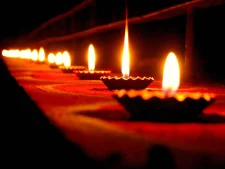
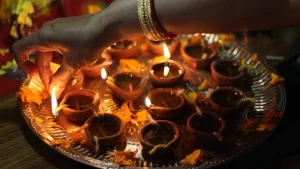
Clay lamps or diyas are lit to illuminate homes during the festival of Diwali (Photo Credit – Britannica)
When and where is Diwali celebrated?
Diwali is celebrated on the day of the full moon around the end of October and the beginning of November. It is a five day festival, with different significance of each day. The third day of Diwali is the main day and the most important.
Most regions across India celebrate Diwali. Diwali celebration in North and Central India is very different compared to the festivities in Southern India. Depending on the state, the religious significance also differs.
Celebrations in most of India take place with great fervour – colours, row of lights, chaos, fireworks, loud gatherings, and noise. However, in Southern India, celebrations are quite subtle even though the traditions are similar.
So if you want to experience Diwali in the true sense, you need to be in the western, central or northern India during this time.
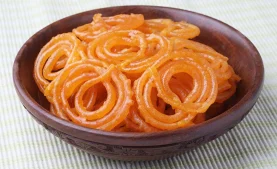
Make sure you eat Jalebi, which is a famous deep fried Diwali sweet
How is Diwali celebrated?
Diwali is a five-day celebration in India, and each day has a special significance.
The celebrations start with Dhanteras on the first day. On this auspicious day, Indians clean and decorate their houses and prepare for the festival. Many people purchase gold items on this day, as it is considered auspicious. People of Hindu faith also honor Goddess Lakshmi, the goddess of wealth and good fortune.
The second day is Narak Chaturdashi, or Choti Diwali. People celebrate by waking up early in the morning, lighting up their house with oil lamps and bursting crackers. They also draw rangolis outside their house.
The third day of Diwali is Lakshmi Puja. This is the main day of the festival of lights. Hindus ask for blessings from Goddess Lakshmi on this day. You will find lighted lamps, rangolis, and firecrackers outside most homes on this day.
The fourth day of Diwali is Padwa or Goverdhan Puja. This day honours the environment and nature. This is considered to be the start of a new year. People visit friends and family on this day and exchange gifts. They also have lavish meals together.
Bhai Dooj is the fifth day of Diwali. It celebrates the special bond between siblings. Brothers visit their sisters’ homes on this day, bringing gifts. In turn, sisters prepare a feast for the brothers and give them gifts as well.
We recommend experiencing all 5 days of Diwali during your trip.
Beautiful combinations of diyas and flowers adorn houses (Photo Credit: PHOOL)
What are the best places to celebrate Diwali in India?
If you’re travelling to India during Diwali, we will always accommodate you in North India during the festivities.A homestay can be a great experience to celebrate Diwali with a family, but they get booked in advance. Some homestays only prefer to host friends and family. But do not worry, hotels have Diwali celebration too – you cannot escape the Diwali spirit, irrespective of where you stay.
In terms of destinations, any place in Rajasthan is great for Diwali. You will see lots of festivities and firecrackers in bigger cities like Mumbai and New Delhi. Towns like Agra, Orchha and Khajuraho located in the state of Uttar Pradesh and Madhya Pradesh are great for Diwali.
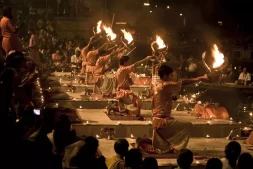
You can go to Varanasi and watch the amazing aarti and the mesmerising fireworks by the Ganges River. Varanasi also celebrates the festival of Dev Deepawali – the Diwali of the Lords. This celebration takes place 15 days after Diwali. It is believed that the Lords come down to Earth to take a dip in the holy waters of Ganga and all the 84 ghats are lit with clay lamps for their welcome. This is a sight worth witnessing as along with celebrations, multiple rituals take place as well.
Jaipur markets are completely lit up and are an absolute visual delight during Diwali. Goa has a special tradition of burning effigies of the demon Narakasura. Though Amritsar has a majority Sikh population, it is worth witnessing the celebrations at the Golden Temple. It doesn’t necessarily matter where in Northern India you celebrate Diwali, just make sure to not travel on the day of Diwali to really experience the Diwali festival to the fullest.Get in touch with us for recommendations for accommodation to experience this festival of lights at its best.
Diwali celebrations in Varanasi are a breathtaking sight to witness (Photo Credit: Times of India)
Safety TIPS FOR EXPERIENCING DIWALI IN INDIA
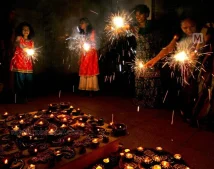
Diyas and firecrackers are everywhere during the Diwali festival, so be careful with your clothes catching fire (especially girls wearing ‘dupattas’ or ‘Indian scarves’). If your ears are sensitive, we suggest taking earplugs as some firecrackers are extremely loud and can sound more like explosions. There can also be a lot of smoke in the air, compromising the air quality of the region. Don’t keep your face too close when lighting fireworks and rush to a safe distance once lit. We highly recommended that you constantly supervise children to avoid any accidents.
Burning of firecrackers during the festival can lead to air pollution especially in big cities like Delhi. In order to steer clear of any infection, it is best that you wear a mask to avoid inhaling this air. Celebrating Diwali in India in smaller cities like Rishikesh and varanasi guarantees an authentic cultural experience. Smaller towns continue to celebrate Diwali in accordance with ancient traditions. The ideal way to understand the rich history and culture of India, we highly recommend celebrating this festival in such towns.
If you have a respiratory condition, please let us know in advance so we can make sure you avoid cities with very high levels of air pollution.
Firecrackers are fun, as long as you maintain safety (Photo Credit – Mathrubhumi English)
Travelling in India during Diwali
If you are travelling to India during Diwali, the festival of lights, make sure to book all your inter-city commutes and accommodations well in advance – train tickets, hotel bookings, and guides become harder and more expensive to book as the festival approaches. Most people make a booking well in advance for accommodation in major tourist cities. However, the most difficult thing to procure is train tickets, as people travel all over India to visit their loved ones.
Travel with India Someday to truly experience Diwali in the best way possible
For more information, visit our blog post onthe must-experience festivals in India. Alternatively, feel free tocontact us for more information about experiencing the festival of lights. If the dates that suit your convenience are nowhere close to this festival, get in touch with us. We’ll help you plan a trip that allows you to experience other popular festivals while still experiencing the vibrant culture of this subcontinent.
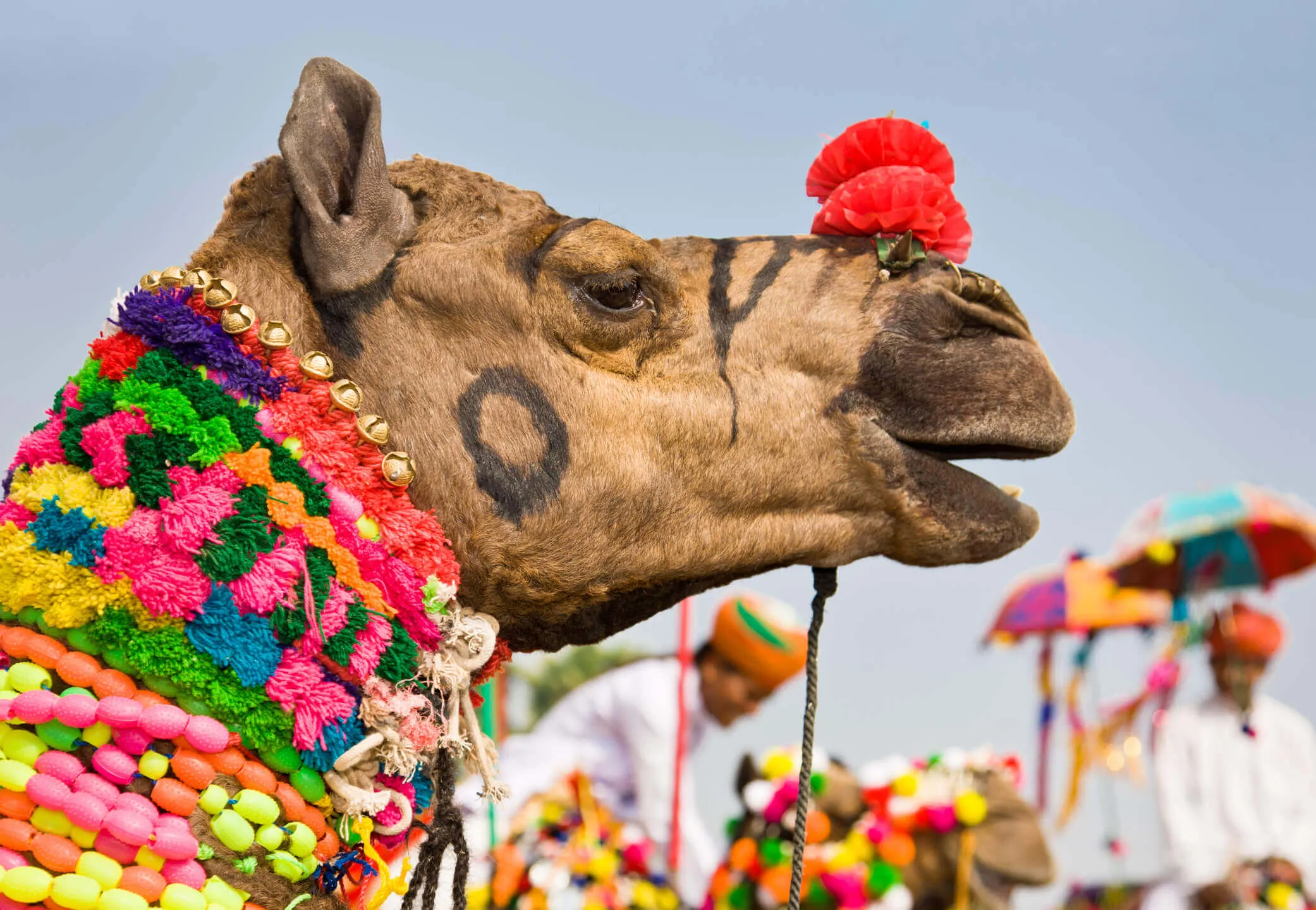
The Pushkar Camel Fair Rajasthan sees around fifty thousand odd camels; quite a unique character. It’s extremely colourful, with a whole lot of activities happening. For example, folk performances, camel races, dances, great food and art and photography.
The Pushkar Camel Fair began as a local Therade fair for camel and other cattle owners. It takes place every year at the time of Kartik Purnima (the full moon in the month of Kartika in the Hindu Lunar calendar), and over the years, it has become an attraction for travellers.
Camel trading, coupled with a bunch of religious rituals is still the premise of the whole affair, and the trading is what draws most tourists. The later part becomes a pilgrimage and ‘a must’ is taking a dip in the holy Pushkar lake.
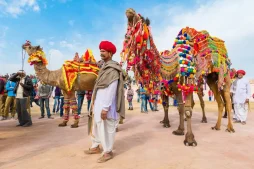
Villagers gather with their camels and other livestock at Pushkar Camel Fair (Photo Credits)
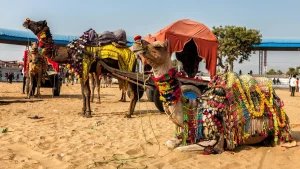
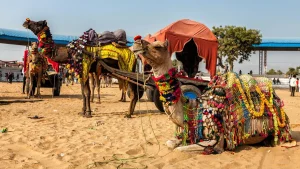
Decorated Camel Cart
When and where is it held?
The fair is always held in Pushkar, near Ajmer in Rajasthan. It usually falls in November, depending on the Hindu calendar. In 2020, it will start on Sunday 22nd November.
Looking at planning a trip to India around the Pushkar Camel Fair? Contact us! – (Photo Credit – Travel Rajasthan)
Getting to Pushkar
Ajmer is the nearest railway station to Pushkar, with trains coming from all the major cities in the country. Alternatively, Ajmer is about 30 minutes drive away from Pushkar and there are other means of transport available, for example, buses. You can even take an auto-rickshaw, but all the best getting the rickshaw driver to take you by the meter. Either way, you should only be paying him INR 100. If you’re flying down. Jaipur is the closest airport and the drive to Pushkar is about 2.5 hours. Taxi fares will be super expensive (25-45 GBP) during the Camel Fair.
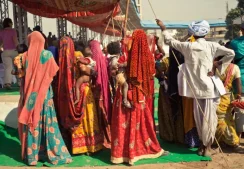
A local family watches the opening ceremony of the Pushkar Fair at the camel grounds (Photo Credit – Jason Rufus)
How is the Pushkar Camel Fair celebrated?
The first thing you’ll notice when you get here is … camels! They’re everywhere. They are all dressed up and being paraded for sale, you will almost miss the two odd lakh people that are in the area at the same time. Camel traders, pilgrims and tourists are all there to play their parts in this old school but still going strong, colourful carnival.
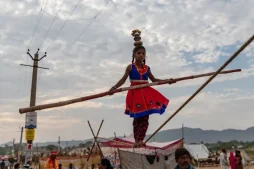
There are camel races, temple dancing, snake charmers, folk singers, classical musicians, acrobats, an art and craft bazaar, camel dances and traders, and carousel rides.
There are another set of pious people you’ll find here who have come for the purpose of pilgrimage. They bathe in holy lake waters of to wash their sins. Pushkar is considered the only holy land for worshipping Lord Brahma – the creator of the universe and the lake is said to have formed where he dropped a flower. After all the hoopla with the camels is over, full moon and two days around it are dedicated by pilgrims to bathing in the lake. It is said the special blessings are bestowed upon those who take a tip in the Pushkar Lake on full moon day.
Performers come from semi-nomadic communities (Photo Credit – Ninara)
Best ways to experience the Pushkar Camel Fair while travelling in India?
If you are willing to spend, you might want to go up in a hot air balloon and get an aerial view of the scene. Go on one of those special Pushkar Fair walking tours (they run in the morning-evening). The morning walk is best to see pilgrims bathing in the lake and have a first-hand experience of rituals being performed. While the evening is the best time to witness the ground where the bustling fair is held at its best.
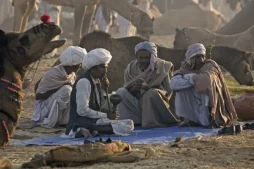
Men with turbans and Hookah (Photo Credit – Koshy Koshy)
Precautions for the Pushkar Camel Fair in India?
Pushkar is full to the brim with visitors during the fair, and accommodation prices skyrocket while rooms run out very fast. That’s why it’s better to arrive a few days before and get a good, cheap deal to make your bookings. You can choose to stay anywhere between a home/farmstay, a guest house, a desert tent or a swanky heritage hotel in Pushkar.
Pushkar is a bit infamous for its drug scene and you know how sometimes, things can go out of hand at such places during festivals. Thus, it’s best to stay on your guard. Don’t get duped by local pundits (priests) and other greedy people who are looking to make a buck off tourists. It gets very crowded during the fair and you’re basically in a desert, so stay hydrated, cover your head and face to avoid the sand troubling you, dress relatively conservative so you don’t get the wrong kind of attention (it’s Rajasthan you’re in, not Goa).
Visiting India during November? Here is what you need to know regarding the weather and other best places to visit during this time.
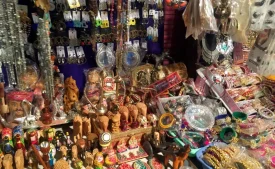
Shopping during the Pushkar Camel Fair (Photo Credit – Rajasthan Tour Planner)
Contact us to plan your trip to India around Pushkar Camel Fair.
If you want to experience a festival in India, you should think of visiting India during the Holi Festival. By mid-March, winters recede in India, and the onset of spring is marked by Holi, the festival of colors. One of the quirkiest and most fun festivals in India, people celebrate Holi by playing with water and colors on the streets. If you visit India during this time, try to time it around the Holi festivities for one of the best experiences of your life.
Read this blog to understand why, when, where, and how this festival of colors Holi is celebrated. This will help you to experience Holi in the best way. If you are planning on visiting India during Holi festival, India Someday canPlan Your Trip, so you end up celebrating it in the right spot.
Holi is usually celebrated in March. You can read about the weather in India inFebruary andMarch.
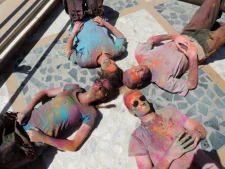
India Someday guests enjoying an afternoon siesta post the Holi celebrations
When is Holi celebrated in India?
The Holi festivities take place over two days in late February or in March. There are no specific dates – according to the Hindu calendar, the day of Holi is the Phalgun Poornima (full moon) which generally arrives in March. The exact dates of the festival vary every year, as it is based on the Indian Lunar calendar.
In 2025, Holi is on 14 March.
In 2026, Holi is on 4 March.
In 2027, Holi is on 22 March.
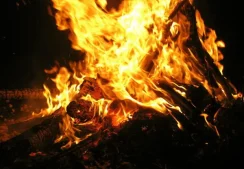
The eve of Holi is Holika Dahan, celebrated with a bonfire.
In Barsana, Vrindavan and Mathura in Uttar Pradesh, Holi celebrations often extend over 10 days and start almost a week before the main event. There is a unique tradition, Lathmar Holi, which is celebrated 6 to 7 days before the official Holi day.
Why is Holi celebrated in India: A History of Holi
The festival of Holi is based on a mythological tale about the good God Vishnu and his rival, the evil King Hiranyakashipu – try to pronounce that! The evil king’s son Prahlad was a devotee of God Vishnu and he refused to worship his father. The king got angry, and he sent his sister Holika to kill him. Holika was granted a boon that fire couldn’t burn her, so she took Prahlad on her lap and climbed on a pyre. She knew that she would survive while her nephew would burn to death. However, when the pyre was set ablaze, miraculously, Prahlad remained untouched by the fire while Holika’s body went up in flames. This is the story of the triumph of good over evil, and Indians celebrate this sentiment every year by burning the Holi pyre one day prior to Holi.
According to another legend, the Hindu blue-skinned God Krishna was envious of the fair-skinned Radha. So he went and colored her face in an attempt to make her look like him. This was the beginning of the epic love story of Radha and Lord Krishna. This is why Holi is celebrated as a festival of love as well, and is often used in Bollywood movies during a romantic sequence.
This is also the origin of the Lathmar Holi tradition. Krishna went to Barsana to celebrate Holi with Radha and tease her friends. Annoyed by Krishna’s pranks, the women decided to take revenge and chased Krishna with sticks (lathi) as he tried to protect himself. This tradition is followed even today in Krishna’s hometown in Uttar Pradesh. The men visit the town of Barsana, where they are greeted with women holding sticks (lathis), ready to attack them. This is a playful tradition followed since decades. If you have a local guide to accompany you, they may be able to take you to see this tradition.
Some people even say Holi is a simple celebration of the end of winter and beginning of spring, a thanksgiving for a good harvest or a reason to meet friends and have fun. In fact, the festival is supposed to mark the last day of winter before spring. It is a festival quite unique to the Western world, but those who experience it truly have fun!
Holika is the immortal saga of good over evil where as Holi is a festival of mutual harmony (Photo Credit – Satish Krishnamurthy)
Where is Holi celebrated in India?
Holi is a primarily Hindu festival, but it is celebrated throughout the country. However, it is a greater deal in northern India. Places like Andhra Pradesh, Bengal, Uttar Pradesh, Bihar, Gujarat, Haryana, Himachal Pradesh, Madhya Pradesh, Maharashtra, Manipur, Orissa, Punjab, Rajasthan and also in the southern state of Tamil Nadu celebrate this festival with great splendor in residential areas, near temples, or in designated venues. Some tribes in the Northeast also celebrate this festival of colours. The biggest celebration happens in Mathura-Vrindavan, Pushkar and Varanasi.
The southern states do not celebrate Holi with much pomp. Also, a lot of Muslims and Buddhists in India don’t celebrate Holi. But most Indians have celebrated Holi or at least experienced it directly or indirectly in their lives.
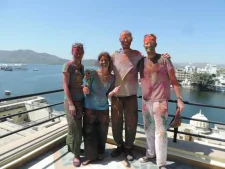
India Someday guests posing after enjoying Holi celebrations in Udaipur
Where should you go for the best Holi experience?
We would recommend you to celebrate Holi anywhere in North India, especially in small towns and cities like Pushkar and Udaipur in Rajasthan, and Varanasi in Uttar Pradesh. At India Someday, these are our favorite places for experiencing Holi. Other cities where you can truly enjoy the spirit of Holi are Jaipur, Jaisalmer, and Jodhpur in Rajasthan. Jaipur, the Pink City, is one of the best places to celebrate Holi. At Govind Dev Ji Temple, the oldest temple in the city, the celebration lasts for more than a week!
Goa is also one of the best destinations to visit for a fun, youthful Holi party. Most cities, like Mumbai and Delhi too have a lot of fun Holi celebrations. You will find many venues across India, especially in metropolitan cities like Mumbai and Delhi, organizing Holi events. You will need to pre-book tickets, but these events are much safer than playing Holi out on the streets.
Mathura-Vrindavan has the biggest public celebrations and events for Holi, and it could easily get out of hand. There are many safety issues here as well, especially for women. So we would NOT recommend this!
Also, don’t forget to visit the bonfire for Holika Dahan. Most towns and cities have many small bonfires a few miles off each other. If you cannot find a pyre, you can ask the reception at your hotel or hostel, or any local guides you know, and they may be able to show you.
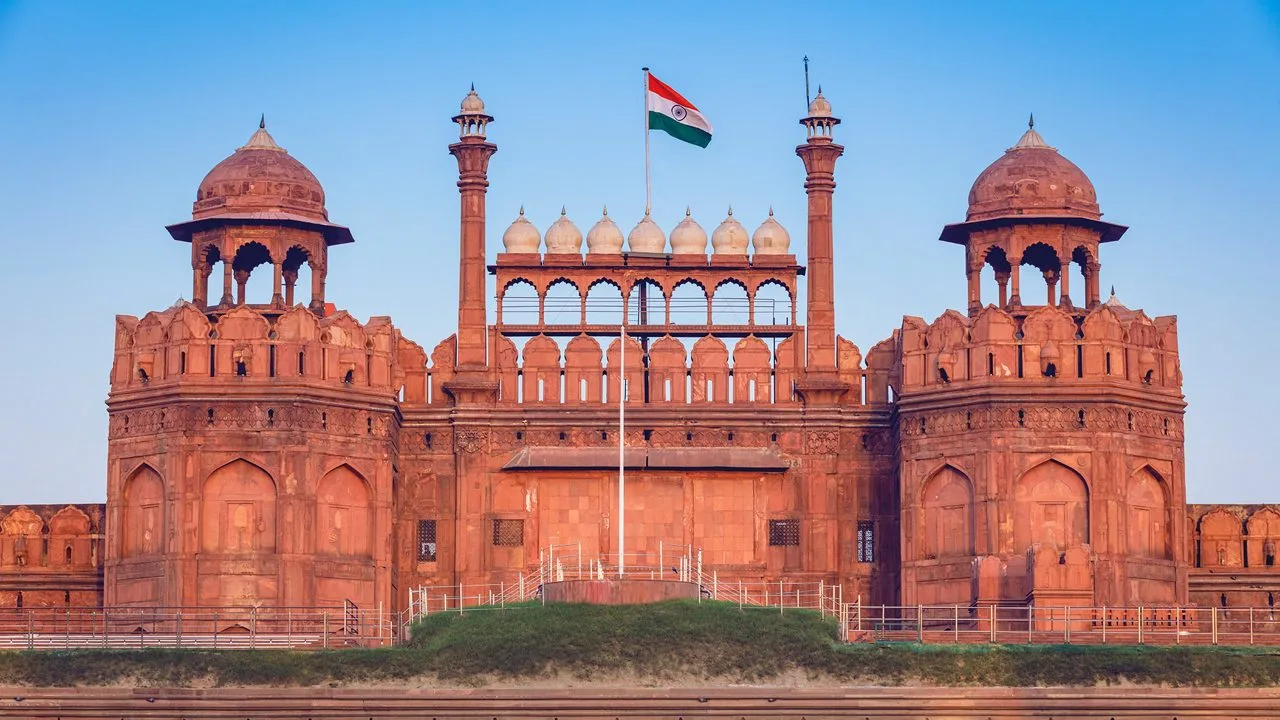
If you’re interested in a trip around Rajasthan to the mentioned cities and more, check on thebest places in the region anddifferent travel routes. You can also think of doing the Golden Triangle route (Delhi-Agra-Jaipur) for Holi, like most travelers. This will allow you to immerse yourself in the local celebrations while visiting the famous monuments like Taj Mahal in Agra, Red Fort in the capital city of Delhi, and Hawa Mahal in Jaipur.
You can browse through our extensiveNorth India travel routes here for travel ideas. Or just hit thePlan You Trip button to start planning your trip to India around Holi.
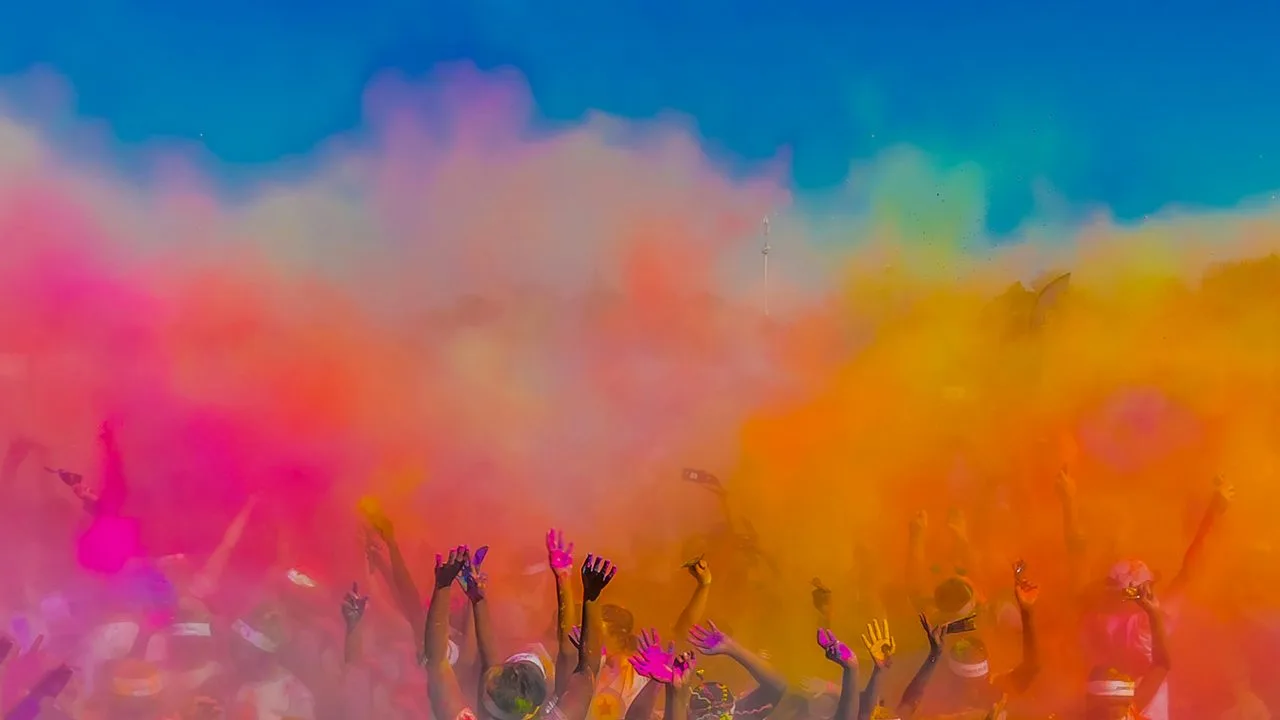
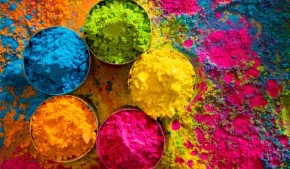
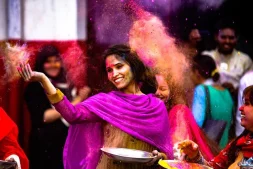
Vibrant colours of Holi festival (Photo Credit – Housing)
How is Holi celebrated in India?
There is a lot of excitement in the air during Holi in India, especially in the north. You will find kids and young men and women preparing for the festivities from the night before by filling water balloons and buying colors. Communities like families, friends, housing societies, temple groups, etc organize the celebrations weeks in advance.
On the eve of the color festival is Holika Dahan. Large groups of friends and families gather together and a bonfire is lit up. Families pray around the bonfire and spend time together. This fire is attempted to be kept burning for five days. You will see bonfires on every street or society during this time.
On the day of Holi, everyone crowds together to play Holi with colors. You will see people celebrating Holi out on the streets. There is often artificial rain, water guns, and loud music along with dry colors. People dance, eat street food, and drink bhang thandai. Thandai is an Indian milk beverage made with spices and dry fruits. Bhang is an edible cannabis paste. While not necessarily legal, bhaang is mixed in thandai and most adults drink it on this day.
All these celebrations mostly take place in the mornings, while the afternoons are for washing off the colors and relaxing after a fun-filled but tiring morning. It can be a bit of an effort to wash the colors off your body, and sometimes the color can remain for days. In a few other places, these celebrations carry on till night!
Often, temples and homes are adorned with flowers. In some places, there are also processions in the temples, but comparatively, Holi is not as religious as the other holy days in India, and does not have any religious rituals as such.
Holi festival is the celebration of unity where everyone seems of the same colour (Photo Credit – Murtaza Ali)
Tips and precautions for celebrating Holi in India
We have a few tips for celebrating Holi in India like locals! And of course, a few precautions as well, so that you can make the most of this colorful festival.
You will find street vendors selling colored powder from more than a week before the festival. If you see any Holi colors, buy them. It is better to stock up in advance. Avoid the permanent colored powders – they will be marked, but if you aren’t sure, ask the vendor. Use only organic colors as much as possible.
Dress well for the Holi celebration. A lot of people wear white while celebrating Holi as a symbol of peace and to showcase the vibrant colors thrown around. You can choose to wear darker colors if you wish. Most locals simply wear old clothes that they may not have to use again.
Use coconut oil liberally on your hair and skin before the events so that the color does not stick to your body for a longer time. Use sunglasses to shield your eyes.
Start your Holi celebrations early in the morning, preferably before the horde of locals and Holi revelers arrives, as it can get overwhelming.
Before throwing color on other people, keep in mind one simple rule – if they have colored powder on their body, they are fellow participants, and thus, fair game. Do not throw colored powders on innocent bystanders.
You can try the bhang, but drink only as much as you can handle.
Make friends at your hotel or hostel or any accommodation. Holi is safer, and so much fun, with friends and people you know. You will be among lots of crowds on this day, so stay safe. Talk to other travelers or people familiar with the local customs and traditions.
For female travelers, there are always a few extra safety tips. Wear clothes that cover your shoulders and knees. If you are a solo female traveler, try to stick around with other travelers or people you know well. Avoid going out alone in public places since there will be many inebriated men all over the place.
Holi is the festival of colors, yes, but you will also be drenched with buckets of water dumped on you, water guns, and even eggs sometimes! So be prepared for all of it.
Avoid traveling long distances on this day, as city public transportation is often not available until late afternoon.
Make sure you have travel insurance before traveling to India. It can help you in a lot of unforeseen circumstances.
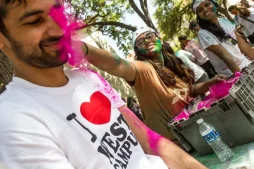
Avoid getting the colour into your eyes during the festival of colours (Photo Credit – Karan Dodia)
India Someday can help you plan a great time during the Holi Festival in India. Plan Your Trip to India with us now and we can advise you how to fit the party in.
Can’t come in March? Read here about other Indian festivals.
When listing places to visit in India on your travels, the North should certainly come at the top of your list! North India covers an area of approximately 1 and a half million sq km, and is endowed with incredible nature, diverse climatic conditions, and a myriad of cultural practices. This article will explore the twenty best places to visit in North India. This article will explore the twenty best places to visit in North India and give you a glimpse of the diverse beauty the region has to offer. We will cover the prominent historic ‘Golden Triangle’ of Delhi, Agra, and Jaipur, and take you through the deserts of Rajasthan and into a beautiful Himalayan paradise. Here are the 20 best places to visit in North India!
Plan your trip with us now and we can give you all the details of any place that interests you!
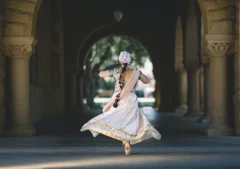
In ancient northern India, Kathakas communicated stories from the great epics and ancient mythology through dance – Photo Credit Saksham Gangwar.
Delhi – A Capital with Character
Chances are New Delhi will be your primary touch point with India, especially if you’re looking to explore North India. As the capital city of the country, no visit is complete without soaking in the rich history of Indian modernity that is Delhi. This is displayed through its construction, architecture, monuments, tombs, temples, ruins and more. All areas offer a unique component to the sprawling city, with highways interconnecting with the rest of the country.
Whether you’re interested in history – visit Old Delhi, looking for some street shopping – plenty to choose from (Sarojni Nagar, Lajpat Nagar, Palika Bazaar), eager to try the delicious street food (UPSC, Nathus), or even to splash out at the designer stores (Luxurious malls are plenty), you’re sure to find what you love in the capital city.
As time passes in this buzzing city, you will find yourself discovering so much within the mesmerizing metropolis. The best time to visit has to be the spring and autumn months – specifically November to March – as the climate would make it easier to move around and explore while also avoiding the unrelenting monsoons.
Agra – More than just the Taj Mahal
The Taj Mahal – one of the world’s new Seven Wonders of the World makes for the most obvious tourist attractions of North India. The undoubtedly magnificent monument that resides in this city is an absolute must on your trip to North India. At dawn or dusk, the Taj Mahal will leave you captivated, inspired, and enthralled. Be sure to also visit some of the other glorious sites in this riveting city.
From the Agra Fort and the Baby Taj to Akbar’s tomb and the fortress city of Fatehpur Sikri. The unique historic significance is one to remember and the architectural genius is beyond comprehension. Further, experience swanky accommodations, craft emporiums, and restaurants in Sadar Bazaar. Agra is a fabulous insight into the extravagance and the artistic impulses of the Mughals and their social effects. There’s a reason the Taj is consistently of the global top places to visit.
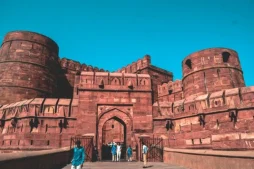
Agra Fort! The gem of the Mughal Era – Photo Credit Arun Geetha Viswanathan.
Jaipur – Take a Piece of Culture
Jaipur, lovingly called the pink city due to the colour of the old city, is the biggest and most bustling city in Rajasthan. From old to new and everything in between – this north Indian city enjoys a bustling city life while also embracing its history. Find some beautiful handcraft and souvenirs in the old city bazaars. The courtyard-like markets will deliver top-notch textiles and accessories made into ethnic wear. Try the kachori from ‘Kanji’ or the traditional ‘dal bati’ at old Jaipuri food joints for different, interesting food.
The monuments in Jaipur are beautiful, picturesque and a marvel to explore. The Amer Fort’s lighting is exquisite, be sure to experience the light and sound night show. Further, visit the Sheesh Mahal (palace of mirrors), the Galtaji ‘Monkey’ Temple, the Nahargarh Fort and the lesser-known Royal Cenotaphs. Jaipur is a photographer’s paradise with its Rajasthani architecture. Anyone interested in history, culture and urban life will have a blast.
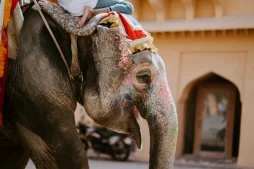
Ride an elephant up the hill to the main entrance of stunning Amber Fort (Photo Credit – Annie Spratt)
Ranthambore – To Spot a Tiger
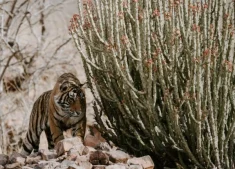
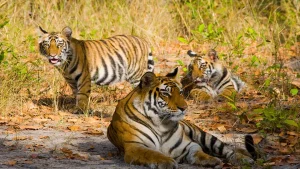
Ranthambore National Park is one of the top places to visit in North India for tiger sightseeing, your odds of an encounter are high! Tigers here assume ownership of the park, unperturbed by visitors and their cameras. As far as places in North India go – this is one as unique as it gets! The proximity of this reserve to the capital of India, Delhi, Agra and Jaipur makes this a convenient trip for travellers.
In addition to these stripy cats, there are also hyenas, leopards, crocodiles, cobras, vipers, tortoise and a plethora of birds. Experience the entire park from the top of the Ranthambore Fort. Visit their website for more details about opening times. This makes for a nice alternative to Jim Corbett National Park for a less tourist vibe.
At Ranthambhore, the Bengal Tigers greet you! (Photo Credit – Annie Spratt)
Jaisalmer – The Desert’s Golden Edge
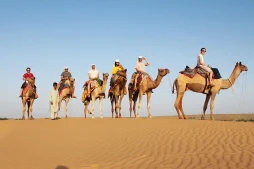
Jaisalmer is relatively more difficult to get to (overnight train from Jaipur or drive from Jodhpur), but entirely worth it. The ‘Golden City’ is a typical Rajasthani desert town, with camel rides at sunset, and truly one of the best places to visit in the state. You can also camp in the desert amidst the arching sanddunes.
The village folk in their vibrant turbans fill the bazaars and there is no match for Jaisalmer’s sandstone structures. Walk through the meandering streets with no fear of getting lost in this medieval gem. Look for traditional dance performances and don’t forget to visit the Jaisalmer Fort and embrace the scenic beauty of Gadsisar Lake, two unforgettable experiences.
Incredible Golden city of India!
Jodhpur – home of the mighty mehrangarh fort
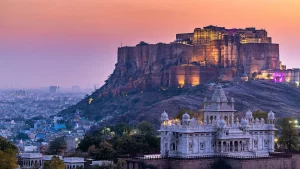
While we are in Rajasthan, we can’t miss out on one of the best tourist places in North. The small town of Jodhpur borders the Thar Desert to the east, getting the best of the desert while still not entirely in it. Almost all houses in the old town are painted in a beautiful baby blue, creating the ‘Blue City.’
The stunning Mehrangarh Fort (easily Rajasthan’s most beautiful) looms over the blue colours. Ziplining off the fort is a brilliant experience one shouldn’t miss. Apart from the fort, go around town if you have time; see the puppet makers, tie and dye artists, spice markets and more. Lose yourself in the bazaars that circle around the clock tower at the heart of the city. The Jalori and Sojati Gates will give you a nostalgic feeling of Jodhpur’s age and history.
Pushkar – Small, Sacred and Young
Another one of the tourist places in North- Pushkar packs a punch. Legend says that Lord Brahma, a Hindu deity, dropped a lotus flower in a place north of Ajmer, and there a lake sprung out. Pushkar and it’s sacred Pushkar Lake are an incredibly important pilgrimage site, and also attract many young backpackers. The lake is flanked by hundreds of temples and Ghats, one of them being the only Brahma Temple in India.
Further, there are rooftop cafes, bakeries and a very colourful market filled with handicrafts, hipster clothing and food. Sunset by the lake is a great experience. If you come to the Pushkar Camel Fair in November, you’ll see throngs of pilgrims, folk musicians and artists, camel traders; a charming desert vibes during the festivities. Climb to the Savitri and Gayatri Temple to get views of Pushkar from above and beautiful sunrises and sunsets. Remember to book in advance for the fair.
Popularly known as Benares and Kashi, the oldest living city lies off the famous Ganges River. The banks of the river have an array of Ghats leading to holy waters. Here you’ll witness priests, pilgrims and religious folk in colourful attire performing rituals in the river.
The Varanasi Ghats are also where Hindus religiously cremate their dead and where the Ganges aarti takes place. Watching this ceremony take place is one of the most intense and moving experiences you can have in India. Varanasi has a unique vibe as one of the major pilgrimage sites and some of the oldest, most ancient temples. ‘The city of lights’ is one of sages and priests where deities abound and is definitely a must visit spiritual destination.
Varanasi! The essence of the spiritual and ancient city of India (Photo Credit – M M
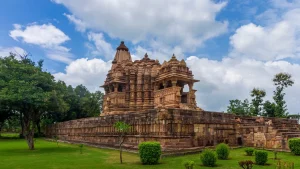
Khajuraho – The erotic temples
The sensual sculptures of the Khajuraho temples are incomparable to anything else. There are several theories as to why the Chandela Dynasty had such explicit erotic temples built in the 10th century. In 1838, the British rediscovered this forgotten architectural marvel, 400 kms Southeast of Agra and West of Varanasi.
The Western Group temples are particularly stunning with pinkish sandstone and almost 3D reliefs creating a realistic account of the practices involved. Add this to the subtle changes in hues by the changing daylight, moonlight and the night floodlights and you’ll be admiring for hours! Khajuraho village, although belittled by the grandiose temples, has its own discreet charm as a laidback spot with a nice market and pretty restaurants. The Dance festival there is a great time to visit Khajuraho.
Amazing temples of Khajuraho!
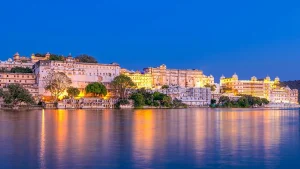
Udaipur – Charming city of Lakes
Udaipur is a famous rich and romantic setting you’ve probably seen but never known where it’s from. Lake Pichola seems painted with an array of island palaces with beautiful balconies, Havelis (royal decorated mansions), Ghats and lovely restaurants all with views of the lake and its surroundings. Some of these island palaces have been transformed to hotels, like the Lake Palace Hotel and the Jag Mandir. The City Palace east of the lake is a wondrous century-old palace built over hundreds of years. Fateh Sagar is also to the north of the lake. With such a variety of views in the ‘City of Lakes,’ it’s a must on any trip to Rajasthan.
Udaipur – The mesmerizing city of lakes
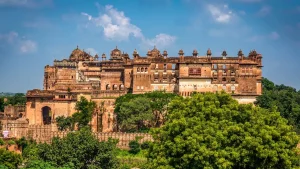
Orchha – The Hidden Gem
Chhattisgarh is a more or less undervalued gem, Orchha is a must-visit if you’re taking a trip to Khajuraho. The name itself actually translates to a ‘hidden place’, an apt meaning for this dhak-covered medieval town. Its architectural value has been recognized over the years. Its lovely shikhara, palatial remains, havelis, and sandstone cenotaphs invaded by flora have all been preserved.
The village is a great place to visit, to relax by the Betwa River on your way down to other cities. Orchha has become more popular, you’ll find many guided tours and tourists here. The best way to enjoy it is to let the bustle clear, lay back and take in the charming historical aura of this beautiful place.
Explore the architectural splendour of the monuments in Orchha
Kanha National Park – Sit in Nature’s Lap
The Kanha National Park in Madhya Pradesh is easily one of the finest wildlife sanctuaries in India and might not quality as a one of the tourist places in north. While, yes, I could have easily recommended Jim Corbett National Park – Kanha is special too – It sprawls over 940 sq kms of deciduous forest cover, grasslands, hills and rivers.
You’ll spot a myriad of bird species and other fauna (tigers) and be awestruck by the early morning beauty of the park. Tiger spotting is more difficult than in other reserves. However, it’s totally worth a visit for the rest of the wildlife and the refreshing countryside views it offers.
Travel through the diverse wildlife at Kanha National Park
Bandhavgarh National Park – Bengal Tiger Territory
195 kms from Jabalpur and 237 kms from Khajuraho, this national park houses the most number of tigers in India. The Bandhavgarh National Park is 448 sq kms and by far the best reserve to spot tigers. During season time, you’ll have the best chances to see them and get insight to their lives and habits.
Accommodation is available near the park entry, which makes it even more convenient. Check out the different sort of birds while lounging at your lodge. If you’re more interested in architecture or history, it also contains some enthralling ruins.
Bandhavgarh National Park is one green destination where you can not only spot the elusive tiger but also leopards, elephants, and white tigers.
Rishikesh – a Charming and Spiritual Himalayan Escape
Relaxing in the foothills of the Himalayas, both Haridwar and Rishikesh hold a crazy mix of different types of people. From yogis, sanyasis, travellers, hippies, backpackers, adventure sports enthusiasts and more, they all come to enjoy the Ganges River. While Haridar has Har ki Pauri to pray to the Ganges river, the hill station of Rishikesh has a stunning backdrop with the Garhwal Mountains looming over.
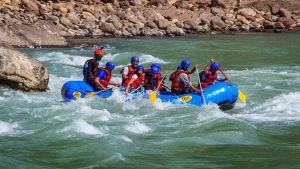
There are many ashrams and yoga centres here. Rishikesh is also a haven for adventure seekers – here, you can go white water rafting, mountaineering or on one of the easier recreational treks. The unparalleled adrenaline rush of bungee jumping and the tranquility of its original charm, make Rishikesh a spiritual and exciting place. Walk upriver, sit among the rocks and meditate.
From Haridwar – the food scene is unmatched – indulge in all sorts of street food. All in all, it’s a lovely experience to spend a good amount of time with, hence one of the best places in North India that can be visited throughout the year, thanks to them being in the lap of the Himalayas.
Breathtaking adventures in Rishikesh (Picture Credit: Live Free Hostels)
Amritsar – An Awakening of Humility
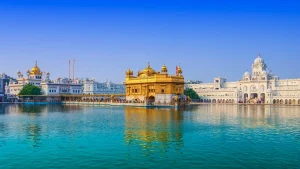
Amritsar, Punjab’s largest city and holy city for Sikhs, is famous for its Golden Temple and stately domes that command the busy old town streets’ view. Walking around the bazaars and the narrow by-lanes of the old quarter is an experience on its own.
The north indian food here is unmatched – do indulge! There is also a golf retreat at the Wagha border 29 kms west (Indo-Pak frontier) where Indian and Pakistani soldiers elaborately bring down flags every evening. Interested in history? Visit the site of Jallianwala Bagh (where silent protestors were massacred during India’s struggle for freedom and independence).
Soak in the sights of the Golden Temple and explore the beautiful Amritsar
Chandigarh – An urban design benchmark
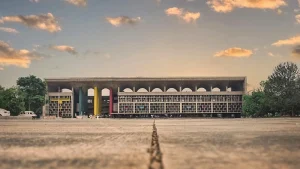
The interesting administrative bureaucratic mess surrounding Chandigarh isn’t the only worthy thing about this city. It’s modelled on Jawaharlal Nehru’s vision for a city ‘symbolic of the future of India, unfettered by the traditions of the past, [and] an expression of the nation’s faith in the future.’ Architect Le Corbusier (Charles Edouard Jeanneret) designed Chandigarh back in 1952 as the progressive town undergoing structural experimentation.
Even amid controversy, architects and designers study Chandigarh’s buildings across the world. It’s much cleaner and greener compared to other major Indian towns. The rock garden here is the most frequented tourist destination in India after the Taj Mahal. No wonder, Chandigarh is often called the “city beautiful” or the planned city of North India. Best time to visit is definitely November to February, where you can indulge in local festivals such as the rose festival held in February every year.
Chandigarh – A well organised city!
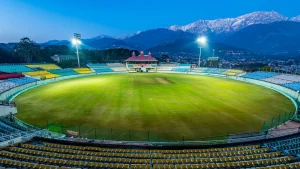
Dharamshala – Center of Buddhism in India
Home to the Tibetan spiritual leader Dalai Lama and the exiled Tibetan government, the hill station of Dharamshala has a unique spiritual vibe to it. The Dalai Lama stays in McLeod Ganj, slightly North in Himachal Pradesh, and there are numerous monasteries that make the valley wonderful. While you can buy Tibetan souvenirs and eat the best momos in India, Dharamshala also offers some of the most natural beauty for you to enjoy.
There’ll be heavy snowfall in the winters and heavy rains during the monsoon season, but after the monsoons, it’s perfect to visit. With picture perfect views of snow covered mountains, the best time to visit Dharamshala is definitely April to June or October to March.
You can stay at McLeod Ganj in one of the many lovely lodging options there. Visit the Dalai Lama Temple, especially during chanting and spin the prayer wheel for good fortune. Dharamshala is also the base for superb Himalayan treks. There are numerous things to do in this region, so you can spend weeks and not get tired of it all.
Dharamshala makes you leave everything aside and just get pampered by nature’s beauty
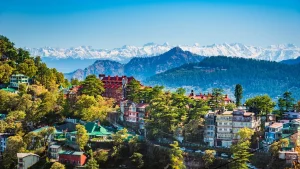
Shimla – Cool, Colonial and Charming
This Himalayan hill station is wonderful, houses steep valleys, apple orchards and maize terrace farming on its hills. Shimla is at 2159 meters and always has cool weather and stunning views. Unsurprisingly, the British made it their summer capital, retaining its colonial aura through churches, mansions, resorts, culture, and British-named shops and homes, and the city even flaunts an old-school mall road. Christ Church and Scandal Point are major landmarks there. The Mall Road is the main shopping area and the Gaiety Theatre hosts several shows. Indian tourists visit from May to June, so if you want to evade the crowds, come in a different season. October and November are great times to visit to soak in the natural beauty of this quaint hill station, but book in advance. Keep an eye out for brass bands, sports screenings and pony rides.
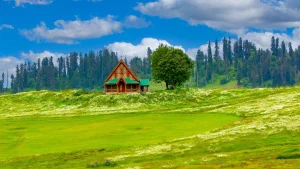
The Kashmir Valley is easily one of the best and most beautiful destinations in North India. This exquisitely cool and lush place is like heaven on earth. Entering from Jawahar Tunnel or Zoji La Pass, the views will be fantastic, verdant and perfectly mountainous. The natural beauty of the snow capped Pir Panjal Range, the bright green fields of corn, wheat, almonds,many popular hill stations sprinkled throughout etc., and some of the highest quality wood only adds to Kashmir’s beauty. Benign spices blended perfectly make the cuisine special. Not too industrialised, the renowned handicraft of Kashmir is worth checking out. Kashmir is also home to Gulmarg Ski Resort. For those looking to ski in India, check out our blog!
Fall in love with the beauty of Kashmir Valley
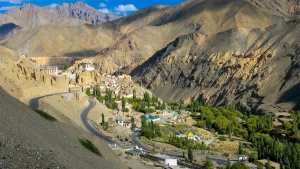
Leh and Ladakh – Distinctly beautiful valley
A nature lovers delight, Ladakh is an entirely separate part of the country in administration, culture and terrain. ‘The Land of High Mountain Passes’ is often called ‘Little Tibet’ for its rich Buddhist culture. There’s no lack of hill stations in Ladakh as well – whether you stay in the quaint little village of Stok and Turtuk or the bustling city of Leh – you’ll have plenty to discover. Ladakh is a Himalayan desert in North India and the ultimate experience for extreme bikers and drivers. It’s a sparse landscape, but the terrain changes are otherworldly. Leh is Ladakh’s stunning thriving capital. To its North lies KhardungLa, one of the highest drivable pass in the world that reaches the Nubra Valley’s sand dunes. Pangong Tso is an incredibly lovely picturesque lake.
You need a permit to visit, so reach Leh a day early to get them. A jeep or a bike is ideal to traverse the region. While there is very little rain and snowfall, it’s very inaccessible because of the heavy snowfall blockages to reach Ladakh. As you venture farther into the wilderness, it becomes less accessible but not impossible.
Vibrant Ladakh colours!
These are a few of our favourite places to visit in North India. We hope you now have some new destinations on your list, but feel free to contact us for any help planning your dream trip to India!
If you’re interested in visiting any of these places, contact us or directly fill our form and we’ll start planning your perfect trip.
Let India Someday handle it and plan your best trip.