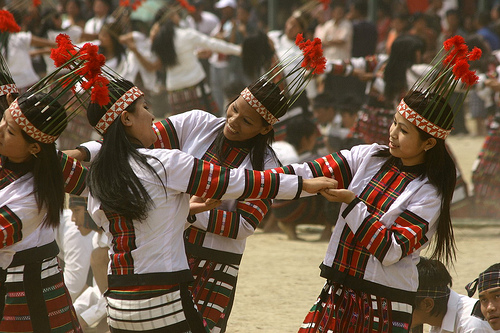
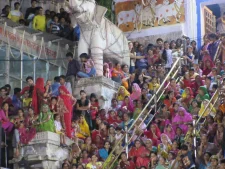
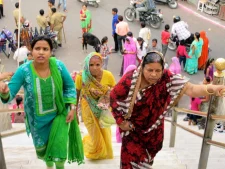
Rumoured to have been around since 1450 AD, Chapchar Kut, the harvest festival of the Mizo tribes tells an eloquent tale of a people, their laughter and endless life. Come early March (1st of March in 2016), jungles of bamboo and undergrowth must be cleared to make way for the summer crop, or the jhum harvest. Once cleared there’s a sudden and welcome break in the otherwise packed schedule of agrarian settlements as they pile up the bamboo and wait for it to dry. It is in this time, that they celebrate.
Photo Credits – www.indiaexchange.org
The cheraw Dance
Colourful traditional attire is dusted off, feasts are prepared and bamboo poles are selected for the crowning dance-The Cheraw. Once the glorious procession of Kut rore is over, where the elders of each tribe parade in representing their individual communities, the dancing begins. The Cherawis a wildly exciting dance of dichotomies, young men pound heavy bamboo poles together against the ground to build a beat while the womenfolk step through them with fascinating dexterity, since missing a beat could mean losing a foot. The festivities are tied up with Then Thumna as local musicians take to the stage and belt out crowd favourites.
While the festival now focuses on song, dance and food, legend has it that the festival was started when the King of a village returned from a hunt empty-handed and ordered his own pig slaughtered so that the village may feast anyway, and the rice-beer (zu) that had already been prepared would not go waste. Along with the missionaries came the eradication of zu and the animistic practices associated with the Kut.
Today the old traditions are revived, but tempered with the Christian history of the community. Locals are quick to share myths and folktales behind various practices, even if they may not hold them true anymore. It’s a beautiful example of a people respecting and appreciating their culture in all its shades without trying to cut out either extreme, but weaving them together into a tapestry of time.
Large number of people gathering on the occasion (Credit_Public.Resource.Org)
At India Someday, we are avid travelers that specialize in assisting travelers plan their holiday to India. Whether it’s flights to India, getting around or accommodation, feel free to get in touch if you have more questions, or fill out our questionnaire to plan your trip accordingly.
There’s a sort of liminal charm to music festivals in India. Most require you to pack up your fringed vests and vinyls and head across the country into the mountains or the desert sands for a mini-holiday of punk-ass beats and electric crowds. Or smooth riffs and night skies. Or the thadaak-thadak of the dholak and the warm glow of a bonfire. Whichever festival you choose, you know you’re in it for the atmosphere. You can meet your friends in the bar behind your house, explore new music as you chug along to your day job. But the spirit of a music festival, be it blues, folk, rock and roll or multi-stage, starry-billed, commercially-endorsed madness, is a release. So fill up the wheelie-case, put on your earphones and catch a cab, February’s got plans for you.
Sula Fest
Wine-tasting, grape-stomping, crowd-surfing. Goes well together don’t you think. Set in the country’s largest vineyard with varied artists producing myriad sounds, it’s a great way to celebrate the harvest of our most beloved wine-ingredient.
On-site camping in swanky Swiss tents, paintballing, zorbing, hot-air ballooning, larger than life interactive art installations are just the bonuses. Come and stay for the spine-tingling folk music and the bass-thumping techno. Artists, filmmakers and musicians come together for a weekend of self, proclaimed craziness, a little Indian Burning Man, if you will. Don’t miss it.
Folk Rajasthan music player tuning his instrument (Photo Credits – Jean-Etienne Minh-Duy Poirrier)
Kala Ghoda Arts Festival
While the shopping section pulls in the crowds, it’s the cultural shows you really take home with you. Moreover, the Classic Dance on makeshift stages under the heavy boughs of Horniman Circle Gardens, power-packed rock gigs on the steps of the imposing Asiatic Library, book-readings in the tome-lined Kitab Khana, street plays in the well, street. Scour the schedule and don’t feel afraid to try something you’ve never heard of before. Entry is free to all.
Siva Mani, acclaimed percussionist plays the Kala Ghoda Festival (Photo Credits – Elroy Serrao)
Hill Top Music Festival
The ultimate party for those that can’t wait until December’s Sunburn. Lounge on the warm Goan beaches all morning before descending into psy-trance madness post three, to be continued until your back dozing on the beach, trapped in the most cathartic party cycle of your life.
Let your soul drift back to the era of whiskey crooners and pomaded coiffs with Bandra’s Mahindra Blues Festival. Big names from the global scene top the bill but supported by a host of brilliant local bands. Set in the arms of the gentle sea breeze, join the crowd and become part of the communal way.
We’ll help you plan the ideal holiday while catering to all your needs and interests. Whether its time constraints or budget restrictions, leave it to us and just hit that Plan Your Trip button.
“Your hand opens and closes and opens and closes. If it were always a fist or always stretched open, you would be paralyzed. Your deepest presence is in every small contracting and expanding, the two as beautifully balanced and coordinated as bird wings.”
~ Rumi
An immersive environment where you can forget your worldly troubles (Photo Credit – Steven Zwerink)
Yoga festival
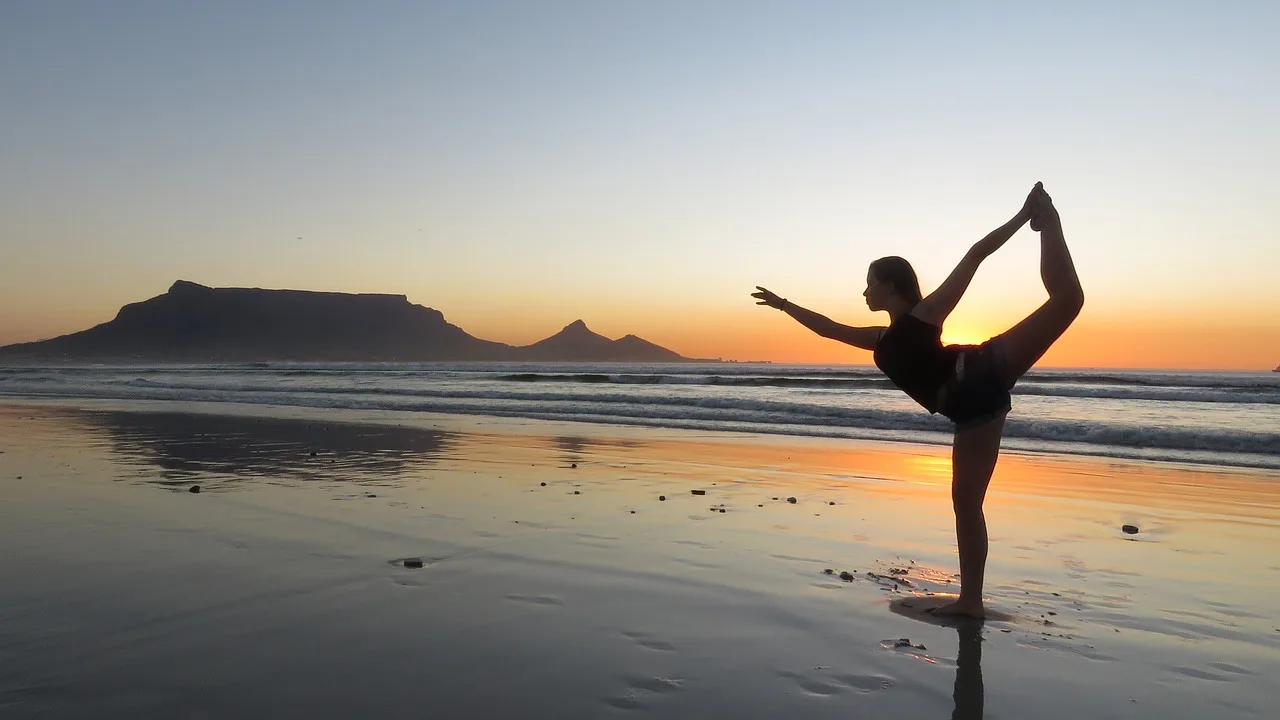
Every coin has two sides, so does yoga. Yoga has a personal side and a social side. Like your own breath surging into your lungs or the gentle brushing away of thought from a restless mind. Also, a social side would be of learning, helping, allowing the principles of yoga to seep into your relationships.
Reach out a little further into that society of fellow practitioners by setting out for the International Yoga Festival. And give yourself the opportunity of slipping into the melting pot of its people.
Those who practice it abroad dream of coming to India and meeting renowned yoga acharyas. They want to explore the country that birthed and nurtured them. So they make this trip to be among others who share similar beliefs and practice the chosen lifestyle.
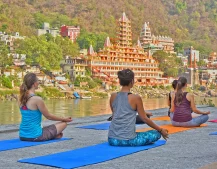
While this doesn’t apply to Indians in general. It definitely does to the several hundreds that gather in the sacred city of Rishikesh each year. People from over 30 countries across the globe for this festival.
Organised by the Parmarth Niketan Ashram, the festival packs over 60 hours of yoga into the first week of February. Alongside internationally developed strains, traditional styles like Kundalini Yoga, Power Vinyasa Yoga, Iyengar Yoga and Kriya Yoga are practiced. Accordingly, dozens of yoga acharyas lead classes through the day.
a day at the festival
It is hemmed in by a 4 am rising call and an Aarti and cultural programs in the evening. Basic boarding facilities are complemented by simple vegetarian food. This creates an immersive environment. An environment where you can forget your worldly troubles and commit to the exploration of body and soul.
What began as a handful of people in a small hotel has now grown into a community. A community that always has room for one more!
India is bright and loud and wild and passionate, making it a master in the art of revelry. Did you think wild parties were all about tequila shots and glo-sticks? Try some bhaang and pichkaris or an all night dandiya session. Yes, these words may feel strange in your mouth right now but we’ll probably have you singing ganpati bappa in the streets before you’re done. Here’s the low-down on a veritable riot of Indian festivals, religious and otherwise. Structure a trip around your favourite choice for a madly immersive journey to the heart of the Indian community. Read all about the festivals in India.
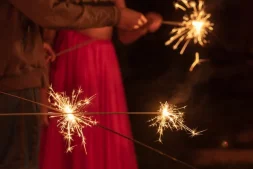
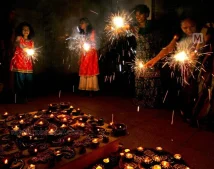
Festival of lights_ sparklers: Credit- madhukar-kumar
Makar Sankranti – kite flying festival
For a country that’s careening into a future of BPOs and IT professionals, we fall back on our agricultural roots hard when it comes to harvest festivals. Celebrated in widely differing ways across the states, harvest festivals in India are worth witnessing. The heart of the season is born of plain and simple gratitude for a bountiful crop, and a welcome break after months of debilitating labour.
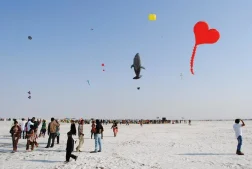
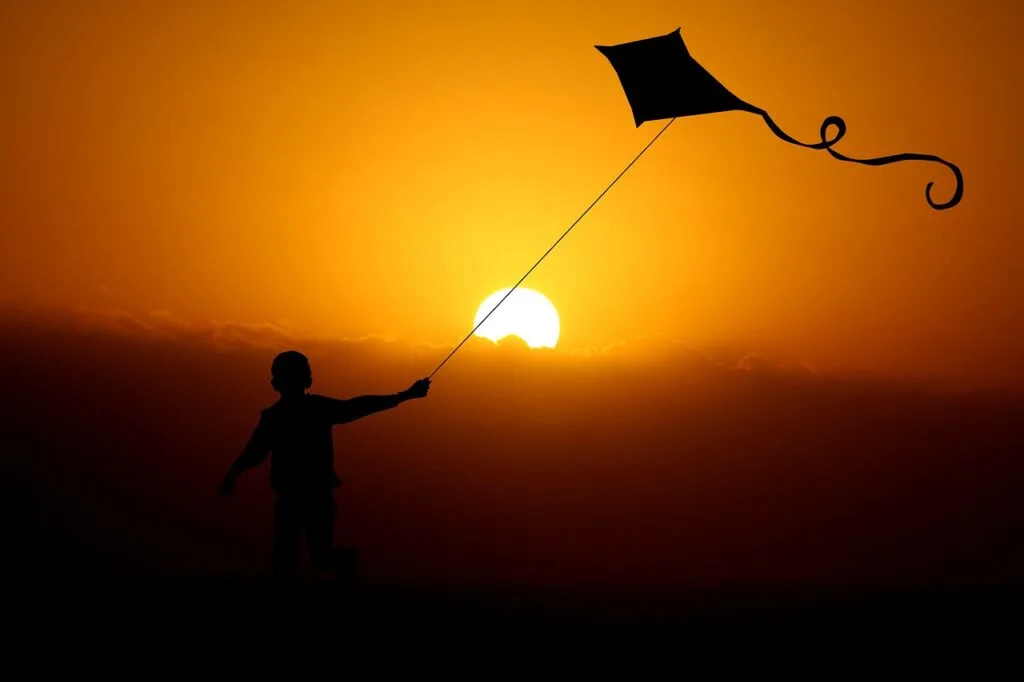
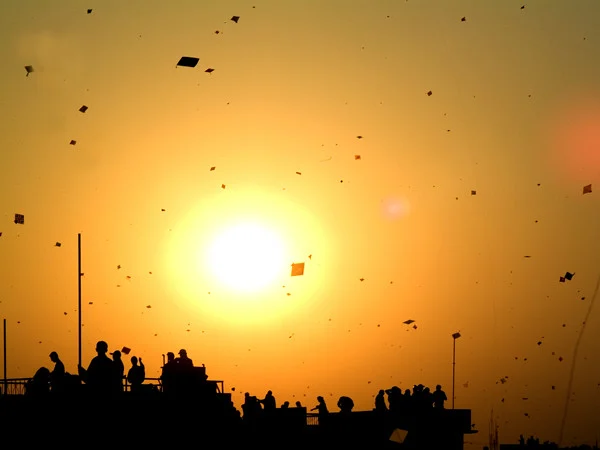
The Gujarati arm of this fiesta, celebrated most passionately in the state capital of Ahmedabad, is Makar Sankranti. It is more widely known as the kite flying festival of India. The name refers to a specific movement of the sun on the equinox, heralding the arrival of longer and warmer days. Whole families take to their rooftops to let loose clouds of brightly coloured paper kites held taut by strings laced with crushed glass and other abrasives.
Why so violent? The aim of the game isn’t just to brighten up the sky; with careful calculation and remarkable skill the kite flyers loop their own kites around those of their opponents (or annoying neighbours) and swiftly cut them down to be claimed as booty. Get ready for age-old rivalries and edge-of-your seat level excitement.
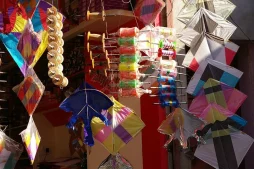
The colorful kite utsav in Gujarat (Credit_Kaushik Patel)
Holi – the famous festival of india
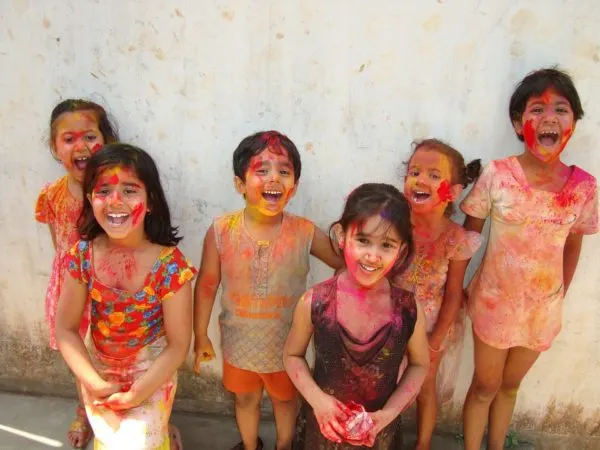
Possibly the most famous of festivals in India, Holi is all about having fun. We’d recommend finding a nice family-run homestay to celebrate with, as the crowd on the streets can get a bit rowdy. Fueled by the heady bhaang, a local concoction of milk and marijuana, people drop their responsibilities for a day. They look to bring a little colour into their lives, either by chasing each other around smearing powder on their faces or flat out dunking each other in buckets of coloured water. Water guns or pichkaris around, be prepared to have water balloons dropped on you by strangers as you pass innocently under their balconies. Any attempt at reproach will only earn you a shout of ‘bura na mano, holi hain’, that is, don’t get upset, it’s holi!
While the festivities often take a dark turn with several cases of molestation and driving under the influence filed each year, it’s important to also know the reasoning and religious significance behind it. The revelry is the second of a two-day celebration of the triumph of good over evil. According to Hindu legend, a young boy is saved by Lord Vishnu from his evil aunt’s murderous intent. This is celebrated by lighting bonfires, her weapon of choice, and dancing around them.
Festival of colours – Holi! – Photo Credit – Shekharchopra85.
Diwali – the bright festival of india
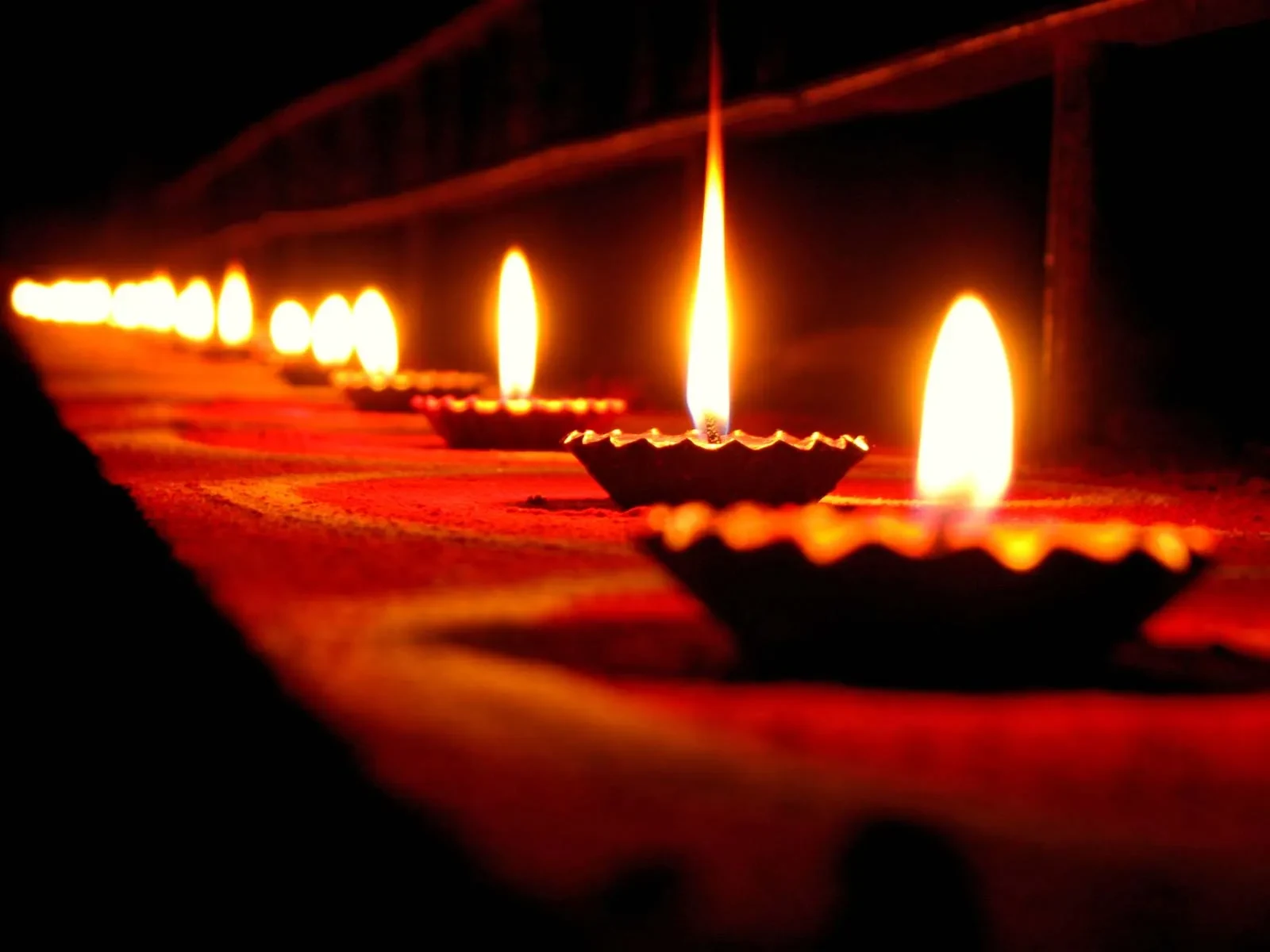
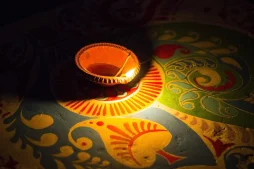
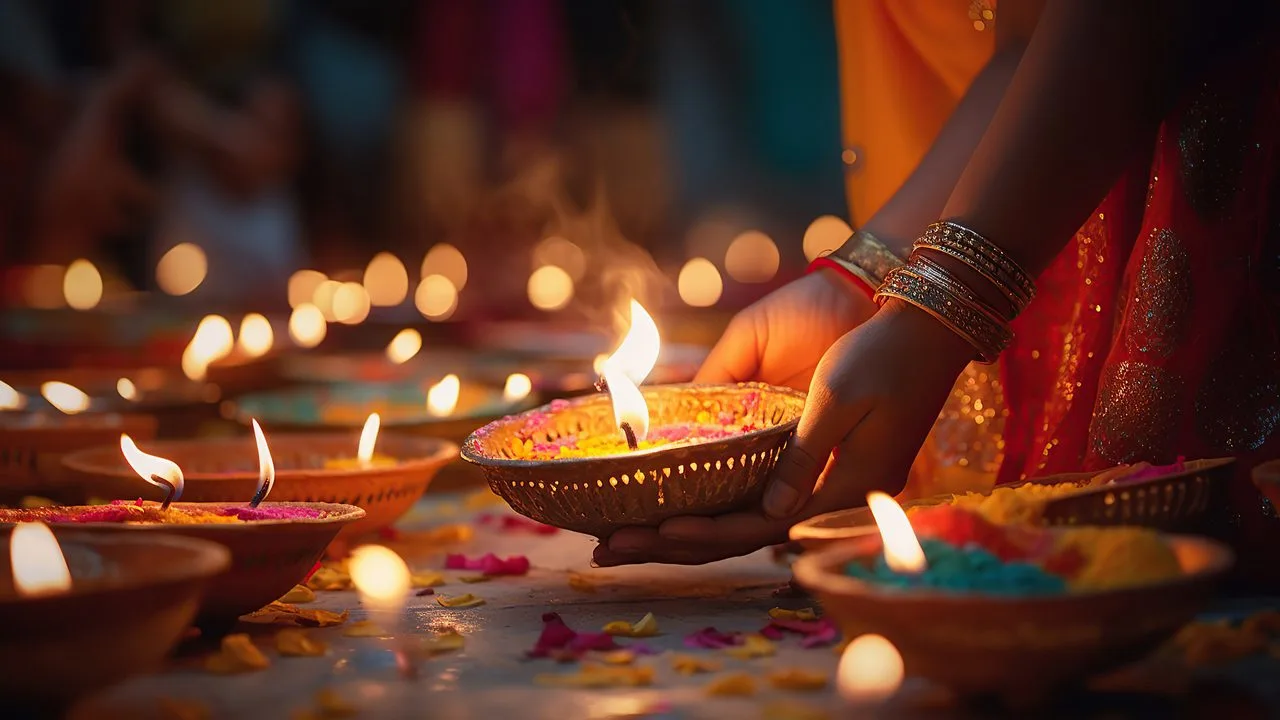
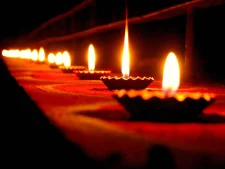
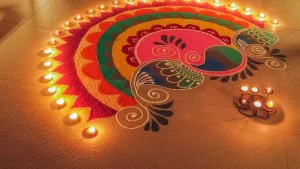
The most elegantly beautiful of them all, the festival in India known across the world, the festival of lights. Clay lamps, diyas, are set in doorways to welcome the goddess of wealth, Lakshmi. Patterns of coloured powder and flower petals form rangolis on every doorstep. Of course, with indrustrialisation there’s also been a huge influx of firecrackers and curtains of fairy lights hanging down the sides of buildings, but the more the prettier, right?
Since it’s also the start of the Hindu New Year, it’s an excuse to buy new clothes, gorge yourself on sweets and meet long-lost aunts and cousins at the annual family bash. If you don’t have a party to go to, the streets will serve just as well for you to listen to the lilting strains of bhajans (devotional songs) drifting out of windows. Remember that Diwali isn’t a festival that involves intoxication and be respectful of that. If you can find a family to adopt you for the week you get to dress to the nines and run around with sparklers for the night.
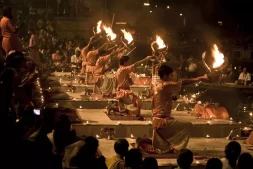
Varanasi is a beautiful place to understand the religious side of things. Set a diya afloat on the river as devotees take a dip on this auspicious night. Hymns and chanting fill the air as the entire river lights up in a sea of flickering flames drifting gently along its surface, a picture that will move you regardless of your religious leanings or lack thereof.
Celebrating the festival of lights with sheer fervor
Janmashtami
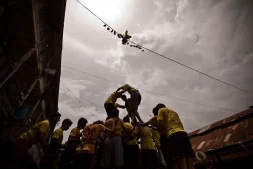
Yet another Hindu festival of India, this one’s a feat of athletic prowess, celebrating the birth of the cheekiest of gods, Lord Krishna. As a child, he was said to have let nothing stop him in his eternal quest to steal and devour freshly churned butter. Local housewives took to hanging their pots of butter from the ceiling, out of the way of the toddler’s greedy hands, but he quickly got a few friends to form a human pyramid under him and nicked the lot anyhow. Thus began the tradition of ‘Dahi Handi’, stinging up earthen pots of buttermilk to be brought down by teams of devotees forming pyramids often over six stories high to break the pot and win cash prizes offered by local leaders. The most thrilling of these scenes is to be witnessed in Mumbai, where local governing bodies have been forced to put a cap on the height of these pyramids for fear of their safety. Another great option is Udaipur, tried and tested by one of our travellers.
The pyramid is made by climbing on top of the teammate
Onam
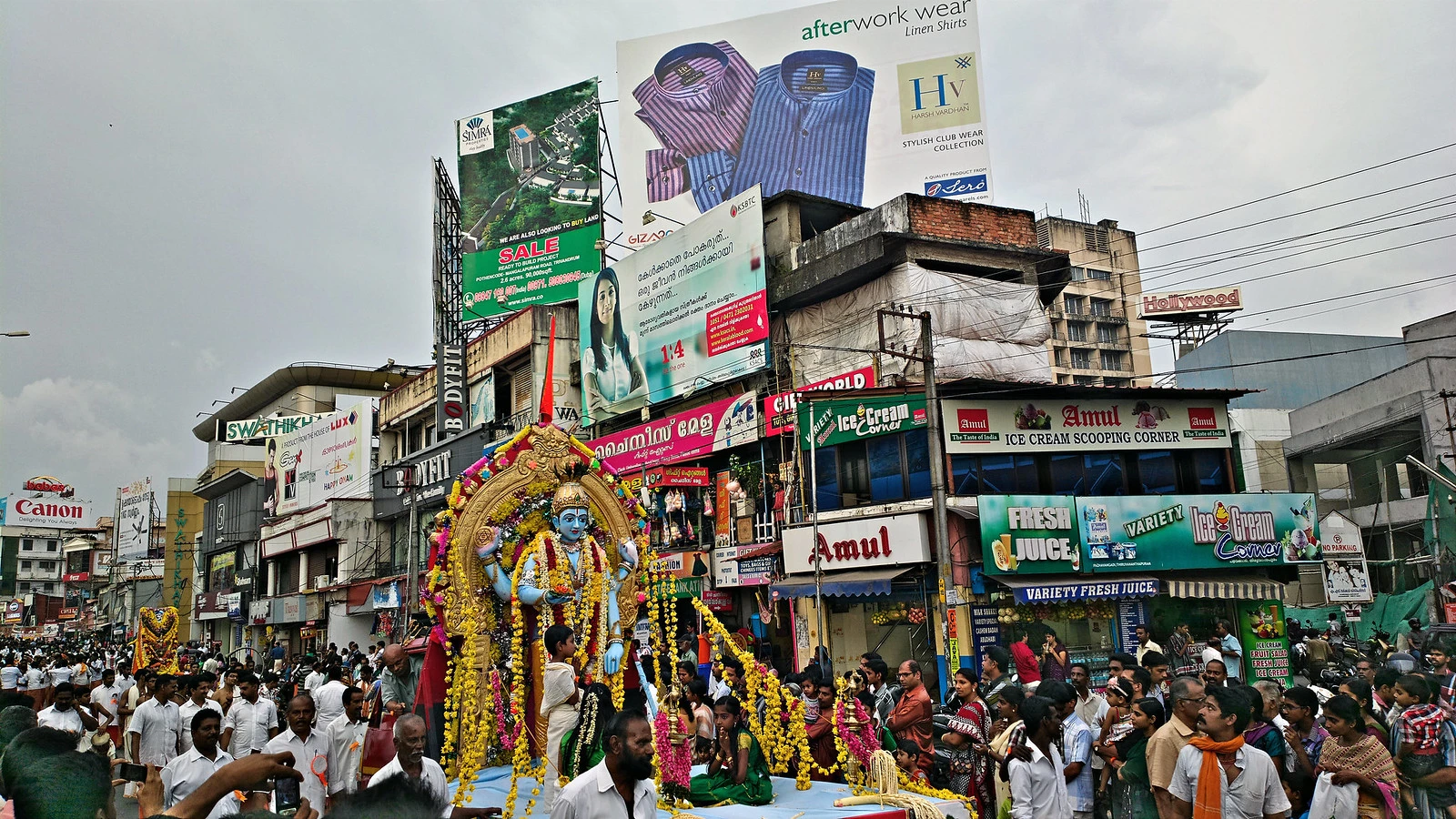
The staple representative of South India in these lists, Onam is also a harvest festival in India, namely the harvest of rice. It is the most famous of the festivals in Kerala. It also celebrates the annual return of the demon King Mahabali to his beloved land of Kerala. Legend tells that the king was so fair and just that the people lived in a golden age under his reign, prompting the jealous gods to trick him into the underworld and away from his people. His return is celebrated with great pomp and splendor, notably the Aranmula boat festival that sees vast crews race Snake Boats down the Pampa river to the sound of traditional songs. The thrill of the race is heightened by the coloured flags and umbrellas on the shore
The most exciting aspect of Onam is the fact that the oldest river boat fiesta in Kerala takes place during this festival. The Aranmula boat festival also involves Snake Boats, which are occupied by a group of people, each racing against others while some oarsmen indulge in singing traditional boat songs. Contact us to help you get there!
The kite festival in India falls on 14th or 15th January every year. It marks the arrival of spring and the transition of the sun into the Makara Rashi (the Capricorn zodiac sign), which is why the kite festival is called Makar Sankranti in some parts of India. In other parts, it is called Uttarayan festival, meaning “the northward journey of the sun”, which begins from this day.
It is also a festival where people come together in celebration and bury their hatchets, offering each other sweets in a joyous atmosphere. In this article, we tell you more about the significance of the kite flying festival in India, how and where it is celebrated, the international kite festival, and the precautions you need to take. Hit us up at India Someday to witness this spectacle in person.
Click here to understand what the weather is like in India in January.
Makar Sankranti is a festival that promotes friendship, family, and togetherness (Photo Credit – Andrea Kirkby)
Significance of the festival:
The significance of Makar Sankranti differs according to the region. Uttarayan festival is celebrated one day after Lohri, on the same day as Makar Sankranti. This harvest festival is dedicated to the worship of the Sun God Surya, who is said to be the source of life and energy. It also symbolizes the end of winter solstice, or Uttarayan, and the ascent of the sun. Makar Sankranti symbolizes the triumph of light over darkness.
One of the other kite festivals is Basant Panchami, which marks the beginning of spring before the harvest season. Basant Panchami is popular in the northern part of India, especially Punjab. It is celebrated for a week with colors and kite flying.
Why do we fly kites on this day?
There are different records about the origin of kite flying in India.
According to Hindu religious beliefs, kites are flown into the skies as an alarm for the gods to awaken them from their deep slumber throughout winter. Kites are also said to serve as a Thanksgiving symbol to the gods in the skies above.
Some historical records suggest that kite flying was a popular activity among Mughal emperors and Muslim traders. Some say it was brought to Gujarat by Buddhist pilgrims from Tibet.
The kite flying tradition on Makar Sankranti also has scientific reasons behind it. Winters are cold and dry, and people are most prone to infections and illnesses during this time. Flying kites during the day exposes the body to the much-needed sun’s rays, which provide vitamin D to the body, boost the immune system, and prevent diseases. They are also believed to have healing and cleansing properties.
Additionally, flying kites involves physical activity, which keeps the body warm and improves blood circulation. It develops a sense of community, as everyone gathers together and shares tricks and stories while learning the sport of flying kites.
How is the kite festival celebrated in India?
Imagine flying colourful kites with your friends and family from a rooftop under the morning sun during cold winters. This sport is an unbeatable experience, especially on this day.
This friendly kite-flying tradition soon turned into spirited kite-fighting competitions among friends and families, where kite flyers tried to cut their opponents’ kite strings so that their kite would be the only one in the sky, the undefeated winner. In Punjab, people engage in friendly kite-flying battles with each other. In Gujarat, there is an international kite flying competition every year, where people of all age groups from all over the world come and participate in this fun activity.
It is a tradition to offer tilgul laddoos to each other on this day. ‘Til’ means sesame and ‘gul’ means jaggery. Tilgul laddoos are round sweets made from sesame seeds and jaggery, two food items that are good for your body during winters. In Maharashtra, while offering these laddoos, Maharashtrian people say, “Til-gul ghya aani goad goad bola”, which means, “Have tilgul laddoos and speak sweet words”.
Some other winter specialties are undhiyu (one-pot vegetable casserole made with seasonal vegetables), chikkis, and til papdi (sesame seed brittle made with sesame seeds and sugar syrup).
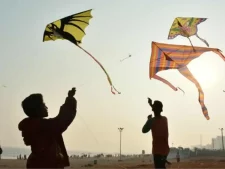
There’s nothing like flying a kite from terraces and rooftops (Photo Credit – Penn-State)
Where and when is the kite festival celebrated in India?
Kite festivals are prominently celebrated in some parts of North India, Gujarat, Rajasthan, and some major cities of Maharashtra. Festivities take place on 14th or 15th January, but in a lot of places, celebrations start a week prior.
Jodhpur in Rajasthan is beautiful on its own, but it comes alive on Makar Sankranti. Witness a thousand colourful kites take over the morning skies as every rooftop is raided by enthusiastic kids and adults alike. Similarly, in Jaipur, Udaipur, and Jaisalmer, you will see beautiful kites flown in the air from rooftops.
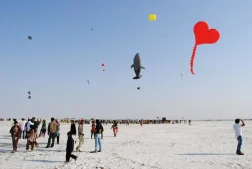
In Ahmedabad, Gujarat’s largest city, the 7th to 15th January is the International Kite Festival week. This is the most famous kite festival in India. People from all over the world come to Ahmedabad to compete in kite fighting. You can see the most unique kites soaring in the blue skies – giant banner kites, flying dragon kites, rokkaku fighter kites, wau balang kites, and more such innovative kites.
The Patang Bazaar (kite market) is open 24 hours a day during this week. Streets are filled with rows of stalls selling kites in this kite capital.
Kite flying starts at 5 am in the morning and goes on until midnight. You will see the sky filled with these beautiful kites in one of Gujarat’s biggest kite festivals.
We definitely recommend being in North India for the Kite Flying Festival, you can browse through our two-week travel routes here.
The colourful kite utsav in Gujarat (Photo Credit – Kaushik Patel)
Precautions to take
The kite flying festival is also responsible for a lot of mishaps and accidents. Why? The strings (manja) used to fly the kites are often coated with ground glass or other abrasive substances in order to cut off other kites. These strings can cause serious cuts if you run through it quickly. So be very careful while handling kites or even just being around kites.
There are also people flying kites on the streets, and often, kites can plummet downwards. Always be aware of your surroundings.
Also, ensure that you don’t trip over or run through any strings that might come in your way.
The Kite Flying Festival has religious and cultural significance attached to it (Photo Credit – Siasat.com)
All in all, the celebration of Makar Sankranti in India is very prominent. It creates an environment across the country that brings out the child in everyone. If you intend to experience the kite festival in India, let us know. We will accommodate you in North India, preferably in a homestay. This way, you can feel like you belong as you partake in the festivities with an Indian family. Click onPlan Your Trip for your ideal itinerary.
It seems like every day is some type of holiday or festival here in India. From Jain holidays to Krishna celebrations, festivities abound. Many Jain folks fast for 8 days before this.
Jagdish Temple, Janmashtami
Just when I thought I had a full Janmashtami experience at the community celebration in Ahmedabad, I immediately got a sense that the Jagdish Temple festivities in Udaipur would be quite a wonder. And I sure was right. There were colourfully dressed men, women, and children. With amplified music, the clay pot dangling up above the public square, shiny streamers, and lights. It was a buzz of festival-like energy that was constant.
I was told that after 06:00 PM, the festivities would really get started. They would end by around 08:15 PM or whenever the pyramid of boys grew tall enough to knock the clay pot of yoghurt down.
Jagdish Temple, Janmashtami
I made my way over at around 7:00/7:30 and joined the dense crowd of spectators. I wish I could have somehow made it to one of the many balconies overflowing with onlookers. Instead, I found myself a spot where the visibility wasn’t bad and there was some room for breathing. That changed pretty quickly! I rarely go deep into tightly crowded spaces unless I feel I have a very clear path to exit. But this seemed like a pretty special opportunity, and I decided to stick it out.
I was able to hold my camera up high and snap some good shots. I’d been warned about unwanted gropes. Accordingly, I had purposely placed myself near women to avoid any unwanted situation.
The crowds roared with enthusiasm! The catchy music played loudly, and there was lots of call and response. It was similar to the community celebration in the Ahmedabad slum.
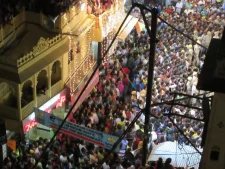
The crowd in the lanes of Udaipur leading up to Jagdish Temple during Janmashtami
The Finale!
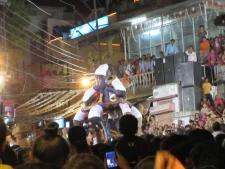
The boys made pyramids that grew taller and taller and the crowd got tighter and tighter. It was still nowhere near the clay pot. It was exhilarating to join in the excitement. Yet still, anxiety-provoking to be in the increasingly crowded audience. Not to mention the sweat literally dripping from my body.
I would think it was as cramped as humanly possible. And then dozens of more people would push their way towards me from both sides. I loved the experience though was horrified at the same time. I finally retreated, recognizing how much longer it would take. Plus, I had exciting dinner plans with a friend, of my New York friend, Aditi. I was so grateful to her for the connections she made for me.
I finally pushed and squeezed my way out of the crowds (not an easy feat), and enjoyed another vantage point from the distance.
A human pyramid being made to break the pot of yoghurt that is at the top
I worked my way through the maze of crooked streets and headed to Jaiwana Haveli to meet Aditi’s friend Yash. His family has been living there for generations. His family also runs a beautiful hotel with stunning views overlooking the lake and the palace. We met up on the roof and enjoyed a refreshing Kingfisher, some decent conversation and yet another scrumptious meal, the highlight of which was the Chilli Paneer.
Ramblinarium – Jaiwana Haveli, Udaipur
I walked myself back to Madri Haveli through the windy maze. Along the way, I was excited for a much-needed shower and rinsing of my sweat-filled clothes. I learned later that it took the boys 40 tries to make a pyramid tall enough to reach the clay pot. So glad I left when I did!
Super thankful for the A/C in my room, I slumbered well and woke to yet another delicious breakfast! This time enjoyed it with Rajesh and Shankar Singh Charan, manager of the Madri Haveli. I went to check out Rajesh’s impressive gallery and was picked up there for my next adventure – the Krishna Ranch.
Experiencing Diwali in India is an experience like no other! If we had to pick two festivals that you must definitely experience in India, it would have to be either the festival of colors Holi (March), or Diwali (October or November), known as the festival of lights. Both these festivals are a sight to behold.
Diwali takes place on different dates every year. It occurs in October or November. The Diwali dates in 2024 are from 28 October to 3 November.
So if you are travelling in India during Diwali, you have to experience the festival in the authentic way. In this blog, we will talk about experiencing Diwali in India and celebrating the festival of lights!
You can read these blogs to get an idea of what the weather in India is like in October and November.
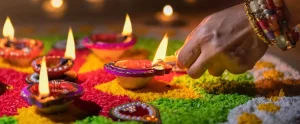
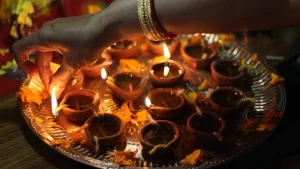
Diyas in Diwali (Photo Credit – Magik India)
Diwali in India- An Overview
The name Diwali comes from the Sanskrit word “deepawali”, which means “rows of lights”.
Diwali in India is as important to Indians as Christmas is in the West. It is a five day festival, and India’s biggest holiday. Most Hindus observe Diwali, which occurs in October or November every year.
Common traditions during Diwali include cleaning and redecorating the house, buying new clothes, lighting diyas (lamps), exchanging gifts, making and eating sweets together as a family, and bursting firecrackers at night. Friends and families gather together for this festival. Diwali is celebrated as a fresh start with the belief that good triumphs all evil.
As a traveller in India, if you are anywhere in North, Central, or Western India, you will feel the festive vibe in the air. This is a festival that brings all of India together, regardless of caste and religion. Indians are friendly, curious people, so don’t be surprised if you get invited to someone’s house to join in the celebrations.
If experiencing Diwali in India is on your wishlist (something we highly recommend),plan your trip with us now, so you can properly experience the grandeur of the festival of lights.
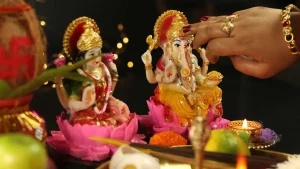
Partake in the Diwali Puja, and see if you can spot the Elephant God Ganpati (Photo Credit – HerZindagi)
Why is Diwali celebrated?
Diwali marks the beginning of a new year in the Hindu calendar in India. It symbolises the victory of light over darkness, good over evil, and hope over despair. Hindus light up their homes with lanterns and oil lamps, and make colorful rangolis (mandalas made using colored powder). This is why, Diwali is known as the festival of lights. To show gratitude to God, all material assets, such as cars, offices, jewellery are worshipped in Diwali.
Diwali is predominantly a Hindu festival, but non-Hindu communities celebrate Diwali with equal gusto. It has an important place in Sikhism and Jainism as well. Even some Buddhists observe Diwali.
There are many legends about the origin of Diwali. The stories vary depending on the region, but the underlying theme is the same – the victory of light over darkness, and good over evil.
Diwali celebrates King Rama’s return to Ayodhya. According to the Hindu epic Ramayana, Lord Rama, his wife Sita, and his brother Lakshman defeated the evil king Ravana and returned to Ayodhya after 14 years of exile.
In another legend, the festival marks the time when Lord Vishnu rescued Goddess Lakshmi, the goddess of wealth and good fortune, from the demon King Bali who had imprisoned her. On this day, Lord Vishnu ordered King Bali to be banished to rule the netherworld.
In Sikhism, Diwali has historical significance. On this day, the sixth Sikh Guru, Guru Hargobind ji, along with 52 other Hindu kings, was released from captivity by the Mughal Emperor Jahangir.
In Jainism, it was during Diwali that Mahavira’s soul attained Nirvana. He was the twenty-fourth and the last Jain Tirthankara of the present cosmic age.
In Gujarat and some Northern communities in India, Diwali signifies the beginning of the new year.
In some parts of India, especially in the east, the hindu Goddess Kali is worshipped on Diwali. It is believed that Goddess Kali appeared with 64,000 Yoginis to kill wicked demons on Diwali. Kali Puja takes place a day after Diwali.
In South India, Lord Krishna is worshipped on Diwali. According to legends, Diwali marks the day when Lord Krishna defeated the demon Narakasur.
Clay lamps or diyas are lit to illuminate homes during the festival of Diwali (Photo Credit – Britannica)
When and where is Diwali celebrated?
Diwali is celebrated on the day of the full moon around the end of October and the beginning of November. It is a five day festival, with different significance of each day. The third day of Diwali is the main day and the most important.
Most regions across India celebrate Diwali. Diwali celebration in North and Central India is very different compared to the festivities in Southern India. Depending on the state, the religious significance also differs.
Celebrations in most of India take place with great fervour – colours, row of lights, chaos, fireworks, loud gatherings, and noise. However, in Southern India, celebrations are quite subtle even though the traditions are similar.
So if you want to experience Diwali in the true sense, you need to be in the western, central or northern India during this time.
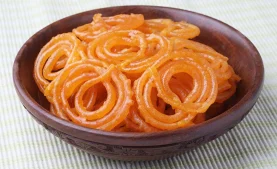
Make sure you eat Jalebi, which is a famous deep fried Diwali sweet
How is Diwali celebrated?
Diwali is a five-day celebration in India, and each day has a special significance.
The celebrations start with Dhanteras on the first day. On this auspicious day, Indians clean and decorate their houses and prepare for the festival. Many people purchase gold items on this day, as it is considered auspicious. People of Hindu faith also honor Goddess Lakshmi, the goddess of wealth and good fortune.
The second day is Narak Chaturdashi, or Choti Diwali. People celebrate by waking up early in the morning, lighting up their house with oil lamps and bursting crackers. They also draw rangolis outside their house.
The third day of Diwali is Lakshmi Puja. This is the main day of the festival of lights. Hindus ask for blessings from Goddess Lakshmi on this day. You will find lighted lamps, rangolis, and firecrackers outside most homes on this day.
The fourth day of Diwali is Padwa or Goverdhan Puja. This day honours the environment and nature. This is considered to be the start of a new year. People visit friends and family on this day and exchange gifts. They also have lavish meals together.
Bhai Dooj is the fifth day of Diwali. It celebrates the special bond between siblings. Brothers visit their sisters’ homes on this day, bringing gifts. In turn, sisters prepare a feast for the brothers and give them gifts as well.
We recommend experiencing all 5 days of Diwali during your trip.
Beautiful combinations of diyas and flowers adorn houses (Photo Credit: PHOOL)
What are the best places to celebrate Diwali in India?
If you’re travelling to India during Diwali, we will always accommodate you in North India during the festivities.A homestay can be a great experience to celebrate Diwali with a family, but they get booked in advance. Some homestays only prefer to host friends and family. But do not worry, hotels have Diwali celebration too – you cannot escape the Diwali spirit, irrespective of where you stay.
In terms of destinations, any place in Rajasthan is great for Diwali. You will see lots of festivities and firecrackers in bigger cities like Mumbai and New Delhi. Towns like Agra, Orchha and Khajuraho located in the state of Uttar Pradesh and Madhya Pradesh are great for Diwali.
You can go to Varanasi and watch the amazing aarti and the mesmerising fireworks by the Ganges River. Varanasi also celebrates the festival of Dev Deepawali – the Diwali of the Lords. This celebration takes place 15 days after Diwali. It is believed that the Lords come down to Earth to take a dip in the holy waters of Ganga and all the 84 ghats are lit with clay lamps for their welcome. This is a sight worth witnessing as along with celebrations, multiple rituals take place as well.
Jaipur markets are completely lit up and are an absolute visual delight during Diwali. Goa has a special tradition of burning effigies of the demon Narakasura. Though Amritsar has a majority Sikh population, it is worth witnessing the celebrations at the Golden Temple. It doesn’t necessarily matter where in Northern India you celebrate Diwali, just make sure to not travel on the day of Diwali to really experience the Diwali festival to the fullest.Get in touch with us for recommendations for accommodation to experience this festival of lights at its best.
Diwali celebrations in Varanasi are a breathtaking sight to witness (Photo Credit: Times of India)
Safety TIPS FOR EXPERIENCING DIWALI IN INDIA
Diyas and firecrackers are everywhere during the Diwali festival, so be careful with your clothes catching fire (especially girls wearing ‘dupattas’ or ‘Indian scarves’). If your ears are sensitive, we suggest taking earplugs as some firecrackers are extremely loud and can sound more like explosions. There can also be a lot of smoke in the air, compromising the air quality of the region. Don’t keep your face too close when lighting fireworks and rush to a safe distance once lit. We highly recommended that you constantly supervise children to avoid any accidents.
Burning of firecrackers during the festival can lead to air pollution especially in big cities like Delhi. In order to steer clear of any infection, it is best that you wear a mask to avoid inhaling this air. Celebrating Diwali in India in smaller cities like Rishikesh and varanasi guarantees an authentic cultural experience. Smaller towns continue to celebrate Diwali in accordance with ancient traditions. The ideal way to understand the rich history and culture of India, we highly recommend celebrating this festival in such towns.
If you have a respiratory condition, please let us know in advance so we can make sure you avoid cities with very high levels of air pollution.
Firecrackers are fun, as long as you maintain safety (Photo Credit – Mathrubhumi English)
Travelling in India during Diwali
If you are travelling to India during Diwali, the festival of lights, make sure to book all your inter-city commutes and accommodations well in advance – train tickets, hotel bookings, and guides become harder and more expensive to book as the festival approaches. Most people make a booking well in advance for accommodation in major tourist cities. However, the most difficult thing to procure is train tickets, as people travel all over India to visit their loved ones.
Travel with India Someday to truly experience Diwali in the best way possible
For more information, visit our blog post onthe must-experience festivals in India. Alternatively, feel free tocontact us for more information about experiencing the festival of lights. If the dates that suit your convenience are nowhere close to this festival, get in touch with us. We’ll help you plan a trip that allows you to experience other popular festivals while still experiencing the vibrant culture of this subcontinent.
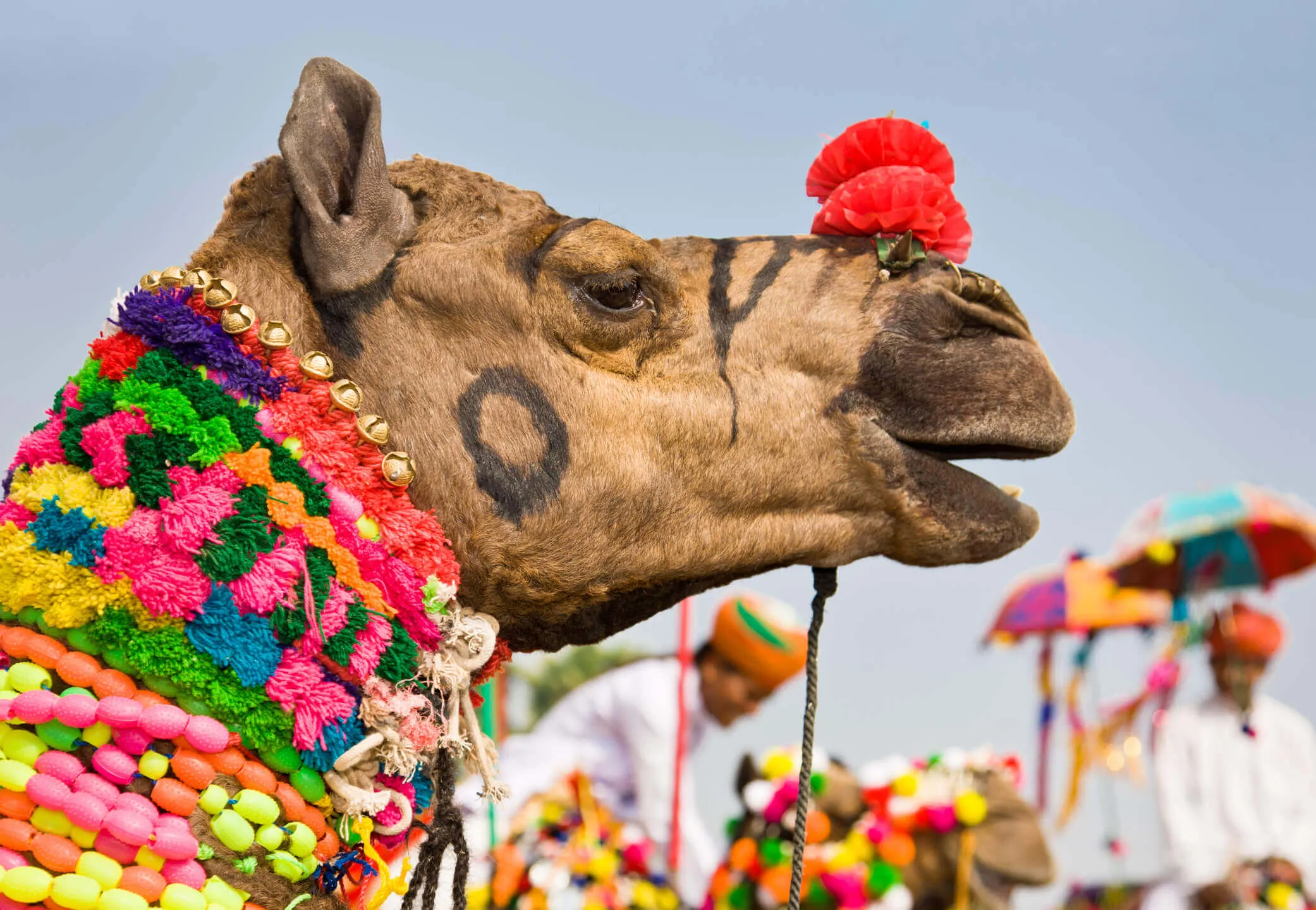
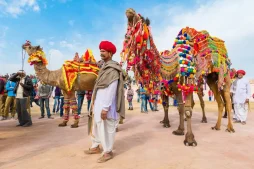
The Pushkar Camel Fair Rajasthan sees around fifty thousand odd camels; quite a unique character. It’s extremely colourful, with a whole lot of activities happening. For example, folk performances, camel races, dances, great food and art and photography.
The Pushkar Camel Fair began as a local Therade fair for camel and other cattle owners. It takes place every year at the time of Kartik Purnima (the full moon in the month of Kartika in the Hindu Lunar calendar), and over the years, it has become an attraction for travellers.
Camel trading, coupled with a bunch of religious rituals is still the premise of the whole affair, and the trading is what draws most tourists. The later part becomes a pilgrimage and ‘a must’ is taking a dip in the holy Pushkar lake.
Villagers gather with their camels and other livestock at Pushkar Camel Fair (Photo Credits)
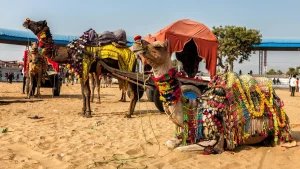
Decorated Camel Cart
When and where is it held?
The fair is always held in Pushkar, near Ajmer in Rajasthan. It usually falls in November, depending on the Hindu calendar. In 2020, it will start on Sunday 22nd November.
Looking at planning a trip to India around the Pushkar Camel Fair? Contact us! – (Photo Credit – Travel Rajasthan)
Getting to Pushkar
Ajmer is the nearest railway station to Pushkar, with trains coming from all the major cities in the country. Alternatively, Ajmer is about 30 minutes drive away from Pushkar and there are other means of transport available, for example, buses. You can even take an auto-rickshaw, but all the best getting the rickshaw driver to take you by the meter. Either way, you should only be paying him INR 100. If you’re flying down. Jaipur is the closest airport and the drive to Pushkar is about 2.5 hours. Taxi fares will be super expensive (25-45 GBP) during the Camel Fair.
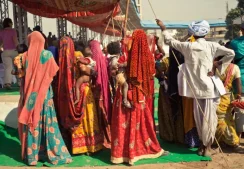
A local family watches the opening ceremony of the Pushkar Fair at the camel grounds (Photo Credit – Jason Rufus)
How is the Pushkar Camel Fair celebrated?
The first thing you’ll notice when you get here is … camels! They’re everywhere. They are all dressed up and being paraded for sale, you will almost miss the two odd lakh people that are in the area at the same time. Camel traders, pilgrims and tourists are all there to play their parts in this old school but still going strong, colourful carnival.
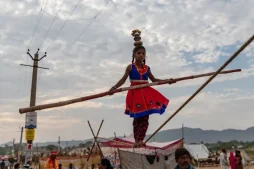
There are camel races, temple dancing, snake charmers, folk singers, classical musicians, acrobats, an art and craft bazaar, camel dances and traders, and carousel rides.
There are another set of pious people you’ll find here who have come for the purpose of pilgrimage. They bathe in holy lake waters of to wash their sins. Pushkar is considered the only holy land for worshipping Lord Brahma – the creator of the universe and the lake is said to have formed where he dropped a flower. After all the hoopla with the camels is over, full moon and two days around it are dedicated by pilgrims to bathing in the lake. It is said the special blessings are bestowed upon those who take a tip in the Pushkar Lake on full moon day.
Performers come from semi-nomadic communities (Photo Credit – Ninara)
Best ways to experience the Pushkar Camel Fair while travelling in India?
If you are willing to spend, you might want to go up in a hot air balloon and get an aerial view of the scene. Go on one of those special Pushkar Fair walking tours (they run in the morning-evening). The morning walk is best to see pilgrims bathing in the lake and have a first-hand experience of rituals being performed. While the evening is the best time to witness the ground where the bustling fair is held at its best.
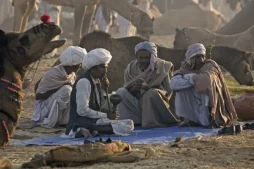
Men with turbans and Hookah (Photo Credit – Koshy Koshy)
Precautions for the Pushkar Camel Fair in India?
Pushkar is full to the brim with visitors during the fair, and accommodation prices skyrocket while rooms run out very fast. That’s why it’s better to arrive a few days before and get a good, cheap deal to make your bookings. You can choose to stay anywhere between a home/farmstay, a guest house, a desert tent or a swanky heritage hotel in Pushkar.
Pushkar is a bit infamous for its drug scene and you know how sometimes, things can go out of hand at such places during festivals. Thus, it’s best to stay on your guard. Don’t get duped by local pundits (priests) and other greedy people who are looking to make a buck off tourists. It gets very crowded during the fair and you’re basically in a desert, so stay hydrated, cover your head and face to avoid the sand troubling you, dress relatively conservative so you don’t get the wrong kind of attention (it’s Rajasthan you’re in, not Goa).
Visiting India during November? Here is what you need to know regarding the weather and other best places to visit during this time.
Shopping during the Pushkar Camel Fair (Photo Credit – Rajasthan Tour Planner)
Contact us to plan your trip to India around Pushkar Camel Fair.
If you want to experience a festival in India, you should think of visiting India during the Holi Festival. By mid-March, winters recede in India, and the onset of spring is marked by Holi, the festival of colors. One of the quirkiest and most fun festivals in India, people celebrate Holi by playing with water and colors on the streets. If you visit India during this time, try to time it around the Holi festivities for one of the best experiences of your life.
Read this blog to understand why, when, where, and how this festival of colors Holi is celebrated. This will help you to experience Holi in the best way. If you are planning on visiting India during Holi festival, India Someday canPlan Your Trip, so you end up celebrating it in the right spot.
Holi is usually celebrated in March. You can read about the weather in India inFebruary andMarch.
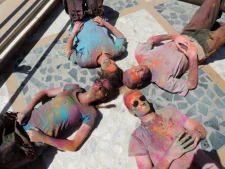
India Someday guests enjoying an afternoon siesta post the Holi celebrations
When is Holi celebrated in India?
The Holi festivities take place over two days in late February or in March. There are no specific dates – according to the Hindu calendar, the day of Holi is the Phalgun Poornima (full moon) which generally arrives in March. The exact dates of the festival vary every year, as it is based on the Indian Lunar calendar.
In 2025, Holi is on 14 March.
In 2026, Holi is on 4 March.
In 2027, Holi is on 22 March.
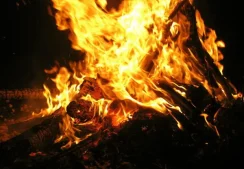
The eve of Holi is Holika Dahan, celebrated with a bonfire.
In Barsana, Vrindavan and Mathura in Uttar Pradesh, Holi celebrations often extend over 10 days and start almost a week before the main event. There is a unique tradition, Lathmar Holi, which is celebrated 6 to 7 days before the official Holi day.
Why is Holi celebrated in India: A History of Holi
The festival of Holi is based on a mythological tale about the good God Vishnu and his rival, the evil King Hiranyakashipu – try to pronounce that! The evil king’s son Prahlad was a devotee of God Vishnu and he refused to worship his father. The king got angry, and he sent his sister Holika to kill him. Holika was granted a boon that fire couldn’t burn her, so she took Prahlad on her lap and climbed on a pyre. She knew that she would survive while her nephew would burn to death. However, when the pyre was set ablaze, miraculously, Prahlad remained untouched by the fire while Holika’s body went up in flames. This is the story of the triumph of good over evil, and Indians celebrate this sentiment every year by burning the Holi pyre one day prior to Holi.
According to another legend, the Hindu blue-skinned God Krishna was envious of the fair-skinned Radha. So he went and colored her face in an attempt to make her look like him. This was the beginning of the epic love story of Radha and Lord Krishna. This is why Holi is celebrated as a festival of love as well, and is often used in Bollywood movies during a romantic sequence.
This is also the origin of the Lathmar Holi tradition. Krishna went to Barsana to celebrate Holi with Radha and tease her friends. Annoyed by Krishna’s pranks, the women decided to take revenge and chased Krishna with sticks (lathi) as he tried to protect himself. This tradition is followed even today in Krishna’s hometown in Uttar Pradesh. The men visit the town of Barsana, where they are greeted with women holding sticks (lathis), ready to attack them. This is a playful tradition followed since decades. If you have a local guide to accompany you, they may be able to take you to see this tradition.
Some people even say Holi is a simple celebration of the end of winter and beginning of spring, a thanksgiving for a good harvest or a reason to meet friends and have fun. In fact, the festival is supposed to mark the last day of winter before spring. It is a festival quite unique to the Western world, but those who experience it truly have fun!
Holika is the immortal saga of good over evil where as Holi is a festival of mutual harmony (Photo Credit – Satish Krishnamurthy)
Where is Holi celebrated in India?
Holi is a primarily Hindu festival, but it is celebrated throughout the country. However, it is a greater deal in northern India. Places like Andhra Pradesh, Bengal, Uttar Pradesh, Bihar, Gujarat, Haryana, Himachal Pradesh, Madhya Pradesh, Maharashtra, Manipur, Orissa, Punjab, Rajasthan and also in the southern state of Tamil Nadu celebrate this festival with great splendor in residential areas, near temples, or in designated venues. Some tribes in the Northeast also celebrate this festival of colours. The biggest celebration happens in Mathura-Vrindavan, Pushkar and Varanasi.
The southern states do not celebrate Holi with much pomp. Also, a lot of Muslims and Buddhists in India don’t celebrate Holi. But most Indians have celebrated Holi or at least experienced it directly or indirectly in their lives.
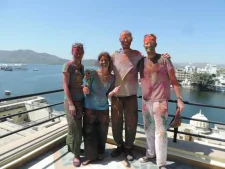
India Someday guests posing after enjoying Holi celebrations in Udaipur
Where should you go for the best Holi experience?
We would recommend you to celebrate Holi anywhere in North India, especially in small towns and cities like Pushkar and Udaipur in Rajasthan, and Varanasi in Uttar Pradesh. At India Someday, these are our favorite places for experiencing Holi. Other cities where you can truly enjoy the spirit of Holi are Jaipur, Jaisalmer, and Jodhpur in Rajasthan. Jaipur, the Pink City, is one of the best places to celebrate Holi. At Govind Dev Ji Temple, the oldest temple in the city, the celebration lasts for more than a week!
Goa is also one of the best destinations to visit for a fun, youthful Holi party. Most cities, like Mumbai and Delhi too have a lot of fun Holi celebrations. You will find many venues across India, especially in metropolitan cities like Mumbai and Delhi, organizing Holi events. You will need to pre-book tickets, but these events are much safer than playing Holi out on the streets.
Mathura-Vrindavan has the biggest public celebrations and events for Holi, and it could easily get out of hand. There are many safety issues here as well, especially for women. So we would NOT recommend this!
Also, don’t forget to visit the bonfire for Holika Dahan. Most towns and cities have many small bonfires a few miles off each other. If you cannot find a pyre, you can ask the reception at your hotel or hostel, or any local guides you know, and they may be able to show you.
If you’re interested in a trip around Rajasthan to the mentioned cities and more, check on thebest places in the region anddifferent travel routes. You can also think of doing the Golden Triangle route (Delhi-Agra-Jaipur) for Holi, like most travelers. This will allow you to immerse yourself in the local celebrations while visiting the famous monuments like Taj Mahal in Agra, Red Fort in the capital city of Delhi, and Hawa Mahal in Jaipur.
You can browse through our extensiveNorth India travel routes here for travel ideas. Or just hit thePlan You Trip button to start planning your trip to India around Holi.
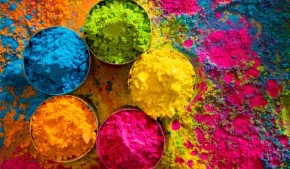
Vibrant colours of Holi festival (Photo Credit – Housing)
How is Holi celebrated in India?
There is a lot of excitement in the air during Holi in India, especially in the north. You will find kids and young men and women preparing for the festivities from the night before by filling water balloons and buying colors. Communities like families, friends, housing societies, temple groups, etc organize the celebrations weeks in advance.
On the eve of the color festival is Holika Dahan. Large groups of friends and families gather together and a bonfire is lit up. Families pray around the bonfire and spend time together. This fire is attempted to be kept burning for five days. You will see bonfires on every street or society during this time.
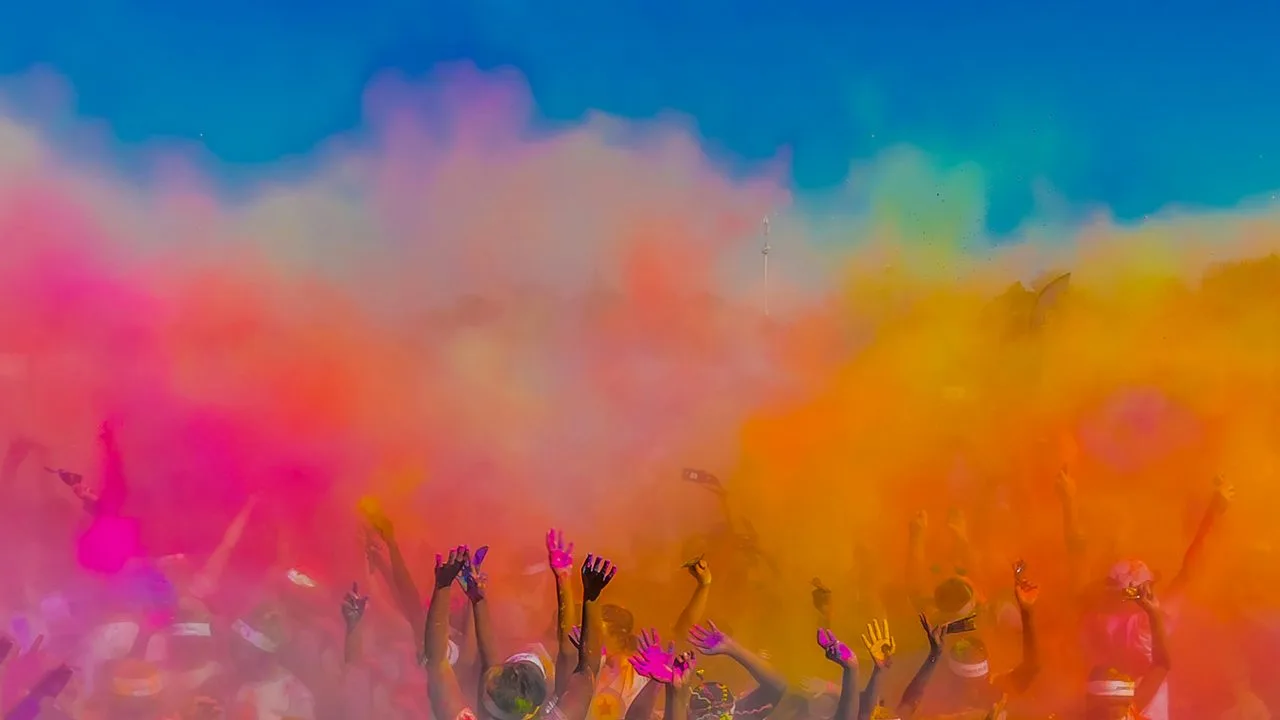
On the day of Holi, everyone crowds together to play Holi with colors. You will see people celebrating Holi out on the streets. There is often artificial rain, water guns, and loud music along with dry colors. People dance, eat street food, and drink bhang thandai. Thandai is an Indian milk beverage made with spices and dry fruits. Bhang is an edible cannabis paste. While not necessarily legal, bhaang is mixed in thandai and most adults drink it on this day.
All these celebrations mostly take place in the mornings, while the afternoons are for washing off the colors and relaxing after a fun-filled but tiring morning. It can be a bit of an effort to wash the colors off your body, and sometimes the color can remain for days. In a few other places, these celebrations carry on till night!
Often, temples and homes are adorned with flowers. In some places, there are also processions in the temples, but comparatively, Holi is not as religious as the other holy days in India, and does not have any religious rituals as such.
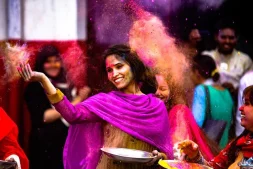
Holi festival is the celebration of unity where everyone seems of the same colour (Photo Credit – Murtaza Ali)
Tips and precautions for celebrating Holi in India
We have a few tips for celebrating Holi in India like locals! And of course, a few precautions as well, so that you can make the most of this colorful festival.
You will find street vendors selling colored powder from more than a week before the festival. If you see any Holi colors, buy them. It is better to stock up in advance. Avoid the permanent colored powders – they will be marked, but if you aren’t sure, ask the vendor. Use only organic colors as much as possible.
Dress well for the Holi celebration. A lot of people wear white while celebrating Holi as a symbol of peace and to showcase the vibrant colors thrown around. You can choose to wear darker colors if you wish. Most locals simply wear old clothes that they may not have to use again.
Use coconut oil liberally on your hair and skin before the events so that the color does not stick to your body for a longer time. Use sunglasses to shield your eyes.
Start your Holi celebrations early in the morning, preferably before the horde of locals and Holi revelers arrives, as it can get overwhelming.
Before throwing color on other people, keep in mind one simple rule – if they have colored powder on their body, they are fellow participants, and thus, fair game. Do not throw colored powders on innocent bystanders.
You can try the bhang, but drink only as much as you can handle.
Make friends at your hotel or hostel or any accommodation. Holi is safer, and so much fun, with friends and people you know. You will be among lots of crowds on this day, so stay safe. Talk to other travelers or people familiar with the local customs and traditions.
For female travelers, there are always a few extra safety tips. Wear clothes that cover your shoulders and knees. If you are a solo female traveler, try to stick around with other travelers or people you know well. Avoid going out alone in public places since there will be many inebriated men all over the place.
Holi is the festival of colors, yes, but you will also be drenched with buckets of water dumped on you, water guns, and even eggs sometimes! So be prepared for all of it.
Avoid traveling long distances on this day, as city public transportation is often not available until late afternoon.
Make sure you have travel insurance before traveling to India. It can help you in a lot of unforeseen circumstances.
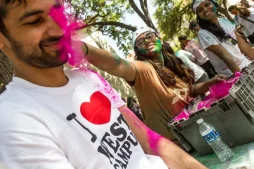
Avoid getting the colour into your eyes during the festival of colours (Photo Credit – Karan Dodia)
India Someday can help you plan a great time during the Holi Festival in India. Plan Your Trip to India with us now and we can advise you how to fit the party in.
Can’t come in March? Read here about other Indian festivals.
Let India Someday handle it and plan your best trip.