TALK WITH US +91-9970620335
WhatsApp

How to Avoid Delhi Belly in India

The diverse variety of food available might be one of the country’s biggest draws, but we also often come across wary travellers wondering how to avoid Delhi Belly in India. This dreaded travellers’ diarrhoea has a nasty tendency to strike at the least convenient time (not that there’s ever a convenient time to have an upset stomach!), but a little wariness and care can go a long way in avoiding a case of the runs.

Most people who get Delhi Belly in India tend to get it in the first week of their travel, so it pays to be especially vigilant then. But that doesn’t mean you should get reckless after you’ve been here a while, either! Here are our top tips on how to avoid Delhi Belly in India so you can have an enjoyable and food-filled holiday!

Delicious delicacies, How to avoid Delhi Belly in INdia
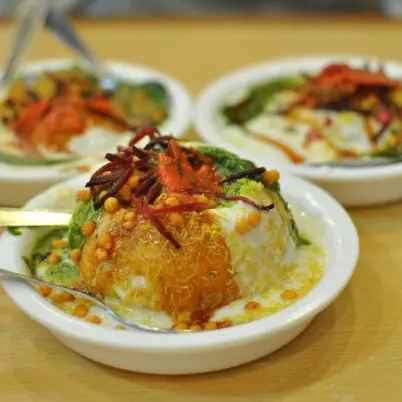
Tempting Delhi street food – Dahi Bhalla Chaat

street food in india (Keep it hot!!)

The first rule of thumb – if it’s not hot, don’t eat it! Avoid uncooked vegetables and fruits, unless you’ve cleaned them yourself. This also means avoiding chutneys and accompaniments with snacks – make sure you ask they aren’t used if you’re experimenting with street food!

And don’t dig into food that’s been sitting around for a while, either at the eatery or in your room. Once food hits room temperature, it becomes a breeding ground for bacteria unless it’s thoroughly reheated.

piping hot food
Pakora being fried in oil (Photo Credit – shameersrk)

Stick to beer

Well, beer, sodas and carbonated drinks, hot teas and coffee – essentially, stay away from water, unless you’re sure of its source! And one thing people often forget – being wary of water also means being wary of ice, as it’s often made using tap water. Even while buying bottled water, make sure that the seal is good – people sometimes refill and resell bottled water! A good way to limit your plastic consumption is to use purification tablets or get yourself a filter bottle.

gastronomical delight, Delhi Belly in India
Encounter with lime soda and soft drinks of India

Load up on probiotics

Probiotic bacteria make your gut happy and strong. A good way to keep your system ready for the food overload that will happen in India is loading up on probiotics! To prevent Delhi Belly, it might help to start on a course of probiotics – yoghurt and kombucha are good natural sources, but your doctor will also be able to help suggest supplements for you.

Homemade yoghurt, Remidie for Delhi Belly in India
Marco Verch’s homemade yoghurt

Look for the crowds

Don’t let all of this scare you off experimenting with foods though – some of the best food in India can be found on the streets and in holes-in-the-wall! Get recommendations from locals (we’ve got tonnes of ideas and love eating – ask us for suggestions!). More importantly, look for where the crowds are going. This not only means that it’s gonna taste great, but also that the turnover’s high – which means hotter, fresher food!

hidden gems if India
Street food – a must-try (Photo Credit – bhimsingh29)

Scrub your hands!

Keeping your hands clean will go a great way to keeping your stomach healthy and happy. And not just at mealtimes, either! You touch your face more often than you know it, and those germs can get into your system pretty easily! Don’t forget to wash your hands at regular intervals!

Swach bharat,eating righti n india, street food in india, eating right in india, hygienic food in india,
Always sanitize your hands or wash them before eating

struck by Delhi Belly in india (Tips to Cure)

If you do manage to get a stomach bug, don’t panic! Stay hydrated – soda with lime juice, sugar and salt is a good drink to have – and you can also pick up electrolyte powders from a pharmacy in a cinch. Along with that, make sure you keep plenty of toilet paper on you, as well as soap and hand sanitizer. Keeping a medical kit with anti-diarrhoea medications like Imodium, as well as oral rehydration supplements. This will make life easier if you do get struck down by Delhi Belly!

Check out how you can plan a culinary trip to India

Get in touch with us to plan a memorable trip to India

Why Everyone Should Plan Culinary Holidays in India

If there’s one thing us Indians are extremely proud of, it’s our country’s rich culinary traditions. We love eating, and we love sharing our food with anyone who’ll let us feed them! You’ll definitely notice it if you go on a train journey in India – your fellow passengers will have loaded up on snacks and foods. And they will not only insist on you trying some, but also tell you why it’s the best food you’ll ever eat!

And the one thing that most international travellers don’t seem to realise is just how vast the realm of ‘Indian food’ is. Which is also one of the reasons why we think culinary holidays in India are such a great idea.

Whether you sign up for Indian food cooking classes, go on food tours, or just choose to make food a focal point of your next holiday. With India, you can’t really go wrong. And don’t let the thought of getting the dreaded Delhi belly scare you off either. Accordingly, here are some tips to make sure you avoid it.

Here’s why we think everyone should plan culinary holidays in India, and how you can make it happen!

Take a cooking class and learn all about what spices to use in Indian dishes, Cooking classes in India
Take a cooking class and learn all about what spices to use in Indian dishes (Photo Credit – Kristina Tripkovic)

Because culinary holidays in India will offer something for everyone

Like we’ve said, Indian food is incredibly diverse. It’s not just each state that has its own unique cuisine, each region invariably has its own unique foodie highlights as well! Indian food has always been about hyper-localised preparations, based on what’s traditionally grown in the region and the season.

Rajasthani dishes use intriguing desert vegetables that you won’t find in any other Indian food. The food in Kerala is focused on coconuts and spices that are found in abundance here. You will also find rice, which is a lot lighter to account for the tropical climate.

So don’t dismiss all Indian food if you aren’t fond of the rich gravies and curries that have been popularised outside India – you’ll be sure to find flavours that you enjoy once you get here and start eating!

Food in kerala India, Cusines in India
Kerala food, more focused on coconuts, rice and spices (Photo Credit – Rashmi Gupta)

Because there’s so much variety for vegetarians

It’s no secret that India is a tremendously vegetarian-friendly holiday destination! A lot of the communities here have always stuck to a vegetarian diet, so if you’re a vegetarian, culinary holidays in India make perfect sense!

This is one place where you won’t feel like the odd person out for wanting to skip the meat. This way you’ll be able to enjoy the food experiences just as much as everyone else. And maybe you’ll even leave with some fantastic new recipes to work with back home.

Food trips in India
Delicious Rajasthani Thali (Photo Credit – Trisha Soni)

Because it’s always fun to learn while you travel

Picking up a new skill, or learning about something different, somehow always seems to be more fun when you’re on holiday. It’s a great way to get familiar with a new culture, and let’s face it; eating good food is never a hardship!

Cooking classes and tours are also an easy way to meet your fellow travellers and to form friendships with locals. They also offer you a chance to see a whole other side of the destination you’re visiting, as well.

Culinary holidays in India, Biryani, Food tour in India
Delicious biryani makes your day perfect (Photo Credit – Wikimedia Images)

How to plan culinary holidays in India

Go homestay-hopping

We love homestays because they offer a hugely personal travel experience, and food plays a big role in that. There are plenty of homestays across the country that offer cooking demonstrations and classes that you can sign up for. Also, having regular meals will give you an insight into that region’s food traditions.

Your hosts will invariably be more than happy to tell you all about the local food and what makes it so special. Moreover, you can always ask them if you could pop your head into the kitchen to see how it all comes together!

So when you’re planning your next holiday to India, consider picking homestays across your route where you can pick up some new kitchen skills.

Cooking is not your thing? That’s not a problem! Sign up for a food tour. Food tours are also a fantastic option. You can spend a few hours sampling the different specialities of a place and get a sense of its culinary history. All this without having to make any of the efforts of actually making your own food.

Indian food tours range from street food walks to restaurant-hopping that’s focused on a specific cuisine or community, as well as more in-depth experiences that’ll trace the ingredient sources as well.

And while there are plenty of food tours available to choose from, you can also customise your own with us!

Authentic North Indian cuisine (Photo Credit – Pille-Riin Priske)

Get in touch, and we’ll be happy to help you chart out your next food holiday in India.

Tips To Obtain Vegan Food in India

Despite being an extremely uncommon diet in India, many parts of the country are a vegan haven. From the coconut curries of Kerala to the delicious dals in all their various forms, many dishes are naturally vegan. With some preparation, it’s not hard to obtain vegan food in India.

The choice of vegetable curries is huge and vegetarian restaurants are everywhere. Meals, in general, are prepared daily and contain fresh ingredients sourced from local markets. It’s common to see people snacking on fresh seasonal fruits purchased from road stalls. The varieties of nut and pulse-based snacks are endless.

There are a number of considerations you need to make in order to ensure your food is free of any animal products. India produces and consumes an awful lot of dairy and it can crop up unexpectedly. The key to success comes down to having some understanding of the Indian diet and how it changes in different regions. Therefore, with a little pre-planning, it is usually possible to follow a plant-based diet in India without too much hassle.

spice and lentils, Types of vegan food
Punjabi Chana (chickpeas) Masala or Chole is a vegan dish

Common Hurdles In Obtaining Vegan Food In India

When following a vegan diet in India, the main hurdle comes with an ingredient known as ghee. Ghee is clarified butter and is an integral cooking ingredient in many parts of Northern India. In regions like Rajasthan for example, where water is at a premium, food is generally cooked in ghee (and is often quite rich).

Ghee is widely accepted as containing many health benefits and is the base ingredient for many sweets, cakes, and biscuits too. It’s frequently brushed onto different kinds of bread as a garnish.  For this reason, it is very easy to accidentally consume dairy in certain parts of the country.

Despite meat and fish consumption is higher than in the North (except Punjab where meat consumption is high), South Indian cuisine tends to contain less dairy as people use coconut oil rather than ghee or any other oil.  Therefore, most vegetarian dishes will also be vegan. It’s unusual for dishes to contain any surprise dairy as it will usually be specified on the menu.

If a dish does contain dairy, it’s usually fairly straightforward to ask for it to be cooked without.  Likewise, you are unlikely to come across much paneer in South India. This is soft cottage cheese made from cows’ milk and is typically found in North India.

Varieties of crisp and spicy crepes, Food in India
‘Dosa’, a South Indian crepe, is often prepared with Butter or Ghee. However, you can make it made in oil too

Nuances of Vegetarian Food In India

Due to religious reasons, India is home to the largest number of vegetarians in the world.  In fact, 40% of Indians are vegetarian, which is around 506,960,000 people. From this, 31% are known as “pure vegetarians”, meaning they do not consume eggs. Across India, you will see restaurants which advertise themselves as “vegetarian” (no meat or fish), “pure vegetarian” (no meat, fish or eggs), or “non-vegetarian”.

These labels can be very helpful, but of course “pure vegetarian” still only refers to Lacto-vegetarianism, which doesn’t exclude dairy.  Pre-packaged foods are also required to carry a label. A green dot indicates that it is vegetarian (not pure vegetarian in most cases) and a brown or red dot indicates otherwise.

food stamps in India, Vegeterian food in India
Green Dot indicates Vegetarian, Red Dot indicates Non-Vegetarian

Milk and Dairy-Based Foods In India

Milk is India’s leading agricultural commodity and India is the leading milk producer in the world. Interestingly, however, there are entire regions, particularly in Eastern India, where people are lactose intolerant. However, once it is transformed into ghee, milk tends to be digestible. Accordingly, these areas are by no means dairy-free. Where people aren’t able to digest milk, protein is obtained through eating meat, eggs, and fish.

Due to the popularity of vegetarian food in India, it shouldn’t be a problem finding vegan options. Sometimes modifications will be necessary, but if you just ask, people will tend to oblige. Despite your best efforts, however, you may find that an explanation of your diet gets lost in translation.

Dairy products,
Cows are sacred in India

When communicating your dietary needs, it’s often best to mention that you are pure vegetarian and you don’t eat dairy. It helps to list common dairy products such as milk, ghee, butter, curd, paneer and cream and to gesture that you do not want them.

Even still, this information can sometimes get lost between your waiter and whoever is in the kitchen, so if in doubt, double-check and hope for the best.

Tips for finding vegan food in India when eating out

Eating out, whether it be in a restaurant or from a food stall, is usually the most cost-effective way of eating in India and certainly the most fun.  Whether you’re out for breakfast, lunch, dinner or just a snack, street food stalls offer a variety of delicious treats. These are prepared right in front of you so it’s often easy to spot if any undesirable ingredients are used.

If you’re heading out, websites like HappyCow can be really useful if you want to pre-plan where you eat and if you fancy take-out. Zomato can help you locate vegan-friendly outlets. In smaller towns and cities, such websites don’t tend to be of much use and you will have to put your trust in local cooks.

If you’re renting an apartment, preparing your own food at home is always an option. However, sourcing all the condiments necessary for preparing a tasty meal is often an inefficient use of both ingredients and money.  If you’re on the move a lot, you’re unlikely to want to put opened foods and oils in your bag. Thus, be frugal with your purchases.

If you are travelling for a short amount of time, you may want to consider throwing a few vegan home comforts in your bag for when you can’t get your hands on a snack.  Raw food bars travel well, as do sachets of protein shakes and the odd (plastic) jar of nut butter.

The staple Indian food
Indian curry being the easiest & tastiest vegan option

Some Hindi Phrases That Will Help You Convey Your Dietary Needs

In order to help you to keep your food animal-free, we have put together a free printable “vegan lingo” pack.  This contains some useful phrases in Hindi for you to say to whoever is serving you food.

We have also written a short explanation of the vegan diet, including what cannot be consumed in four different languages. The idea is that you can show the explanation in the relevant language to whoever is serving your food.

Useful links

http://www.happycow.net/asia/india/  – vegetarian restaurant guide

https://sharan-india.org/try-vegan/ – for useful vegan city directories

http://www.petaindia.com/blog/mumbais-restaurant-scene-gets-vegan/ – vegan-friendly restaurants in Mumbai

http://www.carrots-india.com – 100% vegan restaurant in Bangalore

Go, Goa, Gorge – The Fourth Edition of the Goa Food and Culture Festival is here!

What is this festival all about?

The festival includes food stalls, cooking competitions, demos and an amazingly exciting live distillation unit will showcase all the deliciousness born out of this fertile and sun-kissed land. The fare on offer comes from the kitchen’s of the biggest five-star hotels and the homeliest of home-cooks so there’s nothing to be missed. To keep you entertained while you eat your weight in coconut and fish, there’s a line-up that includes Goenchim Noketram, Indian Ocean, Dance to the Beats, Rhythm and Blues, Kepemchim Kirnnam, Lagori, the Big T Band, Bollywood Hip Hop and Dance Fusion, Thermal and Quarter, Taaq, Bad Blood and One Night Stand.

Indian rock bands
Rahul Ram from Indian Ocean (Photo Credits – Abhimanyu Jhingan)

When is this festival?

This festival takes place every year in Panjim during April.

Enjoy the authentic Goan food and music at the festival

Where does the it take place?

The festival is held at the D B Bandodkar Ground, Campal in Goa. Campal is about 4 kms out from Panjim and easily accessible by road and public transport.

We’ll help you plan the ideal holiday while catering to all your needs and interests. Whether its time constraints or budget restrictions, leave it to us and just hit that Plan Your Trip button.

Goan festivals offer some good music and great food (Photo Credits – Joegoauk Last Namegoa)

Street food in Calcutta to plan your life around

Street food in Calcutta/Kolkata fits itself in neatly with the city’s revolutionary heritage. In a state once ruled by the ‘Babu lok’– the bureaucratic classes. A college student arriving home saying they had already eaten became a form of rebellion. And in response to this new generation seeking to carve it’s a niche on the streets.

Now, they had to give them an excuse to loiter and dissent. Accordingly, the parallel Chinese and Bengali cuisines in the city developed a line of lip-smacking dishes iconic to the age. In this article, we’ll stick to the dishes that are bound geographically with the city. And these cannot be found anywhere else the world over. As the availability and range go beyond what this post can express.

Street food in Calcutta to plan your life around
The Victoria Memorial in Calcutta

Puchka

Yes, technically this is available everywhere. But the Bengali version of the Western Pani Puri or the Northern Golguppa is unique in its perfection. Eaten whole, Crisp, airy deep-fried dough cases are cracked open, stuffed with spiced mashed potatoes, dipped into tetul-jol (tamarind water). But before that, it’s being dunked generously into the icy-cold, spicy-hot paani (water). It also comes in a dahi (yoghurt) variety. This is where the paani is replaced with thin sweetened yoghurt.

Street food in Calcutta to plan your life around
Puchka with yogurt

Kathi Rolls

The Kathi roll is all about that filling, a boon for the meat lovers who thought they’d have to go green for this trip. Chicken rolls, mutton rolls, egg rolls, even egg-mutton combination rolls, they’re enough for a full meal. A paratha (flatbread) is stuffed with the meat, vegetable or kebab of your choice, sometimes with a veneer of a beaten egg after being fried on both sides. Then, dripped with an array of sauces and sprinkled with chaat masala and topped off with onions. The paratha is then rolled around the filling and held together with buttered paper or foil for your convenience.

Street food in Calcutta to plan your life around
Like a Frankie or a wrap (Photo Credit – Jason Lam)

Jhalmuri

This is a good option for health enthusiasts, served by travelling salesmen in a paper bag. Puffed rice is mixed together with boiled potato chunks and diced onions among many other ingredients. It is then flavoured with spicy and sweet chutneys and maybe some sev or crushed puchka puris.

Street food in Calcutta to plan your life around
Jhalmuri (Photo Credit – Jason Lam)

Ghugni

Ghugni is essentially a thick lentil soup made from the black matar daal, a winter favourite. It’s rumoured to be the best around Gariahat. It is served hot with a salad topping of chopped onions and coriander.

Street food in Calcutta to plan your life around
Thick with lentils (Photo Credit – Raasiel)

Chowmein

The settling of the Chinese in Calcutta has birthed many great cultural fusions. The most famous would be the delicious Bengali strain of Chinese food. Chowmein is served up in steaming piles, a great value for the student budget. The noodles are distinctly Indian in flavour, full of assorted crunchy vegetables and heavy with oil. You can have it with any variety of meat under the sun or stick to just the vegetarian option.

Street food in Calcutta to plan your life around
Bengali version of Chinese but with added spice (Photo Credit – Can Pac Swire)

Momos

Momos are a soft, moist dumpling stuffed with chicken, pork or vegetables, brought in from Tibet by the refugees. Alternatively, you can have the fried version, crispy and hot. Both are served with an absolutely delicious, super-spicy gravy.

Street food in Calcutta to plan your life around
Momo

Click on Plan Your Trip for your ideal itinerary.

Quench your thirst in India this summer

It can get really hot in India during the summer. We don’t even have the luxury of heatwaves, we have heat tsunamis. Last year, temperatures soared into the high 40s (that’s a 110+ in Fahrenheit). Although global warming might have meddled in the last couple of years, it’s always been hot.

While most rush to the mountains as the first bead of sweat trickles down their backs, the rest of us must make do with rickety fans and iced juices. And in true Indian over-achieving spirit, we’ve stuffed them full of life-saving goodness.

Quench your thirst in India this summer
Chaas, otherwise known as spiced buttermilk (Photo Credit – Scott Dexter)

Nimbu Pani

One of the best ways to beat the heat during the summer is a glass of Nimbu Pani. Also known as Shikanji in North India, it’s just plain Jane Lemonade at first. Then you add a little bit of salt with sugar, soda for bubbles, crushed mint leaves for colour, maybe ginger for flavour and top off the froth with a sprinkling of chaat masala. This will be your summer staple, particularly in Western and Northern India. You’ll find it at INR 10 a glass on every street corner. Though we’d recommend going someplace with tables and requesting mineral water be used in the process.

Quench your thirst in India this summer
A thirst-quenching lemonade-type drink (Photo Credit – Christian Trachsel from Pixabay)

Jaljeera

A further take on the humble nimbu pani, it’s laced with a cumin based mixture that gives it a salty kick. The more posh households will serve it with a topping of boondi-tiny balls of deep-fried dough that soak up all the delicious juice and transform into soft, succulent little miracles.

Quench your thirst in India this summer
A drink with a salty kick (Photo Credit – Caglar Araz)

Tender Coconut Water

Available across the country but the pride and joy of South India. Huge stacks of coconuts lie piled up on carts and makeshift stalls on every lazy roadside. Beside it you will find a rubbish bin that overflows with discarded shells and straws. It’s the healthiest and most delicious option around with the added bonus of slimy coconut flesh to sink your teeth into. The real reason it’s a winner though is the long and elaborate performance by the Nariyal Paani wallah (coconut-water man).

First, you’ll be asked to declare your preference-a coconut heavy with flesh or still tender with water. He’ll then swiftly grab at a few in quick succession, tapping with the back of his knife and listening keenly for a nuance that only his finely trained ears can recognize.

Suddenly finding the perfect nut, he’ll set it firmly against his thigh and commence slicing through the hard exterior to create a pointy tip. Which he will then dramatically behead, stab with a straw and dump in your hands with a theatrical flourish. How can you say no?

Quench your thirst in India this summer
Sweet, refreshing coconut water (Photo Credit – Adriano Gadini)

Chaas/Lassi

Born from the same humble curds, these brothers are dramatically different on your tongue. The first is buttermilk, watered-down curd spiced with salt, chopped up green chillies, mint and coriander, churned to a froth and sprinkled with chaat masala. The second one is the classic Lassi. Thick, smooth and sweet, the still heavy curd is laced heavily with sugar or jaggery and often flavoured with strawberries or mangoes. Thus, giving it the consistency of a yum milkshake!

Quench your thirst in India this summer
A very popular milk drink in Indian – Lassi (Photo Credit – Adam Jones)

Aam Panna

Born out of the flavour of the season-mangoes. This drink captures the cooling properties of the raw Kairi before it becomes a fat ripe mango. Also, famously known to cause heat boils.

The assured freshness of the ingredients, combined with the mangoes natural fortification with vitamins gives this drink, flavoured with salt and spices a particularly medicinal edge.

It’ll be pressed upon you by well-meaning aunties across the country. By fretting at the sweat on your brow and declaring you dead of dehydration without their help. Also rumoured to prevent tuberculosis, anaemia, cholera and dysentery.

Quench your thirst in India this summer
Contact us for planning your trip now!

Old Delhi: A food haven amidst chaos

If you are travelling in India, Delhi will likely be a part of your trip (unless you are exploring only South India). Delhi is central to any place you are travelling in North India and is the capital of the country for good reasons. Different worlds co-exist in Delhi at the same time. A dichotomy exists: the wide roads and modern infrastructure of New Delhi and the unchanging capital of the Mughal Era, now branded Old Delhi. One thing that definitely hasn’t changed about Old Delhi is the abundance and variety of excellent food.

Here is a list of a few of our favourite places to eat in Old Delhi

Old Delhi: A food haven amidst chaos
Garhwal Paneer Bhandar (Photo Credit – Bomb Man)

Karims (Jama Masjid)

Self-proclaimed descendants of the royal cooks from the Mughal Dynasty, Karims is popular for its Mughlai and North Indian Cuisine. A non-vegetarian paradise, everything at Karim’s is deliciously juicy and tender. The Mutton Seekh and the Mutton Barra are our favourites. If you are a vegetarian, there aren’t too many options, but the Shahi Paneer is really good and you should give it a try!

Old Delhi: A food haven amidst chaos
Seekh Kebab at Old Delhi outside Jama Masjid (Photo Credit – Abhishek Srivastava)

Paranthewali Galli (Chandni Chowk)

Parathewali Galli is a vegetarian food street located in the hustling market of Chandni Chowk near the Red Fort. Popular for its Parathas (bread stuffed with a spiced vegetable filling), the sheer variety of Parathas is jaw-dropping. Visit for the crowd-watching as much as the food.

Old Delhi: A food haven amidst chaos
Paratha (Photo Credit – www.burrp.com)

Jain Coffee House (Chawri Bazaar)

In the crowded streets of Chawri Bazaar, Jain Coffee House is a pocket-sized café, hidden away in the twisted alleyways, and is not the easiest to find. Once found, you’ll notice that it’s quite unusual, a place that’s been in operation for the better part of the last 50 years. The coffee and the milkshakes are really tasty, but Jain Coffee House is on our list for its mouth-watering fruit sandwiches. This is one place that merits a visit, purely for its delicious sandwiches.

Old Delhi: A food haven amidst chaos
Mouth-watering sandwich (Photo Credit – www.eatanddust.com)

Aslam Chicken Corner

“I can’t please everybody, I am not butter chicken”. There’s one of the most commonly uttered phrase in North India. Everybody loves butter chicken – soft tender chicken chunks cooked in a thick gravy of tomatoes, cashews and butter. In the kitchen of Moti Mahal, a legendary restaurant also located in Old Delhi (more on Moti Mahal later), Butter Chicken was invented.

However, if you visit Aslam Chicken Corner expecting a traditional version, you’re in for a surprise. Aslam Chicken Corner serves Butter Chicken in the most literal fashion. Roast some chicken, put it in a bowl, and pour dollops of butter over it, season it with some salt and Voilà! That’s Butter Chicken for you!

Old Delhi: A food haven amidst chaos
Delicious BBQ (Photo Credit – www.thehindu.com)

Moti Mahal (Dariyaganj)

You will find many Moti Mahals across the country, but they are all merely replicas of this one. The real Moti Mahal has stood the test of time. Like we said before, Butter Chicken was invented here. World-famous chefs like Gordon Ramsey and Heston Blumenthal have paid a visit to this restaurant to have their world-class food too!

Old Delhi: A food haven amidst chaos
(Photo Credit – www.indianexpress.com)

Kuremal Mohanlal Kulfiwale (Sitaram Bazaar)

As the name suggests, Kuremal Mohanlal is famous for its Kulfis (an Indian ice-cream). This place is popular for its variety of Kulfis, especially the Mango and the Apple Kulfi, which is stuffed inside the fruit. Don’t miss this delightful and sweet ending, after your hearty meal in Old Delhi!

Old Delhi: A food haven amidst chaos
(Photo Credit – www.eatanddust.com)

Five Unmissable Pizzas in Mumbai

Craving that soft light dough, those warm strings of cheese, that delicious tomato tang, but only see vada pav stalls everywhere you look? Look no further! Mumbai is a cosmopolitan city, and as such, there is a variety of food to eat that isn’t just curry or street food. You can buy Mexican, American, Continental, Thai, Chinese, and of course, Italian! So if you’re craving some food comforts from home, then we can help!

We have created a list of the best pizza restaurants for you to visit during your stay in Mumbai.

Five Unmissable Pizzas in Mumbai
The best pizza joints in all of Mumbai (Photo Credit: Flicker.com)

Pizza by the Bay

The current avatar of a Marine Drive stalwart that once celebrated the smoky richness of Jazz and R&B. Bang opposite the seaface with big, white-framed windows thrown open, you can take in the warm afternoon breeze with a jug of mojitos by your side, sampling simple and delicious Italian fare with the who’s who of SoBo.

India Someday recommends: Literally anything they’re willing to put on their famous thin crust

Five Unmissable Pizzas in Mumbai
Pizza with a sea view! (Picture Credit: On the grid: city guides)

Pizza Express

This chain seems to always have an outlet somewhere near you and is quick to flood your inbox with discounts and offers. But don’t let that take away from its posh gourmet charm. Classy to a fault, it gives you the full force of the authentic Italian industry, tasteful interior decorating et al, but at believable prices.

India Someday recommends: The red hot calabrese pizza.

Five Unmissable Pizzas in Mumbai
(Credit: Wesual Unsplash)

Francesco’s Pizzeria

A cosy glass-fronted outlet in Lower Parel is more famous for its lasagne than its pizzas, but that doesn’t make their pizzas any less spectacular! This little joint loves to play around with funky new themes and ideas, and even had an Italian chef over recently to mull over a new menu. The massive menu covers everything from desi twists to authentic hits.

India Someday recommends: The Notorious Nachos Pollo pizza. Nachos on a pizza. Yes!

Five Unmissable Pizzas in Mumbai
Try The Notorious Nachos Pollo pizza, if you can handle it (Photo Credit – kshitij_shah_89)

Playlist Pizzeria

Great people make great pizza. Lovely staff and catchy music are the heart and soul of this no-frills outlet in the corner of nowhere that is constantly packed with diehard customers that love the place for its dedication to amazing pizza and nothing else. That said, our recommendation may catch you a little off guard!

India Someday recommends: Garlic bread. It’s almost a pizza in itself with a thin slice topped off with mounds of delicious gooey garlicky cheese.

Five Unmissable Pizzas in Mumbai
Cheesy thin crust pizza (Photo Credit – Thomas Tucker)

Quattro Ristorante

A worthy offering for the vegetarians tired of putting up with sub-par Italian just to avoid meat, this quirky little corridor of a restaurant takes their mission very seriously. Beautifully starters and mocktails set the bar high for the veritable event that is the main course. A lovely spot to cuddle up in the booths with your favourite cuddle-buddy.

India Someday recommends: Mediterranean pizza.

Five Unmissable Pizzas in Mumbai
Cheesy veg pizza (Photo Credit – Bruno Marques)

Holding on to Hygiene in India

While the new government has taken a pretty strong stand on cleanliness and hygiene in India, there’s no point in getting our hopes too high just yet. Indians may seem confused about cleanliness, urinating in public on the one hand and obsessively washing their hands before each meal on the other. It’s a diverse country full of lots of different people, each with their own priorities.

As a traveller, try to keep in mind that depending on which area of the country you’re in, you’re going to be faced with a range of cleanliness issues. Here’s a quick guide to help you on your way.

Holding on to Hygiene in India
Sweepers in Metropolitan India

Make yourself a clean-up kit

Sanitizer, wet-wipes, tissues, maybe antiseptic, and most importantly, toilet paper. All of these are easily available in any medical store across the country when you need a refill, but not so much in toilets or bars where you might actually want it. An added bonus in India is soap strips, a little booklet of soap-coated strips to use on trains or buses.

Holding on to Hygiene in India
Hand sanitizers (Photo Credit – tetiana-shyshkina)

Toilets

I’m sure you’ve all come armed with thousands of warnings of India’s open defecation problem. Hygiene in India is sometimes a problem but be rest assured, we do know what toilets are. That said, I’d suggest you stay away from the standalone public loos and opt for something in a decent looking restaurant or mall.

Most of these will offer you the option of western toilets, although sooner or later, you’ll be introduced to the glory of The Indian Toilet. While your leg muscles might complain a bit, it’s definitely the more hygienic option thanks to minimal contact. If you’re carrying your own toilet paper and don’t have to be bothered by the bucket, all the better.

Another feature of toilets in India, more so with the western versions, is the health faucet, a small handshower preferable to the old system of mug and bucket for washing up.

Holding on to Hygiene in India
A must in your travel kit while travelling in India

Food

With this one, you’ve mostly got to go with your gut (geddit?) If you’re eating in hotels 3 stars and up you’re definitely safe, but with others you’ve got to use a little common sense. Does it look clean? Do waiters wipe the table after each patron leaves? Are there a lot of flies around?

Beyond that, it’s important to stick to mineral water. At some street stalls you can even ask if the food is made with bottled water. Don’t go around asking to peek into kitchens, you’ll probably just offend someone. Who knows what they’ll put in your food after that. If you have access to the internet, read a couple of reviews and make an informed choice.

Every single restaurant in India will provide you with a washbasin, or at least a jug of water to pour over your hands. What remains conspicuously absent though is soap, although at some basins you might spy a thin sliver of the ever popular red lifebuoy soap worn into submission by countless users.

For this reason, and also the lack of clean towels, we’d suggest you carry your own little bottle of hand-san or rough it out like the rest of us with a good dousing and a quick wipe on your jeans.

Holding on to Hygiene in India
Always opt for bottled mineral water and avoid water poured for you at restaurants, you cannot know if it’s filtered or not

Hotel Rooms

If you’ve got us on your bookings, you’ll be just fine. If not, here’s a couple of our tricks. Always check the toilet first. Never book a hotel room unless you’re satisfied with the state of its bathrooms. Check the sheets for stains, though that isn’t often a problem. Again, ask for mineral water in your room.

Holding on to Hygiene in India
The hotels we offer are very clean and suitable, like this suggestions of ours: Diggi Palace in Jaipur (Photo Credit – Booking.com)

Public transport

Buses: If air-conditioned and privately run, you should be fine. Buses within the city are often best avoided, although special mention must be made of Mumbai’s BEST buses, which are thoroughly hosed down each day.

Trains and metros: Long-distance trains are quite clean to begin with, though passengers may not keep it that way. Toilets here can be a huge issue; the jerking motion of the train tends to interfere with people’s aim. Local trains and metros are usually good in this respect.

Auto-rickshaws and taxis: Very clean in most cities. The drivers tend to take good care of their vehicles as their entire livelihood is dependent on them. However, the same cannot always be said for their passengers.

Holding on to Hygiene in India
‘Kaali Peeli’ taxi – credit: (ET Auto)

Plan B

You can only ever be so vigilant in regards to hygiene in India. Someone sneezes in your general direction, a vegetable vendor doesn’t wash his hands and little germ slips through. Come prepared for this situation as well. Carry medication that your body is used to and which you trust. Looking up the local variant at the last minute is not recommended. Your health will thank you.

Be clean, be safe!

Holding on to Hygiene in India
Always carry essential hygiene and medical care while travelling

We hope this article helps and provides you with a fair bit of information about hygiene in India. Also, prepares you for your adventure to India! If you are looking for tips to keep in mind about safety and precautions while travelling, we suggest you read this blog, and if you still have questions, please do get in touch with us.

Travelling in different train classes in India and food

Magdalen and Brian, our American guests, did a three week tour across North India. They were most excited about travelling by trains in India and wanted to use them extensively. While many of our guests prefer only travelling by the top-tier AC classes, they wanted to try a mix of all. (AC Seater Class CC, non AC Seater Class SS, Sleeper AC Class, 3 AC and creme de la creme AC FIRST CLASS, 1 AC).

They share their experiences and advice in this blog post. Their original post and many of their adventures can be read on their blog.

Travelling in different train classes in India and food
Maharaja Express for luxury travel (Photo Credit – Shekhar Virdi)

Trains in india: An Indian adventure!

During our 3-week India trip, we took trains for much of the travel we did. While we were at it, we learned a lot about trains in India. The short story: Trains in India are fantastic.

A quick note about prices of train classes in India – most of the prices listed here were specific to our experience (or estimates of our experience). We last travelled in the summer of 2015. Prices may have changed since then – when you are reading this. But just keep in mind, this was our experience.

In planning our trip, we made sure to book trains of a variety of different classes. We did everything from a fancy first class AC overnight car to the reserved seat non-AC car. We did not do the lowest class, the ‘general population’ sleeper car. All in all, we found trains to be a safe, affordable, and an easy way to travel.

There are some great resources out there for much more detailed accounts of the various train classes in India, or tips on how to book trains – for this blog, we just wanted to describe some of our general experiences.

Look at some of two week and month long travel routes across India, which are conveniently connected by multiple train journeys.

Travelling in different train classes in India and food
Train travel in India – Old coaches, but a lot of fun!

Reserved non-A/C Seater (aka SS – second seating class)

We wanted to try the different train classes in India. First, the reserved seat non-AC car. We took this class from Agra to Delhi in the early evening.  The ride was about 4.5 hours long. The train arrived in Agra on time and got to Delhi pretty much on time. The car holds perhaps 90 people or so. All of the seats are labeled, so you just check your ticket for your assigned seat. When we arrived, someone was in our seat, and they moved after we politely asked.

Throughout the journey countless food vendors walked up and down the car selling food. More on food in Indian trains later. This ride cost us INR 223 total for two people. It was quite economical. There were people standing up in the aisle but there was space for our bags in the overhead rack. Since there is no AC, all of the windows were open, which made the trip quite loud. If you bring a pair of earplugs you will probably use them. There were plenty of fans on the ceiling.

Wondering when is the best time to visit India or the cost of travel in India, our detailed blogs will give you an overview.

A/C Seater Class (CC – A/C Chair Car)

On one of our trips during the day we rode in a ‘Chair Car’. We were both a bit worried this wouldn’t be an AC car as it doesn’t explicitly say ‘AC’ in the title (whereas other classes are specific). Turns out this car looked and felt like a train car in Europe or the US might look and feel. There were 6 seats across with an aisle down the middle. The chairs reclined some and yes, there was AC.

Sleeper Overnight Trains (3 Tier, 3 AC class and 2 Tier, 2 AC class)

Next, we took the 3-tier and 2-tier AC cars, both different train classes in India. Both of these are sleeper cars. The main difference is the number of people in the car. The 3-tier has more people & fewer privacy features. Essentially the car is divided up into rooms (minus walls) where there are berths of beds. The beds can be changed into seats as needed.

The 2-tier AC means that if it’s daytime there are two people who might sit on the bench, and none of the beds are folded up. In the 3-tier AC the middle bed is folded up during the day so that people can sit upright on the bottom bunk. In the 2-tier the top bunk does not fold up.

Travelling in different train classes in India and food
Typical 2 Tier A/C (2 AC) – The backrest folds up into the middle berth! (Photo Credit – Peter Fristedt)

Live Life Kingsize! (1st class AC, FIRST AC)

Finally, we took the 1st class AC car for a ride from Udaipur to Delhi. For just under INR 6,000 (for two) it was the most expensive journey we took. We were happily surprised to find we got a private room assigned to us. Two beds behind one door. It was a cute little ‘home’ for the 12.5 hour journey. There was a bell to ring for the attendant to come down and make the bed or help with whatever task. Upon arrival in Delhi, bag porters were knocking on our door to help with our bags. This is definitely the most luxurious of all the train classes in India.

Travelling in different train classes in India and food
You will get an experience like home in luxury train (Photo Credit – Luxury Train Club)

All you need to know about food on Indian trains

We found this to really vary from train to train and station to station. Sometimes, we were bombarded by tons of food sellers.

On the drinks side, they sell everything from cold bottled water (INR 20) and other cold drinks to milk masala Chai (INR 10) and coffee (not sure what this really was). We found the guy saying ‘Chai Chai’ had better chai than the guy saying ‘Chai Coffee’. We think the Chai Chai vendor has pre-brewed & sweetened masala chai, whereas the chai coffee vendor has boiling hot milk, tea bags, and instant coffee mix. Obviously the pre-brewed & sweetened masala chai is better unless you want coffee.

On the food end of things there also was quite a range. There were the guys selling chips, biscuits/cookies/crackers, and other small snack items. Then there was the guy selling two types of patties – we think one was made out of dal – the other could have been potato or chick pea. Either which way, the patties were INR 10 or so.

Our Train Favorite – Tomato Soup!

Next up, the Tomato Soup guy.  In our opinion, this was the best.

First off-the way they said ‘Tomato Soup!’ just made us grin ear-to-ear each time we heard it. Then for INR 20 to get a small cup of super tasty Tomato Soup (with really yummy croutons in it), it was just amazing.

Next up were the guys selling vegetable cutlets and other types of cutlets. We tried a veg cutlet once. It was two pieces of some sort of breaded spiced potato ‘cutlet’ and two pieces of buttered bread. If you were starving (which we were) this is good enough. Otherwise, we would skip it next time. We seem to remember the price was INR 20. There was a guy selling omelets, but we did not try it.

Full meals and Indian Trains

Finally were the guys selling full meals on our overnight trains. I think this might have just been for the upper classes (we only saw it in First & 2 Tier AC classes). For INR 150 you get a full thali plate. There was a dal, a potato dish, and a paneer dish. This was served with chapatti (which we found to be too thick, cold, hard and not appetizing), rice, a gulab jamun and a plastic spoon. All in all, the meal was good enough with plenty of spice and it felt fresh and hygienic enough (it was a tray sealed with plastic).

Travelling in different train classes in India and food
Dining on the train (Photo Credit – Steve Hicks)

Meanwhile, at the various stations, you’ll find a variety of food. Some stations will have nothing, but many will have at least a drink person with chips and other pre-packaged food. Still larger stations will have fruit sellers and a variety of places to get items like samosas or pre-made sandwiches. Finally, the largest stations will have restaurants just outside (such as Comesum).

Read more about train and bus travel in India – North India by bus and train, the experience of three young backpackers. We hope reading this article on the different train classes in India has inspired you to take a journey. Just click on Plan Your Trip for any assistance.

Let India Someday handle it and plan your best trip.

PLAN MY TRIP subtext