Delhi can be a little overwhelming and aggressive. For example, touts are all around trying to sell you products and services. The best approach to ‘Delhi touts’ is a polite ‘no, thank you’. Signing up to guided Delhi tours can be a great way of sheltering yourself from the mayhem.
Looking for more Delhi travel tips? Read this guide for more things to know when exploring Delhi.
A Street Performer (Photo Credit – Adam Waxman)
Exploring Delhi
The first thing we do for our clients is to share our Delhi travel tips and documents. It is a handy guide that helps you navigate around the city. In addition, a good guide book is always highly recommended.
Once you navigate the ‘aggressiveness of the city’ you come to appreciate its beauty. Delhi is a much older city than Mumbai (Bombay). It has a string of stellar monuments: The Humayan Tomb, the Lodhi Gardens, the Jama Masjid, the Lotus Temple, the Akshardham Temple.
The streets are packed with buzz and activity. The chaos of the bazaars is intriguing. But once you realize that Delhi can be ‘managed’ then it can be appreciated and enjoyed. Delhi has a lot of different experiences to offer. So if the hustle-bustle of Old Delhi or Paharganj is too overwhelming, take a relaxing walk in one of the several gardens like Lodhi Gardens. Try to always keep the balance between hectic areas and calmer places like museums, temple or gardens. Not to forget Delhi offers a great food experience as well, particularly when it comes to street food.
You should probably spend about a day or two in Delhi. Accept that you will not be able to see everything that it has to offer. Nonetheless, even a day of venturing out will leave you with impressions of great sights and experiences.
The grandeur of the Lotus Temple at night
Getting around Delhi
A popular way of exploring Delhi is by renting a car for a day. We can either pre-arrange this or it can be easily requested for from your hotel. The price would be between INR 1,000 – 1,500 for a day (8 hours) for an air-conditioned car and a driver. The drivers are very efficient at taking you to all the sites.
One of our Delhi travel tips is to use the metro as another very ‘doable’ option. It is extremely modern and connects the city very well! However, it does not take you to all the attractions. To see Humayan’s Tomb and the Lotus Temple you need to take a rickshaw. Do not hesitate to use the metro. We highly recommend it as an easy way of getting around since the connectivity is really good.
For backpackers or experienced travellers, it is clearly a no-brainer. If you are older, or if travelling with children, the metro could be exhausting so you should consider taking a rented car which is very convenient and helps you getting around without being totally overwhelmed.
Delhi offers a number of guided tour options. We need to confess at this moment, we have not tried too many of them first hand but others have given these recommendations.
A group of American guests heard about the City Walk Delhi tour on NPR (National Public Radio) and thoroughly enjoyed the experience. They recommended it as a way to get an authentic experience in the streets of the city.
Other promising options are the Delhi Heritage Walks and Delhi Metro Walks. These Delhi tours are great value for independent travellers and backpackers. Plus, these walks through the city, are a great way to discover a large majority of Delhi.
Overall, Delhi tours are a great way to see the city with a detailed analysis given from a friendly and knowledgeable guide. Check out whatReality Tourshave to offer.
If you still did not find the ideal tour, India Someday can arrange for a dependable, knowledgeable guide and driver for a day’s private city tour. It focuses on Old and New Delhi and costs INR 5,500 for a day (includes guide and a car.) The payment for this would be direct.
‘Kaali Peeli’ taxi (Photo Credit – Ibrahim Rifath/flickr)
Independently
Travel Delhi independently, why not? This momentous city can also be navigated and experienced without a guide. In fact, 80 per cent of our guests do not opt for a tour. One of our Delhi travel tips for independent travellers is to ride the metro to the monuments. You can do most of these without a guide as they are well explained or (some) have an audio tour. This makes the trip extremely cost-effective and you won’t miss out on the extent of what you can learn about the sites.
As a modern-day city, Agra never fails to impress just about anyone and there are many great guided tours to take. Once you spend time there your impression will be that it is a remarkable city. This guide will help you with getting around Agra.
The Taj Mahal lives up to its expectations. If you can, try and visit it at the break of dawn, then the experience is surreal (avoid winter seasons from mid-December to mid-January when there is fog and poor visibility).
People often make the mistake of considering Agra just as the city of the Taj Mahal. However, there are lots of different things to do in the city. There is also the Agra Fort that is fairly impressive with gorgeous views of the Taj in the distance and from across the river. At sunset this makes for another delightful experience. The Fortress city of Fatehpur Sikri is very interesting too and is a must-see. In addition, it has small, rarely visited monuments like the Baby Taj and Akbar’s Tomb. Many guided tours are also on offer that makes for a great way to experience the city.
Beautiful sights of the Taj Mahal (Photo Credit – Laxmi Lodhi from Pixabay)
Getting around Agra
There are many ways of getting around Agra. You can get to the Taj Mahal, Agra Fort, and the other smaller monuments by Auto Rickshaw, (approx INR 500 – 700 for a day.) For a car with a driver it will cost you INR 1,000 – 1,200 per day, and INR 1,800 if you were to include a visit to Fatehpur Sikri. This includes visits to all other monuments as well. Depending upon which hotel you are staying at, sometimes the Taj is accessible by a short walk and there is no need to take transportation.
Fatehpur Sikri (Photo Credit – Koen)
Recommended Guided Tours
One of the best ways to get around Agra is through guided tours. We book practical, private guided tours through an agency in Agra. Our guests have consistently spoken highly of their experience and the guides. It costs INR 3,500 for the guide (transport is additional), spread usually across two days. There is a chance to visit the Taj Mahal, Agra Fort, The Fortress city, and other monuments in these tours. This can include a second trip to the Taj Mahal at sunset which we highly recommend.
Itmad-Ud-Daulah’s Tomb (Photo Credit – cpcmollet)
Other Things to do in Agra
There are many other activities you can do in Agra. We have heard good things about the Mohabbat Taj dance performances that re-creates scenes from the Mughal Empire (EUR 15+ / USD 20+). Headsets are available in a variety of languages including English and German. Passes can be arranged through the hotel or guide.
If you are travelling with kids or are animal lovers there is a very interesting bear rescue facility in Agra that takes about three hours to visit. Please let us know if you would like to visit this facility as we will need to e-mail them in advance.
Getting around Agra can also be done independently. But, if travelling with family or older guests we always recommend a guided tour. The tour guides are good but, more importantly, the city is very aggressive. A local guide shields you from encountering any problems.
For younger guests: the Taj Mahal and Agra Fort have excellent audio guides. Even without audio they can be explored on your own. The Taj Mahal at sunset viewing point can be reached on your own as well as the other monuments.
The Fortress city of Fatehpur is the only difficult place to experience on your own as it is spread out and you will need someone to explain the area to you. Once you get to Fatehpur Sikri, there are also a string of touts waiting to harass you so be careful.
Panch Mahal, Fatehpur Sikri (Photo Credit – Bruno Girin)
So what are you waiting for, click on Plan Your Trip for your ideal itinerary.
A unique way to travel which every traveller must try at least once.
WWOOFing
In India, it’s a special experience. A unique way to travel which every traveller must try at least once. It’s something you will remember fondly for sure and for all you know, you might find yourself addicted.
What is WWOOF?
WWOOF or World Wide Opportunities on Organic Farms is a non-profit organization which is active all over the world. It works on the concept of bartering a few hours of daily volunteer work on an organic farm in return for accommodation, delicious food and a chance to learn organic farming techniques. About a hundred countries the world over have WWOOF organizations that place people on organic farms of their choice.
How does it work? How do I go about WWOOFing in India?
It is fairly simple. You visit the WWOOF website, choose which country you would like to go and register yourself as WWOOFer in that particular country. There are independent WWOOF websites for each country. Once you register, you are given a membership number which is valid for a year, as many times as you want to use it.
For WWOOFing in India, you should register through http://www.wwoofindia.org/. Their membership page (http://www.wwoofindia.org/member.htm) outlines the steps for joining as a WWOOFer with great clarity. The co-ordinator responds promptly and the entire process is quite smooth. Once your payment has reached them, the organization will email you a membership ID and a list of hosts to choose from. You then contact hosts of your interest independently and exchange details with them. Hosts are free to accept or reject you as a volunteer, just as you are to accept or reject a host.
How many hosts does WWOOF India have? How do I choose?
WWOOF India at present has a list of over 150 hosts in different parts of the country. When making your choice, here are the things you should consider
Organic farm
Where do you want to go?
You can choose on the basis of which Indian state you’d like to visit. WWOOFing is a great way to be a tourist. You build a personal rapport with local people and that’s the best way for a traveller to gain insight into any destination. But of course, you have to prioritize with the work assigned to you first. Most hosts are very accommodating and flexible though. The bottom of the host list has a state-wise key. You can choose a few states and refer to the farms listed within those states specifically.
Since a lot of farming is about physical work, you might want to choose a location where the weather will be most suited to you at that time of the year. You should also keep in mind that terrain plays an important part. Farm work on hilly terrain might be more difficult for you as compared to that of a farm in the plains. You should choose what is most comfortable not push yourself too much, at least in the beginning.
Plucking Tea (Photo Credit – Akarsh Simha)
What do you want to do? What do you want to learn?
The great thing about WWOOFing in India is that it’s not just about working on the farm. You can choose to volunteer in a number of ways. A certain host might need someone to help with accounts and marketing of farm products or someone to implement renewable energy systems or simply someone who can help spread awareness amongst local folk. See how you can come in handy and choose accordingly.
On some farms you can learn yoga while on others you can learn how to grow herbs and spices while still others might teach you how to cook great dishes using organic food or how to work with medicinal plants. Many farms are implementing innovative, clean power and irrigation systems which might be your area of interest.
The host list carries a description of the activities on each farm and also what is expected of you as a volunteer. You should exchange enough emails or talk enough over the phone to your host till you are both convinced that the association will be fruitful.
You can volunteer at a vegetable & fruit garden (Photo Credit – Dorine Ruter)
What are your habits?
Each farm has its own set of rules. Some, in fact, most, are strictly vegetarian. Many do not encourage alcohol consumption. You may be expected to wake up early in the morning and participate in farm activities and call it an early day or dress a certain way, especially since many farms are in rural areas. You should take all this into consideration before choosing your farm. Do not feel shy about asking questions and clearing doubts with your host and try not to overstate your own abilities at all.
River field trip with the host (Photo Credit – Ajay Tallam)
Is it safe? Are there additional costs? How long will I have to stay at the farm?
Yes, WWOOF farms all over the world have a reputation for being quite safe. Volunteers have rarely reported any bad experiences if at all.
As far as costs go, all your tourist activities beyond farm work will be at your own expense. Some hosts might charge you a nominal amount for accommodation which they will make clear in your discussions before you go to the farm. In such cases, much less work is expected of you and you are given relatively more freedom as a volunteer and tourist. Your host might also waive off this amount once you have proved an asset to the farm as a volunteer. Such costs are an informal arrangement and not mandatory as per WWOOF rules.
Most hosts expect you to stay at least for a week or two so that the experience can be mutually beneficial but this duration varies from farm to farm and season to season.
One universal truth about India is that festivals are probably the best firsthand look at its culture. Most have colourful stories and rituals attached to them and the people really know how to have a good time. Let’s just take you through a few of the most famous ones so that you can plan your India travel around a festival in India.
Performing at the beat in music festivals of Rajasthan
Enjoy the festivities of Diwali while travelling in India
It brings in the Hindu New Year – the day Ram, the hero in the ‘Ramayan’ returned home after defeating Ravan, a ten-headed demon who abducted his wife. They call it the festival of lights. It’s easily the most celebrated in India with lamps, lanterns, firecrackers and the Diwali Pooja (prayer ceremony).
When do we celebrate it?
It lasts 5 days starting with Dhanteras and finishing up with New Year. Diwali is the third day, the day of the full moon between October and November. In 2014, it is on 11th Nov (dates keep changing each year according to the Hindu calendar).
Best place to be to enjoy the celebrations
The whole country just lights up, especially North India. In Varanasi, they conduct huge Diwali aartis with elaborate lamps and chants at the Ghats. Rajasthan comes alive and amongst the metros, Delhi has a Diwali worth witnessing.
If you’re travelling to India during the Diwali season, make sure you book well in advance – tickets, bookings, guides. Everything becomes a bit more expensive at this time. A lot of noisy streets and all the smoke from firecrackers are the price you pay for visual delight and superb food.
Festival of lights (sparklers) (Photo Credit – Madhukar Kumar)
Celebrate Holi
This 2-day riot of colours celebrates the bounty of spring. It’s called the “Festival of Colors” and people bathe each other in dry and wet colours, have rain dances, drink bhang (a cannabis paste) and ‘thandai’.
When and where to enjoy the celebrations?
It’s usually the day after the full moon in March (a day before in some eastern parts). In 2014 it’s on March 17. On the night of the full moon, they burn a Holi pyre (on which the mythical demon Holika was burnt) to destroy evil. North India offers unique Holi experiences in Rajasthan, Uttar Pradesh (Barsana, Mathura, Vrindavan), Shantiniketan (Kolkata), other parts of West Bengal and Delhi amongst metros.
Almost every household in India celebrates Holi and it really is fun. The only things to be careful about are checking if the colours you’re using are toxic and if people are largely intoxicated. All in all, the trick to enjoying this one is to stay safe but go into it with no inhibitions.
Onam in Kerala
This is South India’s harvest festival with flower decorations on floors outside all houses. They’re meant to welcome the mythical King Mahabali. People shop and prepare feasts. There’s a lot of song, dance and games but the highlight is the snake boat races. You absolutely must catch one of these.
When and where to enjoy the celebrations?
Celebrated in Malayalam speaking parts of South India, it is really big in Kerala, especially Thrissur with its Puli Kali (tiger play) festival on the last day of Onam. It starts in the first month of Malayalam Calendar and Thiru Onam, the 10th day from Atham is the most celebrated. After Thiru Onam, there are 2 more days of celebration.
If you’re travelling to Kerala during Onam make sure you make advance bookings as ticket prices sky rocket and the best accommodation get occupied quick.
Eleven days of festivities and colourful processions carrying Lord Ganesha idols characterize Ganesh Chaturthi. It is a celebration of the birthday of the Hindu God with an Elephant head. People bring Ganesha statues home and place them in public stalls, worship them for a few days and then submerge (Visarjan) them in style.
Mostly celebrated in the state of Maharashtra and by Maharashtrians elsewhere in India, it falls on the 4th day of the new moon in August or September and lasts 10-11 days. Ananta Chaturdashi (10th day) is the biggest day.
The festivities go hand in hand with heavy traffic, blocked routes and a lot of noise on the streets, especially in Mumbai and Pune.
Ganesh Chaturti in Mumbai (Photo Credit – Chabilleasy Mawa Unsplash)
Pushkar Camel Fair
This 15-day camel trading fair is held in Pushkar, near Ajmer in Rajasthan. People come here in huge throngs. The first 5 days are for camel trading after which pilgrims take dips and conduct rituals in the holy lake. Camels are all decked up and shaved. There are camel beauty pageants, dancing contests, races and what not. Musicians, acrobats, dancers, magicians, carousel rides, snake charmers; this fair has everything you’ve associated with India of the yesteryears and more.
If you’re planning on visiting Rajasthan during the fair, book well in advance unless you want to pay through your nose for an average accommodation. And be careful of godmen and other freeloaders trying to fleece you in Pushkar.
Rajasthan Musical Festival
You camp in the Thar desert (Rajasthan) and revel in 4 days of absolute auditory and visual delight. There’s a bunch of stages, a superb and extremely diverse line-up of music artists from all over, visual art and many more experiences.
There are no fixed dates for the music festival and it keeps changing. If you are interested, keep visiting http://www.ragasthan.com/ to stay in the loop. You should prepare well for extremely cold nights and relatively hot and dry weather during the day’s since you’re going to be outdoors most of the time. Book your passes well in advance, this festival is becoming more famous by the year.
Jodhpur Riff
The Rajasthan International Folk Festival at Mehrangarh Fort in Jodhpur, Rajasthan is a great experience for people any age from any culture. UNESCO calls it a “Peoples Platform for Creativity and Sustainable Development”. It has Sir Mick Jagger for its International Patron. Dates always coincide with the year’s brightest full moon, Sharad Purnima and the festival always has brilliant concerts and events. Again, this is a time of the year when Jodhpur gets very crowded so you should make all your bookings well in advance for a hassle-free experience.
Thailand and India are both great potential options for the budget backpacker. They both offer countless experiences, delicious food, stunning weather and opportunities to meet great people. Both Thailand and India offer incredible photo opportunities and great value. This article will help you decide what is best for you, based on your budget.
India, land of colour, sights and spices (Photo Credit – Spurekar)
beaches
For beach parties, there are plenty of opportunities in both India and Thailand. In India, you’ll be able to find a large diversity – ranging from the party beaches of Goa, to the beautiful abandoned fishing beaches of Karnataka, to the surfing havens of Kerala and to the temple sands of Tamil Nadu and Orissa. The options are endless. Aside from Goa and Gokarna however, beaches in India can be quite conservative, particularly those that are home to temples.
Thailand’s beaches are extremely idyllic; beautiful shades of blue with white sand, especially on the islands. They also tend to be cleaner and their parties will certainly be more liberal, with many more Western travellers there.
Thailand has some beautiful tropical forests teeming with wildlife and greenery. Their forest tourism industry is extremely well developed in order for you to experience its natural bounty.
India’s forests are also beautiful, ranging from the evergreen to the deciduous to the tropical. Areas such as Coorg or the Andamans are lush and blooming with life all year round. Further, India is home to plenty of National Parks with stunning scenery. Depending on the time of year, you may even be lucky enough to spot some tigers! For more information about National Parks in India, visit our blog!
Mountain – wise, both Thailand and India have some great hill-stations. India however, has the backing might of the famous Himalayas, as well as Rajasthan’s endless deserts.
Tigress with cute cubs (Photo Credit – Syna Tiger Resort)
Value for money
India is, by quite some margin, cheaper than Thailand in every aspect – except from alcohol. Depending on the kind of trip you are looking for, this fact alone may sway your decision. Local activities, food, travel and accommodation are all significantly cheaper in India. Hostels in India average around 5-8 USD a night per room. Hostels in Thai cities such as Phuket or Bangkok will not be as cheap.
Street food in Thailand is mind-blowing, despite lacking in vegetarian options. On the other end of the spectrum, Thailand’s luxury comes in many affordable categories, thanks to their strong tourism infrastructure. India is certainly slowly striking out in the luxurious aspect, also.
Hotel Taj Mahal Palace, Mumbai (Photo Credit – Sushma Ghadge)
Tourists
India is not nearly as touristy as Thailand, especially if you go off the beaten track. Thailand can be filled with tourists and it is near impossible to find a place untouched by the ravenous tourism industry. The upside, of course, is fantastic service, safety and high standards in all hotels, no matter how small.
The beauty of India’s less-travelled destinations, however, is unbeatable. If you visit the Northeast or the southern part of Tamil Nadu, you can go days or even weeks without meeting any non-locals. If you’re worried that this means a poorer quality of stay or transport, that is what we are here for! Contact us with any queries you have.
Tourist in Rajasthan
travel
Compared to India, Thailand is much easier to travel independently. In terms of safety, it does have a reputation of being relatively safer than India. You can backpack through Thailand more relaxed and make plans as you go. India, on the other hand, can be more difficult to navigate, though the rewards are definitely richer. With us there to help you, you have no reason to worry about tickets, bookings or tips. There’s nothing to lose!
Train from Mumbai to Kerala (Photo Credit – Antriksh Kumar)
Thailand or India?
Both India and Thailand have their own advantages and disadvantages to travel to. We hope that this article has helped you gain some more insight into what will fit your preferences best. Alternatively, feel free to contact us for any more information, or for any help planning your dream trip to India. If Thailand tickles your fancy more so, check out our sister website, asiasomeday.com.
Thinking of visiting the Golden Temple? One of our bloggers went to Amritsar and was overwhelmed by the positivity displayed at the Golden Temple. Read here to learn about the facts of the Golden Temple to help you plan your journey to Punjab.
‘Skip the Taj Mahal,’ I tell them, ‘and head straight to the Golden Temple of Amritsar!’ They look utterly baffled as I share my honest response to their request for itinerary advice. Yes, I do think the Taj Mahal makes for the quintessential ‘I just went to India’ photo. The remarkable history-rich mausoleum and mosque set up a striking backdrop. Don’t get me wrong, it can indeed be quite fun to meet busloads of tourists from around the globe displaying an impressive array of selfie sticks.
But with only a few weeks to see the colours, chaos and flavours of India, I implore you to visit the Golden Temple. This is the holiest Gurdwara (place of worship) of Sikhism and one of the most positive places in the world. A white marble oasis where the tranquil sound of continuous chanting and tabla beats is paired with the golden glow of a magnificent temple floating in a mirror of still waters. Where the vibrancy, positive energy, devotion and communal spirit of the colourfully dressed crowds embody and proclaim great spirituality.
It is alive unlike anything I’ve ever seen or felt; the energy is almost tangible. An all-volunteer-run communal dining hall serving 60-80,000 people on an average weekday is not to be missed.
Golden Temple lit up at night (Photo Credit – Salil)
Arrival
When I first approached my train to Amritsar I sensed I was up for a new type of adventure on my you wander we pay trip. All of a sudden countless men with daggers and swords were travelling in the same direction as me. Little did I know then that this was kirpan (an iron dagger or full length curved sword). It is one of the ‘5 Kakar’ ritually worn items by Sikhs. I needn’t fear a violence ridden train ride.
From the moment I arrived and gave in my shoes, I was overwhelmed and overstimulated. While not an uncommon experience for me in India, this instantly felt extraordinary. I was overtaken by beaming smiles and vibrant colours as the loud buzz of Amritsar’s hectic streets quickly faded behind. Peaceful sounds of chanting, flutes and string instruments whirred in the background.
As I dipped my toe in the entrance’s waterway (all feet must be cleansed before entering), I was approached by a tall man dressed in his Chola, Sikh warrior attire. My eyes were drawn to his sword and distinctively curled moustache. I finally understood he was concerned I had put my shoes inside my small backpack, an absolute no-no for this sacred site.
I descended the white marble steps into the Harmandir Sahib complex and felt a complete and utter separation from the chaotic, consumerist world just footsteps away. The sun shining its brilliant light on the white marble, golden panels and radiant kurtas and kurtis (Indian garments) of the thousands of beautiful people. People circling clockwise around a pool of holy waters as the pulse of the parade pulling me in immediately.
I meandered across the grounds, straying from the carpets to feel the refreshing chill of marble on my feet, partaking in a steady exchange of smiles with the pilgrims leisurely encircling the concourse. While many tourists are uncomfortable being the target of constant staring in India, I delighted in the gazing game at the Golden Temple. I locked eyes and smiled with incredibly positive people eager to engage and share their upbeat energy. I say fear not and join in as engaging can truly enrich your experience!
Time to book your flights to India (Photo Credit – Jan Vašek)
The Golden Temple
Next was time to wait in the (always) long line to enter the gilded temple itself. While some might dread what feels like a long wait, I relished in the opportunity to examine incredible clothing and jewellery. Folks, in great palpable spirit, excitedly asked me questions and wished to pose together for pictures.
From early in the morning until late in the evening, troves of colourfully dressed people magically add to the serenity of the Golden Temple. Women and men from all walks of life and religions are welcomed to worship equally, the temple’s four entrances representing this openness. Check it out at all different times and shades of light. I’ve even spent the night!
Soothing hymns and gentle musical echoes across the sparkling lake. Pilgrims gracefully remove their Sikh attire to ritually immerse themselves in the pool of nectar, almost always emerging with an impressive holy afterglow.
One of the sounds I love most is the clanking of metal cups near the courtyard’s corners, where contented volunteers use water and sand to ensure an unending supply of clean stainless steel drinking bowls for visitors to stay hydrated. It was amazing how quickly the time passed when on one of my visits.
I seated myself on an empty stool, joining in the sand-washing routine with the rows of colourfully adorned women, with whom I shared a language of smiles and head wobbling. I wasn’t yet at my current Hindi level, able to chat and sing a song or two!
The opulence and sheer brilliance of the two-floored temple’s ornate and intricately carved interior, golden-leafed canopy, exquisite flowers, reverberating music and enthralling (giant) Holy Book ceremonies stand out most in many visitors’ memories (no photography allowed inside).
Golden Temple at it’s best (Photo Credit – Ravi N Jha)
The Langar
I found the incredible langar, communal dining hall, to be its crowning glory. I am thoroughly mesmerized by the unforgettable devotion which could be felt in the air of the astounding temple. Its colours and sounds are nearly hypnotizing. But when I stepped inside the volunteer-run all-vegetarian communal dining hall, I felt spiritually moved. It serves 60-80,000 people a day.
Like a kid in a candy store, I gazed all around, soaking it all in. The sounds of clanking stainless steel dishes, the flow of beautiful people, the smell of freshly stewed dhal (lentils) and the incomparable, powerful positive energy. A sea of colourfully clothed humans ambled up a flight of stairs, rounding the corner slowly enough to catch a peek at the action down below.
Then we entered an enormous hall. This is where, like dominoes, we seated in countless long rows, back to back and face to face with the adjacent lines of happy hungry beautiful souls. Volunteers came around with giant pots and ladled us each healthy portions of dhal, stewed vegetables and a thick rice pudding called kheer. Into our open hands, yet another volunteer dropped fresh roti and another rolled a metal cart of water from which we could fill our while still seated.
A similarly beautiful and delicious meal can be found at any Sikh temple. The simple idea is that everyone, regardless of social status or religion, can sit on the ground together and partake in the same meal at the same time. What a delightful flavour of equality, especially in a country laden with hierarchies and disparity.
The Golden Temple langar is open 24 hours and the food is delicious. No one is dismissed and almost everyone gets their hands dirty helping out.
There’s never a no for food to visitors here (Photo Credit – Clara Giraud)
Volunteering
Clank. Bang. Clink. Smash. Clank. I don’t quite know what words could do justice to the clatter and ruckus to be heard upon exiting the large hall. It then makes its way down an assembly line of volunteers. I stared in awe at the action, distracted only by the throng of volunteers lined up at rows of sinks, washing dishes, women and men in separate areas. On my second visit, I jumped into volunteering, locking eyes and giant smiles with the radiant Indian women.
Fascinated by this amazing operation that happens daily, I can feel devotion in the air. My eyes were teary from the masses of onions being chopped by yet another beautiful team of volunteers. A Sikh gentleman, Mr. Singh, joined and informed me about fascinating Golden Temple facts. ‘It takes tens of millions of dollars to run the langar’.
I’m told by Mr. Singh. He explained that many people chant ‘Wahe Guru’ while volunteering, which means “wonderful teacher” in Punjabi. It refers to the creator of all, God. Anonymous donors and scores of volunteers happily give their time and money here as part of their religious practice. They express some of Sikhism’s most important ethics, Singh explained, ‘sharing, community, inclusiveness and oneness of all humans.’
Khalsa – Ever volunteering and protectors of Sikhism
Pool of Nectar
I returned from this communal heaven to the blissful courtyard where I continued to circle the ‘pool of nectar’. I take time to people watch and rest my feet in various spots along the way. Always trying to replicate the seating positions of my Sikh counterparts so as not to point my feet at anything holy. During each visit, I am nevertheless approached by decked out men with swords, asking me to change my position. The encounter seems somewhat mystifying yet magical.
That first afternoon, I eventually pulled myself away from the incredible marble and gold oasis to attend the famed Indian/Pakistan border crossing ceremony. I also tasted the legendary parantha thali of the century old vegetarian dive, Kesar Da Dhaba. Both are pretty awesome experiences which I highly recommend for your Amritsar visit, a dream city for serious foodies.
Clearwater with beautiful fishes
The incredible positive energy
Little did I know then that I would have been so wooed by the Temple that I would plan multiple visits. Two of these were more than 10 hours and one was overnight. At night volunteers remove every ceiling fan and clean each blade. The glowing smiles on their faces were captivating.
The transitions of light, slowing of the crowds, rolling up of carpets, continuous chanting, rituals for reading the holy book and endless display of volunteer work mesmerize me each time.
I linger at the temple as if I can store up the incredible, palpable and positive energy with me. If I could somehow transmit it to those who regularly come to my mind. People I have been moved by like the crime victims/survivors and colleagues I’ve worked with, family members, friends and others.
The Golden Temple is a delicious medicine for the soul. It is a humbling, magical and truly inspiring experience. I often think of Singh’s words about sharing, community, inclusiveness and oneness of all humans. This helps me understand the power of these ingredients for creating the indescribable positive energy I experienced there. An all-natural, renewable energy our world could use a lot more of!
The God’s Own Country has a number of festivals they celebrate, each more vibrant and wondrous than the first. However, these are celebrated at different times of the year. Each with its own relevance and reasoning behind the timing and rituals. From boats racing across the backwaters, to an 800-year-old festival of dance, read all about the festivals of Kerala and when to visit Kerala to experience them.
Rooted in years of tradition, the festivals of Kerala are each as interesting and different as the other
Attuvela Mahotsavam
At Attuvela Mahotsavam, lights float gently down the river, a scene straight out of a Disney movie. Entire temples reconstructed on boats light up the night. Flanked by colourful canoes and moving to the thumping beat of the drum, the boats move down the Moovattupuzha river to welcome the Goddess Bhagavathy of Elanku coming to visit her sister Goddess of Kodungalloor on this day. It is known throughout as Elamkavu Attuvela Festival or the Floating Festival of Kerala.
Thousands throng the shore to watch the boats light the way for the grand reunion. In the meenam month of the Malyali calendar, falling between March and April, the two processions begin. Kerala’s temple festivals are characterised by delighted chants, drum beats, elephants and fanfare. In contrast, the Attuvela Mahotsavam is unusually serene and transcendental.
When: In the months of March – April
Watch boats come alive with fantastical lights in Kerala
Theyyam
Rooted in 800 years of folk tradition, Theyyam is one of the most popular festivals of Kerala. Also, Theyyam is a famous ritual art form that originated in North Kerala, consisting of a number of dance and art performances. Each of these demonstrate and brings to life the rich mythological and cultural traditions of God’s own country. Filled with colour, music and a range of mythological acts, Theyyam is a must-witness.
When: Theyyam falls in the period between April to December
Theyyam celebrations in Kerala are a cacophony of colour and festivity!
Boat racing festival
The charming backwaters of Kerala are famous world over. And nothing gets as exciting as watching boats skimming over the surface, rowed by sturdy men racing for the win. Riding mainly on the teamwork and sync between each of the rowers, it is enthralling to watch. The races happen in various locations, but some of the most popular races are the Champakulam Moolam Boat Race (Alappuzha), Nehru Trophy Boat Race (Alleppey), Payippad Jalotsavam (Payippad Lake) and Vallam Kali (Punnamada Lake). Celebrated over three months, this is a festival of Kerala we highly recommend you witness.
When: Boat Festival falls in the period between July to September
Rowers wait with anticipation for the boat race to start (Photo Credits – Avinash Singh)
Onam
Also known as the Harvest festival of Kerala, Onam is celebrated all across India. However, it has originated in Kerala. Accordingly, you can imagine the fanfare in the state that it calls home. Onam’s 10-day celebration is best experienced in Kochi, where a royal parade kickstarts the celebrations. The fanfare is evident throughout Kerala, with colourful floral decorations adorning every home. Music, dances and fireworks fill the air on the main auspicious Onam day. We highly recommend eating a Sadhya meal; the customary feast, it consists of nearly 20 to 25 vegetarian dishes and a few desserts served on a banana leaf.
Vishu marks the beginning of the New Year for the Malayalis, the ethnic group of people originating from Kerala. This is a festival that is best experienced when staying at a homestay. You will find that it is mostly at home where the fanfare takes place. Take part in a pooja, a religious worship ritual, and enjoy a fulfilling and absolutely delicious Sadhya meal later.
Rooted in tradition, the dates for festivals of Kerala are decided in accordance with the Malayalam calendar along with the local traditions and customs. Because there can always be changes according to the customs and rituals associated with each place of worship. These months are only an approximate. If you’re looking to travel to Kerala and want to experience a festival, let us know. We can help you plan the ideal trip, just click Plan Your Trip!
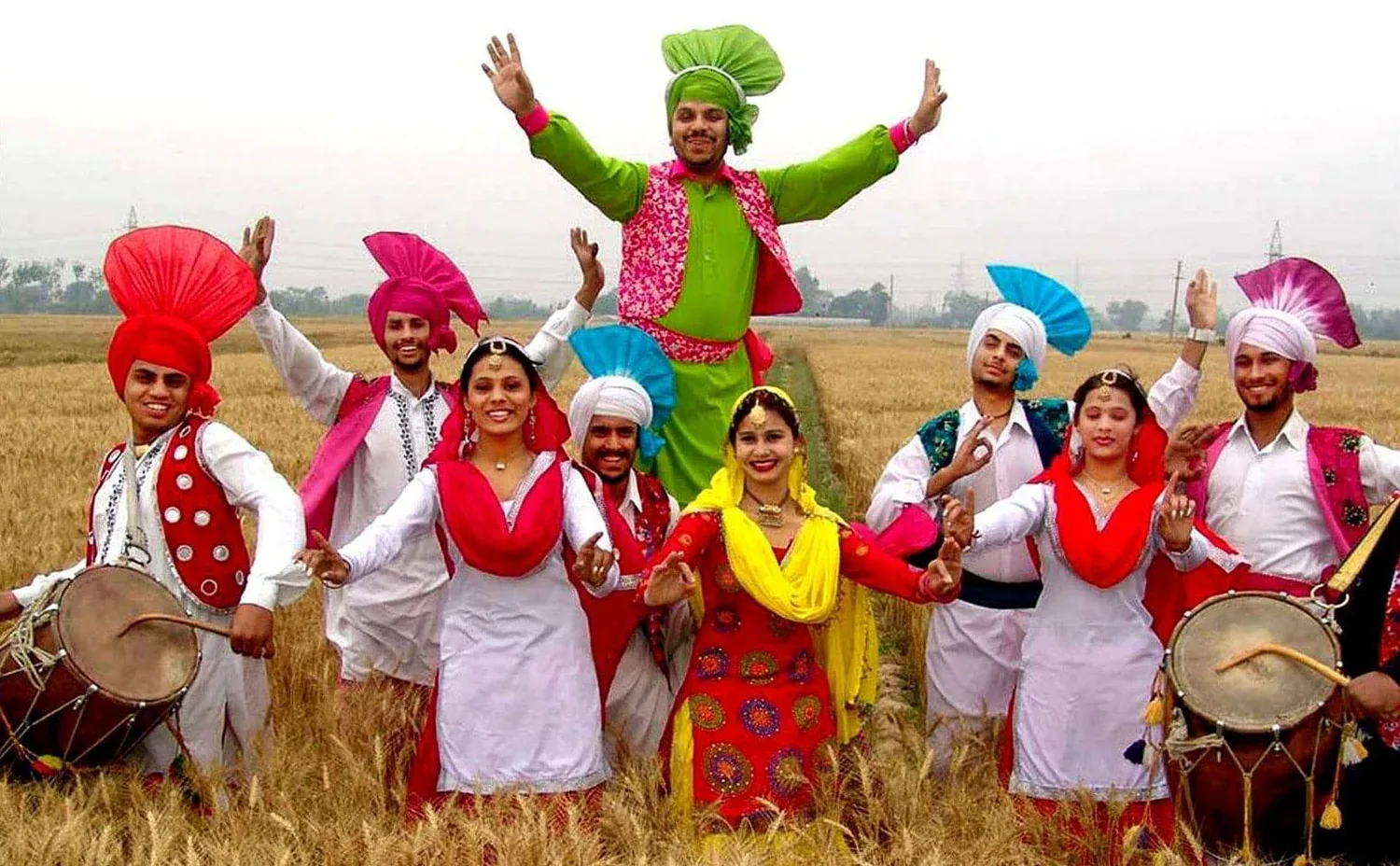
To be a part of a Sikh festival is an intoxicating experience. The sheer passion of the community lifts you out of this world. Farmers and warriors, considered as two sides of the same coin, lead the festivities. They dance the bhangra, inspired by the movements of the agricultural process.
Wonder at the thumping beats of the dholak for the Khalso are pioneers in the field of music and entertainment. Then learn about the rich history of the Baisakhi story and join along with the celebration.
Baisakhi is the lucky draw of festivals, pulling together the Hindu New Year, a harvest festival and the anniversary of the creation of the Khalsa community – the Sikhs. Different regions around the country celebrate the New Year under different names. For example, such as Vishu in the South and Rongali Bihu in Assam. Celebrating Baisakhi in Punjab is the most remarkable experience because it overlaps with the history of the Sikh religion.
Read more about another unique festival in North India.
A celebration of the harvest and the anniversary of the Khalsa community (Photo Credit – Mayank Gupta, Flickr)
Baisakhi Story
The story begins with the martyrdom of the nine Sikh Gurus and the ascension of Guru Gobind Singh. When the Muslim ruler Aurangzeb beheaded his father to still the growth of the religion, the tenth Guru decided to instill courage and passion into the peace-loving, agrarian community.
The Baisakhi story has a rich history that dates back to 1699. Here, Guru Gobind Singh gave a rousing speech and called upon volunteers from the crowd to give their lives for the cause. Five men stepped forward, one at a time, and followed him into his tent. Each time the Guru returned alone, fresh blood dripping from his sword. However, the five men were all alive, and a goat had been slaughtered in their place.
They became the ‘Panj Para’ (the beloved five), and the first members of the ‘Khalsa’ (Pure Ones). They had no caste or class demarcation but were a wholly equal community that lives on today and celebrates the founding day of their clan each year.
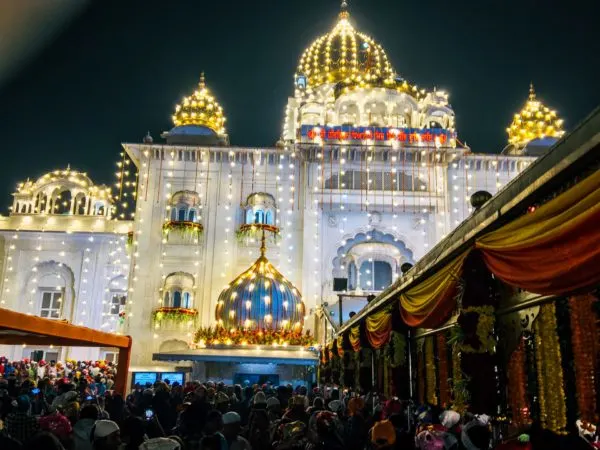
Gurudwara Bangla Sahib Baisakhi decoration (Photo Credit – Sushant Sharma)
Celebrating Baisakhi in Punjab
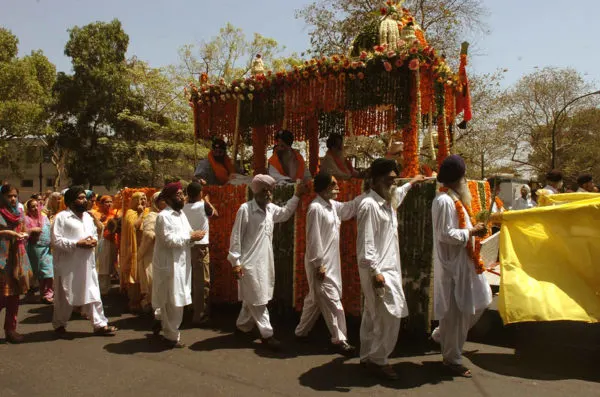
The festival calls for the celebration of life through singing, dancing, parades and wrestling matches. Each echoes the powerful force of life that resides within the Sikhs. They are loud and open-hearted people and they will drag you into the festivities. You will arrive home breathless from dancing and unable to see beyond your full belly.
Follow the march of the Nagar Kirtan through the streets as they sing out from the Guru Granth Sahib, the holy book that is revered as the eleventh and final of the Sikh Gurus. Celebrate the Baisakhi story where it originated and get a true sense of Sikh hospitality.
Mumbai has a population of 11.98 million people, with thousands more moving in every day. With traffic like there is, you’ll understand why the Mumbai local trains are lovingly called the lifeline of the city. At the outset, I’d suggest you download m-indicator, an app that’ll help you out with the schedules of trains and buses in the city as well as the accurate fare for an auto or taxi across a certain distance. It’s similar to travel apps in London or Paris and is quite easy to follow. Soon you will be a pro at working out Mumbai’s public transport!
For additional information on what to do in Mumbai, read our Feeling Bombay blog.
Using Mumbai’s public transport is a cheap and easy way to get yourself around the city
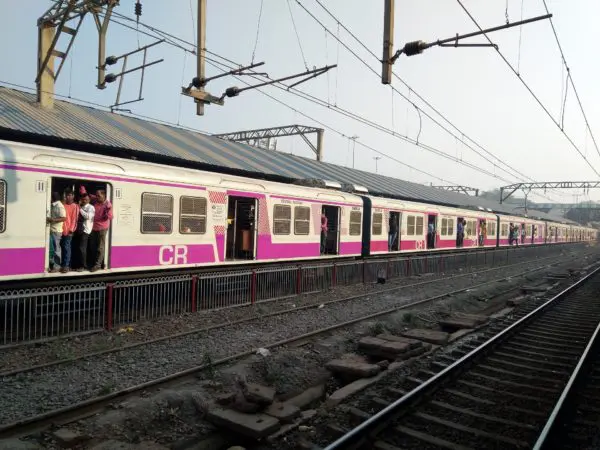
Mumbai Local trains
Consider taking Mumbai local trains for a more straightforward journey. This is one of those quintessential Bombay experiences you cannot miss out on. Amateur musicians, vegetable vendors and trinket sellers will keep you occupied throughout if the constantly changing views and myriad people can’t hold your attention.
Choosing a route:
Avoid travelling during peak hours, it can be very difficult for the inexperienced traveller.
There are three lines: The Central, Western and Harbour lines. The Central and Harbour cross over at Dadar junction if you need to make a change.
Find out which station is nearest to your destination and check that it’s on the same line as the one closest to you. Google maps will help you in this.
Check the train schedule on m-indicator and opt for a slow train for less of a crowd.
Buying tickets:
Mumbai local trains are cheap! Tickets usually cost upwards of INR 10 all the way to INR 30-35 to get to the very edge of the city.
Purchase them at dedicated counters outside the station. Fellow passengers will be happy to direct you. DO NOT buy them from a third party standing outside the counter, they might be counterfeit.
Keep your ticket with you until you exit your destination station, you may be asked to show it to a ticket checker.
Experience an authentic train journey through the bustling streets of Bombay (Photo Credit – Rehan Ansari)
Buses
These may be a little more inconvenient to figure out but the view they offer is second to none, as their rambling routes will take you around the city often for less than INR 20. You’re in for a real treat if you manage to catch a double-decker!
Choosing a route:
This is the really tricky part. Buses tend to have their numbers and destinations displayed on the front, but only in Marathi. The English version is on the left-hand side near the back door. This can be a pain because the bus only stops for a few moments and may move on before you’ve had time to see if it’s the one you want. Ask for help. Fellow commuters or the designated ticket checker will be happy to oblige.
Once again, you can figure out which bus number to look out for on m-indicator.
Buying tickets:
A conductor on the bus will ask you for your destination and give you your ticket and your change. Don’t hesitate to ask him to let you know when your stop is about to arrive.
Tickets usually range from INR 10-30 depending on the length of your journey.
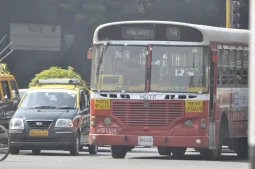
The typical bus you will spot driving around, a popular means of Mumbai’s public transport (Photo Credit – Francisco Antunes)
Metro
Similar to Mumbai local trains, but the monorail is spanking new and still only available in the suburbs. It’s a great ride and one many Europeans will feel at home in. It cuts perpendicularly across the railway lines to help you get to the far-reaching corners of Andheri and Juhu where all the really cool cafes are. Air-conditioned, quiet and startlingly well-behaved, it can provide respite from the hot, crowded streets below.
Choosing a route:
The routes are quite straightforward, with stops every few minutes. Just make sure you’re going in the right direction.
Buying a ticket:
The monorail operates on the token system. Unfortunately, it does not have weekend or tourist passes for brief stays and you will have to purchase either a single or return token only, or a full monthly pass.
Ticket prices range from INR 20-40 for a single journey.
If you purchase a return token LOOK AFTER IT.
Public transport in Mumbai – The metro (Photo Credit – Ashwin Kumar)
Taxis
If you don’t fancy the hassle of using Mumbai local trains then consider taking taxis instead. While the kaali-peelis (black and yellow taxis) are recommended for the sheer authenticity of it, we recommend downloading a radio cab app (like Ola cabs or Uber) for security reasons. In case, it’s very late at night or you’re in a hurry and can’t seem to hail a cab, these will assure you of a ride with additional security features as well.
Choosing a route:
The local cabs will do their best to overcharge because, in their minds, they think you can afford it and they need the money more than you do. Don’t hold it against them. They are very often wonderful people who will give you some of the greatest conversations of your life. That said, try and follow the route on google maps to ensure they aren’t taking you the long way round. Before you leave your hotel, ask the reception for an estimated fare, and ALWAYS travel by meter, no matter what they insist.
Mumbai’s cabs are a blessing compared to the rest of the country. Despite frequent strikes, we still have the lowest strikes and the least complaints of being overcharged or refused. You may have a different experience if you look very obviously foreign, but appeal to their better side and be firm on following the meter.
Taxis and rickshaws are the most convenient modes of Mumbai’s public transport.
Prices:
As of 2016, the minimum fare is INR 22 and increases at the rate of INR 1.5 per additional kilometre.
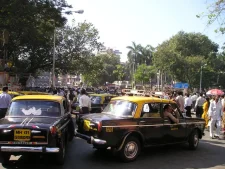
Kaali-peelis in Mumbai
Auto-rickshaws
Unless you stop to take hundreds of photos of yourself in one of these, have you really been to Bombay? One of the most popular and cheapest options out of Mumbai’s public transport choices. Super convenient and outrageous in their driving skills, they suffer all the same pricing issues as taxis. They’re more widespread, though they’re not allowed in the old part of the city in the South. The base price here is INR 18 and they seat only three passengers by law.
Are you someone whose soul becomes one with the two-wheeler machine you ride? Do you feel amazing while you accelerate down an open road? Then the India Bike Week is exactly the place where you belong.
The India Bike Week is a biking festival which acts as a platform for like-minded people. It helps people connect and share their enthusiasm while they enjoy a festival that revolves around biking culture.
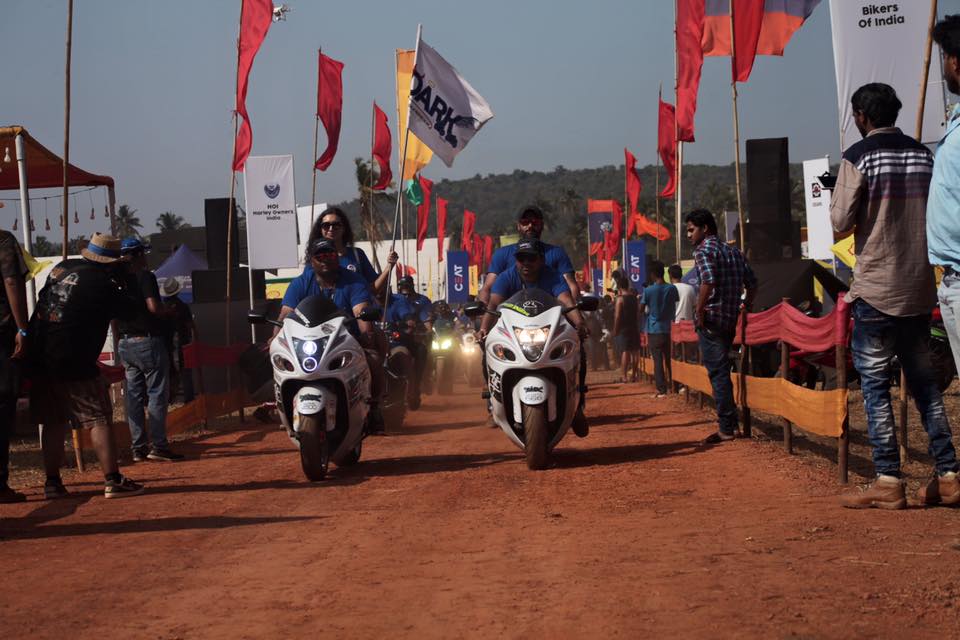
India Bike Week first started in the year 2013. Since then, they have raised the standards every year and this year in particular, the India Bike Week literally raised the roof. The festival was held at the ultimate party destination of India. Bikers and biking enthusiasts from all across made their way to the festival in Goa. Quite a few groups came together to gear up and ride it out from their respective cities. Imagine a group of Harleys revving through the highways, with pillion riders hoisting flags to represent their clans. Sounds badass, doesn’t it?
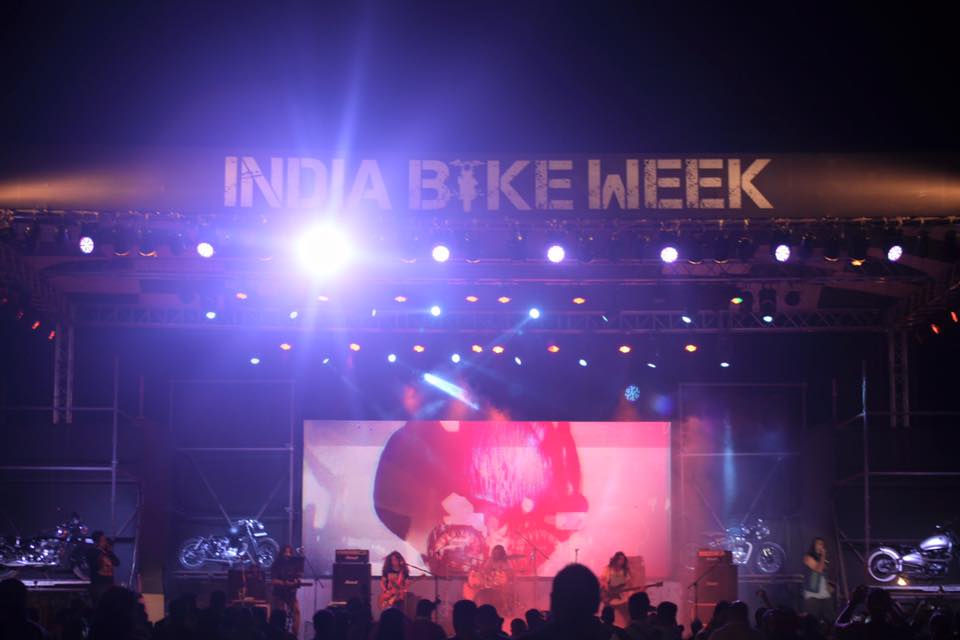
The 2016 edition of India Bike Week had much to offer on so many fronts. The festival had everything from live music performances by bands of various genres and DJs playing groovy music, a national stunt championship, the national custom bike build-offs and much more.
The unforgettable past
India Bike Week is a true fiesta for all those roadies and motor junkies. The festival in Goa is an opportunity for riders to simply join in on a carnival which they can relate to on a spiritual level. You can witness newly launched mean machines and be a part of sessions with International Biking legends. Add to that a Bikini Bike Bash! You must be thinking, ‘this festival just can’t get any better’, right? Wrong!
To make the India Bike Week 2016 bigger and better, the festival was hosted at the Arpora Sporting Ground in Arpora Village, North Goa. This ensures that the venue will be open to 12,000 club members and Independent riders who wish to join. The Biking festival introduced some new, interesting and iconic biking experiences to be a part of. India Bike Week showcases the Hard Endure Challenge, a biking film festival and a moto-trail show with the English professional motorcycle trails and Endurocross rider, Dougie Lampkin.
The festival has spread its wings to the extent where it even attracts international bikers, residing in India or flying down from their own countries. It is not a surprise that a festival which has all the ingredients needed to make an exciting and adventurous event also attracts people who are not necessarily biking enthusiasts, but travel and experience seekers. Because let’s face it, who wouldn’t want to be a part of a festival that has music, art, dance, bike expos and everything that could ever revolve around a motorbike?
The India Bike Week takes place around the 20th of every February.
Let India Someday handle it and plan your best trip.