Itâs no secret that India lends itself well to budget travel. The country has its fair share of âhippie trailsâ that are a favourite when backpacking in India, and everyone knows about that. What people donât realise is that even if backpacker travel is not your cup of tea, there are many other ways to stick to your budget and have a fantastic time while youâre at it.
Alongside this, we’ve answered a few more questions when it comes to budget travel in India. Favourable exchange rates means your money goes a long way, after all. And itâs only helped by the fact that there are always reasonable options to be found.
Read through our guide on budget travel in India to get a feel of it and prep yourself for that amazing trip.
There are several routes to go on budget travels in India (Photo Credit – Mohit Tomar)
are there many budget travel routes in India?
This vast country has so many budget travel routes, you’ll have a tough time just picking one. For starters, look beyond the obvious options that fall on the well-trodden âbanana pancakeâ trail. While the more popular destinations like Goa, Hampi and Rishikesh are great, you would be doing yourself a disservice.
Thereâs plenty more to be seen in the country! Besides, an unfortunate consequence of the popularity of these destinations is that you might encounter touts and scam artists looking to fleece travellers, as well as higher âtourist pricesâ for things than elsewhere in the country. Get in touch with us about what it is you’re looking for and we’ll give you the best route to go on.
Taking the paths less trodden rewards you with unforgettable views and new regions to explore
Are there affordable yet comfortable budget hotels in India?
Thereâs a wide range of accommodation available across the country that breaks the stereotypes of budget hotels. These are exceedingly comfortable and great for budget travel in India. For those looking for true-blue backpacker travel in India, hostels have begun to spring up across the country, which offers cleaner options than some of the older dorms.
Otherwise, cute guesthouses, homestays and boutique hotels are rapidly becoming more and more popular, and there are plenty of options across the country to choose from. Itâs one of our favourite parts of travelling on a budget in India – you donât always have to skimp on your stay, and youâll often come across a truly wonderful place that offers a one-of-a-kind experience.
Beach hut accommodations in Goa can be surprisingly affordable (Photo Credit – Aakka Aakka)
Public transport for budget trips – is it wise?
Looking at budget travel in India? Public transportation is the best way to go. Public transport in India can be overwhelming, but it is an adventure in itself. Plus, there’s no better way to discover this country while travelling cheap. If you stick to getting around either on your own two feet or using the cheap public transport options available across the country, youâll save a pretty penny! These options can get a bit terrifying for a first-timer – road rules in India are different than anything youâve ever experienced before – but theyâre an efficient and affordable way to get around within cities and towns. Remember to settle on a price before you start your journey, though – haggling is the norm, not an exception.
As vast as India is, flights are clearly the quickest way to get from one stop to the next but consider utilising the rail system instead. Along with long-distance buses, trains are more wallet-friendly while travelling on a budget in India. Remember to book your train tickets well in advance, as trains can fill up quickly!
Trains in India are comfortable, and a great way to interact with friendly locals
Is local food in India safe to eat?
Don’t worry, we understand the unease of eating local Indian food. The good news is there’s such a vast range of affordable options that you have nothing to worry about. Whether youâre backpacking in India or just travelling on a budget in India, exploring local restaurants and eateries is an easy way to keep costs low. Ditch the made-for-tourist options; instead, go exploring to check out where locals go to eat and donât be afraid to experiment with flavours. And to avoid falling prey to suspect hygiene, avoid raw foods, and pick places that are always busy!
Street Food in India is a ‘deliciously’ great way to keep those budgets under control (Photo Credit – Jeevan Singla)
We hope all your questions on budget travel in India have been answered. We’ve also got you covered for other details like how much to budget for a day in India. You can always reach out to us with any more questions you may have – we’re always happy to help!
Thereâs something so undeniably romantic about train travel, isnât there? Watching the scenery go by as you chug along across a county is old school in the best sort of way. The magic of train journeys seems to have faded somewhat, though, with the advent of speedier ways to get to your end destination.
But that doesnât mean that you have no options – in fact, luxury travel is making a bit of a resurgence in India, and weâve got quite a few options for bespoke luxury experiences to choose from. At India Someday, weâre big fans of train travel, and, weâve put together a list of some of the most luxurious train experiences the country has to offer!
Exclusive luxury train experience in India (Photo Credit – Luxury Train Club)
The Palace on Wheels
The Palace on Wheels is truly the grand dame of truly luxe Indian trains, the one that blazed the path that the rest have followed. This train was once a literal palace on wheels – it was used by nizams and kings to get around their territories. Itâs now been given a revamp, but retains all of its heritage and regal nature.
The Palace on Wheels takes you across Rajasthan over the course of eight days. Youâll get to see all the top sights of the state, and spend the rest of your time being spoilt silly by all the amenities on board. The cabins are luxurious, the staff are gracious to a fault and will help you with whatever you need, and thereâs a fully stocked bar – itâs a great chance to live like a king for a while!
The Palace on Wheels (Photo Credit – Luxury Train Club)
The Deccan Odyssey
If youâve ever wanted to take your five-star hotel room with you out on the road, well, look no further! The pioneers of luxury hotels in India, the Taj Group manages The Deccan Odyssey. Needless to say, they promise that five-star experience as you travel across the county.
The train has lounges, multi-cuisine restaurants, a conference centre and even a spa – need we say more?
The Deccan Odyssey (Photo Credit – Simon Pielow)
The Golden Chariot
Further South, thereâs the Golden Chariot to consider. The Golden Chariot is an undertaking of the Karnataka State Tourism Board. It takes you to some of the countries top World Heritage Sites and past some of the most stunning scenery on the way.
The furnishings are distinctly South Indian in flavour, harking back to the kingdoms that used to rule these lands. Thereâs a spa on board as well, so you donât miss out on those Ayurvedic massages while youâre travelling.
These are just some of the options out there. If youâre looking for something in particular, do let us know and weâll help you make it happen!
Golden Chariot Lounge (Photo Credit – Simon Pielow)
What about the cost?
The cost of luxury trains in India is comparable – or even favourable to similar experiences in different parts of the world. While the final figure might look a bit daunting, consider what you get in exchange – a taste of royal life, as only India knows how to provide, as well as the ability to take in the diverse landscapes and many sights, sounds and flavours that make this country so unique and special to travel in.
Here we provide you with the different train options for South India. Not to deny that train travel within South India is not as extensive when compared to the North. The popular places (for eg in Kerala) are not well connected and most of the time, it is more convenient to hire a car or fly. Having said this, the Konkan Railway (Southern railway) is the most scenic, and taking a train is well worth the effort.
Listed below are a few of the best train options for South India.
Trains passing from both direction (Photo Credit – Belur Ashok)
1. different train options (Mumbai to Goa)
Train Name: 10103 Mandovi Express Station of origin: Mumbai CST up to Madgaon Departure time: 07:10 hrs (CST) Arrival time: 18:45 hrs (Madgaon)
*if staying in North Goa, alight at Pernem or Thivim.
Pros: As it is a day train, the countryside is best explored. You chug through the winding waterfalls, mountains, rice fields, and lush greenery.
Cons: The train has the most stops and one that takes the longest to reach Goa. The train is for those who enjoy long journeys.
Return Journey: (10104 Mandovi Exp) departs from Madgaon at 09:30 hrs and reaches Mumbai CST at 21:40 hrs.
There are different trains options available for South India; such as Konkan Kanya which is an overnight train and Jan Shatabdi which is the fastest, reaching Goa in 7 hours time. However, as all Shatabdiâs, it has chair car seats so not the most comfortable.
Watch the beautiful countryside pass you by on your journey (Photo Credit – Belur Ashok)
2. different train options (Goa to Hampi)
Train name: 18048 Vsg Howrah Express Station of origin: Vasco Da Gama up to Howrah (Kolkata) Runs on: Tuesday, Thursday, Friday and Sunday Departure time: 07:10 hrs (Vasco) Arrival time: 14:53 hrs (Hospet Junction)
*Hospet is the nearest station to Hampi.
Pros: This is the only train to Hampi from Goa. However, the biggest plus of taking this train is that you pass through the very famous Dudhsagar Falls (Sea of Milk). It one of the most scenic waterfalls and if travelling in the monsoons, a definite must-see. The train halts for about a minute in the falls.
Cons: As the train does not run every day, you have to plan your itinerary accordingly.
Return Journey: We suggest avoid the train if going from Hampi to Goa. The train starts from Kolkata and hence in all likelihood would be delayed by the time it reaches Hospet and would also be used and dirty. Alternatives are taking a bus/ renting a car, but please note that the roads on this route are not very good.
3. different train options (Hospet to Mysore or Bangalore)
Train Name: 16591 Hampi Exp Station of origin: Hubli Junction up to Mysore Departure time: 20:45 hrs (Hospet) Arrival time: Next day 09:40 hrs (Mysore)/ 06:10 hrs (Bangalore City)
Pros: It is the most convenient and inexpensive alternative. The train is well-timed. You do not waste a day travelling.
Return Journey: (16592 Hampi Exp) Departs from Mysore at 18:15 hrs (Bangalore City – 21:50 hrs) and reaches Hospet next morning at 07:40 hrs.
Trains are a convenient and inexpensive way of travel (Photo Credit – Rolling Okie)
4. different train options (Goa to kochi)
Train Name: (16345) Netravati Exp Station of origin: Lokmanya Tilak Terminus (Mumbai) up to Trivandrum Departure time: 23:00 hrs (Madgaon) Arrival time: Next day 14.10 hrs (Ernakulam Junction)
Pros: Cheapest way to get to Kochi. There are rarely direct flights on this route. Flights are via Mumbai, Bangalore or Hyderabad.
Cons: One of the most-used trains, especially by Indians, hence tickets have to be booked well in advance (two months before departure date) as they get sold out quickly.
Return Journey: (16346 Netravati Exp) Departs from Ernakulam at 14:05 hrs and reaches Madgoan next morning at 05:00 hrs.
*There are other trains on this route that take less travel time, however, they do not run on all days. Check your travel dates to see if they are available.
An old man reading newspaper while waiting for his train to Ernakulam (Photo Credit – Vishwaant Avk)
5. differet train options (Alleppey to Varkala)
Train Name: (12075) Jan Shatabdi Station of origin: Kozhikode (Calicut) up to Trivandrum Departure time: 18:15 hrs (Alleppey) Arrival time: 20:05 hrs (Varkala)
Pros: Quicker than driving and much cheaper too. Also, if only on a Kerala trip, there are not many instances where one can travel by train so if both these places are part of your itinerary, take a train, just for the experience.
Return Journey: (12076 Jan Shatabdi) Departs from Varkala at 06:32 hrs and reaches Alleppey at 08:15 hrs
This train starts from Calicut and halts at Kochi (Ernakulam Junction) too.
Station name display board in yellow (Photo Credit – LushLitBlog)
6. different train options (Mumbai to Aurangabad)
Train Name: 12071 Jan Shatabdi Exp Station of origin: Dadar Station up to Aurangabad Departure time: 14:00 hrs (Dadar) Arrival time: 20:35 hrs (Aurangabad)
Pros: The fastest train with the fewest halts. You can also fly to Aurangabad, however, flights are either very early in the morning or late evening.
Return journey: (12072 Jan Shatabdi Exp) Departs from Aurangabad at 06:00 hrs and reaches Dadar at 12:30 hrs
7. Different train options (Chennai to Pondicherry)
Train Name: 12635 Vaigai Exp Station of origin: Chennai Egmore up to Madurai Departure time: 13:20 hrs (Chennai) Arrival time:Â 15:45 hrs (Villupuram Junction-nearest station to Pondicherry)
Pros: Again the cheapest and most convenient way to get to Pondicherry. Rented car fares in Tamil Nadu are the highest when compared to other regions and taking trains when possible makes it easy on the pocket. If not delayed, the train takes lesser time than driving.
Return journey: (12636 Vaigai Exp) Departs from Villupuram Junction at 11:42 hrs and reaches Chennai Egmore at 14:40 hrs.
*The train goes up to Madurai. You can take this train either from Chennai or Pondicherry to get to Madurai.
We hope reading this article on the different train options in South India has inspired you to take on this adventurous a journey. Just click on Plan Your Trip for any assistance.
Chennai Central Station (Photo Credit – Vellupura)
The Indian railways have subdivided a large number of bookable seats on a train into various âquotasâ or categories so as to enable everyone to avail of this inexpensive travel experience. These quotas include General, Ladies, Senior Citizen, Defence etc. One quota made available exclusively for foreign tourists (i.e. non-resident Indians) is the Foreign Tourist Quota. In this article, you will learn how to book a foreign tourist quota ticket.
Almost always you will find some or the other alternative to the foreign tourist ticket, so get in touch with us and start planning your trip to India  so you wonât have to spend your precious time in India at the foreign tourist office.
Visitors travelling to India who hold valid tourist visas can avail tickets under this quota.
Please note travellers in India on any other visa (such as a business visa, an employment visa or student visa) are not eligible to book tickets under this quota. Please note that on some trains a section of tickets are blocked under the female quota which is different from Foreign tourist quote. If you are a female traveller, remember that booking in a female quota means you would be competing with a large section of Indian women, who will be traveling under the same reservation.
Do all trains have foreigner tourist quota tickets?
No, foreigner tourist quota tickets cannot be booked on all trains.
There is no list of trains available to the public which can be booked under the foreign tourist quota. However, you can check on the Indian Railways Website under the âseat availabilityâ section if the train you are looking for has any seats available under the foreign tourist quota.
Can foreigner tourist quota train tickets be booked in advance?
Wondering how to book a foreign tourist quota ticket in advance? Bookings open the same time as for the general quota i.e. 120 days before departure date. However, foreign tourist quota tickets cannot be booked online or by an agent.
You need to be present at the booking counter with your passport and a valid tourist visa. If tickets are needed for more than one person, you need to carry their passport/s too. Photocopies will not be accepted.
Where do you book foreigner tourist quota train ticket?
The designated International tourist bureaus is where you can book a foreigner tourist quota tickets. These bureaus are located in the major cities of –
Kolkata – located in East India;
Chennai, Bangalore and Secunderabad – located in South India;
Mumbai, Ahmedabad, Jaipur and Jodhpur – located in West India; and
New Delhi, Agra Cantonment and Varanasi – located in North India.
How do I pay for the tickets and is there a special fare?
The ticket fare is not the same as a general quota ticket. So be ready make those additional payments. You have to pay in foreign currency i.e. USD, GBP or EUR. You can also pay in Indian Rupees; however, the currency exchange receipt or ATM receipt may be required. It is also better to carry cash with you as not all bureaus accept a credit/debit card.
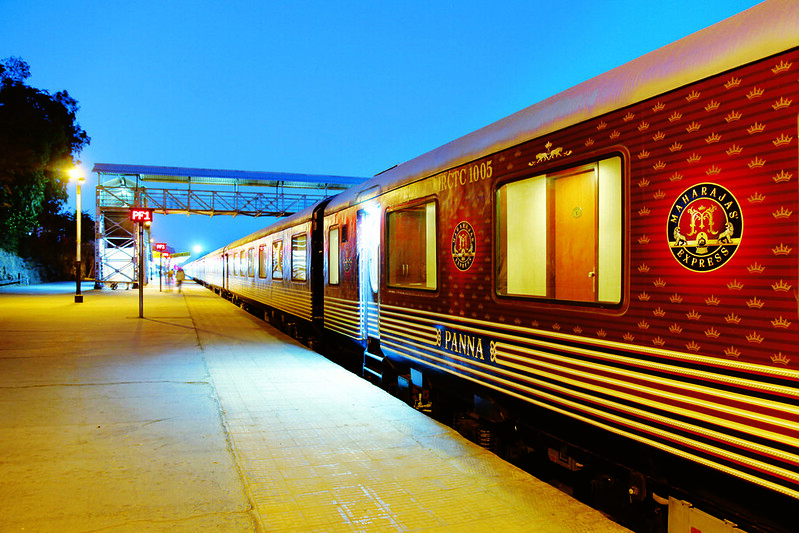
Maharaja Express for luxury travel (Photo Credit – Shekhar Virdi)
Other useful information
Do keep in mind that there are very few/limited seats available under this quota. By the time you are in India, it may be possible that the tickets are unavailable. Accordingly, do not plan your trip around it but keep it as an emergency window.
Before you get to the booking office, note down ahead the train name, number, the boarding and the alighting station names. You need to fill a reservation form at the office and having this information handy will help save time.
We recommend not to believe touts/agents you come across at the railway stations (especially Delhi), who will try to mislead and fleece you. It is safer to ask your hotel/homestay for specific information.
And if you would like to avoid the hassle of going to a foreign tourist office and hoping you get a ticket. For more information about train travel in India, check out this blog. We always recommend planning in advance. Get in touch with us here to make the most of your time in India.
India has one of the largest rail networks in the world, meaning train routes are immensely interconnected, reaching thousands of destinations including remote villages. Further, travelling by train in India is extremely cheap. Costing a fraction of what youâd pay an airline and also falls in the responsible tourism manner of travel.Â
Indian train lines portray immense culture. They have an intriguing meal-order system. There are instant bonds that spring up with your co-passengers, by sharing meals and fun conversations. All this part of the great Indian rail adventure. Find out more about planning your train route in India through inspiration from our other posts.
Here we have put together five Indian itineraries that rely heavily on train routes to get you between destinations. We advise you to have train tickets booked in advance, please feel free to contact us for any help.
Scenic views by train travel (Photo Credit – donvikro)
Of all the train routes, this is perhaps best suited for first-time visitors looking to cover Indiaâs Golden Triangle. Start from Delhi, the teeming capital, and head out first toward the ancient spiritual town of Varanasi.
From here, you have all of Rajasthanâs vast deserts ahead of you. So a little meditation now will do you good. Then, with a stop to see the Taj Mahal in Agra, meander through Rajasthanâs most beautiful cities – Jaipur, Jaisalmer, Jodhpur and Udaipur. Each city is a backpackerâs dream, and you should plan a few days in each so you can explore all their colourful alleyways.
The best part though is chugging past the desert landscape in your (preferably A/C) sleeper car, buying pyaaz ki kachori (an onion-stuffed fried snack). And tomato chaat from the vendors that pop up outside your window at stations.
You can also expect to meet and befriend a lot of fellow travellers along the route – all the better to swap stories over a game of cards on a long night on the train!
Trains: You have four overnight trains and two short day trains. You can also get from Jodhpur to Udaipur by bus.
For more details on things to do and see in Northern India, visit our blog post on the twenty best places to visit in North India. Generally, the best time to go to the North of India is between August and April.
Sunset camel safari at the dunes (Photo Credit – Ninara)
We love this train route because it offers a slow exploration of Indiaâs beautiful western coastline. Your trains will pass over great, wide rivers and chug by palm-fringed fishing villages, with all the land to one side of you suddenly giving way to the endless ocean.
You can also take pit stops at some of Indiaâs most famous beaches on your way. Catch your first train in Mumbai, a city with a facade of business and bustle that hides a sleepily beautiful history.
Next stop – party central! Take your time in Goa, making sure to hit all the great parties, but also to understand the mysteries of its natural bounties. Take a breather a Gokarna, which is every bit as beautiful as Goa, but a lot less busy. Finally, make your way across Kerala, stopping wherever you feel like it – you really canât go wrong in Godâs own country!
North Kerala is often ignored, but is a beautiful, non-touristy region of the state, with pristine beaches, hills, and forests. This route runs mainly along the Konkan line. This belt is one of the most beautiful in India – relaxed, tropical, hassle-free and safe.
Trains: This route can be done with a mix of day and overnight trains. However, we recommend that you take as many day trains as possible, as the routes are very scenic. The best time to go is usually between October and April to enjoy the sunshine on the beach, although the monsoon months have their own charm, reaching peak greenness in September.
For more information on exciting things to do in these locations, feel free to check out some more of our blogs relevant to your desired destination!
Read on:Uncover the Best Season for Exploring India’s WondersTravellers enjoying on the beaches of Goa
If you want to take in a cross-section of India on one trip, this train route is for you! Youâll get to see it all, from Delhi, the stronghold of the North, all the way down to beautiful sun-kissed Kerala.
This will be one of your best opportunities to really compare the often starkly different cultures of the country, and besides, long-distance trains have a tendency to get people talking!
Watch the scenery unfold and change as you journey from the hills through the forests of the Western Ghats, passing some of the nationâs most vibrant cities along the way. Delhi is only a teaser of the Punjabi culture that will grab you up in a hearty bear hug in Amritsar.
Stop here to pay your respects at the Golden Temple! Head up to Dharmshala for a bit of spiritual guidance with great views. Agra and Udaipur are home to some truly gorgeous architecture, and Mumbai has some of the greatest food to dig into!
Then youâre southward bound, through the ever-charming beauty of Goa and into the sun-drenched backwaters of Kerala.
Give this route time – we recommend at least 3 to 4 weeks. Trust us; youâre going to want to add more stops in between.
Trains: You should rely mainly on overnight trains, as some journeys may last up to 20 hours without a break. The best time to go on this trip would be between August and April, before the summerâs heat sets in.
This train route meanders east, flirting with the mighty river Ganges along the way! Spend some time exploring Delhi and Agra before stepping back in time in the temple town of Khajuraho.
From here, take the delightful toy train up to Darjeeling for some quiet time in the tea capital of the world before moving on to Kolkata. Point of interest – Kolkata is rumoured to have some of the best railway-side fast food in the country!
That means steaming hot earthenware cups of chai, sticky, sugary sweets, overstuffed kathi rolls and spicy aloo chaat. Take full advantage of them!
Trains: This train route, again, is best done with a mix of overnight and day trains.
For the best weather, make this journey between August and April. For more information about this area, check out our blog: Travelling to North East India.
Women working in the tea plantations (Photo Credit – ian-wagg)
Don’t worry if youâre not a fan for the overnight long hauls. Thereâs still a way to sneak in some of the train routes in small doses. Each journey varies from 4 to 7 hours, so itâs a great chance to get some nap-time, too!
Most of the cities on this route are in the Punjab-Rajasthan belt, except for Rishikesh. Rishikesh is a deeply spiritual city perched on the banks of the river Ganges, nestled in the foothills of the Himalayas in Uttarakhand. Itâs a good place to visit as it is a mix of spirituality, adventure etc.
For this trip, it is best to travel between August and April, once the worst of the monsoon is over. For more information about exciting things to do in North India, check out our blog: Top 20 things to do in North India.
All of these routes are merely templates, but feel free to contact us for any help in paving your perfect travelling experience across India.
Mumbai has a population of 11.98 million people, with thousands more moving in every day. With traffic like there is, you’ll understand why the Mumbai local trains are lovingly called the lifeline of the city. At the outset, I’d suggest you download m-indicator, an app that’ll help you out with the schedules of trains and buses in the city as well as the accurate fare for an auto or taxi across a certain distance. It’s similar to travel apps in London or Paris and is quite easy to follow. Soon you will be a pro at working out Mumbai’s public transport!
For additional information on what to do in Mumbai, read our Feeling Bombay blog.
Using Mumbai’s public transport is a cheap and easy way to get yourself around the city
Mumbai Local trains
Consider taking Mumbai local trains for a more straightforward journey. This is one of those quintessential Bombay experiences you cannot miss out on. Amateur musicians, vegetable vendors and trinket sellers will keep you occupied throughout if the constantly changing views and myriad people can’t hold your attention.
Choosing a route:
Avoid travelling during peak hours, it can be very difficult for the inexperienced traveller.
There are three lines: The Central, Western and Harbour lines. The Central and Harbour cross over at Dadar junction if you need to make a change.
Find out which station is nearest to your destination and check that it’s on the same line as the one closest to you. Google maps will help you in this.
Check the train schedule on m-indicator and opt for a slow train for less of a crowd.
Buying tickets:
Mumbai local trains are cheap! Tickets usually cost upwards of INR 10 all the way to INR 30-35 to get to the very edge of the city.
Purchase them at dedicated counters outside the station. Fellow passengers will be happy to direct you. DO NOT buy them from a third party standing outside the counter, they might be counterfeit.
Keep your ticket with you until you exit your destination station, you may be asked to show it to a ticket checker.
Experience an authentic train journey through the bustling streets of Bombay (Photo Credit – Rehan Ansari)
Buses
These may be a little more inconvenient to figure out but the view they offer is second to none, as their rambling routes will take you around the city often for less than INR 20. You’re in for a real treat if you manage to catch a double-decker!
Choosing a route:
This is the really tricky part. Buses tend to have their numbers and destinations displayed on the front, but only in Marathi. The English version is on the left-hand side near the back door. This can be a pain because the bus only stops for a few moments and may move on before you’ve had time to see if it’s the one you want. Ask for help. Fellow commuters or the designated ticket checker will be happy to oblige.
Once again, you can figure out which bus number to look out for on m-indicator.
Buying tickets:
A conductor on the bus will ask you for your destination and give you your ticket and your change. Don’t hesitate to ask him to let you know when your stop is about to arrive.
Tickets usually range from INR 10-30 depending on the length of your journey.
The typical bus you will spot driving around, a popular means of Mumbai’s public transport (Photo Credit – Francisco Antunes)
Metro
Similar to Mumbai local trains, but the monorail is spanking new and still only available in the suburbs. It’s a great ride and one many Europeans will feel at home in. It cuts perpendicularly across the railway lines to help you get to the far-reaching corners of Andheri and Juhu where all the really cool cafes are. Air-conditioned, quiet and startlingly well-behaved, it can provide respite from the hot, crowded streets below.
Choosing a route:
The routes are quite straightforward, with stops every few minutes. Just make sure you’re going in the right direction.
Buying a ticket:
The monorail operates on the token system. Unfortunately, it does not have weekend or tourist passes for brief stays and you will have to purchase either a single or return token only, or a full monthly pass.
Ticket prices range from INR 20-40 for a single journey.
If you purchase a return token LOOK AFTER IT.
Public transport in Mumbai – The metro (Photo Credit – Ashwin Kumar)
Taxis
If you don’t fancy the hassle of using Mumbai local trains then consider taking taxis instead. While the kaali-peelis (black and yellow taxis) are recommended for the sheer authenticity of it, we recommend downloading a radio cab app (like Ola cabs or Uber) for security reasons. In case, it’s very late at night or you’re in a hurry and can’t seem to hail a cab, these will assure you of a ride with additional security features as well.
Choosing a route:
The local cabs will do their best to overcharge because, in their minds, they think you can afford it and they need the money more than you do. Don’t hold it against them. They are very often wonderful people who will give you some of the greatest conversations of your life. That said, try and follow the route on google maps to ensure they aren’t taking you the long way round. Before you leave your hotel, ask the reception for an estimated fare, and ALWAYS travel by meter, no matter what they insist.
Mumbai’s cabs are a blessing compared to the rest of the country. Despite frequent strikes, we still have the lowest strikes and the least complaints of being overcharged or refused. You may have a different experience if you look very obviously foreign, but appeal to their better side and be firm on following the meter.
Taxis and rickshaws are the most convenient modes of Mumbai’s public transport.
Prices:
As of 2016, the minimum fare is INR 22 and increases at the rate of INR 1.5 per additional kilometre.
Kaali-peelis in Mumbai
Auto-rickshaws
Unless you stop to take hundreds of photos of yourself in one of these, have you really been to Bombay? One of the most popular and cheapest options out of Mumbai’s public transport choices. Super convenient and outrageous in their driving skills, they suffer all the same pricing issues as taxis. They’re more widespread, though they’re not allowed in the old part of the city in the South. The base price here is INR 18 and they seat only three passengers by law.
Five months into my amazing India travel experience as a solo female, made possible by India Somedayâs absolutely brilliant You Wander We Pay contest, I bear good news. Iâm alive and well, perhaps even glowing, as I dream about where to venture next in this country of chaos and charm.
Probably not what you would expect to read if you, like many others I know, have been too daunted to make your way to India. Deterred by the countless blogs which warn women endlessly about the dirt, disorder and demeaning behaviour of the âterrible male species.â
Well, here are six thoughts I think you should keep in mind if heading this way. And fear not, they are not designed to scare the chapatti out of you!
Mehendi on hands (Photo Credit – Pablo Heimplatz)
Itâs pretty damn amazing here! Mind the media!
All too often, itâs the gloom and doom of life thatâs presented to us in our media, instilling fear and emphasizing negativity. Keep that in mind! Iâm not suggesting bad things donât happen – they surely do, all over the world.
And huge kudos to those who share their experiences and raise critical awareness of gender-based violence of any sort. So I say yes, read it all! Hear the important voices of survivors and fellow travellers, increasing awareness and sharing safety tips. There is lots of good advice out there.
Just beware! Itâs not the full story! There are thousands of us women who are having stellar, incident-free expeditions through India. Immersing in the culture and commotion, day and night, in cities and villages, with women and men. We’re more than safe, weâre having the time of our lives!
They each have a different success story to tell (Photo Credit – Find Your Feet, Flickr)
You will be stared at – You are fascinating!
Whether youâre on the Metro platform in Delhi or walking through a small village in Uttarakhand, you WILL be stared at. You can count on it.  All the more so if you have very fair skin or blonde curly hair! Iâve had people literally come stand a foot away from me, looking me up and down, or even sneaking selfie shots with me, as if I wouldnât notice.
Many women travellers are horrified by this and have told me they feel like sexual objects. While I can empathize, knowing we carry with us our personal and shared histories as women, I personally feel more like an object of cultural curiosity and am not at all offended. Isnât that a big part of why weâre here too?! One of my favourite parts of travelling in India is the amazing parade of people. I could watch and stare all day!
So yes, I do feel eyes on me, but I feel more like a walking museum of western life than a sexual object. I can feel their fascination with my white skin, my freckles, my smile, my jewellery, my clothes, my bag, my shoes. I feel them wondering about who I am, what I do, how I think, not just what I look like naked. And trust me, I do know that feeling of being objectified – I just happen to feel it much more on the streets of New York City than here in India.
Of course, as with anywhere, there will be some obnoxious souls you might encounter. Indian men will often be the first to warn you about them. But, after 5 months of some pretty intense travel through cities and villages, using public transportation, and following my gut, Iâm happy to say that I donât think thatâs the norm. Some men, in fact, might not even look at you at all, declining eye contact even while youâre in a conversation.
Let your guard down and be as open as possible to other walks of life
Positive Energy is Palpable! Being present. Being open.
Iâve been blown away by the positive energy here in India. Perhaps itâs one of my favourite parts of this country. Iâve travelled to many places around the world and never have I felt so much positivity. From the breathtaking natural environments of wide-open deserts (Jaisalmer, Rann of Kutch), to the stunning mountains of Uttarakhand and Himachal Pradesh.
The powerful rivers, the glorious beaches, the endless farmland, and even the chaotic streets are filled with people and cows. The beauty of the land coupled by the brilliant colours of clothing and other textiles can almost even be over-stimulating and nourishing for the eyes and soul! And then there are the people – for whom the answer to any question is âyes, possible!â
Take it in! Breathe it! Be present and live in the moment! Savour it! Feel its healing power! Let your guard down!
Put those fear-mongering blogs in the back of your mind – and get to know the locals, even the men! Many travellers come to India and spend their time only seeing sites and enjoying the comforts of their accommodations.
But being open to the people and culture will truly enrich your experience. It will also get you the directions and guidance you need, sometimes without even asking (the majority of people simply want to connect with you and help – not get in your pants!)
The eye contact to be made, with women and men alike, especially while circling the white marble floors of the Golden Temple grounds, is unlike anything Iâve ever experienced. Even while on buses or walking the streets, connecting eyes and exchanging genuine smiles (and perhaps ahead bobble too) is powerfully beautiful – and harmless!
The majority of people, women and men, are sincerely interested in you culturally. Hence, offering you chai because of their Indian hospitality and to interact with you, as a human.
Let your guard down (to whatever extent feels comfy and safe) and be as open as you can to the stellar people here. I for one have found myself eating the most delicious meals, experiencing the incredible wildlife and even dressing in full traditional Kutch exquisite handmade clothing – all because of my openness.
Embracing the positivity, and moving the fear factor to the backseat (still need the info to inform your gut) will surely offer you a truly memorable India experience.
Here is your chance to meet a mixture of interesting friends to make your trip more memorable
Strength in Numbers!
No, I donât mean its better to travel with a crowd, though at times, it sure is fun! I mean there are TONS of us out here. Every week, Iâm newly inspired and empowered by the calibre of solo women travellers I meet.
And not just westerners. To many Indiansâ surprise, I regularly meet awesome Indian women. Women who have quit their conventional jobs, donned their backpacks and are out exploring their incredible country. Many of them blogging about it too. Many others are venturing out for long weekends and shorter trips, plotting their grand plans for longer-term adventures.
We draw strength and passion from each other. We, women, are oozing with cultural curiosity, passion for nature and desire for healing, self-growth and connection, both for ourselves and others.
Despite our masses, many will still be uber impressed by how brave you are (little do they know how much easier it often is to travel solo). You will still frequently be asked if you are single if you have kids and why not! Roll with the questions, as you like, having fun and embracing the opportunity for dialogue, even if it feels better to white-lie your answers.
All the more interesting if you connect with local women and womenâs organizations, bearing witness to their experiences too. One of my favourite moments was chitchatting about periods with the 14 and 19-year-old sisters from Dharamkot whose home I stay in. They loved my diva cup (definitely something I recommend for all menstruating travellers!)
Such an amazing collection of women I feel honoured to now know and learn from (and with). From a 19-year-old German navigating her way through Rajasthan to the Indian woman who left her marriage and is seeking my travel suggestions. Also, to the Brit in her 70s covering more of the unbeaten path than any other woman Iâve met.
An incredible sisterhood – inspiring, empowering, and making a change!
On the go, travel buddies
Being your true self
The more you travel and the more you live, the more you know what makes you tick. What inspires you, challenges you, nourishes you, strengthens you, brings you the most fun and the list could go on. Go after those things and go at the pace that feels right for you.
Even if it means straying from the path that youâve read about, things youâre âsupposed to doâ or see others doing. This has landed me in the most amazing local and nature scenes, leading me from one great opportunity to the next.
Remember that there are no wrong turns. If you miss seeing a palace, itâs probably because you had an eye-opening conversation or were in a beautiful park. India is a thoroughly overstimulating place!
Staying in one area and unfolding the many layers; moving on to experience another terrain, language, style and cuisine; or venturing to a meditation or yoga retreat – all will offer endless anthropological phenomenon.
In India, when asked âwhy,â the answer is often âwhy not?â If you keep this philosophy in mind, following your instincts and true-self will be all the more fun.
Travel to find yourself
Good decisions and following your gut (a few little tips)
5 incident-free months of amazing travel through India (not even Delhi Belly!) I realize I might indeed be blessed with some good fortune. Iâve also followed some decent advice for making wise decisions. Even though it sometimes means sacrificing something my âtrue selfâ (see above) would want to wear or do! Here are some of the tips I find most helpful.
Dive Into India’s Textiles
Have I mentioned the vibrant colours and amazing patterns of all the textiles and clothing? Well, dive in! Leave your spaghetti-strap tanks at home (in fact, leave everything at home and carry the lightest bag possible!) Hit the markets and shop for some colourful scarves and cotton kurtas (loose, long tunics worn by Indian women).
The hardest part will be choosing! Or wear other clothing that keeps you covered. India is a pretty conservative country. Covering your shoulders and legs might make you a little hotter temperature-wise. But youâre bound to feel much comfier in other ways. It will certainly help make the inevitable staring feel benign and a colourful kurta will earn you an extra smile or two.
Enjoy the conversation
Youâll be asked over and over again about what country youâre from. And often the convo can become much more substantive and interesting. Get into it, enjoy it – and as you should anywhere, have your clear set of boundaries. Be ready to ease yourself out of the conversation as soon as you get any sort of âickyâ feeling.
Indulge in stargazing
The stars can be incredible here. Nothing like stargazing in the countryside, where the dearth of electricity means little light pollution. It’s not easy to hold me back from a good night walk, especially when my strong instincts donât smell any danger. But I make that sacrifice, both in cities and in villages. I donât do a lot of walking alone outside at night.
Thankfully, thereâs almost always something fun going on to watch, talk about, cook, eat or play inside!
Colourfully dressed Rajasthan women (Photo credit – Suffix)
Take the local transport
Local is often better. In big cities, I love taking public transportation and to get between cities and states, the trains and buses are stellar. Look out for âall-womenâ cars on local trains, usually all the way at the front or back.
Amazing to ride with so much fun colour and energy. A packed car full of traditional women carrying things on their heads and contemporary women heading to a whole array of jobs. There are even special lines for women to purchase tickets and some cities now have a fleet of all-women rickshaws.
Train Travel
For long train travel, I recommend either 2nd class AC or Sleeper Car. In Sleeper, the top bunk is best. There are lots of stories out there of women who have been groped on trains. However, I have yet to meet someone this has happened to. I love Sleeper Class because itâs always easy to connect with trusted Indian women, many travelling with their families.
They will happily keep an eye on your bag when you go to the bathroom. And they will also offer you some of the home-cooked food they brought on their journey. Lots of peddlers and other people will keep coming in and out of the train car. Hence, being on the top bunk gives you a safe place for your bags and lets you take it all in from a distance. I LOVE these train rides.
Sleeper Buses
Overnight sleeper buses are pretty great too; though beware of the double sleeper. As the name suggests, it is meant for two. And unless you know who youâre sharing it with, itâs probably not a good idea! Again, the upper level is more private but the bottom level is definitely less bumpy!
Bottom line ladies, as you would/should anywhere in the world, my best advice while travelling India is to be aware, use common sense and follow your gut. Make sure to enjoy the fabulous people and positive energy of this blessed country!
Namaste!
Thank you to India Someday, You Wander We Pay, and Incredible India.
India is home to over a billion people, and the country covers more than three million square kilometers. Now that youâve booked your plane ticket to India, youâre raring to see everything that you possibly can. With so much area to cover and so little time, not to mention your limited traveling funds, seeing India from a train window is an excellent way to soak in as much of this beautiful and diverse country as you can. Here weâll look at the step-by-step process of seeing India by rail.
Train arrives well before time
JessSignet is a travel writer and regular backpacker. She loves exploring the globe and enjoys sharing her travel insights and tips.
Step One: Choosing your Route
If you are backpacking in India then the first step is to decide where you want to go. Most trains run from one city center to another, so you can reasonably expect the train to stop in the very heart of that city. Then take a look at the times and fares. Be careful when checking fares: for longer journeys, there are sleeper cars which may or may not offer air conditioning and which may or may not include all of the meals on the journey. Be sure to take these factors into account, especially if you plan to cover a long stretch.
Once youâve chosen your route, you can easily book the ticket online or go to any train station to purchase the ticket. If it sounds a bit daunting but seeing India by rail is an exploration like no other. Also donât hesitate to call India Someday and have them handle it for you!
Engrossed readers on the go: (Credit- Rathish Gandhi)
Step Two: Packing What You Need
Seeing India by rail is a very special experience, but as any experienced train traveller can tell you, it does require some special preparation. The key to travelling by train and saving money is to bring everything that you need with you. Prices on the train tend to be a bit steep, so bring enough water and snacks to last you for the duration of your trip. Even if meals are provided with your ticket, be wary. The new food might not sit well with you as youâre traveling fast down the tracks. If youâre prone to motion sickness, itâs a good idea to take some medicine before you set out.
Remember when backpacking in India to always bring your travel documents wherever you travel, such as your passport and your visa. There are often pickpockets prowling the trains, so be sure to stash all of your valuables on your body, or keep them in a very safe place at all times. In recent years, there have also been many issues with violence toward women on the trains. While this trend has subsided a bit, many lines have created âwomen onlyâ carriages to prevent gender-based violence.
Witness beautiful views on the train journey
Step Three: Getting Onto the Train
Now that youâve packed and prepared for your train trip, youâve got to make it to the train station. Most of the larger cities in India have a central train station in the city center. Locating the station can be done by asking directions from a local. Also, don’t hesitate to ask India Someday to book you a taxi.
Make sure to arrive at the station early so that you can ensure a seat and get settled before the train leaves for your destination. If you are backpacking in India then itâs likely you may choose a less expensive and less fancy train line. Be prepared that things will not always run exactly on time. However, it is always better to be a bit early, even if the train may be a few minutes late. Many lines do not offer refunds if you miss the train, so to protect your train ticket investment and arrive early to the station!
Mumbai local (intercity) trains are packed with daily travellers
Step Four: Sharing Your Experience
Finally, youâve made it to your destination, and half of the fun was getting there! Some of the best ideas and breakthroughs were made on train journeys. Take advantage of this time to reflect on your experiences in India – from the seemingly inconsequential to the unforgettable. Use your hours to capture the scenery passing you and share it with your friends. Even though wifi is often accessible in India, itâs always a good idea to have a VPN or similar service on your device. This allows you to connect to all of your favourite websites and social media platforms while youâre abroad. Itâs also a good idea to check in with friends and/or family at each leg of your train journey so that someone knows where you are at all times.
Overall, seeing India by rail is a great way to see more of the country as you travel between destinations. Plus itâs a great way to save money as you travel around one of the largest and most crowded countries in the world. So grab your backpack and your passport, and get ready to plan, pack, travel and share your experience all over the Asian subcontinent!
Magdalen and Brian, our American guests, did a three week tour across North India. They were most excited about travelling by trains in India and wanted to use them extensively. While many of our guests prefer only travelling by the top-tier AC classes, they wanted to try a mix of all. (AC Seater Class CC, non AC Seater Class SS, Sleeper AC Class, 3 AC and creme de la creme AC FIRST CLASS, 1 AC).
They share their experiences and advice in this blog post. Their original post and many of their adventures can be read on their blog.
Maharaja Express for luxury travel (Photo Credit – Shekhar Virdi)
Trains in india: An Indian adventure!
During our 3-week India trip, we took trains for much of the travel we did. While we were at it, we learned a lot about trains in India. The short story: Trains in India are fantastic.
A quick note about prices of train classes in India – most of the prices listed here were specific to our experience (or estimates of our experience). We last travelled in the summer of 2015. Prices may have changed since then – when you are reading this. But just keep in mind, this was our experience.
In planning our trip, we made sure to book trains of a variety of different classes. We did everything from a fancy first class AC overnight car to the reserved seat non-AC car. We did not do the lowest class, the âgeneral populationâ sleeper car. All in all, we found trains to be a safe, affordable, and an easy way to travel.
There are some great resources out there for much more detailed accounts of the various train classes in India, or tips on how to book trains â for this blog, we just wanted to describe some of our general experiences.
Train travel in India – Old coaches, but a lot of fun!
Reserved non-A/C Seater (aka SS – second seating class)
We wanted to try the different train classes in India. First, the reserved seat non-AC car. We took this class from Agra to Delhi in the early evening. The ride was about 4.5 hours long. The train arrived in Agra on time and got to Delhi pretty much on time. The car holds perhaps 90 people or so. All of the seats are labeled, so you just check your ticket for your assigned seat. When we arrived, someone was in our seat, and they moved after we politely asked.
Throughout the journey countless food vendors walked up and down the car selling food. More on food in Indian trains later. This ride cost us INR 223 total for two people. It was quite economical. There were people standing up in the aisle but there was space for our bags in the overhead rack. Since there is no AC, all of the windows were open, which made the trip quite loud. If you bring a pair of earplugs you will probably use them. There were plenty of fans on the ceiling.
On one of our trips during the day we rode in a âChair Car’. We were both a bit worried this wouldnât be an AC car as it doesnât explicitly say âACâ in the title (whereas other classes are specific). Turns out this car looked and felt like a train car in Europe or the US might look and feel. There were 6 seats across with an aisle down the middle. The chairs reclined some and yes, there was AC.
Sleeper Overnight Trains (3 Tier, 3 AC class and 2 Tier, 2 AC class)
Next, we took the 3-tier and 2-tier AC cars, both different train classes in India. Both of these are sleeper cars. The main difference is the number of people in the car. The 3-tier has more people & fewer privacy features. Essentially the car is divided up into rooms (minus walls) where there are berths of beds. The beds can be changed into seats as needed.
The 2-tier AC means that if itâs daytime there are two people who might sit on the bench, and none of the beds are folded up. In the 3-tier AC the middle bed is folded up during the day so that people can sit upright on the bottom bunk. In the 2-tier the top bunk does not fold up.
Typical 2 Tier A/C (2 AC) – The backrest folds up into the middle berth! (Photo Credit – Peter Fristedt)
Live Life Kingsize! (1st class AC, FIRST AC)
Finally, we took the 1st class AC car for a ride from Udaipur to Delhi. For just under INR 6,000 (for two) it was the most expensive journey we took. We were happily surprised to find we got a private room assigned to us. Two beds behind one door. It was a cute little âhomeâ for the 12.5 hour journey. There was a bell to ring for the attendant to come down and make the bed or help with whatever task. Upon arrival in Delhi, bag porters were knocking on our door to help with our bags. This is definitely the most luxurious of all the train classes in India.
You will get an experience like home in luxury train (Photo Credit – Luxury Train Club)
All you need to know about food on Indian trains
We found this to really vary from train to train and station to station. Sometimes, we were bombarded by tons of food sellers.
On the drinks side, they sell everything from cold bottled water (INR 20) and other cold drinks to milk masala Chai (INR 10) and coffee (not sure what this really was). We found the guy saying ‘Chai Chai’ had better chai than the guy saying ‘Chai Coffee’. We think the Chai Chai vendor has pre-brewed & sweetened masala chai, whereas the chai coffee vendor has boiling hot milk, tea bags, and instant coffee mix. Obviously the pre-brewed & sweetened masala chai is better unless you want coffee.
On the food end of things there also was quite a range. There were the guys selling chips, biscuits/cookies/crackers, and other small snack items. Then there was the guy selling two types of patties â we think one was made out of dal – the other could have been potato or chick pea. Either which way, the patties were INR 10 or so.
Our Train Favorite – Tomato Soup!
Next up, the Tomato Soup guy. In our opinion, this was the best.
First off-the way they said ‘Tomato Soup!’ just made us grin ear-to-ear each time we heard it. Then for INR 20 to get a small cup of super tasty Tomato Soup (with really yummy croutons in it), it was just amazing.
Next up were the guys selling vegetable cutlets and other types of cutlets. We tried a veg cutlet once. It was two pieces of some sort of breaded spiced potato ‘cutlet’ and two pieces of buttered bread. If you were starving (which we were) this is good enough. Otherwise, we would skip it next time. We seem to remember the price was INR 20. There was a guy selling omelets, but we did not try it.
Full meals and Indian Trains
Finally were the guys selling full meals on our overnight trains. I think this might have just been for the upper classes (we only saw it in First & 2 Tier AC classes). For INR 150 you get a full thali plate. There was a dal, a potato dish, and a paneer dish. This was served with chapatti (which we found to be too thick, cold, hard and not appetizing), rice, a gulab jamun and a plastic spoon. All in all, the meal was good enough with plenty of spice and it felt fresh and hygienic enough (it was a tray sealed with plastic).
Dining on the train (Photo Credit – Steve Hicks)
Meanwhile, at the various stations, youâll find a variety of food. Some stations will have nothing, but many will have at least a drink person with chips and other pre-packaged food. Still larger stations will have fruit sellers and a variety of places to get items like samosas or pre-made sandwiches. Finally, the largest stations will have restaurants just outside (such as Comesum).
Read more about train and bus travel in India – North India by bus and train, the experience of three young backpackers. We hope reading this article on the different train classes in India has inspired you to take a journey. Just click on Plan Your Trip for any assistance.
– Gregor, Sarah and family from Canada are travelling with their children aged 12, 10 and 5 for a year across Europe and Asia. They used our help to plan parts of their India trip and are guests authors for a series of blogs on travelling in India with children.Â
âKeep the kids happy, everybody is happy.â These wise words were spoken by my mother-in-law. Travelling in India from early January to mid-March, we experienced both the sweet fruits of our observance of this wisdom and the rotten fruit of forgetting it. It is hot, busy and very different from home (Canada). You need to take time to just relax, unwind, digest (both exotic foods and all the impressions) and escape. Our tendency is to want to fill our days with meaningful cultural visits, to maximize the time we have. We want to see this exotic new land before we head back home where everything is so familiar. With children, this does not work!
Children of the same age always inspire each other
Our journey with the kids
As cool as it could be to climb to the top of a peak in Sri Lanka with all of the other pilgrims to witness sunrise, these will be the kids crying and acting out and miserable for the rest of the day. So many beautiful temples, so little time⊠After two or three, the intricacies of when they were built and how Buddha is holding his fingers is lost on the small people. We dropped our kids in at the deep end, arriving in India in Mumbai and heading to Aurangabad to visit the Ajanta and Ellora caves. They were little troopers, but we quickly saw that we needed to leave them in the room (our eldest daughter is 12 going on 17!) while we went out to buy some fresh fruit or to do a little shopping close by.
Backwater canoe trip in Kerala with children
the kids’ favourite place
Nature and small towns are also a key to happiness. When we arrived in Hampi, the kids were jubilant: âThis is our favourite place in India!â Life slowed down, there was much less pressure to buy things (I received daily offers from one man to have my ears cleaned and he even had testimonials sorted by country of origin). It was possible to rent scooters and enjoy getting around by ourselves. Any beach we visited offered the same thing in addition to the breeze that invariably comes with being right on the ocean.
Cooking class in Varkala with kids
So, I would say that India is an amazing place to visit, but with kids, you must pace yourself. One temple, not four! Some city time but not much! Nature, fresh air and some beach time is an important way to break up some of the heavier experiences. It gives us all time to digest what we have seen and done. When the kids have time to recuperate and chill-out time, they seem to be able to just take everything in stride. A large part of the enjoyment on our trip has been watching the kids go with the flow!
India is always an adventure, more so when travelling with children
More blogs from Gregor and Sarah on travelling India with children