There’s something so undeniably romantic about train travel, isn’t there? Watching the scenery go by as you chug along across a county is old school in the best sort of way. The magic of train journeys seems to have faded somewhat, though, with the advent of speedier ways to get to your end destination.
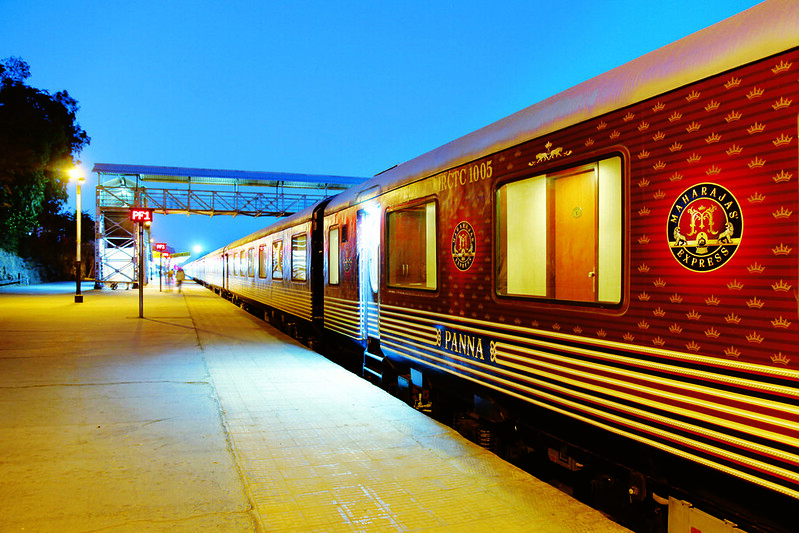
But that doesn’t mean that you have no options – in fact, luxury travel is making a bit of a resurgence in India, and we’ve got quite a few options for bespoke luxury experiences to choose from. At India Someday, we’re big fans of train travel, and, we’ve put together a list of some of the most luxurious train experiences the country has to offer!
Exclusive luxury train experience in India (Photo Credit – Luxury Train Club)
The Palace on Wheels
The Palace on Wheels is truly the grand dame of truly luxe Indian trains, the one that blazed the path that the rest have followed. This train was once a literal palace on wheels – it was used by nizams and kings to get around their territories. It’s now been given a revamp, but retains all of its heritage and regal nature.
The Palace on Wheels takes you across Rajasthan over the course of eight days. You’ll get to see all the top sights of the state, and spend the rest of your time being spoilt silly by all the amenities on board. The cabins are luxurious, the staff are gracious to a fault and will help you with whatever you need, and there’s a fully stocked bar – it’s a great chance to live like a king for a while!
The Palace on Wheels (Photo Credit – Luxury Train Club)
The Deccan Odyssey
If you’ve ever wanted to take your five-star hotel room with you out on the road, well, look no further! The pioneers of luxury hotels in India, the Taj Group manages The Deccan Odyssey. Needless to say, they promise that five-star experience as you travel across the county.
There are six route options to choose from that cover the Deccan region (of course), Gujarat, parts of Rajasthan and Maharashtra. And it goes without saying that the train itself is outstanding, from the décor, which is opulent and thoughtful, to the staff, which is always happy to help.
The train has lounges, multi-cuisine restaurants, a conference centre and even a spa – need we say more?
The Deccan Odyssey (Photo Credit – Simon Pielow)
The Golden Chariot
Further South, there’s the Golden Chariot to consider. The Golden Chariot is an undertaking of the Karnataka State Tourism Board. It takes you to some of the countries top World Heritage Sites and past some of the most stunning scenery on the way.
The furnishings are distinctly South Indian in flavour, harking back to the kingdoms that used to rule these lands. There’s a spa on board as well, so you don’t miss out on those Ayurvedic massages while you’re travelling.
These are just some of the options out there. If you’re looking for something in particular, do let us know and we’ll help you make it happen!
Golden Chariot Lounge (Photo Credit – Simon Pielow)
What about the cost?
The cost of luxury trains in India is comparable – or even favourable to similar experiences in different parts of the world. While the final figure might look a bit daunting, consider what you get in exchange – a taste of royal life, as only India knows how to provide, as well as the ability to take in the diverse landscapes and many sights, sounds and flavours that make this country so unique and special to travel in.
This article will give you some insight into trip ideas to Leh Ladakh. Perched high atop the Himalayas, Ladakh is one of the most sought after destinations in India. It has almost become synonymous with the perfect Indian road trip. Nevertheless, the accolade is well deserved, as some travel routes for Leh and Ladakh are incomparable. The challenge of the rugged terrain, unpredictable weather and the high altitude makes it a bucket list item for travellers and adventurers alike. For more information about travelling to Leh Ladakh, take a look at our blog.
Remember, Ladakh has a small travel window from June to early October as the passes get blocked with snowfall.
There are multiple ways of doing this road trip, depending on the timing and base destination. Want to know which route would be perfect for you? Dive into our guide on the 5 best routes for your dream road trip to Leh and Ladakh.
If you’d like to visit Leh and Ladakh and not have to go through the trouble of researching and booking hotels, transport and places to visit, contact us/fill our form and we’ll sort everything out for you!
The journey starts in Chandigarh, with an 8-hour drive to Manali. You’ll pass Kullu, after which lush green mountains and clear skies come into view. The Beas river’s turquoise waters will flow alongside you on your relaxing journey.
A popular hill station, Manali offers a panoramic view of the mountains. When you’re not admiring the wonderful vistas, be sure to bathe in the refreshing hot water springs of Vashisht, paraglide in Solang Valley and dine in riverside cafes. After a relaxing excursion here, you’ll be ready to hit the road.
The Manali to Leh route is unmatchably scenic. It’s almost a rite of passage for every adventurer, biker and travel junkie.
The journey is certainly an exciting one which alternates between lush greenery, snowcapped peaks and desolate wastelands. You will also cross high mountain passes, glacial lakes and charming villages. Chill in Leh for a day and explore the local attractions. Stand high in the Leh Palace and gaze in wonder at the Shanti Stupa. You can also shop in the vibrant markets for antiques and cheap winter-wear.
Explore the Nubra Valley and Pangong Tso, the two most popular places in Ladakh. The Nubra Valley is known for its monasteries, arid deserts and hot water springs. Pangong Tso needs no introduction. A lake of ethereal beauty, camping beside it and watching it change shades during the day will be the highlight of your trip.
Duration: 8 nights to 9 days Good to know: The average altitude of the Manali-Leh highway is around 10,000 feet, with 5 high mountain passes on the way. So acclimatizing is very important on this route. Keep yourself hydrated. Get some inspiration about where to visit in Coralie’s trip to Leh Ladakh.
The other gateway to Ladakh is Srinagar, home to the Dal Lake, a serene lake encompassed by high mountains. A houseboat stay on the lake is highly recommended.
The route to Leh passes through Sonmarg, a popular hill station sitting on a green valley fed by Himalayan glaciers. The adventure begins from Sonmarg as you start climbing the mighty Zoji La, the first mountain pass on the route. In total, you’ll cross 3 mountain passes on this trip.
There are plenty of things to see en route, such as the Kargil Memorial and the river confluence in Nimmu. This is the point where the emerald Indus river merges with the brown waters of the Zanskar river. Perched on a cliff, Lamayuru Monastery is another spectacular sight. The landscape around it resembles the surface of the moon, earning it the nickname ‘Moonland’.
As you cross Drass, you will see the landscape change dramatically, with the lush greenery giving way to mountains of brownish hues. The last stretch of the road to Leh is breathtaking, with barren land on both sides and golden mountains providing a surreal backdrop.
Duration: 8 nights to 9 days Good to know: It’s the most comfortable road journey to reach Ladakh. It crosses over 3 passes and the ascent is gradual, helping you acclimatize naturally.
The glacier is located in Sonmarg, which is a very popular tourist destination in the summer (Photo Credit – Tanay Kibe)
Amritsar is a bustling city; home to the elegant Golden Temple, the spiritual centre for Sikhs. As grandiose as it is, the temple exudes calm and peace.
The flag retreat ceremony at the Indo-Pakistan border – 30 kms off Amritsar is quite the sight. Every evening, soldiers of both countries perform an orchestrated drill with their respective flags. Don’t forget to indulge in some lip-smacking Parathas.
Dharamshala, a picturesque town surrounded by snow-capped peaks, serves as the Dalai Lama’s residence, which explains the prevalent Buddhist culture. The charming St. John Church, Norbulingka Institute, Dal Lake and Namgyal Monastery are worth a visit.
Next up is Manali, a very popular hill station. While here, check the Hidimba Temple, a shrine where history meets natural beauty. Hike to Jogni Falls, 25 mins hike from Vashisht, where you can bathe in the springs. There’s plenty of adventure sports like rock climbing and paragliding. Or explore Manali and chill at some riverside café.
The Manali-Leh highway, the gateway to Ladakh, takes you through some of the most beautiful terrains.
Since it’s a long journey, you can break it up and stop at Jispa, a beautiful town set along the Bhaga River. Engulfed by clouds and dripping in lush greenery, it’s a place worth visiting in its own right.
You’ll cross some of the highest passes in the world – Baralacha, Lachulung and Tanglang Ga. Make a pit stop at Suraj Tal Lake, and be careful of the infamous Gata Loops.
Duration: 14 nights to 15 days Good to know: This route provides a dose of everything in a short span of time – culture, history, cuisine, adventure and landscapes.
After landing in Leh, you should adapt to the altitude, so exploring the next day is a good idea. The town has many sightseeing options including palaces, stupas, war museums and colourful markets.
Start the journey by heading to the Nubra Valley. Being at a lower altitude than Leh, it’ll help you acclimatize. On this route, you will cross over Khardung La pass, the world’s highest drivable road, at an altitude of 18,380 feet.
It’s one of the most surreal landscapes – golden sand dunes ringed by towering mountains. You can find the two-humped Bactrian camels, a rare species endemic to this region.
Take a ride to Turtuk, a quaint offbeat village on the Indo-Pakistan border. It’s one of the last villages in India to continue the traditions of the Balti people.
From the Nubra Valley, you can discover Pangong Tso – a lake with sparkling blue waters. Stroll along the lake and immerse yourself in its overwhelming beauty. At night, you can sit by the lake and stargaze.
Later, meet Pangong’s sibling – Tso Moriri Lake, whose remoteness ensures that few travellers make it that far. It’s a great place for bird enthusiasts and don’t forget to check out Tso Kar, a lake whose shores are partially covered in salt crusts. After an unforgettable journey, you can descend to Manali via the Manali-Leh highway.
Navigating through some of the most difficult roads, rugged terrains and shallow streams gives the adventure its worth. As tough as it is, it’s just as rewarding. The views en route make it all worth the effort.
Duration: 9 nights to 10 days Good to know: Since you are flying directly from Delhi to Leh, you are gaining altitude very quickly. Ensure that you acclimatize properly and take your time on your trip to Leh Ladakh.
Pangong Lake is the most popular destination in Ladakh (Photo Credit – Gautham Navada from Pixabay)
This route gives you the best of both worlds – the Srinagar-Leh highway and the Manali-Leh highway.
Starting from Srinagar, you drive to Leh, halting at Kargil. On the way, visit the Kargil War Memorial and the confluence at Nimmu – the meeting point of the Indus and Zanskar Rivers. Stop at Magnetic Hill, a mysterious stretch where cars supposedly defy the laws of physics. Once you reach Leh, relax the rest of the day.
The epic road trip to Leh Ladakh starts from Leh after a day of acclimatization and sightseeing. Additionally, on this journey, you will witness the amazing Nubra Valley. On the way take a snap at Khardung La where you’ll come within touching distance of snow-capped peaks.
Sit by some of the most beautiful lakes in the world – Pangong Tso and Tso Moriri. Camp beside them and stargaze all night long.
Ladakh is also the land of exquisite monasteries, so get a taste of Tibetan architecture at the Hemis, Thiksey and Lamayuru Monastery.
The last bit is climactic as you drive down the Manali-Leh highway, one of the most exciting road trips in the world. You’ll see nature in all its glory!
Duration: 14 night to 15 days Good to know: Since you are travelling to Leh from Srinagar, the ascent is gradual, helping in better acclimatization. While coming back, you are taking the Manali-Leh route, which is at a higher altitude. By this time, however, your body would have adapted to the lower oxygen levels, making it easy on the return journey.
For any more information, or for any help in planning a trip to Leh Ladakh, feel free to contact us!
There are very few places in the world as enchanting as Ladakh and its capital Leh. Its mountainous landscapes, deep blue lakes and scenic road journeys have been luring travellers from all around the world. Alluring beauty aside, there are plenty of attractions to take in, from beautiful monasteries and elegant palaces to quaint villages and high mountain passes. Want to know which of these amazing places should be on your bucket list? Check out our cherry-picked list of the top 10 places to visit in Ladakh.
Village situated amidst the beautiful mountains
Leh Palace
Sitting on top of a hill, Leh Palace is one of the finest examples of medieval Tibetan architecture. The palace is made of stones, wood, mud and sand and is often compared to the world-famous Potala Palace in Lhasa. The walls of the palace provide warmth in winters and create a cool ambience in summers.
The interiors are adorned with crowns, ceremonial dresses, jewellery and artistic paintings. Some as old as 450 years and made from colours derived from powdered stones and gems. Murals etched on the walls depict glory days of the past. If that’s not fascinating enough, the palace provides spectacular views of the surrounding mountain range and the valley below. There’s no doubt why this makes it to our list of top 10 places to visit in Ladakh.
Location: Leh How to get there: Leh Palace is a short walk uphill from Leh Market. Alternatively, you can drive up to the entrance
The palace provides spectacular views of the surrounding mountain range and the valley
Shanti Stupa
The Shanti Stupa is a white-domed monument built on top of a steep hill. Facing snow-capped peaks, it was made by an interesting blend of Japanese Buddhists along with the locals. It marked and celebrated 2500 years of Buddhism and was also meant to be a symbol of peace. The stupa holds a golden Buddha statue and images of his birth and death.
Being at a vantage point, the stupa affords unadulterated views of the valley below. Lit up at night, it acquires a beauty of its own. If you want to witness a magical sunrise or sunset, this is one of the best places to visit in Ladakh.
Location: Leh How to get there: You can go by car up to its entrance
Shanti Stupa is a beautiful Buddhist place of worship you should visit during sunrise or sunset (Photo Credit – daemonzzz)
Sangam at Nimmu
On the way to Leh, along the Srinagar-Leh highway, lies the Sangam. It is a confluence of two rivers at Nimmu. Breathtaking to witness, here the emerald waters of the Indus merge with the brownish waters of Zanskar. It makes for a spectacular sight, especially for nature lovers. It is one of the top 10 places to visit in Ladakh if you want to see an unforgettable sight of natural wonder.
Location: Sham Valley How to get there: It is 33 kms from Leh by road
Sangam is a confluence of two rivers at Nimmu (Photo Credit – narumi31)
Lamayuru Monastery
A quaint village between Kargil and Leh. Lamayuru is known for its moon-like terrain, earning it the nickname ‘Moonland’. If that name itself isn’t enough to justify its place on our list of top 10 places to visit in Ladakh, simply read on.
Legend has it that a lama named ‘Naropa’ walked this land when it was submerged underwater. Upon his request, the water receded thus letting him establish the monastery which is now the famed ‘Lamayuru Monastery’. One of the most beautiful monasteries in Ladakh, its interiors are embellished with jaw-dropping paintings and frescoes. A cave next to the prayer hall has statues of Naropa and his disciples, one of the highlights of this shrine.
Perched on a hill, the monastery also offers unparalleled views of the moonscapes around it. And just like the moon, the monastery is ‘out of this world’.
Location: Lamayuru (Leh-Srinagar Highway) How to get there: It is 116 kms from Leh by road
One of the most beautiful monasteries in Ladakh situated in the ‘Moonland’ (Photo Credit – Lionel Borie)
Khardunga La Pass
Imagine what it would feel like to be on top of the world. No, we are not talking about the arduous climb to Everest. On the way to Nubra Valley, a popular destination in Ladakh lies Khardung La pass – the world’s highest motorable road. It’s located at a staggering altitude of 18,380 feet.
Stop here for a cup of tea and admire the surreal snow-covered landscape around you. This is on the bucket list of everyone who travels to Ladakh. It almost feels like you are at a winter wonderland. This is because everything around you from rocks to roads to mountains are draped in snow.
The steep and rugged terrain, winding roads, furious winds and unpredictable weather means you will earn bragging rights for making it this far. No wonder it’s a rite of passage and one of the top places to visit in Ladakh for bikers, cyclists and travel junkies.
Note: Being at such a high altitude, you cannot stop here for more than 20 minutes. The oxygen levels are very low, so don’t linger around for too long.
Location: Khardung La Top How to get there: It is 40 kms from Leh city by road
Khardunga La Pass is the world’s highest motorable pass
Sand Dunes at Hunder
One of the best experiences in Ladakh is lying on the desert and gazing at a million stars. You wouldn’t believe us, would you? After all, who expects to find a desert atop the Himalayas? Most of you may not be aware that Ladakh is actually a high altitude cold desert. It’s more than evident at the super scenic Nubra Valley.
One of the most popular attractions in this valley is the village of Hunder. Every year, this place is swarmed with thousands of travellers, who come to witness sand dunes wrapped around by golden brown mountains.
The desert is also home to the double-humped Bactrian camel, a rare species found only in this region of Ladakh. A ride on the backs of these sturdy animals is surely one of the most memorable experiences to have.
Location: Nubra Valley How to get there: It is 120 kms from Leh by road
Hunder sand dunes – Nubra Valley
Turtuk
Straddling borders with Pakistan, Turtuk is the closest village to the ‘line of control (LOC)’. Located so close to the border, this is the only village that tourists are permitted to visit. The landscape here changes dramatically with barren wastelands giving way to lush greenery, with an abundance of Apricot and Peach fields. Inhabited by a Muslim population, this quaint village is one of the last towns in India to have a prominent Balti culture. Try the delicious Balti cuisine here, especially the Apricot based stew.
With its serene ambience, scenic vistas and the aquamarine waters of river Shyok meandering through the village, Turtuk is as heavenly as it gets. It is definitely one of the top offbeat places to visit in Ladakh, where you can soak up the beauty undisturbed by tourist crowds.
Location: Nubra Valley How to get there: It is 205 kms from Leh by road
Scenic views of Turtuk
Pangong Tso Lake
Ladakh is home to many high altitude lakes, but none can match the grandeur of Pangong Tso. Brought to limelight by the movie ‘3 Idiots’, it is now the most popular destination in Ladakh.
Flanked by mountains of brownish hues, walking along the banks of the azure blue lake is akin to living in a postcard picture. Its uniqueness though, lies with the changing shades of the lake as the day progresses. Be ready to whip out your cameras and catch this mystic phenomenon live. At night, watch the sky blanketed by a million stars as you camp next to the lake.
Come night or day, there is always magic in the air at Pangong.
Location: Tso Pangong, Changthang plateau How to get there: It is 160 kms from Leh by road
The most popular destination in Ladakh (Photo Credit – Gautham Navada from Pixabay)
Hemis Monastery
Hemis monastery is the largest monastery in Ladakh. It’s widely known for playing host to the popular Hemis festival every June. Its exquisite architecture, serene surroundings and views of neighbouring mountains make it a must visit on your Ladakh trip.
The monastery has one of the rarest collections of Thangka paintings, murals, Buddhist scriptures and stupas made of gold and silver. Wonderful paintings of Buddha cover the monastery walls.
If you happen to visit during festival time, you can see masked dancers performing, listen to traditional music, watch people strolling about in colourful attires and gorge on delicious local cuisine.
Location: Off Karu, on the Leh-Manali highway How to get there: It is 44 kms from Leh by road
Welcoming dance at Hemis monastery, Ladakh (Photo Credit – Alex Hanoko)
Tso Moriri
Tso Moriri is Pangong’s alter ego, similar in its bluish complexion and astounding beauty. It is remotely located higher than the Pangong Lake. Accordingly, visited by fewer tourists, and therein lies its appeal. With brownish mountains towering over it on one side and a lush green countryside on the other, it is like staring at a live oil painting. Bird enthusiasts have another reason to cheer as the lake attracts a number of migratory birds, right from seagulls, Brahmin ducks and geese, to the rare and elusive black-necked cranes.
For a more immersive experience you can camp at Korzok village in the vicinity of the lake.
Location: Korzok Village, Changthang Plateau How to get there: It is 220 kms from Leh by road
Leh and Ladakh are stunning locations, and well worth the visit. We hope that reading our list of top 10 places to visit in Ladakh has inspired you to plan a trip there. Contact us for any sort of help you need, and for more insider tips and advice on where to go and how to get there.
With rolling hills, tea plantations, mesmerizing landscapes, beautiful beaches and backwaters, finding the best time to visit Kerala in South India can be a task. While the best time to visit Kerala depends on your preference, winters and monsoons are ideal according to us.
November to March is the best time to visit Kerala. It is the winter season and peak tourist season, since the climate is extremely pleasant. Kerala in monsoon season has its own charm, as the entire state is filled with lush greenery.
Even the Kerala summer season is bearable with its green hills, cooler climate and hill stations.
Known as God’s own country, Kerala is a year round destination for budget travellers, luxurious vacationers, couples, families, and solo travellers alike.
This guide tells you the best time to visit Kerala so that you get the most out of the beaches, backwaters, major attractions, festivals, and nature.
Get in touch with us to find out more, including the famous ayurvedic treatments, or to start making the perfect tour plans for your next trip!
Weather in Kerala:
If you are planning to visit Kerala, you need to know the climate and weather in Kerala throughout the year. Kerala experiences four seasons – winter, summer, south-west monsoon, and north-east monsoon.
Kerala is a tropical state, which means that the weather in Kerala is typically humid all year round. You can expect heavy rains during the summer monsoon season from June to August.
During summer season, Kerala can experience storms and cyclones, so Kerala summers are not the best time to visit Kerala.
The best time to visit Kerala is between November and March, with clear blue skies and minimal rainfall. The pleasant weather continues throughout the season.
However, Kerala doesn’t get extremely hot in summer like most other parts of India, even though it is close to the equator. That is because the Western Ghats, India’s high mountain ranges along the western coast, prevent the warm winds from reaching there. So the average temperature is consistently below 35 degrees celsius on most days.
Kerala’s hill stations like Munnar and Thekkady are cooler than coastal cities of Kochi and Trivandrum, with a comfortable climate throughout the year.
Munnar, and hill stations like it, are painted with a broad stroke of luscious green, especially in the Monsoon (Photo Credit – Sreehari Devadas_unsplash)
Winter season in Kerala
Winter is considered to be the best season to visit Kerala. The end of November till late February constitutes winter season in Kerala. Temperature remains pleasant during this time, rarely rising above 30 degrees celsius. The mountainous regions of Wayanad, Munnar, and Thekkady can get quite cold, so be sure to pack some warmer clothes.
The peak season for tourism in Kerala begins from November, and rightfully so – it is the best time to visit Kerala.
The pleasant weather makes it the best season to enjoy local sightseeing in Kerala. Winters are perfect to visit as many destinations and tourist attractions as you can fit in your itinerary.
You can visit the famous tea plantations in Kerala, go for beach visits and enjoy beach activities and water sports, explore the backwaters of Kerala with boat excursions and houseboat cruises, or trek to the waterfalls during this season. Thanks to the cooler weather, the backwaters will experience less humidity and feel more pleasant.
For wildlife enthusiasts, winter is a great time to visit the national parks and wildlife sanctuaries of Kerala, or even go on some wildlife safaris.
Popular tourist destinations will be crowded during this season, but it is worth it. The climate is cool and you can soak the natural beauty of this state to the fullest.
The best time to visit Kerala is also the best time to see the gorgeous tea plantations (Photo Credit – Girish Gopi)
Summer in Kerala
Kerala commences its summer season towards the end of February. The weather in Kerala in summer can vary from warm temperatures to scorching heat depending on the diverse range of region.
But while most regions in India tend to get intensely hot in summers, Kerala’s climate differs because of its geography.
The state is close to the equator, but the climate is not as hot as you would expect. That’s because the Western Ghats block the hot winds and the Arabian Sea offers a constant flow of cool breeze along the coast, keeping the heat in control.
Temperatures range from 32 degrees celsius to 36 degrees celsius. However, there is too much humidity in the air, so Kerala remains hot and physical activities can get exhausting.
The hill stations of Kerala are perfect to beat the summer heat. The slightly cooler weather at the picturesque Munnar, Thekkady, and Vagamon are great for trekking, hiking, and biking.
There are many local festivals that happen in summer in Kerala. If you want to immerse yourself in the culture of Kerala, summers are a good time to do so.
The summer season doesn’t see a lot of tourists in Kerala, so if you are on a tight budget, it is the perfect time to visit: you get lesser crowds and reduced prices.
The backwaters of Kerala are in season throughout the year, but during the summer months of April and May, the water levels are too low to explore as much of the river and lake landscapes. Adding the humidity in the mix, it can be challenging to visit backwaters for a long time.
Pack light clothing, sunscreen, hat, and sunglasses while travelling to Kerala during the humid summer season. Make sure you keep yourself hydrated and eat small, frequent meals throughout the day.
There’s something about Kerala’s empty beaches that can be very appealing(Photo Credit – weareaway)
Monsoon in Kerala
The unique thing about Kerala is that this state experiences two monsoon seasons: The Southwest monsoon season from June to August, and the Northeast monsoon season from October to November. August constitutes monsoon season in Kerala, and rains are at their peak in this month.
The Western Ghats get hit first by the clouds in Kerala, making precipitation and humidity extremely high.
Ideally, the rainy season is not the best time to visit Kerala thanks to the constant rains, but since monsoon travels have started becoming popular, Kerala is one of the topmost destinations for a monsoon vacation.
Kerala’s monsoon season offers beautiful scenery. The lush green landscapes of Kerala become even more vibrant during monsoons – a sight to behold, as long as you can withstand the heavy rainfall. Monsoon seasons in Kerala, with their refreshing showers, can give its winter seasons a run for their money.
An added bonus? Monsoon is considered to be an off season for travel in Kerala, so you get great discounts on your hotel rates, tickets, and transportation. With lesser crowds, you can also explore the stunning landscape of Kerala without the rush.
Kerala is a popular destination for wellness centres, Ayurvedic therapies, and the Kerala massage. The best time to undergo these Ayurvedic massages is during the monsoons. The cool, moist, and dust-free weather help the Ayurveda therapies work more effectively by opening up our skin pores. The post-treatment period for the Ayurvedic treatments also needs your body to cool down, which is helped by the cool monsoon weather.
The Northeast monsoon season can cause heavy downpours with thunder and lightning. The climate can get as hot as the summer season. So make sure to check the Kerala weather forecast while planning your travels.
Heavy rains might hamper tour plans. Prepare to be flexible, as the landslides and flooding may cause blockages and delays in terms of transport. If this happens, we highly recommend some chai and hot local snacks along with indulging in ayurveda therapies.
Make sure you pack raincoats, umbrellas, and appropriate shoes if you plan to visit Kerala during monsoons. Carry plastic bags to keep your gadgets safe from the rainwater. On nature treks you’ll encounter some blood-sucking leeches but not to worry, locals know how to prevent and handle those situations.
The beaches are empty from May till September. The current is too strong for swimming, and the wind and weather don’t allow you to sunbathe either. Many places close down for the season.
Festivals in Kerala:
Due to its history of colonization and trade, Kerala is home to many religions – Hinduism, Christianity, Judaism, and Islam. As a result, there are many religious festivals, spiritual and cultural festivals that are celebrated in this state. Experience Kerala’s ancient traditions as you see the people of Kerala celebrating elephant festivals, dancing to folk dances, praying to Gods, and keeping their heritage intact.
Here are some famous festivals that you should not miss if you are travelling to India during this time.
These magnificent elephants are a part of some festival celebrations in Kerala (Photo Credit – Brian Holsclaw)
Onam:
A traditional harvest festival, the Onam festival is a 10-day celebration that happens in September. It is the biggest festival for locals in Kerala. Everybody decorates houses, prepares feasts, and plays games. The best part is the Onam Pulikkali Tiger Play, where people dress up as tigers. There are also snake boat races across multiple cities in the state.
Thrissur Pooram:
The Thrissur Pooram Festival is celebrated in April or May in Thrissur. The highlight of this festival is a procession of 101 decorated elephants, with five musical instruments and incredible fireworks.
Pongala:
Pongala is a 10-day festival attended by thousands of female devotees at Attukal Bhagavathy temple near Trivandrum. Men are not allowed near the temple. On this day, the goddess is offered Pongala, a sweet porridge, prepared in a clay pot on open fire.
Vishu:
Celebrated in April or May, Vishu festival is the astronomical New Year celebrated by Hindus in Kerala. They believe that the first object you see on this day influences the fortunes of the subsequent year.
Kochi-Muziris Biennale:
If religious festivals aren’t your thing, the Kochi-Muziris Biennale is a contemporary art festival that takes place every winter from December to March in Kochi. You will find art exhibitions of different mediums in galleries and open spaces all over the city.
A year round destination, the natural beauty of Kerala will ensure that you have a memorable holiday that keeps you wanting more. From the hill stations of Kerala to beach getaways, tea and spice plantations to floating on a houseboat in the enchanting lagoons of the Kerala backwaters, there is magic to be unravelled. Whether you are seeking adventure or wanting to explore Kerala luxuriously, we will plan the perfect Kerala holidays for you. So, if you are interested in travelling to Kerala on your own customized itinerary,plan your trip with us now.
Planning on visiting South India in May and June? To be honest, we aren’t big fans of visiting South India in May and June. It’s hot. As in super hot! And humid! This doesn’t just mean fewer travellers coming to India but also that our subtle travel expert brains work a little slower than usual. But it doesn’t mean that you can’t travel to India. In fact, it only means that the mountains are calling!
And it’s not only the foothills and mountain ranges of the Himalayas that should get all the attention. From Mumbai in the north to the most southern tip of the subcontinent parallel to the western coast run the Western Ghats, a 1600 kms long mountain range listed as a UNESCO World Heritage Site. Covered with national parks, wildlife sanctuaries, forest reserves as well as charming hill stations.
Athirappilly Water Falls (Photo Credit – Rashi Raffi)
An insight on travelling to South India in May and June
You can’t just find various wild and unique flora and fauna species in those hills but also endless fruit, tea and coffee plantations. And visiting South India in May and June offers cooler temperatures and less stuffy air than in the cities and plains of India.
As soon as the rains start by the beginning or middle of June, nature changes its colour from brown-yellow to lush green within a couple of days. Waterfalls appear and rivers and lakes fill up. It’s a celebration of life! The cloudy sky and cooling rain bring a drop in the temperatures and fresher more breathable air.
Misty mountains in Munnar (Photo Credit – 4769654_640)
South india in may and june (Munnar)
The most popular amongst the hill stations is Munnar which is reachable in 3 hours from Kochi and in 5 hours from Madurai. It’s more a region than a certain city or village worth visiting. In fact, the city of Munnar is a cluster of shops selling locally harvest products and cheap accommodations. Therefore, we rather suggest staying in the countryside amongst tea plantations, dense rain forest and high mountain views. There are numerous homestays and boutique hotels meeting every kind of traveller’s budget and expectations.
One can take road trips up mountain roads through breathtaking landscapes. Visiting museums and strolling or hiking through the tea plantations and forests is a good option. The beautiful Eravikulam National Park is home to the endangered Nilgiri Thar and is located only 35 kms from the city centre of Munnar.
Nilgiri Thar at Eravikulam National Park (Photo Credit – Nandhu)
South india in may and june (Thekkady)
Thekkady can be reached in 3.5 hours from Munnar. The drive there is an experience in itself as the roads are built in several serpentines running up and down the mountains. The mountains are covered in dense forest and more tea plants. Thekkady is a region that accommodates the famous Periyar National Park. Spread across 777 kms, the wildlife sanctuary is home to tigers (there is no chance to see them though), as well as elephants, bisons and deers who often come to the artificial lake in the center of the evergreen park to drink. Your best chance to get a glimpse is to go on a bamboo boat ride or on a guided safari tour with tribal ranchers.
The little village of Kumily is the closest to the entry of the park and offers many nice restaurants and accommodations. The region is also famous for it’s spice plantations. Visit them to learn more the local culinary and ayurveda secrets.
Visit Piyar National Park in Thekkady (Photo Credit – Naeem Mayet)
South india in may and june (Wayanad)
Wayanad is a region in the Western Ghats further north of Kerala. Owing to its bigger distance to the backwaters and beaches, it is worth visiting as it’s less crowded and touristy. However, there is a lot to experience and see in Wayanad. Hike up to the Edakkal Caves which is of moderate difficulty. It boasts of gems like the prehistoric wall painting dating back to 8000 years. Thsi is a great way to get an overview of the mesmerising landscape of Wayanad. Or you climb up to the Chembra Peak with views all over the area with pleasant mountain climate to enjoy.
Don’t miss out on the Banasura Sagar Dam in Kalpetta. It is the largest dam in India and is the 2nd largest in all of Asia. At Muthanga National Park, you can experience exotic wildlife and nature on a half-day safari. Kuruva Dweep is a group of unhabituated islands in the river delta of the Kabani River. Here, one can find an incomparable interesting flora and fauna. You can cross from river island to island on small bamboo rafts which make the visit very adventurous.
The beautiful landscapes of Wayanad
Other hill stations
You could also visit the other interesting hill stations in South India in May and June. To name a few, you could visit Ooty, Coonoor and Kotagiri in Tamil Nadu, all within a 50 km radius from each other. Ooty is called the queen of hill stations and was established by the British as a place of temperature relief. You can reach it on a memorable ride with a toy train. Coonoor and Kotagiri are smaller but you can also hike and enjoy stunning views from the surroundings of these small villages but do avoid their bustling messy centres.
Coorg is a hill station in Karnataka, 120 kms north of Wayanad, and famous for its coffee and spice plantations. On the weekend’s, domestic tourists from Bangalore flood into this countryside. Accordingly, weekdays is your best bet if you like to enjoy the beautiful nature almost by yourself.
more information
If you aren’t much of hiking or nature person and prefer luxury travels and relaxation, South India doesn’t disappoint. You could travel to the beaches of Goa or Kerala as well as the Backwaters and stay for a bargain at 4 to 5 stars resorts. Many hotels, homestays and resorts close between April and October due to the off-season. However, the ones that remain open offer great deals in the hot and rainy season. But be prepared that it can get extremely hot and many restaurants and bars will be closed.
A comprehensive list of insider tips for Delhi! All the must-do attractions including visiting temples, markets and gardens, as well as eating some of the tastiest food in Delhi. There are many attractions built in the Mughal Empire for the history buffs who enjoy learning about the city’s rich past and will enjoy seeing some mausoleums. Plus, let’s not forget about the many religious groups within India, and therefore Delhi, which means there are chances to visit a mixture of Hindu temples, Mosques, and also Bahá’í places of worship.
Visit Delhi for great architecture, markets and beautiful parks (Photo Credit – J&M)
Walk through Chandni chowk
First and foremost, you must sample the street food cuisine. Old Delhi is a bustling place of narrow lanes filled with chaotic energy, a great depiction of India. You can start by visiting the Sikh temple opposite the metro station of Chandni Chowk. From here you can walk the bylines or take a cycle rickshaw to Jama Masjid. Dress appropriately (no shorts, sleeveless t-shirts). This mosque is beautiful and very peaceful. Then you can visit the Red Fort and go for the evening light and sound show. Not maintained as well as it can be but it still shows the power of the Mughal Empire in India.
Estimated Time: 4-5 hours
Cost: Red Fort Entry INR 250
Jama Masjid INR 150 plus for the camera
Cycle rickshaw – negotiable, but they put in a lot of labour so we always give them a little more.
Hint- walking around in the heat is tiring but great for shopping. A must do is eating at Karims opposite Jama Masjid.
Jama Masjid mosque just by Chandni Chowk (Photo Credit – Naveed Ahmed)
Humayun’s Tomb
A great prelude to the Taj, made from red sandstone with intricate work of white marble. This tomb of the Mughal emperor is worth a visit. Located in the Nizamuddin area of Delhi, there are also a few quaint mosques just a little ahead of the car park of Humayun’s Tomb. Peacocks roam the garden regularly and if you catch its monsoon dance, it just adds to the beauty of the Tomb.
Time: 2 hours
Cost: INR 150
Humayun Tomb (Photo Credit – Mohan Nannapaneni)
Lodhi garden
A place where the business elite come for their evening walks and runs, where the common man comes to find shade for a afternoon nap. A place where the birds of Delhi flock in the evenings and early mornings. A large garden sprawling in the middle of south Luytens Delhi, Lodhi Garden is a photographers delight and a great place for an evening stroll. The Gardens also have a few dilapidated Mughal architecture based structures.
Time: 2 hours in the evening (the best time to go is sunset)
Cost: Free
Delhi is greener than you might expect with a few parks to offer a break from crazy city life (Photo Credit – Uttam Sharma from Pixabay)
Delhi Haat
Delhi Haat is a market where there is an aggregation of various handicrafts and art from across India. Vendors have their products for sale. During winter it is great to walk around the colourful textiles, charming jewellery and exquisite woodwork at the market. Other than the wares for sale, they also organize musical events and shows in the evenings. Also, there are food stalls from different parts of India. So if one wants to taste the complete Indian cuisine, step into Delhi Haat and sample food from different states. The momos are especially good along with the kebabs. To get here you may take the yellow line metro to AIIMS, or a rickshaw/taxi.
Time: 2 Hrs
Cost: INR 50-100
There are dozens of market stalls to shop around, but this one is prominent for being the best in Delhi (Photo Credit – Meenakshi Madhavan)
India Gate and Parliament
Being the centre of Indian politics and Judicial System, Delhi has the honour of having India’s Parliament and Secretary offices. The area of Central Secretiat Delhi houses the President of India and the Prime Minister’s offices in the complex called Rasthrapati Bhavan. This building is truly majestic and very elegant. You can walk around outside without much hassle. From here you can also see in the distance the India Gate, made in honour of Indian soldiers who fought in WWII for the British.
Time: 1.5 Hrs
Cost: Free
India Gate (Photo Credit – Shalender Kumar from Pixabay)
Lotus Temple
For those spiritually inclined the Lotus temple near the Akshardham in Delhi is a fantastic experience. Approximately a 45 mins to an hour ride from the centre of Delhi, the temple is indeed a reflection of serenity and peace. A Bahá’í house of worship, the temple is noticeably composed of marble-clad ‘petals’ to shape it like a lotus flower. It is open to all for visit, regardless of religion or sex.
Time: 2-3 Hrs
Cost: Free
One of the most impressive architectural pieces in Delhi you should not miss (Photo Credit – Shalender Kumar)
Connaught Place
This is a circular high street shopping district. The British had used this as their offices and have created a circular market which is always protected from the sun. It is now the hub of branded shops and fancy bars and restaurants. This is a must-do for many a place to eat, and of course to shop. They do have some great deals on roadside bookstalls here. You can also enjoy a few Bollywood movies as there are quite a few movie theatres in this region. The largest Sikh temple in Delhi and the monkey god temple (Hanuman Temple) is also nearby.
This is one attraction that you can add to your itinerary if you have enough time, but it is not necessarily one you have to rush to. Another Tomb of a Mughal emperor built-in 1754, the Safdarjung tomb is nice but repetitive. The mausoleum is built mainly of marble and sandstone thus given it that reddish glow. It also has a lot of monkeys who can be troublesome and try to steal your bag and grab your food.
Another tomb built in the Mughal era (Photo Credit – Arya Visuals)
Eating/Dining tips
Delhi has a multitude of food and having lived there for a while. Harsh, one of the partners of India Someday, has too many places to suggest. But we have tried to narrow it down. From high end to roadside (North Indian food), Delhi is known for its food. The term Delhi belly (for slightly upset stomach), though negative, indicates that people eat so much that they always tend to get a Delhi belly.
Garden of Five senses (View 4.5/5, taste 4.5/5)
A slightly expensive affair, this place is situated next to Lodhi Gardens and has a beautiful ambience and equally eloquent food. The food is more European and Continental but is delightfully made by international chefs. They have a good collection of wines as well.
Price – INR 1,200-1,800 per person for a meal
Karims (Jama Masjid) (View 4.5/5, taste 5/5)
You cannot go to Delhi and not eat at the Karim’s at Jama Masjid. The owners of this establishment were cooks for the king during the 1800s and have carried the secret recipes from one generation to another. The meat here is to die for and the simplistic vegetarian is also great. The gosht kebabs along with the roomali rot (thin tossed bread) are perfect. Add to this Dal Makhani (lentils) and some ran (goats leg) and you have a complete meal. They have multiple branches across Delhi, but we recommend only eating at the original one opposite Jama Masjid for the true experience. The view here is just seeing people relishing the food and the number of plates being consumed.
Price – INR 200-350 per person for a meal
Delhi Haat
As mentioned earlier this place has food stalls which serve food from different parts of India. This is a great place to sample and have a few snacks. The momos in the Arunachal stall are particularly good. Even the Thali Peeth at the Maharashtrian stall is good.
Price – INR 40-50 per dish
The Big Chill (View 3/5, taste 4.5/5)
This is another legendary place in Delhi and is always full. It is located at Khan Market in South Delhi (there is a metro station on the purple line) so we suggest you reach there at around 13:00 hrs for lunch (book a table for 13.30 hrs). Then walk around Khan Market and check out the different Indian designer shops. So after the 15-20 mins walk around the market you can go back and eat some great desserts and Indianized European food. This place is run by owners from Northeast India and they make a mean penne vodka (pasta cooked in vodka) and also serve some of the best desserts in town. The place is very lively and has a nice décor of old Hollywood movie posters.
Near Connaught Place is an establishment known for its South Indian food. This place has chains across India, Singapore, Malaysia and a few other countries. They are known for their quick service and great food. South Indians mostly eat rice based dishes along with lentils. So taste idli’s (rice cakes served with coconut chutney and spicy lentils) and dosa (flat crispy rice pancakes).
Price – INR 100-150 per person per meal
There are so many places to choose from and so many yummy dishes to try (Photo Credit – Jusfoodonline)
One of the biggest questions travellers face when planning to visit India is – should I go to North India or South India? And, of course, when they think ‘North India or South India’, they’re usually considering between Rajasthan (and the surrounding region) and Kerala (and the region). These are two beautiful states/regions with a lot to see and do and have great accommodation options, so it’s no wonder they’re wildly popular with tourists!
While Rajasthan and Kerala are by no means the only two regions worth visiting in India, the intention of this article is to give you a practical overview of both, and the key factors to consider when deciding between them or deciding to include both the regions in your trip. This will help you decide if you should visit North India or South India – or both!
Between Delhi, Agra, and the cities of Rajasthan, this part of North India has some of the most fabulous architectural marvels of India. There’s the Taj Mahal, of course, as well as many magnificent forts and palaces. Exploring these forts and palaces is a delightful experience. They showcase intricate architecture, some offer commanding views, and they tell incredible tales of history.
If you are a huge history buff, you can read up before visiting the monuments or hire a guide (or an audio guide). Even if you aren’t into history and do not care too much about the stories behind the monuments, aimlessly wandering around them is a lot of fun.
Rajasthan has a huge variety of delightful heritage and traditional properties to stay at. A lot of old palaces and homes have been converted into hotels. Perhaps in no other region of the world will you find so many heritage properties to stay at within one region!
From the religious city of Pushkar to the Ranthambore tiger reserve, and the lakes in Udaipur to the desert town of Jaisalmer, Rajasthan offers very diverse experiences.
Rajasthani locals add bright bursts of colour to the countryside in their saris and turbans.
Rajasthan offers many chances to get a glimpse of rural life as you travel between towns. There are a few rural excursions to choose from, too – contact us if you’re interested in one!
What you may not like about Rajasthan and North India:
Travelling between towns takes time and often involves a combination of modes of transport. You should always expect multiple five to seven-hour road journeys. Overnight bus and train journeys from Jaipur are among the most used ways to reach Jaisalmer, though there are now flights from Jaipur, Mumbai and Delhi as well.
Delhi, Agra and Varanasi (and even Rajasthan to an extent) are aggressive. We basically mean a lot of touts trying to sell you things or services, or overcharging you. This is significantly less prevalent in the South of India (Kerala).
On the whole, Rajasthan is dry and arid in contrast to the forever-green Kerala.
Rajasthan might not be too conducive when travelling with very young kids. Distances are long, and there’s not as many activities for kids. Having said that, forts and palaces can be great fun for imaginative young kids to explore.
Varanasi, though vibrantly alive, is a bustling and aggressive city (Photo Credit – Jon Rawlinson)
South India
(What we and former guests love and like)
Kerala is extremely green! It’s a stunning state, and very easy to relax in.
The hill station of Munnar offers breathtaking views of tea plantations and rolling hills and valleys.
Thekkady, near Periyar National Park, offers great trekking opportunities along with boat rides on the lovely Periyar Lake and spice plantation tours.
Fort Cochin is arguably the quaintest town in India! It has old India, Dutch and colonial structures, ancient markets, and plenty more. It’s very easy to walk through and explore at your own pace. Our tip: a Kathakali dance performance is always fun to watch when you’re here.
Kerala is easier in the sense that travel times are much shorter – 3 to 5 hours is typically the longest you’d spend in transit, and the attitude is not as aggressive and ‘touty’. You are more likely to get a fair price and will not be harassed to spend your money as much as you would in North India.
Kerala offers delightful accommodation options, too. In contrast to Rajasthan, there are not really any palaces converted into hotels. However, you will find lovely traditional villas, homestays, the famed houseboats and colonial stays. In most cases, it’s the views that make the stay. You can easily find a room that overlooks a valley or stay by the waterfront along the backwaters.
Somehow, hospitality in Kerala is more laid back and honest. People are always trying to make sure you are well fed!
Kerala by itself has nothing you can complain about. It is only when you contrast it against Rajasthan and consider the benefits of North India or South India that you’ll see that it offers no forts, palaces, monuments or noteworthy temples to visit. But, then the theme of a holiday in Kerala is different. It is all about nature and relaxation.
The Athirapally Falls in the Thrissur district are the exact kind of thing waiting for you in Kerala (Photo Credit – Rashi Raffi_unsplash)
North India or South India – what do you choose?
If we are allowed to be biased, for a first-time visitor, Rajasthan trumps Kerala. This may just be for the sheer stunning monuments it has to offer. If you like exploring history and ruins and want an active holiday, then perhaps North India is more suited for a ten-day holiday.
On the other hand, if you are convinced that you want to relax during your holiday, experience nature and engage in some light trekking, then Kerala is your answer. Kerala is absolutely gorgeous, and you have the backwaters, the hills and tea plantations, and loads of lovely accommodation options to choose from.
If we had couple of weeks to visit India, would you recommend only North India or South India or both Rajasthan and Kerala?
This is a hard choice. Kerala by itself for fourteen days would be a leisurely paced, relaxing holiday, A North India trip can easily span over fourteen days without getting excessive or feeling repetitive.
So the choice is either to just take a North India trip or include Kerala in the itinerary. It’s important to understand that a combined trip works out a little more expensive. This is because you have to take flights between the two regions.
We usually send our guests multiple travel plans to help them decide. Here are a few routes which some past guests have done.
If you have seventeen to eighteen days or up to three weeks then, you can include both in your trip.
**Please note, this article only focuses on Rajasthan and Kerala and does not include regions like Goa, the city of Mumbai or other regions of India and the merit/demerit of visiting them. However, they are worth considering too.
Delhi can be a little overwhelming and aggressive. For example, touts are all around trying to sell you products and services. The best approach to ‘Delhi touts’ is a polite ‘no, thank you’. Signing up to guided Delhi tours can be a great way of sheltering yourself from the mayhem.
Looking for more Delhi travel tips? Read this guide for more things to know when exploring Delhi.
A Street Performer (Photo Credit – Adam Waxman)
Exploring Delhi
The first thing we do for our clients is to share our Delhi travel tips and documents. It is a handy guide that helps you navigate around the city. In addition, a good guide book is always highly recommended.
Once you navigate the ‘aggressiveness of the city’ you come to appreciate its beauty. Delhi is a much older city than Mumbai (Bombay). It has a string of stellar monuments: The Humayan Tomb, the Lodhi Gardens, the Jama Masjid, the Lotus Temple, the Akshardham Temple.
The streets are packed with buzz and activity. The chaos of the bazaars is intriguing. But once you realize that Delhi can be ‘managed’ then it can be appreciated and enjoyed. Delhi has a lot of different experiences to offer. So if the hustle-bustle of Old Delhi or Paharganj is too overwhelming, take a relaxing walk in one of the several gardens like Lodhi Gardens. Try to always keep the balance between hectic areas and calmer places like museums, temple or gardens. Not to forget Delhi offers a great food experience as well, particularly when it comes to street food.
You should probably spend about a day or two in Delhi. Accept that you will not be able to see everything that it has to offer. Nonetheless, even a day of venturing out will leave you with impressions of great sights and experiences.
The grandeur of the Lotus Temple at night
Getting around Delhi
A popular way of exploring Delhi is by renting a car for a day. We can either pre-arrange this or it can be easily requested for from your hotel. The price would be between INR 1,000 – 1,500 for a day (8 hours) for an air-conditioned car and a driver. The drivers are very efficient at taking you to all the sites.
One of our Delhi travel tips is to use the metro as another very ‘doable’ option. It is extremely modern and connects the city very well! However, it does not take you to all the attractions. To see Humayan’s Tomb and the Lotus Temple you need to take a rickshaw. Do not hesitate to use the metro. We highly recommend it as an easy way of getting around since the connectivity is really good.
For backpackers or experienced travellers, it is clearly a no-brainer. If you are older, or if travelling with children, the metro could be exhausting so you should consider taking a rented car which is very convenient and helps you getting around without being totally overwhelmed.
Delhi offers a number of guided tour options. We need to confess at this moment, we have not tried too many of them first hand but others have given these recommendations.
A group of American guests heard about the City Walk Delhi tour on NPR (National Public Radio) and thoroughly enjoyed the experience. They recommended it as a way to get an authentic experience in the streets of the city.
Other promising options are the Delhi Heritage Walks and Delhi Metro Walks. These Delhi tours are great value for independent travellers and backpackers. Plus, these walks through the city, are a great way to discover a large majority of Delhi.
Overall, Delhi tours are a great way to see the city with a detailed analysis given from a friendly and knowledgeable guide. Check out whatReality Tourshave to offer.
If you still did not find the ideal tour, India Someday can arrange for a dependable, knowledgeable guide and driver for a day’s private city tour. It focuses on Old and New Delhi and costs INR 5,500 for a day (includes guide and a car.) The payment for this would be direct.
‘Kaali Peeli’ taxi (Photo Credit – Ibrahim Rifath/flickr)
Independently
Travel Delhi independently, why not? This momentous city can also be navigated and experienced without a guide. In fact, 80 per cent of our guests do not opt for a tour. One of our Delhi travel tips for independent travellers is to ride the metro to the monuments. You can do most of these without a guide as they are well explained or (some) have an audio tour. This makes the trip extremely cost-effective and you won’t miss out on the extent of what you can learn about the sites.
As a modern-day city, Agra never fails to impress just about anyone and there are many great guided tours to take. Once you spend time there your impression will be that it is a remarkable city. This guide will help you with getting around Agra.
The Taj Mahal lives up to its expectations. If you can, try and visit it at the break of dawn, then the experience is surreal (avoid winter seasons from mid-December to mid-January when there is fog and poor visibility).
People often make the mistake of considering Agra just as the city of the Taj Mahal. However, there are lots of different things to do in the city. There is also the Agra Fort that is fairly impressive with gorgeous views of the Taj in the distance and from across the river. At sunset this makes for another delightful experience. The Fortress city of Fatehpur Sikri is very interesting too and is a must-see. In addition, it has small, rarely visited monuments like the Baby Taj and Akbar’s Tomb. Many guided tours are also on offer that makes for a great way to experience the city.
Beautiful sights of the Taj Mahal (Photo Credit – Laxmi Lodhi from Pixabay)
Getting around Agra
There are many ways of getting around Agra. You can get to the Taj Mahal, Agra Fort, and the other smaller monuments by Auto Rickshaw, (approx INR 500 – 700 for a day.) For a car with a driver it will cost you INR 1,000 – 1,200 per day, and INR 1,800 if you were to include a visit to Fatehpur Sikri. This includes visits to all other monuments as well. Depending upon which hotel you are staying at, sometimes the Taj is accessible by a short walk and there is no need to take transportation.
Fatehpur Sikri (Photo Credit – Koen)
Recommended Guided Tours
One of the best ways to get around Agra is through guided tours. We book practical, private guided tours through an agency in Agra. Our guests have consistently spoken highly of their experience and the guides. It costs INR 3,500 for the guide (transport is additional), spread usually across two days. There is a chance to visit the Taj Mahal, Agra Fort, The Fortress city, and other monuments in these tours. This can include a second trip to the Taj Mahal at sunset which we highly recommend.
Itmad-Ud-Daulah’s Tomb (Photo Credit – cpcmollet)
Other Things to do in Agra
There are many other activities you can do in Agra. We have heard good things about the Mohabbat Taj dance performances that re-creates scenes from the Mughal Empire (EUR 15+ / USD 20+). Headsets are available in a variety of languages including English and German. Passes can be arranged through the hotel or guide.
If you are travelling with kids or are animal lovers there is a very interesting bear rescue facility in Agra that takes about three hours to visit. Please let us know if you would like to visit this facility as we will need to e-mail them in advance.
Getting around Agra can also be done independently. But, if travelling with family or older guests we always recommend a guided tour. The tour guides are good but, more importantly, the city is very aggressive. A local guide shields you from encountering any problems.
For younger guests: the Taj Mahal and Agra Fort have excellent audio guides. Even without audio they can be explored on your own. The Taj Mahal at sunset viewing point can be reached on your own as well as the other monuments.
The Fortress city of Fatehpur is the only difficult place to experience on your own as it is spread out and you will need someone to explain the area to you. Once you get to Fatehpur Sikri, there are also a string of touts waiting to harass you so be careful.
Panch Mahal, Fatehpur Sikri (Photo Credit – Bruno Girin)
So what are you waiting for, click on Plan Your Trip for your ideal itinerary.
Trains are one of the safest and most economical modes of transport in India. Either when travelling on a budget or just for the experience; trains are the best bet, and so these are some of the best trains and best train routes in India that the Indian railways have to offer.
Indian trains are also quite complicated and different in the variety of classes available. Ranging from sleepers to extremely luxurious A/C trains, here’s a complete guide to the range of classes.
If you’re already deciding to come to India but have no idea where to start, or if you need some help with the logistics, get in touch with us and we’ll sort out all the hassle for you.
Best trains in Indian railways (in North India)
Trains in the Indian Railways provide range of luxury train journeys in India, that one can experience, such as the Palace on Wheels. Launched by the Indian Railways in association with Rajasthan Tourism Development, The train service serves its line: New Delhi – Jaipur – Udaipur – Bharatpur – Agra – New Delhi.
Train name – 12002 Bhopal Shatabdi (Station of origin – New Delhi up to Bhopal)
Departure time – 06:00 hrs (Delhi)
Arrival time – 08:06 hrs (Agra Cantt)
Pros: Shatabdi is the fastest train after the Rajdhani. This train reaches Agra in 2 hours whereas a car would take about 3.5 to 4.5 hours depending on traffic. There are other trains to Agra but this is the only one that reaches in such a short time. Breakfast is served, as catering is available in the train. The train also halts at Jhansi so take this train to get to Orchha from Delhi or Agra (Jhansi is the nearest station to Orchha).
Cons: As it’s an early morning train, it’s not entirely ideal for late risers.
Return journey – 12001 Ndls Shatabdi
Departure time – 20:35 hrs (Agra Cantt)
Arrival time – 22:45 hrs (New Delhi)
Indian Trains from Agra to Jaipur
Train name – 12195 Af Aii Intercity (Station of origin – Agra Fort up to Ajmer)
Departure time – 05:10 hrs (Agra Fort)
Arrival time – 09:30 hrs (Jaipur)
Pros: As it originates from Agra itself, the train will depart on time. The other trains on this route are long-distance trains, which originate from Kolkata, Varanasi, Khajuraho, etc. and will be delayed by the time they reach Agra.
Cons: The travel time is the same as driving to Agra. And if you rent a car, you can also stop to visit the fortress city of Fatehpur Sikri. Also not ideal for late risers.
There is also an evening train that runs every day apart from Thursday departing at 18:00 hrs from Agra reaching Jaipur at 22:20 hrs (Af Jp Shatabdi 12036).
Return journey – 12196 Aii Af Intercity
Departure time – 17:10 hrs (Jaipur)
Arrival time – 21:30 hrs (Agra Fort)
Trains are a great way to see the countryside by day, and meet new, exciting people by night (Photo Credit – Belur Ashok)
Trains in the indian railways (in Rajasthan)
From Jaipur to Jaisalmer
Train name – 14659 Dli Jsm Exp (Station of origin – New Delhi up to Jaisalmer)
Departure time – 23:45 hrs (Jaipur)
Arrival time – 11:15 hrs (Jaisalmer)
Pros: It’s the only train on this route and the best alternative. You can take a one stop flight or drive. Both are not recommended as there is just one flight between these 2 cities and is operated by 2 different carriers with a long layover and the drive is too long. You can take a bus but there is no direct connectivity. The bus only goes up to Jodhpur and from there you have to take another bus to Jaisalmer. You can also end your trip in Jaisalmer and take this train up to Delhi (if your international flight is from Delhi. This train reaches Delhi at 11:10 hrs.
Cons: Late night train, however, Jaipur is a busy junction and you will always find people around so don’t worry about being alone and unsafe.
Return journey – 14660 Jsm Dli Exp
Departure time – 17:15 hrs (Jaisalmer)
Arrival time – 04:50 hrs (Jaipur)
Trains to Jodhpur from Jaisalmer
Train name – 14660 Jsm Dli Exp (This is the same train that goes from Jaisalmer to New Delhi)
Departure time – 17:15 hrs (Jaisalmer)
Arrival time – 22.25 hrs (Jodhpur)
Pros: The train runs at a convenient time, you can spend the day in Jaisalmer and leave at your own leisure.
Cons: As it is a long-distance train (goes up to New Delhi), it can get delayed although it doesn’t happen too often.
Return journey – 14659 Dli Jsm Exp
Departure time – 05:30 hrs (Jodhpur)
Arrival time – 11:15 hrs (Jaisalmer)
There is an intercity that runs between Jaisalmer and Jodhpur. This train departs at 23:30 hrs arrives in Jodhpur at 05:20 hrs. However, as the timings are odd and inconvenient (you miss out on a good nights rest), we recommended taking the evening train.
Trains from Jaipur to Udaipur
Train name – 09721 Jp Udz Superfast Special
Departure time – 06:45 hrs (Jaipur)
Arrival time – 13:45 hrs (Udaipur)
Pros: Although the travel time is the same, the train is convenient and cost-effective as compared to renting a car. As this is a special train, it is not permanently on the railway system but extended on a regular basis.
Cons: This train has only a Chair Car seating (like in an A/C Volvo Bus). For some, it can get uncomfortable sitting at a stretch for 7 hours.
Return journey – 09722 Udz Jp Superfast Special
Departure time – 14:15 hrs (Udaipur)
Arrival time – 21:15 hrs (Jaipur)
The train halts at Ajmer (nearest station to Pushkar), you can take this train if you’re going to Pushkar from Jaipur or you want to go to Udaipur from Pushkar.
Jaipur to Jodhpur by train
Train name – 22478 Jp Ju Superfast Exp
Departure time – 06:00 hrs (Jaipur)
Arrival time – 10:30 hrs (Jodhpur)
Pros: Driving to Jodhpur takes about 5.5 hours or more depending on traffic conditions. The train is super fast and reaches in 4.5 hours so definitely worth saving the extra bucks.
Cons: It is an early morning train, still being, however, the best option available on this route.
Return journey – 22477 Jp Ju Superfast Exp
Departure time – 18:15 hrs (Jodhpur)
Arrival time – 22:40 hrs (Jaipur)
If you’re very interested in exploring Rajasthan and want to include Delhi and Agra into your tour, here are some great routes that can help you do that.
trains in the indian railways (In and around new Delhi)
From Khajuraho to Agra by train
Train name – 19665 Kurj Udz Exp (Station of origin – Khajuraho up to Udaipur)
Departure time – 09:10 hrs (Khajuraho)
Arrival time – 17:35 hrs (Agra Cantt)
Pros: The best way to get to Agra from Khajuraho. There are no direct flights and the only other way is to fly to Delhi (again most flights are via Varanasi) and from Delhi, drive to Agra.
Cons: An entire day is spent in the train. However, when possible, travel by First Class as the fare is cheap enough and you get to spend the day in absolute comfort.
Return journey – 19666 Udz Kurj Exp
Departure time – 10:50 hrs (Agra Cantt)
Arrival time – 19:30 hrs (Khajuraho)
Here’s a list of the twenty best places to visit in the entire Northern region of India.
Trains from Delhi to Pathankot
Train name – 14033 Jammu Mail
Departure time – 20:10 hrs (Old Delhi)
Arrival time – 06:10 hrs (Pathankot)
Pros: The train timings are perfect. You take the train after an entire day of sightseeing in Delhi and after a good sleep; you wake up in the Himalayas.
Cons: Pathankot is the nearest station to Dharamshala and it’s a 3 hours drive from the railway station to Dharamshala. So after a long train journey, another 3 hours driving can get tiresome. Nevertheless, the drive is extremely scenic.
Return journey – 14034 Jammu Mail
Departure time – 19:05 hrs (Pathankot)
Arrival time – 05:45 hrs (Old Delhi)
Recently flights have been introduced and Air India and SpiceJet have regular flights between Delhi and Dharamshala.
Reaching Amritsar from New Delhi by railway
Train name – 12029 Swarna Shatabdi
Departure time – 07:20 hrs (New Delhi)
Arrival time – 13:35 hrs (Amritsar)
Pros: If travelling on a budget, taking a train to Amritsar is the best alternative. You can also take buses, but the train would be more comfortable. There is another Shatabdi that leaves in the evening at 16:30 hrs towards Amritsar.
Return journey – 12030 Swarna Shatabdi
Departure time – 16:55 hrs (Amritsar)
Arrival time – 23:05 hrs (New Delhi)
Indian Railway from New Delhi to Haridwar
Train name – 12017 Dehradun Shatabdi
Departure time – 06:50 hrs ( New Delhi)
Arrival time – 11:25 hrs (Haridwar)
Pros: The bumpy roads from New Delhi to Haridwar make this train a better alternative. There is another Shatabdi that departs Delhi at 15:00 hrs reaching Haridwar around 19:00 hrs.
Return journey – 12018 Dehradun Shatabdi
Departure time – 18:13 hrs (Haridwar)
Arrival time – 22:45 hrs (New Delhi)
Haridwar is a 30-45 minutes drive to Rishikesh. You can also fly to Dehradun which the nearest airport to Rishikesh from New Delhi. Rishikesh is an hour’s drive from Dehradun.
Trains in the Indian Railways are filled with interesting people, so interacting with them can pass time quite easily (Photo Credit – Rignam Wangkhang)
Let India Someday handle it and plan your best trip.