Feeling Udaipur as your next destination? We can help you with what the most charming things to see in Udaipur during your stay here. The city has lots of historic, beautiful buildings – the Udaipur city palace is a must-see! Plan your trip with us now and find out more!
This charming little city tucked away in the shadow of the Aravalli Mountains, Rajasthan. It’s an absolute favourite with our travellers in North India. Shrouded in romance, it’s dotted with lakes and palaces aplenty, many of which have been converted into luxury hotels, including the City Palace itself.
Grab a beer or a cup of tea at one of the rooftop restaurants at sunset or lose yourself in the mind-boggling network of narrow treasure-filled streets. Explore the winding palace corridors or even set out into the country to ride horses into the hills.
Inside City Palace (Photo Credit – Volker Glätsch)
Things to do in Udaipur
– Get intimate with the historical architecture – from the splendid Udaipur City Palace to smaller monuments like Bajore ki Haveli and Jagdish Temple
– Get lost in the alleys of the Old Town
– Watch the sunset over Udaipur town from the Monsoon Palace
– Relax/read a book from a rooftop café with a cold beer and have a view over the lake and Udaipur City Palace
India Someday is here to give you great advice on what things to do in Hampi, an archaic city that exists outside of time. Plan your trip with us and we can organise an itinerary for you and answer any questions you have on how to reach Hampi.
Hampi is a miracle! Carpets of rice paddy and endless banana groves rise up out of dust and boulders, fed by the swollen Tungabhadra River. 14th-century temples populated by monkeys and dusty sunshine look down on a game of twilight cricket. Ornately carved pagodas attract worshipers from the country, though the local population is shadowed by the tourist community.
Sprawling, cheap cottage-style hostels, with great pizza and Tibetan thukpa, make it a haven for backpackers and families looking to spend quality time together. Come for the knowledge, stay for the peace.
The ancient ruins you can see in Hampi are practically unaffected by change (Photo Credit – Balaji Srinivasan)
Top experiences and things to do in Hampi
We have included the best activities and things to do in Hampi to help you plan your trip, such as:
– Exploring the ancient city.
– Actually watching the sunset at Sunset Point.
– Leaning back in one of the mattress-lined restaurants and sipping a much-needed ginger-mint lemonade.
Stone Chariot in Hampi (Photo Credit – A J Patil from Pixabay)
Activities
– Take an evening coracle ride on the lake for stunning, spinning views.
– Boulder climbing. It’s an exciting sport, and you’re sure to find fellow backpackers who’ll show you the ropes.
– Hire a rickety moped or a bicycle and sail through the streets, monument hopping.
Recommended for:
Backpackers ****
Couples ***
Families **** (since there are so many activities available in the countryside)
Recommended period of stay: 4-5 days
Bouldering Activity (Photo Credit – Aleksandr Zykov)
How to reach Hampi
Asking yourself how to reach Hampi? The easiest routes are to go from Goa or Bangalore.
If travelling from Goa to Hampi then catch a train or a bus, there are no flights that reach here. For train, we recommend the Howrah Express from Vasco De Gama Station at 07:20 hrs to arrive in Hospet. If you are taking a bus then this will take about 7 to 8 hours. Our favourite to use is Paulo Travels. For more information on this route click here.
How to reach Hampi from Bangalore? You should take a bus for the cheapest option and this will take roughly 8 hours. Or you can take a train from Bangalore railway station to Hospet. The Hampi Express goes every day at 21:10 hrs.
If you need our assistance in planning your trip to this beautiful region, do get in touch with us. We would be happy to help you plan a customized trip according to your need!
India has one of the largest rail networks in the world, meaning train routes are immensely interconnected, reaching thousands of destinations including remote villages. Further, travelling by train in India is extremely cheap. Costing a fraction of what you’d pay an airline and also falls in the responsible tourism manner of travel.
Indian train lines portray immense culture. They have an intriguing meal-order system. There are instant bonds that spring up with your co-passengers, by sharing meals and fun conversations. All this part of the great Indian rail adventure. Find out more about planning your train route in India through inspiration from our other posts.
Here we have put together five Indian itineraries that rely heavily on train routes to get you between destinations. We advise you to have train tickets booked in advance, please feel free to contact us for any help.
Scenic views by train travel (Photo Credit – donvikro)
Of all the train routes, this is perhaps best suited for first-time visitors looking to cover India’s Golden Triangle. Start from Delhi, the teeming capital, and head out first toward the ancient spiritual town of Varanasi.
From here, you have all of Rajasthan’s vast deserts ahead of you. So a little meditation now will do you good. Then, with a stop to see the Taj Mahal in Agra, meander through Rajasthan’s most beautiful cities – Jaipur, Jaisalmer, Jodhpur and Udaipur. Each city is a backpacker’s dream, and you should plan a few days in each so you can explore all their colourful alleyways.
The best part though is chugging past the desert landscape in your (preferably A/C) sleeper car, buying pyaaz ki kachori (an onion-stuffed fried snack). And tomato chaat from the vendors that pop up outside your window at stations.
You can also expect to meet and befriend a lot of fellow travellers along the route – all the better to swap stories over a game of cards on a long night on the train!
Trains: You have four overnight trains and two short day trains. You can also get from Jodhpur to Udaipur by bus.
For more details on things to do and see in Northern India, visit our blog post on the twenty best places to visit in North India. Generally, the best time to go to the North of India is between August and April.
Sunset camel safari at the dunes (Photo Credit – Ninara)
We love this train route because it offers a slow exploration of India’s beautiful western coastline. Your trains will pass over great, wide rivers and chug by palm-fringed fishing villages, with all the land to one side of you suddenly giving way to the endless ocean.
You can also take pit stops at some of India’s most famous beaches on your way. Catch your first train in Mumbai, a city with a facade of business and bustle that hides a sleepily beautiful history.
Next stop – party central! Take your time in Goa, making sure to hit all the great parties, but also to understand the mysteries of its natural bounties. Take a breather a Gokarna, which is every bit as beautiful as Goa, but a lot less busy. Finally, make your way across Kerala, stopping wherever you feel like it – you really can’t go wrong in God’s own country!
North Kerala is often ignored, but is a beautiful, non-touristy region of the state, with pristine beaches, hills, and forests. This route runs mainly along the Konkan line. This belt is one of the most beautiful in India – relaxed, tropical, hassle-free and safe.
Trains: This route can be done with a mix of day and overnight trains. However, we recommend that you take as many day trains as possible, as the routes are very scenic. The best time to go is usually between October and April to enjoy the sunshine on the beach, although the monsoon months have their own charm, reaching peak greenness in September.
For more information on exciting things to do in these locations, feel free to check out some more of our blogs relevant to your desired destination!
Read on:Uncover the Best Season for Exploring India’s WondersTravellers enjoying on the beaches of Goa
If you want to take in a cross-section of India on one trip, this train route is for you! You’ll get to see it all, from Delhi, the stronghold of the North, all the way down to beautiful sun-kissed Kerala.
This will be one of your best opportunities to really compare the often starkly different cultures of the country, and besides, long-distance trains have a tendency to get people talking!
Watch the scenery unfold and change as you journey from the hills through the forests of the Western Ghats, passing some of the nation’s most vibrant cities along the way. Delhi is only a teaser of the Punjabi culture that will grab you up in a hearty bear hug in Amritsar.
Stop here to pay your respects at the Golden Temple! Head up to Dharmshala for a bit of spiritual guidance with great views. Agra and Udaipur are home to some truly gorgeous architecture, and Mumbai has some of the greatest food to dig into!
Then you’re southward bound, through the ever-charming beauty of Goa and into the sun-drenched backwaters of Kerala.
Give this route time – we recommend at least 3 to 4 weeks. Trust us; you’re going to want to add more stops in between.
Trains: You should rely mainly on overnight trains, as some journeys may last up to 20 hours without a break. The best time to go on this trip would be between August and April, before the summer’s heat sets in.
This train route meanders east, flirting with the mighty river Ganges along the way! Spend some time exploring Delhi and Agra before stepping back in time in the temple town of Khajuraho.
From here, take the delightful toy train up to Darjeeling for some quiet time in the tea capital of the world before moving on to Kolkata. Point of interest – Kolkata is rumoured to have some of the best railway-side fast food in the country!
That means steaming hot earthenware cups of chai, sticky, sugary sweets, overstuffed kathi rolls and spicy aloo chaat. Take full advantage of them!
Trains: This train route, again, is best done with a mix of overnight and day trains.
For the best weather, make this journey between August and April. For more information about this area, check out our blog: Travelling to North East India.
Women working in the tea plantations (Photo Credit – ian-wagg)
Don’t worry if you’re not a fan for the overnight long hauls. There’s still a way to sneak in some of the train routes in small doses. Each journey varies from 4 to 7 hours, so it’s a great chance to get some nap-time, too!
Most of the cities on this route are in the Punjab-Rajasthan belt, except for Rishikesh. Rishikesh is a deeply spiritual city perched on the banks of the river Ganges, nestled in the foothills of the Himalayas in Uttarakhand. It’s a good place to visit as it is a mix of spirituality, adventure etc.
For this trip, it is best to travel between August and April, once the worst of the monsoon is over. For more information about exciting things to do in North India, check out our blog: Top 20 things to do in North India.
All of these routes are merely templates, but feel free to contact us for any help in paving your perfect travelling experience across India.
This article is perfect for those looking to travel to the Himalayas. We have drafted three route ideas – up in the Himalayas and the Golden Temple, in the Northeast and in the famous Leh and Ladakh. We have also included some suggestions for hotel accommodation for you while you are there. However, feel free to contact us for any help in planning your perfect trip to the Himalayas!
Beautiful white landscape
1. Himalayas and the Golden Temple (Nature and Spirituality)
This route is ideal for people wanting to experience a little bit of spirituality. You can witness the majestic mountains of the Himalayas from its foothills in Himachal Pradesh, a region filled with quaint and beautiful villages and cities.
Village situated in beautiful mountains
Amritsar
Start off your trip in Amritsar, easily accessible by flight, train and road. A must is to visit the Golden Temple – immerse yourself in Sikhism, a religion that gives. Further, the architecture and tank up on the humble Langar. Backpackers can catch a night’s rest at the fabulous Jugaadus Hostels or Akaal Residency for some privacy.
If you have some room for spending, opt for the Country Inn and Suites. If you’re looking for a more luxurious stay, the Svaasa is for you. From here, you can either catch a bus or rent a chauffeur-driven car at INR 4,000 for pretty much all connections in the hills.
The Golden Temple is the most visited monument in the country
dharamshala
We’d strongly recommend hiring a driver, both because the roads are tricky for those unfamiliar and you’re free to explore, discover and take in the view. Next, you move up to Dharamshala, home of the Dalai Lama and the adjacent McLeod Ganj in Himachal Pradesh. Dharamshala is a beautiful hill city that houses the exiled Tibetan government, so there’s a huge Buddhist influence there.
Backpackers can hole up at the Pink House; those looking for a little more comfort can try Chonor House. There’s a rare treat here for the artistically inclined called the Mirage, a homestay that doubles as an artists retreat, even having a pottery wheel for you to try. If you would like to spend the extra cash, we would recommend staying at the Mirage.
Green and brown mountain during daytime (Photo Credit – Rusheel Tickoo)
Manali
Manali is the next stop in Himachal Pradesh and one of the many foothills of the Himalayas. You can blow off some steam by just relaxing hippie style and then satiate your munchies at the numerous little adorable cafes. Rock Top Cottage Café is a great hotel choice for backpackers, a nice cozy setup. For someone looking for a more comfortable stay, Johnson’s Lodge and the pricier The Himalayan, a beautiful castle resort that won’t disappoint. Then catch a bus to Shoja, a national park that cradles a small village, making it a perfect base camp as you trek into its leafy recesses. All class differences are erased here since there’s only one decent hotel available – Banjara Camps.
It’s a gateway for skiing in the Solang Valley
Kotgarh
Kotgarh is nationally known for its apples and widespread apple orchards. It’s utterly beautiful, whilst quaint; perfect for taking walks through apple orchards and forests. It’s quite here, but the stunning Seetalvan Orchards will make your visit here so special.
Apple orchards in Kotgarh (Photo Credit – Ashish Gupta)
Shimla
Shimla is the largest city in Himachal Pradesh and is definitely worth a visit when travelling to the Himalayas. As the summer capital of the British Raj, this charming resort town has a strong British colonial presence. In the centre of town, traffic is banned so walking is ideal and scenic, despite the hilly conditions! For those looking to escape the heat and to experience a happy buzz within popular hill resorts, Shimla is for you.
Wrap up the trip in Kasauli, free of cars, pollution and all the associated bad vibes. Hunker down in HPTDC’s Ross Common or the elegant Seven Pines.
Take a leap from Delhi to Bagdogra and Bagdogra to Pelling in a single day, by both air and road respectively. There, take some time to immerse yourself in the beauty of the villages. We recommend the Daragaon Village Retreat.
The Northeast is one of the most beautiful regions in the country
Gangtok and Darjeeling
From Pelling, take a scenic 5-hour drive to Gangtok, the capital of Sikkim, which is full of languid icy lakes and views of the soaring Himalayas. Sikkim is definitely a beautiful area, also with a large Buddhist influence in its architecture and traditions. Additionally, you can stay at the lovely Hotel Pandim while you’re there before shifting base to Darjeeling.
The famous tea plantations from Darjeeling make a wonderful experience when travelling to the Himalayas. You can spend a couple of days learning the delicate art of picking and processing tea from the simple town that knows best. After a long day of exploring, head back to the shining wood floors and gaping bay windows of Hotel Shangri La for the night.
Changu Lake, or Tsomgo Lake, is only 40 kms from Gangtok, and one of the wonders of the Northeast
Guwahati
From here you can hire a car to drop you off at New Jagalpuri, which is 5 hours away. There you can then catch a train to Guwahati in Assam. From ancient temples to the burgeoning wildlife, Guwahati is a great destination for this route.
When you’re tired of the history and the animals, take a quick 4-hour drive to Shillong, the capital of Meghalaya. Meghalaya is one of the Seven Sisters, and is nicknamed the ‘Abode of the Clouds’. We recommend exploring the manicured gardens and the waterfalls.
Here’s a more detailed look at what the Northeast has to offer, and how to go about planning your trip there.
This is the perfect route for someone highly interested in the mountains and landscapes but doesn’t want to grind as a backpacker.
The best view in Turtuk
Leh
Once you land in Leh, make sure to give yourself some time to adjust to the drastic change in altitude, the only downside of a quick flight.
Once you’ve had your fill of the palaces and stupas, get into a jeep and take a drive through Chang-La Pass, the third-highest drivable road in the world. Come out the other end onto one of the world’s most breath-taking sights – the endless stillness of Pangong Tso Lake. With this lake and the Moriri Tso, you’ll find marvelous views of the two sister lakes.
The next day, you can set your sights 1010 ft higher at the world’s highest drivable pass – Khardung La Pass. This treacherous road will take you into the uniquely distinct Nubra Valley bordering the Himalayas. Break through the fog and onto the smooth vistas of snow, take a million photos and a quick dip in the hot sulphur springs at Panamik before heading back the way you came.
Khardung La Pass in Leh (Photo Credit – Wolfgang Reindl)
If you’re planning to travel to the Himalayas and would like to do any of these trips, or would like any help planning your dream trip, let us know and we can make that happen for you!
From crispy fried gol-gappas that burst in your mouth, to thick sweet lassi to beat the desert heat, Jaipur has the perfect menu for a backpacker on a shoestring budget. Besides, you haven’t had an authentic experience of Jaipur until you have tried its wide array of delicious street food.
Just hit up any of these roadside eateries and before you know it, you’ll have a paunch that any Rajasthani could be proud of!
Chaat is one of the most popular street food
exploring street food in jaipur @ Gulab Ji Chai Wala
Where: Opposite Ganpati Plaza on MI Road
What to eat: Bun Maska Samosa washed down with a quick gulp of delicious masala chai. It cannot get better! Make sure you get there before 18:00 hrs in the evening.
Where: 220, Street No.1, near Sidhwashar Mandir, Raja Park
What to eat: Squeeze a lemon wedge over a plate full of piping hot spicy chicken tikkas before dunking them in some good old fashioned mint chutney to combat the spice. Sethi’s in Jaipur is street food at its most delectable.
Tandoori Chicken
exploring street food in jaipur @ Lassiwala
Where: 315, MI Road
What to eat: So legendary, it defines itself. Moreover, exploring street food in Jaipur isn’t complete without this. Lassiwala defines street food at its most traditional, authentic and yum. Rajasthan has a strong fondness for this thick, curd based sweet drink, and goes on to even add a layer of straight-up full-fat cream on top for some extra richness. You can’t leave Jaipur without it.
A glass of Lassi is the best thing after a long day of sightseeing (Photo Credit – Saahib)
exploring street food in jaipur @ Chawla’s
Where: 349, Fashion Street, Lane No.1, Raja Park
What to eat: Another street food that is not to eb missed is the custom made gol gappas, tangy-sweet or fiery hot. If it looks too packed, you can head to their competitors Nand’s right across the road.
Pani Puri (Photo Credit – Yusuke Kawasaki)
exploring street food in jaipur @ Sanjay’s Omelet Restaurant
Where: Janta Store, Bapu Nagar
What to get: Any of the countless reinventions of this simple egg dish served up by Sanjay Sharma, once a proud competitor in MasterChef India.
Omelet (Photo Credit – Daniel Albany)
exploring street food in jaipur @ Falahaar
Where: A-1, Vasundhara Colony, Opp. Kamal and Co, Tonk Phatak
What to eat: The name literally means ‘food for people on fasts’, and it’s perfect for Jains and vegetarians. You can make a meal of their Sabudana Khichdi, but don’t forget to finish off with their famous Shrikhand.
Sabudana Khichdi (Photo Credit – Devika)
exploring street food in jaipur @ Saras Parlour
Where: Near Mahaveer Hospital, Malvaiya Nagar
What to eat: Paneer Pakoras and Doodh Jalebis. Each dish perfectly complements the other, the sweet crunchiness of the jalebi putting out the fire that the spicy pakora started and the cold milk settling it all down.
Paneer Pakoras can be complemented with Doodh Jalebis (Photo Credit – Sean Carter)
explore some more @ Pav Bhaji Stalls
Where: Near Birla Mandir, Link Road, Nehru Bazaar
What to eat: Pav Bhaji, obviously! There’s some contention over which stall is the original Pandit Pav Bhaji, but the quality is more or less uniform across stalls.
Pav Bhaji (Photo Credit – RovingI)
another place to explore is @ Al Bake
Where: MI Road
What to eat: Pretty much anything with chicken in it. This one’s a great street food option for late night chicken lovers.
(Photo Credit – neverbutterfly)
lastly @ The old man at Raja Park
Where: Raja Park
What to eat: When you talk about street food in Jaipur, you can’t not visit Raja Park. Not eat so much as gulp down, a cold fizzy glass of soda lemonade or Shikanji, a Jaipur favourite.
Want to explore regions, cultures, traditions, street food, adventure etc. Then what are you waiting for? Get in touch with us to plan your trip to India!
Travelling in India for a month? This article will explore travel routes through India in one month. The famous saying goes, ‘a life time is not enough to explore all of India’, and rightly so. Therefore, we suggest that one month in India is the least amount of time you would want to spend here.
There is no single best route to travel across India, so we have provided 5 different routes. Each outline covers 4 weeks in India and includes an overview of the routes, the destinations, the highlights, and the modes of travel.
The suggested routes are moderate to fast-paced trips, that contain the drawbacks of the tours. They also have an approximate indicative budget for each route, going from backpackers to luxury travellers. You can compare different routes of travelling in India and see what you should be prepared to miss out on. The E-Visa and Visa On Arrival have made India a much simpler place to get to for travellers wanting to visit India.
North India contains several such stunning sights (Photo Credit – Ravi Shekhar)
travel routes through India – route 1: the classic north and south
Route 1: Delhi – Varanasi – Agra – Jaipur – Jaisalmer – Jodhpur – Udaipur – Mumbai – Goa – Hampi – Kerala (Route on GoogleMaps)
This travel route through India is one of the most popular month-long routes for travellers, especially with backpackers. This route has you starting in the historically rich capital of Delhi. Head east to visit Varanasi, one of the oldest continually inhabited cities known to civilization. Travel west to visit the Taj Mahal, and then loop around the desert state of Rajasthan.
While traveling in India, you’ll get to explore cities rich in culture and character in Rajasthan (Jaipur, Jodhpur, Udaipur). You can also take part in the Camel Safari & the Desert Camp in Jaisalmer. End the northern leg of your trip in Udaipur before taking a bus or flight to Mumbai.
Travelling to the South is more relaxing, as you’ll be travelling along the same coast as Mumbai. Relax on the beaches in Goa. Explore the boulders and rice fields of the time-bound Hampi. Visit the beautiful state of Kerala known for its backwaters and its tea plantations.
For a more detailed explanation on travelling in India and the best things to do in North India and South India, visit our blogs.
Depending on when you are looking to travel, this travel route through India can be quite busy. This is one of the most frequented routes by travellers wanting to visit India. If you plan on picking it, we suggest you ensure all your transport and accommodation is booked well in advance.
Since all these places are popular among tourists, it’s likely you will bump into more than a few on this trip. While that isn’t always a bad thing, but if you’d like to avoid the crowds we’d suggest you travel a little early (mid July – September).While the North would have great weather, the South would be wet, but beautiful.
Backpacker! Boutique! or mix and match, we can help you plan a well thought and cost effective month across India.
Cost of a four week tour across North and South India?
In terms of backpacking – dorm beds, day and overnight trains and a possible flight – you could potentially do this tour for as little as 700 EUR. Together, we can cater to your budget when booking hotels and modes of transport. Travelling in India isn’t extremely expensive in regards to spending money, for example, the food is cheap yet healthy.
The backwaters of Kerala will steal your breath away (Photo Credit – Nahel-Abdul)
Being home to a billion people, a million Gods and plenty of wacky rituals, India is also home to the incredible Himalayas. This is the best possible travel route for people who have only a month in India and want to combine their trip to India with a trek in Nepal (Everest Base Camp/Annapoorna Mountain Pass).
You will begin your trip in Delhi, a city extremely central to some of the most prominent locations in North India. From here on, head north to Dharamshala (home to the Dalai Lama), followed by Amritsar (known for the beautiful Golden Temple) and Rishikesh (the Yoga capital of the world, also known for its adventure sports).
After Rishikesh, you come back to Delhi before heading southwest, this time in to Rajasthan. Start with the state’s three gems – Jaipur, Jodhpur & Udaipur – before visiting Pushkar and Agra and then taking an overnight train to Varanasi. Varanasi is quite intense, it’s one of the oldest civilizations in the world and also a great place to end your trip in India. If you’re up for an adventurous assault on the senses, you can take a bus from Varanasi into Nepal.
Like the first route, this is also extremely popular among travellers, so if you decide to take it, you might want to book your train tickets well in advance. It is a hectic route, so we would recommend it to active travellers.
Apart from that, this is a good route to cover three regions (the Himalayas, Rajasthan and Varanasi) in the month you have in India.
Again if you plan to backpack, take train and buses you can do the tour for as little as 600 EUR/ 700 USD per person. You would want to double your budget to travel comfortably.
The Himalayas have hidden secrets to be explored (Photo Credit – Steven Lasry)
As a country, India has a myriad of facets and each region is often drastically different from the last. This travel route through India (the South) will be extremely gratifying – a full trip in itself.
Fly into Mumbai and head South to the fabulous beach state of Goa. Next, you can catch a bus or train to the evergreen Hampi and then spread out across Karnataka from royal Mysore to urban Bangalore before moving southeast to Chennai. Take a long break in Francophile Pondicherry or break it up with the southern spice of Trichy and Madurai. End the trip on the beach in Varkala or carry on to the stunning hill station of Munnar, and the backwaters in Alleppey.
For more detailed information about the best things to do in the South of India, read our blogs.
Drawbacks
South India is a beautiful region to explore, but it is slightly more expensive compared to the North. Flying into Mumbai and staying there can be quite expensive. There aren’t too many budget options in the South, even though there has been a rise in the number of hostels. It’s also sometimes convenient in the South to hire a car to get from one place to another, which racks up a higher bill than buses.
This route, like the previous one, is all about exploring South India. However, while traveling in India on this route, you will not be travelling southeast. You’ll fly into Mumbai and head South to Goa, Hampi and Mysore before crossing into Kerala and spending the rest of your days exploring God’s own country.
This route is more relaxed and moves at a slower pace than the others, giving you time to soak in the beauty of the South without dropping dead from exhaustion. Getting from Mumbai to Goa to Hampi by bus is not tough, but if you throw in a few trains and maybe a car hire, it’ll be easier.
Drawbacks
Limited to the South alone, and includes all the same drawbacks as the previous route.
The Himalayas, the Taj Mahal and the serene backwaters are a few things that people associate with India. And rightly so! However, India is also home to the divine but underrated Northeast, a virtual paradise nestled in the out-flung arm of the country. So when travelling in India remember this gem as well.
If you are looking to go off the beaten track, this is a great travel route for you to take. Travel through Bagdogra, Gangtok, Ravangla , Pelling, Namchi and Darjeeling, then make your way west to Kolkata; one of the oldest metros in the country. From there you can catch a train to Varanasi, then move through Khajuraho (known for it’s erotic temples), Orchha (the quintessential Indian town), Agra and Rajasthan, before heading back to Delhi.
Apart from being diverse, India is also simply large. You may have to take a few flights, Delhi – Badgogra, or Bagdogra – Kolkata to save time, since there is only a month and so much to see and do in it. Travelling in the Northeast could be slightly more expensive as the local transport, though very economical, is inconsistent with its timings. You may want to trade some of your other luxuries on the trip for a comfortable car ride.
Places like Khajuraho and Orchha are beautiful places to visit, but make sure you’ve made travel arrangements in advance. There is a dearth of options and not very great connectivity either.
Further, depending on the time of year you are planning to travel, the North and Northeast can get pretty cold, especially in the mountains. For more information on travelling in India, contact us or check out our blog. Don’t have a month? Here are a few two week itineraries you could follow for North India or the South India. For any further assistance, or for help with planning the trip of a lifetime, simply click on Plan Your Trip.
The magical states of Northeast India has ageless forests and formidable mountain ranges
The dawn of a new season somehow finds a way to ignite a sense of adventure. It is that time of the year when people all across the globe decide to take a much delayed and needed vacation. It is also that time of the year when school and college students finally get the opportunity to leave their everyday life behind to go on an epic SUMMER ROAD TRIP! Nothing rejuvenates the mind and the soul like the open roads, the company of your close ones, the sight of the world passing you by and the beautiful natural wonders you get to witness along the way. If you are looking to embark on a summer road trip in India, you must definitely go up North. Here is a route you have to try!
Take a road trip this summer through the outstanding mountains of India (Photo Credit – Vikramdeep Sidhu)
The Road Trip Route
Start your road trip off in Delhi. What better place to start a trip than from the capital of India? Remember to stock up on supplies for the road, not that you wouldn’t find things on the way. From Delhi, head all the way up to the mountains in Dharamshala (McLeod Ganj). On a rendezvous with mountains, sun-kissed treetops, lush green forests and smooth highway roads, tall city towers and a few rocky roads thrown in for variety.
Start your trip in Delhi, the capital of India! (Photo Credit – Mohan Nannapaneni)
Delhi – Kasauli (5.15 hours)
Begin at the small cantonment town of Kasauli, situated at an average altitude of 1900m (6000 feet) above sea level. Take the NH-1 highway from Delhi and continue your journey onto the NH-22 highway after you’ve crossed Ambala. The highway from Delhi to Kasauli is one of the best roads in India you will get to experience. It is best if you start your trip early in the morning so you can get breakfast at one of the amazing highway dhabas. An experience within itself! When in Kasauli, let the beauty of the town sink in, as you enjoy wandering around a lush green valley, nestled in between mountains. Take a break in the town and go for a walk on the Gilbert trail, a well-maintained nature trail which is nothing short of a marvel. The Christ Church and the Baptist Church are also worth checking out.
The highway from Delhi to Kasauli is one of the best roads in India you will get to experience (Photo Credit – Jon Connell)
Kasauli – Shimla – Thanedar (3-3.30 hours)
You’ll be surrounded on all sides by astounding beauty as you start going upwards from Kasauli. You’ll be forced to stop along the way and let out your inner shutterbug, as you drive up the comfortable roads. Clear bright skies above and majestic mountains ahead will set the scene for the kilometres to come.
Enter Shimla, the capital of Himachal Pradesh and the principal commercial, cultural and education centre of the hills. Of all the things you could do in Shimla, you can’t miss a pit stop at Minchy’s. This store sells various fruit-related products, all made from fresh produce, courtesy of the many fruit orchards in Thanedar, Kotgarh and other places in and around Shimla. They have everything from fruit syrups and wines to jams and candy.
As you get back on the road for your journey from Shimla to Thanedar, get ready to experience an exciting drive at the absolute crest of the mountain. That’s right! The roads are very close to the peak and the ascension in the roads, along with the twists and turns make for an exhilarating drive. Seeing a mountain from afar is one thing, but driving at its peak is a whole new experience.
By the time you reach Thanedar, the sun would be on its way down, to clear the path for the dark of the night. About the right time for you to take a pause for the cause. It is not advisable that you drive after sundown. It is not very safe and you’ll miss out on the view. Spend the night at the nearby Seetalvan Orchard, a veritable paradise that’ll make it hard for you to leave.
Get yourself packed up to drive down to your next location, Shoja, after enjoying a good night’s sleep and witnessing a beautiful sunrise.
Get ready to experience an exciting drive at the absolute crest of the mountain
Thanedar-Shoja-Manali (6-7 hours)
Upwards again, this is where the thrilling part of your Roadtrip comes into the picture. You follow the MDR15 road, which will eventually lead you to the NH22 highway route. The road to Shoja takes you through the scary yet adventurous, Jalori Pass. It’s a mountain pass situated at an elevation of 10,800 ft above sea level. You have to navigate a steep hill with mean curves along with muddy and rocky roads to get there. Make no mistake, the drive through this road is an exhilarating experience but also one where caution must be taken. The steep climb must be approached at a constant 1st gear. The surroundings are picturesque and often complemented by the view of snow-clad peaks.
The two primary highway routes from Shoja to Manali are the NH-305 and the NH-21. After crossing Shoja, you have to follow the NH-305 route towards Thalaut. Head down the Panjai road in Thalaut to get to the NH-21 highway, which will lead you to Manali.
Once you find a way to leave the beautiful hill station of Manali behind, head towards Dharamshala. You will realize that the road still has so much more to offer. This is the part of the trip that is best done in broad daylight. The drive from Manali to Dharamshala is as exciting as it is magical. You will get to witness the spectacular Kangra Valley. Driving on smooth and well-constructed roads are fun, sure, but the breath-taking sight of snowy mountains, placed artistically behind a landscape of lush green trees and clear blue skies, is what feeds the soul of a wanderer.
Beautiful view of the mountain (Photo Credit – David Bacon)
Click on Plan Your Trip for your ideal summer road trip itinerary.
Kochi is the fifth in our live like a local series. Check out our editions on Bangalore, Delhi, Jodhpur and Mumbai too! Find out where to stay, what to eat, where to go, what to do, what to say and a bunch of extra tips to help you drop the tourist tag.
Beena Homestay. Run by the eponymous Beena who serves by day as the Health Inspector of the Corporation of Cochin, so you know the quality won’t be a problem! Well-located and well-managed, you’ll be a sucked into their family life without being imposed upon.
One of the spacious rooms at Beena Homestay (Photo Credit – Beena Homestay)
What to eat
Hit one of the local toddy shops like Mullapanthal, and pair some local liquor with amazingly exotic dishes like crab, frog legs, rabbit, duck and fish heads cooked Kerala style. Seek out smaller establishments if you want to avoid the college crowds, especially on weekends. These shops are usually open all day but if you go too early the day’s catch won’t be in from the beach yet and if you go too late it’ll be gone. Stop at one of the thattukada (street food) joints for some spicy fried quail and soft buttery parotas.
Try the delicious seafood during your stay (Photo Credit – Sharon Ang)
Where to go
Move past the fishing nets to the main harbour in Kochi. Abuzz with life, this may not necessarily be where the locals go to take a break, but it is where you’ll find them. Find a tea stall or awning to shelter under as you people-watch at this throbbing centre of commerce. If you’re approached by a resident you can be rest assured that they’re not a tout.
Chinese fishing nets at Ernakulam harbour (Photo Credit – Suhasdoosra)
What to do
Take the ferry to Vypeen Island. Both the journey and the destination are equally mesmerizing. Drift along the network of backwaters packed tightly between the colourful and curious passengers in their autorickshaws on the car ferry. At Vypeen make your way to Kuzhipilly Beach rather than Cherai for some alone time, especially if it’s a weekday.
The beautiful architecture of Vypeen Island
What to say
Seri Seri. Say it as often as you can, in response to absolutely anything and they’ll take you for a genius. It basically means ‘okay okay’, but it’s used more as punctuation than in actual agreement. Venda (no) will keep the touts away.
Bonus tips:
Make a pit stop on the highway when you see a tender coconut stall and make a special request for fizzy coconut water.
Carry your heaviest conditioner and lightest cotton outfit because it will be HUMID. SO HUMID. You can never fully prepare for this level of humidity, but you can try.
The fourth in our ‘Live like a local’ series that tries to give you the insider scoop to what the long term residents love about their city. Read our Mumbai and Delhi posts also!
Nightlife in India
Where to stay
Villa Camelot. Hosts Yamini and Raghu will offer you more hospitality than the average Bangalorean is used to, but their cosy three-storey in Whitefield blends in seamlessly with the homes of the upper-middle class that bought up the plots when the city was still young.
Have a cup of coffee and one of the many chill coffee shops while you read a book or work
What to eat
Bangalore is a haven for India’s beer lover. The breweries blossoming on every corner epitomize the cooler-than-cool vibe of the city with 60s tunes piped gently into the dimly lit interiors. Toit, Biere Club and Biere Street will make for a great start. Get your fill of a deep-fried South Indian breakfast at Benne Masala Dosa at CTR or Airlines Hotel, go to Faanoos Siddique Kebab or Misbah Kebabs near Johnson market for seekh kebabs, veal, and other Mughlai food. Chicken wing-y finger are best licked at Plan B. Get at least one plate of Ice-cream at corner house, not because they’re mind-melting, but because it’s just what people do. Burgers at Thulp Cafe. Roadside momos.
Juicy kebabs at Shivajinagar, Bangalore
Where to go
The Bangalore garden city is slowly being mismanaged into environmental oblivion, so pack a picnic and head to Cubbon Park while you still can. If you’re up for a trek and don’t mind sharing the view with hundred-odd other tourists, drive up to Nandi Hills. Book lovers, carve out a whole day for Blossom Book House. Indiranagar is a hub of night-time activity from plays and sketches to stand up and live music. If the night still seems to stretch endlessly ahead of you, we recommend Pebble to dance on the grass under the stars.
Cubbon Park
What to say
Kannada gothilla. It means ‘I don’t know Kannada’. Not that you’ll be required to speak it, most shopkeepers and auto drivers speak basic English. Call anybody boss for a quick response.
Bonus tips:
If your auto driver won’t use the meter, get out. Radio cabs are a much safer bet, they cost the same for none of the hassles
If you want to start a conversation with a local, compliment the weather. They will embrace you as one of their own
Mumbai has a population of 11.98 million people, with thousands more moving in every day. With traffic like there is, you’ll understand why the Mumbai local trains are lovingly called the lifeline of the city. At the outset, I’d suggest you download m-indicator, an app that’ll help you out with the schedules of trains and buses in the city as well as the accurate fare for an auto or taxi across a certain distance. It’s similar to travel apps in London or Paris and is quite easy to follow. Soon you will be a pro at working out Mumbai’s public transport!
For additional information on what to do in Mumbai, read our Feeling Bombay blog.
Using Mumbai’s public transport is a cheap and easy way to get yourself around the city
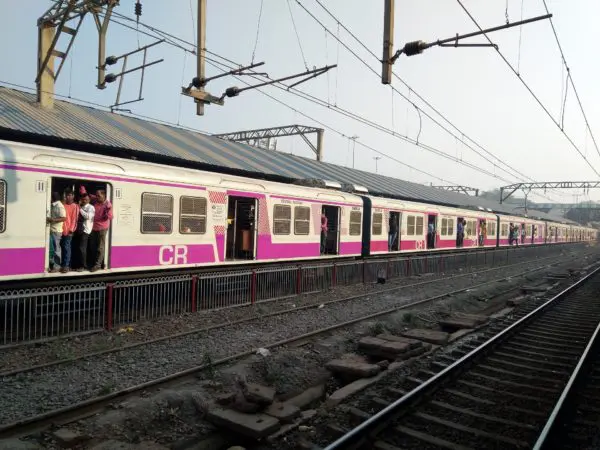
Mumbai Local trains
Consider taking Mumbai local trains for a more straightforward journey. This is one of those quintessential Bombay experiences you cannot miss out on. Amateur musicians, vegetable vendors and trinket sellers will keep you occupied throughout if the constantly changing views and myriad people can’t hold your attention.
Choosing a route:
Avoid travelling during peak hours, it can be very difficult for the inexperienced traveller.
There are three lines: The Central, Western and Harbour lines. The Central and Harbour cross over at Dadar junction if you need to make a change.
Find out which station is nearest to your destination and check that it’s on the same line as the one closest to you. Google maps will help you in this.
Check the train schedule on m-indicator and opt for a slow train for less of a crowd.
Buying tickets:
Mumbai local trains are cheap! Tickets usually cost upwards of INR 10 all the way to INR 30-35 to get to the very edge of the city.
Purchase them at dedicated counters outside the station. Fellow passengers will be happy to direct you. DO NOT buy them from a third party standing outside the counter, they might be counterfeit.
Keep your ticket with you until you exit your destination station, you may be asked to show it to a ticket checker.
Experience an authentic train journey through the bustling streets of Bombay (Photo Credit – Rehan Ansari)
Buses
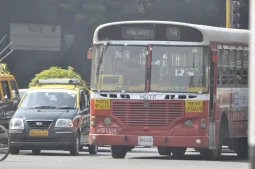
These may be a little more inconvenient to figure out but the view they offer is second to none, as their rambling routes will take you around the city often for less than INR 20. You’re in for a real treat if you manage to catch a double-decker!
Choosing a route:
This is the really tricky part. Buses tend to have their numbers and destinations displayed on the front, but only in Marathi. The English version is on the left-hand side near the back door. This can be a pain because the bus only stops for a few moments and may move on before you’ve had time to see if it’s the one you want. Ask for help. Fellow commuters or the designated ticket checker will be happy to oblige.
Once again, you can figure out which bus number to look out for on m-indicator.
Buying tickets:
A conductor on the bus will ask you for your destination and give you your ticket and your change. Don’t hesitate to ask him to let you know when your stop is about to arrive.
Tickets usually range from INR 10-30 depending on the length of your journey.
The typical bus you will spot driving around, a popular means of Mumbai’s public transport (Photo Credit – Francisco Antunes)
Metro
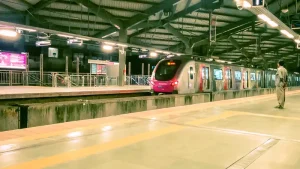
Similar to Mumbai local trains, but the monorail is spanking new and still only available in the suburbs. It’s a great ride and one many Europeans will feel at home in. It cuts perpendicularly across the railway lines to help you get to the far-reaching corners of Andheri and Juhu where all the really cool cafes are. Air-conditioned, quiet and startlingly well-behaved, it can provide respite from the hot, crowded streets below.
Choosing a route:
The routes are quite straightforward, with stops every few minutes. Just make sure you’re going in the right direction.
Buying a ticket:
The monorail operates on the token system. Unfortunately, it does not have weekend or tourist passes for brief stays and you will have to purchase either a single or return token only, or a full monthly pass.
Ticket prices range from INR 20-40 for a single journey.
If you purchase a return token LOOK AFTER IT.
Public transport in Mumbai – The metro (Photo Credit – Ashwin Kumar)
Taxis
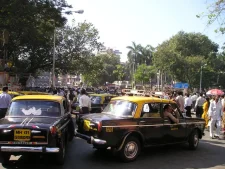
If you don’t fancy the hassle of using Mumbai local trains then consider taking taxis instead. While the kaali-peelis (black and yellow taxis) are recommended for the sheer authenticity of it, we recommend downloading a radio cab app (like Ola cabs or Uber) for security reasons. In case, it’s very late at night or you’re in a hurry and can’t seem to hail a cab, these will assure you of a ride with additional security features as well.
Choosing a route:
The local cabs will do their best to overcharge because, in their minds, they think you can afford it and they need the money more than you do. Don’t hold it against them. They are very often wonderful people who will give you some of the greatest conversations of your life. That said, try and follow the route on google maps to ensure they aren’t taking you the long way round. Before you leave your hotel, ask the reception for an estimated fare, and ALWAYS travel by meter, no matter what they insist.
Mumbai’s cabs are a blessing compared to the rest of the country. Despite frequent strikes, we still have the lowest strikes and the least complaints of being overcharged or refused. You may have a different experience if you look very obviously foreign, but appeal to their better side and be firm on following the meter.
Taxis and rickshaws are the most convenient modes of Mumbai’s public transport.
Prices:
As of 2016, the minimum fare is INR 22 and increases at the rate of INR 1.5 per additional kilometre.
Kaali-peelis in Mumbai
Auto-rickshaws
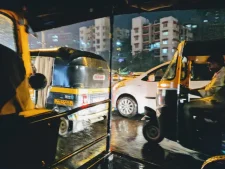
Unless you stop to take hundreds of photos of yourself in one of these, have you really been to Bombay? One of the most popular and cheapest options out of Mumbai’s public transport choices. Super convenient and outrageous in their driving skills, they suffer all the same pricing issues as taxis. They’re more widespread, though they’re not allowed in the old part of the city in the South. The base price here is INR 18 and they seat only three passengers by law.