India is popular for its wide range of religious and spiritual beliefs. Owing to that, the country is home to a diversity of spiritual spots. Far up in the valleys of the North, you will find many places to embrace the calm and imbibe some of the essences of this life.
Here are a few places that should definitely feature on your spiritual journey in India!
Lord Shiva and his Trishul
Varanasi, Uttar Pradesh
Located on the banks of the holy River Ganges, Varanasi is a centre of religious energy. This ancient city in Uttar Pradesh also goes by names Banaras or Kashi. It is one of the most visited spiritual places in India. Here, the rituals happen at its ghats, the steps leading down to the banks of the holy river. You will also experience culture in the tight, winding bylanes that lead to them.
Don’t miss the spectacle of the grand aarti (pooja) of the River Ganges, held every evening at Dashashwamedh Ghat. The Diwali celebrations in Varanasi are also a sight to behold!
Sadhu offering prayers on the banks of Holy Ganges
Golden Temple, Amritsar, Punjab
If you are in the region, Amritsar’s Golden Temple is an absolute must-visit. This, the most famous Sikh Gurudwara, is a whole universe in itself. It is also known as Harmandir Sahib or Darbar Sahib, and was founded by the 5th Guru, and completed in 1604. The temple is popular for its peaceful and calm ambience, owing in part to the beautiful holy tank Amrit Sarovar. Many believe that Amrit Sarovar’se waters have healing powers. The reflection of the gold and marble architecture of the temple in these waters, too, is a sight for sore eyes. While you are here at this spiritual retreat, don’t forget to enjoy the very famous langar, or a free meal, served here – you can also volunteer to help prepare this meal, which feeds lakhs of people every day.
Khalsa are also known as guardians and the disciples of Guru Gobind Singh
Bodh Gaya, Bihar
Bodh Gaya is where Prince Siddhartha Gautama attained enlightenment and became a Buddha. The Mahabodhi Temple here in Gaya is a UNESCO World Heritage site. People and many tourists visit this place to meditate, study and to learn the teachings of Buddha. It is one of the most peaceful, spiritual places in North India. While there isn’t much else to see and do in the area, if you’re a student of Buddhism, Bodh Gaya is definitely worth a visit.
Giant Buddha statue – seated in a meditation pose, or dhyana mudra
Haridwar and Rishikesh, Uttarakhand
Haridwar is one of the most sacred spiritual places in India. It is settled along the banks of the River Ganges at the point where it first flows onto the plains, and, like Varanasi, is one of the Sapta Puris (seven holy places) of Hinduism. It’s also one of the four locations at which the Kumbh Mela is held, and if you can handle crowds, that’s definitely an event that you should mark on your calendar!
The nearby city of Rishikesh is also a very famous spiritual and holy place in India. Located at the foothills of the Himalayas, it is just the right place to visit for some meditation and yoga. In fact, it is arguably the yoga capital of the world. The name, as inspired by Lord Vishnu is home to thousands of sages and pilgrims seeking peace and blessings. Along with its spiritual side, Rishikesh is also famous for adventure sports. You can enjoy river rafting, treks and also bungee jumping here.
In both of these cities, while you enjoy the sights and sounds, you will sadly need to be aware of the fact that you might encounter touts trying to take advantage of you. Don’t let them ruin your experience though – just be firm and don’t give in to their demands!
Located near the Mandakini River in Kedarnath, the Kedarnath temple is one of the four ‘Chota Char Dham’, or small four abodes – holy sites – a pilgrimage circuit in Uttarakhand that also comprises Badrinath, Gangotri and Yamunotri. This temple, one of the 12 Jyotirlingas dedicated to Lord Shiva, can only be reached by foot after an adventurous trek (though there are also ponies that you can hire) from Gaurikund. The trek in itself makes the journey worth experiencing, and being a part of the throng of pilgrims at the temple is also special. The glaciers and snowy mountains around the temple add to its beauty. The temple is open from April to November, though, as the weather makes visiting through the rest of the year untenable.
Need help planning your next spiritual journey to India? Get in touch, and we will help you!
Although January is the coldest month in the northern part of India, winter is actually starting to make its way out in the better part of the subcontinent, making the weather in India in January just about perfect to plan your trip. And, if you’re not averse to the cold, that leaves you with even more options to choose from. Here are some of our top picks for things to do in India in January.
Cabin on a hill (Photo Credit – Sreehari Devadas)
Walk on a river of ice
Despite its incredibly harsh climate, Ladakh is home to a number of indigenous people. Over centuries, they have adapted to this unique cold desert environment. The landscape is dotted with numerous, far-flung villages deep within the Himalayas. Many of these are cut off from the rest of civilisation during the winter months. One such place is Zanskar. But the locals, driven by practical considerations, have devised a novel way of commuting when the snow has cut off the passes. They simply walk on the frozen river. And thrill seekers from around the world now emulate them. Late January, being the coldest time of the year, is when the Zanskar river has frozen solid, making it the safest time to traverse. So, if you like adventure, the Chadar, as the frozen Zanskar is called, is arguably the best place to visit in India in January.
Phuktal, Zanskar Valley, India (Photo Credit – sandeepachetan.com travel photography)
Go skiing
Although India is not really known to be a winter sports destination, the weather in India in January makes the snow-covered slopes of the Himalayan ranges great for a skiing holiday. Places like Gulmarg and Auli have well-developed facilities to cater to powder snow enthusiasts and definitely warrant consideration. For more information on skiing in India, check out our blog!
Apart from the North, winter in the rest of India is largely pleasant. This means that birds migrating South for the winters find the weather in India in January just about perfect. Come January, national parks like Jim Corbett, Keoladeo Ghana, Nameri, and Kaziranga are a paradise for birders from all over the world.
The most popular beaches on the west coast of India can get quite balmy in summer. But the weather in India in January is just perfect. Additionally, the rush of tourists leading to new year’s has abated considerably by then, making this one of the best places to visit in India in January. Goa, Gokarna, and Diu are good options to explore.
Goa, India
Explore the Rann of Kutch
The great and little Rann of Kutch in Gujarat are vast expanses of almost completely flat land that are inundated by saline water every monsoon. By mid-winter, this water has either receded or evaporated, leaving vast tracts that have an astounding number of species inhabiting them. Additionally, summers can get quite harsh here. So, the weather in India in January makes it the perfect time to visit. And then there’s the Rann Utsav, an annual cultural festival attracting visitors from around the globe.
Thinking of heading to India soon? Get in touch with us, and we’ll help you chart out your holiday!
India is known to be a particularly hospitable country. Visitors are welcomed with open arms, and by and large, the general public will go out of their way to help tourists in all sorts of ways. But like they say, it takes an exception to prove the rule. Especially in the big cities, where tourism is a booming business, there will always be the occasional unscrupulous tout or scammer waiting to take advantage of the unsuspecting traveller. To avoid falling a victim to scams, it is best to be forearmed. Here are some of the more common tourist scams in India.
Crowded Market (Photo Credit – Yuan Thirdy)
The fake ‘tourist office’
This is a tricky one to deal with and seems most prevalent in the North of the country. You will be led to an ‘official tourism office’ where they will tell you that the plans and reservations you’ve made are fake, and that they will help you make new bookings. As they pose as government officials, it is easy to fall prey for this common tourist scam.
The best thing to do, of course, is to immediately contact your operator and let them know if you find yourself in this situation, and also contact the hotels you’ve been booked at. We share our contact information with you – use it! Do also be aware of where the actual Tourism Information Offices are; the one in Delhi, for example, is at 88 Janpath Road. If you’re on a trip with India Someday, rest assured, all it takes is a phone call for us to direct you to the established offices.
Always verify the credibility of tourist information centres
The hotel switch
One of the most common tourist scams in India to be aware of is the hotel switch. Again, it is important to remember that if you ask a stranger off the road for assistance, he or she is most likely to help out as much as possible. Most taxi and auto-rickshaw drivers also tend to be the same. But there are those who wouldn’t be as nice. And preying on visitors’ lack of on-ground knowledge is an easy way to fool them.
On the way to a hotel of your choice, you will be gently told that it isn’t such a great place, and that they know of one that is much better and cheaper, too. In some cases, they will tell you that the place you chose has shut down. The best way to get out of this situation without creating a fuss is to tell the driver that you’ve already paid an advance.
They may then even try and take you to a different place with the same name, so it’s best to call the hotel and ask for a nearby landmark. In addition, you can also ask the hotel to arrange a pick up, or hire a private car for the ride, both of which we can help you with. Of the scams in India to avoid, this one’s quite easy to get out of.
Also cross-check your direction (Photo Credit – Mohit Tomar)
Inflated taxi/auto fare
This also makes its way to the list of some of the most common tourist scams in India. Here, the driver will ask where you want to go and then quote an arbitrary number as fare. The reason given for not plying by the meter is that it is difficult for them to get a customer on the way back. This is far more common later at night. Threatening to call a cop can be an effective deterrent, but this could be time-consuming.
A better option would be to simply use an aggregator service, which has become fairly common in all big cities in India. A Government-authorized prepaid counter is another workaround. We can also help you with transport options so you have a car and driver at your disposal! Get in touch and we’ll sort things out for you.
Navigating through local transport can be tricky, but if you know your way through the scams, it can be a very eventful experience (Photo Credit – Dion Hinchcliffe)
An ‘honest’ billing mistake
Sometimes, Hotels and Bars perpetrate sophisticated tourist scams in India. When you find additional items on your bill, the person in question will quickly acknowledge the mistake and take the said items off the bill. But, the service charge and luxury tax (if applicable) which is calculated on the previously inflated amount will remain. Asking for a new bill is the easiest way to avoid prolonged discussion on the matter.
Keep an eye out on those bills and ask for a new one in case you smell something fishy (Photo Credit – Oliver Menyhart from Pixabay)
The old switcheroo
When trying to get change for a larger currency bill, or while paying for something, the perpetrators will either palm a few notes and say you haven’t paid enough, or switch your currency note for a counterfeit one. Counting the notes while paying or declaring that you just withdrew them from an ATM are good ways of avoiding currency scams.
Be careful while you deal with cash and watch your notes
The road fee
Owing to its reputation of being a slightly unfriendly city, tourists often ask ‘is Delhi safe for foreigners?’. For the large part, it is, provided you take adequate precautions. But sometimes, the very people responsible for safeguarding the people’s interests exploit them.
Although this isn’t actually dangerous except for a little monetary loss, it is still one of the scams to be aware of in India. Officials, either designated or pretend, ask for arbitrary fees or taxes from unsuspecting tourists. Although, asking for proper identification and a clear explanation of the said demand is enough of a deterrent.
On the whole, India and her people love tourists, and we love sharing the wonders of our country with you. Don’t let these scams scare or deter you; now that you know about the common tourist scams in India, you’re well prepared to grab it by the horns. Planning your next holiday in India, or dreaming of visiting India someday? Get in touch, and we’ll help you put it together!
India has something for everybody. No matter what your age, interest level or budget, you’ll find more than enough options to make your trip to India memorable. And it’s especially great for kids. Bustling markets, colourful festivals, forts, palaces, beaches, forests… there’s enough and more in India for kids. What’s more, the experience will leave behind memories that last a lifetime. Here’s our pick of child-friendly destinations in India to visit with kids, and what to do there:
India is a very child-friendly destination!
Go on an elephant ride in Rajasthan
Rajasthan is known for its fabulous palaces and forts. But imagine visiting a fort atop an elephant! That’s definitely something the kids will love! And Jaipur is just the place to do it, making it a top pick among child-friendly holiday destinations in India. The Amer Fort offers elephant safaris that take you all the way to the main entrance of the fort. What a magnificent way to arrive! Apart from that, there are plenty of other places in Jaipur where you can interact with elephants quite closely, and of course, go on an elephant-back ride.
Goa, with its lovely beaches and calm seas, is one of the best places in India to visit with kids. Add to that some great water sports and you have yourself a sure-fire hit. Most of the beaches in North Goa, from Arambol all the way down to Aguada have these activities during tourist season. Kids can go jet skiing, parasailing, kneeboarding, or ride a banana boat. They can even try kayaking in the calm backwaters, making Goa a must-go destination in India for kids.
Off to Kayak in Indian waters (Photo Credit – Nevil Zaveri, Flickr)
Traverse the Ganges in Rishikesh
Of the four locations that Flying Fox operates ziplines in India, Rishikesh is probably the most scenic. Imagine traversing 400 meters across the Ganges river, suspended 70 meters in the air! Flying Fox has an impeccable safety record, so it’s a great adventure option in India for kids. Additionally, Rishikesh also has white water rafting of all grades, making it one of the great places in India to visit with kids.
Water rafting
Spend time on a houseboat In Kerala
Among child-friendly holiday destinations in India, God’s own country comes highly recommended. The extensive network of backwaters offers a wonderful opportunity for families to spend time together. Kids would love the idea of spending a whole day on the river, with the option of visiting some great restaurants along the banks. They can also take a smaller boat and traverse the narrower canals to observe villages whose sustenance depends on this lifeline.
Our guests in Eco trails houseboat (Photo Credit – Annika Kästle and family)
Go on a wildlife safari in Bandhavgarh
Spending time in the jungles of India can be a fantastic experience, especially for kids. This is especially true for Bandhavgarh, where, along with a wide variety of fauna, tiger sightings are almost guaranteed. Watching this big cat in the wild is in a league of its own, making this national park one of the choicest places in India to visit with kids.
Planning a trip to India with children can seem daunting – but we’re here to help! Get in touch, and we can put your holiday together for you.
With a varying topography and vibrant culture, there are many family holiday destinations in India. Perhaps no other country in the world can offer the range of things to do and places to see that India does. Here are some of the best family holiday destinations in India.
Agra Taj Mahal (Photo credit Rool Paap)
Jammu and Kashmir
A paradise on Earth, Jammu and Kashmir is the perfect destination for a family holiday. Kashmir is well known for the Dal Lake in Srinagar, Shalimar Bagh and other Mughal gardens, and the picturesque Gulmarg, home to the highest golf course in the world.
Stay in a houseboat in Dal Lake or take a leisurely shikara ride. There are many sightseeing options in Kashmir, such as Baisaran Valley in Pahalgam, or the Shankaracharya Hill Temple. You can take a gondola ride in the snowy landscape of Gulmarg, and during winters, you can enjoy snow activities like skiing and sledding.
Kashmir shows a different kind of beauty in every season – the lush greenery and vibrant blooms of flowers can be experienced in spring from April to June. you can see the browns and oranges of the leaves during autumn in October and November, while if you want to enjoy the snow and skiing, December to March is the perfect time.
Gulmarg, Kashmir
Himachal Pradesh
Himachal Pradesh is a beautiful state to visit for a family holiday, with places like Shimla, Manali, Dalhousie, and Kasauli. The state has many outdoor activities and stunning trekking trails, not all of which are suitable for children or senior citizens.
Shimla, formerly the Summer Capital of the British, is one of the best family destinations, pictured in many Bollywood movies. The popular attractions of Shimla are the Mall Road, Tibetan markets, Christ Church, and Jakhu Temple. You can also take a train ride in Shimla, or for a more unique experience, a yak ride in Kufri.
Khajjiar, often called mini-Switzerland of India, is known for the serene Khajjiar Lake and adventure activities like horse riding and paragliding.
Visit Rohtang Pass, Solang Valley, or McLeodganj in Manali for sightseeing and adventure activities like trekking, skiing, paragliding, mountaineering, water crossing, river rafting, and ice skating. McLeodganj, home to the Tibetan spiritual leader Dalai Lama, offers a glimpse of Tibetan culture amidst views of the scenic mountains. You can find many ancient monasteries of India in McLeodganj and the surrounding towns of Dharamshala, Dharamkot, Bhagsu Nag, and Kangra.
You can plan a trip to Himachal Pradesh from February to June.
Shimla, Himachal Pradesh
Nainital
The Lake District of India, Nainital is one of the best family holiday destinations in India. Since the British era, the city has been a popular tourist destination. There are many family activities in Nainital, such as sightseeing the serene lakes all over the city, short treks, horse rides, and lakeside activities such as boating, yachting, and paddling. You can take a cable car ride up to Snow View Point, which offers panoramic views of snow-capped mountains, such as Nanda Devi, Trishul, and Nanda Kot.
If you are a wildlife enthusiast, the Jim Corbett National Park is one of the most famous wildlife attractions in India. Located a few kilometers away from Nainital, people from all over the world come for the wildlife safaris at this national park.
You can go on a jeep safari at Jim Corbett National Park, nature walks in some areas, boating at Naini Lake, or tiger-spotting at Govind Ballabh Zoo. From Tiffin Top, you can get a gorgeous view of the Kumaon Himalayas. The best time to visit Nainital is from June to November.
Nainital
North-East India
The lesser explored Seven sisters, Northeast India is a treasure trove of beautiful spots for family members seeking quality time amidst nature. From mighty peaks and lush valleys, expansive tea plantations, verdant meadows, and lush forests, the North East has a lot to explore.
Gangtok, the capital of Sikkim, has some amazing panoramic views of the Kanchenjunga mountain range, which you can see from Tashi Viewpoint and Ganesh Tok. You can visit the Enchey and Pemayangtse monasteries, and Chogyal’s Palace.
If you want to be at the heart of nature, head to Shillong, with lush green hills, pine forests, waterfalls, and many adventure activities you can try.
The living root bridges in Meghalaya are a must-visit if you are in North East in India. Some major attractions in North East India are Kaziranga National Park, Teesta River, Cherrapunji, Nathula Pass, Tawang Monastery, Tsogmo Lake, Loktak Lake, Gorichen Peak, Elephant Falls, and Lachung.
The best time to visit the North East is from March to June.
View of Kanchenjunga from Gangtok
The Golden Triangle
The Golden Triangle is one of the most traveled tourist routes in India, and for good reason. Including a large part of North India with cities of Delhi, Agra, and Jaipur, which form a triangular shape on the map of India. With famous historical sites like the Taj Mahal, India Gate, Red Fort, Hawa Mahal, Qutub Minar, and more, this route is an amalgamation of different cultures and traditions.
New Delhi
The capital city of India, Delhi is a blend of the old and new. Explore the narrow, crowded streets of Old Delhi, or go shopping at the posh malls in Saket. Visit the India Gate, Red Fort, Lotus Temple, Akshardham Temple, Lodhi Gardens, and the National Rail Museum, some of the major attractions of Delhi. Indulge in some street food at Chandni Chowk, or go street shopping at Sarojini Nagar and Delhi Haat.
Lotus Temple, Delhi
Agra
The beauty of the Taj Mahal is talked about all over the world. One of the wonders of the world, this majestic monument is located in Agra. The Taj Mahal was built from white marble by Mughal Emperor Shah Jahan, in honor of his beloved wife, Mumtaz Mahal. Apart from the Taj Mahal, nearby attractions include the Agra Fort, the abandoned city of Fatehpur Sikri, the tomb of Idmat-ud-Daulah and Akbar, and Mehtab Bagh.
Fatehpur Sikri, Agra
Jaipur
The vibrant culture and royalty exuded by Jaipur, the Pink City, will leave you mesmerized. Explore the magnificent Hawa Mahal and Amer Fort, go on elephant rides, and shop at the colorful bazaars full of indigenous textiles, handicrafts, and delicious street food.
Hawa Mahal, Jaipur
The best time to visit the Golden Triangle is from October to March. Keep in mind that the Taj Mahal is closed on Fridays. Don’t forget to try some authentic Indian food on your trip. If you don’t want to risk eating street food, there are also many upscale restaurants, especially in New Delhi, that you can try.
Rajasthan
One of the best family vacation spots in India, Rajasthan offers grandeur and a rich cultural heritage. Palaces, forts, temples, deserts, wildlife –Rajasthan has it all. Apart from the Pink City of Jaipur, a part of the Golden Triangle tour, there is much to explore in Rajasthan.
The city of lakes, Udaipur, is a wonderful blend of luxury, culture, and natural beauty. Visit the grand City Palace, or take a boat ride on Lake Pichola, with the stunning Taj Lake Palace floating in the middle of the lake. Check out some traditional puppet shows, explore the local markets, and enjoy some authentic Rajasthani cuisine.
Visit Jaisalmer, the Golden City of Rajasthan, with its beautiful sandstone architecture and the vast expanse of Thar desert. Go on a camel safari across the golden sand dunes, or spend the night under the stars in a desert camp.
Visit the Mehrangarh Fort in the Blue City, Jodhpur. The city of Pushkar is renowned for the iconic Pushkar Camel Fair, with camel trade, races, and folk performances. Visit the sacred Pushkar Lake and the ancient temples such as the Brahma Temple.
If you are a wildlife enthusiast, do not miss the Ranthambore National Park, where you can take a wildlife safari to spot tigers, leopards, deer, exotic birds, and other rich flora and fauna.
If it gets too hot for you, visit Mount Abu, the only hill station of Rajasthan. With a pleasant climate and lush greenery, you can explore the Dilwara Temples, Mount Abu Wildlife Sanctuary, and vibrant markets. Go boating on Nakki Lake and watch a sunset at Sunset Point.
The best time to visit Rajasthan is from November to February, when the climate is comparatively cooler.
The oldest city in the world, Varanasi in Uttar Pradesh is a cultural experience like no other. Located on the banks of the holy river Ganga, the holy city gives you a glimpse of spirituality with the ringing temple bells and the morning and evening aartis (chants) at the ghats.
Visit the Kashi Vishwanath Temple, Dhamek Stupa, and Dashashwamedh Ghat in Varanasi. Experience an aarti at the ghats and take a boat ride in the Ganges.
The best time to visit Varanasi is from October to March.
Varanasi, Uttar Pradesh
Darjeeling
Located at an altitude of 7000 feet above sea level, Darjeeling in West Bengal is a beautiful holiday destination, especially for a family vacation. With a mesmerizing view of the Kanchenjunga mountain range and the Himalayas, this tranquil retreat has many family friendly activities. Kids will love the toy train of iconic Darjeeling Himalayan Railway, which takes you from New Jalpaiguri to Darjeeling. You can visit the lush tea gardens of Darjeeling, Rangit Valley, visit Buddhist monasteries such as the Ghoom monastery and Bhutia Busty monastery, or watch a sunrise at Tiger Hill.
While Darjeeling is a great destination throughout the year, the best time to visit is from October to March.
Darjeeling Himalayan Railway
Gujarat
Gujarat is a beautiful destination, brimming with fascinating history, culture, tradition, wildlife sanctuaries, and picturesque landscapes, offering something for the whole family.
Visit the Rann of Kutch, a white salt desert. The unique landscape turns ethereal on a full moon night. You can experience this during the Rann Utsav, a cultural festival that takes place from the end of November up until February.
There are many tourist places in Gujarat, such as the Gandhi Ashram, Sabarmati Riverfront, the Statue of Unity, Somnath, Gir Wildlife Sanctuary, Adalaj Step-well, Kankaria Lake, and Dwarka. Some other tourist attractions include the ancient sites of Lothal, Dholavira, Patan, and Modhera, and the Auto World Vintage Car Museum, a museum displaying vintage cars.
The best time to visit Gujarat is from November to February.
Adalaj Stepwell, Gujarat
Mumbai
The financial capital of India and the heart of Bollywood, Mumbai is the city that never sleeps. There are many things to do in this metropolitan city. Take a ferry ride at the famous Gateway of India and visit the Elephanta Caves, seek blessings at Shri Siddhivinayak Temple, or explore the Buddhist sanctums at Kanheri Caves. Catch a sunset at Marine Drive, Juhu Beach, or Band Stand, and if you are a wildlife enthusiast, visit Sanjay Gandhi National Park or the Byculla Zoo. Gorge on some delicious food at the many, many food joints, or go street shopping at Colaba Causeway or Hill Road.
There are many amusement parks around Mumbai for all age groups, including Essel World, Adlabs Imagicaa and Aqua Imagicaa, and Della Adventure Park.
The best way to experience Mumbai is during festivals, but the city is even more crowded during this time, so if you are traveling with small children, you may want to avoid festivals.
Mumbai is hot and humid for most of the year. You can visit this beautiful city between November and March, when the weather is relatively pleasant as you take in the city life.
Mumbai skyline
Goa
Goa may be renowned as a party destination, but it is a beautiful location for a family vacation as well! The state displays a strong Portuguese influence in its colonial architecture, especially the churches, the delectable cuisine, and the laid back vibe of the locals.
There are many water sports and activities you can do along the rivers and on the beaches of Goa, such as boating, fishing, water skiing, and parasailing. Dig into some fresh seafood at the shacks along the beach, or at local seafood restaurants.
Apart from its beaches, Goa has many other things to explore – forts, wildlife and bird sanctuaries, and many lagoons and waterfalls. Visit the beautiful churches, go on a jungle safari, shop at the flea market in Anjuna, and cycle through the interiors of Goa.
You can visit Goa from November to February, when the weather is pleasant.
Goa
Hampi
Recognized as a UNESCO World Heritage Site, Hampi in Karnataka is steeped in history, perfect for a family vacation. Visit the temples and ruins of what was once a majestic medieval city. Some of the main attractions are the Virupaksha Temple, Vijaya Vittala Temple, Lotus Palace, and the Elephant Stables and Queen’s Bath.
Just ten kilometers away from Hampi is the Daroji Sloth Bear Sanctuary, where you may be able to spot rare sloth bears.
The best time to visit Hampi is between October and March.
Hampi
Hill Stations of South India
South India has some beautiful hill stations, such as Ooty, Coorg, Munnar, Kodaikanal, and Arakku Hills, offering stunning vistas of the Western Ghats and the Himalayas.
Visit the beautiful tea gardens and the famous tea museum in Munnar. With scenic beauty and lush greenery, Munnar also has many camps and hikes.
Kodaikanal, known as the Princess of Hill Stations, is famous for its lakes, especially its star-shaped lake, Pillar Rocks, Coaker’s walk, Telescope House, and Rose Garden.
Coorg, a hill station in Karnataka, is renowned as “The Scotland of India”. With lush greenery and pleasant climate. There are many activities for adventure lovers, like rafting, trekking, and camping. You can visit the Nagarhole National Park, Dubare Elephant Camp, Nagarhole National Park, Raja’s Seat, and Abbey Falls in Coorg.
In Ooty, you can take a toy train ride, courtesy of the Nilgiri Mountain Railway, from Mettupalayam to Ooty. some other attractions are the botanical garden, Ooty Lake, Doddabetta Peak, Pykara Lake and Fall, deer park, and more.
Arakku Hills are famous for coffee plantations, lakes, and the panoramic views from the peaks.
Nilgiri Mountains
Kerala
Tucked away in the southern part of India, Kerala is often referred to as “God’s Own Country”. With abundant natural beauty, this narrow strip of land along the Arabian Sea is one of the best holiday destinations in India. With pristine beaches, backwaters, spice gardens, coffee plantations, and tea estates, Kerala is a haven for nature lovers.
Kerala also has a rich wildlife, beautiful temples, ayurvedic treatments, vibrant festivals, and delectable cuisine, making it an ideal destination for a great family trip.
Go on a cruise on the backwaters of Kerala in Alleppey, or relax on the Kovalam beach. You can bathe, feed, and ride on elephants at Elephant camp, or spot tigers at Periyar Lake and Tiger Reserve in Thekkady. Nearby places include Echo Point, Lakkam Waterfalls, Wayanad, and Thekkady tree house.
The best time to visit Kerala is from September to March.
Go island hopping at Andaman and Nicobar Islands, a collection of 300 islands in the Indian Ocean. The perfect relaxing vacation spot, this tropical paradise has rainforests, white sandy beaches, lagoons, coral reefs, the sun, sea, and sand – a nature lover’s paradise.
Visit the famous Cellular Jail, where you can watch a light and sound show in the evenings. Explore Elephant Beach, Limestone Cave, Ross Island, and Havelock Islands, or have a picnic at any of the beaches. You can go scuba diving at Neil Island, watch a sunset at Chidiya Tapu, or chill at Radhanagar Beach. Visit Port Blair, located at the juncture of Bay of Bengal and the Arabian Sea.
The best time to visit Andaman and Nicobar Islands is from October to May.
Andaman and Nicobar Islands
India is a diverse country, with a varying geography and unique cultures as you go from one region to another, making it the perfect place to spend your family holidays. With such a large variety, there is something for everyone in this family friendly country. As you spend time in different parts of India, you will realize that all the regions, cultures, and locals of India offer families an unforgettable experience.
Book a trip with us to create cherished memories that will last a lifetime! At India Someday, we can curate personalized trips for you based on your requirements. Get in touch with us, and let’s plan your next adventure to India with your family!
The diverse variety of food available might be one of the country’s biggest draws, but we also often come across wary travellers wondering how to avoid Delhi Belly in India. This dreaded travellers’ diarrhoea has a nasty tendency to strike at the least convenient time (not that there’s ever a convenient time to have an upset stomach!), but a little wariness and care can go a long way in avoiding a case of the runs.
Most people who get Delhi Belly in India tend to get it in the first week of their travel, so it pays to be especially vigilant then. But that doesn’t mean you should get reckless after you’ve been here a while, either! Here are our top tips on how to avoid Delhi Belly in India so you can have an enjoyable and food-filled holiday!
Tempting Delhi street food – Dahi Bhalla Chaat
street food in india (Keep it hot!!)
The first rule of thumb – if it’s not hot, don’t eat it! Avoid uncooked vegetables and fruits, unless you’ve cleaned them yourself. This also means avoiding chutneys and accompaniments with snacks – make sure you ask they aren’t used if you’re experimenting with street food!
And don’t dig into food that’s been sitting around for a while, either at the eatery or in your room. Once food hits room temperature, it becomes a breeding ground for bacteria unless it’s thoroughly reheated.
Pakora being fried in oil (Photo Credit – shameersrk)
Stick to beer
Well, beer, sodas and carbonated drinks, hot teas and coffee – essentially, stay away from water, unless you’re sure of its source! And one thing people often forget – being wary of water also means being wary of ice, as it’s often made using tap water. Even while buying bottled water, make sure that the seal is good – people sometimes refill and resell bottled water! A good way to limit your plastic consumption is to use purification tablets or get yourself a filter bottle.
Encounter with lime soda and soft drinks of India
Load up on probiotics
Probiotic bacteria make your gut happy and strong. A good way to keep your system ready for the food overload that will happen in India is loading up on probiotics! To prevent Delhi Belly, it might help to start on a course of probiotics – yoghurt and kombucha are good natural sources, but your doctor will also be able to help suggest supplements for you.
Marco Verch’s homemade yoghurt
Look for the crowds
Don’t let all of this scare you off experimenting with foods though – some of the best food in India can be found on the streets and in holes-in-the-wall! Get recommendations from locals (we’ve got tonnes of ideas and love eating – ask us for suggestions!). More importantly, look for where the crowds are going. This not only means that it’s gonna taste great, but also that the turnover’s high – which means hotter, fresher food!
Street food – a must-try (Photo Credit – bhimsingh29)
Scrub your hands!
Keeping your hands clean will go a great way to keeping your stomach healthy and happy. And not just at mealtimes, either! You touch your face more often than you know it, and those germs can get into your system pretty easily! Don’t forget to wash your hands at regular intervals!
Always sanitize your hands or wash them before eating
struck by Delhi Belly in india (Tips to Cure)
If you do manage to get a stomach bug, don’t panic! Stay hydrated – soda with lime juice, sugar and salt is a good drink to have – and you can also pick up electrolyte powders from a pharmacy in a cinch. Along with that, make sure you keep plenty of toilet paper on you, as well as soap and hand sanitizer. Keeping a medical kit with anti-diarrhoea medications like Imodium, as well as oral rehydration supplements. This will make life easier if you do get struck down by Delhi Belly!
The ancient practice of yoga is deeply rooted in Indian traditions. It’s an integral part of many lives here, and yoga in India is something that many travelers are curious to learn more about on their holiday.
There are many different schools of yoga that have evolved over the years, each of which has its own unique features. Here’s a breakdown of some of the most popular types of yoga in India as well as the best yoga ashrams in India. Click here to know more about Yoga in India.
Did you know that ‘yoga’ isn’t just one all-encompassing practice? In fact, yoga refers to far more than just the asanas or poses that have become a form of physical exercise over the world. Yoga is as much about the mental and spiritual as it is the physical, and is a collection of disciplines with the ultimate goal of attaining moksha, or liberation.
Here is a blog on the different types and forms of Yoga in India.
Yoga in India (Photo Credit – Ali Husnain Arshad)
Hatha Yoga
Almost all the yoga you see people practicing is, in fact, Hatha Yoga. Hatha Yoga is essentially the physical poses, or asanas, that you assume.
But in modern terms, this has evolved to mean a type of yoga that focuses on slow, gentle movements, holding the asanas for a few breaths before transitioning to the next. So if you’re a beginner looking to explore yoga in India, this is a good place to start!
However, you will also find more exhaustive courses in India that will take you beyond just the asanas to a holistic practice of Hatha Yoga. This includes pranayama (breathing techniques), meditation, and even a recommended diet. So Hatha yoga is even suited for those of you looking for a more meaningful experience.
The holistic form of Hatha Yoga in India (Photo Credit – Kaylee-garrett)
Iyengar Yoga
Iyengar Yoga is a form of Hatha Yoga that focuses more on physical practices and movements and is one of the most popular types of yoga in India. This type is about precise movements to create certain body alignments, matched carefully with breathing techniques.
This type of yoga isn’t as free-flowing as some of the others. You will learn a sequence of positions that are held for a defined period of time. Often people will use props, like blocks and ropes, to help their body become molded into certain positions.
This type of yoga in India is great for people who are looking more for physical benefits.
Traveler enjoying yoga by the beach (Iyengar Yoga- Photo Credit Pexels)
If you’re looking for more of a spiritual connection, however, you might want to consider exploring Kundalini Yoga. This form of yoga combines sequences of movements (known as kriyas), with breathing techniques, meditation and chanting.
This method helps you to awaken the Kundalini, the spiritual energy believed to rest at the base of your spine. Don’t look at this purely as physical exercise; this type of yoga in India aims to connect you to your consciousness and help you unleash your true potential.
Join classes and meet new friends also interested to learn yoga in India
Want to know which are the best yoga and spa resorts in India, we have got that covered for you – Check out this blog.
Ashtanga Vinyasa Yoga
Referred to as the ‘Mysore school of yoga’, Ashtanga Vinyasa Yoga follows a series of set sequences of asanas combined with a specific alignment of breaths. With its intense form of physical movement, you should consider this as more of power yoga.
This type is still practiced widely but is technically no longer considered a traditional form of yoga in India. There are now several differences compared to the original concept as westerners have since added to the practice.
However, you should consider this if you want a more physical and independent type of yoga as practitioners are largely expected to know and follow the routines themselves. Instructors will be there to offer you guidance but they do not give you a step-by-step like in other routines.
Ashtanga Vinayasa Yoga (Photo Credit – Katee Lue)
Where to learn Yoga IN INDIA – the best yoga ashrams
These are just some of the types of yoga in India. There are further many other methodologies and schools of thought as well. Reach out to us for more assistance and further information on yoga in India.
No matter what type of yoga you’re interested in learning, you’ll find a place to do so in India. We can also offer you guidance on the best yoga ashrams in India.
You can sign up for short yoga classes to get a feel for it, longer courses with a stay at some of the best yoga ashrams in India, or even do some yoga teacher training yourself! Check out this article on yoga travel routes.
Going on a safari in India is always magical – this is a country of diverse landscapes, and each has its own wild treasures.
Tigers, leopards and lions are big draws, as is the Asian elephant, but there are also bears, a huge variety of deer, and many other smaller creatures are just as intriguing to spot. And we haven’t even mentioned the avifauna!
However, on all safari holidays, you must remember that you’re entering someone else’s space and treat it accordingly. Admittedly, there might not be much enforcement of the rules (and even common sense sometimes!)
While you’re on safari in India, it’s always a good idea to be a responsible traveller out in the jungle, so you leave the lands just as untouched as you find them! Here are some tips on how to stay responsible while going on safari in India.
And if you’re looking for inspiration, here’s a guide to going on a safari.
Observe wildlife quietly from distance (Photo Credit – Sreeram Narayan)
Keep it on the down-low
Yes, it’s extremely exciting to spot a tiger stalking a deer – but cheering the poor cat on might just alert the prey that it’s being stalked! And the same goes for the animals that seem to be ignoring you, staying just out of your perfectly framed photograph.
Clapping, hollering or making any other loud, disturbing sounds is a huge no-no out in the forest. Not only are you disturbing the animals (who tend to be shy and wary), you might also be disrupting your fellow travellers’ long-awaited safari holidays!
Embrace the sounds of the wild instead. If everyone’s quiet, you’ll be able to hear birdsong, the rustling of leaves, crunch of undergrowth… all signs that could guide you towards your next spectacular sighting as well!
Leopards are excellent tree climbers (Photo Credit – Syna Tiger Resort)
Pick your clothes carefully
Who would have ever thought that you’d have to dress appropriately while out in the jungle? You’re waking up at the crack of dawn, yawning as you climb into a safari vehicle.
But when you plan your safari trip, make sure you pack enough neutral and forest-coloured clothes – think greens, browns and ochres – so that you blend in better with the surroundings!
Experts say that bright, flamboyant colours can often disturb wildlife, and it’s best to avoid them when you’re on safari. While we’re on the subject, another thing to keep in mind is that most creatures out there have a sense of smell that’s way more powerful than yours is!
While you should definitely bathe, stay away from strongly-scented soaps and shower gels, and skip those perfumes and colognes! All these smells can confuse animals, which is something we should try to avoid.
Indian Vultures (Photo Credit – Rob Snijders)
Think beyond the tiger
While Indian tiger safaris are famous (and rightly so), there’s so much more to see in Indian jungles!
Depending on where you’re going on a safari in India, you’ll have the opportunity to see creatures as diverse as sloth bears, the muscled gaur (Indian bison), the one-horned rhino, Asian elephant, Malabar flying squirrel, and even the diminutive red panda!
So, don’t limit yourself to tiger safaris – you’ll be surprised at the surprises the Indian forests can throw at you!
Nilgiri Tahr at Eravikulam National Park (Photo Credit – Nandhu)
Choose your safari guides well – and listen to them!
Picking who you go on a safari with can be the difference between having a mediocre safari experience and one that you will remember for a lifetime. You should, of course, pick an operator that follows responsible practices – stay away from any that ‘guarantee’ sightings.
Having a qualified naturalist with you will add a tremendous amount to your safari. Trust us, it’s worth spending a little bit extra on a safari excursion that includes this.
And once you’re out on a safari, listen to what your guides and naturalists are saying! They’re experts in the area, and know the jungles way better than you. They know if (and where) you can get out of the safari vehicles, when you should leave the animals alone, and when it’s safe to linger!
Elephant having mud bath (Photo Credit – Aashish Pareek)
Pay attention to the animals
And we don’t just mean ‘look at them!’ While subtle clues are more difficult to pick up on, if you pay attention, you’ll be able to tell what sort of mood the creatures you’re looking at are in.
The guide or naturalist accompanying you might signal that they’re nervous. This could be a sign that there’s a predator nearby. Or perhaps, you’ve come across a mother that’s trying to protect her babies!
Respecting behavioural cues that the animals are sending out will make for a more fulfilling safari experience for you. It will also make the jungle a more comfortable place for the animals – win-win, we say!
Tigress with cute cubs (Photo Credit – Syna Tiger Resort)
Going on safari in India – the BOTTOM-LINE
We’ve said a lot about what to do and what not to do. But the most important thing to remember is – going on a safari is supposed to be fun! As long as you pick your operators well and keep these easy-to-follow guidelines in mind, you’ll have a great holiday.
If you aren’t sure what sort of safari you’re interested in, get in touch if you need help planning your Indian safari holidays. You could also check out these articles on Safaris in South India and Safaris in North India for inspiration!
Despite being an extremely uncommon diet in India, many parts of the country are a vegan haven. From the coconut curries of Kerala to the delicious dals in all their various forms, many dishes are naturally vegan. With some preparation, it’s not hard to obtain vegan food in India.
The choice of vegetable curries is huge and vegetarian restaurants are everywhere. Meals, in general, are prepared daily and contain fresh ingredients sourced from local markets. It’s common to see people snacking on fresh seasonal fruits purchased from road stalls. The varieties of nut and pulse-based snacks are endless.
There are a number of considerations you need to make in order to ensure your food is free of any animal products. India produces and consumes an awful lot of dairy and it can crop up unexpectedly. The key to success comes down to having some understanding of the Indian diet and how it changes in different regions. Therefore, with a little pre-planning, it is usually possible to follow a plant-based diet in India without too much hassle.
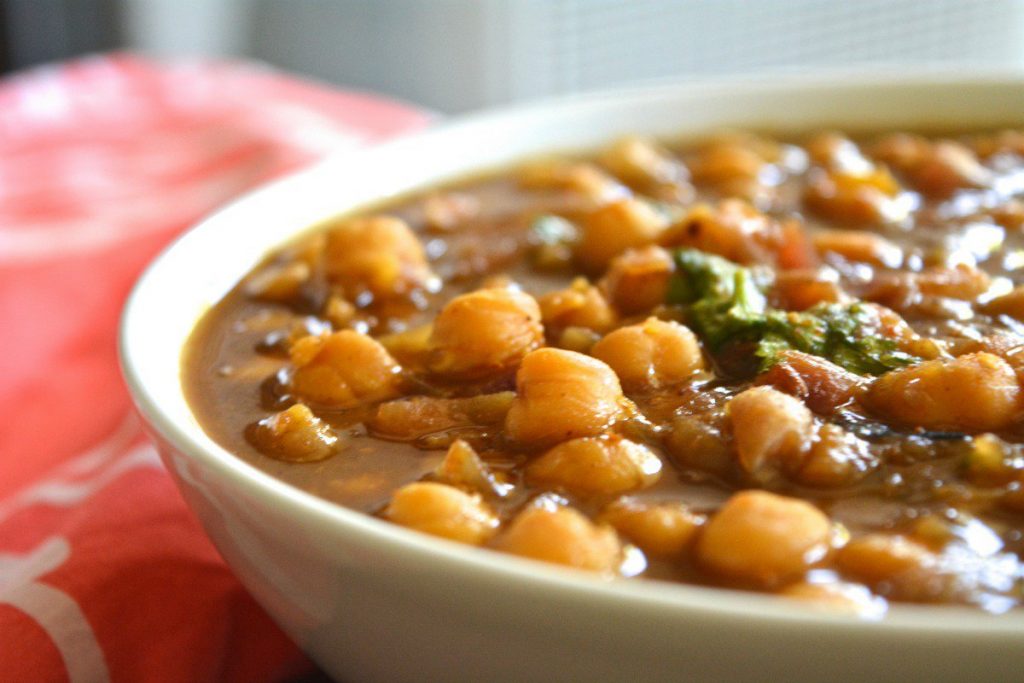
Punjabi Chana (chickpeas) Masala or Chole is a vegan dish
Common Hurdles In Obtaining Vegan Food In India
When following a vegan diet in India, the main hurdle comes with an ingredient known as ghee. Ghee is clarified butter and is an integral cooking ingredient in many parts of Northern India. In regions like Rajasthan for example, where water is at a premium, food is generally cooked in ghee (and is often quite rich).
Ghee is widely accepted as containing many health benefits and is the base ingredient for many sweets, cakes, and biscuits too. It’s frequently brushed onto different kinds of bread as a garnish. For this reason, it is very easy to accidentally consume dairy in certain parts of the country.
Despite meat and fish consumption is higher than in the North (except Punjab where meat consumption is high), South Indian cuisine tends to contain less dairy as people use coconut oil rather than ghee or any other oil. Therefore, most vegetarian dishes will also be vegan. It’s unusual for dishes to contain any surprise dairy as it will usually be specified on the menu.
If a dish does contain dairy, it’s usually fairly straightforward to ask for it to be cooked without. Likewise, you are unlikely to come across much paneer in South India. This is soft cottage cheese made from cows’ milk and is typically found in North India.
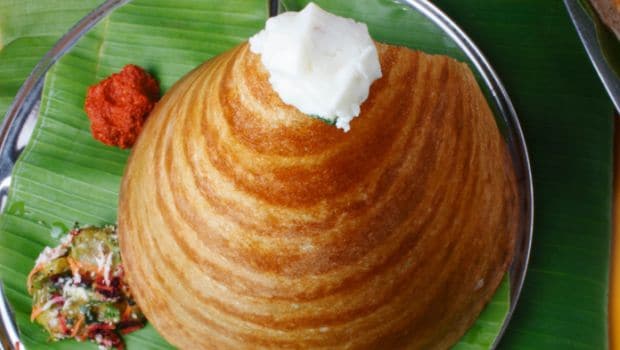
‘Dosa’, a South Indian crepe, is often prepared with Butter or Ghee. However, you can make it made in oil too
Nuances of Vegetarian Food In India
Due to religious reasons, India is home to the largest number of vegetarians in the world. In fact, 40% of Indians are vegetarian, which is around 506,960,000 people. From this, 31% are known as “pure vegetarians”, meaning they do not consume eggs. Across India, you will see restaurants which advertise themselves as “vegetarian” (no meat or fish), “pure vegetarian” (no meat, fish or eggs), or “non-vegetarian”.
These labels can be very helpful, but of course “pure vegetarian” still only refers to Lacto-vegetarianism, which doesn’t exclude dairy. Pre-packaged foods are also required to carry a label. A green dot indicates that it is vegetarian (not pure vegetarian in most cases) and a brown or red dot indicates otherwise.
Green Dot indicates Vegetarian, Red Dot indicates Non-Vegetarian
Milk and Dairy-Based Foods In India
Milk is India’s leading agricultural commodity and India is the leading milk producer in the world. Interestingly, however, there are entire regions, particularly in Eastern India, where people are lactose intolerant. However, once it is transformed into ghee, milk tends to be digestible. Accordingly, these areas are by no means dairy-free. Where people aren’t able to digest milk, protein is obtained through eating meat, eggs, and fish.
Due to the popularity of vegetarian food in India, it shouldn’t be a problem finding vegan options. Sometimes modifications will be necessary, but if you just ask, people will tend to oblige. Despite your best efforts, however, you may find that an explanation of your diet gets lost in translation.
Cows are sacred in India
When communicating your dietary needs, it’s often best to mention that you are pure vegetarian and you don’t eat dairy. It helps to list common dairy products such as milk, ghee, butter, curd, paneer and cream and to gesture that you do not want them.
Even still, this information can sometimes get lost between your waiter and whoever is in the kitchen, so if in doubt, double-check and hope for the best.
Tips for finding vegan food in India when eating out
Eating out, whether it be in a restaurant or from a food stall, is usually the most cost-effective way of eating in India and certainly the most fun. Whether you’re out for breakfast, lunch, dinner or just a snack, street food stalls offer a variety of delicious treats. These are prepared right in front of you so it’s often easy to spot if any undesirable ingredients are used.
If you’re heading out, websites like HappyCow can be really useful if you want to pre-plan where you eat and if you fancy take-out. Zomato can help you locate vegan-friendly outlets. In smaller towns and cities, such websites don’t tend to be of much use and you will have to put your trust in local cooks.
If you’re renting an apartment, preparing your own food at home is always an option. However, sourcing all the condiments necessary for preparing a tasty meal is often an inefficient use of both ingredients and money. If you’re on the move a lot, you’re unlikely to want to put opened foods and oils in your bag. Thus, be frugal with your purchases.
If you are travelling for a short amount of time, you may want to consider throwing a few vegan home comforts in your bag for when you can’t get your hands on a snack. Raw food bars travel well, as do sachets of protein shakes and the odd (plastic) jar of nut butter.
Indian curry being the easiest & tastiest vegan option
Some Hindi Phrases That Will Help You Convey Your Dietary Needs
In order to help you to keep your food animal-free, we have put together a free printable “vegan lingo” pack. This contains some useful phrases in Hindi for you to say to whoever is serving you food.
We have also written a short explanation of the vegan diet, including what cannot be consumed in four different languages. The idea is that you can show the explanation in the relevant language to whoever is serving your food.
One of the biggest concerns travellers have before setting of on a trip is ‘how much money will I need per day?’. It can be difficult to gauge how much things cost on the other side of the world, after all! Well, the short answer when it comes to budgeting for travel in India is – as little or as much as you’d want to! That isn’t really helpful though, so we’ve further broken it down for you. From getting around, to food and other expenses, here’s our guide on how much to budget for a day in India.
Despite your budget, every Indian street market will always have something in store for you (Photo Credit – Vishal Bhutani)
local travel budget for a day in India
Average cost per day: INR 500 – INR 1,000
The absolute best way to get around locally in India is via public transport. You’ll find some form of autorickshaw or ‘tuk-tuk’ in pretty much every major city and town, and they’re hands-down the cheapest option. Though riding in one can be a hair-raising experience if you aren’t used to Indian driving styles, it’s tons of fun and a definite experience.
It’s important to remember that you need to haggle for a price – outside of Mumbai, it’s rare to find an auto that runs ‘on the meter’. Each city and town has its own price ranges for auto rides; we recommend checking with a few locals on what good rates are. If you’re unsure, here’s a rule of thumb we like to follow – start your negotiations at half the amount they’ve quoted you.
Buses are also commonplace, though some are more rickety than others. These ply both locally, as well as between towns and cities. Some cities also have a local train network, as well as select connectivity via an MRT system. And of course, major metros have Uber, so that’s always an option!
The tuk-tuks are fun, interesting and affordable as well (Photo Credit – Shankar s)
food budget for a day in India
Average cost per day: INR 500 – INR 2,000
Dining is one of those areas where you can pretty much spend as little or as much as you want to – food is very reasonably priced in India. Of course, you’ve to be wary of the infamous ‘Delhi Belly’, especially when you can tell that hygiene levels might be questionable. A good rule to have is to only pick places that are always busy and full of locals.
The metros have easy access to everything, from local holes-in-the-walls to superlative fine-dining experiences and everything in between. However, you’re unlikely to find the same sort of range in smaller cities and towns. Also, if you’re in a tourist hub, finding a truly local eatery that doesn’t have prices inflated for visitors might involve going exploring a bit.
Pav Bhaji, is not only piping hot and mouth-watering but is also staggeringly cheap yet filling
Sightseeing
Average cost per day: INR 300 – INR 2,000
You will quickly realise that government-managed monuments have different ticket prices for Indian and International visitors – foreigners pay substantially more. You will also need to account for any shows, courses and experiences you might want to sign up for. Even so, a total budget of about INR 10,000 for sightseeing should have you covered on a two-week trip.
As a foreigner, you will have to pay more for a ticket to most monuments and sights (Photo Credit – Ten Safe Frogs)
Do you need to tip?
While eating out, bigger restaurants will often add a ‘service charge’ to your bill, which is like an auto-gratuity. This is not to be confused with the service tax, which is a government-mandated fee. If you don’t see this, any tip is appreciated. In hotels, too, a tip to the staff is always appreciated, though in no way mandatory. If you’re staying at a smaller guesthouse or homestay, you can speak to the owners and ask them what the best way to show your appreciation for the staff’s service would be.
While boarding long-distance trains, porters might help you load and unload your luggage, and expect a tip for this service. Otherwise, you don’t need to tip while using any of the public transport systems. Read more about how tipping in India works with our guide.