With the advent of the internet, you now have the ability to book hotels and flights at the snap of a finger. But with such technology comes a problem that we are sure everyone faces, the problem of too much information. 100 review websites, each one with a different opinion. Which can make travelling these days rather stressful. There are just so many options out there, that you don’t know where to look! Is this the best way to get around, am I missing out on some great flight deal, how will I know if I’ve done everything I should? Trip planning, especially for a country as vast and varied as India is, can be, quite frankly, intimidating. So here is a quick explanation on why a personalized trip to India is easy with a little help from us.
So, when you plan a holiday to India, you might wonder whether you should sign up for a group trip or a personalized one would make more sense. The case with group travel is that it seems easy, there’s definitely comfort in numbers and everything’s already charted for you.
However, here’s why we think a customized trip to India is the way to go:
India Someday has well-connected travel assistants all over the country
You’re in control
The biggest plus of a personalized itinerary (and it’s a really big one!) is that you’re the boss. You get to decide when you will go, how long you spend in each place, and what you see and do once you’re there. You’re not tied down by what the group’s departure date is, or what the planned schedule looks like – it’ll only have what you want on it, after all! Which leads us to our next point.
Simply pack your bags and hit the road (Photo Credit – นิธิ วีระสันติ)
It isn’t as expensive as you think
It’s widely believed that customizing your vacation requires deeper pockets than a group trip, but that’s not necessarily the case! We not only help you plan your holiday to India, we’ll make it work within the budget you have. That’s the beauty of personalized trips, after all – you get the benefits of both, a group package and travelling independently. That’s why we say.
Indian currency (Photo Credit – Rupixen.com)
It’s not difficult!
All you need to do is tell us what you want to do, and what sort of holiday you’re looking for. We’ll figure out all the details for you, and our travel planners will make sure that they give you all the information you might need for your trip. We’ve got plenty of reading material right here, as well. And, we’re also always a quick email or call away if there’s something we’ve not covered – before you leave, and while you’re on the road. So clearly.
Ayurveda and yoga in Kerala (Photo Credit – Gundula Vogel)
You don’t need large groups to stay safe
While planning a trip to India, you might come across articles discussing safety for the traveller. And yes, of course, anyone travelling to a new destination must always be aware of the social norms and cultural cues of the country they’re going to see. Having said that, you won’t ever be completely alone! Like we said earlier, we can be easily reached if you need us, but we’ll also give you the freedom to explore and experience our beautiful country just the way you want to.
So to conclude if you would like a customized trip to India we at India Someday would be happy to help plan your trip to India. Just get in touch with us and we will get back to you with some thoughts and questions.
Backpacker in India (Photo Credit – Ibrahim Rifath)
If you are planning a trip to this subcontinent in July, you need to understand the weather in India in July. Known as the wettest month in India, the rain is in full swing in most parts of the country. Read on to find out more about the weather in different regions of India in this month.
India weather in July
The Indian climate is intense and ever-changing and offers you all kinds of climate, from snow to heavy rain, from dry heat to humidity, and from blistering cold to unbearably hot temperatures.
By the end of June, monsoon season covers most of the country with a thick and wet blanket of clouds. The weather in India in July is wet. The rain starts in full swing during this month. It is followed by warmer weather in absence of rainfall.
From Kerala in the South to the Himalayas in the North, and from the Arabian Sea in the west to the Bay of Bengal in the east, it rains throughout the country, although the intensity of the rain greatly varies in every region, as does the average temperature. Compared to the previous months, the temperatures in July are comparatively cooler, and you can enjoy a great India trip.
Besides the negative effects of the monsoon season – floods, landslides and an outdated infrastructure to cope with this, certain regions of India are breathtakingly beautiful at this time of the year. The vast stretches of lush green landscapes in the South and the beautiful weather in the state of Rajasthan, make for the best regions to visit during this time of the year. It is also a great time for trekking and nature enthusiasts.
Here’s a guide to help you plan the ideal trip despite the weather conditions in India during the monsoon season.
Wondering when is the best time to visit India,you can read this! Here is a detailed overview on what the weather conditions would be like each month in India, in different regions of the country. Feel free to explore.
At India Someday, we would recommend visiting the far north amidst the mountains, the Western Ghats, and some parts of Tamil Nadu.
If you want to escape the heat and the heat all together and enjoy stunning landscapes, then the mountains are where you should go. Ladakh might be the best destination to visit in India in July. In the midst of the mountain ranges of the Himalayas, it offers breathtaking views and great opportunities for hikes. Ladakh is also called the cold desert for a reason as the precipitation is very low up there. In July, the temperatures are at their maximum but the average highs rarely exceed 30°C. It is also the prime tourist season for this part of India so be prepared as it won’t be as tourist-free as the rest of India! Check out our blogs on travelling to Leh and Ladakh, and somepotential travel routes that we’ve drafted for you!
You can also explore Rajasthan and towns like Varanasi and Khajuraho. If you still want to experience the gorgeous monsoon season in all its glory, you can visit Goa and Kerala. While you explore this region, stay at some exquisite boutique hotels at much cheaper rates and enjoy South India devoid of tourists.
We’d also recommend exploring the Western Ghats. The region is covered with national parks, wildlife sanctuaries and some charming hill stations. You’ll find a variety of rare species of flora and fauna in the hills with endless fruit, tea and coffee plantations. In July, the temperatures are cool and the air is a lot cleaner. Other regions which you could definitely explore during the monsoons in India areWayanad, Munnar and Thekkady. Further, the Dudhsagar Waterfall Hike in Goa is an excellent experience this time of year. Ooty in Tamil Nadu is very popular among domestic tourists, to flee the constantly changing climatic conditions of the cities in the monsoon season.
The far north regions of India such as Leh, Ladakh, Lahaul, and Spiti are excellent destinations for a trip in July. These regions are not as affected by the rains, but the weather is pleasant and precipitation is low. The average temperatures range from 11 to 25 degrees Celsius, making it perfect for outdoor activities like trekking, hiking, and sightseeing.
However, the regions along the Himalayan foothills, including Shimla, Manali, and Dharamshala, can experience heavy rains in this month. Landslides are also a common occurrence, which is why this region is not recommended for a trip in July.
By the end of June and beginning of July, the monsoon season hits Rajasthan and other Central and Northern regions with moderate downpours. All the popular cities of the North like Jaipur, Agra, Delhi, Varanasi,Rishikesh and Amritsar experience a respite from the sweltering summer heat in the months between July and August.
This month brings mixed weather in the Golden Triangle and Rajasthan regions. There is a good amount of rainfall in the Golden Triangle regions of Delhi, Agra, and Jaipur. The climate is cloudy on most days, which means the temperature is cooler and humidity is higher at this time. However, Rajasthan receives a low amount of rainfall even in July, making it a good destination for the wet month.
The drop in temperature makes it easy to go sightseeing the various forts, palaces, and temples, but the sporadic rains and heat spells can be exhausting if you spend a lot of time outdoors.
The Karsha Gustor Festival is a celebration of the Karsha Monastery in Zanskar, Ladakh. The festival includes masked dance performances by monks to celebrate the victory of good over evil.
The festival of Guru Purnima often takes place in mid-July in Rishikesh. The festival, honoring spiritual teachers and mentors, is marked by prayers, discussions, and fasting.
The Delhi Tourism Mango Festival in July showcases more than 500 varieties of mangoes. The festival is attended by farmers and mango producers all around India and there are many mango products for sale as well!
North India in the month of July – Photo Credit Faisal Fraz.
South India in July
In India, weather in July in South India is different on the east coast and the west coast. Compared to June, Kerala experiences lesser rainfall in July; however, the rainfall is more frequent and lasts for a longer time. It is a great time to visit the national parks in the region or go for some monsoon treks. However, if you want a dry holiday with sunshine, July is not the best time to visit Kerala.
In Goa, rain is in full swing and most restaurants, shacks, and beach activities are closed from June to September. However, you can get great discounts on luxury resorts and accommodations. Enjoy a luxurious staycation indoors with spa treatments or ayurvedic massages. If you love nature, Goa and Kerala offer lush green landscapes and breathtaking views.
Tamil Nadu, on the other hand experiences a lot less rainfall in July, ideal to explore this cultural region. The only flip side is the heat spells due to the lack of rainfall. Tamil Nadu doesn’t experience heavy rainfall until October, so July is a good time to explore some beautiful regions in this state such as Chennai and Pondicherry.
The festival of Njangattiri Aanayoottu takes place in Kerala in July. This festival celebrates elephants by lining them up in a row in the Njangattiri Bhagavathi Temple and feeding them fruits and other foods. You may also have a chance to see a snake boat race in the town of Champakulam in July.
The Nishagandhi Monsoon Music Festival is organized by Kerala tourism in July, where people can enjoy traditional music and dance performances.
Wondering when is the best time to visit India,you can read this! Here is a detailed overview on what the weather conditions would be like each month in India, in different regions of the country. Feel free to explore.
The east stream of the monsoon winds hit the Northeast of India by the beginning of June. The eastern Himalayan region of Arunachal Pradesh, Sikkim, and Meghalaya experience heavy downpours in this month. In fact, Meghalaya sees the highest rainfall in the world during June and July. We would suggest planning a trip to the northeast after October.
Even east India experiences heavy rains during July in regions like Kolkata and foothills of the Himalayas. However, the temperatures can go high in regions like Odisha.
The Behdienkhlam Festival is celebrated in July by the Phar tribe in Meghalaya. After the process of sowing in agriculture is completed, this festival is celebrated to eradicate negativity.
The Drupka Teshi Festival is a Tibetan festival celebrated in Northeast India. You can experience a yak race during this festival in Deer Park.
The Puri Rath Yatra takes place in Orissa in July at Jagannath Temple in Puri.
Puri Rath Yatra
West India and Central India in July
July in Western India and Central India is extremely wet. The regions of Mumbai, Pune, Nagpur, and the west coast see the worst of monsoon season in this month. July is the peak monsoon month, with heavy downpours, cloudbursts, flooding, and landslides in many parts of the region. There is also a hindrance in the daily commute with traffic jams, potholes, and flooded streets.
The average temperature is much cooler in July, but there is little scope for sightseeing. The weather department and government often issue warnings during this month to stay indoors, which is probably not the best way to spend a vacation.
Monsoons in Mumbai have an impact so magical and irresistible. A cup of tea, Vada Pav and the waves crashing against the shore while people simply stand and stare in awe.
Islands in July
Both the south-west islands like Minicoy in Laccadive, and south-east islands like Port Blair in Andaman and Nicobar, experience high, frequent rains in July. With the high tidal waves, heavy rains, and strong winds, the islands of India are not recommended in July.
Tips for visiting India in July
While packing for a trip to India in July, keep in mind that this is the wettest month in most states, so be prepared for rain and humidity. Pack light and breathable clothes. Keep some clothes extra in case you get wet, since clothes will not dry quickly. Also keep a waterproof jacket or raincoat and an umbrella with you. Wear comfortable sandals which won’t slip or get ruined on the wet roads.
No matter which season you are visiting India in, carry sunscreen, sunglasses, and a hat or a cap for sun-protection.
Monsoon season means a higher risk of getting sick. Keep an emergency medical kit handy with important medicines that you might need.
If you do visit India in July, keep your schedule flexible, since random rain showers can disrupt your plans.
Was this blog helpful to find out the India weather in July? For more detailed information on the best places to visit in India in July, or for any help to plan your ideal holiday to India, simply get in touch with us or hit thatPlan Your Trip button.
Planning on visiting South India in May and June? To be honest, we aren’t big fans of visiting South India in May and June. It’s hot. As in super hot! And humid! This doesn’t just mean fewer travellers coming to India but also that our subtle travel expert brains work a little slower than usual. But it doesn’t mean that you can’t travel to India. In fact, it only means that the mountains are calling!
And it’s not only the foothills and mountain ranges of the Himalayas that should get all the attention. From Mumbai in the north to the most southern tip of the subcontinent parallel to the western coast run the Western Ghats, a 1600 kms long mountain range listed as a UNESCO World Heritage Site. Covered with national parks, wildlife sanctuaries, forest reserves as well as charming hill stations.
Athirappilly Water Falls (Photo Credit – Rashi Raffi)
An insight on travelling to South India in May and June
You can’t just find various wild and unique flora and fauna species in those hills but also endless fruit, tea and coffee plantations. And visiting South India in May and June offers cooler temperatures and less stuffy air than in the cities and plains of India.
As soon as the rains start by the beginning or middle of June, nature changes its colour from brown-yellow to lush green within a couple of days. Waterfalls appear and rivers and lakes fill up. It’s a celebration of life! The cloudy sky and cooling rain bring a drop in the temperatures and fresher more breathable air.
Misty mountains in Munnar (Photo Credit – 4769654_640)
South india in may and june (Munnar)
The most popular amongst the hill stations is Munnar which is reachable in 3 hours from Kochi and in 5 hours from Madurai. It’s more a region than a certain city or village worth visiting. In fact, the city of Munnar is a cluster of shops selling locally harvest products and cheap accommodations. Therefore, we rather suggest staying in the countryside amongst tea plantations, dense rain forest and high mountain views. There are numerous homestays and boutique hotels meeting every kind of traveller’s budget and expectations.
One can take road trips up mountain roads through breathtaking landscapes. Visiting museums and strolling or hiking through the tea plantations and forests is a good option. The beautiful Eravikulam National Park is home to the endangered Nilgiri Thar and is located only 35 kms from the city centre of Munnar.
Nilgiri Thar at Eravikulam National Park (Photo Credit – Nandhu)
South india in may and june (Thekkady)
Thekkady can be reached in 3.5 hours from Munnar. The drive there is an experience in itself as the roads are built in several serpentines running up and down the mountains. The mountains are covered in dense forest and more tea plants. Thekkady is a region that accommodates the famous Periyar National Park. Spread across 777 kms, the wildlife sanctuary is home to tigers (there is no chance to see them though), as well as elephants, bisons and deers who often come to the artificial lake in the center of the evergreen park to drink. Your best chance to get a glimpse is to go on a bamboo boat ride or on a guided safari tour with tribal ranchers.
The little village of Kumily is the closest to the entry of the park and offers many nice restaurants and accommodations. The region is also famous for it’s spice plantations. Visit them to learn more the local culinary and ayurveda secrets.
Visit Piyar National Park in Thekkady (Photo Credit – Naeem Mayet)
South india in may and june (Wayanad)
Wayanad is a region in the Western Ghats further north of Kerala. Owing to its bigger distance to the backwaters and beaches, it is worth visiting as it’s less crowded and touristy. However, there is a lot to experience and see in Wayanad. Hike up to the Edakkal Caves which is of moderate difficulty. It boasts of gems like the prehistoric wall painting dating back to 8000 years. Thsi is a great way to get an overview of the mesmerising landscape of Wayanad. Or you climb up to the Chembra Peak with views all over the area with pleasant mountain climate to enjoy.
Don’t miss out on the Banasura Sagar Dam in Kalpetta. It is the largest dam in India and is the 2nd largest in all of Asia. At Muthanga National Park, you can experience exotic wildlife and nature on a half-day safari. Kuruva Dweep is a group of unhabituated islands in the river delta of the Kabani River. Here, one can find an incomparable interesting flora and fauna. You can cross from river island to island on small bamboo rafts which make the visit very adventurous.
The beautiful landscapes of Wayanad
Other hill stations
You could also visit the other interesting hill stations in South India in May and June. To name a few, you could visit Ooty, Coonoor and Kotagiri in Tamil Nadu, all within a 50 km radius from each other. Ooty is called the queen of hill stations and was established by the British as a place of temperature relief. You can reach it on a memorable ride with a toy train. Coonoor and Kotagiri are smaller but you can also hike and enjoy stunning views from the surroundings of these small villages but do avoid their bustling messy centres.
Coorg is a hill station in Karnataka, 120 kms north of Wayanad, and famous for its coffee and spice plantations. On the weekend’s, domestic tourists from Bangalore flood into this countryside. Accordingly, weekdays is your best bet if you like to enjoy the beautiful nature almost by yourself.
more information
If you aren’t much of hiking or nature person and prefer luxury travels and relaxation, South India doesn’t disappoint. You could travel to the beaches of Goa or Kerala as well as the Backwaters and stay for a bargain at 4 to 5 stars resorts. Many hotels, homestays and resorts close between April and October due to the off-season. However, the ones that remain open offer great deals in the hot and rainy season. But be prepared that it can get extremely hot and many restaurants and bars will be closed.
If you are planning a trip to India, the main question you will ask yourself is, “How many days are enough to explore India?”, or “How many days to spend in India?” Well, saying that India is a diverse country would be an understatement – you will find different cultures, traditions, and cuisines in every region. So whether you know what you would like to see or you are confused, it is a challenge to decide exactly how many days are enough to explore the country.
We have tried to make things easier for you in this blog so that you can see as much of India as possible irrespective of how long you stay in the country. Also, whether you are looking to plan a family holiday or are asking yourself how long to backpack in India as a solo traveler, you can contact us and we at India Someday can help you with your India itinerary.Plan Your Trip now!
Solo travellers can enjoy India as much as a family would – Tomb of I’timād-ud-Daulah, Agra (Photo Credit – Ibrahim Rifath)
How many days are enough to explore India?
Before planning a trip to India, we are sure you have wondered how long your dream trip to India should be, or how many days are enough to truly experience India. Honestly, you can spend six months in India and still not see and experience the entire country. Moreover, not all people have the luxury of spending that much time on vacation. So if you are wondering about a practical time frame to tour India, see a few diverse regions, and really experience the Indian culture, we would recommend spending 3 weeks here ideally.
Planning an itinerary for India is exceedingly challenging. If you want the right mix, be it authenticity and comfort or activity and luxury, just let us know by hitting thePlan Your Trip button. Consider what sites are high up on your list to see so that we can help you plan your India itinerary accordingly.
We can help you plan your dream family holiday to India
How much of India can you see in three weeks?
How much you can see in three weeks in India depends on the pace of travel that you enjoy and your budget. Travelling by train, bus or even rented car is fairly inexpensive in India. However, including a lot of flights can make your trip expensive. Although, more flights would mean more destinations that you can visit, so decide accordingly.
Ideally, if you have three weeks, we would recommend touring two regions in this timespan. One good option is North India and the Himalayas. So you could visit the Golden Triangle (New Delhi, Agra, and Jaipur), which would allow you to explore some of India’s most-visited tourist attractions along with some lesser-frequented places. Visit the Red Fort in the capital city of New Delhi, the Taj Mahal in Agra, and the Hawa Mahal in Jaipur, the Pink City. You could also add Varanasi and more of Rajasthan in this circuit. You can do a day tour in the holy city of Varanasi – visit Kashi Vishwanath temple dedicated to Lord Shiva, and attend the aarti (chants) on the ghats of the holy river Ganges. You could then explore the regions at the Himalayan foothills, such as Himachal Pradesh and Uttarakhand.
Alternatively, you can also explore three to four states in South India, for example, Goa – Karnataka – Tamil Nadu – Kerala.
Whether you want to party or just relax, Goa’s beaches have you covered. Visit the temples and ruins of the ancient kingdom of Hampi in Karnataka. If you wish to experience the religious side of India, Tamil Nadu has many, many temples you can visit. End your journey by unwinding at the Backwaters of Kerala by cruising in the waterways on a canoe or staying in a houseboat – You can even rent a houseboat for overnight travel from Cochin or Alleppey!
If you have the budget to take a few internal flights, then you could also do a North and South India trip. However, you will only be able to visit a few places in each region. If you think this would be your only trip to India, then this is a great option you can choose.
Always remember that travelling between places in India, especially road travel, can take time. It can be a little tiring and overexerting yourself in excitement can make you fall ill. Try not to plan too much – often, less is more.
The Taj Mahal is a special attraction to couples visiting India (Photo Credit – Sarah Sampsel)
What can you do in two weeks in India?
Often, two weeks is the maximum time one can take off from work. Plus, if this is your first trip to Asia or Southeast Asia, two weeks might be a better idea so that you don’t get very overwhelmed.
Ideally, try and visit only one region in a time frame of two weeks. You can do a good mix of highlight places and some less popular destinations in North India, or the same for South India.
You could also look at an 8-9 day North India tour and end with 4-5 days on the beach. There is potential to tour both North and South India in two weeks but this may feel rushed. You would be scratching the surface without really experiencing either region.
If you plan on exploring the Golden Triangle (Delhi – Agra – Jaipur) during your two weeks in India, you could also visit some lesser known attractions along with the major cities in the North. If you want to embrace spirituality in India, we would recommend visiting the Golden Temple in Amritsar. You could also visit Dharamshala in Himachal Pradesh, the village of the Dalai Lama.
Another option would be to extend your route to include more of Rajasthan. Visit the mighty Mehrangarh Fort in Jodhpur, the Blue City, or take a pristine boat ride in the pristine lakes of Udaipur, known as the City of Lakes. You could also visit the stunning sand dunes in the Thar desert and enjoy a camel safari.
You can also visit Mumbai, the city that never sleeps. The CSMT Railway Station of Mumbai is a UNESCO World Heritage Site! You can do a day trip in Mumbai – visit the Gateway of India and the iconic Queen’s Necklace as you watch the sun set in the Arabian Sea. Witness the architecture from the era of British India, or the many museums and art galleries in the city. No matter when you visit Mumbai, there will always be something happening!
Camel safaris await in North India (Photo Credit – Tom Bishop)
How to spend a month or longer in India?
Backpackers ahoy, wondering how long to backpack in India? We would recommend spending longer than two months ideally. You will definitely not be able to see everything, but you can cover quite a lot of places. Plus, you can take ample time savoring every place at your own pace instead of rushing from one place to another.
You will get great value for money in terms of food and accommodation in India. Train travel is remarkably inexpensive as well, though you will have to book tickets in advance. If you plan well in advance, you can also book some flights at a great price. In one month or more, you can visit multiple regions, maybe do some volunteering work, or even spend time at an Ashram. There is more than enough to do and see in India no matter how long you stay here.
India is not an easy destination for an international tourist. You will probably get a culture shock. And if you plan to stay in India for a longer time, you may miss home. So take your time to settle into the method behind the madness of this warm country. You will definitely leave with a deeper understanding and an enjoyable experience the more time you spend in India.
One week is not nearly enough to take in this vast country, but if that is all the time you have, we would recommend visiting the Golden Triangle. The Golden Triangle route comprises Delhi, Agra, and Jaipur, and offers a lot of diverse cultural attractions.
You can start your tour in New Delhi. Spend two nights in Delhi, exploring famous historical attractions in the city such as Humayun’s Tomb, India Gate, Lotus Temple, and the Akshardham Temple. You can also visit Raj Ghat, a memorial dedicated to Mahatma Gandhi in Delhi. Visit the markets of Old Delhi and indulge in shopping and a food tour.
You can spend one night in Agra, sightseeing and visiting UNESCO world heritage sites like the Taj Mahal (obviously!), Agra Fort, and Jama Masjid. After your historical Agra day, you can then travel to Jaipur.
Ideally, spend three nights in Jaipur, since there is a lot to do and see in this Pink City. During Jaipur sightseeing, visit Hawa Mahal, City Palace, Amber Fort, and many other famous forts and royal palaces around.
We give detailed guidance to female travellers before and during their stay
So, fellow travelers, if you are not sure how much time you should spend in the country, or simply looking for more ideas, let us know and we will plan the perfect itinerary for you. Plan your trip with us now!
One of the biggest questions travellers face when planning to visit India is – should I go to North India or South India? And, of course, when they think ‘North India or South India’, they’re usually considering between Rajasthan (and the surrounding region) and Kerala (and the region). These are two beautiful states/regions with a lot to see and do and have great accommodation options, so it’s no wonder they’re wildly popular with tourists!
While Rajasthan and Kerala are by no means the only two regions worth visiting in India, the intention of this article is to give you a practical overview of both, and the key factors to consider when deciding between them or deciding to include both the regions in your trip. This will help you decide if you should visit North India or South India – or both!
Between Delhi, Agra, and the cities of Rajasthan, this part of North India has some of the most fabulous architectural marvels of India. There’s the Taj Mahal, of course, as well as many magnificent forts and palaces. Exploring these forts and palaces is a delightful experience. They showcase intricate architecture, some offer commanding views, and they tell incredible tales of history.
If you are a huge history buff, you can read up before visiting the monuments or hire a guide (or an audio guide). Even if you aren’t into history and do not care too much about the stories behind the monuments, aimlessly wandering around them is a lot of fun.
Rajasthan has a huge variety of delightful heritage and traditional properties to stay at. A lot of old palaces and homes have been converted into hotels. Perhaps in no other region of the world will you find so many heritage properties to stay at within one region!
From the religious city of Pushkar to the Ranthambore tiger reserve, and the lakes in Udaipur to the desert town of Jaisalmer, Rajasthan offers very diverse experiences.
Rajasthani locals add bright bursts of colour to the countryside in their saris and turbans.
Rajasthan offers many chances to get a glimpse of rural life as you travel between towns. There are a few rural excursions to choose from, too – contact us if you’re interested in one!
What you may not like about Rajasthan and North India:
Travelling between towns takes time and often involves a combination of modes of transport. You should always expect multiple five to seven-hour road journeys. Overnight bus and train journeys from Jaipur are among the most used ways to reach Jaisalmer, though there are now flights from Jaipur, Mumbai and Delhi as well.
Delhi, Agra and Varanasi (and even Rajasthan to an extent) are aggressive. We basically mean a lot of touts trying to sell you things or services, or overcharging you. This is significantly less prevalent in the South of India (Kerala).
On the whole, Rajasthan is dry and arid in contrast to the forever-green Kerala.
Rajasthan might not be too conducive when travelling with very young kids. Distances are long, and there’s not as many activities for kids. Having said that, forts and palaces can be great fun for imaginative young kids to explore.
Varanasi, though vibrantly alive, is a bustling and aggressive city (Photo Credit – Jon Rawlinson)
South India
(What we and former guests love and like)
Kerala is extremely green! It’s a stunning state, and very easy to relax in.
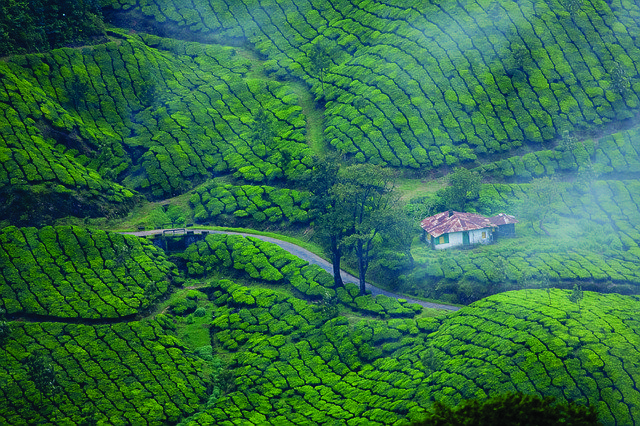
The hill station of Munnar offers breathtaking views of tea plantations and rolling hills and valleys.
Thekkady, near Periyar National Park, offers great trekking opportunities along with boat rides on the lovely Periyar Lake and spice plantation tours.
Fort Cochin is arguably the quaintest town in India! It has old India, Dutch and colonial structures, ancient markets, and plenty more. It’s very easy to walk through and explore at your own pace. Our tip: a Kathakali dance performance is always fun to watch when you’re here.
Kerala is easier in the sense that travel times are much shorter – 3 to 5 hours is typically the longest you’d spend in transit, and the attitude is not as aggressive and ‘touty’. You are more likely to get a fair price and will not be harassed to spend your money as much as you would in North India.
Kerala offers delightful accommodation options, too. In contrast to Rajasthan, there are not really any palaces converted into hotels. However, you will find lovely traditional villas, homestays, the famed houseboats and colonial stays. In most cases, it’s the views that make the stay. You can easily find a room that overlooks a valley or stay by the waterfront along the backwaters.
Somehow, hospitality in Kerala is more laid back and honest. People are always trying to make sure you are well fed!
Kerala by itself has nothing you can complain about. It is only when you contrast it against Rajasthan and consider the benefits of North India or South India that you’ll see that it offers no forts, palaces, monuments or noteworthy temples to visit. But, then the theme of a holiday in Kerala is different. It is all about nature and relaxation.
The Athirapally Falls in the Thrissur district are the exact kind of thing waiting for you in Kerala (Photo Credit – Rashi Raffi_unsplash)
North India or South India – what do you choose?
If we are allowed to be biased, for a first-time visitor, Rajasthan trumps Kerala. This may just be for the sheer stunning monuments it has to offer. If you like exploring history and ruins and want an active holiday, then perhaps North India is more suited for a ten-day holiday.
On the other hand, if you are convinced that you want to relax during your holiday, experience nature and engage in some light trekking, then Kerala is your answer. Kerala is absolutely gorgeous, and you have the backwaters, the hills and tea plantations, and loads of lovely accommodation options to choose from.
If we had couple of weeks to visit India, would you recommend only North India or South India or both Rajasthan and Kerala?
This is a hard choice. Kerala by itself for fourteen days would be a leisurely paced, relaxing holiday, A North India trip can easily span over fourteen days without getting excessive or feeling repetitive.
So the choice is either to just take a North India trip or include Kerala in the itinerary. It’s important to understand that a combined trip works out a little more expensive. This is because you have to take flights between the two regions.
We usually send our guests multiple travel plans to help them decide. Here are a few routes which some past guests have done.
If you have seventeen to eighteen days or up to three weeks then, you can include both in your trip.
**Please note, this article only focuses on Rajasthan and Kerala and does not include regions like Goa, the city of Mumbai or other regions of India and the merit/demerit of visiting them. However, they are worth considering too.
Wondering what the weather in India is like at different points of the year? Well, India tends to have three different seasons: winter, summer and monsoon. Each comes with quite an intense change in the climate bringing either impulsive rain showers, the heat so extreme you cannot step outside during midday, and even towns get covered in a blanket of snow in the northern region of the country. If you plan your trip with us we will help you decide which area is best to visit during the month that you are here.
Here is a comprehensive list of the weather in India at different times of the year:
Monsoons in India (Photo Credit – SHAH Shah)
Ideal Times to visit
The most ideal time to visit is during the winter months (Oct-Feb) when the days are much cooler throughout India. Although this is peak tourist season and prices will be higher, you will have a lot more comfortable trip where you won’t have to escape the heat during the day. There is even a chance of seeing snow in the north of India.
North India: (i.e. Delhi, Agra, Rajasthan etc.) visit from October to March (10˚C – 28˚C).
South India: (i.e. Goa, Kerala, Tamil Nadu etc.) visit from October to April (22˚C – 32˚C).
Himalayas: Visit from April-June to avoid the heat of Central India or during September – mid-November to catch the snow. These are the best times to trek (avoid July-August as this is the monsoon season).
May to September are generally the non-touristy months with a significantly lower number of tourists and cheaper hotel prices. This is because the summer brings intense heat which can be quite unpleasant, even for the locals let alone tourists! We would suggest you avoid travelling in these months but we also realise sometimes it cannot be avoided, therefore plan around the weather and head to somewhere that isn’t as unbearable.
Towards the later months from June-August, the monsoon season hits and many places will face heavy spurges of rain plus high humidity. You should visit the top of the Himalayas in Kashmir as it will have much more pleasant weather than Central and South India.
North India can be extremely hot (35˚C – 40˚C) and therefore is best avoided.
South India will also be hot but is more pleasant than the North (25˚C – 35˚C). You can also escape to hill stations or forest areas that are a lot cooler. Plus, the beaches will be less crowded so it’s not all bad!
Himalayas – April, May, June, September & October are the best months to trek. The summer melts the snow and treks that were formerly inaccessible, like the road to Pangong Lake, become open.
Sweltering heat in the Thar desert of Rajasthan (Photo Credit – Ben Ostrower)
How much would a two week holiday in India cost?
A typical two week holiday, with a couple of internal flights, train travel by air-conditioned coach, comfortable, value for money accommodation, food and monument entrance fees would cost EUR 500 to EUR 700 (USD 700 – USD 1000) per person (excluding flight to and out of India).
By spending a little more you can indulge in a few pampered hotel stays, or even rent a car (and driver) for certain legs of your journey.
Alternatively, if you decide to backpack India on a shoestring you can spend even less than EUR 500 (USD 700), but you should be willing to compromise on comfort.
Festivities around The Golden Temple in Amritsar (Photo Credit – Cuyahoga)
How much does it cost to fly to India?
Flights from Europe can range between EUR 400 to Euro 800 depending on the season and how early you book.
From North America prices can range between USD 900 to USD 1300, again depending on the season and how early you book flights.
Flights are most expensive in and around December.
One universal truth about India is that festivals are probably the best firsthand look at its culture. Most have colourful stories and rituals attached to them and the people really know how to have a good time. Let’s just take you through a few of the most famous ones so that you can plan your India travel around a festival in India.
Performing at the beat in music festivals of Rajasthan
Enjoy the festivities of Diwali while travelling in India
It brings in the Hindu New Year – the day Ram, the hero in the ‘Ramayan’ returned home after defeating Ravan, a ten-headed demon who abducted his wife. They call it the festival of lights. It’s easily the most celebrated in India with lamps, lanterns, firecrackers and the Diwali Pooja (prayer ceremony).
When do we celebrate it?
It lasts 5 days starting with Dhanteras and finishing up with New Year. Diwali is the third day, the day of the full moon between October and November. In 2014, it is on 11th Nov (dates keep changing each year according to the Hindu calendar).
Best place to be to enjoy the celebrations
The whole country just lights up, especially North India. In Varanasi, they conduct huge Diwali aartis with elaborate lamps and chants at the Ghats. Rajasthan comes alive and amongst the metros, Delhi has a Diwali worth witnessing.
If you’re travelling to India during the Diwali season, make sure you book well in advance – tickets, bookings, guides. Everything becomes a bit more expensive at this time. A lot of noisy streets and all the smoke from firecrackers are the price you pay for visual delight and superb food.
Festival of lights (sparklers) (Photo Credit – Madhukar Kumar)
Celebrate Holi
This 2-day riot of colours celebrates the bounty of spring. It’s called the “Festival of Colors” and people bathe each other in dry and wet colours, have rain dances, drink bhang (a cannabis paste) and ‘thandai’.
When and where to enjoy the celebrations?
It’s usually the day after the full moon in March (a day before in some eastern parts). In 2014 it’s on March 17. On the night of the full moon, they burn a Holi pyre (on which the mythical demon Holika was burnt) to destroy evil. North India offers unique Holi experiences in Rajasthan, Uttar Pradesh (Barsana, Mathura, Vrindavan), Shantiniketan (Kolkata), other parts of West Bengal and Delhi amongst metros.
Almost every household in India celebrates Holi and it really is fun. The only things to be careful about are checking if the colours you’re using are toxic and if people are largely intoxicated. All in all, the trick to enjoying this one is to stay safe but go into it with no inhibitions.
Onam in Kerala
This is South India’s harvest festival with flower decorations on floors outside all houses. They’re meant to welcome the mythical King Mahabali. People shop and prepare feasts. There’s a lot of song, dance and games but the highlight is the snake boat races. You absolutely must catch one of these.
When and where to enjoy the celebrations?
Celebrated in Malayalam speaking parts of South India, it is really big in Kerala, especially Thrissur with its Puli Kali (tiger play) festival on the last day of Onam. It starts in the first month of Malayalam Calendar and Thiru Onam, the 10th day from Atham is the most celebrated. After Thiru Onam, there are 2 more days of celebration.
If you’re travelling to Kerala during Onam make sure you make advance bookings as ticket prices sky rocket and the best accommodation get occupied quick.
Eleven days of festivities and colourful processions carrying Lord Ganesha idols characterize Ganesh Chaturthi. It is a celebration of the birthday of the Hindu God with an Elephant head. People bring Ganesha statues home and place them in public stalls, worship them for a few days and then submerge (Visarjan) them in style.
Mostly celebrated in the state of Maharashtra and by Maharashtrians elsewhere in India, it falls on the 4th day of the new moon in August or September and lasts 10-11 days. Ananta Chaturdashi (10th day) is the biggest day.
The festivities go hand in hand with heavy traffic, blocked routes and a lot of noise on the streets, especially in Mumbai and Pune.
Ganesh Chaturti in Mumbai (Photo Credit – Chabilleasy Mawa Unsplash)
Pushkar Camel Fair
This 15-day camel trading fair is held in Pushkar, near Ajmer in Rajasthan. People come here in huge throngs. The first 5 days are for camel trading after which pilgrims take dips and conduct rituals in the holy lake. Camels are all decked up and shaved. There are camel beauty pageants, dancing contests, races and what not. Musicians, acrobats, dancers, magicians, carousel rides, snake charmers; this fair has everything you’ve associated with India of the yesteryears and more.
If you’re planning on visiting Rajasthan during the fair, book well in advance unless you want to pay through your nose for an average accommodation. And be careful of godmen and other freeloaders trying to fleece you in Pushkar.
Rajasthan Musical Festival
You camp in the Thar desert (Rajasthan) and revel in 4 days of absolute auditory and visual delight. There’s a bunch of stages, a superb and extremely diverse line-up of music artists from all over, visual art and many more experiences.
There are no fixed dates for the music festival and it keeps changing. If you are interested, keep visiting http://www.ragasthan.com/ to stay in the loop. You should prepare well for extremely cold nights and relatively hot and dry weather during the day’s since you’re going to be outdoors most of the time. Book your passes well in advance, this festival is becoming more famous by the year.
Jodhpur Riff
The Rajasthan International Folk Festival at Mehrangarh Fort in Jodhpur, Rajasthan is a great experience for people any age from any culture. UNESCO calls it a “Peoples Platform for Creativity and Sustainable Development”. It has Sir Mick Jagger for its International Patron. Dates always coincide with the year’s brightest full moon, Sharad Purnima and the festival always has brilliant concerts and events. Again, this is a time of the year when Jodhpur gets very crowded so you should make all your bookings well in advance for a hassle-free experience.
India is a confusing country, and tipping in India is a big question for travellers. We at India Someday have now planned nearly 2000+ trips for people travelling to India. Our expertise has helped us put together a rough guide on tipping in India in various circumstances. This article tells you how much you should be tipping in India depending on the situation or service (like at restaurants, hotel staff and your car drivers). If you do need help with planning your trip, we are happy to help you with candid advice and our own travel experience.
The currency in India, commonly known as the Indian Rupee (INR) (Photo Credit – Shameer Pk)
TIPPING IN India AT A RESTAURANT
India has some great food and you can choose from street food stalls and small restaurants, to high-end experiences. Each of them have a distinctly different tipping etiquette, making tipping in India at restaurants a bit of a confusing challenge.
For street food, no tipping is required. When you pay for a small meal, breakfast or a snack that costs less than INR 300, a 10% tip is appreciated. If you have small bills handy, you can tip in multiples of 10 Rupee notes.
On bills ranging from INR 300 to INR 1,000, you can tip around 7% to 10% of the bill amount. For example, a tip of INR 100 on an INR 1,000 bill is a very good tip. You can also tip about INR 70 and that would be fine. On bill amounts above INR 1,000, a tip of 5% to 7% is sufficient.
Restaurants now often include a ‘service charge’, not to be confused with ‘service tax’ (which is a government-levied tax). No tip is expected if this type of charge is levied. It’s normally capped at 10%.
Fine-Dining Restaurants in India are quite swanky (Photo Credit – Blake Wisz)
TIPPING in India AT HOTELS
In general, hotels have a vast staff that you don’t necessarily get to meet or cross paths with. For that reason, we do always recommend leaving a tip for the entire staff. On average you can tip INR 100 per person/per night at the homestays or hotels you are staying at. So, 2 adults staying in Delhi for 3 nights can tip 2 adults * 3 nights * 100 = INR 600 (Note: Exclude restaurant tips from the general tips to the hotel). Normally at the reception, you would find a central tip box or you can ask if they have one. If not, then tip one central person at the reception and indicate you want it to go to everyone in the staff. If you are young budget travellers/backpackers and want to tip even lower for hotel rooms, you can.
Homestays and B&Bs will usually bill you for meals and extra services at the end so you can tip them then. Do let them know this tip is for the staff, who do the cooking, cleaning etc. Always leave the tip at the end of the stay. Again, a little more than INR 100 per person/per night is enough. Additionally, in India, there will be times when bellboys (individuals who will carry your luggage to your room) wait for a tip at the door. In these cases, you can give them a small tip of INR 10 to 20.
A beautiful hotel in Kochi, Kerala, offering spectacular views
TIPPING CAR HIRES AND GUIDES
Pick up/drops and day tours
When you are being picked up from an airport/railway station or just being dropped off at an airport/railway station you can tip INR 50 to 100.
If you have a car for a day touring the city, depending on your happiness with the service you can tip between INR 200 to 400. Base this on whether he gave you good local tips on places to eat or monuments to visit and whether he avoided tourist traps.
Tipping in India can be bypassed if you take a taxi or a tuk-tuk (rickshaw) from point A to point B after a rate has been negotiated. If you’re interested in more info in relation to tuk-tuks, check this guide out.
Multiple day car hire or guide
Many of our trips include multiple-day car hires with their own drivers, who accompany you anywhere between a few days to a few weeks.
Base your tip on the number of passengers in this instance:
For 1 or 2 passengers, tip between INR 300 to INR 600 per day. So if you had a driver for four days and were very happy you can tip him INR 2,400.
For 3 to 5 passengers, then tip between INR 500 to INR 800 per day.
There have been instances when our drivers have absolutely delighted our guests. The driver has taken them to their village or house, told great stories, and overall taken great care of them. Do feel free to tip above this guideline if you feel like your driver deserves it. There is absolutely no issue with that!
Tipping Guides
You should tip a guide between INR 100 to INR 300 per day. This depends on your level of satisfaction with the guided tour. If it is a group tour then per person INR 50 to INR 100 is a fair tip.
In terms of tipping guides for a more personalized tour, it really depends on how happy you were with the tour and the service. We suggest a wider price range of INR 300 to INR 1,000 (happy to absolutely delighted).
Travelling in an auto rickshaw is a total must for an authentic Indian experience
Tipping in India: TO KNOW
While tipping in India isn’t necessarily a cultural tradition, people expect you to tip in most of the tourist towns. We do recommend tipping at various instances as explained above, but tip higher only when you are very happy with the service. For a more general look at budgeting for your trip to India, this link is a good place to start.
We also encourage tipping higher than the range specified depending on your satisfaction level. This could be in cases where an individual went out of his way for you or in general, you feel like the service was excellent and the increase is more than deserved.
We recommend tipping at various places depending on your satisfaction level (Photo Credit – Dan Smedley)
If you are in the planning process or are thinking about a trip to India, or it’s already planned but need some help with it, do let us know and we can help you plan your trip.
The weather in India in October is a mixed bag, with the average high temperature different in every region. Read through our article on the weather in India in this month and get inspired by discovering the best places to visit in India during this time.
India Weather in October
October in India marks the end of monsoon, but in India, weather is different in different parts of India. October acts as a transitional month, where some parts of the country occasionally experience rain, some parts begin to cool down, while in some parts, it gets quite hot.
The cold takes over in the north. With clear skies and pleasant climate, these regions get ready for tourism. It starts to snow in Ladakh and Uttarakhand in north India.
In Central and Western India, October weather is dry with minimal rainfall. However, the climate can swing between hot and cool.
On the other hand, the southern and eastern coastal regions such as Kolkata, Chennai, and Kerala experience the retreating monsoon season with light rainfall.
October experiences a few showers and is a good time to travel across India.
Best Places to Visit in India in October
The weather in October in India differs from one region to another. While it is mostly warm and dry in maximum places, it is unpredictable. At India Someday, we would recommend the Himalayas in the North and northeast. The lower parts of these regions are perfect for short treks and hikes during this month.
The states of Rajasthan, Gujarat, and Maharashtra have average high temperatures hovering around 30 degrees Celsius (86 degrees Fahrenheit), but the weather is pleasant. You can visit the blue city of Jodhpur in Rajasthan, known for its blue-painted houses, or visit the grand city of Udaipur. Gujarat and Maharashtra have many cultural attractions worth visiting. There are also many national parks and wildlife sanctuaries that start opening up in October in Rajasthan, Gujarat, and Maharashtra.
The Golden Triangle is a great route to visit in October. Comprising Delhi, Agra, and Jaipur, this route includes many important historic monuments in India, such as the Red Fort in New Delhi, Taj Mahal in Agra, and Hawa Mahal in Jaipur. It is an amalgamation of different cultures and traditions, with something for everyone. Additionally, there are many amazing festivals that take place during October. Diwali, the festival of lights, takes place in October or November, and is one of the biggest festivals in the country. Another festival is Navratri, which takes place towards the end of September or in October, and is celebrated differently across the country. Dussehra also takes place in October, celebrating the triumph of good over evil. The Rajasthan International Folk Festival and Marwar Festival takes place in Rajasthan.
October is a great time to visit the mountains in the northern part of India. The high altitude regions in Uttarakhand, Himachal Pradesh and Ladakh can get extremely cold and there is also a good likelihood of snow. However, the hill stations and regions of Rishikesh, Manali, Shimla, and Dharamshala are ideal for a trip in October. With clear skies and pleasant sunny days, you can go for hikes and treks here in October. Read more about adventure travel routes in the Himalayashere.
If you are visiting India for the first time, the Golden Triangle is a great route for exploring the north of the country. With Taj Mahal, Red Fort, Hawa Mahal, Fatehpur Sikri, and City Palace on the route, you get a glimpse of many facets of India in this short trip.
Coming to the lower north of India, Rajasthan can get quite hot during the afternoons, with daytime temperatures sometimes reaching 35 degrees Celsius (95 degrees Fahrenheit) or higher.
Diwali is celebrated in a grand manner in North India. All the houses are cleaned and lit with oil lamps. People visit friends and families and exchange sweets and gifts.
The Rajasthan International Folk Festival takes place in mid-October near Mehrangarh Fort in Jodhpur. This annual event celebrates the local music and art of Rajasthan through folk music, dance performances, and storytelling. Another festival in Jaipur during this time is the Marwar Festival, which includes horse polo, one of the most popular sports in Jodhpur.
The festival of Dussehra takes place in September or October in India. While it is celebrated across India, you can find a different kind of energy if you visit Delhi, Uttar Pradesh, and Rajasthan. Statues of Ravana, a demon king in Hindu mythology, are set on fire on this day. In the holy city of Varanasi, along with Lucknow and Kanpur, Ram Leela, a popular Sanskrit epic, is performed on a large scale.
As the retreating Northeast monsoon arrives, Kerala receives a lot of rain even in October. If you are planning to visit Kerala during October, you will be greeted with lush greenery and beautiful waterfalls, but be prepared for heavy downpours. It is not tourist season in Kerala, so expect fewer restaurants open by the beach. It can get quite warm in the lowlands and cool in the mountains with temperatures varying from 16° to 30°C (86°F). We’d recommend preparing for every weather change possible: from drizzle to storm, from cloudy to sunny, from hot to cold. Seefour popular routes for Kerala. Karnataka’s climate is almost the same as Kerala’s but there is less rainfall. It is also a very viable route forbackpackers. Tamil Nadu’s official monsoon season starts mid-October and lasts until mid-December. It is better to avoid the East Coast like Pondicherry, Mahabalipuram and Chennai in October. In Goa business slowly picks up by mid-October with many resorts and restaurants reopening for the new season. South Goa remains slow until November. However, the beaches of North Goa are warm and welcoming. It can be hot and it might get stormy on some days but it is a rare occurrence.
Diwali in the southern states has different customs and traditions, and is much more subdued than the rest of the country. People light oil lamps and pray to Lord Ganesha and Goddess Lakshmi. They prepare a variety of snacks and exchange gifts and clothes with loved ones. Kerala does not celebrate Diwali with the same enthusiasm as the other states in India. In Goa, people burn effigies of Hindu demon Narakasura, symbolizing the triumph of good over evil.
Karnataka receives a good amount of rainfall but it is still less compared to Kerala.
East India and North East India in October
October to March are the peak months for tourism in East India and Northeast India. The October temperatures on the eastern coast are relatively cooler, great for outdoor activities.
Durga Puja usually takes place in September or October, and is celebrated with great vigor in West Bengal. This nine-day festival honors Hindu Goddess Durga through large idols, aartis (chants), and other festivities. Dussehra is the last day of the festival.
Diwali is celebrated in East India differently than the rest of India. While most of the country focuses on Lord Rama, West Bengal celebrates Diwali with Kali Puja. People worship Goddess Kali by lighting clay lamps to idols of the Goddess. The evenings are filled with lights and fireworks.
In Meghalaya, people light lamps in their homes and on the hills, making it a sight you cannot miss. In Nagaland, Diwali often coincides with Toku Emong, a harvest festival in the state.
Durga Puja
West India and Central India in October
As the monsoons recede, the weather in Central and West India in October becomes pleasant. It rarely rains in Central India in October, so you can mostly expect a rain-free holiday. With the average high temperature staying at 30 degrees Celsius (86 degrees Fahrenheit) during the day, the climate is hot but not unpleasant. However, the ‘October Heat’ can take hold of regions like Mumbai, where it becomes unbearably hot before the month transitions to the cool winter.
Navratri is celebrated in India during September or October. In Gujarat and Maharashtra, the nine-day festival is filled with people fasting and performing traditional dances of Dandiya and Garba with friends and family.
Diwali is celebrated resplendently in the western states of Maharashtra and Gujarat. Houses are lit by diyas and lanterns, and Goddess Laxmi, the goddess of wealth, is worshipped. Rangolis, intricate designs made by colored powder, are drawn outside everyone’s houses. Friends and families visit each others’ houses and exchange gifts, sweets, and traditional snacks. At night, people burst firecrackers together – the festival is a riot of lights and vibrance all around.
In Central India, Diwali coincides with the harvest season. People worship their livestock and light bonfires.
Navratri celebrations in Gujarat and Maharashtra
Islands in October
Andaman and Nicobar Islands, located in the Bay of Bengal, have warm seas and pleasant weather. The October temperatures make it the perfect time for some outdoor activities on the island, or underwater activities in the sea.
October is the beginning of winter in Lakshadweep. The average temperatures range between 24 and 27 degrees Celsius (75.2 and 80.6 degrees Fahrenheit), ideal for outdoor activities or water sports on the island.
Lakshadweep
Tips while visiting India in October
Visiting India in October will require some extensive packing. The choice of clothing will depend on the region you are visiting. With an average high temperature of 30 degrees Celsius (86 degrees Fahrenheit), we would recommend light and breathable clothes throughout the country along with some warm clothes for the night and sweaters or shawls if it gets cold. Also carry an umbrella with you in case of a sudden rain spell.
While visiting conservative places, wear appropriate clothing covering the body.
October is the beginning of the high season for tourism in India, so you will see a moderate influx of travelers in India. The cost of accommodation and other tour expenses are still relatively reasonable. You will be able to find many resorts and hotels of good quality at a good price.
Make sure you check the festival dates for the year before planning a trip, as the dates change every year.
Does this article make you want to visit India in October? Let us know! For more detailed information about the best places to visit in October, or for any help planning your perfect trip to India, feel free toContact Us! We will plan a wonderful trip for you, customized according to your requirements.
The weather in India in June varies greatly from one region to another. June marks the monsoon season in the country, starting from southern India. So while the south of India is bathed in rain, the north of the country faces extreme heat. Read on to find out the exact weather in each region in India in June.
India Weather in June
In India, weather is different in different regions and climatic zones in June. The Southwest monsoon usually hits Kerala in South India towards the end of May or in early June. The rain then travels up North along both the east and west coast, but is usually stronger on the west coast. By mid-June, monsoon arrives in Goa and Mumbai, and in Rajasthan and Delhi by the end of the month before making its way up to the mountains.
June usually starts as another hot month with high temperatures of 35°C but can end with lots of rain and a resurgence of greenery. For some travellers however, this might not be the desired time to visit if your time is limited. This completely depends on where you would like to go.
Find out more about the effects of the rainy season and how it can impact your travels in thisblog.
At India Someday, while we would not put June at the top of our list ofbest times to visit India, there are still quite a few places you can visit in the country. Plus, monsoons in India can be a beautiful experience. Landscapes turn lush green from the rain after months of heat. Having said that, you need to be prepared for the varying temperatures, heavy rain and humidity, and all other issues that come with the monsoon season in India.
The northernmost part of the Himalayas is the best choice for a trip in June. Leh experiences pleasant daytime temperatures of around 21 degrees Celsius. The rain also does not affect this region much this month. It is the perfect destination for hiking, trekking, and experiencing the beauty that the country has to offer.
If you are planning to visit the Golden Triangle, you will find fewer crowds this month. However, the heat can be pretty intense, so make sure you plan any outdoor sightseeing in the morning or late afternoon. Try not to venture outdoors during the hot afternoons. If you are visiting the Taj Mahal, it is a good idea to visit early in the morning to avoid crowds and heat. Keep in mind that the Taj Mahal is closed on Fridays.
Kerala is wet in June, but there are fewer tourists and you will be able to witness some mesmerizing natural views during this month. On the other hand, Tamil Nadu is hot at this time, but you can visit Pondicherry, or hill stations like Ooty and Coonoor, which offer cooler temperatures.
North India in June
It rarely rains in the northern Himalayan regions in June, and the average temperature is cooler, ranging from 15 to 20 degrees Celsius. Rishikesh, Shimla, Manali, and Dharamshala are popular destinations at this time of year. However, towards the end of the month, the weather can change drastically with heavy rainfalls that can cause landslides, making outdoor activities extremely risky.
Ladakh or Lahual and Spiti offer an excellent escape in the North during June. Located in the middle of the Himalayas, Leh and Ladakh have breathtaking views and great hiking trails. Ladakh is also known as the cold desert since precipitation is low up there. The climate is perfect, with moderately warm days and pleasantly chilly nights. However, it is a popular tourist destination in June, so you can expect crowds during this time.
The Shimla Summer Festival occurs in June. This five-day long harvest festival is celebrated with a half-marathon, folk performances, handicraft exhibitions, and a flower show.
In Rishikesh and Varanasi in North India, the Hindu festival of Ganga Dussehra takes place in May or June, which celebrates the mythical origin of the holy river Ganga. It is said that the Ganges river descended from heaven to earth on this day.
As monsoon season in the country arrives towards mid-June and slowly makes its way up to the north, the Golden Triangle region of Delhi, Agra, and Jaipur, as well as the lower north regions of Varanasi and Amritsar stay hot and dry until the end of June. It is also often cloudy, adding humidity to the already exhausting climate.
Cities like Agra, Varanasi and Amritsar are usually dry until the end of June, making it a good time to visit.
South India in June
Monsoon in India first hits Kerala in June and then travels up north along the east coast and west coast. Tamil Nadu and the east coast get little rain in this month to the extent that they can also struggle with drought some years. June in Goa is a wet month, so be prepared with umbrellas and raincoats if you plan on visiting Goa in this month. As monsoons flourish on the west coast, so does the tropical flora. The natural landscape becomes lush green and is a sight to behold.
However, the monsoon season also means disruptions in travel and outdoor activities. Many hotels and restaurants on the beaches of Goa, Karnataka, and Kerala remain closed until September.
However, accommodations that are open probably have great discounts. So if you still wish to travel in June despite the heat, rain, and humidity, we would recommend the Western Ghats. This 1600 kms long mountain range, running parallel to the coast of the Arabian Sea, is a UNESCO World Heritage Site. The region is full of national parks, wildlife sanctuaries, forest reserves, and many hill stations.
Check out the fruit, tea, and coffee plantations in Munnar, Thekkady, or Wayanad in Kerala. You can also visit the Dudhsagar Waterfall in Goa. In Tamil Nadu, Ooty is a popular hill station among domestic tourists to escape the heat of the cities.
The Kottiyoor Vaishaka Mahotsavam takes place in Kerala. Dedicated to Lord Shiva, the 28-day festival sees traditional rituals performed in thatched huts, and elephants and devotees walking in the river as it rains heavily.
Plan Your Trip to India in June with us now and we will suggest the best places to enjoy during this time.
Kerala offers the most breathtaking views of lush green plantations that look even more beautiful during the rainy season.
East India and Northeast India in June
The monsoon winds hit the Northeast of the country by the beginning of June and some regions like Meghalaya get an intense amount of rain. June is the wettest month in northeast India. Plus, Kaziranga National Park is closed during the rainy season, from the end of May until the start of October. Hence, we recommend visiting this region during and after October.
The Buddhist holy month of Saga Dawa is usually in the month of June. The festival is celebrated with prayers and processions in the state of Sikkim.
In Odisha, the Jagannath Rath Yatra takes place in June. This Chariot Festival is a holy Hindu festival said to be Puri Jagannath’s holy journey.
Saga Dawa (Pic courtesy: People’s Archive of Rural India)
West India and Central India in June
Monsoon arrives in Mumbai and much of Central India in mid-June. We recommend avoiding the plains of Central India in May and June. However, the rain is not very heavy yet, and you will experience quite a few sunny days as well. So while you need to be prepared for the wet weather and humidity, sightseeing is still possible. Many national parks remain open until the end of the month.
It is better to visit upper North of India in June as the temperatures are low and rainfall is less.
Islands in June
The Andaman and Nicobar Islands remain warm in June, with average temperatures ranging from 26 to 32 degrees Celsius. The islands have a tropical climate with a few rainy days in this month, but the weather is pleasant overall.
On the other hand, June marks the monsoon season in Lakshadweep. The island experiences heavy rains and strong winds, with temperatures ranging from 26 to 28 degrees Celsius. The climate is cool and pleasant, perfect for travellers who want cooler weather and don’t mind the rain showers.
Travel tips for visiting India in June
June is an off-season in the country, which means that many hotels and accommodations will be closed during this month. But it also means that you can get great discounts on the ones that are open, along with cheaper flights.
The weather in June is unpredictable, which is also one of the reasons why it is an off-season month for tourism. However, if you do visit India in June, decide the regions you want to visit and pack accordingly.
Carry light and breathable clothes. Carry a light jacket, sunscreen, sunglasses, raincoat or umbrella anywhere you go since the weather conditions vary every year in June.
Make sure to carry water with you and stay hydrated at all times.
At India Someday, we plan the ideal India trips for you based on your requirements and needs. For more detailed information about the best places to visit in the country in June, or for any help planning a wonderful trip to India,feel free to contact us!
Weather in India in June Video
Let India Someday handle it and plan your best trip.