TALK WITH US +91-9970620335
WhatsApp

Weather in India in March

The weather in India in March is warm, the crowds are less, and the month witnesses one of the most enjoyable festivals in India – Holi – the festival of colours! If you are planning a trip, the March temperature makes India a great holiday destination. Read on to find out about the weather in the country in March in detail. You can see some of our month long suggested tours for India that cover different regions.

Weather in India in March

March is a warm and dry month in most of India. With the average temperature rising slowly and the monsoon rain a few months away, the March weather is perfect to visit India. Being a shoulder season, the warmer weather of March signals the end of winter and the beginning of the summer. That is why, the tourist crowd in the country is relatively less.

The chances of rainfall are few, with the exception of some rain showers in the northeast.

Best places to visit in India in March

If you are traveling to India in March, we recommend visiting Northern India, where there is stunning scenery everywhere you look, and the temperatures are still pleasant. If you are visiting South India, we would suggest heading to the many tea plantations or national parks to avoid the heat.

If you love wildlife and nature, March is a great time to take wildlife safaris in the national parks and wildlife sanctuaries of India, such as Kaziranga National Park, Ranthambore National Park, Kanha Tiger Reserve, and more.

India celebrates the festival of Holi in March, which can be a great experience for travelers. You can travel to Uttar Pradesh, Gujarat, Madhya Pradesh, Rajasthan, or Maharashtra for Holi. The biggest Holi celebration happens in Mathura-Vrindavan, Pushkar, and Varanasi.

For more information on the Holi Festival, check our our blog ‘Visiting India during Holi Festival’. If you are interested in travelling to India during March for Holi, check out our travel route: ‘Wander to India and Experience Holi with the Wandering Quinn’.

Summer in India, Why visit India in March
Vibrant colours of Holi (Photo Credit – Frankspandl)

North India in March

As the average temperatures rise further in March, it is a great time to visit the mountains and the Himalayan foothills like Amritsar, Rishikesh, and Dharamshala. With clear skies, warm weather, beautiful sunshine, and a variety of flora, it is the perfect time to visit Jammu and Kashmir, Himachal Pradesh, or Uttarakhand. Daytime temperatures range from 15 Degrees Celsius to low 20s. Go off the beaten path and follow some hiking trails and treks to make the most of this weather.

The Matho Nagrang Festival takes place in Ladakh in the Matho monastery. Also known as the Oracle Festival, the main attraction is the future predictions, along with monk dances, mask dances, and more.

The International Yoga Festival in Rishikesh has yoga workshops and seminars by trainers from around the world.

The Golden Triangle has pleasant temperatures in March,ranging around 28 degrees Celsius during the day. You can visit the Red Fort in New Delhi, Taj Mahal in Agra, and Hawa Mahal in Jaipur. You can also extend the Golden Triangle to include Rajasthan in your trip.

There are many festivals that take place in March in Rajasthan. The festival of Holi is celebrated with pomp in this state. The Jaipur Elephant Festival is celebrated a day before Holi, and has many events that celebrate the culture of Rajasthan, where elephants play an important role.

The Godwar Festival in Pali celebrates the art and culture of Rajasthan with traditional sports like turban tying, races, and events and performances.

Mewar Spring Festival in Udaipur, also known as Gangaur, marks the beginning of spring with a procession of different communities carrying idols of the regional deities.

For more information about our favourite places to visit in North India, see our blog post.

Check Out: Inspect Rajasthan’s Top Vacation Spots

Places to visit in India in March
Amritsar Golden Temple

South India in March

Southern India can get quite warm in March. While the weather doesn’t get as hot as in April and May, it’s not as pleasant as in January, either. The beginning of the off-season means that the region is a lot less touristy and generally less crowded, making it easier to travel. This means you get emptier beaches and cheaper accommodation options. Check out our blog that suggests some lesser-known beaches for you to try. If you are looking to explore the temples, this may not be the perfect time to, as it may get too sunny in the afternoons. For some fabulous photography opportunities in India, why not head to the tea plantations and the national parks for a cooler experience?

Hoysala Mahotsav is a classic dance festival celebrated in Karnataka in March, where traditional folk music and dances are performed by artists from across India.

Paropally Gajamela is a festival in Kerala that celebrates elephants, so important to the region. The festival sees elephant processions, rituals, and cultural activities. Another festival in Kerala is Chinakkathoor Pooram, a temple festival which sees shadow puppet shows, music, and dance events.

For some inspiration on things to do and see in South India, check out our blog.

Also Read: Best Time to Visit India

Uncover: Best Time to Visit Kerala

Tours around India in March, South India in March
Munnar in Kerala, gorgeous hill station (Photo Credit – Gaurav Kumar)

East India and Northeast India in March

While the East Coast is not the most pleasant in March, it is still much better than the west coast of Arabian Sea. Temperatures range from 28 to 35 degrees Celsius during the day.

Northeast India, unlike many other regions, is beautiful in March. The region is lush green and the water bodies are full. However, Northeast may see some pre-monsoon showers in March.

Wildlife enthusiasts must explore the Kaziranga National Park in Assam. March is a good time to witness animals in their natural habitat. You can spot tigers, rhinos, elephants, and other wildlife in this park.

Kaziranga National Park

West India and Central India in March

While March is comparatively cooler than the following summer months, it is still a hot and humid month in Western India. The temperature continues to increase as the month progresses and the regions near the Arabian Sea get quite warm and humid.

Explore Kanha Tiger Reserve or Bandhavgarh National Park in Madhya Pradesh during this month.

Holi, the festival of colors, is celebrated with vibrant colors and water in Western and Central India. The festival is enjoyed by spraying colored powder and water on each other.

The Velas Turtle Festival takes place around March in Ratnagiri in Maharashtra, on the west coast of India. It celebrates the nesting of the Olive Ridley turtles, one of the more endangered turtle species.

The Ajanta Ellora Dance Festival is set against the backdrop of the Ajanta and Ellora Caves in Aurangabad, in the Sahyadri Ranges of Western Ghats. The festival  has many cultural competitions and performances.

Shigmo is Holi as celebrated in Goa. It is a 14-day festival which celebrates the homecoming of warriors who returned home during Holi after fighting invaders.

Weather in India in March, Holi in India
Holi is the celebration of unity where everyone seems of the same colour (Photo Credit – Murtaza Ali)

Islands in March

The Andaman and Nicobar Islands have a warm temperature of 30 degrees Celsius throughout the month, ensuring that you have a good time in the blue waters and sandy beaches. The climate is ideal for some outdoor activities on the beach, or underwater activities like sorkeling and scuba diving.

Lakshadweep also has a similar weather in March, with a minimum temperature of 22 degrees Celsius and a maximum temperature of 36 degrees Celsius.

Tips while visiting India in March

  • March signals the end of peak tourist season in India, which means you will get many offers and discounts on flight tickets and accommodation. You will also get fewer crowds compared to other months in all popular cities and major tourist attractions.
  • Always carry water with you and stay hydrated.
  • Pack appropriately for your trip according to the region you are visiting. Pack light, breathable clothes like loose cotton t shirts and pants. Carry a light jacket or sweater if you are traveling to the north. Nights will be cool in the north even in March. Also carry sunscreen with you and use it liberally throughout the day anywhere you go.
  • Respect the local customs and traditions of India and be mindful about obeying them, especially in religious places.

So whether you are looking for more information about the weather, or some more places to explore in March, we can help! At India Someday, we will help you plan the perfect trip, customized according to your requirements. So feel free to contact us with any questions.

Weather in India in March Video


Weather in India in August

If you are planning to visit India in August, you first need to understand the weather in India in August. The average temperatures and weather conditions in August differ from region to region in the country. As a whole, June to September is the wet season in India. August is also a shoulder season for many parts of the country, which means less tourists and great prices! Read on to find out about the weather conditions in India in August.

India weather in August

India has three primary seasons: summer, winter, and monsoon. The Indian monsoon season is from mid-June till the end of September. August is a prime monsoon month in India. Some parts of India experience heavy rainfall, while some other parts are relatively dry.

India in monsoons is beautiful. Although it is hot and humid in some parts of the country, the weather conditions are largely pleasant and cool.

It is an off-season for tourism in India, but there are many parts of India where you can still travel in August. Some parts of the far north, like Leh and Ladakh, or the lower north, like Rajasthan, are great to visit in August, with low rainfall, fewer tourists, and mesmerizing views.

At this time of the year, you can get off-season bargains for hotels, even for luxurious accommodations, across your stay.Further, you can have most places to yourself with a  minimal number of tourists, making your experience more authentic. For more information on travelling to India during the monsoon, check out our blog.

Travelling to India in August? Read through this article for a better understanding of rainfall patterns in different regions of the country during this time. This is our guide to help you decide what places to visit and what places are best avoided during this season.

Here is a detailed overview on what the weather would be like each month in India, in different regions of the country. Feel free to explore.

January | February | March | April | May | June | July | August | September | October | November | December

monsoon in india
India experiences monsoon season in the month of August, however, there are certain regions you can travel to during this month.

Best places to visit in India in August

If you plan to visit India in August, you need to learn the weather and temperatures of the region you are visiting. While some regions experience torrential rain in this month, some regions are quite hot. On some days, it can feel like summer, while on others, the temperatures are cool and the weather is perfect for taking in the lush green nature.

The regions of Leh, Ladakh, and Spiti Valley in the far north are perfect to visit in August. Rain does not affect these regions as much in August, making it a good destination to explore. The weather conditions are also pleasant for sightseeing.

In the lower north, Bikaner, Jodhpur, and Jaisalmer in Rajasthan are quite dry and there is a lot to explore in these cities in August.

Pondicherry in Tamil Nadu is also not quite affected by the southwest monsoon, making it a good escape in South India, where it rains in most places in August. On the other hand, we recommend avoiding the state of Tamil Nadu in August, since it can be very hot and humid.

India celebrates its independence day on 15th August every year. India got its independence from British rule in 1947. It is celebrated all over India with flag hoisting ceremonies, parades, and cultural programmes.

The festival of Janmashtami is also celebrated in August across India. This festival is a celebration of the birth of the Hindu deity Lord Krishna. Major celebrations take place in Mathura and Vrindavan in Uttar Pradesh, Mumbai, and Gujarat. People host cultural events and reenact scenes from the life of Lord Krishna. Dahi Handi is a popular tradition that takes place on this day, where groups of young boys and men form 9 or 10 tiered human pyramids to break a pot of curd hung high in the sky with ropes.

Another festival celebrated in August in many parts of the country is Rakshabandhan. Sisters tie a band called rakhi on their brothers’ wrists and pray for their well-being, while brothers promise to protect their sisters.

Related: Here’s a detailed guide about best time to travel to India

Discover the Best: Top 20 Spots in North India

thar desert
The Thar desert of Rajasthan does not receive heavy rainfall and thus exploring this region in August would be perfect.

North India in August

In the northern Himalayas, rains are not heavy and don’t last long. The temperature becomes cooler and the countryside landscape turns green. In the Leh and Ladakh regions, the weather is amazing in August, with pleasant days and clear skies. If you do plan a trip to Leh, a flight might be a better option than by road in August. It can get cold, especially in the second half of August, so be sure to pack some woolen clothes.

On the other hand, the rest of the Himalayan regions including Uttarakhand and Himachal Pradesh experience heavy rains during August. Landslides are also a common occurrence. The popular destinations of Rishikesh, Dharamshala, and Manali get a lot of rain, making outdoor activities impossible.

Unlock Luxury: Hotels in India

The lower northern regions and the Golden Triangle cities of Delhi, Agra, and Jaipur, along with Varanasi, receive a good amount of rain in August. It is one of the rainiest months in Delhi, but the intensity is not the same as in South India.

August is also one of the rainiest months in Rajasthan, although even then, the desert makes it one of the driest regions in India. The Thar desert in Jaisalmer might not get any rain at all! If it does rain, it is intense, but does not last long.

The temperatures range from 26 degrees Celsius to 33 degrees Celsius in August, pretty much the same as July.

The main independence day parade in India takes place in New Delhi. The Prime Minister of India hoists the national flag. It is followed by the national anthem and a 2 to 3 hour long parade.

Teej is a festival celebrated by women in the northern regions of Rajasthan, Punjab, and Uttar Pradesh. Women worship the Hindu God Shiva and Goddess Parvati, and perform various rituals for a good married life.

Check out some route options to travel in the North here.

Discover: Spot Rajasthan’s Foremost Travel Locations

Here is a detailed overview on what the weather would be like each month in India, in different regions of the country. Feel free to explore.

January | February | March | April | May | June | July | August | September | October | November | December

himachal pradesh
Himachal Pradesh receives a good amount of rainfall in August and you need to beware as there are chances of landslides occurring in this region.

South India in August

The west coast of Kerala and Goa experience very heavy rainfall during monsoon season, especially in August. This can hamper travel plans in the region. It rains intensely and for long hours on some days, while on some days, the sky clears up completely. However, the upside to this heavy rain is the stunning nature that comes to life in this month. The rivers and lakes are full, the surroundings are lush green, and the weather is cool.

Domestic tourists escape to the hill stations like Wayanad, Munnar, and Thekkady in Kerala to get a respite from the heat and humidity that the rain brings.

Goa also becomes extremely beautiful during this time of year, although most outdoor activities and water sports are closed. Even having a swim in the ocean can be dangerous due to the strong currents coming with the south-west monsoon.

However, Goa and Kerala are perfect if you want to relax and enjoy a stay at a luxury resort for inexpensive prices. Many hotels also have pools you can take a swim in. Because it is not the tourist season, there are off-season discounts at almost all accommodations. You not just save money, but also have the place to yourself!
You can also explore the temple and palace ruins of Hampi, an ancient empire in Karnataka. Hampi experiences moderate rains in August, so the crowds are less and the climate is more pleasant for exploring, if you don’t mind the rain. Check out a possible trip route including Hampi here.

The western part and hill stations of Tamil Nadu like the Nilgiris, Kodaikanal, and Coimbatore receive a good amount of rainfall, while the central and southern regions of Chennai, Trichy, Madurai, and Kanyakumari receive light rains. Pondicherry in Tamil Nadu is not much affected by the southwest monsoon, so if you want to avoid the heavy rains of South India, Pondicherry is a great escape.

The festival of Onam takes place in Kerala in August or September. The festival is celebrated with vibrant parades and the traditional snake boat race.

Madras Day is a civic holiday that takes place in Chennai in August. The day celebrates the founding of the city on 22 August, 1639. It is celebrated with heritage walks and exhibitions.

Explore: Kerala’s Perfect Timing for Travel

monsoons in india - weather in india in august
The wet season in the picturesque countryside of Kerala, South India

East India and Northeast India in August

West Bengal receives a good amount of rain in August. The coastal regions and the Sundarbans can get particularly wet, while the cities like Kolkata can experience waterlogging and flooding. The state of Odisha sees heavy rainfall in August, in cities like Puri and Bhubaneswar.

There is also a chance of cyclones in the Bay of Bengal, which can affect the rains and winds in this region.

Rains in August are abundant in the northeast, but there is a decrease in the intensity as compared to June and July. The states of Meghalaya, Assam, Nagaland, and Arunachal Pradesh receive more rainfall. There is also a risk of landslides and floods during this time, especially in Assam.

August is also the hottest month of the year in this region, thanks to the high humidity levels. So while you can expect heavy rains at the beginning of the month, the temperatures are mild, ranging from 25 to 30 degrees Celsius.

Jhapan Mela is a snake festival that takes place in Bishnupur in West Bengal in this month. It is celebrated in honor of the snake goddess Manasa Devi and showcases performances by snake charmers.

Sundarbans in West Bengal

West India and Central India in August

The rain is in full swing in Western and Central India in the month of August. The Western Ghats of Maharashtra see some of the highest rainfall during this month. The other regions on the west coast like Konkan, Pune, and Nashik also get heavy rainfall, but the lush scenery makes up for the intense rains.

Central and Southern Gujarat experience moderate rainfall, while the northern part of Gujarat, along with Kutch region, does not get much rainfall.

The central regions, including Madhya Pradesh and Chhattisgarh, get heavy showers, and can sometimes result in flooding in the low-lying areas. If you want to plan a trip to the national parks of Central India, monsoon is not the time to go, since most national parks are closed from June to September for the monsoon season.

In August, the humidity is high in the coastal regions like Mumbai. The temperatures range from 24 to 30 degrees Celsius, but coastal cities like Mumbai are slightly cooler due to the sea breeze.

Mumbai regularly experiences waterlogging and flooding during monsoon season, disrupting transport and daily life. The Arabian Sea is also rough at this time, and water sports, swimming, and boating are discouraged.

Monsoon season displays the most breathtaking side of the Western Ghats and the surrounding regions, but it can also be a risk.

Parsi New Year, or Navroz, is celebrated in August by Parsi communities in India, particularly in Maharashtra and Gujarat. It is celebrated with prayers, feasts, and meeting friends and families.

Nag Panchami is a festival in which snakes are worshipped and offered milk and flowers. It is largely celebrated in Maharashtra.

Rakshabandhan festival

Islands in August

August is not the best time to visit the islands in India. Andaman and Nicobar Islands in the Bay of Bengal and Lakshadweep Islands in the Arabian Sea experience heavy rainfall in August, although the Lakshadweep Islands do not experience it as intensely. The sea is warm, but often rough, which means that outdoor activities and water sports like scuba diving, and snorkeling are closed. Ferry services can also be affected.

Tips while visiting India in August

  • Pack for your trip with the monsoon and humidity in mind. Take light, breathable clothes, along with a good umbrella, raincoat, and waterproof shoes or sandals.
  • Rains attract mosquitoes in India, which can carry malaria. If you are planning to visit India during monsoons, make sure to consult a doctor about malaria prevention before your trip. Also keep a mosquito repellant with you.
  • Rains also bring in a horde of viral diseases, so carry basic fever medications with you.
  • Choose destinations that are usually safe during monsoons, and keep your itinerary flexible.
  • Avoid street food during the monsoons and drink only bottled water. Keep a bottle with you at all times and stay hydrated.
  • Keep checking weather updates of the region you are visiting.


manali - weather in india in august
You can enjoy off-season discounts for most accommodations and also escape crowds if you choose to travel in August.

All in all, it is possible to travel to India in August. If you enjoy backpacking (cheaper costs and fewer tourists), then August is the time for your adventure. Carry a rain jacket and gumboots so you can walk around in comfort. And when it rains too heavily, you can snuggle up with some ‘chai’ and a good book.

Read Further: Guide on the Cost of Traveling in India

At India Someday, we curate personalized trips for you based on your needs and requirements. For more information about the weather in India or for planning your next trip to India, feel free to contact us!

Weather in India in September

The weather in India in September is different in different regions. Before you visit India, you will need to take into account the weather of the region you are visiting in this large country. In India, weather conditions change with season and region. The September weather and temperatures make it a great month to visit India. This article will give you an insight into the weather in India in September in various regions.

India Weather in September

Monsoon starts in India from mid-June and lasts till September. You will usually experience light or heavy rainfall, but only in short spurts. It is the end of the monsoon season in September in India. India in September is drier and sunnier than the months of July and August and not quite as hot yet as in October. North India does not see as much rainfall as southern India. The states of Goa, Karnataka, Tamil Nadu, and Andhra Pradesh often receive sporadic rainfall, with Kerala receiving persistent showers.

This is also a shoulder season in India, before tourism starts in full swing from October. Accommodations will offer good discounts during the off-season. You can even stay at heritage hotels and luxury resorts at a much lower price during the off-season. Plus, you will find fewer visitors at popular monuments, museums, and bustling cities. So if you are planning to visit India on a budget, September is one of the best months to plan a trip.

Here is a detailed overview of what the weather would be like each month in India, in different regions of the country. Feel free to explore.

January | February | March | April | May | June | July | August | September | October | November | December

north india area, Best time to visit India
Regions like Leh and Ladakh in North India are drier than South India.

Best places to visit in India in September

September is a shoulder season for tourism. Since the peak months for tourism in India are from October to March, September sees fewer crowds and better rates along with great weather in many parts of the country.

A trip to the Golden Triangle can be ideal during September. The Golden Triangle is perfect if you are visiting India for the first time, since it covers the major tourist monuments in the northern part of India, such as the Taj Mahal, India Gate, Red Fort, and Hawa Mahal. The route usually begins from Delhi, where you can explore monuments like the Red Fort and India Gate, and streets like Chandni Chowk in Old Delhi. From there, you can travel to Agra to see the majestic Taj Mahal and many other historic monuments in the city. The last spot of the Golden Triangle is Jaipur in Rajasthan, with architectural wonders like Hawa Mahal and City Palace.

The Himalayas in the far north, Rajasthan, Sikkim, and the west coast of India are some other places to visit in India in September. The temperatures in Tamil Nadu are also pleasant at this time. However, if you want to explore the Thar Desert in Rajasthan, the winter months from November to March might be a better option. Similarly, the beaches of Kerala and Goa are better avoided until the drier months, but the countryside and hill stations are certainly worth visiting.

Discover: The Best Places to Visit in Rajasthan


Taj Mahal, Agra

Discover India’s Finest: Luxury Hotels

North India in September

September is considered to be the post-monsoon period in the far North in the Himalayas, especially in the foothills around Rishikesh, Shimla, Dharamshala or other hill stations.
The main monsoon months of June, July and August often bring the risk of landslides, cloud bursts, flooding and storms. However, September comes with clear weather and fewer chances of rain. The temperatures are pleasant, and it is the perfect time to get a great view of the distant peaks of Himalayas. September is ideal for activities like hiking or trekking in the mountains, as well as for relaxing.
Ladakh’s peak season for tourism is from June to early September, but it can often get very cold towards the end of August. The climate in Ladakh is hard to predict, since it can change from one year to another. You can fly to Leh and enjoy the stunning landscapes it has to offer, or chat with the locals and explore the many monasteries in the region. If there is heavy snow, you may not be able to travel from Manali to Leh and the Pangong Tso or Nubra Valley.
The Valley of Flowers in Himachal Pradesh is in full bloom during September, making this the ideal month to visit. Check out our tour ideas for the Himalayas here.

Coming to the lower northern part of India, September is a great month to plan a trip here. The rains are usually light and in short spells. You will find sunny days and clear skies, with temperatures swinging between pleasantly warm and hot. Thanks to the monsoon season, the countryside is lush green. You will be able to see farmers working in the green fields, while the lakes, rivers, and waterfalls flow abundantly with water.

September is a fantastic time to visit Rajasthan. The climate is cool and pleasant, and rains are not an issue. Plus, since it is not peak season, you get better rates on accommodations and fewer crowds at popular places. On the other hand, there are some activities you may have to miss out on, such as an overnight camel safari in Jaisalmer, or exploring the national parks in the state, since these activities don’t reopen until early or mid-October.

See Also: Navigating the Best of North India

Check out Henning’s two week trip in Rajasthan with homestays or Chiara’s Flashpacking Trip in Rajasthan. We have a few more route suggestions here.

Weather in india in september
Jodhpur, Rajasthan, in September, on a good day with clear skies.

Here is a detailed overview on what the weather would be like each month in India, in different regions of the country. Feel free to explore.

January | February | March | April | May | June | July | August | September | October | November | December

Related: Choosing the right time to visit India

South India in September

The weather in South India in September depends on the region. While it is the end of monsoon season, many areas of the south are still wet. The rains decrease gradually towards the end of September.
September is relatively quiet in Goa. It is a wet month but the showers are light and sporadic. However, the waters are still rough and we advise caution if you plan on swimming. South Goa gets busy during October and November, staying peaceful in September. North Goa slowly kicks into action with shacks, restaurants and other activities. Apart from the beaches, Goa also has a great countryside with rain forests and impressive waterfalls. If you are not really keen on beaches and can do without them, Goa is a beautiful place to visit in September.

Tamil Nadu and Karnataka are usually dry during the month of September. The days are sunny and hot, as the main monsoon starts in November. It’s a great time to visit Hampi, the popular backpacking destination in Karnataka. This place can get very hot and dry during the rest of the year, so if you want to experience a green and cool Hampi come in September. You can travel then to Mysore and Wayanad and eventually to Kerala. For some more travel routes down south, click here.

You can expect rain in Kerala during September. Heavy showers are common during the month, but the landscape turns a stunning green. If you are a nature lover and don’t mind the humidity levels, the Kerala backwaters are the perfect escape for you. With a tropical climate, lower temperatures, and cloudy skies, the month is perfect for short treks and other outdoor activities amidst nature. It is the perfect time to explore the rural scenery and local life of the state. National Parks like Periyar National Park and Eravikulam National Park remain open in the South.

The festival of Onam takes place in September in Kerala. It is a harvest festival that is celebrated with flowers, boat races, singing, dancing, and feasts served on long banana leaves.

Interested in a trip like this? Here’s an incredible trip that passes through many South Indian destinations that you can read, or simply click on Plan Your Trip for help.

Discover: Best Time to Visit Kerala

Onam in Kerala


East India and North East India in September

Kolkata and West Bengal in the east see monsoon in full swing during September. However, Kalimpong in the Eastern Himalayas offers a rejuvenating escape. With cool temperatures, lesser crowds, and a rich variety of flora, this tiny hill station should be on your list when in West Bengal. The nine-day festival of Durga Puja takes place in September or October in West Bengal. It is marked by beautifully carved idols of the Goddess, pandal hopping, and gorging on food, with traditional songs and dances.

In the Northeast, the monsoon season nears the end in September. The clear skies and pleasant weather make the northeast a great destination to relax or indulge in outdoor activities like trekking or nature walks. The Ziro Music Festival takes place in September. Music lovers from all over the world come to Ziro Valley in Arunachal Pradesh for this one-of-a-kind music event.

Ziro Valley, Arunachal Pradesh

West India and Central India in September

September sees the tail end of monsoon, but often, Central India experiences a lot of rain during this month. Flash floods are also common. The national parks are closed until October.

The metropolitan city of Mumbai is worth visiting during September. The weather is cool, with medium showers throughout the day. The temperatures on the west coast of Arabian Sea range from 28 to 30 degrees Celsius (82.4 to 86 degrees Fahrenheit), which makes the weather warm and ideal for swimming and other water activities.

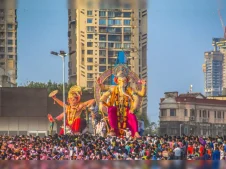
It is the perfect time to visit Marine Drive, Gateway of India, and Elephanta Caves, but more importantly, the festival of Ganesh Chaturthi takes place mostly in September. This 10-day festival dedicated to the elephant-headed Hindu God is celebrated with pomp and splendor, and it is an experience you should not miss. Larger than life idols of the Hindu God Ganpati are carried in vibrant processions on the streets and submerged in water on the last day.

Another festival that takes place during September or October is Navratri, a nine-day celebration of the Hindu Goddess Durga. It is celebrated almost all over the country in different ways. Gujarat celebrates Navratri like no other state, followed by Maharashtra. You can see people in colorful traditional attire, enthusiastically performing dance forms Garba and Dandiya.

Ganesh Chaturthi celebrations in Mumbai (Pic courtesy: Times of India)

Islands in September

The climate is comparatively warm on the Andaman and Nicobar Islands located in the Bay of Bengal, with temperatures ranging from 27 to 32 degrees Celsius (80.6 to 89.6 degrees Fahrenheit). The warm ocean makes it a great time for underwater activities such as diving and snorkeling.

However, the islands may see high tidal waves, strong winds, and heavy rains at times, so make sure you check the weather forecast before planning a trip there.

Andaman and Nicobar Islands

Tips while visiting India in September

  • Dress appropriately according to the region you are visiting. The climate in September in most parts of India is warm and humid, so wear light and breathable clothing. Do carry an umbrella and mackintosh, since you will experience sporadic rainfall in many parts of the country.
  • Make sure to protect yourself by carrying sunglasses, a hat, cap, and sunscreen to prevent sunburns, and insect repellent to protect yourself from mosquitoes and other small insects.
  • The festivals in September such as Ganesh Chaturthi, Navratri, and Durga Puja mean large crowds on the streets during the festival days. Be careful with your belongings and stay alert.

We hope this guide was helpful to find out the weather in September in India. For more detailed information about where is best to visit in India in September, or for any help planning your perfect trip to India, feel free to contact us! At India Someday, we customize trips to India according to your requirements, so hit us up, and we will plan a trip to India for you.

Weather in India in January

The weather in India in January makes it one of the best times to visit India. January is the coolest month in India, although the temperature varies from region to region. The weather is pleasant in most of India, so you can visit most of the country in January. Read through the weather in India in January and get some inspiration on some of the places to visit in India at this time.

January Weather in India

With the exception of the snowy peaks in the North and some parts of the Northeast, it is not very cold in India. January is a dry month, with barely any rainfall across the country. The average temperatures can vary largely from day to night. Prepare yourself for a maximum daytime temperature of 30°C (86°F) dropping to 15°C (59°F) at night, sometimes lower.

Here is an overview on the best time to visit India.

You can also find a detailed overview on what the weather would be like each month in India, in different regions of the country. Feel free to explore.

January | February | March | April | May | June | July | August | September | October | November | December

Weather in India in January
The great monuments in North India

Best places to visit in India in January

January is a great month to visit India. The climate is mild and cool, making it perfect for sightseeing and exploring during the day. Tourists from the Southern Hemisphere have their summer break from December to February, so most tourist places in India are extra crowded in January.

You can tour the Golden Triangle in January – the Red Fort in New Delhi, the Taj Mahal in Agra, and the Hawa Mahal in Jaipur. Rajasthan is a very popular tourist destination in January.

South India is warm but pleasant in January, so you can soak in some sunlight without feeling burnt.

North India in January

The weather in India in January varies a lot just within the North. In the far north, the Himalayas are blanketed with snow. If you are looking for trekking and other outdoor activities, this region may not be the best choice in January. Many roads and hiking trails are blocked or closed due to the snow, making traveling difficult, expensive, and tiring.

But if you want to ski, January is a great month to do so. Gulmarg in Kashmir is one of the most popular destinations in India for skiing. You can also opt for other smaller resorts in Manali and Auli in Himachal Pradesh.

Delhi can get quite cold in January, with temperatures ranging from 22 to 5°C (71-41°F). The cities of Agra and Rajasthan are pleasantly warm during the day, heating up to 20 to 28°C (82-86°F).

Evenings get cold in North India – nature reserves and northern cities like Jaisalmer, Amritsar and Delhi get particularly cold at night in January. Rooms with heating facilities are uncommon except in high-end hotels. However, hotels and guest houses usually provide warm blankets. We recommend carrying a blanket, a pair of warm socks, and maybe something to cover your ears at night.

At this time of year, clouds are rare and you will be safe from the rain in Northern areas. Take note however, that there may well be persistent fog around Delhi and Agra. It can last for days at a time, disrupting air traffic and train departures, so it is good to prepare for delays.

In Punjab, Lohri is celebrated in January, a colorful festival dedicated to the Sun God. It is celebrated by singing folk music and lighting a bonfire.

The Bikaner camel festival in Rajasthan is celebrated in January every year in the village of Bikaner, dedicated to the ship of the desert, the camel. Thousands of camels are adorned and traded at the camel fair. There are also many cultural activities happening during the festival.

January is the most popular month to travel in Rajasthan. This means that it is likely to be packed with tourists and so hotel availability may become an issue. We recommend booking in advance to secure your spots. Remember, we can help you with that, just click on Plan Your Trip.

If you are interested in travelling through Rajasthan and North India in January, check out Henning’s two-week-trip to Rajasthan with homestay experiences, or Chiara’s Rajasthan trip for a dash of luxury. In case you’re looking for route options combining cities, look at our Delhi – Agra – Rajasthan route options.

Want to avoid the tourist rush and have warmer weather in North India? Consider visiting during the months of February or March.

Know More: Northern India’s Ultimate Travel Guide

Discover: Stumble Upon Rajasthan’s Premier Vacation Spots

Jodhpur_(Photo Credit Anshul Tilondiya )

South India in January

India weather in South India in January is comfortably warm. In most cities of Kerala, Karnataka, and Tamil Nadu, the average temperature is normally around 25°C (77°F) during the day, and around 15-20°C (59-68°F) at night. Humidity and rainfall levels tend to drop, making Southern India a good destination to visit in January.

This is peak tourist season in South India, so places like Varkala and Kochi are quite busy, so make sure you book your tickets and accommodations in advance.

Goa is a great place to visit in India in January. It rarely gets cold, and the sunny days are very pleasant. However, there is a cooler breeze at night along the vast stretches of countryside in the state. Daytime temperatures are normally above 25°C (77°F), so it is the perfect time to get some Vitamin D without the unbearable, blazing heat. However, the downside of visiting Goa at this time of the year is the crowd. The beaches see a lot more visitors, and popular resorts get booked months in advance.

The harvest festival of Pongal is celebrated in Tamil Nadu in January. It is a big cultural celebration with a special dish called Pongal made from freshly harvested rice.

The Float Festival of Madurai also takes place in Tamil Nadu at Meenakshi Amman Temple. The cultural festival is celebrated in January on a full moon night – the area is decorated with bright lights and many rituals take place here on this day.

We advise you to plan your trip in advance, and in case you don’t, we can always help you out. Just click on Plan Your Trip and we can take over to plan your trip for you. Also, check out Rachel’s trip across South India to find inspiration for a travel route inclusive of Goa.

Plan Your Trip: Discover the Best Time for Kerala

Here is a detailed overview on what the weather would be like each month in India, in different regions of the country. Feel free to explore.

January | February | March | April | May | June | July | August | September | October | November | December

Goa

Eastern India and Northeastern India in January

The east of India is pretty dry during January. On the east coast, in cities like Puducherry and Odisha, temperatures range from 20°C to 28°C (68°F to 82°F). The pleasant January weather makes it a good time to visit the eastern part of India.

Northeast India is also dry in January, one of the very few months where the skies are blue and you can enjoy outdoor activities. You can go trekking, hiking, and camping, getting close to nature. Visit the double decker root bridges in Meghalaya, or explore Gangtok in Sikkim.

Gangtok

Western India in January

Western India is considerably warm in January, with the Arabian Sea and Gulf of Kutch. Temperatures range between 20°C and 30°C (68°F to 86°F) in the coastal cities of Mumbai and Goa. It is a great time to unwind on the beaches of the west coast or trek on the hills of Western Ghats. As you move further towards the mainland, the climate becomes warmer.

The festival of Makar Sankranti takes place in the middle of January. It is widely celebrated in Maharashtra and Gujarat. In Gujarat, there is an international kite festival that takes place on Makar Sankranti.

The Rann Utsav also takes place in January in Gujarat. Many festivities, music, and dance performances take place in a tent city at the edge of the White Rann in the Thar Desert. Attend the Rann Utsav on a full moon night – the moonlight reflecting off the white salt flats is a phenomenal sight.

International Kite Festival

Central India in January

Nagpur, Lucknow, and the rest of Central India has hot but pleasant weather in January. This time is perfect for sightseeing or taking a wildlife safari across the many national parks in Central India. Late nights and early mornings at the national parks can get chilly, so make sure you pack some warm clothing. Rain is rare in January, so you don’t need umbrellas or waterproof jackets, although it is not a bad idea to pack it if you can.

wildlife safaris in Central India

For more detailed information about weather in India in January, or for any help in planning your perfect trip to India, feel free to contact us!

Tips while visiting India in January

  • A major Indian public holiday is celebrated on 26 January – the Republic Day of India, which celebrates the date on which the Constitution of India came into effect in 1950. The main celebration is held at the Red Fort in New Delhi with a ceremonial parade. On this day, some areas may be crowded, while some places may be closed.
  • If you are visiting India in January, keep in mind that almost all the main attractions in the country will be crowded. We would recommend going off the beaten path this month.
  • Many places in the far north will be closed or cut off due to the snow, so try to avoid such destinations in January.
  • Pack appropriate clothing for your trip. If you are visiting North India, you will need warm clothing. Pack a blanket, jacket, or shawl since the north can get quite cold in January, especially at night. You can pack light clothing for the South, but take a warm jacket or sweater for the night.
  • Keep basic medications handy. Winter brings with it some infections and viral fevers. You will find medical aid in most tourist places in India, but just in case, keep your regular medications with you.

If you are thinking of visiting India, January is a great month to plan a trip to this diverse country. Most of India has the perfect weather conditions in January to travel and explore without getting tired or exhausted. For more detailed information about weather in India in January, or for any help in planning your perfect trip to India, feel free to contact us! We will customize the perfect trip for you based on your requirements.

If you consider a trip to India in January, you are at the right place. India Someday can help you plan a route with the best choices of accommodations and transport modes. And if a hotel is booked out we will find a suitable alternative within your budget and expectations. Plan your trip with us now!

Travelling to India from Australia

Are you planning on travelling to India from Australia? At India Someday, we can help you curate the perfect travel itinerary. In this article, we cover the basics of travelling to India – how to get an Indian Visa for Australian citizens, vaccinations, flights, and more.

Explore incredible India (Photo Credits – Vikram Singh)

visa

Travelling to India from Australia? You are eligible for an e visa, or an electronic visa! You can check our  blog post regarding eVisas for more information about e visas. You need to obtain your e visas prior to your arrival in India. Start this process as soon as you can so that any delays in visa arrival won’t disrupt your travel plans. However, if you plan on adding Sri Lanka or Nepal to your trip, we recommend you to put in the additional efforts and get a regular tourist visa.

There are two types of tourist visa you can get for your trip to India – a multiple entry visa (90 days consecutive stay per entry, valid for 1 year from approval) or a double entry tourist visa (30 days across 2 entries). A tourist e visa for 1 month will cost $25 USD or $38.43 AUD.

Before you enter India, make sure you have a copy of your visa and other valuable documents stored in a separate bag from the original in case one gets lost or stolen. Keep digitally stored copies on a drive handy as well. It is exceptionally important to comply with all the extensive requirements for documents, because the local authorities can ask for them during the immigration process when you enter India.

For more information about obtaining Indian visas for Australian citizens, check your government’s website.

Pro tip: Always carry photocopies of your tourist Visa and passport with a visible passport number. 

Travelling to India from Australia, Indian visa for Australian citizen
Always carry photocopies of your Visa

VACCINES

For Australian nationals, vaccination requirements are stipulated by the Indian Embassy rather than the Australian. However, they only specify that you must provide a vaccination certificate if you enter India from Australia from a Yellow Fever endemic area.

Stay up to date on any vaccines and boosters that are required in Australia. For some areas, it is advised to carry anti-malarial pills. If you are on any prescription drugs, make sure to carry enough to last you the entire trip, along with the prescription. It helps to know the generic names of these drugs as well, in case you misplace them and need to restock with local equivalents.

While in India, drink filtered or bottled water and eat hot, well-cooked food. Speak to a healthcare professional for any guidance or information you may need before you enter India.

Vaccinations! Be on your guard, keep the viruses away.

FLIGHTS

The best cities to enter India while flying from Australia are major metropolitan cities of Mumbai, New Delhi, or Chennai, since there is extensive flight connectivity. Prices tend to skyrocket between May and July. For cheaper flights, try to plan your travel between September and March.

Indian visa for Australian citizens
Time to book your flights to India (Photo Credits – Daniel Eledut)

SEASONS

With the exception of a few areas in the north, India is predominantly a warm, tropical country. India can reach extremely high temperatures, as well as high humidity and UV levels. Indian summer begins in March and last until mid-June. Visit Indiabetween September and December, after the monsoon season, to experience luscious greenery/ To learn more about Indian climate depending on the time of year, visit our blog posts regarding weather in India during different seasons.

Learn More: Explore the Best Timing for Your India Vacation

Enjoy the diverse climate across India (Photo Credits – Pulak Bhagawati)

cultural differences

Consider that there are differences in customs when travelling to India from Australia. We recommend to always try to be modest, courteous and conscious of your behaviors. However, we don’t want to scare you into thinking you’ll be judged too harshly. Indians, in general, are very accepting people – and when in doubt, the best thing to do is seek advice on customs that would be foreign to you. 

  • Criminal penalties, especially for consumption or possession of drugs and extending your stay beyond your visa are harsh and include a sentence of up to 10 years of jail time. While your government will do what they can to help you under the Consular Services Charter, they cannot physically release you from jail.
  • It is important to remove your shoes before entering a home, store or particularly a temple if you see others doing the same.
  • In visiting places of religious significance, dress conservatively and to be mindful and respectful of local sentiments.
  • Laws on decency are open to interpretation, so it is important to be careful about engaging in public displays of affection.
  • Most Indians consider it disrespectful to touch things or people with their feet, and immediately apologize if they do so by mistake. So be sure to always apologise if you step on something, or accidentally touch someone with your feet.
  • Lack of personal space is common in India, so do not be offended if people openly stare, or brush up against you. But if that feels uncomfortable, avoid crowded places and other areas with crowds. Go to the police or Indian authorites for help if you feel unsafe at any point.
  • English is widely spoken and utilized in India but it may be difficult to recognize at first. Indian-English has its own rich flavor borrowed from local languages.
  • Smoking in public is illegal in India, though you’re likely to see everyone doing it. Just be aware that the law exists in case you’re questioned.
  • Expect delays while travelling in India.
  • Smaller commercial boats and buses rarely carry safety equipment.
Explore the unique culture of India (Photo Credits – Steve Rybka)

DIFFERENCES IN LAWS

  • Remember that photography of airports and military areas is strictly prohibited. This will be announced before landing by the crew.
  • Legal drinking ages vary from 18 to 25 across states. However, drinking is completely banned in a few states, so it is imperative that you research before exploring a state.
  • Deliberate killing or maiming of a cow is a nationwide offence. Further, consumption or possession of beef is a criminal offence in some states.
  • Some Australian criminal laws apply to Australians overseas. For more information, please check your government’s website. Australians who commit these offences while overseas may be prosecuted in Australia.
  • Also, you need to ensure you are in possession of a valid visa and a valid passport when in India at all times. Australian passports must be valid for at least 6 months, before you embark on your India travels. The Australian government will not be able to help you in case you breach such Indian Government’s law requirements. 
  • When departing India, you will soon be able to claim any GST you may have paid when purchasing goods (though not for services). However, this process is still under implementation.
Cows is treated as a sacred animal (Photo Credits – Monthaye)

ROUTES

India is a vast, diverse country with many interesting places to visit no matter what part of the country you are in.

From the metropolitan cities of Mumbai, New Delhi, Chennai and Bangalore, to the ancient architectures such as the stunning Taj Mahal or Ajanta and Ellora Caves, there is so much to see and explore.

If it is your first time in India, we would recommend a minimum of 14-day trip in order to properly take in and explore one or two regions in the country.

We have a wide variety of sample routes that may give you inspiration. If you have something else in mind, contact us with your queries, and we will sort everything for you!

Learn More: Uncovering the Economic Aspects of India Travel

Other Things to Keep in Mind

Even though travel insurance is not mandated for Australian tourists, we highly recommend it when you are visiting India. You will be able to travel with peace of mind.

If you are on a longer trip of over 10 days, get a pre-paid local sim card. The charges are quite nominal and you will get better connectivity without piling on the astronomical roaming charges.

Once you enter India, the Australian Government recommends you reach out to the Australian Consulate General in case of any emergencies (this includes losing your documents). In fact, it might be a good idea to update them with your contact details, and the local number so that they can track you better in the unlikely event of an emergency. 

We don’t recommend exchanging money at the Airport, as the transaction charges tend to be inflated. You can head to a local bank or money exchange in any of the cities to exchange Australian Dollars to Indian Rupees. The Indian economy enables digital payments in most places, so you will not face any issues, but it is still better to keep some Indian rupees in cash handy in case of emergencies.

FAQs

What documents should i carry while travelling to India from Australia?

When you enter India, Australian citizens and other international arrivals need a passport valid for at least 6 months from your date of entry in India, and a valid tourist visa or e visa, without which you will be denied entry in the country. If you are an Overseas Citizen of India (OCI) cardholder, you can enter India with the OCI card and a valid passport.

How much is the visa fee for India from Australia?

The cost of an Indian visa for an Australian citizen is USD 25, or 37 Australian dollars. The India visa for Australia is valid for 30 days. The standard processing time for an Indian e-visa is 2 to 4 days.

What is some good travel advice for someone travelling to India for the first time?

India is regionally and culturally diverse, which can be overwhelming while planning a trip. Some good advice is to not try to experience everything in just one trip. Take your time and explore just one or two regions properly during one stay in India. Drink boiled or bottled water. Eat hot, well-cooked food. Make sure you know where the nearby healthcare services are. Stay safe and healthy.

Which are the best places to visit in India?

While most travellers choose locations that are popular tourist spots, India has a lot of undiscovered beauty to explore. There may be some restrictions while travelling in regions of conflict like Jammu and Kashmir. However, try to choose places frequented by other travellers. At India Someday, we will help you plan the perfect trip to suit your requirements, whether it be mainstream spots or the offbeat paths.

Travelling to India from Australia, Indian visa for Australian citizens
We will help you plan your trip at India Someday

Travelling to India from the US

At India Someday, we can help you on your travels to India. In this article, we offer extensive guidance on travelling to India from the US. We cover how to get an Indian Visa for American citizens, vaccinations, flight information and more.

best places to Fly in and out India
You can visit the temple in India

VISA

Travelling to India from the US? You’re eligible for an e-visa into India! For more information on this, see our blog post regarding e-visas. It’s best to start this process sooner rather than later, as visas are required prior to your arrival, and for India only; if your plan is to add on Sri Lanka or Nepal to your trip, we recommend taking out a regular visa.

Once you land, make sure you have a copy of your visa stored in a separate bag from the original, in case one gets lost or stolen.

Indian visa for US citizens
Apply for your visa now and enjoy a wonderfully exotic holiday to India (Photo Credit – Julien Tromeur)

VACCINES

We’d strongly recommend making sure you are up to date on any vaccines and boosters that are required. Kindly consult your doctor for his recommendations. In some areas, it is advised to carry anti-malarial pills. If you’re on any prescription drugs, carry a sufficient amount to last you on the trip, along with the prescription for them. It’ll help if you know the generic names of these drugs, in case you misplace them and have to restock with local equivalents.

While in India, stick to bottled and filtered water. Eat hot and well-cooked food. Make sure you have a good stock of any prescription medication you’re on.

precautions to take when travelling to India from th US
Please contact a healthcare professional for advice on suggested inoculations or medication

FLIGHTS

Generally, the cheapest cities to fly into from America are New Delhi or Mumbai. Direct, one-way flights from New York to New Delhi or Mumbai go from $391 in November, all the way up to $724 in August. They tend to average at around $450 for the rest of the year.

travelling to India from the US
You will most likely be flying in and out of Mumbai or Delhi

SEASONS

With the exceptions of the northern areas, India is widely classified as a warm, tropical country. India can reach extremely high temperatures, as well as high humidity and UV levels. Indian summer begins in April and lasts until the beginning of October.

To experience luscious greenery, a great time to visit India is between September and December, after the monsoon season. For more information about Indian climate depending on the time of year, visit our blog posts regarding monthly weather in India.

Discover the Best: Top Spots 20 in North India

steps to obtain a Indian visa
In season you can visit hill stations (Photo Credit – Subharnab Majumdar)

cultural differences

Consider that there is a difference in customs when travelling to India from Australia. We suggest to always try to be modest, courteous and conscious of your behaviour.

  • Criminal penalties, especially for consumption or possession of drugs and extending your stay beyond your visa are harsh. They could include a stay of up to 10 years of jail time. While your government will do what they can to help you under the Consular Services Charter, they cannot physically release you from jail.
  • It is important to remove your shoes before entering a home, store or particularly a temple. If you see others doing so, we’d suggest you do too.
  • When visiting places of religious significance, it is important to dress conservatively and to be mindful and respectful of local sentiments.
  • Laws on decency are open to interpretation, so it is important to be careful about engaging in public displays of affection.
  • Feet are considered as unclean by many. Be sure to always apologise if you step on something, or accidentally touch someone with your feet.
  • Lack of personal space is common in India. Accordingly, do not be offended if people openly stare, or brush up against you. However, avoid crowded places if it makes you uncomfortable. If you feel unsafe, go to the police for help.
  • Whilst the English language is widely spoken and used in India, it may be difficult to recognise at first. Indian-English has its own rich flavour borrowed from local languages.

Explore More: Prepare for Your Journey from Australia to India

Things to keep in mind when travelling to India
The Golden Temple – Amritsar

ROUTES

India is a huge, incredible and fascinating country with a myriad of interesting experiences to do and see. We would recommend a minimum of a 14-day trip, especially if it is your first time here. This way, you can cover one or maybe two regions.

We have a wide variety of sample routes that may give you inspiration. If you have something else in mind, do not hesitate to contact us with your queries, and we’ll sort everything for you!

Indian visa for US citizens
Trains are a great way to see the countryside by day and meet new, exciting people by night

THINGS TO LOOK OUT FOR:

No matter which country you visit, there are some basic guidelines you should follow in order to have a safe, healthy and enjoyable journey. The same applies to travel in India. Here are some important factors to consider when planning your trip to India. 

Travel Restrictions:

Before jetting off to India from the US, foreign nationals must be sure to check the latest travel restrictions due to the evolving global situation. Travellers with tourist visas have different rules from those with work or residence visas. Keep an eye on entry requirements, vaccination mandates and quarantine protocols for international flights, before you enter India. Stay informed about any updates from both the US and Indian governments to ensure a smooth journey. Flexibility in your travel to India is key, as regulations can change swiftly.

Health Care:

Prioritise your health while exploring the country. Research local healthcare provisions, find the nearest health facility to where you are staying and consider travel insurance that covers medical emergencies. Vaccinations, like for typhoid and hepatitis might be recommended. Be prepared for random post arrival testing in the wake of COVID-19 scares. Consult your healthcare provider before you travel to India. Maintain hygiene, drink bottled water and self-monitor what you eat to prevent stomach upsets. Be cautious about your health post arrival in the country, but don’t let health concerns hinder your incredible Indian experience.

Current News:

Stay tuned to reliable news sources for the latest updates on India before and during your travel to India. Be aware of any ongoing protests, political events or local unrest in minor and major cities that might impact your plans. Staying informed about the COVID-19 situation, transportation strikes or extreme weather conditions will empower foreign nationals to make well-informed decisions and enjoy a safe journey.

Local Laws & Regulations:

Upon entering India, immerse yourself in India’s rich culture, but always respect local laws. Dress modestly, particularly in religious sites and conservative areas. Public displays of affection are usually frowned upon. Abide by photography rules at monuments. Possession of certain substances is illegal, so be cautious. Understand local customs to avoid unintentional disrespect. Knowledge of laws and checking with local authorities can keep you out of trouble and foster positive interactions with the welcoming locals.

Documentation:

Secure your travel to India with proper documentation. A valid passport with at least six months’ validity from your return date is essential. Obtain an appropriate  visa well in advance – tourist, business, or e-visa, depending on your purpose of visit. Carry printed and electronic copies of all essential documents, including travel insurance. Additionally, keep your emergency contacts and embassy information handy. Organising your paperwork ensures a seamless entry and stay in India.

Explore More: India’s Exciting Activity Options

Travel essentials to India
skincare is a travel essential (Photo credits – pexels_tara-winstead)

Frequently Asked Questions:

What documents do I need to travel to India?

Irrespective of which country you are coming from, there are travel and entry restrictions for all visitors to India. If you are travelling to India from the US, you will require a valid Indian visa in your passport. Now there is a much more accessible online e-visa facility, which you can use to get your visa to India.

What do I need when travelling to India?

Now that the world has recovered from the COVID-19 pandemic, there are new rules in place for entering India. In order to enter the country, you will be required to submit a self-declaration form that has complete accurate information regarding vaccinations and travel information in the two weeks before your arrival in India. Without this form, you may not be allowed to enter the country. Check the latest travel regulations online before you travel and stay up to date with your documentation.

What jabs do I need to travel to India?

The most common vaccines or injections advised to foreign nationals before travelling to India include those for typhoid, malaria, hepatitis, tetanus and diphtheria. Depending on your country of origin, there may be extra injections that you will be required to take. 

Do I need a yellow fever vaccine for India?

Foreign nationals are highly susceptible to diseases in India, the severity of which may be much higher than locals who are also infected. To be on the safer side, vaccinations are advised for foreign nationals planning to travel to India. Of these vaccines, the yellow fever vaccine is also recommended. 

Is India safe for American tourists?

India can be a very tourism-friendly country, if you avoid areas of conflict, stay vigilant while travelling at night and remain practical in the way you travel. Avoid travelling to Jammu and Kashmir due to political unrest, Leh-Ladakh during off-season months to avoid being stranded in the winter months or to prohibited areas in the Nicobar Islands where indigenous tribes inhabit the land and do not welcome tourists.

Travelling to India from the UK

Travelling to India from the UK? At India Someday, we help you plan the ideal trip according to your requirements. In this article, we offer extensive guidance on Indian Visa, vaccinations, flights, and more for British citizens.

Taj Mahal is the most visited monument in India

VISA

While travelling to India from the UK, you will need a visa or an e-visa. There are a number of visa categories in India. Ensure the right visa according to the purpose and duration of your visit.

If you are a UK passport holder applying for a tourist visa, you can simply apply for an e tourist visa. At India Someday, we can help you apply for the same. Tourist e-visa for UK citizens in India is available for thirty days, for one year and for five years duration. The cost for Indian visa for UK citizens depends on the type of visa. A tourist visa for a duration up to one year costs GBP 116, while a tourist e-visa for up to one year costs GBP 31.69.

For more information on this, see our blog post regarding eVisas.

If you are a British citizen of Pakistani origin, you will need to apply for an Indian tourist visa on a Pakistan passport. If you have renounced or cancelled your Pakistani passport, you will need to submit proof of the same. Keep in mind that this process will take much longer than other visa application processes.

For more information about obtaining an Indian visa for UK citizens, check your government’s website for further details.

VACCINations for India

While the UK doesn’t enforce any inoculations or medication for individuals travelling to India, some are strongly recommended, especially for at-risk individuals.

Boosters and courses that are usually advised are Diptheria, Hepatitis A, Hepatitis B, Tetanus and Typhoid. Vaccines that are advised in some cases are Cholera, Japanese Encephalitis and Rabies. For some areas, it is advised to carry anti-malarial pills.

If you’re on any prescription drugs, carry a sufficient amount to last you the trip, along with the prescription for them as well. Make sure you know the generic names of these drugs in case you need to restock with local equivalents.

While in India, stick to bottled or filtered water, and eat hot and well-cooked food.

At least eight weeks before your trip, be sure to check with your GP, nurse, travel clinic, or healthcare professional for any information and the latest updates on any vaccinations and certificates that you may need. For more information, visit www.fitfortravel.nhs.uk 


Tips for Travelling to India

FLIGHTS and customs

UK passport holders can fly to Delhi, Mumbai, Goa, or Chennai from most major airports in the UK. Airfares skyrocket in June and July, so travel between September and March for cheaper flights.

There are strict rules in place about goods that can be brought in or taken out of India.

Possession and operation of satellite phones without a license is illegal in India. You will also need prior permission from the Indian authorities to bring equipment like listening or recording devices, radio transmitters, drones, powerful cameras, or binoculars into India.

There are also restrictions on bringing Indian money into India. Visitors and tourists cannot bring any amount of Indian currency into the country. If you are an Indian resident, you are allowed to bring up to INR 25,000 into the country.

If you are visiting India, you need to bring cash in pounds, travellers’ cheques, or a bank card and exchange or withdraw Indian rupees once you are in india.

Flight to India (Photo Credits – Daniel Eledut)

SEASONS

Expect an extreme change in climate while travelling to India from the UK. With the exception of some parts in North India, India is widely a warm, tropical country. Indian summers begin in March and last until mid June. Temperatures can reach up to 45 degrees celsius. The intense heat is accompanied by high humidity and UV levels. For more information about Indian climate depending on the time of year, visit our blog posts regarding weather in India during different seasons.

Discover More: Learn About the Optimal Time to Explore India’s Beauty

Bada Bagh, Travelling to India Tips
Bada Bagh in Jaisalmer!

cultural differences

While travelling to India from the UK, consider the fact that there is a huge difference in customs and traditions in both the countries. We suggest to always try to be modest, courteous, and conscious of your behaviour.

  • It is important to remove your shoes before entering a home, a temple, or some stores, especially if you see others doing the same.
  • When visiting places of religious significance, it is important to dress conservatively and to be mindful and respectful of local sentiments.
  • Laws on decency are open to interpretation, so it is important to be careful about engaging in public displays of affection.
  • Feet are considered as unclean by many. Be sure to always apologise if you step on something, or accidentally touch someone with your feet.
  • Lack of personal space is common in India, do not be offended if people openly stare, or brush up against you in crowds or in a hurry. However, avoid crowded places if it makes you uncomfortable. If you feel unsafe, go to the police for help.
  • English language is widely spoken in India, but it may be difficult to understand at first. Indian-English has its own rich, hybrid flavour borrowed from local languages.
  • Smoking in public is illegal in India, though you’re likely to see everyone doing it. Just be aware that the law exists in case you’re questioned.
The culture of India refers collectively to the thousands of distinct and unique cultures of all religions and communities present in India

WHERE SHOULD I TRAVEL IN INDIA?

India is a huge, incredible and a fascinating country with a myriad of interesting experiences to do and see.

From the mighty Himalayas in the North, to the architectural wonder Taj Mahal in Agra, the deserts of Rajasthan and the beaches of Goa, there is so much to explore in India! Most travellers get flummoxed while planning a trip to India.

We would recommend a minimum of 14-day trip, especially if it is your first time here. This way, you can properly explore one or two regions in the country.

We have a wide variety of sample routes that may give you inspiration. If you have something else in mind, do not hesitate to contact us with your queries, and we will sort everything for you!

Travelling to India from the UK, Travelling to India Tips
Trains in India

THINGS TO KEEP IN MIND while travelling to India from the uk

If you plan well and do enough research, travelling to India from the UK is not too difficult. No matter where you go, you need to prepare yourself for all kinds of possibilities, such as travel delays, illnesses, lost baggage, or insufficient funds.

Here are some important things to keep in mind while planning your trip to India from the UK.

Visa and passport formalities

Keep your travel documents in place before you visit India. UK passport holders need a tourist visa to travel to India, so apply online starting three months prior to your visit up to four days before. UK passports can get the Indian e-visa, and we can help you with the same.

Whether you are a UK citizen or EU citizen, your passport should be valid for at least six months, so make your travel plans accordingly. Travellers must double-check visa requirements and latest updates for the country they are visiting before they embark on the journey.

Always keep copies of all your documents, e-visa, and passport photos, in case you misplace the originals.

Illnesses

If you are not attuned to the change in climatic conditions, there may be an increased risk of health problems,especially where a medical facility may not be readily available. Pack essential medicines and consult your doctor for vaccines and health advice before your trip.

Common health risks that UK nationals should be mindful of include food-related illnesses and mosquito-borne diseases.

Drink bottled water, avoid ice and opt for cooked foods. This way you are safe from raw or contaminated food, which you are likely not to digest. Apply mosquito repellent and wear protective clothing. Face masks can help protect you from pollution. It is an essential travel item in india.

You need to stay healthy in order to truly enjoy exploring India. If you feel unwell, seek medical treatment promptly. Travel insurance is a must.

Food & Water Safety

When in India, you have to try the country’s diverse and delectable cuisine. But local food also means an increased risk of stomach problems. Some advice we can give you is to opt for hot, freshly cooked meals in good, well-known restaurants. Eating at local, less fancy restaurants offer higher risk of ingestion and stomach problems. Avoid street food unless it’s cooked right in front of you. Drink bottled or boiled water and use the same for brushing teeth. Be cautious with raw vegetables and fruits – peel them yourself so that you are ensuring you don’t eat contaminated food. Hand sanitizer and practising good hygiene will ensure low risk of infections, allergies or stomach problems. Your taste buds will thank you!

For the Adventurers

North India offers breathtaking locations for hikes in places like Himachal Pradesh and Uttarakhand. If you are planning an adventure trip or a trek, make sure you pack appropriate gear for the changing weather and challenging terrains. Be sure to check weather forecasts before starting a trek and keep someone informed about your plans.

Acclimatise to high altitudes to prevent acute motion sickness. Respect nature and the local customs – leave no trace and take no risk.

(Credit_vivek doshi-unsplash)

FAQs

Can UK tourists travel to India?

All British passport holders are eligible to travel to India provided they obtain a valid travel visa to enter India. The visa type could be tourist, business, student or resident, each having its own requirements and regulations. Once the visa has been approved, the UK citizen is free to travel to the country.

Are British citizens allowed to travel to India?

Yes, British citizens are allowed to enter India and travel within the country for tourism or recreation with a valid passport and a tourist visa. UK passport holders will need to apply for and obtain the necessary Indian visa before they travel. The Indian visa can be applied for online, on the approval of which travellers will receive an electronic visa (or e-visa), which will suffice as an entry document for British citizens.

What are the entry requirements for UK citizens traveling to India?

UK citizens need a passport valid for at least 6 months from your date of entry in India. Your passport must have 2 blank pages for your visa. You will also need a visa or an e-visa to travel to India, unless you are an Overseas Citizen of India (OCI) cardholder. If you hold a valid OCI card, you can use it along with your British passport; you do not need a visa.

How much Indian currency can I carry to India?

UK citizens and foreigners in general are not allowed to import Indian rupees to India. However, there is no limit to how much foreign currency you can carry to India. However,  you will have to declare it if the amount exceeds US$5,000 in notes and coins, or US$10,000 in notes, coins, and traveller’s cheques. If you are an Indian resident, you can carry up to INR 25,000.

How much is Indian visa for UK citizens?

The fee for Indian visa for UK citizens depends on the type of visa. A tourist visa for a duration up to one year costs GBP 116.

How much does the Indian e-visa cost?

An Indian tourist e-visa for 30 days costs GBP 19.80.

Can I drive in India with a UK license?

UK citizens can drive in India with a UK license and an accompanying international driving permit after you arrive. However, the rules about how long you can drive on a UK license can differ from state to state.

What is some good advice for someone travelling to India for the first time?

A piece of advice for first-time travellers in India is not to try to experience everything in one trip. India’s regional and cultural diversity can be overwhelming. But it is not possible to cover everything in India in one short trip. So take your time and explore one or two regions leisurely. Make sure the areas you choose are frequented by other travellers. Watch what you eat. Stay healthy and safe.


Traveling to India for the first time? Here are 19 things you should know!

Traveling to India for the first time? We will tell you 19 things you should know before visiting! If this is your first trip to India, consider this blog as a first timer’s guide to the few things you must know before traveling to this fascinating country packed with things to see and do. Honestly, you can never be fully prepared for incredible India. From the mountains in North India to the backwaters of the South, there is a unique charm in every corner of India.

If you love to travel, you should take at least one trip to India. There are many tourist destinations in India for every type of traveler. Whether you are searching for Costa Rica’s vibrant wilderness, the calmness of Greek islands, the tropical magic of the Amazon rainforest, the intricate monuments of Central Asia, or the winter wonderland of Switzerland, would you believe us if we told you that all of it can be found in India?

Many travelers prefer to visit India, since it offers a varied world in one country. Although it can be a fantastic culture shock for first time travellers, you slowly start appreciating the beauty of this country. So if you are planning a trip to India, deep dive into the upcoming adventure with a few handy tips from us to make your journey easier!

To prepare for your adventure to India here’s 19 tips that we at India Someday can offer to help you get started.

The best time to visit India

India is a year round destination, as the country’s climate changes from one region to another. No matter when you visit this fascinating country, you will always find something exciting to explore. However, the best time to visit India is from November to March. The climate is cool throughout most of the country. Although Southern India remains warm, it is still pleasant for sightseeing. But keep in mind that this is the peak tourist season in India. You will see a huge number of tourists at all the major attractions.

June to September is monsoon season in India. While the monsoon rains affect most of the country, the landscape turns extremely beautiful, a sight to behold. It is off-season for travel during this time, although if you don’t mind some rain, you should definitely visit India towards the end of August and the beginning of September.

Mid-March to June is the summer season in India, and it can get uncomfortably hot in many parts of the country. We would not recommend visiting India during this season, since a lot of outdoor sightseeing will be restricted to early mornings and late evenings. The  bustling streets of India are also quiet during the scorching afternoons.

The best places to visit in India

This country offers some of the most incredible sights to travelers, and it is impossible to explore all the sights in just one trip. There are myriad variations of journeys you can take to explore the country’s amazingly varied facets, depending on your interests.

As first time visitors, you can visit incredible monuments like the Taj Mahal in Agra or the Red Fort in Delhi, forts like Amber Fort and Mehrangarh Fort in Rajasthan, 

You can cover the Golden Triangle (Delhi – Agra – Jaipur) in a week long trip to India. These three Indian cities provide an all-encompassing tour of North India, exposing guests to different cultures and lifestyles in a short time. The Golden Triangle is the perfect introduction to the country.

Embrace the spirituality of India by visiting the Golden Temple in Amritsar or the holy city of Varanasi. Go on camel safaris through the Thar desert in Rajasthan or take a wildlife safari in the national parks of Central India. Stay in luxury villas and resorts or save money by staying in a hostel with other travelers and like minded people. You can travel independently or go on small group trips – everything is up to you.

Crowd in India, traveling to India for the first time
Crowd outside a temple in India

Basic English is widely spoken across India

Most people in India, especially the metropolitan cities, speak English. Call it an after-effect of colonialism, but English is the secondary language in India. Not everyone can speak it, or speak it well, but you will find that communication or language skills won’t be a very big issue. Street names, important signs and public transport messages are all written in English as well as the state language.

tips while traveling to India
Sign boards in both language (Photo Credit – Cambodia4kids.org Beth Kanter)

Always eat hot, fresh food

India is one of the best countries in the world for gastronomy. Indian cuisine varies from one region to another, and it is all undoubtedly delicious. You will find that India is a largely vegetarian country, so if you are a vegetarian or a vegan, you will be spoilt for choice. We can guarantee that by the end of your trip, you will be in love with Indian cooking.

The coastal areas of India offer freshly caught seafood, street stalls offer food fried fresh in front of you, and if you want to try something vegetarian, there is a plentiful choice of meat free dishes. Unlike the Indian stereotype, you won’t be eating curry in most meals. Indian cuisine is vast

However, the country is not the most hygienic, so most people are very skeptical about eating street food here. Plus, the excessive spice in the food can be an issue for foreigners who are not used to eating such spicy food. It is easy to get stomach troubles in this country – the Delhi Belly is a very present problem for many travelers.

However, there are a few ways to avoid throwing your holiday down the toilet. Firstly, make sure to eat food that is freshly cooked and served hot. Secondly, avoid salads and juices as much as possible.

Consume only packaged drinking water

Always drink bottled water in India, preferably from a good brand like Bisleri. Tap water in India is not potable and can cause tummy troubles if consumed. Make sure to only drink bottled or purified water. If you do not get packaged water anywhere, which would rarely be the case, you can boil water before drinking.

Things to keep in mind while traveling in India,
Eat fresh cooked and hot food always (Photo Credit – Saurabh Sharan)

Keep all your essential documents handy

Remember to carry a copy of your passport, visa, travel insurance, licenses, and identity proof with you at all times.

You need a visa to come to India. It sounds like common sense, but you’d be surprised at how many first time travelers don’t know this. Travellers from the US, Australia and the UK will be eligible for an e-visa.

A travel insurance will safeguard you against issues like theft, illness, or injury, so make sure you have one before coming to India.

Handling  money

India is slowly turning into a cashless economy, but still the majority of local payments are done in cash. Try to keep a large quantity of notes of smaller denominations, such as INR 20, INR 50, and INR 100, since everything is relatively inexpensive in India.

Also, when you are in India, get a local sim card. There are many benefits to getting a local sim card – you get a network in most places, and it is much less expensive than using your own.

Take care of your health and hygiene

India is a great country, but it is often not very clean and hygienic. We would recommend packing antibacterial wipes.  If you are traveling by train, the toilets in the trains can often be unclean. Make sure to carry your own toilet paper for train travel.

If you have any essential medicines that you might require, don’t forget to carry those with you.

Don’t settle for any price you’re not comfortable with

You’ve probably heard that India is a bargain heaven. Alternately, shopkeepers will consistently rip you off when they realize you’re a foreigner. Bargaining can be a sensitive business, so always look out for a fixed price sign before you start anything. If  you do feel like you’re getting ripped off and the seller is refusing to bring down their price, it’s best to just walk away. There’s no point in risking offense.

Find Out More: Investigate the Perfect Time for an Indian Adventure

travel guide for India, Safety trip when traveling in India
Very carefully before bargaining and purchasing (Photo Credit – Cleavers)

People are friendlier than they look

The local people may seem completely absorbed in their own lives, especially in the metropolitan cities, but they will always help you if you just ask. Taxi drivers and keepers of tiny cigarette shops on street corners serve as bottomless sources of information. In fact, your taxi driver may often be the best person to ask for recommendations. They will offer some of the best advice, although sometimes they may ask you seemingly intrusive questions. It is up to you if you want to answer them or not, but most of the time, they are only asking out of curiosity or to make conversation. So show some polite interest, but keep a safe distance if you don’t want to engage.

Travelling to India for the first time
Drivers are friendly (Photo Credit – Fabrice Florin)

Respect local customs

If you are first timers to India, you must know that India is a country rooted in culture and traditions. There are many religions in India, each with its own traditions. Cultural customs vary from one region to another. While you are in this country, respect local customs. For example, most religious places and even houses in India will require you to take off your footwear outside the door, before entering. In many temples, such as the Golden Temple, you will have to cover your head with a scarf or handkerchief.

Pack appropriate clothing

While packing for a trip to India, make sure you pack according to the region you are visiting, and the season you are visiting in. Pack light and breathable clothes for warmer weather and regions, and pack some sweaters and shawls if you are visiting the far north or during winters. If you are visiting during monsoon season, make sure to carry an umbrella, raincoat, and appropriate footwear. Also keep some protective covers handy for covering your phone and valuables in case of rain.

If you will be trekking, hiking, visiting hilltop fortresses, or simply walking a lot, make sure to wear comfortable shoes for such activities.

India has a relatively modest culture, and we would recommend our guests to dress modestly, especially while visiting religious sites and rural areas. Remember that people will openly stare regardless of what you wear, but it is just curiosity. People not from the metropolitan cities can be naturally inquisitive, so try to ignore the stares. However, if you feel uncomfortable or unsafe at any point, do not hesitate to go to the police station for help.

Learn More: Get Acquainted with India’s Top Attractions

 10 things you have to know when Travelling to India for the first time
A tourist at the Golden Temple in Amritsar (Photo Credit – David Bacon)

Beware the scamsters

Delhi is crazy chaotic and full of scams, so are Agra and Jaipur. Familiarize yourself with them before you leave.

Be aware of scam (Photo Credit – Partha Sarathi Sahana)

India is not all elephants and snake charmers

There’s even gourmet restaurants and hi-tech amusement parks. That said, if you really want to relive the 60s, we can always get you a slot at Elefantastic.

Read our client blog about experiencing Elefantastic and what to expect.

If you’re planning a trip to India from the UK, check out this comprehensive guide.

Learn More: Tips for Traveling from Australia to India

You maybe eligible for an e-visa if you're visiting India, E vias for India, Is India a safe country
You may be eligible for an e-visa if you’re visiting India.

India is a great family destination

India is a safe country to visit with family. People in India actually love children, and are very accommodating. Usually kids are not charged extra for staying in hotel rooms. In most places, kids have free entry. Plus, if you are staying in a homestay, the locals will very happily make special food for the kids.

Visa for india, things you should know before you travel to India
Cute school kids waving the Indian Flag

Solo travelers or women travelers need to be extra careful

India is a relatively safe country, despite the many incidents that you hear about in the news. However, India, or for that matter, any country, is not completely safe for female visitors or solo travelers. Plus, in this crowded country, you can often feel like your personal space is being invaded. It is totally normal in India, but if you are uncomfortable, reach out for help. Also avoid going to unknown places all alone, especially at night.

Pickpocketing, getting harassed in large crowds, or getting scammed are a few subtle dangers you need to stay careful against. Stay calm in such situations, and go to the nearest police station for help.

Transportation in India is relatively inexpensive

Transportation in India is on the cheaper side, and public transport, even more so. While flights are the easiest way to go from one place to another, trains are a much cheaper and comfortable option for long distances. Train travel in India is quite inexpensive and can be a great experience. Indian trains for long distances have different classes, and the prices vary accordingly. There are different styles of trains – one with a chair car and one with bunks where you can lie down. You can also choose AC or non-AC cabins. However, train tickets tend to sell out quickly, especially if you are traveling during peak season, so make sure to book your tickets in advance. Within cities, you can travel by bus, taxi, or auto rickshaw (tuk-tuk).

You’ve never really ‘seen’ India

Be it your first time or the tenth, no single individual has ever seen India completely. It’s changing every day, and can be overwhelming at times. But to experience even a tiny slice of it, two weeks of passion and chaos and fun, can change your life forever.

We can help

It can be confusing, especially if it is your first trip to the country. If the pre-packaged tours stifle you and going solo is too challenging, we’re just what you’re looking for. At India Someday, we are your adventure travel consultants. Tell us what you are looking for and we will make the best itinerary to India for you. For more India travel tips, contact us with your queries, and we can get cracking at making your first time in India a memorable one. We also plan Asia tours in countries like Sri Lanka, Vietnam, Thailand, and Philippines.

So, contact us at India Someday and we will plan the best India itineraries for your next trip to India!

Sri Lanka and India – Why you need to see both

A tiny island just off the Southwest tip of India, what could Sri Lanka promise that you haven’t already seen on the mainland? You’re in for a surprise.

We’ve curated a list of differences here, to highlight the absolutely, positively, all-important need for us all to visit Sri Lanka, someday.

why visit Sri Lanka
Sri Lanka has a beautiful, mountainous landscape to discover (Photo Credit – Michael Kafta, Flickr)

Atmosphere

At first glance, it seems like the hills are just another Kerala, the beaches another Goa, the temples another Tamil Nadu. Yet every leaf is a shade greener, the beaches whiter, the streets cleaner, the smiles wider. Sri Lanka’s deeply rooted sense of civic cleanliness and respect for public property is a stark opposite to India’s apathy.

While both have their fair share of scenic cities, Galle definitely takes the cake for cuteness. Even the tourism infrastructure is better – check-ins are faster, and national parks and coasts are better maintained. Roads are smoother and pot-hole free, and officials better at their jobs. Locals are equally as friendly, but less likely to stop you every few steps and ask for a photo. Perhaps most importantly, Sri Lanka is simply safer.

India and Sri Lanka tours
Mirissa Beach (Photo Credit – Farhath Firows)

Cuisine

Sri Lanka’s food is definitely similar to South India’s, with a heavier prevalence of fish in the coastal country. With only a population of 20 million in contrast to India’s billions, it is a smaller country and has less cultural divergence. Needless to say that options are limited. And you will find that most dishes are a variant of the basic boiled-rice-and-curry, with delicious sambol on the side.

You’ll be able to find foreign influences scattered through the country with dishes like lamprais from the Dutch and kool from Jaffna. Sri Lanka misses out on the widespread Indian tradition of street food, which means you’ll be spending a bit more on food here.

Sri Lankan Food and Indian food
Sri Lankan cuisine (Photo Credit – Aiko Konishi)

Things to see

Sri Lanka’s culture is ancient and very well preserved. Visit the ruins of their erstwhile capital and hike up into the fortresses. Explore the 1,300 kms coastline dotted with palm-fringed slices of paradise.

Further inland you have national parks and botanical gardens that are rich reserves of the country’s biodiversity. Add a cherry on top – Sigiriya. The preserved ruins of an ancient civilisation are hidden away inside a massive, imposing rock structure.

Best places to visit in Sri Lanka and India
Preserved ruins of Sigiriya (Photo Credit – Claire Rowland)

Cost

Compared to India the costs do vary but spending is similar overall. In contrast, Sri Lanka is definitely more expensive for a backpacker as there are fewer hostels and cheap hotels. Homestays and budget hotels cost the same. But, if you’re hiring a car and driver it’s around 30% more expensive in Sri Lanka.

If you’re using the extensive, well-maintained and much less crowded public transport system, Sri Lanka definitely comes out ahead. Notable exceptions here are the incredibly high monument fees, all-around USD 10-30. While many are well worth the cost that goes into their upkeep, some aren’t.

Our overall verdict would be that even if you’ve been to South India, Sri Lanka will still blow you away with its unique identity. Small differences in sari draping and curry-seasoning are part of a bigger picture of historical influences, geographical differences and a gentler and more respectful ethos. Still not sure? Let us book you a trip and you can see for yourself!

Find Out More: Gauging the Cost of Exploring India

Train in India, Trains in Sri Lanka

Feel free to get in touch with us to plan your trip to Sri Lanka!

Thailand or India? Budget Backpacking

Thailand and India are both great potential options for the budget backpacker. They both offer countless experiences, delicious food, stunning weather and opportunities to meet great people. Both Thailand and India offer incredible photo opportunities and great value. This article will help you decide what is best for you, based on your budget.

Update – We now plan trips to Thailand and other Asian Countries, read more!

India or thailand
India, land of colour, sights and spices (Photo Credit – Spurekar)

beaches

For beach parties, there are plenty of opportunities in both India and Thailand. In India, you’ll be able to find a large diversity – ranging from the party beaches of Goa, to the beautiful abandoned fishing beaches of Karnataka, to the surfing havens of Kerala and to the temple sands of Tamil Nadu and Orissa. The options are endless. Aside from Goa and Gokarna however, beaches in India can be quite conservative, particularly those that are home to temples.

Thailand’s beaches are extremely idyllic; beautiful shades of blue with white sand, especially on the islands. They also tend to be cleaner and their parties will certainly be more liberal, with many more Western travellers there.

See Also: Navigating Kerala’s Optimal Travel Times

You can read some of our South India backpacking travel routes here.

Why visit India
Kovalam Beach, Kerala (India)

MOUNTAINS, FORESTS AND NATIONAL PARKS

Thailand has some beautiful tropical forests teeming with wildlife and greenery. Their forest tourism industry is extremely well developed in order for you to experience its natural bounty.

India’s forests are also beautiful, ranging from the evergreen to the deciduous to the tropical. Areas such as Coorg or the Andamans are lush and blooming with life all year round. Further, India is home to plenty of National Parks with stunning scenery. Depending on the time of year, you may even be lucky enough to spot some tigers! For more information about National Parks in India, visit our blog!

Mountain – wise, both Thailand and India have some great hill-stations. India however, has the backing might of the famous Himalayas, as well as Rajasthan’s endless deserts.

Thailand or India
Tigress with cute cubs (Photo Credit – Syna Tiger Resort)

Value for money

India is, by quite some margin, cheaper than Thailand in every aspect – except from alcohol. Depending on the kind of trip you are looking for, this fact alone may sway your decision. Local activities, food, travel and accommodation are all significantly cheaper in India. Hostels in India average around 5-8 USD a night per room. Hostels in Thai cities such as Phuket or Bangkok will not be as cheap.

Street food in Thailand is mind-blowing, despite lacking in vegetarian options. On the other end of the spectrum, Thailand’s luxury comes in many affordable categories, thanks to their strong tourism infrastructure. India is certainly slowly striking out in the luxurious aspect, also.

Get a better understanding of the cost of travel in India, click here.

Taj Mahala Palace in Mumbai
Hotel Taj Mahal Palace, Mumbai (Photo Credit – Sushma Ghadge)
Tourists

India is not nearly as touristy as Thailand, especially if you go off the beaten track. Thailand can be filled with tourists and it is near impossible to find a place untouched by the ravenous tourism industry. The upside, of course, is fantastic service, safety and high standards in all hotels, no matter how small.

Learn About: India Travel Essentials for US Tourists

The beauty of India’s less-travelled destinations, however, is unbeatable. If you visit the Northeast or the southern part of Tamil Nadu, you can go days or even weeks without meeting any non-locals. If you’re worried that this means a poorer quality of stay or transport, that is what we are here for! Contact us with any queries you have.

Thailand or India, Jaipur
Tourist in Rajasthan
travel

Compared to India, Thailand is much easier to travel independently. In terms of safety, it does have a reputation of being relatively safer than India. You can backpack through Thailand more relaxed and make plans as you go. India, on the other hand, can be more difficult to navigate, though the rewards are definitely richer. With us there to help you, you have no reason to worry about tickets, bookings or tips. There’s nothing to lose!

Learn More: Discover the Best Timing for Your India Visit

Train from Mumbai to Kerala (Photo Credit – Antriksh Kumar)

Thailand or India?

Both India and Thailand have their own advantages and disadvantages to travel to. We hope that this article has helped you gain some more insight into what will fit your preferences best. Alternatively, feel free to contact us for any more information, or for any help planning your dream trip to India. If Thailand tickles your fancy more so, check out our sister website, asiasomeday.com.

Let India Someday handle it and plan your best trip.

PLAN MY TRIP subtext