TALK WITH US +91-9970620335
WhatsApp

How to Avoid Tourist Traps in Delhi

With only 20 years under her belt, Claire Lovesti has already travelled to 3 continents, 16 countries, and 38 cities! Here’s her insider scoop on grabbing a glimpse of the real Delhi.

Travelling always garners that secret sense of adventure; the rush of wandering down an unknown street, the slight fear in tasting a new dish, the unbelievable excitement at discovering another perch in the world that delivers a perfect sunset (because there’s millions of them, hidden all over the world).

It’s why I travel.

The only thing that ever bars me from visiting a new place is the authenticity I’m likely to encounter – and it’s not all about commercialization, it’s about the heart. While Disney World to some may seem too pristine, it’s the whole Disney experience of walking down Main Street with a recreated vintage theatre on one side and a Starbucks on the other.

Whereas, when I wander into the Great Smoky Mountains and get into a traffic jam because of the busses lined up for Ripley’s in Gatlinburg I have to wonder, is this too much of a tourist trap?

On my trip to New Delhi, I was never at a crossroads on whether to make the trip (India oozes with sincerity, it’s impossible to miss it), but I did know that it has a propensity for luring tourists away from the real gems.

But how can visitors avoid tourist traps in India? Check out my list of do’s, don’ts and everything in between to avoid falling into one of the tourist traps in Delhi.
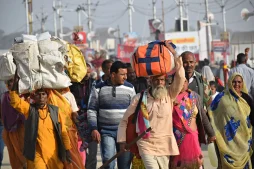
How to Avoid Tourist Traps in Delhi
Travelling in India

Travelling

There are a few common tourist scams in India. While I tend to stay away from organized travelling in general (no travel agencies, no group tours), it does seem to make it easier in the long run, which is the main draw. When you’re touching down in a foreign place, the temptation to grab anything that seems even the least bit coordinated has multiplied.

But, the key to Delhi is either to strike out on your own with the aid of apps (I like free tour apps that give me a walking guide of the city, like Historypin) or pre-book in advance. Everything from trains to hotels to excursions are going to be more expensive online, but it’s also easier to get a feel for whether you’re getting the best deal or just the walk around.

If you co-ordinate with an agency like India Someday, you have the hassles of travel and accommodation sorted out giving your explorations even more independence. 

Scams in India to Avoid: For trains, be careful that you aren’t buying a ticket for the waitlist. For taxis, go with flat fare rides (not private cars) that make a record of your name for the police. When in doubt, book online with a trusted site. Do I sound paranoid? Don’t take it personally, I’ve just been on one too many “great deals” that ended with me seeing nothing but the alleyway of some famous museum and the back of a crowded bus.

How to Avoid Tourist Traps in Delhi
Avoid train scams (Photo Credit – Cambodia4kids.org Beth Kanter)

Popular sightseeing spots

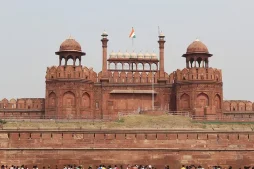
Like any tourist city, there’s going to be people hanging around the hot spots hoping to make a buck off the travellers. If you’re in Delhi checking out the Red Fort, or wandering into a market that caters to travellers,  you might come up against this: beggars. 

My first experience with beggars was in Rome with the Roma. While I made classic mistakes there, I keep in mind a couple of things when I travel now that keep me from handing out rupees for every magician in Old Delhi.

If any group surrounds your mode of transportation or group and are performers, it’s better to walk away without watching any of it. While some of the performances are interesting (and certainly new to many travellers), if you watch, you should give them some money. If you don’t want to hand over any change, get out of there as quickly as possible.

Same goes for shoe shiners, kids, or magical acts – don’t let them get more than 10 seconds of their pitch out, it’s better to get the heck out of dodge.
How to Avoid Tourist Traps in Delhi
Red Fort (Photo Credit – Prajapati Harsh)

What to bring with you

While travelling, there’s always a couple of things I never leave home without, and with Delhi, it’s not any different.

Don’t worry about clothes; jewellery, clothing, shoes, and other accessories are very inexpensive in Delhi, so if you run out of t-shirts and jeans, it’s not hard to find affordable options to tide you over until washing day. Things you might not consider but are essential: water treatment tablets (or something of that sort), insect repellent, earbuds, sunscreen, and a SIM card.

Some of the worst bugs you can pick up abroad are found in the water, so if bottled isn’t an option (or you just refuse to pay the big prices) take a SteriPEN with you. It uses ultraviolet light to kill the pathogens, viruses, and all manner of bacteria that can contaminate your water and it’s small and travel-friendly. Sunscreen and bug spray are self-explanatory, as are the earplugs (Delhi is a beautiful, cultural mecca, but quiet it is not!).

As for the SIM card, this is a personal travel hack of mine to keep my data working wherever I am without sending my cell bill through the roof (don’t tell Verizon). This “hack” doesn’t require anything other than picking up a card on the way out of the airport and installing it in my phone. Most work automatically, and if not you just need to unlock your phone. It’s easy, the service is cheaper, and you get better bars for making sure Dark Sky tracks the rainstorm heading your way.       

You may shake your head at why this is a tourist trap to avoid, but trust me, being a sunburnt, itching, directionless tourist in the streets of Delhi will certainly make an example out of you for the next passersby – it’s easier to just avoid with some clever packing!
How to Avoid Tourist Traps in Delhi
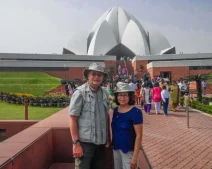
Clients outside Lotus Temple in Delhi (Photo Credit – Jay Galvin)

Shopping

If you see a lot of fanny packs, run.

All jokes aside, when it comes to picking up authentic knick-knacks in Old (or New) Delhi, the key is to look for places offering locally handmade items. As a rule of thumb, the smaller the market is, the better. I suggest hitting up places like Dilli Haat (traditional weekly market, go for the artefacts, stay for the performances and food) or Chandi Chowk (great for fabrics and spices), rather than the Central Cottage Industries Emporium.

I also have a personal preference for not buying any electronics or hardware, but rather traditional handmade items like painted dolls, lanterns, or beautiful sari scarves. For things from Tibet as well as Indian, hit up Janpath and Tibetan Market in Old Delhi for paintings, brassware, and cool jewellery. For a suit, head to Khan Market, and for upscale art and interiors, go for the smaller Sunder Nagar. These markets will be potentially crowded, but it’s where all the hidden gems are.

How to Avoid Tourist Traps in Delhi
Shopping in India

 Cash handling

Don’t make a beginner mistake with the money; when it comes to bringing out the cash just remember, less is more. 

When wandering markets or looking for streetfood (chaat, phirni, jalebi, and chai are on my list of must-try’s), keep a couple of things in mind: haggling here is alive and well, and keeping your bills close to your chest is just a good rule of thumb. Otherwise, you’ll be the target for the pocket snatchers in the market (every city has them, I’m not picking on Delhi!). 

Whether it’s your first time travelling in Delhi or your millionth, there are more charms than dangers in the streets of this old (and new!) city. With careful planning, it’s easy to avoid them with ease and get back to what’s really important: enjoying the experience.

Have any tips or tricks for making a trip to Delhi better? Leave your suggestions in the comments, I’d love to hear them! Click on Plan Your Trip for your ideal itinerary.


Visiting Chapchar Kut in 2016

Rumoured to have been around since 1450 AD, Chapchar Kut, the harvest festival of the Mizo tribes tells an eloquent tale of a people, their laughter and endless life. Come early March (1st of March in 2016), jungles of bamboo and undergrowth must be cleared to make way for the summer crop, or the jhum harvest. Once cleared there’s a sudden and welcome break in the otherwise packed schedule of agrarian settlements as they pile up the bamboo and wait for it to dry. It is in this time, that they celebrate.

Chapchar-Kut-Festival-indiaexchange-org
Photo Credits – www.indiaexchange.org

The cheraw Dance

Colourful traditional attire is dusted off, feasts are prepared and bamboo poles are selected for the crowning dance-The Cheraw. Once the glorious procession of Kut rore is over, where the elders of each tribe parade in representing their individual communities, the dancing begins. The Cheraw is a wildly exciting dance of dichotomies, young men pound heavy bamboo poles together against the ground to build a beat while the womenfolk step through them with fascinating dexterity, since missing a beat could mean losing a foot. The festivities are tied up with Then Thumna as local musicians take to the stage and belt out crowd favourites.

While the festival now focuses on song, dance and food, legend has it that the festival was started when the King of a village returned from a hunt empty-handed and ordered his own pig slaughtered so that the village may feast anyway, and the rice-beer (zu) that had already been prepared would not go waste. Along with the missionaries came the eradication of zu and the animistic practices associated with the Kut. 

Today the old traditions are revived, but tempered with the Christian history of the community. Locals are quick to share myths and folktales behind various practices, even if they may not hold them true anymore. It’s a beautiful example of a people respecting and appreciating their culture in all its shades without trying to cut out either extreme, but weaving them together into a tapestry of time.

Large number of people gathering on the occasion (Credit_Public.Resource.Org)
At India Someday, we are avid travelers that specialize in assisting travelers plan their holiday to India. Whether it’s flights to India, getting around or accommodation, feel free to get in touch if you have more questions, or fill out our questionnaire to plan your trip accordingly.

Travelling as a Couple to India

Travelling as a couple to India? You’re bound to have questions and concerns. From urban to rural, India’s attitude toward romance differs wildly. Unmarried couples may be forced into separate rooms or given tips on where to catch a quick moment together. Be aware you may be vulnerable to stigma. Whereas the country, which ties love up into a neat little box, will heartily embrace married couples. But there are also many beautiful sights for you to plan a romantic getaway to India.

It’s very complex and the general rule, especially when it comes to PDA, is to be sensitive to the atmosphere around you. It’s a country with endless opportunities to showcase your love and discover each other, as long as you do your research right. When you’re out, watch how other people, and other couples in particular, are behaving and simply follow suit. You may even learn a thing or two on clandestine loving from our attention-weary youth!

Travelling as a Couple to India
The ultimate romantic getaway to India includes a trip to the Taj Mahal

Booking your rooms

While some of the smaller hotels may refuse to admit unmarried couples of Indian origin, they usually make an exception for foreigners. The days of being questioned about differing last names are in the past, particularly in the metropolises, but there’s a stigma attached to booking a room for a couple of hours in the afternoon. If you’re travelling as a couple to India you might want to play it safe by slipping on a ring. Explain the unshared last name on your passports as a cultural difference or bureaucratic delay; you might feel a little more comfortable. Married couples, feel free to flaunt your wedding rings.

The attitude of homestays is usually far more accepting. They are used to a certain kind of traveller that breaks the rules and travels young, or ones who may or may not believe in the institution of marriage at all. Rest assured that if you’re doing your bookings through us, you won’t have to lie or worry.

We can ensure that you get the perfect romantic getaway to India. Read more into our pick of the most romantic hotels in India.

Plan Your Stay: Luxury Hotels in India

Travelling as a Couple to India
Hampi: another destination for your romantic getaway to India (Photo Credit – Jimmy Conover)

Being yourselves

When travelling as a couple to India, please accept that there are different customs to abide by. There’s no shame in holding hands or taking a brief nap on your partner’s shoulder. Anything beyond that may make those around you uncomfortable. Please try not to think of it as people judging you and forcing their rules down your throat. Yes, it would be lovely to have the freedom to express your love openly. But the current cultural reality is that it’s considered as discomforting as flashing. So hold the passion in check until you’re behind closed doors or learn from the couples canoodling on street corners and grab a little peck when no one’s watching.

Travelling as a Couple to India
A romantic getaway to India in Mumbai (Photo Credit – Joanna Nix-Walkup)

Using public transport

Be more careful about your intimacy, especially on overnight journeys. While it may cause a little heartache to skip the goodnight kiss, remember that as a space without any police patrols or specific rules, you’re more likely to attract unwanted attention. Stick to your berths and follow the age old Indian tradition of ‘behaving decently‘. You don’t have to completely ignore one another, hugs and hand-holding will turn no heads. Mostly, foreigners travelling as a couple to India are given the benefit of the doubt in these circumstances.

Travelling as a Couple to India
Be modest and respectful on public transport

Safety

Because you are travelling as a couple to India you have each other for safety. But we recommend that you cover your basics. Be aware of your surroundings and carry pepper spray, have your embassy on speed dial and do your research. With all your homework in place, you can push all the nagging worries to the back of your head and throw yourself headfirst into this splendid country you take your romantic getaway to India with the one you love.


Travelling as a Couple to India
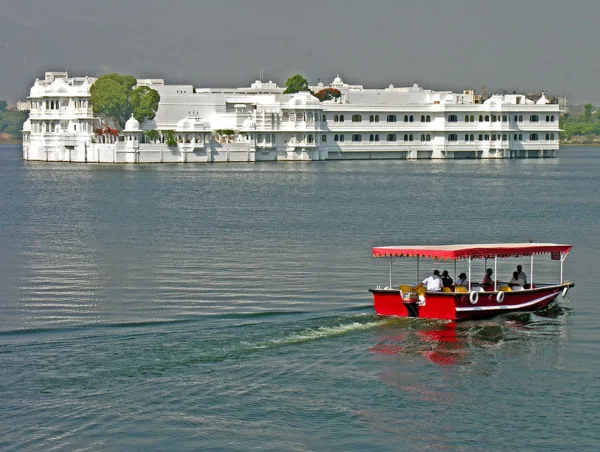
A trip to Lake Pichola is incomplete without a boat ride in the serene lake (Photo Credit – Dennis Jarvis)

If you’d like to travel in any other way, our blogs on solo travelling and solo travelling as a woman can be helpful to you too! India Someday can help you plan your perfect trip without being invasive and giving you your space. Just hit Plan Your Trip to know more.

Traveling as a solo woman in India: Six (not-so-scary) thoughts!

Five months into my amazing India travel experience as a solo female, made possible by India Someday’s absolutely brilliant You Wander We Pay contest, I bear good news. I’m alive and well, perhaps even glowing, as I dream about where to venture next in this country of chaos and charm.

Probably not what you would expect to read if you, like many others I know, have been too daunted to make your way to India. Deterred by the countless blogs which warn women endlessly about the dirt, disorder and demeaning behaviour of the ‘terrible male species.’

Well, here are six thoughts I think you should keep in mind if heading this way. And fear not, they are not designed to scare the chapatti out of you!

Traveling as a solo woman in India: Six (not-so-scary) thoughts!
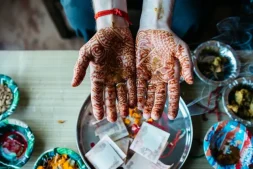
Mehendi on hands (Photo Credit – Pablo Heimplatz)

It’s pretty damn amazing here! Mind the media!

All too often, it’s the gloom and doom of life that’s presented to us in our media, instilling fear and emphasizing negativity. Keep that in mind! I’m not suggesting bad things don’t happen – they surely do, all over the world.

And huge kudos to those who share their experiences and raise critical awareness of gender-based violence of any sort. So I say yes, read it all! Hear the important voices of survivors and fellow travellers, increasing awareness and sharing safety tips. There is lots of good advice out there.

Just beware! It’s not the full story! There are thousands of us women who are having stellar, incident-free expeditions through India. Immersing in the culture and commotion, day and night, in cities and villages, with women and men. We’re more than safe, we’re having the time of our lives!

Traveling as a solo woman in India: Six (not-so-scary) thoughts!
They each have a different success story to tell (Photo Credit – Find Your Feet, Flickr)

You will be stared at – You are fascinating!

Whether you’re on the Metro platform in Delhi or walking through a small village in Uttarakhand, you WILL be stared at. You can count on it.   All the more so if you have very fair skin or blonde curly hair! I’ve had people literally come stand a foot away from me, looking me up and down, or even sneaking selfie shots with me, as if I wouldn’t notice.

Many women travellers are horrified by this and have told me they feel like sexual objects. While I can empathize, knowing we carry with us our personal and shared histories as women, I personally feel more like an object of cultural curiosity and am not at all offended. Isn’t that a big part of why we’re here too?! One of my favourite parts of travelling in India is the amazing parade of people. I could watch and stare all day!

So yes, I do feel eyes on me, but I feel more like a walking museum of western life than a sexual object. I can feel their fascination with my white skin, my freckles, my smile, my jewellery, my clothes, my bag, my shoes. I feel them wondering about who I am, what I do, how I think, not just what I look like naked. And trust me, I do know that feeling of being objectified – I just happen to feel it much more on the streets of New York City than here in India.

Of course, as with anywhere, there will be some obnoxious souls you might encounter. Indian men will often be the first to warn you about them. But, after 5 months of some pretty intense travel through cities and villages, using public transportation, and following my gut, I’m happy to say that I don’t think that’s the norm. Some men, in fact, might not even look at you at all, declining eye contact even while you’re in a conversation.

Traveling as a solo woman in India: Six (not-so-scary) thoughts!
Let your guard down and be as open as possible to other walks of life

Positive Energy is Palpable! Being present. Being open.

I’ve been blown away by the positive energy here in India. Perhaps it’s one of my favourite parts of this country. I’ve travelled to many places around the world and never have I felt so much positivity. From the breathtaking natural environments of wide-open deserts (Jaisalmer, Rann of Kutch), to the stunning mountains of Uttarakhand and Himachal Pradesh.

The powerful rivers, the glorious beaches, the endless farmland, and even the chaotic streets are filled with people and cows. The beauty of the land coupled by the brilliant colours of clothing and other textiles can almost even be over-stimulating and nourishing for the eyes and soul! And then there are the people – for whom the answer to any question is “yes, possible!”

Take it in! Breathe it! Be present and live in the moment! Savour it! Feel its healing power! Let your guard down!

Put those fear-mongering blogs in the back of your mind – and get to know the locals, even the men! Many travellers come to India and spend their time only seeing sites and enjoying the comforts of their accommodations.

But being open to the people and culture will truly enrich your experience. It will also get you the directions and guidance you need, sometimes without even asking (the majority of people simply want to connect with you and help – not get in your pants!)

The eye contact to be made, with women and men alike, especially while circling the white marble floors of the Golden Temple grounds, is unlike anything I’ve ever experienced. Even while on buses or walking the streets, connecting eyes and exchanging genuine smiles (and perhaps ahead bobble too) is powerfully beautiful – and harmless!

The majority of people, women and men, are sincerely interested in you culturally. Hence, offering you chai because of their Indian hospitality and to interact with you, as a human.

Let your guard down (to whatever extent feels comfy and safe) and be as open as you can to the stellar people here. I for one have found myself eating the most delicious meals, experiencing the incredible wildlife and even dressing in full traditional Kutch exquisite handmade clothing – all because of my openness.

Embracing the positivity, and moving the fear factor to the backseat (still need the info to inform your gut) will surely offer you a truly memorable India experience.

Traveling as a solo woman in India: Six (not-so-scary) thoughts!
Here is your chance to meet a mixture of interesting friends to make your trip more memorable

Strength in Numbers!

No, I don’t mean its better to travel with a crowd, though at times, it sure is fun! I mean there are TONS of us out here. Every week, I’m newly inspired and empowered by the calibre of solo women travellers I meet.

And not just westerners. To many Indians’ surprise, I regularly meet awesome Indian women. Women who have quit their conventional jobs, donned their backpacks and are out exploring their incredible country. Many of them blogging about it too. Many others are venturing out for long weekends and shorter trips, plotting their grand plans for longer-term adventures.

We draw strength and passion from each other. We, women, are oozing with cultural curiosity, passion for nature and desire for healing, self-growth and connection, both for ourselves and others.

Despite our masses, many will still be uber impressed by how brave you are (little do they know how much easier it often is to travel solo). You will still frequently be asked if you are single if you have kids and why not! Roll with the questions, as you like, having fun and embracing the opportunity for dialogue, even if it feels better to white-lie your answers.

All the more interesting if you connect with local women and women’s organizations, bearing witness to their experiences too. One of my favourite moments was chitchatting about periods with the 14 and 19-year-old sisters from Dharamkot whose home I stay in. They loved my diva cup (definitely something I recommend for all menstruating travellers!)

Such an amazing collection of women I feel honoured to now know and learn from (and with). From a 19-year-old German navigating her way through Rajasthan to the Indian woman who left her marriage and is seeking my travel suggestions. Also, to the Brit in her 70s covering more of the unbeaten path than any other woman I’ve met.

An incredible sisterhood – inspiring, empowering, and making a change!

Traveling as a solo woman in India: Six (not-so-scary) thoughts!
On the go, travel buddies

Being your true self

The more you travel and the more you live, the more you know what makes you tick. What inspires you, challenges you, nourishes you, strengthens you, brings you the most fun and the list could go on. Go after those things and go at the pace that feels right for you.

Even if it means straying from the path that you’ve read about, things you’re ‘supposed to do’ or see others doing. This has landed me in the most amazing local and nature scenes, leading me from one great opportunity to the next.

Remember that there are no wrong turns. If you miss seeing a palace, it’s probably because you had an eye-opening conversation or were in a beautiful park. India is a thoroughly overstimulating place!

Staying in one area and unfolding the many layers; moving on to experience another terrain, language, style and cuisine; or venturing to a meditation or yoga retreat – all will offer endless anthropological phenomenon.

In India, when asked “why,” the answer is often “why not?” If you keep this philosophy in mind, following your instincts and true-self will be all the more fun.

Traveling as a solo woman in India: Six (not-so-scary) thoughts!
Travel to find yourself

Good decisions and following your gut (a few little tips)

5 incident-free months of amazing travel through India (not even Delhi Belly!) I realize I might indeed be blessed with some good fortune. I’ve also followed some decent advice for making wise decisions. Even though it sometimes means sacrificing something my ‘true self’ (see above) would want to wear or do! Here are some of the tips I find most helpful.

Dive Into India’s Textiles

Have I mentioned the vibrant colours and amazing patterns of all the textiles and clothing? Well, dive in! Leave your spaghetti-strap tanks at home (in fact, leave everything at home and carry the lightest bag possible!) Hit the markets and shop for some colourful scarves and cotton kurtas (loose, long tunics worn by Indian women).

The hardest part will be choosing! Or wear other clothing that keeps you covered. India is a pretty conservative country. Covering your shoulders and legs might make you a little hotter temperature-wise. But you’re bound to feel much comfier in other ways. It will certainly help make the inevitable staring feel benign and a colourful kurta will earn you an extra smile or two.

Enjoy the conversation

You’ll be asked over and over again about what country you’re from. And often the convo can become much more substantive and interesting. Get into it, enjoy it – and as you should anywhere, have your clear set of boundaries. Be ready to ease yourself out of the conversation as soon as you get any sort of “icky” feeling.

Indulge in stargazing

The stars can be incredible here. Nothing like stargazing in the countryside, where the dearth of electricity means little light pollution. It’s not easy to hold me back from a good night walk, especially when my strong instincts don’t smell any danger. But I make that sacrifice, both in cities and in villages. I don’t do a lot of walking alone outside at night.

Thankfully, there’s almost always something fun going on to watch, talk about, cook, eat or play inside!

Traveling as a solo woman in India: Six (not-so-scary) thoughts!
Colourfully dressed Rajasthan women (Photo credit – Suffix)

Take the local transport

Local is often better. In big cities, I love taking public transportation and to get between cities and states, the trains and buses are stellar. Look out for “all-women” cars on local trains, usually all the way at the front or back.

Amazing to ride with so much fun colour and energy. A packed car full of traditional women carrying things on their heads and contemporary women heading to a whole array of jobs. There are even special lines for women to purchase tickets and some cities now have a fleet of all-women rickshaws.

Train Travel

For long train travel, I recommend either 2nd class AC or Sleeper Car. In Sleeper, the top bunk is best. There are lots of stories out there of women who have been groped on trains. However, I have yet to meet someone this has happened to. I love Sleeper Class because it’s always easy to connect with trusted Indian women, many travelling with their families.

They will happily keep an eye on your bag when you go to the bathroom. And they will also offer you some of the home-cooked food they brought on their journey. Lots of peddlers and other people will keep coming in and out of the train car. Hence, being on the top bunk gives you a safe place for your bags and lets you take it all in from a distance. I LOVE these train rides.

Sleeper Buses

Overnight sleeper buses are pretty great too; though beware of the double sleeper. As the name suggests, it is meant for two. And unless you know who you’re sharing it with, it’s probably not a good idea! Again, the upper level is more private but the bottom level is definitely less bumpy!

Bottom line ladies, as you would/should anywhere in the world, my best advice while travelling India is to be aware, use common sense and follow your gut. Make sure to enjoy the fabulous people and positive energy of this blessed country!

Namaste!

Thank you to India Someday, You Wander We Pay, and Incredible India.

Bollywood movies to help you understand India

We’re not gonna lie, Bollywood is pretty amazing. But, if you take all your cues on Indian culture from a Yash Chopra movie, you’re setting yourself up for some major disappointment. You probably saw that one coming though. Maybe you turned to the more gritty movies by acclaimed directors and producers in recent years. Maybe Slumdog Millionaire? Please don’t.

Between the big money Bollywood blockbusters and the well-intended but out-of-touch foreign entries, there are a handful of moving and eloquent homegrown pieces that tell the stories of people you are most likely to encounter on your trip – the middle-class pencil pusher, the confusedly passionate student, the curious village boy, and dysfunctional families that brush dirty secrets under the rug.

While the locations may be neither quaint backward villages nor mansions big enough to house a city. But if you focus on the people and their relationships you’ll come to the country more prepared to understand it, both in its multi-faceted history and its convoluted present. I regret that this list has no regional options, as those are not always as easy to find with subtitles.

Bollywood movies to help you understand India
Film City in Mumbai

Lunchbox

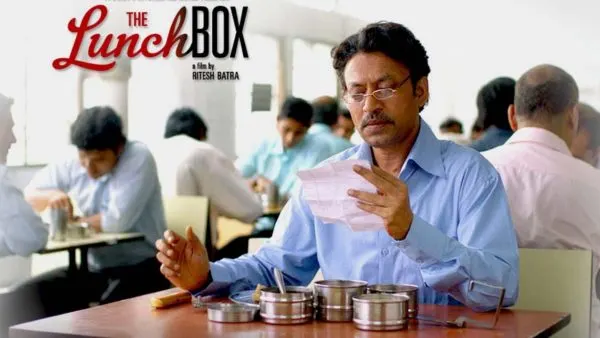
This Bollywood movie was released in 2013, it gently essays the complacency and complexity of the urban Indian middle class. An ageing accountant and a young housewife craving her husband’s wandering attention are accidentally linked through an error in Bombay’s otherwise infallible Dabba system.

Their relationship grows in the backdrop of sharing a radio and recipes with the upstairs neighbour, the comforting monotony of a daily commute and fantasies of potential love lost. The story is lovely in itself, but this movie’s particular beauty lies in its details – the unthreaded eyebrows of a woman whose husband does not love her, the creaky ceiling fans of an ancient South Bombay office. Watch it for the subtleties.

IMDB rating: 7.8/10

Bollywood movies to help you understand India
This movie’s particular beauty lies in its details

Rang De Basanti

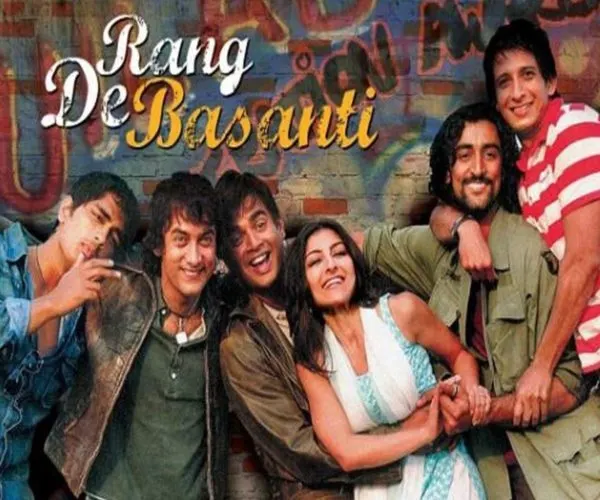
Passion, history, pride. A gripping and heart-wrenching film about the journey of a group of college kids making a movie about the Freedom Movement over half a century after its dreams supposedly came to fruition. Tackling the seedy underbelly of political corruption and tracing its tangible and achingly physical casualties on the ground.

This Bollywood movie takes you across North India, infusing you with the history of a proud race, delving into the horrors of partition and religious conflict and will finally ask, if after all that sacrifice and bloodshed, are we finally a free country? And if not, how many more lives must we give? Watch it for the power-packed emotion.

IMDB rating: 8.2/10

Bollywood movies to help you understand India
Rang De Basanti

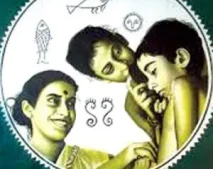
Pather Panchali

Famously the one to kick off the trend of ‘authenticity’ in Indian film, Satyajit Ray’s masterpiece lays out the rural life in a simple and straightforward story.

A tale of siblings hungry for entertainment in a sleepy village, the politics of cramped living quarters, the social unbalance that results from income hierarchies and the parental burden of providing and caring respectively.

Nearly half a decade has passed since its release, and a lot has changed, but is, as always, the same. Watch it before you decide to trek out into the rural countryside and ‘get to know the real India’. Watch it to know who you’re dealing with and not confuse interest with pity.

IMDB rating: 8.5/10

Bollywood movies to help you understand India
Watch before you decide to trek out into the rural countryside and ‘get to know the real India’ (Photo Credit – IMDB)

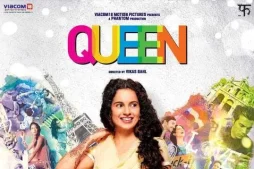
Queen

Granted, a major part of this movie was shot in Paris and Amsterdam but it’s not just Europe. It’s Europe through Rani, the mould that all urban Indian girls are cast from. Left at her own wedding when her boyfriend suddenly decides she isn’t ‘modern enough’.

Rani, her name meaning Queen, decides to go off on her honeymoon anyway and meets all sorts while there. To understand her grapple with the woman she thought she would be, and the woman she discovers herself to be capable of being is to understand the expectations and limits set to so many like her.

Maybe see your own place as a woman travelling to India. Watch it for the context it’ll provide.

IMDB rating: 8.2/10

Bollywood movies to help you understand India
Watch as a woman travelling to India for the context it can provide

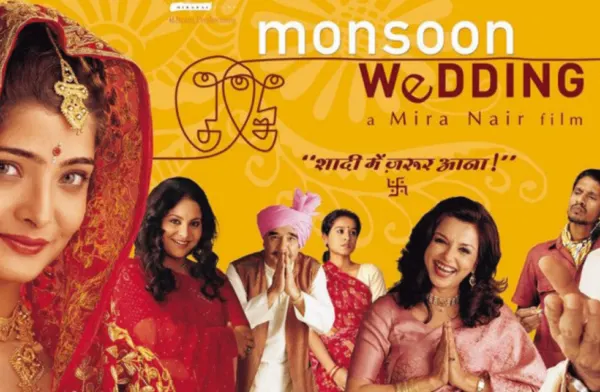
Monsoon Wedding

If you’re going to be spending a lot of time in the big cities, this is a great way to dive into what you might consider the dichotomy of the upper-middle classes. Rich, educated, urbane, but still outrageously sexist and oppressive towards their own.

This movie is simultaneously hilarious, colourful and shocking. As one man’s attempts to throw his daughter a big Punjabi wedding he cannot afford churns up memories of sexual abuse, a budding romance and a young boy’s punishment for leaning too far into the demarcated realm of women.

As a traveller you might meet young people at bars and cafes of this category. This Bollywood movie will help you understand the grey shades of their backgrounds. Also, it maybe keep you from passing judgement too soon. Watch it for the honesty.

IMDB Rating: 7.4/10

Bollywood movies to help you understand India
This is a movie that dives into the dichotomy of the upper-middle class

Gangs of Wasseypur

Action-packed and haunting, this makes an appearance on any list with the word authentic in it. Set in the mafia-ruled Badlands of Jharkhand it watches three families battle it out for control over the local coal supply through gun warfare, seduction and dirty, dirty politics.

After being screened as a whole 5-hour long movie at numerous film festivals. Anurag Kashyap’s multi-starrer had to be chopped into two halves for the general public. The brilliant cinematography and chase scenes mean that it’s easy on the eyes.

And, the cuss-laden dialogues and sure to keep your adrenaline pumping. Watch it if you’re looking out for some of that classic third-world grit.

IMDB Rating: 8.2/10

Bollywood movies to help you understand India
Packed with action, three families battle it out for control over the local coal supply through gun warfare, seduction, and dirty politics (Photo Credit – IMDB)

Seeing India by Rail: A Budget Traveller’s Guide

India is home to over a billion people, and the country covers more than three million square kilometers. Now that you’ve booked your plane ticket to India, you’re raring to see everything that you possibly can. With so much area to cover and so little time, not to mention your limited traveling funds, seeing India from a train window is an excellent way to soak in as much of this beautiful and diverse country as you can. Here we’ll look at the step-by-step process of seeing India by rail.

Seeing India by Rail: A Budget Traveller’s Guide
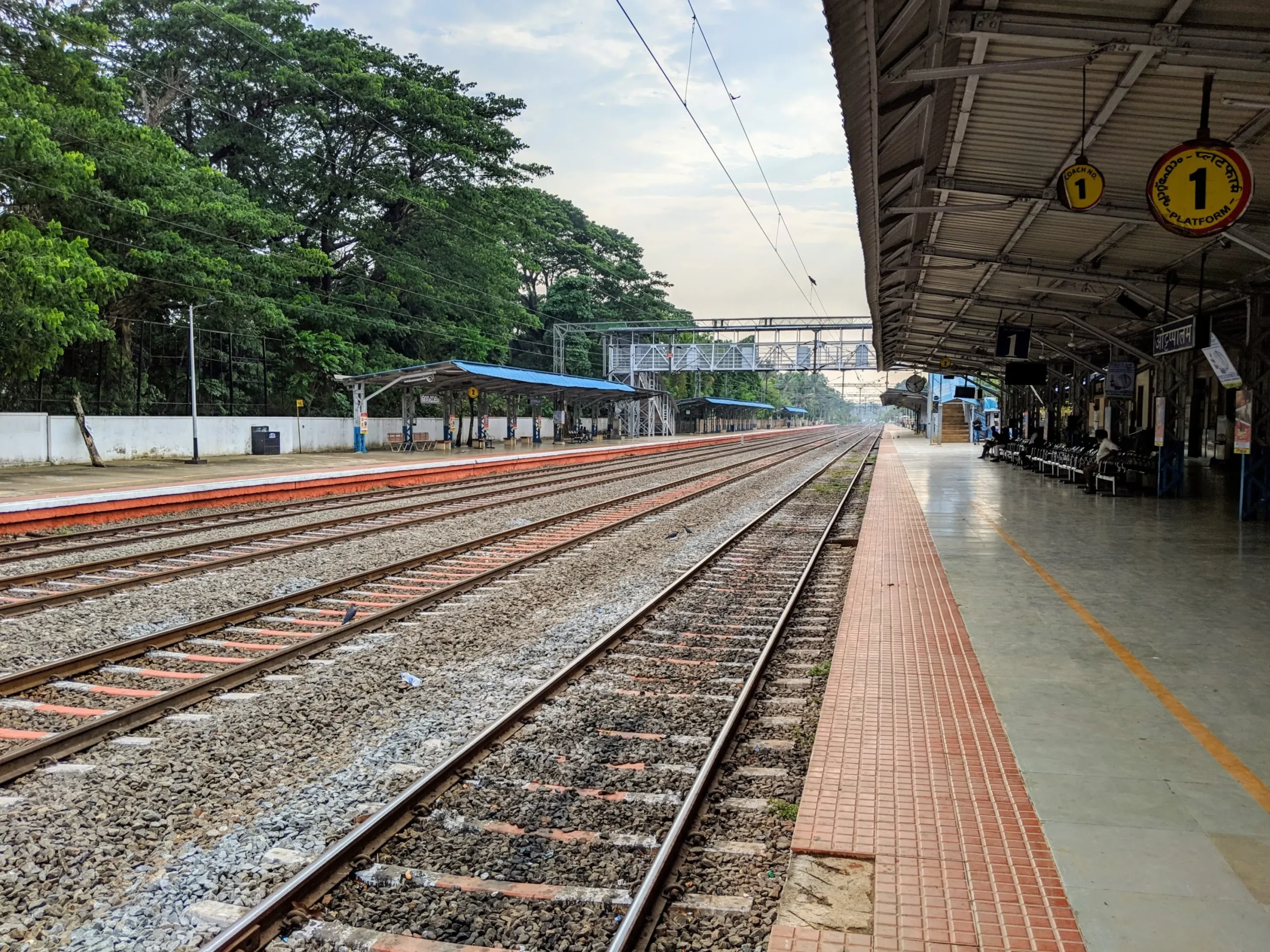
Train arrives well before time

Jess Signet is a travel writer and regular backpacker. She loves exploring the globe and enjoys sharing her travel insights and tips.

Step One: Choosing your Route

If you are backpacking in India then the first step is to decide where you want to go. Most trains run from one city center to another, so you can reasonably expect the train to stop in the very heart of that city. Then take a look at the times and fares. Be careful when checking fares: for longer journeys, there are sleeper cars which may or may not offer air conditioning and which may or may not include all of the meals on the journey. Be sure to take these factors into account, especially if you plan to cover a long stretch.

Once you’ve chosen your route, you can easily book the ticket online or go to any train station to purchase the ticket. If it sounds a bit daunting but seeing India by rail is an exploration like no other. Also don’t hesitate to call India Someday and have them handle it for you!

Seeing India by Rail: A Budget Traveller’s Guide
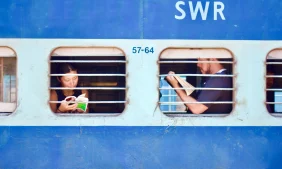
Engrossed readers on the go: (Credit- Rathish Gandhi)

Step Two: Packing What You Need

Seeing India by rail is a very special experience, but as any experienced train traveller can tell you, it does require some special preparation. The key to travelling by train and saving money is to bring everything that you need with you. Prices on the train tend to be a bit steep, so bring enough water and snacks to last you for the duration of your trip. Even if meals are provided with your ticket, be wary. The new food might not sit well with you as you’re traveling fast down the tracks. If you’re prone to motion sickness, it’s a good idea to take some medicine before you set out.

Remember when backpacking in India to always bring your travel documents wherever you travel, such as your passport and your visa. There are often pickpockets prowling the trains, so be sure to stash all of your valuables on your body, or keep them in a very safe place at all times. In recent years, there have also been many issues with violence toward women on the trains. While this trend has subsided a bit, many lines have created “women only” carriages to prevent gender-based violence.

Seeing India by Rail: A Budget Traveller’s Guide
Witness beautiful views on the train journey

Step Three: Getting Onto the Train

Now that you’ve packed and prepared for your train trip, you’ve got to make it to the train station. Most of the larger cities in India have a central train station in the city center. Locating the station can be done by asking directions from a local. Also, don’t hesitate to ask India Someday to book you a taxi.

Make sure to arrive at the station early so that you can ensure a seat and get settled before the train leaves for your destination. If you are backpacking in India then it’s likely you may choose a less expensive and less fancy train line. Be prepared that things will not always run exactly on time. However, it is always better to be a bit early, even if the train may be a few minutes late. Many lines do not offer refunds if you miss the train, so to protect your train ticket investment and arrive early to the station!

Seeing India by Rail: A Budget Traveller’s Guide
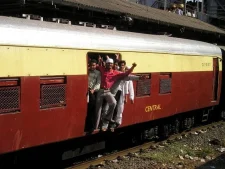
Mumbai local (intercity) trains are packed with daily travellers

Step Four: Sharing Your Experience

Finally, you’ve made it to your destination, and half of the fun was getting there! Some of the best ideas and breakthroughs were made on train journeys. Take advantage of this time to reflect on your experiences in India – from the seemingly inconsequential to the unforgettable. Use your hours to capture the scenery passing you and share it with your friends. Even though wifi is often accessible in India, it’s always a good idea to have a VPN or similar service on your device. This allows you to connect to all of your favourite websites and social media platforms while you’re abroad. It’s also a good idea to check in with friends and/or family at each leg of your train journey so that someone knows where you are at all times.

Overall, seeing India by rail is a great way to see more of the country as you travel between destinations. Plus it’s a great way to save money as you travel around one of the largest and most crowded countries in the world. So grab your backpack and your passport, and get ready to plan, pack, travel and share your experience all over the Asian subcontinent!

Seeing India by Rail: A Budget Traveller’s Guide
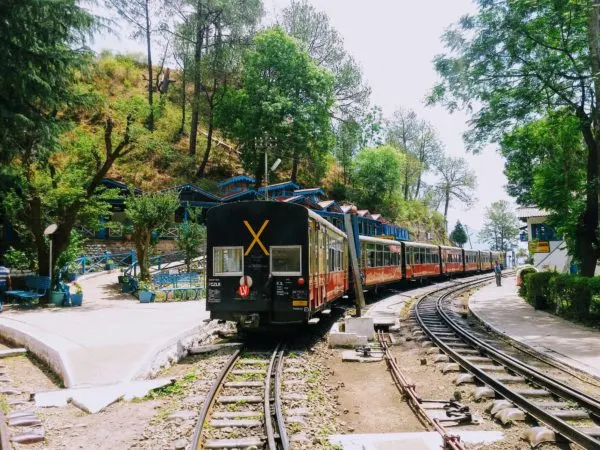
Toy train entering the station

Updated E-visa Rules – India 2016

A couple of months ago the Indian Government updated its rules and regulations for obtaining an e-visa. And it wouldn’t do for you to be left in the dark, would it? So here’s a quick briefing on the changes, make a note in your travel diaries.

Visa to India for foreginers
Indian Visa application form

Eligibility

PURPOSE: Only four possible intentions are considered innocent by the Indian Government for obtaining a visa. Firstly, recreation and sightseeing, likewise, casual visits with friends and family. Secondly, a short duration for medical treatment, and lastly, a casual business visit. Our apologies on not making a category for Self-Discovery.
PASSPORT: The original document should be valid for another six months from arrival. Also, It should have at least two blank pages to fill up with Indian stamps. Unfortunately, those holding Pakistani Passports or are of Pakistani origin, are not allowed this convenience.

Hence, they must apply directly at the India Mission for regular passports. Diplomatic/Official Passport holders, and those endorsed on Parent’s/Spouse’s Passport and International Travel Document Holders, will all have to also make do with the regular method of obtaining visas.

Indian E- visa process
Always ensure validity (Photo Credit – Jacqueline Marcou from Pixabay)

Application requirements

PASSPORT: For an e-visa, you will need to submit a scanned copy of your passport’s information page online here. So before your stay in India, do make sure that it’s signed and valid for 6 months. Also, it needs to be full of blank visa pages for all your fun travel plans. Don’t forget to carry it with you on your trip!

PHOTO:  You will have to upload a digital copy of a passport-sized photo to the website. You can also use a scanned photo of a regular passport photo instead.

PROOF OF DEPARTURE: You will need to show a confirmed round trip ticket. So they know you’re not trying to sneak in and start a new life.

PLEASE NOTE

For applications to be eligible for an e-visa they must be submitted no later than 4 days prior to departure, and no earlier than 34 days before the date of arrival so if you’re not the kind that likes their itinerary done and dusted well in advance, you might want to consider a traditional visa.

You can get a maximum of 2 Electronic Travel Authorisations (ETA) in a year with one of them providing a maximum stay of 30 days.

You can pick up a visa on arrival at Bangalore, Chennai, Cochin, Delhi, Goa, Hyderabad, Kolkata, Mumbai, and Trivandrum ONLY.

Carry a copy of ETA at the time of your travel (obviously).

Your visa will usually be processed and issued within 3 business days if approved.

Flights to India
Have a safe flight to India!
Happy bureaucratising to you!

Holding on to Hygiene in India

While the new government has taken a pretty strong stand on cleanliness and hygiene in India, there’s no point in getting our hopes too high just yet. Indians may seem confused about cleanliness, urinating in public on the one hand and obsessively washing their hands before each meal on the other. It’s a diverse country full of lots of different people, each with their own priorities.

As a traveller, try to keep in mind that depending on which area of the country you’re in, you’re going to be faced with a range of cleanliness issues. Here’s a quick guide to help you on your way.

Holding on to Hygiene in India
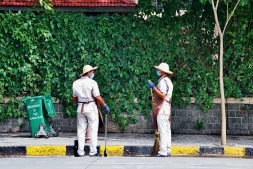
Sweepers in Metropolitan India

Make yourself a clean-up kit

Sanitizer, wet-wipes, tissues, maybe antiseptic, and most importantly, toilet paper. All of these are easily available in any medical store across the country when you need a refill, but not so much in toilets or bars where you might actually want it. An added bonus in India is soap strips, a little booklet of soap-coated strips to use on trains or buses.

Holding on to Hygiene in India
Hand sanitizers (Photo Credit – tetiana-shyshkina)

Toilets

I’m sure you’ve all come armed with thousands of warnings of India’s open defecation problem. Hygiene in India is sometimes a problem but be rest assured, we do know what toilets are. That said, I’d suggest you stay away from the standalone public loos and opt for something in a decent looking restaurant or mall.

Most of these will offer you the option of western toilets, although sooner or later, you’ll be introduced to the glory of The Indian Toilet. While your leg muscles might complain a bit, it’s definitely the more hygienic option thanks to minimal contact. If you’re carrying your own toilet paper and don’t have to be bothered by the bucket, all the better.

Another feature of toilets in India, more so with the western versions, is the health faucet, a small handshower preferable to the old system of mug and bucket for washing up.

Holding on to Hygiene in India
A must in your travel kit while travelling in India

Food

With this one, you’ve mostly got to go with your gut (geddit?) If you’re eating in hotels 3 stars and up you’re definitely safe, but with others you’ve got to use a little common sense. Does it look clean? Do waiters wipe the table after each patron leaves? Are there a lot of flies around?

Beyond that, it’s important to stick to mineral water. At some street stalls you can even ask if the food is made with bottled water. Don’t go around asking to peek into kitchens, you’ll probably just offend someone. Who knows what they’ll put in your food after that. If you have access to the internet, read a couple of reviews and make an informed choice.

Every single restaurant in India will provide you with a washbasin, or at least a jug of water to pour over your hands. What remains conspicuously absent though is soap, although at some basins you might spy a thin sliver of the ever popular red lifebuoy soap worn into submission by countless users.

For this reason, and also the lack of clean towels, we’d suggest you carry your own little bottle of hand-san or rough it out like the rest of us with a good dousing and a quick wipe on your jeans.

Holding on to Hygiene in India
Always opt for bottled mineral water and avoid water poured for you at restaurants, you cannot know if it’s filtered or not

Hotel Rooms

If you’ve got us on your bookings, you’ll be just fine. If not, here’s a couple of our tricks. Always check the toilet first. Never book a hotel room unless you’re satisfied with the state of its bathrooms. Check the sheets for stains, though that isn’t often a problem. Again, ask for mineral water in your room.

Holding on to Hygiene in India
The hotels we offer are very clean and suitable, like this suggestions of ours: Diggi Palace in Jaipur (Photo Credit – Booking.com)

Public transport

Buses: If air-conditioned and privately run, you should be fine. Buses within the city are often best avoided, although special mention must be made of Mumbai’s BEST buses, which are thoroughly hosed down each day.

Trains and metros: Long-distance trains are quite clean to begin with, though passengers may not keep it that way. Toilets here can be a huge issue; the jerking motion of the train tends to interfere with people’s aim. Local trains and metros are usually good in this respect.

Auto-rickshaws and taxis: Very clean in most cities. The drivers tend to take good care of their vehicles as their entire livelihood is dependent on them. However, the same cannot always be said for their passengers.

Holding on to Hygiene in India
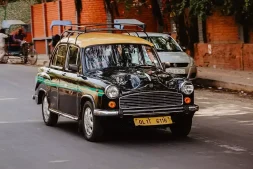
‘Kaali Peeli’ taxi – credit: (ET Auto)

Plan B

You can only ever be so vigilant in regards to hygiene in India. Someone sneezes in your general direction, a vegetable vendor doesn’t wash his hands and little germ slips through. Come prepared for this situation as well. Carry medication that your body is used to and which you trust. Looking up the local variant at the last minute is not recommended. Your health will thank you.

Be clean, be safe!

Holding on to Hygiene in India
Always carry essential hygiene and medical care while travelling

We hope this article helps and provides you with a fair bit of information about hygiene in India. Also, prepares you for your adventure to India! If you are looking for tips to keep in mind about safety and precautions while travelling, we suggest you read this blog, and if you still have questions, please do get in touch with us.

Emergency service helplines in India

Throwing yourself into a new country with new laws, new customs and new languages is a thrilling experience. But do remember that it carries a fair amount of risk as well. Disasters and crime can happen to be anything ranging from a flat tire to a theft. Each country has a different attitude toward each of these situations. In India, emergency services vary drastically in quality and response time across the urban-rural divide as well.

Here’s a couple of pointers to help you contact the right people when you need them. These will also help you understand how to communicate your problems effectively and efficiently.

Emergency service helplines in India
Consider buying small padlocks to lock your bags so that nothing can be stolen from them (Photo Credit – Markus Spiske)

BE PREPARED

  • Keep your consulate on speed dial, they’re always your safest option. They’ll understand where you’re coming from and your own cultural understanding of certain events such as gender rights or medical conditions
  • Carry medication you feel may be required at your destination
  • If you’re holidaying by the sea take glucose and insect repellent. And if you’re heading to tightly packed cities, carry a mask and inhaler
  • Always have the number of a good private hospital at your destination at hand. If you can find their dedicated ambulance number, that’s even better
  • In case of a criminal altercation be aware of your rights
  • Get a functional internet pack on your phone. I cannot stress enough the importance of internet connectivity in such situations. While India does have an emergency number system, you need to be able to access further options as well, depending on your situation. Most travellers tend to be dependent on the Wi-Fi at their hostels or hotels, but you need something full time.
Emergency service helplines in India
Always carry essential hygiene and medical care while travelling

Medical Emergencies

Even in big cities, private hospitals are almost always a safer bet in terms of available technology and quality of care. Ask at your hotel/ hostel for the number or dedicated ambulance service number of a good hospital nearby and save it.

Often ambulances aren’t even worth waiting for since traffic congestion and our lack of respect for ambulance sirens. This means they don’t have any distinct advantage over regular transportation besides first aid. So if you’re in a tearing hurry, jump into the nearest cab or hail down a passing car. You’ll find strangers are often happy to help.

If none of these work for you, or you’re in an area with top-notch government services, dial 102 for an ambulance.

A lot of the time a medical emergency could be a lack of available medication at the right time. In this case, just do a quick internet search for the nearest 24-hour pharmacy. There are plenty of them, particularly in urban areas, and they’re well-stocked.

Emergency service helplines in India
Because of traffic congestion, the best bet may be not to wait for an ambulance but to jump in a taxi (Photo Credit – D Mak)

Criminal Emergencies

I do not wish to put my country down, which I love. But, for your own safety it’s best to know that except for a few pockets of super-urban areas, the local police can be quite unreliable. There is an emergency number 100, and we also have the blanket emergency number 108. But response times can vary from 7 minutes to an hour.

Since cops are spread pretty thin, due to a low cop to citizen ratio; it leads them to approach problems with a hardened cynicism. Until you can prove otherwise, all complaints are wearily dismissed as a waste of time. Your status as a foreign national can also affect the proceedings. Either you’re heaped with scorn for “coming to this country and then dumping all your problems on us”. At the opposite end, genuine care and concern twice that any local would receive, in deference to your foreign passport.

In case of theft, registering a complaint is smooth, the police are old hands at this. In case of a sexual crime, go straight to the hospital. Then call the police to make sure they are at the hospital to oversee the treatment and direct doctors on how to handle evidence to give you a strong case. Always keep your tone respectful with the police, they’ll appreciate it and it’ll be to your own benefit.

In more rural areas, be alert, because a casual accusation can often snowball into lynch mobs and kangaroo courts well before the police arrive.

Emergency service helplines in India
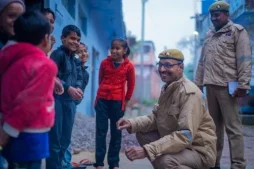
Police in India are usually dressed in khaki uniforms

GENERAL EMERGENCIES

  • Women and children, dial 1090 or 1091 regardless of the nature of your emergency. To report child abuse, it’s 1098 (do keep in mind though, that child-rearing practices here can be jarringly different from back home). A lot of practices that are perfectly acceptable in this country may seem strange or even barbaric to you
  • In the case of domestic abuse and sexual violence: 181
  • Suicide/crisis 24-hour helpline:  (044) 2754 6669
  • Anti-poison aid: 1066

Be safe!

Emergency service helplines in India
Female tourists should not venture out alone at night in an unsure area (Photo Credit – Yonatan Anugerah)

Indian Laws every foreign tourist should know

When it comes to Indian customs and laws, the rumour mills really get cranking. Would your hand be chopped off for stealing? No. Would you be arrested for a quick hug in the street? Unfortunately, yes.

Here’s a list of ground rules compiled for your benefit so you know exactly what’s coming. More importantly, familiarize yourself with the legal terms. Then you know when you’re really guilty and when you’re being harassed by corrupt authorities. As a foreigner, you’re likely to be the target of policemen or locals trying to take advantage of your ignorance, so it’s important to know your rights.

Wondering when is the best time to visit India, read here? 

Indian Laws every foreign tourist should know
Legal terms (Photo Credit – Fathromi Ramdlon)

Legal rights of Women

  • Only female officers can escort women to the police station. If there isn’t one, DON’T GO!
  • Not only do male officers have no right to escort a woman but she can also refuse to go to the police station between 18:00 hrs to 06:00 hrs. In case of a serious crime, a written permit from the magistrate is required for male officers to escort her.
  • Women can lodge complaints through emails at ncw@nic.in, our National Commission for Women.
  • Guidelines issued by the Delhi Police entitle women to the privilege of registering a complaint via email or even through post if she can’t go to the police station. Just do a quick internet search to get the contact details of your local police station.

Look at the different South India and North India travel routes.

Indian Laws every foreign tourist should know
Only female officers can escort women to the police station (Photo Credit – BodyWorn by Utility)

Public Protocol

PDA

A lot of the issues in Indian law stem from the fact that the vague wording of the Indian Penal Code gives the cops an unfair amount of wiggle room. While in the cities you might find rows of couples making out beneath skimpy scarves by the shoreline, more rural areas can tend to object to even holding hands or a peck on the cheek. On visiting new places always try to gauge the atmosphere first. If reprimanded by a police officer, be apologetic to the point of grovelling. Rudeness and high-handedness will get you nowhere. Nudity or going topless in public is never an option at any beach. Bikinis are best avoided on most beaches in South India, which is home to religious sites.

Public Nuisance

Section 268 defines this as ‘an illegal omission which causes any common injury, danger or annoyance to the public or to the people in general.’ Note the use of the term ‘annoyance’, again widely open for interpretation. Avoid disturbing residents with loud noises, public drunkenness or anything that could be construed as vandalism. Sexual harassment is punishable by law.

Recording

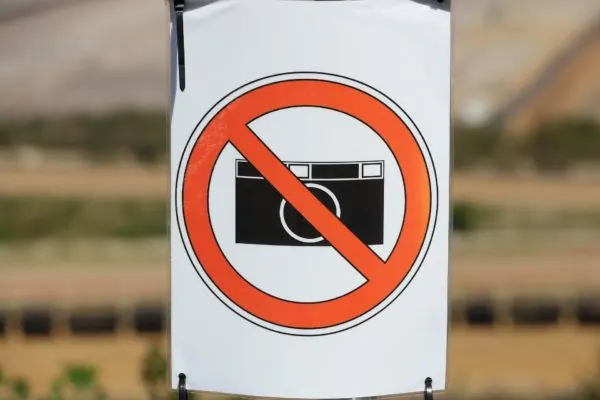
You obviously want a trove of videos and photographs to take home, and India provides a multitude of photo ops, but try and be a little careful in sensitive areas. Military and government zones, crowded airports and railway stations are always on high alert for security threats, you don’t want to be mistaken for one. Put away binoculars, if you’re carrying any.

Get insights on traveling to India from the US

Indian Laws every foreign tourist should know
Check for any sign that explicitly prohibits photography (Photo Credit: Herbert Aust)

Substance laws

Alcohol

The legal age for drinking as per the Indian Law is between 18 to 25 (this varies from state to state), so do some local research before you go. A distinction is usually made between mild liquor (beer and wine) and hard liquor (spirits). Avoid any local liquors not vetted by your hotel manager or tour guide, and again, no public drunkenness. If an election is nearing, alcohol may be banned for a couple of days prior, and days of local religious or political significance are also usually dry. Some states are dry year-round, or require a permit to buy, transport or consume alcohol. Carriage of alcohol between states is often illegal due to the varying alcohol laws, you may be stopped for a random check.

Drugs

Unequivocally illegal. Cigarettes and chewing tobacco are available on every street corner and don’t carry much social stigma. However, for anything else there will be legal consequences. Consequences such as a 6-month minimum sentence for possessing a small amount of drugs deemed for personal consumption, and a 10-year sentence for drug possession of anything sufficient for trafficking. Convicted offenders can expect fines and a minimum jail sentence of 10 years.

Beef

In 2015, several states declared a blanket ban on export, import, and sale of beef and beef products, a continuation of the prevention of cow slaughter laws. Deliberate killing or maiming of a cow can attract a five-year prison sentence, so be careful when you drive!

Contraband

Transport and possession of firearms, antiques, electronic equipment, local currency, ivory, gold objects, and pornographic materials are all regulated by the government. Non-residents cannot import or export the Indian rupee, while Indian citizens have limits. For more information, consult India’s Central Board of Excise and Customs. Antiques, specifically, must be registered with local police, along with a photograph of each item. Satellite phones are illegal.

Indian Laws every foreign tourist should know
Alcohol laws of India are different for different states (Photo Credit – Free Photos)

Identification

Carry your passport with you at all times; you will require it for all check-ins at hotels or airports. If you’re brave enough to drive in Indian traffic, make sure you have an international driving permit and a helmet for motorcyclists and passengers.

The Indian legal process is cumbersome and lengthy. Do your best to avoid any brush with the Indian law. Individuals arrested on a major offence can languish in jail for years before a verdict is reached. Indian ‘red-tape ‘ism can hamper your consulate’s attempts to help. Try not to forget that India still awards the death penalty for the ‘rarest of rare ’ cases. This is another excellent example of our tendency for vague wording. Always keep in mind your rights and defend your innocence, but courteously.

Read Further: Finding Joy in Things to do in India

Additional Resource: India’s Finest Luxury Hotels

Now that you know the legal dos and don’ts, what are you waiting for? Contact us, and we will be more than happy to plan that dream trip of yours.

Explore Further: Top 20 Destinations in Northern India

Let India Someday handle it and plan your best trip.

PLAN MY TRIP subtext