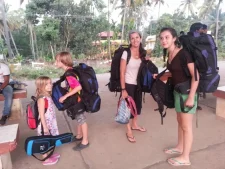
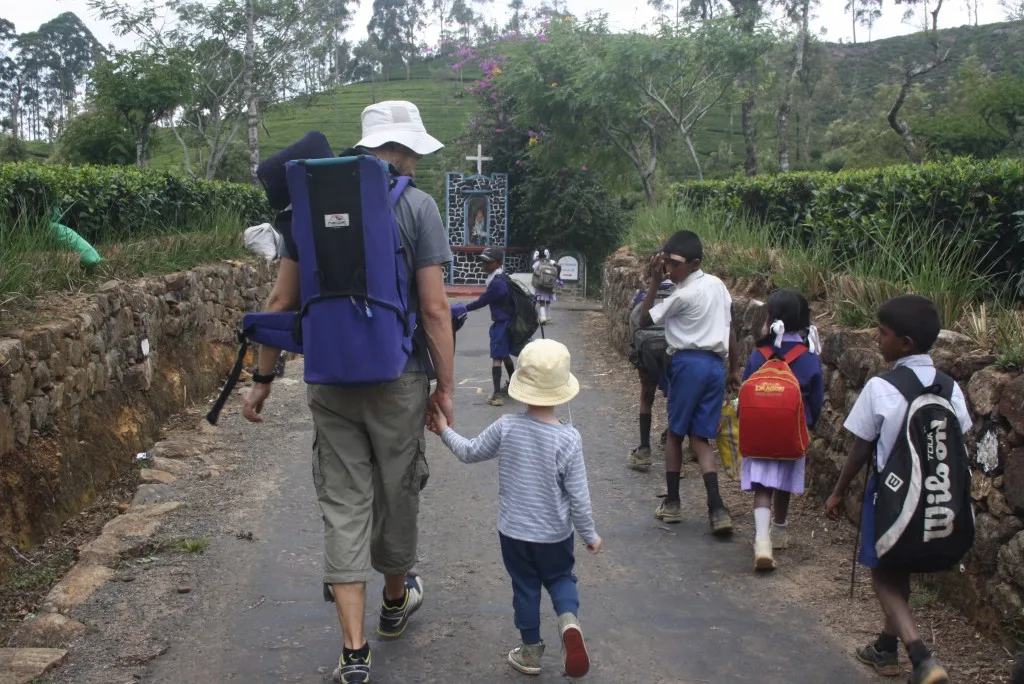
– Gregor, Sarah and family from Canada are travelling with their children aged 12, 10 and 5 for a year across Europe and Asia. They used our help to plan parts of their India trip and are guests authors for a series of blogs on travelling in India with children.
“Keep the kids happy, everybody is happy.” These wise words were spoken by my mother-in-law. Travelling in India from early January to mid-March, we experienced both the sweet fruits of our observance of this wisdom and the rotten fruit of forgetting it. It is hot, busy and very different from home (Canada). You need to take time to just relax, unwind, digest (both exotic foods and all the impressions) and escape. Our tendency is to want to fill our days with meaningful cultural visits, to maximize the time we have. We want to see this exotic new land before we head back home where everything is so familiar. With children, this does not work!
Children of the same age always inspire each other
Our journey with the kids
As cool as it could be to climb to the top of a peak in Sri Lanka with all of the other pilgrims to witness sunrise, these will be the kids crying and acting out and miserable for the rest of the day. So many beautiful temples, so little time… After two or three, the intricacies of when they were built and how Buddha is holding his fingers is lost on the small people. We dropped our kids in at the deep end, arriving in India in Mumbai and heading to Aurangabad to visit the Ajanta and Ellora caves. They were little troopers, but we quickly saw that we needed to leave them in the room (our eldest daughter is 12 going on 17!) while we went out to buy some fresh fruit or to do a little shopping close by.
Backwater canoe trip in Kerala with children
the kids’ favourite place
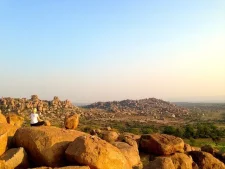
Nature and small towns are also a key to happiness. When we arrived in Hampi, the kids were jubilant: “This is our favourite place in India!” Life slowed down, there was much less pressure to buy things (I received daily offers from one man to have my ears cleaned and he even had testimonials sorted by country of origin). It was possible to rent scooters and enjoy getting around by ourselves. Any beach we visited offered the same thing in addition to the breeze that invariably comes with being right on the ocean.
Cooking class in Varkala with kids
So, I would say that India is an amazing place to visit, but with kids, you must pace yourself. One temple, not four! Some city time but not much! Nature, fresh air and some beach time is an important way to break up some of the heavier experiences. It gives us all time to digest what we have seen and done. When the kids have time to recuperate and chill-out time, they seem to be able to just take everything in stride. A large part of the enjoyment on our trip has been watching the kids go with the flow!
India is always an adventure, more so when travelling with children
More blogs from Gregor and Sarah on travelling India with children
A good friend of India Someday, Aditya Lalla shares his stay and trekking experience in text and pictures.
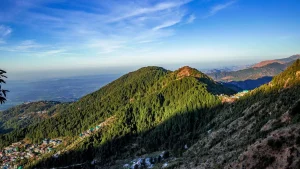
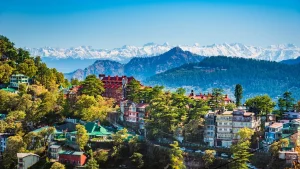
Walking across McLeodganj takes all of twenty minutes. Built up around a one-way ring road (Temple Road going downhill, Jogiwara Road going back up) and a handful of side roads branching out from the main square at the Northern tip of the circuit, McLeodganj is a fantastic starting point for a number of great treks.
McLeodganj is a fantastic starting point for several great treks
Trekking in McLeodganj, Dharmshala
Heading due north out of the main square, through the local khao gully (lit. food lane) and bazaar, you will suddenly find yourself walking on a quiet paved road used only by the locals and the occasional cattle.
Known as the Dal Lake-McLeodganj road, it has almost no gradient and is a pleasant, scenic route approximately 2.5 kms long. Once at the Dal Lake, one can either go on a bit higher to Naddi Village or visit the Tibetan Children’s Village.
Bhagsu Nag is a small village about 1.5 kms to the east of McLeodganj. Known for its Shiv Temple and spectacular views, it is also the starting point for a short but steep hike going up to Bhagsu Nag waterfall.
There is a guardrail, the path is paved, and there are steps for the steeper sections. This is a popular spot for most tourists visiting McLeodganj, so it’s not unusual to see people of all age groups making their way up and down the route.
Bhagsu Falls, Dharamshala
Triund Hill
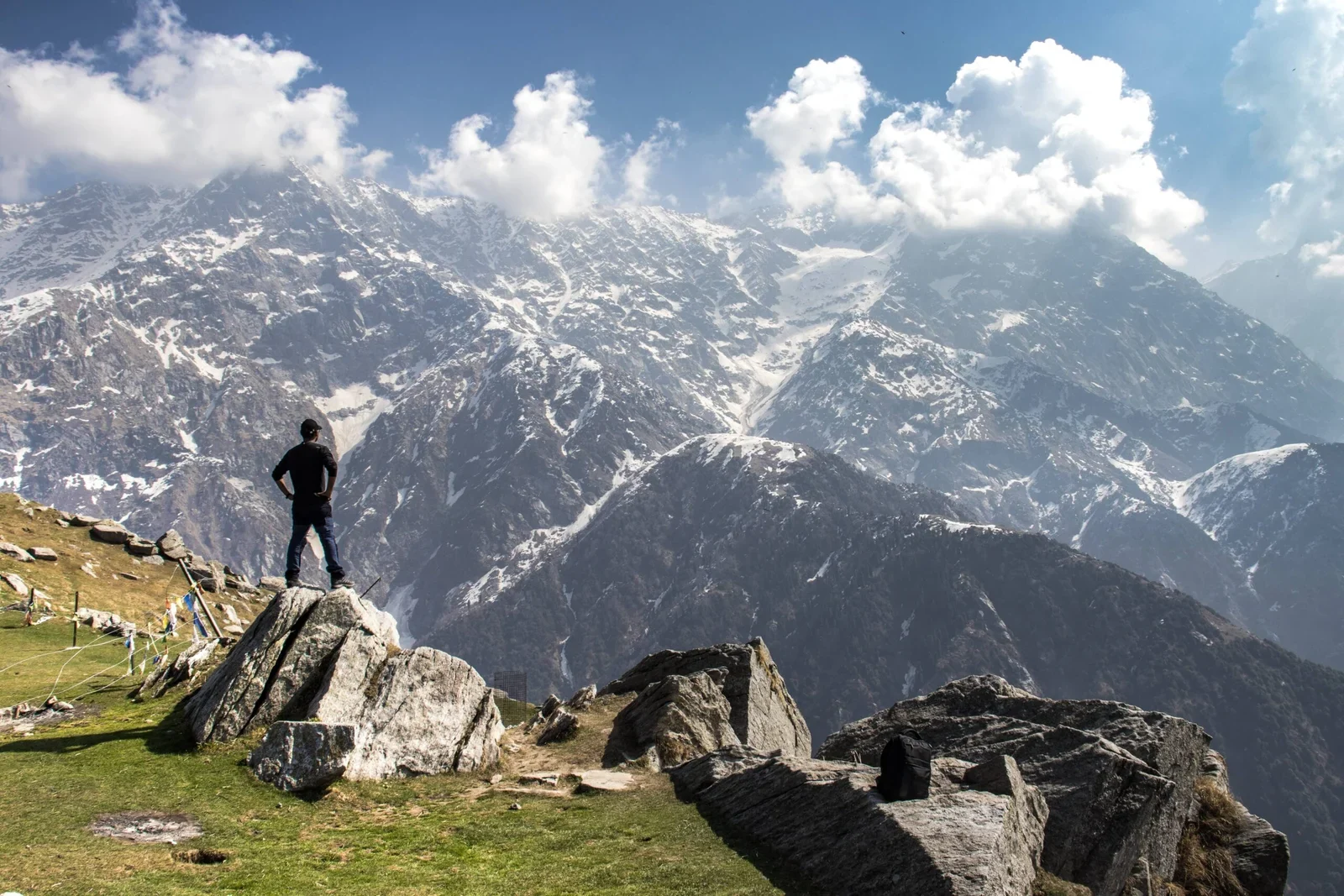
The most famous trek from McLeodganj is the trek to Triund Hill. You can either start from near the government primary school at Dharamkot, or from the German Bakery at Bhagsu Nag. The route up from Bhagsu Nag is a little shorter, but a lot steeper, and gets too slippery to attempt safely when it’s raining. Both routes meet at a temple called the Gallu Devi Temple which is where the trek really starts.
Near the temple are a couple of cafes. These are the first in a set of three groups of cafes that you will come across on the way up to Triund Hill, and mark the end of the first leg of the journey. Each leg gets progressively steeper and slightly harder to climb, but the path is always well marked, and nowhere does the trek get more than moderately difficult.
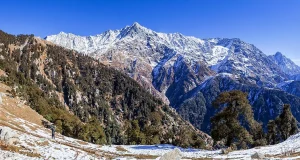
Getting to the top takes between 2 & 6 hours, depending on the number of stops made and how quickly you walk, but the view is more than worth the hike. The journey up does give you occasional glimpses of what to expect, but the flat meadow on top of Triund gives you a spectacular panoramic view of the Dhauladhar Range on one side and the plains on the other.
Longer journeys are also possible, walking a 3 or more days circuit looping around to the snow line or onwards through sections of the Dauladhars, but these will require signing up with an experienced group of guides and carrying around the required food and survival gear.
The most famous trek from McLeodganj is the trek to Triund Hill
Where to stay in McLeodganj
8 Auspicious Him View
It’s simple, it’s reasonably priced, and it’s got a view of the Himalayas. A family run guest house on Jogiwara road with surprisingly large rooms. The 8 Auspicious Him View is a quiet and comfortable place to stay. Decor is exclusively pine wood, and the food is vegetarian (with eggs). The rooms are approximately INR 3,000 per night and the included breakfast is simple but excellent.
Accommodation with wonderful views of the mountains
Where to eat in McLeodganj
8 Auspicious Him View
Eat breakfast if you’re staying here. They serve traditional Tibetan breakfast food, and it is delicious. Especially the Him View Sandwich.
The Crazy Crepe Pancake (aka The Brew Club Book Club)
It’s a cosy little cafe which serves incredible vegan crepes and waffles. You can choose your batter as well as the toppings (cinnamon oat flour crepe with apricot sauce? Done!). The portions are (really) big too (Nutella crepe with extra Nutella? Done, and done!).
They encourage you to sit around, read, and sip your brew of choice while slowly contemplating which particular crepe will be your indulgence of the day.
Shiva Cafe
Hidden away above the Bhagsu Nag waterfall, Shiva cafe is a great place to relax and while away some time. The path up is partly overgrown in places and not very well marked, but the astonishing view is worth the extra effort. You can choose to sit either inside or outdoors (weather permitting) while snacking on their offerings.
Jimmy’s Pizzeria in McLeodganj (Photo Credit – Ankur Gulati)
What to carry/wear
Sensible shoes and a sweater or a waterproof jacket (in case it rains) should cover most short treks. Water and snacks are a good idea, but not essential since you’re never too far from a shop or café. In case of overnight/multi-day treks – listen to what your guides suggest. The weather can be unpredictable, and the mountains unforgiving.
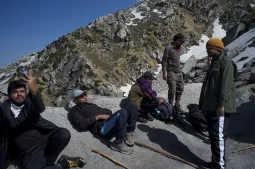
Prepare for trekking (Photo Credit – Aleksandr Zykov)
What else to do in Mcleodganj
McLeodganj is famous for being the residence in exile of Tibet’s spiritual leaders. The Dalai Lama resides here, and the temple complex built around his house is the reason most people visit McLeodganj in the first place.
Visitors are freely allowed to walk around the entire complex (except for his holiness’ actual residence). You can watch the monks pray, or learn about Tibetan history, or just sit in some of the spectacular gardens.
Do remember, this is also a seat of political power, and there is a blanket ban on all electronics carried by visitors. You will also find armed security guards cordoning off certain areas.
The Tibetan Children’s Village is a non-profit integrated educational community for destitute Tibetan children in exile, and for the hundreds of those escaping from Tibet every year. The headquarters of the institute are found next to the Dal Lake. It now has established branches in India extending from Ladakh in the North to Bylakuppe in South. They have over 16,726 children under its care.
There are also a number of monasteries, stupas, museums, and libraries scattered in and around McLeodganj. These come with scriptures and histories carried by the people of Tibet to India.
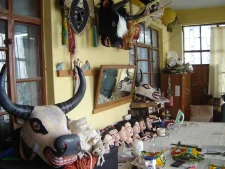
Workshop at the Tibetan Institute of Performing Arts in McLeodganj (Photo Credit – ptwo)
Travelling to India with children: Experiences of a Canadian family with kids aged 12, 10 and 5
When we told our friends that we were going to take our kids to India for two and a half months, some of the responses were “What! Are you crazy!” “Aren’t you worried about them getting sick?” “Do you really think it is a safe place to go with kids????” “Why India, why don’t you just stay in Europe?” “Wow, you are brave, but do you think it is responsible to take kids to India, they really don’t have the same immune system.”
Well, I am happy to say that taking your kids to India is a great idea. I feel like it is a privilege and a real education for kids. There is so much beauty, history, culture, and religion in India, not to mention, really lovely people and wonderful food. Depending on how you travel, you may not be out of your comfort zone at all, or even better, you may be out of your comfort zone and you will see how resilient and adaptable your children are.
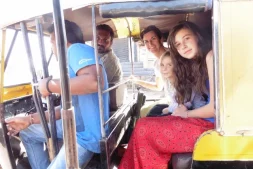
Travelling by Tuk Tuk from Hospet to Hampi
Initial experiences of big-city Mumbai
When we arrived in Mumbai from snowy Berlin, we jumped in with both feet. We got into a taxi at 6 in the morning to take us to our hotel in Colaba, just over an hour away. You would have thought that it was mid-morning anywhere else with all the action. There were loads of people out and about, traffic and honking had started, there were people sleeping on the streets and all the vendors were just getting set up to start their long day of selling.
After a bit of a nap, we went out for a walk to explore a bit. There was lots going on for us to adjust to; the smells, the heat, the noise, the traffic, the number of people on the streets, the street people begging and following us. After a little while, we went back inside, debriefing the experience with the children. They found it busy! Funnily enough, on the next outing, only three hours later, this was the new normal and the kids got to see how people live in big cities – and they had no problems navigating this norm from then on.
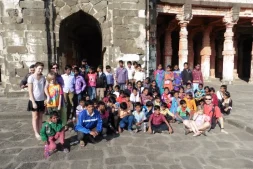
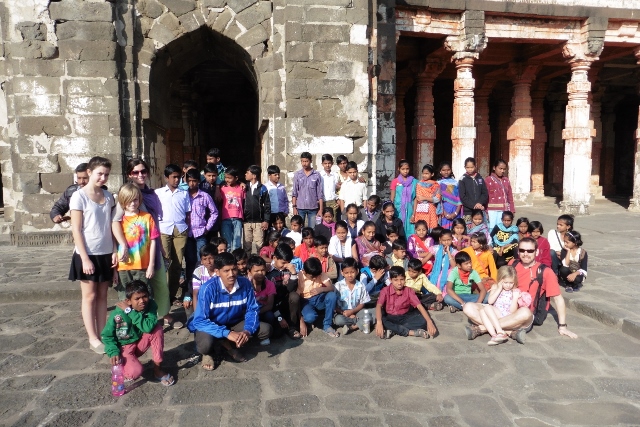
School trip we met at Fort Daulatabad, who wanted a photo with us
Places in India we visited with our children
We have visited loads of places in India, from the caves to Hampi, to the beaches of Goa and down through Kerala. All of the places have their own set of challenges but most importantly, they all have their unique beauty. In Mumbai, we saw how resilient people are and how they are all trying to make a living. We saw so much honesty and pride that we found it inspiring.
At the caves of Ellora and Ajanta, we marvelled at a civilization’s rich history and incredible talent, ingenuity and perseverance to create something of such remarkable size and beauty. In Hampi, the landscape is so beautiful and other-worldly that you wonder how places like this exist. Of course, there is the fun of the beaches, playing in the waves and visiting spice plantations. There are mountains and tea plantations, it goes on and on. In India, there is lots of everything and you will never have enough time to explore it all.
Scenic view of the boulders at Hampi (Photo Credit – Pixabay)
What the children learned
Yes, there is poverty and yes, many places are dirty. For us, these are excellent opportunities to show our children how so much of the world lives. In Canada, you would never see so much garbage strewn all over the roads, thrown over the hillsides, in the rivers, etc., so this does several things on our family trip. It makes us appreciate the wealth and infrastructure in our own country (and perhaps feel less resentful about paying taxes), it makes us grateful for our own good fortune, and it allows us to understand what challenges developing countries are facing and accept that all progress is on a continuum.
We see the interconnectedness of the world and how our actions at home affect other countries. The learning and understanding of effects of pollution can be seen in some parts of India and not in others. But essentially it is all learning and understanding through experience.
We have walked the streets at night everywhere and have felt less danger than I would at home. When we have accidentally overpaid, people have pointed out the mistake and returned our change. We have found kindness and generosity everywhere we have been.
Food
In six weeks, no one has been sick (well, our youngest had a bit of heatstroke but that had more to do with chatting parents than any fault of India!). We have eaten in local restaurants and have had no issues at all with sickness. I actually thought that I might trim down a bit after a Christmas in Germany, but no luck! The food in India is so good that you will eat well. Of course in some of the more touristy places, your kids may be eating Nutella pancakes, pizzas and pasta but in many places, there were no other options than curry – and they managed fine. We always asked the waiters for less spice and between the rice and sauce and naan bread, the kids were never hungry. Add a tasty lassi to their meal and they were happy. For the parents, we love the food!
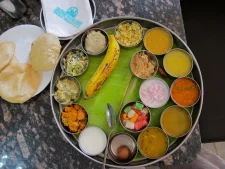
Indian Thali – a selection of little dishes of curry with bread and rice (Photo Credit – leliebloem)
Final Verdict on travelling to India with children
So I suppose I would close with two comments. One is that the only danger we have found in India are falling coconuts – seriously, I have had two coconuts fall within twenty feet of me. Now that is a large miss, but if one did drop on my head, I don’t think I would fare too well. In many places, they have nets under them, in most places they don’t. So I won’t sit under a coconut tree, but that is a pretty easy danger to avoid and that is the only real danger I look out for here.
And finally, I would say that “No, I am not crazy for taking my kids to India, but rather I am giving them the gift of a lifetime.” I am opening their eyes, showing them the world, breaking down stereotypes and giving them an experience that they will never forget.” I would recommend it to anyone.
Crowds are interested in Talia, and she is overwhelmed
Sarah and her family from Canada are travelling with their children aged 12, 10 and 5 for a year across Europe and Asia. They used our help to plan parts of their India trip and are guest authors of a series of blogs on travelling in India with children. This one talks about if you seek fame go to India.
Of course, from Canada, we knew about Bollywood and we had seen some or parts of Bollywood movies. We knew the Bollywood scene was in Mumbai. What we didn’t know is that we could BE in a Bollywood movie. We actually were asked not once, but twice, if we wanted to come to the film set as extras. It seemed that the only requirement was that we were Caucasian. That’s when we say, if you are seeking fame go to India.
The first time we were asked was to star in a film with the actor Khan and the second time, we were asked to sit in a café (onset) in a Pepsi commercial. Now regrettably, for my 12-year-old daughter, we had to turn down the offers both times. We had travel plans and we weren’t prepared to change them.
The money earned wasn’t much, 500 rupees ($10), with lunch and meals provided, as well as transportation. We would have to be on set for about 12 hours. With younger children (in addition to our 12 year old), this wouldn’t be easy to negotiate. The experience, however, would have been pretty cool–if only once.
Feeling like we had just missed out on our three seconds of fame, we headed off to the Ellora and Ajanta Caves. My eldest daughter doubted that the caves could possibly be as exciting as taking part in a Bollywood film. We’re not sure what the verdict is but certainly while being at the caves, we felt as though we were famous.
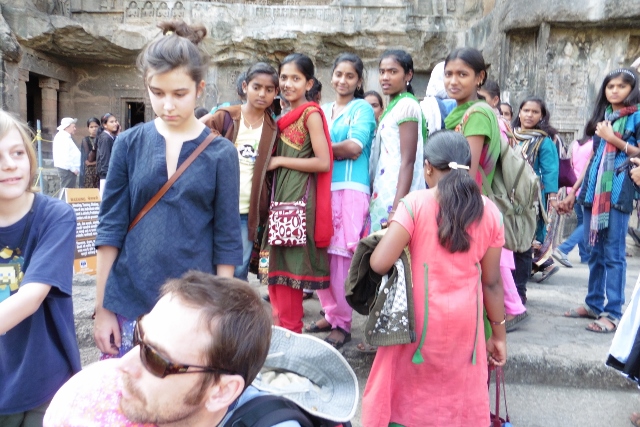
When we walked in, we saw signs about not bothering people by asking them to take photos. Initially, I assumed this was directed at us, the Foreigners, but it turned out to be directed at the Indian tourists. They are very eager to have their photos taken with foreigners.
As we had children with us, and the youngest being a 5-year-old blond girl, we walked around the caves like movie stars followed by the paparazzi.
We were asked probably over 100 times if we could have photos taken of us. The biggest target was our youngest daughter. She was asked non-stop. In fact, she started to hide behind us. When we said yes to one person, others would run over and start snapping as well.
I had my first taste of what it must feel like to be famous. So as we walked around the caves, I channelled my inner Angelina Jolie, stood up straight and smiled, many, many times over.
The experience was more funny than bothersome. Needless to say by the end of the day we had strategies to lessen the attention. The caves at Ellora and Ajanta are absolutely mind-blowing. We would highly recommend the trip.
What people were able to create two thousand years ago is really beyond comprehension. We didn’t get too baffled, however, by this incredible and miraculous work of ingenuity because we always had another photoshoot around the corner.
School trip we met at Fort Daulatabad who wanted a photo with us
If you’ve been thinking that it’s high time the process of getting a visa to India became smoother, you’ve been thinking right! The Indian government since June 2014, has been aggressively putting in place an eVisa system for inbound tourists.
And the good news is, we’re almost there – you’ll most likely be getting your visa online for your next visit to India. It will reduce paperwork and make the whole process much easier for travellers. No more enduring long lines at embassies, convoluted verification and documentation process and other hassles!
Getting a visa for India
E-Visa or Visa on Arrival for India? What is the difference?
The eVisa format being implemented resembles a Visa on arrival but is not exactly a Visa on arrival. Because the applicant needs to submit their Indian Visa forms online. Once submitted, pay the necessary fees online and they would be informed if the Visa is granted or not. You do not have to courier your passport or visit an Indian Embassy or consulate.
Once your Visa is granted you will be notified online. Using this, you can board your plane to India and the Visa would be stamped on your arrival in India. While similar, it is still not exactly a Visa on arrival and it would be a lot less cumbersome than couriering your passports or having to line up outside an Indian Embassy/consulate.
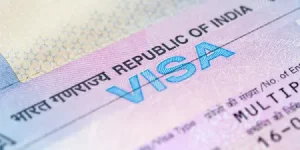
India Visa (Photo Credits)
Which countries can avail of e-visa for India?
Overall, so far the following countries are eligible, the most predominant ones being the United States of America, the United Kingdom, Germany, France, Australia, and New Zealand.
The remaining list is Albania, Andorra, Angola, Anguilla, Antigua & Barbuda, Argentina, Armenia, Aruba, Austria, Azerbaijan, Bahamas, Barbados, Belgium, Belize, Bolivia, Bosnia & Herzegovina, Botswana, Brazil, Brunei, Bulgaria, Burundi, Cambodia, Cameroon Union Republic, Canada, Cape Verde, Cayman Island, Chile, China, China- SAR Hongkong, China- SAR Macau, Colombia, Comoros, Cook Islands, Costa Rica, Cote d’lvoire, Croatia, Cuba, Cyprus, Czech Republic, Denmark, Djibouti, Dominica, Dominican Republic, East Timor, Ecuador, El Salvador, Eritrea, Estonia, Fiji, Finland, Gabon, Gambia, Georgia, Ghana, Greece, Grenada, Guatemala, Guinea, Guyana, Haiti, Honduras, Hungary, Iceland, Indonesia, Iran, Ireland, Israel, Italy, Jamaica, Japan, Jordan, Kazakhstan, Kenya, Kiribati, Kyrgyzstan, Laos, Latvia, Lesotho, Liberia, Liechtenstein, Lithuania, Luxembourg.
Yes, we agree that it is a long list. It further continues with Madagascar, Malawi, Malaysia, Mali, Malta, Marshall Islands, Mauritius, Mexico, Micronesia, Moldova, Monaco, Mongolia, Montenegro, Montserrat, Mozambique, Myanmar, Namibia, Nauru, Netherlands, New Zealand, Nicaragua, Niger Republic, Niue Island, Norway, Oman, Palau, Palestine, Panama, Papua New Guinea, Paraguay, Peru, Philippines, Poland, Portugal, Qatar, Republic of Korea, Republic of Macedonia, Romania, Russia, Rwanda, Saint Christopher and Nevis, Saint Lucia, Saint Vincent & the Grenadines, Samoa, San Marino, Senegal, Serbia, Seychelles, Sierra Leone, Singapore, Slovakia, Slovenia, Solomon Islands, South Africa, Spain, Sri Lanka, Suriname, Swaziland, Sweden, Switzerland, Taiwan, Tajikistan, Tanzania, Thailand, Tonga, Trinidad & Tobago, Turks & Caicos Island, Tuvalu, UAE, Uganda, Ukraine, Uruguay, USA, Uzbekistan, Vanuatu, Vatican City-Holy See, Venezuela, Vietnam, Zambia and Zimbabwe.
SAARC nations and Pakistan, Iraq, Somalia, Sudan, Nigeria and Afghanistan which are on ‘prior reference” list are the ones that’ll have tough luck as far as eVisas are concerned. There’s some good news for Afghan nationals though, India may open its doors for them to stay for up to 2 years on humanitarian grounds, subject to checks and balances to avoid misuse.
Visa Rejected (Photo Credit – Mohamed Hassan)
A brief overview of the e-visa process for India
With Electronic Travel Authorization (ETA) foreign travellers will be able to apply (through a website) for and receive an online confirmation of their eVisa within 3-5 working days. The facility will be available for a 30 day period from your date of arrival in India onwards.
The software for the eVisa system is ready. This will be in operation at 9 international airports. These are Delhi, Mumbai, Chennai, Kolkata, Hyderabad, Bengaluru, Kochi, Thiruvananthapuram. A dedicated website for the purpose of getting an eVisa is already functional. However, you will have to pay an additional fee to use the service. Visit https://indianvisaonline.gov.in/ to see if you can use the facility as yet.
Eligibility
PURPOSE: The Indian Government considers only four possible intentions as innocent. These are recreation and sightseeing, casual visits with friends and family, short duration medical treatment and casual business visits. Our apologies on not making a category for self-discovery.
PASSPORT: The original document should be valid for another six months from arrival and have at least two blank pages to fill up with Indian stamps. However, Pakistani Passport holders or people of Pakistani origin are not provided with this convenience. They must apply directly at India Mission for regular passports. Diplomatic/Official Passport holders, those endorsed on Parent’s/Spouse’s Passport and International Travel Document Holders will also have to make do with the regular method of obtaining visas.
Application requirements
PASSPORT: Submit a scanned copy of your passport’s information page online here. However, make sure that it’s signed and valid for 6 months beyond your stay in India. It’s always good to have a full of blank visa pages for all your fun travel plans. Don’t forget to carry it with you on your trip!
PHOTO: If you have a digital copy of a passport-sized photo, upload it to the website. If not, you could also use a scanned photo of a regular passport photo instead.
PROOF OF DEPARTURE: A confirmed round trip ticket always helps. As they know you’re not trying to sneak in and start a new life.
PLEASE NOTE
For applications to be eligible you must take care of 2 conditions. Firstly, submission no later than 4 days prior to departure, and no earlier than 34 days before the date of arrival. You might want to consider a traditional visa if you’re the kind that likes their itinerary done and dusted well in advance.
You can get a maximum of 2 Electronic Travel Authorizations (ETA) in a year. From which one would provide a maximum stay of 30 days.
You can pick-up a visa on arrival at Bangalore, Chennai, Cochin, Delhi, Goa, Hyderabad, Kolkata, Mumbai, and Trivandrum ONLY.
Carry a copy of ETA at the time of your travel (obviously).
Your visa is usually processed and issued in 3 business days (if approved).
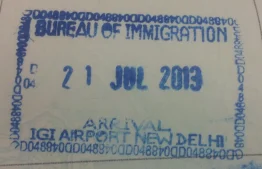
Visa Stamp
A word to the wise
The ease in the process of obtaining a visa will surely boost tourism. Accordingly, India’s inbound tourism is expected to double in the next 2 years. In other words, if you aren’t a fan of too many tourists, this new development may be a bit disappointing.
But if you plan and book in advance, choose your destinations smartly with good advice, you’re likely to have a great time. So do let us know if you are planning a trip to India, and we would be happy to help!
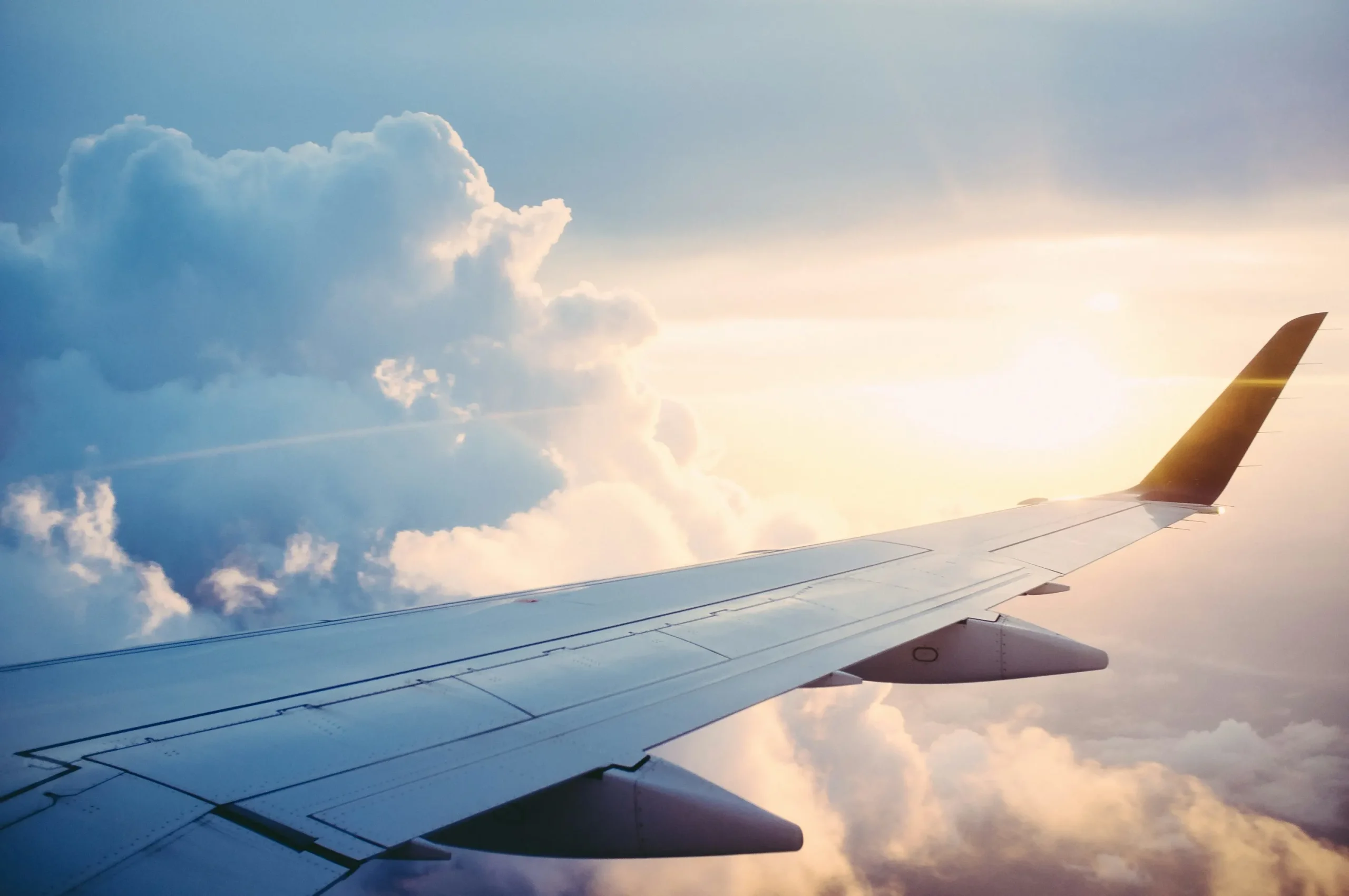
Flying in India is often seen as the most effective way to travel. India is generally a largely inexpensive travel destination. Most of the large cities and metros are well connected by airways.
Taking a flight is certainly one of the most convenient and comfortable ways to travel within India. Jet Airways and Air India are the main and long-standing airlines. Other budget airlines include IndiGo, SpiceJet, and GoAir.
SpiceJet is one of the most common domestic flights in India
How much does flying in India cost?
Planning in advance is key. If you book at least 4 to 5 months or more before your travel dates. You can get flights for as low as USD 44 (EUR 32).
The longer and further your destination is, the more expensive it is. Tickets for high-demand flights, such as Delhi-Mumbai will also be higher in price, especially in peak tourist seasons. We recommend booking flight tickets in advance in order to get the cheapest fares.
You can find great deals on domestic flight tickets on online booking websites such as Make My Trip, Cleartrip, Yatra, etc. You can also book tickets over the phone or through an agent rather than making booking at the airport itself.
Travel agents usually know where to get the best deals in terms of routes and fares. That’s why it’s usually advisable to go through a reliable agent.
India is so large that it would be extremely time-consuming and complicated to travel around it without a flight or two. However, the airline connectivity in India is not as good as the railway connectivity.
You will find that not all towns of tourist interest are connected by direct flights. Further, flying is not the most sustainable way to travel, so we suggest opting for other modes of transport where possible.
For example, if you are touring the famous Golden Triangle (i.e Delhi, Agra and Jaipur) you cannot fly between these cities. The best alternative here is to fly into Delhi then rent a car (with a driver). Or take a train to Agra and the same from Agra to Jaipur.
Jaipur has an airport and regular flights to Delhi. So if your trip ends in Jaipur, you can fly back to Delhi. But if you are travelling within Rajasthan, say Pushkar or Jodhpur (which does have an airport), a train or car is the only alternative.
Similarly in the South too, you can fly into Kochi or Trivandrum but for travel within Kerala, you cannot.
Flying in India is certainly time-effective. SpiceJet and Air India have recently introduced daily flights between Delhi and Dharamshala. So the 12-hour train journey from Delhi to Pathankot, plus a 3-hour drive from Pathankot to Dharamshala is now shortened to a 1 hour flight.
However, the overnight train is still a very economic alternative and the 3-hour drive is an extremely scenic ride into Dharamshala. You can now fly direct from Varanasi to Agra. Air India is the only airline, however, they do not fly daily. Check for the days they fly when planning your itinerary.
Jet Airways (Photo Credit – Daniel Eledut)
How early do I need to be at the airport, and what is my luggage allowance?
Effective April 2014, the check-in counters for domestic flights close 45 minutes prior to the time of departure on your ticket. It is advisable to reach at least 75-90 minutes before to ensure a hassle-free check-in.
Hand luggage is X-rayed and stamped before check-in. All cabin baggage must have a baggage tag as to get you through security check. There are specific security requirements for flights to politically/socially sensitive areas as Kashmir, Ladakh etc. They may disallow cabin luggage and confiscate batteries in electronics. Baggage identification on tarmac may be expected of you before loading.
You can also web check-in for your flight. Web check-in is allowed 24 hrs prior to departure. You need to log on to the airline website, pull out your reservation, and follow the steps as directed.
You can select your seats here and at the end, save a copy of the boarding pass and carry a printout along, or simply save a copy on your phone if the airline allows it. If you have already checked-in online, you can reach the airport 60 mins prior to your flight departure.
The allowance for check-in baggage is 15 kgs for economy class passengers and 30 kgs for those flying business class on standard domestic carriers.
For cabin baggage, as per regulations by the Government, currently, only one piece of cabin baggage per adult/child passenger is permitted onboard. The weight of the cabin baggage should not exceed 7 kgs. Passengers are permitted to carry one laptop over and above one piece of hand luggage as cabin baggage.
If your check-in baggage exceeds 15 kgs, you are charged INR 250 per additional kg which is to be paid directly at the airport.
Passengers on board (Photo Credit – Orna Wachman)
Can you help with information on cancellation and refunds?
The cancellation and refund process is now quite easy and hassle-free. You can cancel online directly or via phone. It takes about 3 to 5 working days for the amount to get credited in your account.
The cancellation or date change charges are between INR 1,500-1,800 per person per flight depending on the airline and if booked through Make My Trip or Cleartrip, they charge an additional INR 250 per person.
Be aware, however, that airlines may cancel their flights if there have not been enough bookings on it to cover their costs. This is more likely during off-season months. If this happens, they will be required to give passengers a full refund. Where available they will offer you seats on an alternative flight. Sometimes, where this is not an option, it is ideal to take a refund and make an alternative booking.
If this happens on your trip, feel free to contact us and we can help you in any way that we can. Alternatively, let us know any questions you may have about flying in India – we’ll be happy to help.
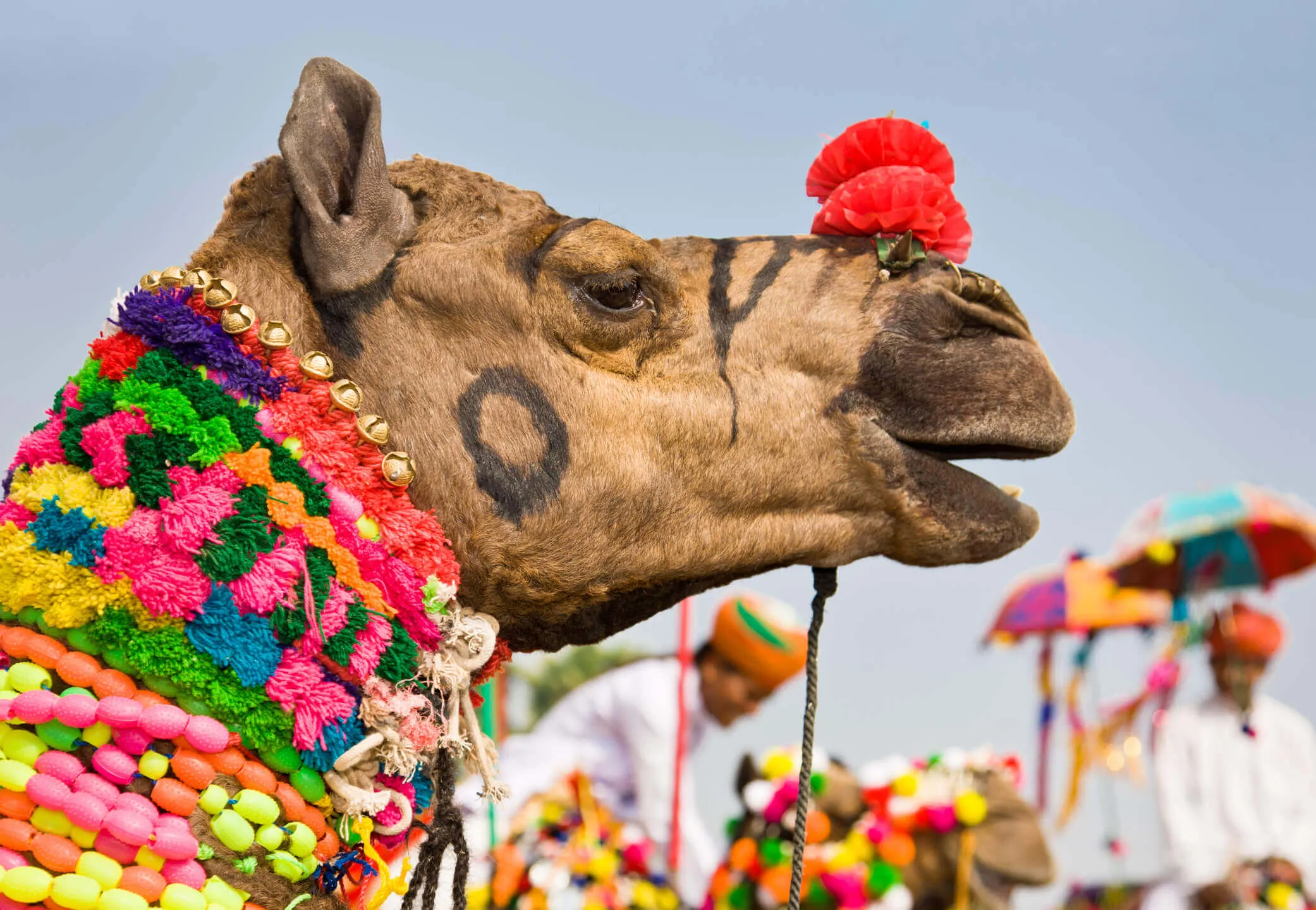
The Pushkar Camel Fair Rajasthan sees around fifty thousand odd camels; quite a unique character. It’s extremely colourful, with a whole lot of activities happening. For example, folk performances, camel races, dances, great food and art and photography.
The Pushkar Camel Fair began as a local Therade fair for camel and other cattle owners. It takes place every year at the time of Kartik Purnima (the full moon in the month of Kartika in the Hindu Lunar calendar), and over the years, it has become an attraction for travellers.
Camel trading, coupled with a bunch of religious rituals is still the premise of the whole affair, and the trading is what draws most tourists. The later part becomes a pilgrimage and ‘a must’ is taking a dip in the holy Pushkar lake.
Villagers gather with their camels and other livestock at Pushkar Camel Fair (Photo Credits)
Decorated Camel Cart
When and where is it held?
The fair is always held in Pushkar, near Ajmer in Rajasthan. It usually falls in November, depending on the Hindu calendar. In 2020, it will start on Sunday 22nd November.
Looking at planning a trip to India around the Pushkar Camel Fair? Contact us! – (Photo Credit – Travel Rajasthan)
Getting to Pushkar
Ajmer is the nearest railway station to Pushkar, with trains coming from all the major cities in the country. Alternatively, Ajmer is about 30 minutes drive away from Pushkar and there are other means of transport available, for example, buses. You can even take an auto-rickshaw, but all the best getting the rickshaw driver to take you by the meter. Either way, you should only be paying him INR 100. If you’re flying down. Jaipur is the closest airport and the drive to Pushkar is about 2.5 hours. Taxi fares will be super expensive (25-45 GBP) during the Camel Fair.
A local family watches the opening ceremony of the Pushkar Fair at the camel grounds (Photo Credit – Jason Rufus)
How is the Pushkar Camel Fair celebrated?
The first thing you’ll notice when you get here is … camels! They’re everywhere. They are all dressed up and being paraded for sale, you will almost miss the two odd lakh people that are in the area at the same time. Camel traders, pilgrims and tourists are all there to play their parts in this old school but still going strong, colourful carnival.
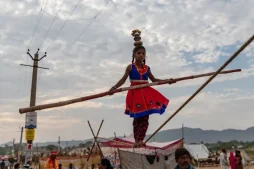
There are camel races, temple dancing, snake charmers, folk singers, classical musicians, acrobats, an art and craft bazaar, camel dances and traders, and carousel rides.
There are another set of pious people you’ll find here who have come for the purpose of pilgrimage. They bathe in holy lake waters of to wash their sins. Pushkar is considered the only holy land for worshipping Lord Brahma – the creator of the universe and the lake is said to have formed where he dropped a flower. After all the hoopla with the camels is over, full moon and two days around it are dedicated by pilgrims to bathing in the lake. It is said the special blessings are bestowed upon those who take a tip in the Pushkar Lake on full moon day.
Performers come from semi-nomadic communities (Photo Credit – Ninara)
Best ways to experience the Pushkar Camel Fair while travelling in India?
If you are willing to spend, you might want to go up in a hot air balloon and get an aerial view of the scene. Go on one of those special Pushkar Fair walking tours (they run in the morning-evening). The morning walk is best to see pilgrims bathing in the lake and have a first-hand experience of rituals being performed. While the evening is the best time to witness the ground where the bustling fair is held at its best.
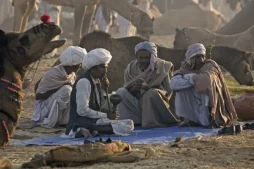
Men with turbans and Hookah (Photo Credit – Koshy Koshy)
Precautions for the Pushkar Camel Fair in India?
Pushkar is full to the brim with visitors during the fair, and accommodation prices skyrocket while rooms run out very fast. That’s why it’s better to arrive a few days before and get a good, cheap deal to make your bookings. You can choose to stay anywhere between a home/farmstay, a guest house, a desert tent or a swanky heritage hotel in Pushkar.
Pushkar is a bit infamous for its drug scene and you know how sometimes, things can go out of hand at such places during festivals. Thus, it’s best to stay on your guard. Don’t get duped by local pundits (priests) and other greedy people who are looking to make a buck off tourists. It gets very crowded during the fair and you’re basically in a desert, so stay hydrated, cover your head and face to avoid the sand troubling you, dress relatively conservative so you don’t get the wrong kind of attention (it’s Rajasthan you’re in, not Goa).
Visiting India during November? Here is what you need to know regarding the weather and other best places to visit during this time.
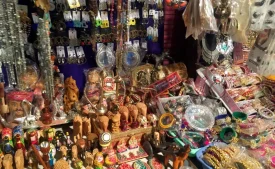
Shopping during the Pushkar Camel Fair (Photo Credit – Rajasthan Tour Planner)
Contact us to plan your trip to India around Pushkar Camel Fair.
Northeast India is one of the most remote regions in India. It’s untouched by the overbearing tourism industry, which makes it an incredible place to visit. It consists of seven states; Assam, Arunachal Pradesh, Manipur, Meghalaya, Mizoram, Nagaland and Tripura. If you planning to travel to North East India expect to find one of the largest and irreplaceable biodiversity hotspots in the world, with more than 60% of the area under forest cover. Although the cultures are often dismissively grouped together, they’re incredibly diverse and worth discovering.
If you’d like to plan a trip in one of these states or in any other place in India, let us know and we can help you out.
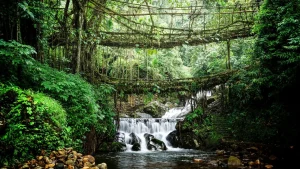
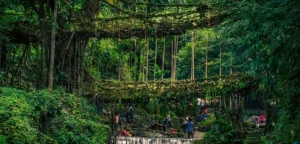
In many paths of these states, you’ll find root bridges like this one in Meghalaya, making trekking so much fun
How to get around in North East India?
A remote and hilly area, the infrastructure is not well developed. With the exception of Assam, where they have 4 lane cement highways, roads can be pretty bad. In Arunachal and Nagaland, roads are winding and poorly maintained, with a top speed of 30 km/h. This makes journeys between places long and arduous. Nevertheless, the views are spectacular and will keep you spellbound for the entirety of your trip.
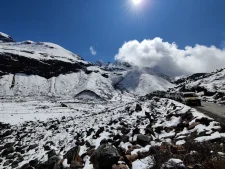
Magnificent view en route to Zero Point, Sikkim (Photo Credit: Tripoto)
How’s Accommodation in North East India?
Accommodation is fairly basic in the majority of the region. Hotels often do not have geysers or showers so buckets with hot water could be provided. Also, some places won’t have Western-style toilets so prepare yourself to squat. Assam, Sikkim and Gangtok do have some extremely comfortable housing for travellers. A growing interest in visiting these endangered and beautiful areas will only bring newer options for tourists venturing there.
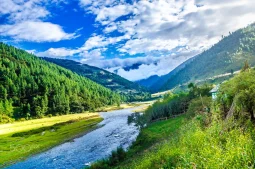
The beautiful green grass and mountain in Sangti Valley at Arunachal Pradesh (Photo Credit: SetMyTrip)
Who is it for?
The northeast has a very raw and rugged beauty, bearing a closer affinity to Southeast Asia than to the general perception of India. If you like to travel rough and truly experience the lives of other cultures then it’s the place for you. Expect the complete unexpected when voyaging through the region.
Despite the idea and perception that the northeast is incredibly primitive and backwards, they have the most widespread rock music scene in all of India. Look up college festivals, local concerts and competitions to get a chance to experience something terrific. They also host quite a few music festivals that draw crowds and bands in from across the country.
There are very few luxury hotels in the northeast India and those that exist are found in selected places like Kaziranga, Shillong, Jorhat and Dibrugarh. So, if you’re a luxury traveller, you might want to look elsewhere in terms of luxurious experiences.
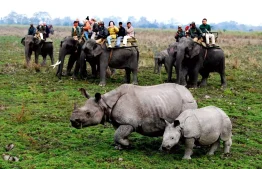
On an elephant safari at Kaziranga National Park (Photo Credit – Travel News)
Cost of travel in North East India
Because of its remoteness, the cost of trips in northeast India is nearly 20% higher than any similar trip elsewhere in India. This is due to the transportation cost which is quite high because of the roads steepness and poor condition. We’d say travelling in groups of 4 or more is the most economical way of doing it. Hotels are also more expensive. A big bonus is that the cost of living is low, and there’s very little chance you’ll meet someone trying to scam you.
Seasons in North East India
November to May is a good time to visit northeast India, but it truly depends on the kind of trip and places you’d like to visit. This is because certain months might be more favourable than others. The northeast is considered in the world as one of the places that receives the most rainfall in the world, so prepare for constant rainfall during many months of the year. The good thing about rain is that it gives it the green luscious touch that makes the region stunningly beautiful.
Double Decker Living Root Bridge constructed by weaving the roots of Banyan trees (Photo Credit – Tripzy Go)
The delicious food
While sticky rice is the staple diet of almost every tribe in the northeast of India, they compliment it with a dazzling array of meats, pickles, vegetables and beans cooked in various different ways. They love meat, pork being the favourite but also chicken, fish, snail and smaller game also vying for the top candidate. The residents are famous for cooking anything that moves, a topic you probably shouldn’t bring up directly with your host or residents there. Nevertheless, it’s definitely something to look forward to if you really want to dive into a new culture. Alcohol goes well with all the meat they eat. Rice and millet make the base for delicious local brews.
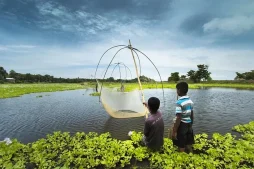
Small kids are fishing
Permits for Northeast India
Foreigners don’t require permits to enter any of the northeastern states besides Arunachal Pradesh. For this particular state you need a PAP (Protected Area Permit), which costs USD 100 for 2 people and is granted for the duration of 30 days. You have to apply for the permit through a tour operator recognised by the Government of Arunachal Pradesh.
In conclusion, we at India Someday recommend that you keep 10 days minimum for a trip to the northeast. 10 days is necessary as there’s so much to discover and the remoteness means there is very slow internal travel. Road journeys are long and tiresome, so take a couple more days to visit if you’re looking to relax. Most routes through Nagaland and Arunachal Pradesh will require 15 to 20 days. This is to properly experience the varied culture and the beauty northeast India has to offer.
The best places to visit in India in January would arguably be the region of South India. Here, the weather will be perfectly warm; not too hot, just comfortable and dry – making it the perfect Indian holiday destination in January.
North India can also be a fabulous place to visit in January, but in some places, temperatures can drop to uncomfortable temperatures, with some hotels not offering heating.
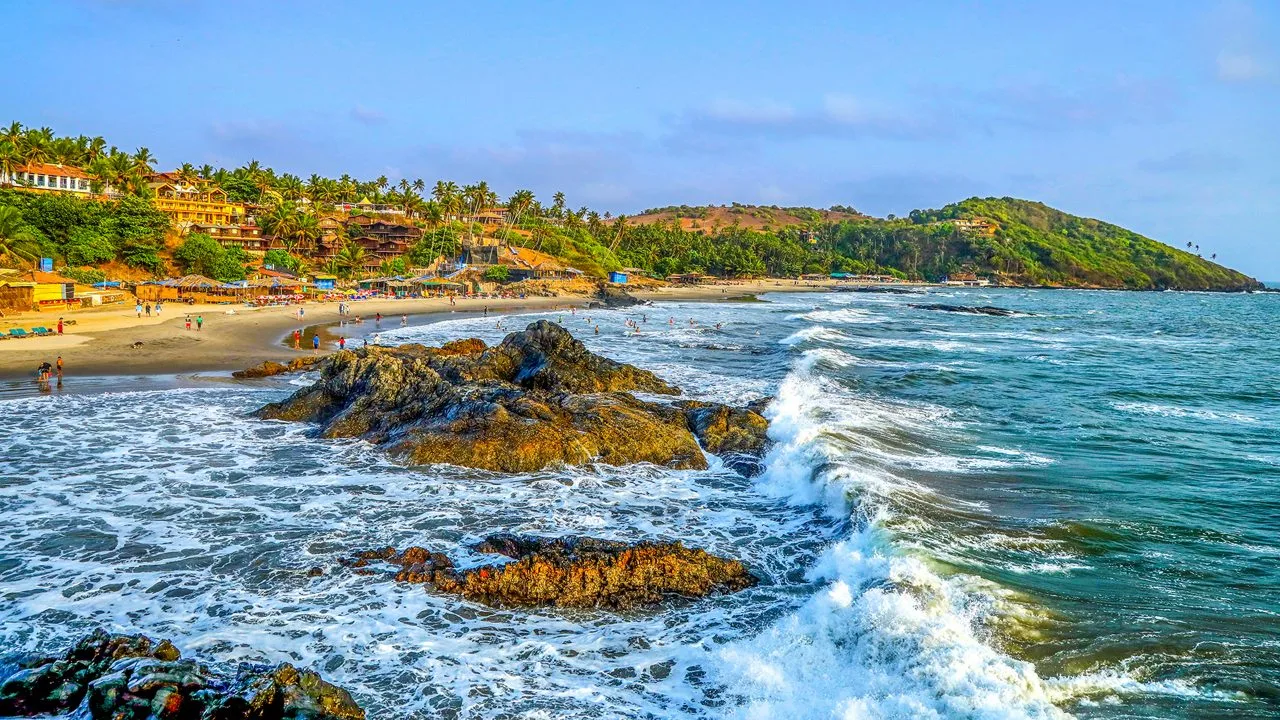
One of the best places to visit in India in January is Goa. The weather will certainly be warm enough to enjoy the glorious beaches, the more comfortable temperatures mean that exploring Goa’s cultural and historic elements will make a fabulous addition to your January trip. The beaches here can get pretty crowded at this time of year. Especially during the first 2 weeks in January. Accordingly, we suggest hitting the beaches after the second week of January.
For another wonderful destination perfect for this time of year is Hampi. Explore the picturesque temples, enjoy the outstanding views, or get blessed in the Elephant stable. For adventure lovers, go cliff jumping, rent a moped and learn how to drive it in the spacious reservoir, or hire a Karnataka Boat and go for a refreshing swim in the lake.
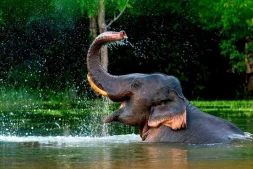
Kerala (God’s own country) is a must visit on your trip to Southern India. Here you can have an ultimate elephant experience in the Kodanad Elephant Sanctuary.
Exciting activities can be enjoyed here, such as elephant baths, feeding, watching baby elephants play and an elephant safari; all while observing, not obstructing. Further, experience the tranquil Indian backwaters on a Kerala Houseboat in Alleppey, admiring the luscious greenery whilst enjoying delicious food.
In North India, it is useful to bare in mind that nights are likely to be cold. Agra and Delhi receive a dense layer of fog on most mornings and this often disrupts and delays trains and flights.
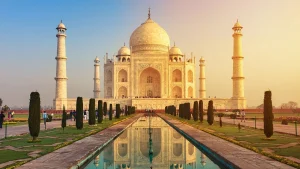
Irrespective of when you plan your trip to North India, Agra is certainly not to be missed. The magical Taj Mahal is always unmatched in terms of beauty. The city is submerged in fog during this time, and this only adds to the sheer magnificence of the Taj Mahal.
Weather in cities such as Udaipur and Jaisalmer remain warm, and so January is a gorgeous month to visit. Enjoy the breathtaking temples and fascinating architecture in the ‘City of Lakes’ (Udaipur), or experience the enchanting fort of Jaisalmer in the ‘Golden City’.
On the other hand, up towards the Himalayas can get very cold and snowy during this time of year. Towards the latter end of January makes a fabulous time to go skiing or snowboarding in Gulmarg, Kashmir.
For more information on skiing in India, check out our blog. Alternatively, contact us to help you plan your trip to India!
We hope our recommendations help you and if you need any assistance, simply click on the Plan Your Trip button. We will help plan your dream trip to this vast subcontinent.A trip that will be the perfect blend of all your varied interests and will cater to all your essential requirements. Let us take the weight of you and help plan a trip to suit your travel style!
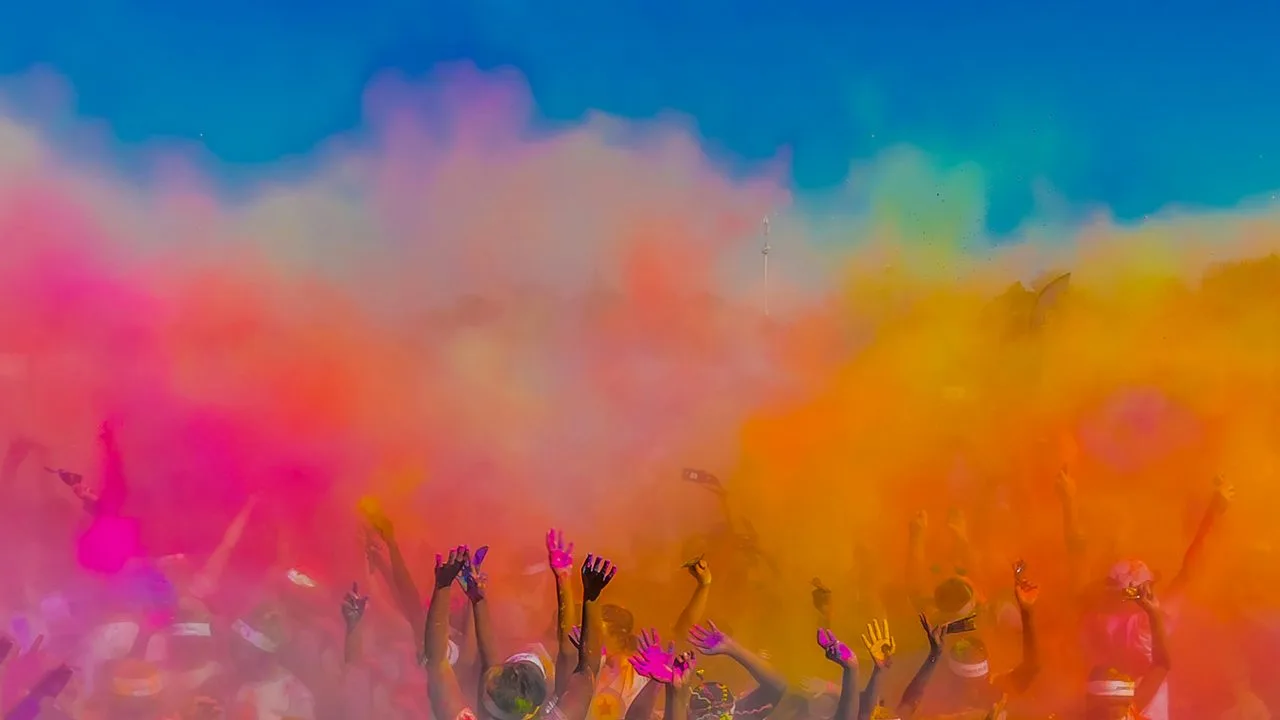
If you want to experience a festival in India, you should think of visiting India during the Holi Festival. By mid-March, winters recede in India, and the onset of spring is marked by Holi, the festival of colors. One of the quirkiest and most fun festivals in India, people celebrate Holi by playing with water and colors on the streets. If you visit India during this time, try to time it around the Holi festivities for one of the best experiences of your life.
Read this blog to understand why, when, where, and how this festival of colors Holi is celebrated. This will help you to experience Holi in the best way. If you are planning on visiting India during Holi festival, India Someday canPlan Your Trip, so you end up celebrating it in the right spot.
Holi is usually celebrated in March. You can read about the weather in India inFebruary andMarch.
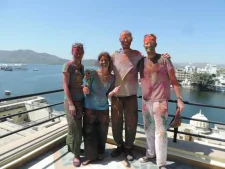
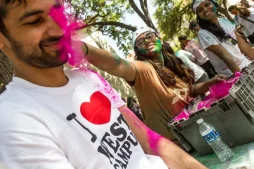
India Someday guests enjoying an afternoon siesta post the Holi celebrations
When is Holi celebrated in India?
The Holi festivities take place over two days in late February or in March. There are no specific dates – according to the Hindu calendar, the day of Holi is the Phalgun Poornima (full moon) which generally arrives in March. The exact dates of the festival vary every year, as it is based on the Indian Lunar calendar.
In 2025, Holi is on 14 March.
In 2026, Holi is on 4 March.
In 2027, Holi is on 22 March.
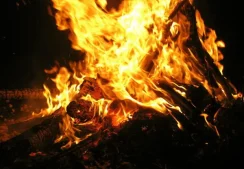
The eve of Holi is Holika Dahan, celebrated with a bonfire.
In Barsana, Vrindavan and Mathura in Uttar Pradesh, Holi celebrations often extend over 10 days and start almost a week before the main event. There is a unique tradition, Lathmar Holi, which is celebrated 6 to 7 days before the official Holi day.
Why is Holi celebrated in India: A History of Holi
The festival of Holi is based on a mythological tale about the good God Vishnu and his rival, the evil King Hiranyakashipu – try to pronounce that! The evil king’s son Prahlad was a devotee of God Vishnu and he refused to worship his father. The king got angry, and he sent his sister Holika to kill him. Holika was granted a boon that fire couldn’t burn her, so she took Prahlad on her lap and climbed on a pyre. She knew that she would survive while her nephew would burn to death. However, when the pyre was set ablaze, miraculously, Prahlad remained untouched by the fire while Holika’s body went up in flames. This is the story of the triumph of good over evil, and Indians celebrate this sentiment every year by burning the Holi pyre one day prior to Holi.
According to another legend, the Hindu blue-skinned God Krishna was envious of the fair-skinned Radha. So he went and colored her face in an attempt to make her look like him. This was the beginning of the epic love story of Radha and Lord Krishna. This is why Holi is celebrated as a festival of love as well, and is often used in Bollywood movies during a romantic sequence.
This is also the origin of the Lathmar Holi tradition. Krishna went to Barsana to celebrate Holi with Radha and tease her friends. Annoyed by Krishna’s pranks, the women decided to take revenge and chased Krishna with sticks (lathi) as he tried to protect himself. This tradition is followed even today in Krishna’s hometown in Uttar Pradesh. The men visit the town of Barsana, where they are greeted with women holding sticks (lathis), ready to attack them. This is a playful tradition followed since decades. If you have a local guide to accompany you, they may be able to take you to see this tradition.
Some people even say Holi is a simple celebration of the end of winter and beginning of spring, a thanksgiving for a good harvest or a reason to meet friends and have fun. In fact, the festival is supposed to mark the last day of winter before spring. It is a festival quite unique to the Western world, but those who experience it truly have fun!
Holika is the immortal saga of good over evil where as Holi is a festival of mutual harmony (Photo Credit – Satish Krishnamurthy)
Where is Holi celebrated in India?
Holi is a primarily Hindu festival, but it is celebrated throughout the country. However, it is a greater deal in northern India. Places like Andhra Pradesh, Bengal, Uttar Pradesh, Bihar, Gujarat, Haryana, Himachal Pradesh, Madhya Pradesh, Maharashtra, Manipur, Orissa, Punjab, Rajasthan and also in the southern state of Tamil Nadu celebrate this festival with great splendor in residential areas, near temples, or in designated venues. Some tribes in the Northeast also celebrate this festival of colours. The biggest celebration happens in Mathura-Vrindavan, Pushkar and Varanasi.
The southern states do not celebrate Holi with much pomp. Also, a lot of Muslims and Buddhists in India don’t celebrate Holi. But most Indians have celebrated Holi or at least experienced it directly or indirectly in their lives.
India Someday guests posing after enjoying Holi celebrations in Udaipur
Where should you go for the best Holi experience?
We would recommend you to celebrate Holi anywhere in North India, especially in small towns and cities like Pushkar and Udaipur in Rajasthan, and Varanasi in Uttar Pradesh. At India Someday, these are our favorite places for experiencing Holi. Other cities where you can truly enjoy the spirit of Holi are Jaipur, Jaisalmer, and Jodhpur in Rajasthan. Jaipur, the Pink City, is one of the best places to celebrate Holi. At Govind Dev Ji Temple, the oldest temple in the city, the celebration lasts for more than a week!
Goa is also one of the best destinations to visit for a fun, youthful Holi party. Most cities, like Mumbai and Delhi too have a lot of fun Holi celebrations. You will find many venues across India, especially in metropolitan cities like Mumbai and Delhi, organizing Holi events. You will need to pre-book tickets, but these events are much safer than playing Holi out on the streets.
Mathura-Vrindavan has the biggest public celebrations and events for Holi, and it could easily get out of hand. There are many safety issues here as well, especially for women. So we would NOT recommend this!
Also, don’t forget to visit the bonfire for Holika Dahan. Most towns and cities have many small bonfires a few miles off each other. If you cannot find a pyre, you can ask the reception at your hotel or hostel, or any local guides you know, and they may be able to show you.
If you’re interested in a trip around Rajasthan to the mentioned cities and more, check on thebest places in the region anddifferent travel routes. You can also think of doing the Golden Triangle route (Delhi-Agra-Jaipur) for Holi, like most travelers. This will allow you to immerse yourself in the local celebrations while visiting the famous monuments like Taj Mahal in Agra, Red Fort in the capital city of Delhi, and Hawa Mahal in Jaipur.
You can browse through our extensiveNorth India travel routes here for travel ideas. Or just hit thePlan You Trip button to start planning your trip to India around Holi.
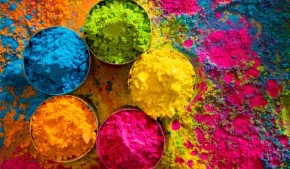
Vibrant colours of Holi festival (Photo Credit – Housing)
How is Holi celebrated in India?
There is a lot of excitement in the air during Holi in India, especially in the north. You will find kids and young men and women preparing for the festivities from the night before by filling water balloons and buying colors. Communities like families, friends, housing societies, temple groups, etc organize the celebrations weeks in advance.
On the eve of the color festival is Holika Dahan. Large groups of friends and families gather together and a bonfire is lit up. Families pray around the bonfire and spend time together. This fire is attempted to be kept burning for five days. You will see bonfires on every street or society during this time.
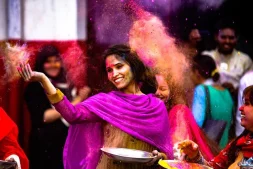
On the day of Holi, everyone crowds together to play Holi with colors. You will see people celebrating Holi out on the streets. There is often artificial rain, water guns, and loud music along with dry colors. People dance, eat street food, and drink bhang thandai. Thandai is an Indian milk beverage made with spices and dry fruits. Bhang is an edible cannabis paste. While not necessarily legal, bhaang is mixed in thandai and most adults drink it on this day.
All these celebrations mostly take place in the mornings, while the afternoons are for washing off the colors and relaxing after a fun-filled but tiring morning. It can be a bit of an effort to wash the colors off your body, and sometimes the color can remain for days. In a few other places, these celebrations carry on till night!
Often, temples and homes are adorned with flowers. In some places, there are also processions in the temples, but comparatively, Holi is not as religious as the other holy days in India, and does not have any religious rituals as such.
Holi festival is the celebration of unity where everyone seems of the same colour (Photo Credit – Murtaza Ali)
Tips and precautions for celebrating Holi in India
We have a few tips for celebrating Holi in India like locals! And of course, a few precautions as well, so that you can make the most of this colorful festival.
You will find street vendors selling colored powder from more than a week before the festival. If you see any Holi colors, buy them. It is better to stock up in advance. Avoid the permanent colored powders – they will be marked, but if you aren’t sure, ask the vendor. Use only organic colors as much as possible.
Dress well for the Holi celebration. A lot of people wear white while celebrating Holi as a symbol of peace and to showcase the vibrant colors thrown around. You can choose to wear darker colors if you wish. Most locals simply wear old clothes that they may not have to use again.
Use coconut oil liberally on your hair and skin before the events so that the color does not stick to your body for a longer time. Use sunglasses to shield your eyes.
Start your Holi celebrations early in the morning, preferably before the horde of locals and Holi revelers arrives, as it can get overwhelming.
Before throwing color on other people, keep in mind one simple rule – if they have colored powder on their body, they are fellow participants, and thus, fair game. Do not throw colored powders on innocent bystanders.
You can try the bhang, but drink only as much as you can handle.
Make friends at your hotel or hostel or any accommodation. Holi is safer, and so much fun, with friends and people you know. You will be among lots of crowds on this day, so stay safe. Talk to other travelers or people familiar with the local customs and traditions.
For female travelers, there are always a few extra safety tips. Wear clothes that cover your shoulders and knees. If you are a solo female traveler, try to stick around with other travelers or people you know well. Avoid going out alone in public places since there will be many inebriated men all over the place.
Holi is the festival of colors, yes, but you will also be drenched with buckets of water dumped on you, water guns, and even eggs sometimes! So be prepared for all of it.
Avoid traveling long distances on this day, as city public transportation is often not available until late afternoon.
Make sure you have travel insurance before traveling to India. It can help you in a lot of unforeseen circumstances.
Avoid getting the colour into your eyes during the festival of colours (Photo Credit – Karan Dodia)
India Someday can help you plan a great time during the Holi Festival in India. Plan Your Trip to India with us now and we can advise you how to fit the party in.
Can’t come in March? Read here about other Indian festivals.
Let India Someday handle it and plan your best trip.