TALK WITH US +91-9970620335
WhatsApp

Festivals in India

India is bright and loud and wild and passionate, making it a master in the art of revelry. Did you think wild parties were all about tequila shots and glo-sticks? Try some bhaang and pichkaris or an all night dandiya session. Yes, these words may feel strange in your mouth right now but we’ll probably have you singing ganpati bappa in the streets before you’re done. Here’s the low-down on a veritable riot of Indian festivals, religious and otherwise. Structure a trip around your favourite choice for a madly immersive journey to the heart of the Indian community. Read all about the festivals in India.

Festivals in India
Festival of lights_ sparklers: Credit- madhukar-kumar

Makar Sankranti – kite flying festival 

For a country that’s careening into a future of BPOs and IT professionals, we fall back on our agricultural roots hard when it comes to harvest festivals. Celebrated in widely differing ways across the states, harvest festivals in India are worth witnessing. The heart of the season is born of plain and simple gratitude for a bountiful crop, and a welcome break after months of debilitating labour.

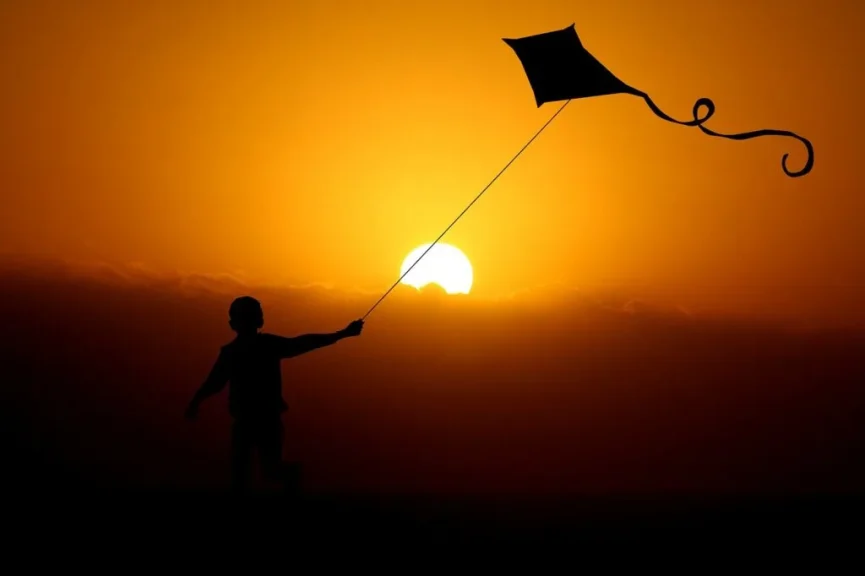
The Gujarati arm of this fiesta, celebrated most passionately in the state capital of Ahmedabad, is Makar Sankranti. It is more widely known as the kite flying festival of India. The name refers to a specific movement of the sun on the equinox, heralding the arrival of longer and warmer days. Whole families take to their rooftops to let loose clouds of brightly coloured paper kites held taut by strings laced with crushed glass and other abrasives.

Why so violent? The aim of the game isn’t just to brighten up the sky; with careful calculation and remarkable skill the kite flyers loop their own kites around those of their opponents (or annoying neighbours) and swiftly cut them down to be claimed as booty. Get ready for age-old rivalries and edge-of-your seat level excitement.

Festivals in India
The colorful kite utsav in Gujarat (Credit_Kaushik Patel)

Holi – the famous festival of india

Possibly the most famous of festivals in India, Holi is all about having fun. We’d recommend finding a nice family-run homestay to celebrate with, as the crowd on the streets can get a bit rowdy. Fueled by the heady bhaang, a local concoction of milk and marijuana, people drop their responsibilities for a day. They look to bring a little colour into their lives, either by chasing each other around smearing powder on their faces or flat out dunking each other in buckets of coloured water. Water guns or pichkaris around, be prepared to have water balloons dropped on you by strangers as you pass innocently under their balconies. Any attempt at reproach will only earn you a shout of ‘bura na mano, holi hain’, that is, don’t get upset, it’s holi!

While the festivities often take a dark turn with several cases of molestation and driving under the influence filed each year, it’s important to also know the reasoning and religious significance behind it. The revelry is the second of a two-day celebration of the triumph of good over evil. According to Hindu legend, a young boy is saved by Lord Vishnu from his evil aunt’s murderous intent. This is celebrated by lighting bonfires, her weapon of choice, and dancing around them.

Festivals in India
Festival of colours – Holi! – Photo Credit – Shekharchopra85.

Diwali – the bright festival of india

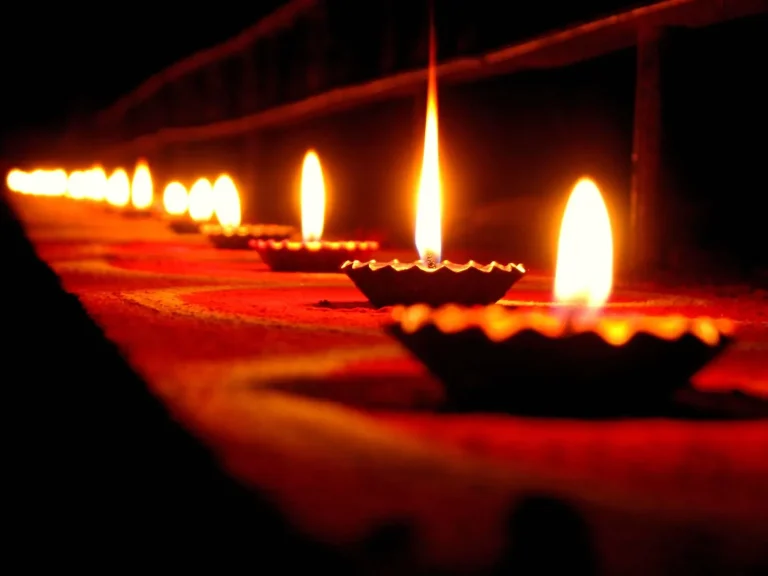
The most elegantly beautiful of them all, the festival in India known across the world, the festival of lights. Clay lamps, diyas, are set in doorways to welcome the goddess of wealth, Lakshmi. Patterns of coloured powder and flower petals form rangolis on every doorstep. Of course, with indrustrialisation there’s also been a huge influx of firecrackers and curtains of fairy lights hanging down the sides of buildings, but the more the prettier, right?

Since it’s also the start of the Hindu New Year, it’s an excuse to buy new clothes, gorge yourself on sweets and meet long-lost aunts and cousins at the annual family bash. If you don’t have a party to go to, the streets will serve just as well for you to listen to the lilting strains of bhajans (devotional songs) drifting out of windows. Remember that Diwali isn’t a festival that involves intoxication and be respectful of that. If you can find a family to adopt you for the week you get to dress to the nines and run around with sparklers for the night.

Varanasi is a beautiful place to understand the religious side of things. Set a diya afloat on the river as devotees take a dip on this auspicious night. Hymns and chanting fill the air as the entire river lights up in a sea of flickering flames drifting gently along its surface, a picture that will move you regardless of your religious leanings or lack thereof.

Festivals in India
Celebrating the festival of lights with sheer fervor

Janmashtami 

Yet another Hindu festival of India, this one’s a feat of athletic prowess, celebrating the birth of the cheekiest of gods, Lord Krishna. As a child, he was said to have let nothing stop him in his eternal quest to steal and devour freshly churned butter. Local housewives took to hanging their pots of butter from the ceiling, out of the way of the toddler’s greedy hands, but he quickly got a few friends to form a human pyramid under him and nicked the lot anyhow. Thus began the tradition of ‘Dahi Handi’, stinging up earthen pots of buttermilk to be brought down by teams of devotees forming pyramids often over six stories high to break the pot and win cash prizes offered by local leaders. The most thrilling of these scenes is to be witnessed in Mumbai, where local governing bodies have been forced to put a cap on the height of these pyramids for fear of their safety. Another great option is Udaipur, tried and tested by one of our travellers.

Festivals in India
The pyramid is made by climbing on top of the teammate

Onam

The staple representative of South India in these lists, Onam is also a harvest festival in India, namely the harvest of rice. It is the most famous of the festivals in Kerala. It also celebrates the annual return of the demon King Mahabali to his beloved land of Kerala. Legend tells that the king was so fair and just that the people lived in a golden age under his reign, prompting the jealous gods to trick him into the underworld and away from his people. His return is celebrated with great pomp and splendor, notably the Aranmula boat festival that sees vast crews race Snake Boats down the Pampa river to the sound of traditional songs. The thrill of the race is heightened by the coloured flags and umbrellas on the shore

The most exciting aspect of Onam is the fact that the oldest river boat fiesta in Kerala takes place during this festival. The Aranmula boat festival also involves Snake Boats, which are occupied by a group of people, each racing against others while some oarsmen indulge in singing traditional boat songs. Contact us to help you get there!


Kite Flying Festival In India

The kite festival in India falls on 14th or 15th January every year. It marks the arrival of spring and the transition of the sun into the Makara Rashi (the Capricorn zodiac sign), which is why the kite festival is called Makar Sankranti in some parts of India. In other parts, it is called Uttarayan festival, meaning “the northward journey of the sun”, which begins from this day.

It is also a festival where people come together in celebration and bury their hatchets, offering each other sweets in a joyous atmosphere. In this article, we tell you more about the significance of the kite flying festival in India, how and where it is celebrated, the international kite festival, and the precautions you need to take. Hit us up at India Someday to witness this spectacle in person.

Click here to understand what the weather is like in India in January.

Kite Flying Festival In India
Makar Sankranti is a festival that promotes friendship, family, and togetherness (Photo Credit – Andrea Kirkby)

Significance of the festival:

The significance of Makar Sankranti differs according to the region. Uttarayan festival is celebrated one day after Lohri, on the same day as Makar Sankranti. This harvest festival is dedicated to the worship of the Sun God Surya, who is said to be the source of life and energy. It also symbolizes the end of winter solstice, or Uttarayan, and the ascent of the sun. Makar Sankranti symbolizes the triumph of light over darkness.

One of the other kite festivals is Basant Panchami, which marks the beginning of spring before the harvest season. Basant Panchami is popular in the northern part of India, especially Punjab. It is celebrated for a week with colors and kite flying. 

Why do we fly kites on this day?

There are different records about the origin of kite flying in India.

According to Hindu religious beliefs, kites are flown into the skies as an alarm for the gods to awaken them from their deep slumber throughout winter. Kites are also said to serve as a Thanksgiving symbol to the gods in the skies above.

Some historical records suggest that kite flying was a popular activity among Mughal emperors and Muslim traders. Some say it was brought to Gujarat by Buddhist pilgrims from Tibet.

The kite flying tradition on Makar Sankranti also has scientific reasons behind it. Winters are cold and dry, and people are most prone to infections and illnesses during this time. Flying kites during the day exposes the body to the much-needed sun’s rays, which provide vitamin D to the body, boost the immune system, and prevent diseases. They are also believed to have healing and cleansing properties.

Additionally, flying kites involves physical activity, which keeps the body warm and improves blood circulation. It develops a sense of community, as everyone gathers together and shares tricks and stories while learning the sport of flying kites.

How is the kite festival celebrated in India?

Imagine flying colourful kites with your friends and family from a rooftop under the morning sun during cold winters. This sport is an unbeatable experience, especially on this day.

This friendly kite-flying tradition soon turned into spirited kite-fighting competitions among friends and families, where kite flyers tried to cut their opponents’ kite strings so that their kite would be the only one in the sky, the undefeated winner. In Punjab, people engage in friendly kite-flying battles with each other. In Gujarat, there is an international kite flying competition every year, where people of all age groups from all over the world come and participate in this fun activity.

It is a tradition to offer tilgul laddoos to each other on this day. ‘Til’ means sesame and ‘gul’ means jaggery. Tilgul laddoos are round sweets made from sesame seeds and jaggery, two food items that are good for your body during winters. In Maharashtra, while offering these laddoos, Maharashtrian people say, “Til-gul ghya aani goad goad bola”, which means, “Have tilgul laddoos and speak sweet words”.

Some other winter specialties are undhiyu (one-pot vegetable casserole made with seasonal vegetables), chikkis, and til papdi (sesame seed brittle made with sesame seeds and sugar syrup).

Travel Wisdom: Essential Tips for US Tourists in India

Kite Flying Festival In India
There’s nothing like flying a kite from terraces and rooftops (Photo Credit – Penn-State)

Where and when is the kite festival celebrated in India?

Kite festivals are prominently celebrated in some parts of North India, Gujarat, Rajasthan, and some major cities of Maharashtra. Festivities take place on 14th or 15th January, but in a lot of places, celebrations start a week prior.

Jodhpur in Rajasthan is beautiful on its own, but it comes alive on Makar Sankranti. Witness a thousand colourful kites take over the morning skies as every rooftop is raided by enthusiastic kids and adults alike. Similarly, in Jaipur, Udaipur, and Jaisalmer, you will see beautiful kites flown in the air from rooftops.

In Ahmedabad, Gujarat’s largest city, the 7th to 15th January is the International Kite Festival week. This is the most famous kite festival in India. People from all over the world come to Ahmedabad to compete in kite fighting. You can see the most unique kites soaring in the blue skies – giant banner kites, flying dragon kites, rokkaku fighter kites, wau balang kites, and more such innovative kites.

The Patang Bazaar (kite market) is open 24 hours a day during this week. Streets are filled with rows of stalls selling kites in this kite capital.

Kite flying starts at 5 am in the morning and goes on until midnight. You will see the sky filled with these beautiful kites in one of Gujarat’s biggest kite festivals.

Read on: Understanding Travel Costs in India

We definitely recommend being in North India for the Kite Flying Festival, you can browse through our two-week travel routes here.

Kite Flying Festival In India
The colourful kite utsav in Gujarat (Photo Credit – Kaushik Patel)

Precautions to take

The kite flying festival is also responsible for a lot of mishaps and accidents. Why? The strings (manja) used to fly the kites are often coated with ground glass or other abrasive substances in order to cut off other kites. These strings can cause serious cuts if you run through it quickly. So be very careful while handling kites or even just being around kites.

There are also people flying kites on the streets, and often, kites can plummet downwards. Always be aware of your surroundings.

Also, ensure that you don’t trip over or run through any strings that might come in your way.

Kite Flying Festival In India
The Kite Flying Festival has religious and cultural significance attached to it (Photo Credit – Siasat.com)

All in all, the celebration of Makar Sankranti in India is very prominent. It creates an environment across the country that brings out the child in everyone. If you intend to experience the kite festival in India, let us know. We will accommodate you in North India, preferably in a homestay. This way, you can feel like you belong as you partake in the festivities with an Indian family. Click on Plan Your Trip for your ideal itinerary.

Let India Someday handle it and plan your best trip.

PLAN MY TRIP subtext