TALK WITH US +91-9970620335
WhatsApp

Common tourist scams in India

India is known to be a particularly hospitable country. Visitors are welcomed with open arms, and by and large, the general public will go out of their way to help tourists in all sorts of ways. But like they say, it takes an exception to prove the rule. Especially in the big cities, where tourism is a booming business, there will always be the occasional unscrupulous tout or scammer waiting to take advantage of the unsuspecting traveller. To avoid falling a victim to scams, it is best to be forearmed. Here are some of the more common tourist scams in India.

things to beaware of in India
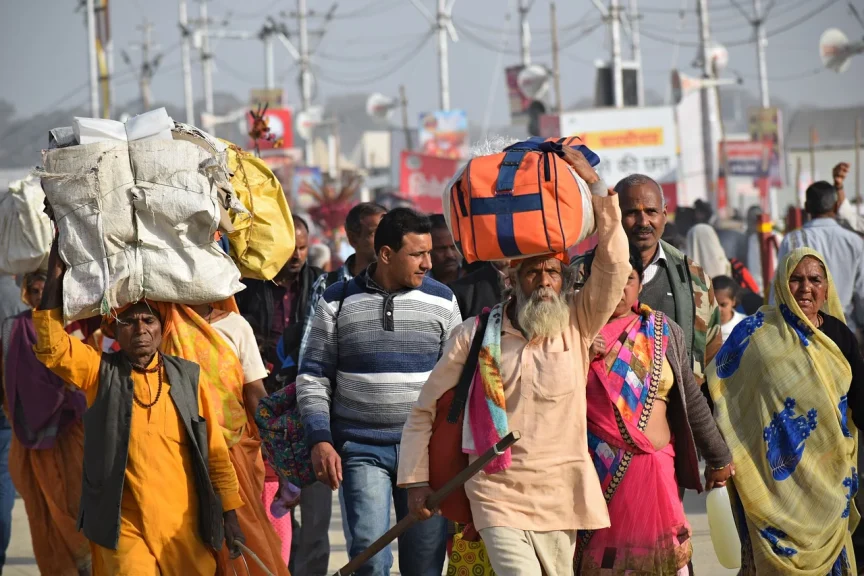
Crowded Market (Photo Credit – Yuan Thirdy)

The fake ‘tourist office’

This is a tricky one to deal with and seems most prevalent in the North of the country. You will be led to an ‘official tourism office’ where they will tell you that the plans and reservations you’ve made are fake, and that they will help you make new bookings. As they pose as government officials, it is easy to fall prey for this common tourist scam.

The best thing to do, of course, is to immediately contact your operator and let them know if you find yourself in this situation, and also contact the hotels you’ve been booked at. We share our contact information with you – use it! Do also be aware of where the actual Tourism Information Offices are; the one in Delhi, for example, is at 88 Janpath Road. If you’re on a trip with India Someday, rest assured, all it takes is a phone call for us to direct you to the established offices.

Tourist scams in India
Always verify the credibility of tourist information centres

The hotel switch

One of the most common tourist scams in India to be aware of is the hotel switch. Again, it is important to remember that if you ask a stranger off the road for assistance, he or she is most likely to help out as much as possible. Most taxi and auto-rickshaw drivers also tend to be the same. But there are those who wouldn’t be as nice. And preying on visitors’ lack of on-ground knowledge is an easy way to fool them.

On the way to a hotel of your choice, you will be gently told that it isn’t such a great place, and that they know of one that is much better and cheaper, too. In some cases, they will tell you that the place you chose has shut down. The best way to get out of this situation without creating a fuss is to tell the driver that you’ve already paid an advance.

They may then even try and take you to a different place with the same name, so it’s best to call the hotel and ask for a nearby landmark. In addition, you can also ask the hotel to arrange a pick up, or hire a private car for the ride, both of which we can help you with. Of the scams in India to avoid, this one’s quite easy to get out of.

Scams in India
Also cross-check your direction (Photo Credit – Mohit Tomar)

Inflated taxi/auto fare

This also makes its way to the list of some of the most common tourist scams in India. Here, the driver will ask where you want to go and then quote an arbitrary number as fare. The reason given for not plying by the meter is that it is difficult for them to get a customer on the way back. This is far more common later at night. Threatening to call a cop can be an effective deterrent, but this could be time-consuming.

A better option would be to simply use an aggregator service, which has become fairly common in all big cities in India. A Government-authorized prepaid counter is another workaround. We can also help you with transport options so you have a car and driver at your disposal! Get in touch and we’ll sort things out for you.

tips to avoid torist traps in India
Navigating through local transport can be tricky, but if you know your way through the scams, it can be a very eventful experience (Photo Credit – Dion Hinchcliffe)

An ‘honest’ billing mistake

Sometimes, Hotels and Bars perpetrate sophisticated tourist scams in India. When you find additional items on your bill, the person in question will quickly acknowledge the mistake and take the said items off the bill. But, the service charge and luxury tax (if applicable) which is calculated on the previously inflated amount will remain. Asking for a new bill is the easiest way to avoid prolonged discussion on the matter.

Safety tips and ways to avoid tourist traps
Keep an eye out on those bills and ask for a new one in case you smell something fishy (Photo Credit – Oliver Menyhart from Pixabay)

The old switcheroo

When trying to get change for a larger currency bill, or while paying for something, the perpetrators will either palm a few notes and say you haven’t paid enough, or switch your currency note for a counterfeit one. Counting the notes while paying or declaring that you just withdrew them from an ATM are good ways of avoiding currency scams.

Scams in India
Be careful while you deal with cash and watch your notes

The road fee

Owing to its reputation of being a slightly unfriendly city, tourists often ask ‘is Delhi safe for foreigners?’. For the large part, it is, provided you take adequate precautions. But sometimes, the very people responsible for safeguarding the people’s interests exploit them.

Although this isn’t actually dangerous except for a little monetary loss, it is still one of the scams to be aware of in India. Officials, either designated or pretend, ask for arbitrary fees or taxes from unsuspecting tourists. Although, asking for proper identification and a clear explanation of the said demand is enough of a deterrent.

Read on: Immersing in Things to do in India

On the whole, India and her people love tourists, and we love sharing the wonders of our country with you. Don’t let these scams scare or deter you; now that you know about the common tourist scams in India, you’re well prepared to grab it by the horns. Planning your next holiday in India, or dreaming of visiting India someday? Get in touch, and we’ll help you put it together!

Dealing With Touts in India

Wondering how problematic it is to deal with touts in India? Picture this: you’re off on a trip to Delhi. The capital of India, a land of historic value and great energy, the kind of city that gets your heart pumping. Weeks, maybe even months of planning have finally reached their fruition. You have arrived. You can’t wait to explore Delhi and make this another memorable trip. But, the minute you step off the train, someone runs up to you, clings to your sleeve and smooth talks you out of your hard earned money. What a way to start the trip!

Sadly, this is an unfortunate aspect of travelling to India, the touts. They are people who will do anything to make a quick buck out of vulnerable first-time travellers. Those experienced can easily deal with it, usually learning from their mistakes or by reading up enough. The problem is, sometimes, no matter how much knowledge you may have, you can never be too prepared for these fraudsters. They’ll come at you from all sides, offering everything from hotels and taxis at ‘Cheap’ ‘Special’ or ‘Discount’ rates to hats, sweaters and keychains. Our guide on dealing with touts in India has come to the rescue; read up and laugh your anxieties away. 

Dealing With Touts in India
Heed the signs – Beware of touts in India (Photo Credits – sanjayausta.photoshelter.com)

Where do you find Touts in india?

You may think you will find touts only at crowded stations or monuments, but it’s much more widespread than that. A tout could be just about anybody, your taxi/ auto-rickshaw driver or your hotel manager. Anybody who is earning a commission or even a direct profit from getting you to part with your money is a tout.

You will find people trying to charge you extra for entrance at monuments, temples and mosques. The key is to avoid or ignore them, though your patience will be sorely tested. Their initial aim is for you to respond to them. Once done, they’ll dive straight into their sales pitch and bait you into buying something.

They will cling to you doggedly if you try to walk away. If you ignore them long enough, they’ll eventually turn their attention to somebody else. Make sure you buy your tickets at designated counters with prominent signs displaying entrance fees, and whenever possible try to dish out exact change. You would be surprised at how even the employees working for authorities like the railways or the bus services will try to short-change you.

If you take a cab or an auto-rickshaw from the railway station, a good chance is that the driver will tell you that your hotel is already fully booked or in some cases even shut down to try and entice you toward a ‘cheap’ hotel of his choice. Firmly tell them you’ve paid in advance, or call up the hotel and ask for a landmark. This is a common scam in India that you can easily get out of.

Dealing With Touts in India
Always buy your ticket from the booking office

new Delhi

New Delhi is a city of warm, generous people who are very upset by their city’s reputation as a haven for touts. You will find a lot of people who genuinely want to help you without asking for anything in return. Thus, being too cautious might keep you from connecting with some truly lovely people.

A common scam is the train ticket scam at New Delhi. An official-looking person comes up to you, informing you that your train has been cancelled. Be careful when boarding a train from Delhi, your tickets are NOT cancelled, unless your tour operators tell you so! If anyone tries to tell you otherwise, just laugh them off and carry on with your journey. Always ring your tour operator to clear any doubts before giving in to this trick, as the solution offered by touts is buying a much more expensive train ticket.

Dealing With Touts in India
New Delhi is full of bustle and charm, don’t let the touts ruin the experience (Photo Credit – Grant Matthews)

Pushkar

Pushkar is a holy city, home to a place of worship of great importance to Hindus. You’ll find the place packed with travellers. Both explorers and pilgrims making their way to ‘Tirth Raj’, the king of pilgrimage sites. The irony is that this land of goodness, godliness and devotion, has become a hotbed for mischief-makers.

The most common scam you will encounter is the form of paid blessings. Touts in India can indeed take on amusing disguises. When you wander across the town or the small lake, you will come across smiling priests (touts, yes that’s what they are, touts).  They will ask you if you want to be blessed, after which they will pray for you, make you chant a few words and then demand outrageously large sums of money.

The best way to avoid them is to say upfront exactly how much you’re willing to pay (nothing more than INR 50-100) and then watch how they don’t want to give you ‘special blessings’ anymore.

Dealing With Touts in India
Pushkar is gorgeous but notorious for ‘Priest’ touts (Photo Credit – Francisco Anzola, Flickr)

Agra

The land of the Taj Mahal draws in tourists from around the world and quick on their heels, the touts.

The touts in Agra have a very mind-blowing capacity for being irritating. Yes, all touts in India and over the world are irritating, but these guys are exceptionally good at pestering people. They will want to sell you little Taj Mahal replicas, ‘authentic’ pashmina shawls, and will tell you that your hotel or the Taj is far away and ask you to take the Tanga rickshaw (carriage) to a place that is quite literally 500 meters away.

The best way to deal with touts in Delhi, Agra or all over in India, in general, is to just ignore them, never run out of patience, and do a little bit of research about the place you are visiting. Just to reiterate, you will find a lot of genuinely helpful people who will help you. Indians are very welcoming people. Some might even help you negotiate with the touts!\

Explore More: Getting Acquainted with Things to do in India


Dealing With Touts in India
Be firm with the touts around the Taj Mahal so you can truly appreciate its beauty in peace

We understand that no matter how much you read, dealing with touts in India can be intimidating. If you want to avoid a sticky situation, feel free to contact us!

Let India Someday handle it and plan your best trip.

PLAN MY TRIP subtext